Conversational Banking Guide: Benefits, Use Cases & Challenges
Conversational banking lets you bank through messaging apps you already use, offering 24/7 access, personalized service and even faster transactions through AI.

Conversational banking lets you bank through messaging apps you already use, offering 24/7 access, personalized service and even faster transactions through AI.
Ever wished that banking could be as easy as chatting with a friend? Well, now it can be with the rise of conversational banking. Banks are now offering customers the ability to interact with their accounts through a chat interface.
Traditional banking methods can be time-consuming and inconvenient. Conversational AI banking aims to simplify the banking experience. According to 88% of banking executives, conversational AI is set to become the dominant channel for customer service.
Customers can have a more personalized and convenient banking experience with AI-powered banking. Leveraging AI and natural language processing can help banks respond instantly to customer inquiries. We will explore the benefits of interactive banking and how it is revolutionizing how we manage our finances.
Conversational banking refers to a method of banking that allows customers to interact with their bank or financial institution through a conversational interface, such as a chatbot or voice assistant. The technology enables customers to perform a variety of banking tasks such as checking account balances or applying for a loan, simply by having a conversation with the digital assistant.
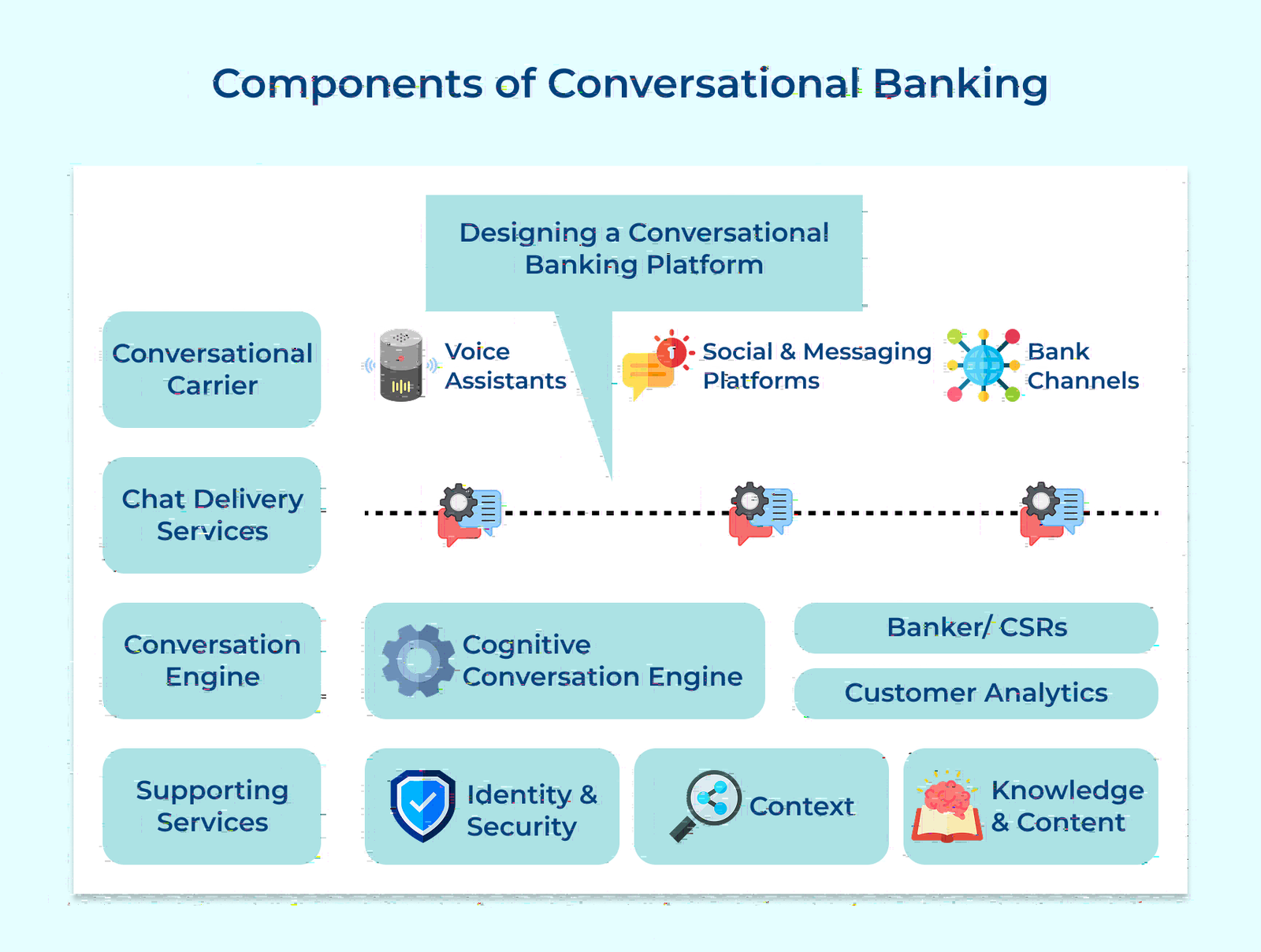
Conversational AI banking offers a convenient way for customers to access their banking services. They can engage with the bank anytime and anywhere through their preferred messaging platform. The banks on their part can respond to queries in a human-like manner by utilizing natural language processing.
Conversational banking offers a personalized accessible banking experience through advanced AI technology. Let’s explore the benefits in detail.
Discover how innovative banking solutions can streamline your financial life and help you achieve your goals.
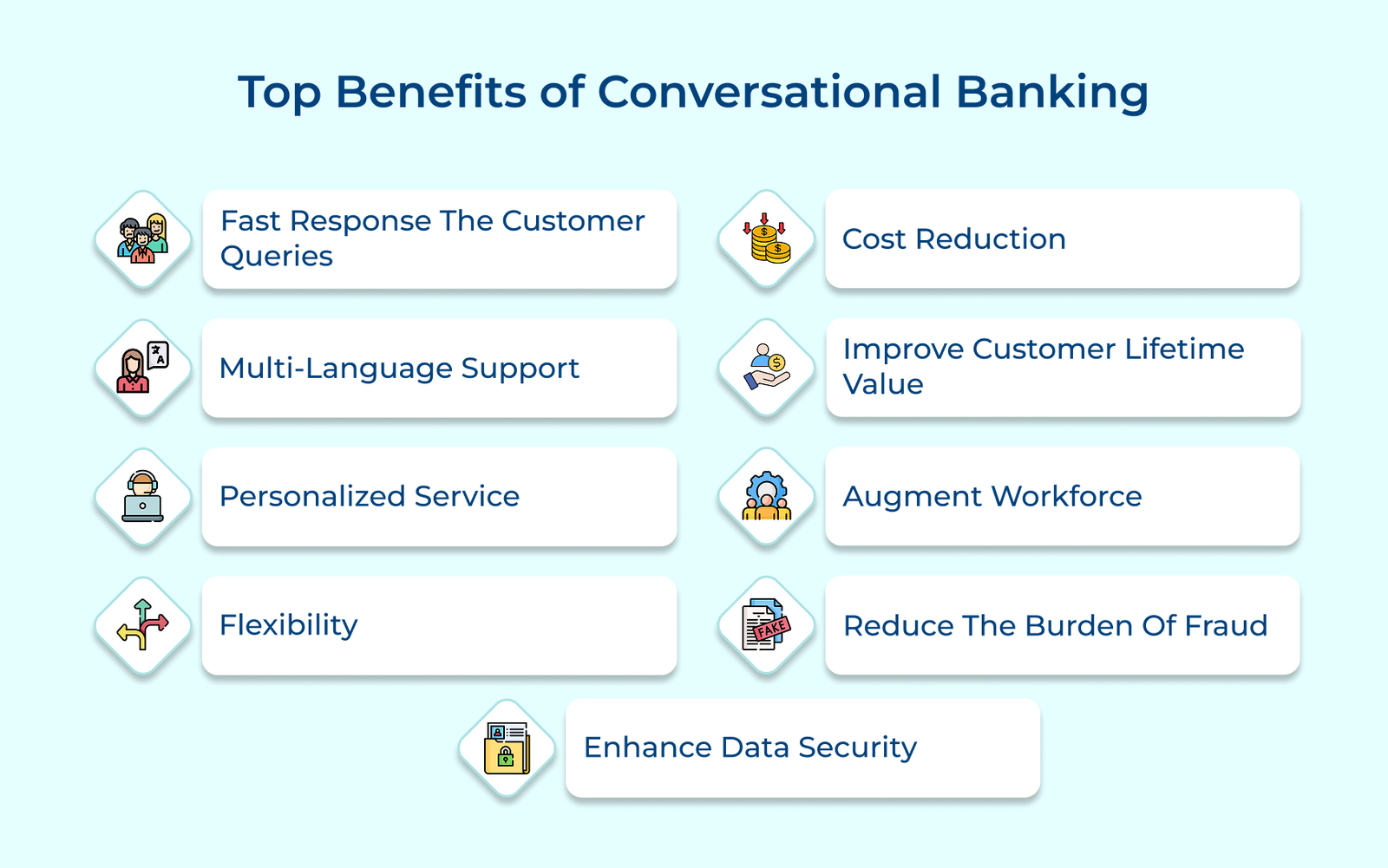
One of the key benefits of conversational AI banking is the fast response time to customer queries. No longer do customers have to wait on hold for a representative to be available. Customers can simply input their queries into a chat interface and receive instant responses with conversational AI. It allows for a more efficient and streamlined customer experience.
Interactive banking offers multi-language support, making it easier for customers who may speak different languages to interact with their bank. Whether a customer speaks English, Mandarin, or any other language, they can still receive the same level of support through conversational AI. It not only helps to break down language barriers but also helps to create a more inclusive banking experience.
Conversational AI tools can analyze customer data in real-time, allowing banks to tailor their services. A significant 70% of consumers expect personalized advice from their banks. Customers can receive customized offers, support and advice, leading to a more positive banking experience. Conversational AI ensures that customers feel understood and valued by their bank by providing financial advice or suggesting relevant products.
Another significant benefit of conversational AI banking is the flexibility it provides to customers. Customers can access banking services at any time, from anywhere by using AI-powered chatbots and virtual assistants. The flexibility eliminates the need for customers to visit physical branches or wait on hold to speak with a representative, saving time.
Learn how cutting-edge technology can enhance your operations, reduce costs, and drive customer satisfaction.
Cost reduction is a significant advantage for financial institutions implementing conversational AI. Automating routine tasks and customer interactions can help banks reduce the need for human agents. Chatbots can handle inquiries, provide account information and even assist with basic transactions, freeing up employees to focus on complex issues.
Another key benefit of conversational AI banking is the ability to improve customer lifetime value. Banks can enhance the customer experience by offering personalized and proactive interactions. Chatbots can provide tailored product offers, answer questions about financial goals and offer real-time assistance whenever customers need it.
One key benefit of AI-powered banking is the ability to augment the workforce. Financial institutions can handle a large volume of inquiries without the need for human intervention. Employees are allowed to focus on more complex tasks that require human judgment. Conversational banking ensures the benefit of providing personalized and real-time assistance to customers through natural language processing.
Conversational AI banking utilizes advanced technology to detect and prevent fraudulent activities. Chatbots can identify any suspicious behavior and alert the appropriate authorities by analyzing user data. The proactive approach helps financial institutions stay one step ahead of fraudsters and protect their customer’s sensitive information.
Interactive banking ensures robust data security by encrypting all communication between the customer and the chatbot. The encryption safeguards sensitive details such as account numbers from unauthorized access. AI-powered chatbots are equipped with advanced authentication measures. Banks can instill trust in their customers and protect their data from cyber threats.
Implementing conversational banking involves several key steps to ensure you create a seamless conversational experience for your customers.
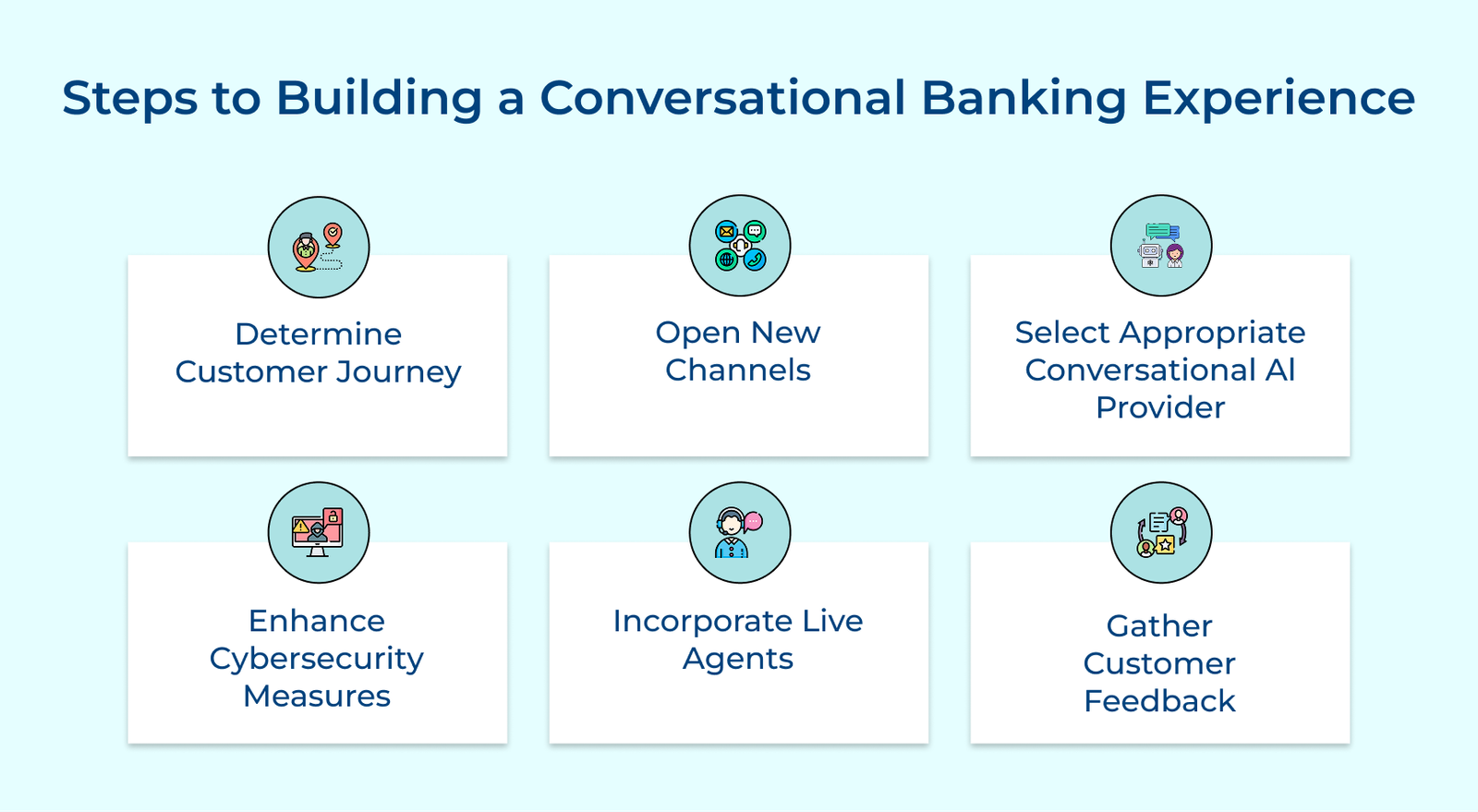
When building a conversational banking experience, one crucial step is to determine the customer journey. It involves mapping out the different touchpoints and interactions a customer has with the banking services.
Understanding the customer journey is key to providing a seamless experience that meets the needs of the clients. Assume that a customer has started their journey by inquiring about different saving account options. An AI banking system can customize responses to offer account information based on the initial interaction.
How to implement:
One key step to building a successful AI-powered banking experience is to open new channels for communication with customers. Expanding how customers can interact with a bank allows for more personalized service. Opening new channels, such as integrating chatbots on social media or developing a mobile banking app with a live chat feature, can help customers easily access information.
Take the example of a customer who prefers to communicate via social media and can easily reach out to their bank. It can include Messenger or Twitter to inquire about their account balance or report a lost credit card. Offering additional channels can help banks meet customers where they are and provide a seamless banking experience.
Pro tips:
Conversational AI technology plays a key role in enhancing customer service, improving user experience and increasing efficiency. Some of the popular Conversational AI providers in the market include IBM Watson and Amazon Lex.
Let’s assume that a use case demonstrating the importance of selecting the right Conversational AI Provider can be seen in a scenario. Customers can check their balance or transfer funds with the mobile app. An efficient solution can provide accurate responses, leading to a positive experience.
Best practices:
Enhancing cybersecurity measures is a crucial step that cannot be overlooked. Businesses can establish trust and credibility with their clients by ensuring that sensitive customer information is protected. It will lead to a more positive user experience.
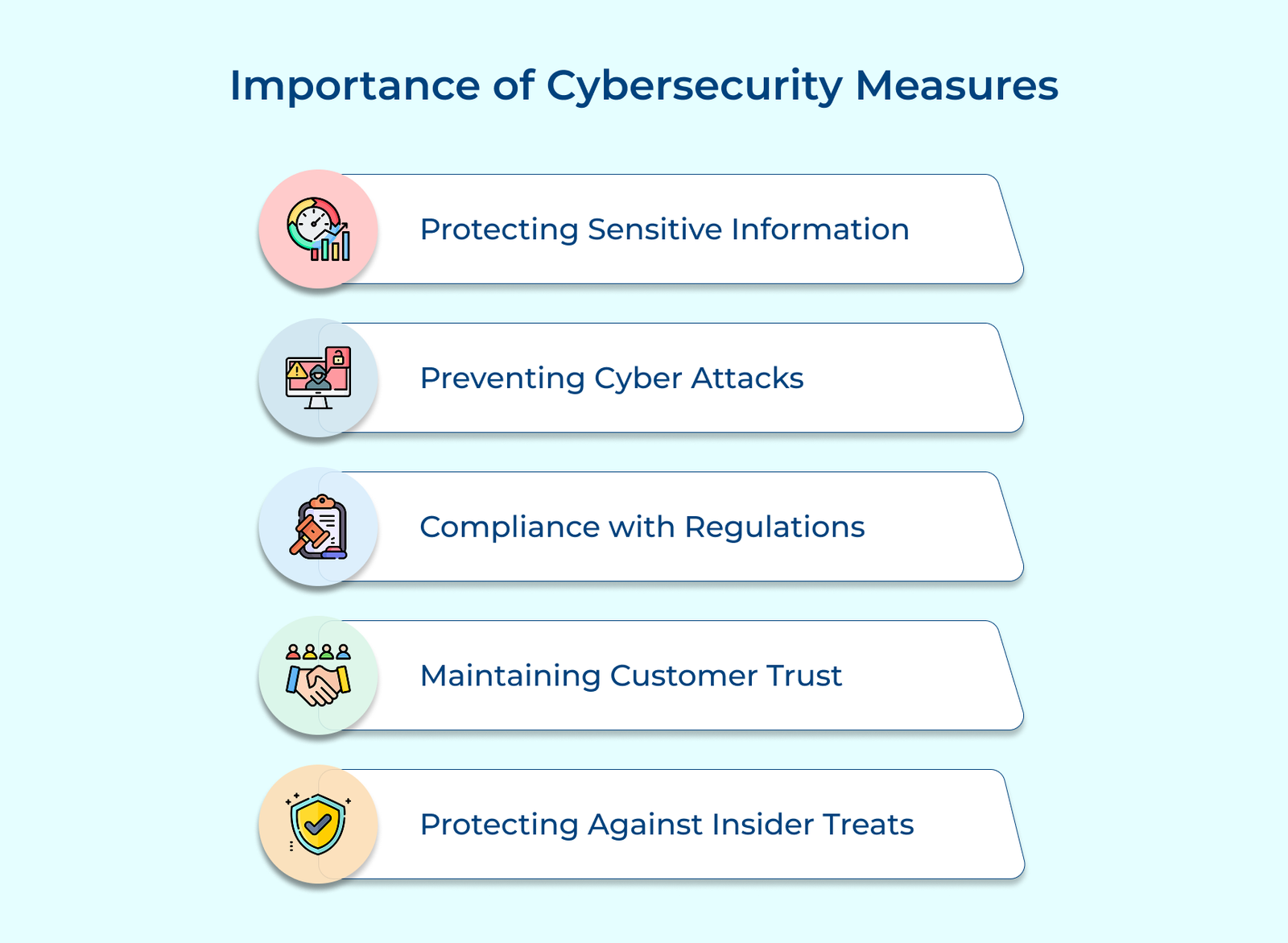
Let’s consider that implementing end-to-end encryption for all communications within the conversational AI banking platform can prevent unauthorized access to sensitive information. Regularly updating security protocols can help address any vulnerabilities in the system.
Best practices:
Incorporating live agents is a crucial step in building an interactive banking experience. Banks can provide a seamless experience by combining the efficiency of conversational AI with the personalized touch of a live agent.
A use case scenario for incorporating live agents in interactive banking could be a customer seeking advice on investment options. The AI chatbot could gather basic information and provide initial offers. A live agent could step in to provide in-depth analysis, answer queries and offer personalized investment.
Pro tips:
Gathering customer feedback is a crucial step in building a conversational AI banking experience. Banks can better understand their needs and tailor their services by obtaining input from customers. One way to gather customer feedback is through surveys or feedback forms.
Let’s assume that a bank might send out a survey to customers asking for feedback on their satisfaction with the bank’s mobile app. Based on the responses received, the bank can identify areas for improvement, such as adding new features or improving user interface.
How to implement:
Conversational banking use cases demonstrate how AI-driven interactions can simplify transactions. Let’s explore them below in detail:
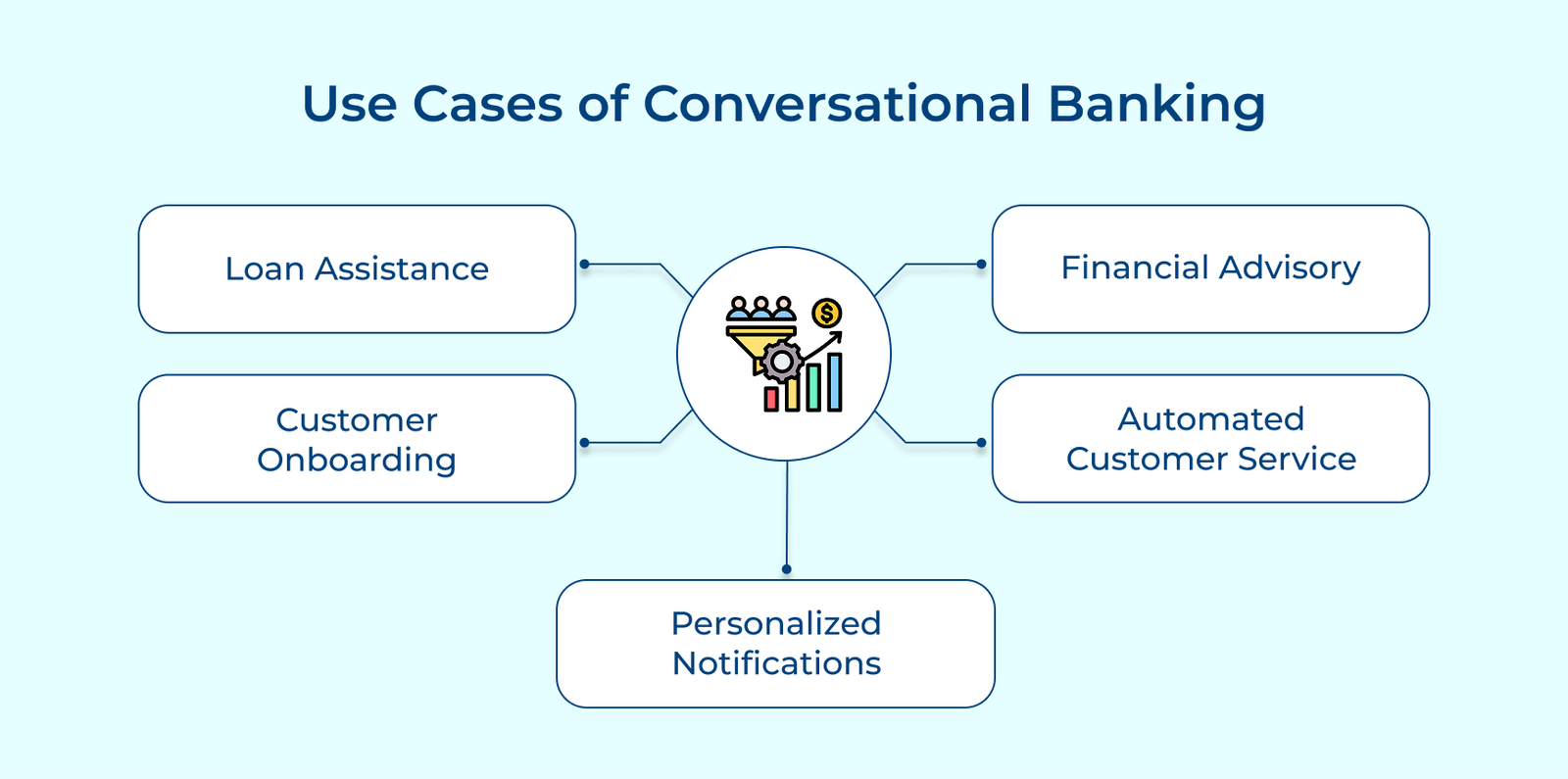
1. Loan assistance: Conversational banking can help customers with loan inquiries and applications. Clients can get information about different loan options and eligibility criteria. They can even receive guidance on how to apply for a loan. It streamlines the loan process and makes it easier for customers to access financial assistance.
2. Financial advisory: Many banks offer personalized financial advice through chat banking. Customers can discuss their financial goals, investment options and retirement planning with a virtual assistant. The one-on-one interaction helps customers make informed decisions about their finances.
3. Customer onboarding: Conversational AI banking can simplify the onboarding process for new customers. Virtual assistants can help users get started with their banking services. It guides customers through the registration process and account setup. The feature enhances the customer experience and reduces the time required for account setup.
4. Automated customer service: Chat banking provides instant customer support through automated responses to common queries. Customers can get answers to FAQs, report issues with their accounts, or request assistance with transactions through the chat interface.
5. Personalized notifications: Interactive banking platforms can send personalized notifications to customers about important updates. The notifications can be delivered through chat messages, keeping customers informed about their financial activities. The feature enhances communication between banks and customers.
There are several obstacles that banks face when implementing the technology. Below are some of the primary obstacles to the implementation of conversational banking and potential solutions:
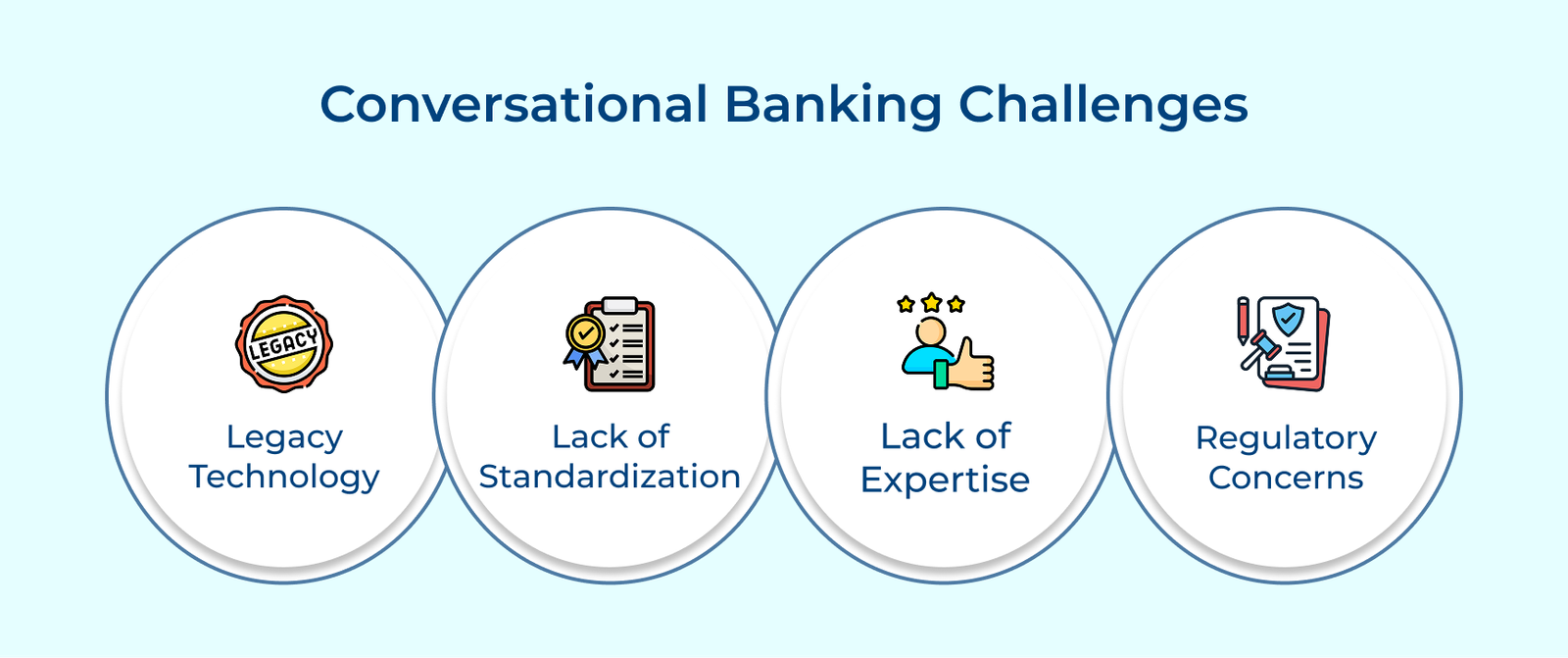
One of the biggest challenges in implementing conversational banking is dealing with legacy technology systems that are outdated and not easily integrated with new chatbots. The systems may not be able to support the communication channels necessary for conversational AI banking, resulting in a disjointed user experience.
Investing in modernizing technology infrastructure and adopting API-based systems will help banks to seamlessly integrate chatbots into their operations. Updating their legacy systems can help banks ensure a seamless customer experience across all channels.
Another obstacle to the implementation of interactive banking is the lack of standardization in messaging platforms and protocols. Different messaging apps have varying features, making it difficult for banks to create a consistent experience for customers.
Banks can work with industry organizations and technology providers to establish standards for AI-powered banking. They ensure that their chatbots and messaging services work seamlessly across different platforms by developing common protocols.
Implementing conversational banking requires a unique set of skills, including knowledge of AI, machine learning and natural language processing. Many banks may lack the internal expertise to develop and maintain chatbot systems.
Partnering with external technology providers or hiring specialists in conversational AI banking will fill the expertise gap. They leverage their knowledge to successfully implement interactive banking solutions by collaborating with experts in the field.
Banks face regulatory challenges when implementing AI-powered banking, as customer data privacy is top priority in the industry. Regulatory concerns may prevent banks from fully leveraging chatbot technology to enhance customer service.
Banks must consider working closely with regulators to ensure that their AI-powered banking solutions comply with data protection and privacy regulations. They address concerns and build trust with customers by implementing robust security measures.
Here are the top conversational banking examples of brands and the impact they had on their business:
1. Bank of America
Bank of America introduced its AI-powered virtual assistant, Erica, to help customers manage their finances through conversational banking. Customers can ask Erica questions, receive personalized insights, set up savings goals and even pay bills just by using natural language. The implementation of Erica has resulted in increased customer engagement and satisfaction.
2. Capital One
Capital One implemented conversational AI banking through their chatbot, Eno. Customers can easily check balances and track expenses through messaging platforms like Facebook Messenger. Eno’s AI capabilities enable it to understand customer queries conversationally.
3. Wells Fargo
Wells Fargo launched its chatbot, Wells Fargo Assist, to provide customers with support and assistance in managing their finances. Leveraging AI technology helped Wells Fargo Assist provide accurate responses to customer inquiries, helping to streamline the process. The implementation of AI-powered banking has helped Wells Fargo strengthen customer relationships.
4. HSBC
HSBC integrated conversational banking into its digital banking platform. It allows customers to interact with the bank through voice commands and chat. Customers can perform a variety of banking tasks, such as checking account balances and paying bills, simply by speaking or typing requests. The adoption of conversational AI banking has enabled HSBC to deliver more personalized services to customers.
Banking needs to evolve to meet the changing needs and expectations of customers. AI-powered banking offers a transformative solution, redefining the way we interact with our financial institutions. The innovative approach enables a seamless banking experience by harnessing natural language processing.
Unlock a world of possibilities with interactive banking, where financial needs are met with unparalleled ease. Transform the banking experience into a delightful experience and witness the remarkable impact it can have on financial well-being.

Conversational AI plays a crucial role in banking by enhancing customer service experiences through automated chatbots and virtual assistants. The AI technologies can handle customer inquiries, provide personalized recommendations and even assist with account management tasks. Leveraging conversational AI can help banks improve efficiency and offer 24/7 support to customers.
Designing a conversational banking experience involves creating a user-friendly interface and integrating AI chatbots for customer service. Banks can enhance the customer experience by focusing on simplicity, security and seamless communication. Effective design strategies include natural language processing and real-time response capabilities.
Conversational banking utilizes artificial intelligence to provide banking services through messaging apps or voice assistants. Users can check balances, transfer money, or get account details by chatting with a chatbot. The services are available 24/7 and offer a convenient way for customers to manage their finances.
Just like any other digital technology, conversational banking comes with its risks. While banks put measures in place to secure customer data, hacking or data breaches are always possible. Customers need to use secure channels, such as encrypted messaging apps and be cautious about sharing sensitive details during conversations with chatbots.
While conversational banking offers convenience and efficiency, there are limitations to consider. Security concerns arise with sensitive information being shared through chatbots. Lack of personalization and human touch may lead to miscommunication or frustration for some users. Language barriers or technical difficulties could hinder the effectiveness of conversational banking services.

Grow Customer Relationships and stronger team collaboration with our range of products across the Conversational Engagement Suite.
Omnichannel Customer Support & Help Desk Software
AI Enabled Business Messaging and Chatbot Software
Sales Engagement & CRM Software
Call Center Software & Virtual Phone System
Product Marketing & Experience Platform
Customer Experience & Feedback Management Software

 10 Excellent Customer Relationship Management Examples
Scroll to top
10 Excellent Customer Relationship Management Examples
Scroll to top