Unlocking Loyalty: The Power of Empathy in Customer Service
Empathy in customer service is the key to unlocking exceptional service. Understanding customers' needs can help build trust, resolve issues effectively and keep them coming back for more.

Empathy in customer service is the key to unlocking exceptional service. Understanding customers' needs can help build trust, resolve issues effectively and keep them coming back for more.
Have you ever received exceptional customer service that left you feeling appreciated and valued? Chances are, empathy played a key role in that interaction.
Empathy is a crucial aspect of customer service. It can make or break a customer’s experience with a business. A recent study showed that 96% of consumers view empathy as important in customer support interactions.
Empathy is not just a buzzword in customer service; it is a powerful tool that can strengthen relationships and drive success. The article explores the importance of empathy in customer service. It provides tips on how businesses can cultivate an empathetic approach to serving their customers.
Empathy in customer service refers to genuinely understanding and sharing your customer’s feelings during their experience with your business. It goes beyond simply hearing their words to actually feeling what they’re going through. When you practice empathy, you step into their shoes and see the situation from their perspective rather than just following a script.
Empathy creates an emotional bridge between you and your customer that transforms the entire interaction. You listen carefully to both their words and the emotions behind them then respond in ways that show you truly understand their situation. The approach naturally shifts conversations from transactional exchanges to meaningful human connections that leave customers feeling heard and valued.
Key objectives:
Let us go through the numerous benefits of empathy in customer service strategies to understand how doing so can create lasting value for your brand.
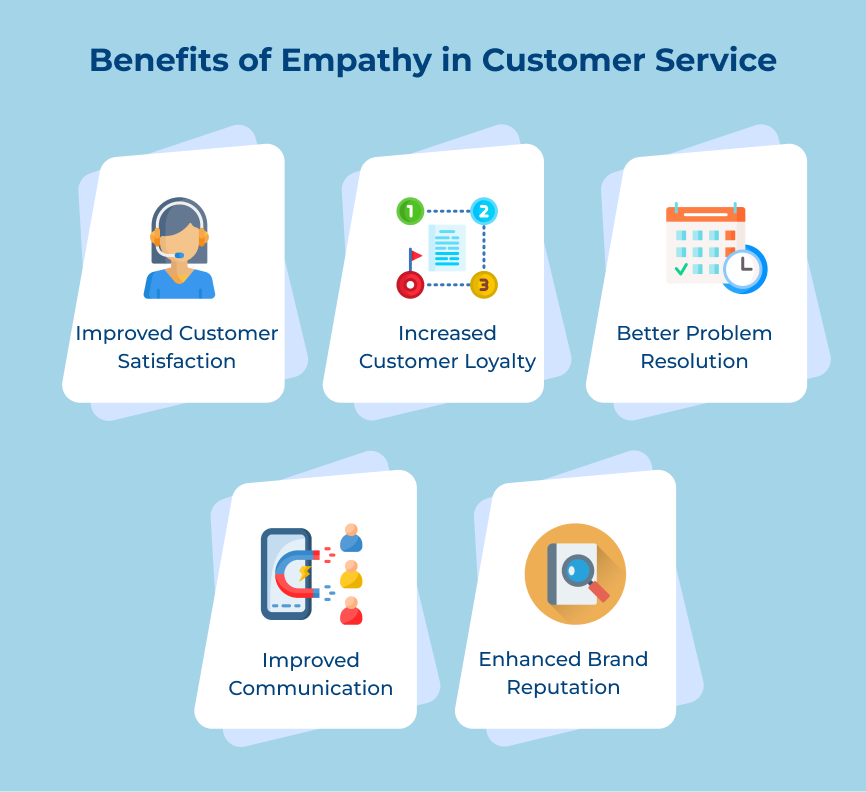
One of the main benefits of using customer service empathy is that it leads to higher levels of customer satisfaction. When customers feel that their concerns are being acknowledged, they are more likely to have a positive experience. It can result in repeat business and positive word-of-mouth referrals.
Empathy helps to build trust with customers, creating a sense of loyalty and long-term relationships. When customers feel valued, they are more likely to continue doing business with a company and recommend it to others. It can lead to higher customer retention rates and a positive reputation.
Customer service representatives can better understand the root of the issue by listening actively. It can show empathy towards customers and work towards finding a solution. Empathy helps employees understand the customer’s perspective and work to solve problems. It leads to more effective problem resolution and a positive outcome for both parties.
Customer service empathy can help improve communication between customers and employees. Actively listening with empathy can create a more supportive dialogue with customers. It leads to clearer communication and a better understanding of each other’s needs. It can prevent misunderstandings and create a more positive interaction overall.
Customers appreciate companies that show empathy and care for their needs. Prioritizing empathy in customer service interactions can build a strong brand reputation. It can differentiate a company from its competitors. It can also help attract more customers who value personalized service.
Check out the practical tips and best practices to inject empathy into your customer service approach, eventually transforming interactions into memorable experiences.
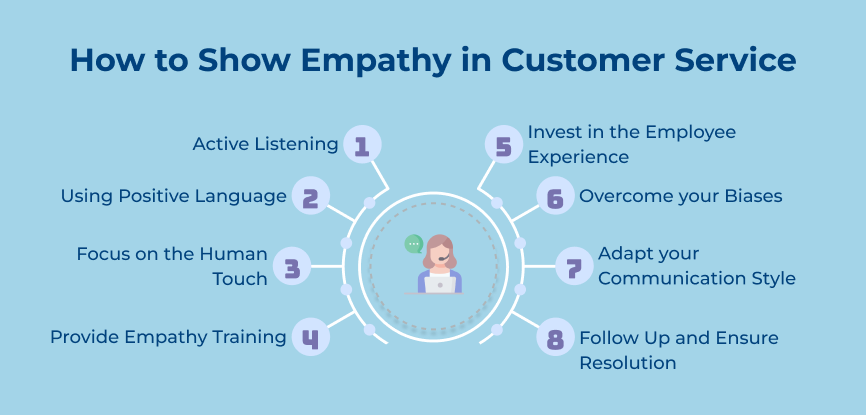
Active listening is a crucial skill in customer service that can significantly enhance the customer experience. Effective active listening involves fully concentrating on what the customer is saying, understanding their needs and responding appropriately. About 55% of the time human communication is devoted to listening.
Let’s assume that a customer calls in with a complaint about a product. Instead of just hearing their complaint, an active listener would take the time to understand the issue. They would ask clarifying questions and offer personalized solutions. It can help address the customer’s specific needs.
Best practices:
Using positive language is an effective best practice to show customer service empathy. The approach involves using words that convey understanding, support and care toward customers. Representatives can improve customer interactions by using positive language, even in tough situations.
Let’s consider that instead of saying “I can’t help you with that,” a representative can say “Let me see what I can do to assist you with that issue.” The simple change in language can make a big difference in how customers perceive the level of care and attention they receive.
Best practices:
Showing empathy in customer service has become increasingly important. One effective best practice to show empathy is to focus on the human touch. It means treating each customer interaction as a personalized experience, rather than a transaction. Customer service representatives can show genuine care and concern for the individual customer by focusing on the human touch.
The approach helps customers feel understood and valued, leading to a more positive customer experience. Let’s assume that instead of simply following a script, representatives can actively listen to customers, address their concerns and offer personalized solutions.
Best practices:
Empathy training helps employees develop the skills needed to connect with customers on a deeper level. Learning how to actively listen, empathize with different situations and respond with compassion can create a positive customer experience.
Let’s consider that during a call with a frustrated customer, an employee trained in empathy might say, “I understand how frustrating it must be for you. I will do everything in my power to help find a solution.”
Best practices:
Investing in the employee experience is an effective best practice to show empathy in customer service. Companies that excel in customer experience have 1.5 times as many engaged employees. You are creating a more positive environment for both your team and your customers by prioritizing the satisfaction of the employees.
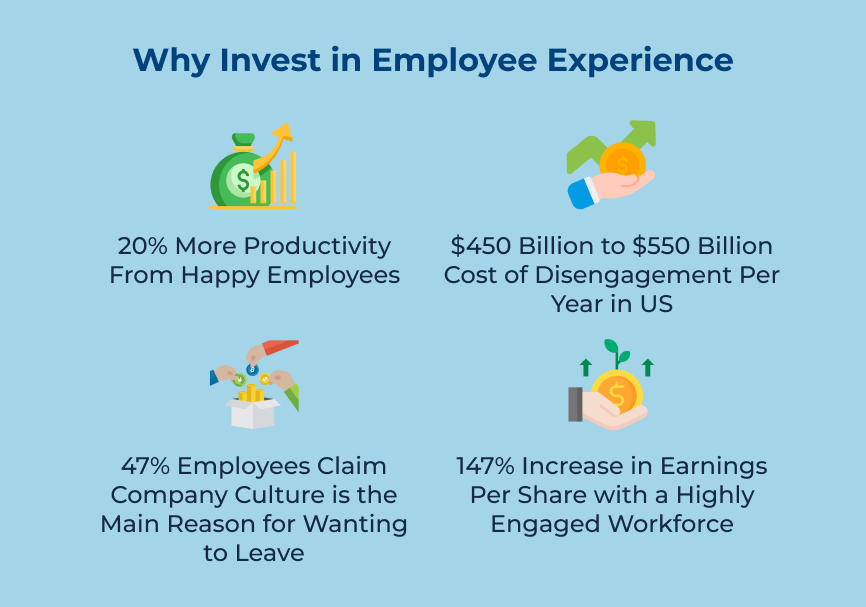
One example of how investing in the employee experience can show empathy in service is by providing development opportunities for the staff. When employees feel valued, they are more likely to go above and beyond to provide exceptional service to customers.
Best practices:
“Overcome your biases” is a critical best practice in showing empathy in customer service. Bias can cloud our judgment and prevent us from truly connecting with others. We can approach customer interactions with an open mind to help by overcoming our biases.
Let’s assume that a customer is upset about a product not meeting their expectations. Instead of dismissing their complaints, we can acknowledge their feelings. It can help us work towards finding a solution that satisfies them.
Best practices:
One of the most effective best practices for showing empathy is to adapt the communication style to meet the customer’s needs. It means being able to adjust your tone, language and approach based on the individual you are interacting with.
Adapting the communication style can help better connect with customers on a personal level and show them that you care about their concerns. Let’s consider that a customer is feeling frustrated. A calm tone can help alleviate their stress and show that you are trying to help.
Best practices:
“Follow up and ensure resolution” is an effective best practice to show empathy in customer service. It involves making sure that any issues raised by the customer are resolved promptly. Following up to ensure their satisfaction is also important.
Let’s assume that a customer contacts a company with a complaint about a faulty product. The representative can follow up by arranging for a replacement product to be sent out. They can also check in with the customer to make sure they are satisfied with the resolution.
Best practices:
Let’s go through some compelling use cases of customer service empathy and see how it can shape exceptional customer experiences.
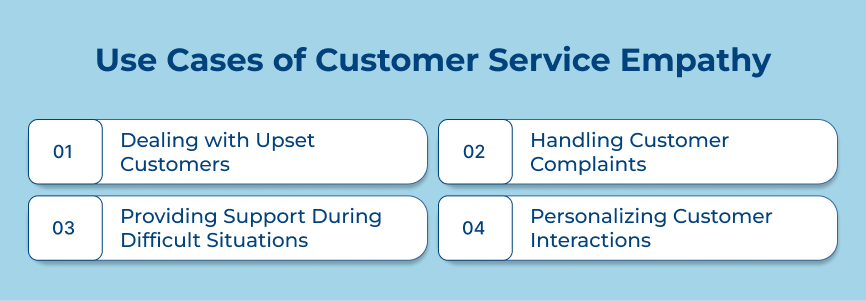
Inevitably, there will be times when customers are upset or dissatisfied with a product or service. Showing empathy in such situations, by listening to their concerns, can help de-escalate the situation. Acknowledging their emotions and demonstrating that you understand their perspective can work towards finding a resolution that satisfies the customer.
When customers have complaints about a product or service, it’s important to approach the situation with empathy. Instead of becoming defensive try to understand the customer’s point of view and show that you genuinely care. Expressing empathy and taking ownership of the problem can turn a negative experience into a positive one for the customer.
There may be times when customers reach out to customer service for help during challenging circumstances, such as dealing with financial hardship. Showing empathy and offering support can make a significant impact on the customer’s experience. Showing compassion and understanding can help customers feel valued during difficult times.
Empathy can also help customer service representatives to personalize interactions with customers. Representatives can tailor their responses to provide a personalized and effective service by understanding a customer’s unique needs. Empathy allows representatives to go beyond scripted responses and show care for each customer. It enhances the overall customer experience.
Explore the powerful empathy phrases that can elevate your customer service skills and ensure every customer leaves with a sense of satisfaction.
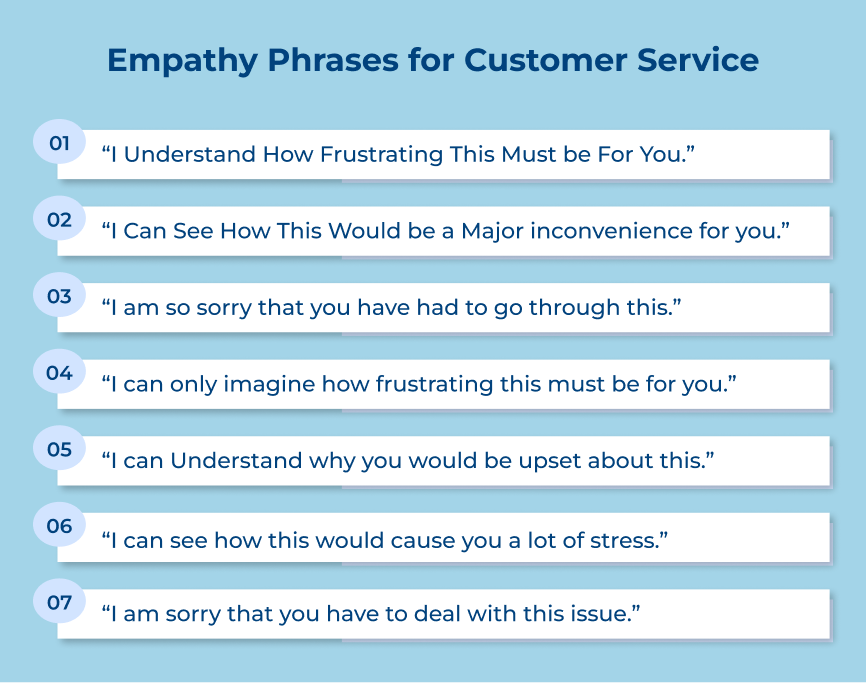
1. “Thank you for sharing that with me, I can 100% understand how frustrating that is. Here’s how I can help.” You are showing that you empathize with the customer’s situation and are ready to assist them in finding a solution by acknowledging their frustration.
2. “That’s happened to me as well, so I understand how disappointing it is. Let me see what I can do for you.” Sharing a personal experience can help build a connection with the customer and show that you can relate to their emotions.
3. “Thank you for your honesty. I’m going to do everything in my power to help.” Acknowledging the customer’s honesty can help strengthen the trust between the brand and the customer. It shows that you are committed to resolving their issue.
4. “Please know that you are a customer that we value very much, let me see what I can do.” Reassuring the customer of their value can help ease their concerns. It shows that you are dedicated to providing them with a positive experience.
5. “Thank you for sharing that. I’m so sorry you had that experience. Let me see how I can make it better.” Expressing genuine apologies and a willingness to improve the situation can help restore the customer’s trust and loyalty.
6. “That is such a disappointing experience and doesn’t live up to our values. Here’s how I’m going to fix it for you.”The statement acknowledges the customer’s disappointment while also showing that you are committed to finding a solution. It reassures the customer that you are taking their concerns seriously and are actively working to resolve the issue.
7. “Personally, it is how I would handle the situation.”.Offering a personal touch shows the customer that you are invested in their situation and are willing to take ownership. It can help build trust and rapport with the customer, making them feel more comfortable.
8. “How can I make it better for you?”. The statement puts the focus back on the customer and their needs. Asking for their input on how to improve the situation shows that you value their opinion and are willing to go the extra mile to meet their expectations.
9. “I’m so happy that you reached out so that I can fix it for you!”. Expressing gratitude for the customer’s communication shows that you appreciate their feedback. The positive reinforcement can help reassure the customer that they made the right decision in reaching out for help.
10. “I’m going to make sure we resolve it for you as fast as humanly possible.”. The statement reassures the customers that their issues will be addressed promptly. It shows that you are committed to providing a timely resolution and demonstrates your dedication to customer satisfaction.
Empathy in customer service is the key to creating a positive and lasting impression on customers. Understanding and connecting with their emotions can not only solve problems but also build trust. When compassion meets solutions, customers feel heard, valued and appreciated. It leads to increased satisfaction, repeat business and positive word-of-mouth referrals. Remember to always lead with empathy in your customer interactions. It is the bridge that connects companies with their customers on a deeper and more meaningful level.

Empathy is crucial in customer service as it allows service providers to understand and connect with customers on a personal level. It helps in building trust, strengthening relationships and providing solutions to their concerns. Customers feel valued and understood, by showing empathy, leading to improved customer satisfaction.
Empathy in customer service seems to be disappearing. Companies are focusing more on efficiency, rather than taking the time to truly understand their customers. Businesses need to remember that showing empathy towards customers can lead to increased loyalty. Let’s bring empathy back into customer service.
Empathy in customer service is a key component of building strong relationships with customers. You can provide a personalized experience by putting yourself in their shoes. Showing empathy can create loyal customers who feel valued and understood. It leads to repeat business and positive word-of-mouth referrals.
Customer empathy can make a huge difference during stressful periods by showing understanding and support to customers. Listening to their needs can build stronger relationships and loyalty. It helps in creating a positive experience and retaining customers even in tough times. Empathy is a powerful tool for businesses to navigate through tough situations.
You can measure the impact of empathy in customer service by tracking customer satisfaction scores, feedback and repeat business. Look for trends in customer responses to assess the effectiveness of your empathy efforts. Make adjustments as needed to improve the overall customer experience.
Grow Customer Relationships and stronger team collaboration with our range of products across the Conversational Engagement Suite.
Omnichannel Customer Support & Help Desk Software
AI Enabled Business Messaging and Chatbot Software
Sales Engagement & CRM Software
Call Center Software & Virtual Phone System
Product Marketing & Experience Platform
Customer Experience & Feedback Management Software

 What is Customer Data Management And its Best Practices?
Scroll to top
What is Customer Data Management And its Best Practices?
Scroll to top