How to Guide Users: 7 Steps and Tips for Product Onboarding
Master product onboarding to turn new users into loyal fans. Discover how to craft an experience that educates, engages and empowers users to achieve their goals effectively.

Master product onboarding to turn new users into loyal fans. Discover how to craft an experience that educates, engages and empowers users to achieve their goals effectively.
Ever purchased a new product only to feel overwhelmed by the onboarding process? Many companies have difficulty presenting products clearly and user-friendly to potential customers. 89% of potential customers will consider switching to other solutions if the onboarding process for a tool they’re currently using is complicated.
Product onboarding is a critical step in the user journey. It sets the tone for their entire experience with the product. A seamless onboarding process is essential for customer satisfaction and retention. It includes an initial setup to understand natures and functionalities.
The article discusses onboarding significance, avoiding mistakes and best practices for a smooth customer onboarding experience. Whether a product manager, designer or marketer, understanding the importance of onboarding is key to driving product adoption.
Product onboarding can be defined as the structured process that guides new users through their first experiences with your product or service. It’s like having a friendly tour guide who shows visitors around a new city, helping them understand where everything is and how to navigate successfully. The process transforms confused newcomers into confident users who can actually accomplish their goals with your product.
The approach works by creating a step-by-step journey that introduces users to core features gradually rather than overwhelming them all at once. Think of it like learning to drive as you don’t really need to start on the highway but begin in an empty parking lot. The process uses tutorials and guided experiences to help users achieve their first meaningful success with your product.
Key objectives:
Let us understand why mastering product onboarding is key to driving success and longevity for any innovative offering.
1. Helps customers understand the product: Product onboarding is the first impression customers have of the product. It is important to make a good one. Assisting customers in onboarding explains product functions, key features and effective usage.
2. Increases customer retention: Effective onboarding can help reduce customer churn. It ensures that customers have a clear understanding of the value the product provides. When customers are confident with the product, they tend to keep using it and become loyal customers. An effective onboarding process boosts retention of new hires by 82%.
3. Improves customer satisfaction: A smooth onboarding process can lead to higher customer satisfaction levels. When customers can easily set up and use the product, they are more likely to have a positive experience.
4. Drives product adoption: Product onboarding helps ensure that customers can fully adopt and utilize the product. Providing guidance and support during the onboarding process can help customers overcome any challenges they may face. It also increases their likelihood of using the product successfully.
5. Enables upselling and cross-selling opportunities: Effective onboarding can create chances for upselling or cross-selling extra products or features. Educating customers on all product offerings during onboarding can boost future purchases.
Explore the crucial roles and collaborative efforts essential for creating onboarding processes that can make or break a product’s success in the market.
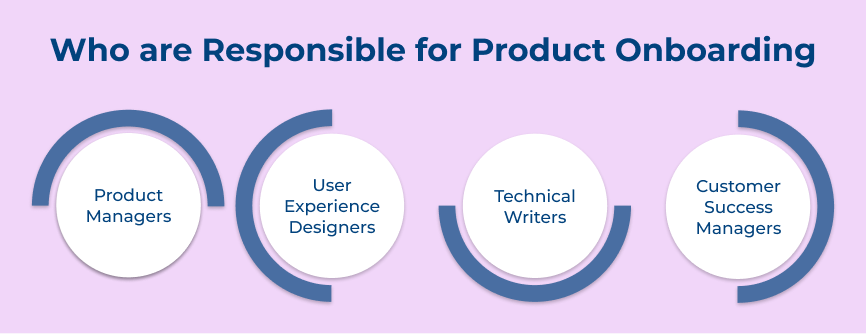
Product managers are typically responsible for overseeing all aspects of a product, including its onboarding process. They define the overall user experience and ensure that the onboarding process is seamless. Product managers collaborate with developers to create onboarding flows that introduce users to key features effectively.
User experience designers play a crucial role in product onboarding. They create the visual and interactive elements that guide users through the onboarding process. They design user interfaces, interactions and animations that make the onboarding experience easy to understand.
Technical writers are responsible for creating onboarding documentation, help guides and tutorials that assist users in getting started with a product. They provide clear, concise instructions for users to easily learn product usage. Technical writers anticipate common questions to proactively address user frustration in onboarding materials.
Customer success managers are responsible for ensuring that customers can successfully onboard and derive value from the product. They work closely with customers to understand their needs, challenges and goals. They also provide personalized assistance and guidance throughout the onboarding process.
Check out the following successful product onboarding steps to turn first-time users into lifelong advocates of your brand.
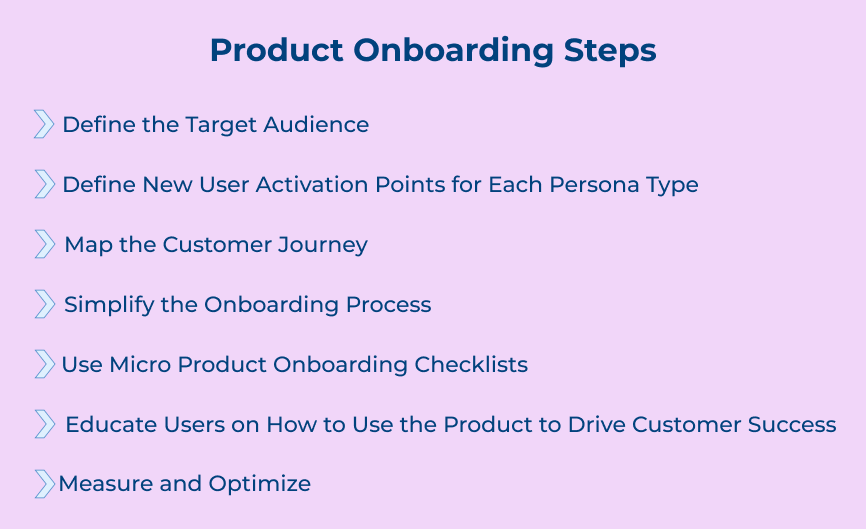
Defining the target audience is a crucial step in creating a successful product onboarding strategy. The step involves pinpointing the key demographic, psychographic and behavioral traits of potential customers. Businesses can tailor their messaging, features and user experience by understanding their target audience.
The importance of the step in creating a successful strategy cannot be overstated. Knowing the target audience helps businesses create personalized onboarding experiences that resonate with them. It can lead to higher user satisfaction, increased retention rates and more successful product adoption.
Actionable tips:
Creating a successful product onboarding strategy is crucial for ensuring that new users have a positive experience with the product. One important step in the process is defining new user activation points for each persona type. Defining activation points involves identifying user actions that indicate successful onboarding.
The step allows businesses to tailor the onboarding experience to each user persona. It ensures that they receive the guidance and support they need to become active users. Let’s assume, a social media platform sets activation points for influencers based on follower count and regular posting. A casual user persona may have activation points related to completing their profile and interacting with friends.
Actionable tips:
Mapping the customer journey is a crucial step in creating a successful product onboarding strategy. Analyzing customer interactions helps customize onboarding for a seamless experience. Companies that have and utilize customer journey maps are 200% as likely to outperform rivals.
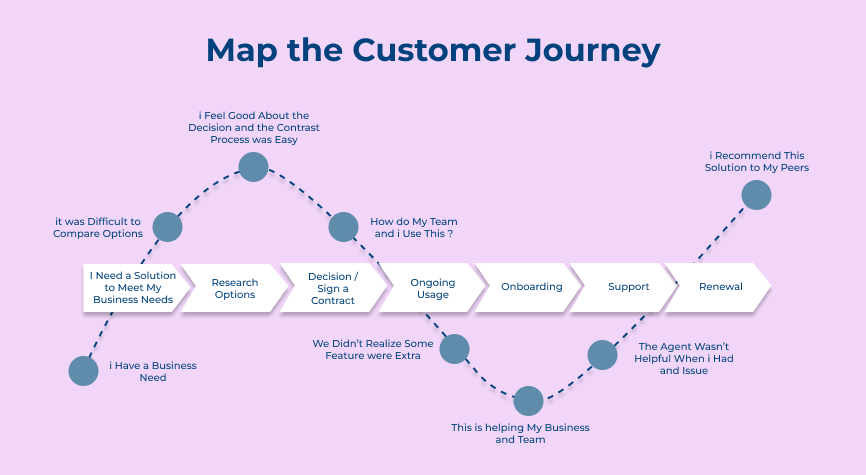
One use case for mapping the customer journey is for a software company launching a new app. Analyzing how customers find, sign up, use features and become loyal can unveil onboarding process issues.
Actionable tips:
Creating a successful product onboarding strategy is crucial for ensuring that users have a seamless and positive experience when using the product. One key step in the process is simplifying the onboarding process. It involves making it easy for users to understand how to use the product and guiding them through the initial setup.
Simplifying the onboarding process is important because it helps reduce confusion for users, leading to higher adoption rates. A complex onboarding process can deter users from fully engaging with the product and may result in high churn rates.
Actionable tips:
Micro-product onboarding checklists are an essential component in creating a successful onboarding strategy. It provides a detailed overview of the steps a user needs to take to successfully onboard onto a product.
Users can easily understand each step, by breaking down the onboarding process into smaller tasks. It leads to a more seamless transition to the product. A use case for micro onboarding checklists can be seen in a new software application. Users feel more at ease using the software when offered a detailed checklist for tasks like profile setup.
Actionable tips:
Educating users on how to use the product is essential for creating a positive user experience and enhancing customer loyalty. When users feel confident in their ability to use the product, they are more likely to continue using it and recommend it to others.
Let’s take the example of a software company. They may offer a series of tutorial videos, user guides and live demos to help users learn how to navigate their platform. Users can quickly familiarize themselves with the product by providing the resources and start using it effectively.
Actionable tips:
Measuring and optimizing are essential in creating a successful product onboarding strategy. Businesses can track onboarding effectiveness to improve user retention through data-driven decisions. Regularly monitoring onboarding ensures a smooth transition for users into using the product.
Let’s consider that a software company can assess user engagement in onboarding by tracking task completion rates and analyzing feedback. They can then improve onboarding by simplifying instructions, offering interactive tutorials, or personalizing based on user preferences.
Actionable tips:
Check out the difference between product onboarding vs user onboarding to understand how each of them works independently.
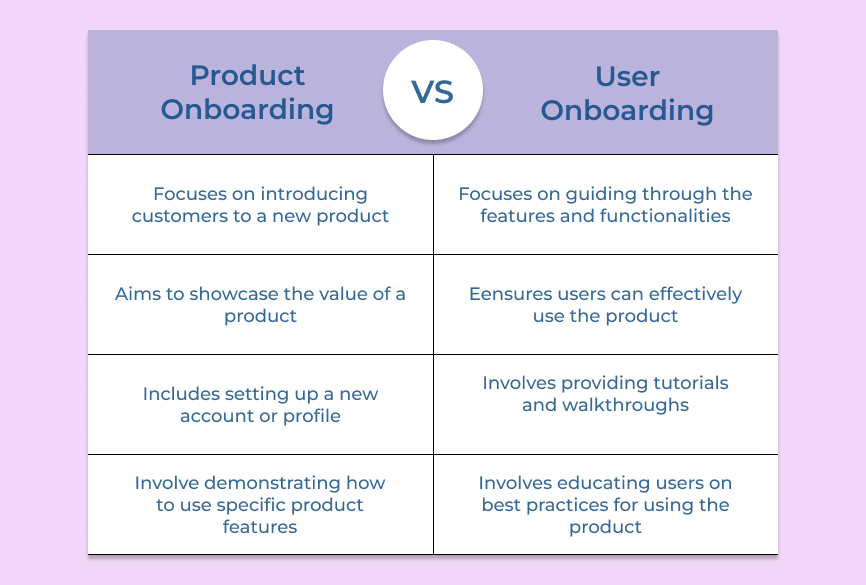
Product onboarding focuses on introducing users to the overall product, its features and benefits. It aims to help users understand how the product works and how it can solve their problems.
User onboarding focuses on guiding users through the specific steps necessary to start using the product effectively. It is more tactical and hands-on, providing users with the information they need to get started.
Product onboarding typically occurs before a user has signed up for the product or during the initial stages of their journey. It is a broad introduction to the product and sets the stage for the user experience.
User onboarding occurs after a user has signed up for the product and is ready to start using it. It is more detailed and specific, walking users through each step.
Product onboarding content tends to be more general, highlighting the key features and benefits of the product. It is designed to capture users’ attention and convince them to sign up.
User onboarding content is more detailed, providing users with step-by-step instructions on how to use the product. It is designed to help users overcome any obstacles or confusion they may encounter.
Product onboarding requires a strategic approach to marketing and messaging. It is often the first impression users have of the product. It should be engaging and informative highlighting the key benefits of the product.
User onboarding requires a more practical and hands-on approach, focusing on guiding users through the product to help them get started. It should be clear, concise and user-friendly, making it easy for users to follow along.
Here we will be going through the most prevalent onboarding errors and how you can navigate around them to optimize user experience.
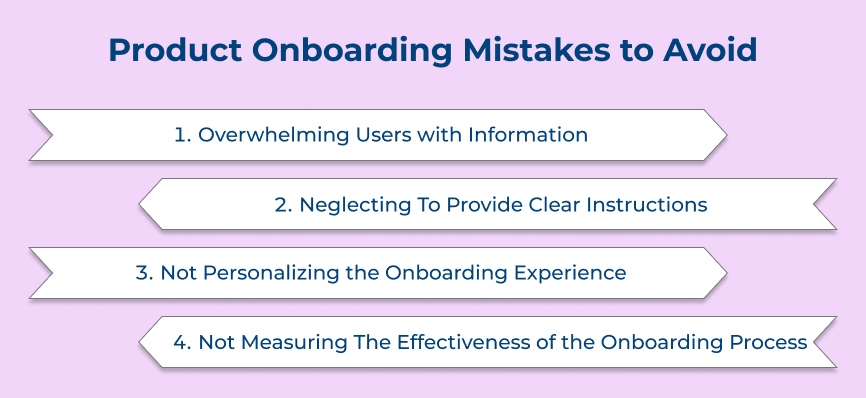
One of the most common mistakes companies make during product onboarding is overwhelming users with too much information all at once. It can lead to confusion and users may end up abandoning the product before fully understanding how to use it.
Break down the onboarding process into smaller, more manageable steps to avoid the problem. Focus on guiding users through the most important features of the product first. Gradually introduce more advanced features as users become more comfortable with the product.
Another common mistake companies make during product onboarding is neglecting to provide clear instructions on how to use the product. Without clear guidance, users may struggle to figure out how to navigate the product and may end up feeling lost.
Provide step-by-step instructions on how to use the product, preferably with visuals to make the process more engaging and easy to follow. Make sure to highlight key features and functionalities that will help users get the most out of the product.
Personalization is key to ensuring a positive onboarding experience for users. Many companies offer a generic onboarding process without considering user needs and preferences. 58% of customers say that they must receive a personalized experience when interacting with a brand/company.
Consider personalizing the onboarding experience based on the user’s demographic information, previous interactions and other relevant data. Tailor the onboarding process to meet the specific needs of each user. Provide relevant recommendations and suggestions to help users get the most out of the product.
One of the most common mistakes companies make during product onboarding is failing to measure the effectiveness of the onboarding process. Failure to track key metrics may hinder companies from improving and optimizing future user onboarding experiences.
Track key metrics such as user engagement, retention rates and conversion rates during the onboarding process. Use the data to identify any bottlenecks or usability issues that may be hindering user adoption. Make necessary adjustments to ensure a seamless onboarding experience for all users.
Check out the best practices for product onboarding that can turn first-time users into loyal advocates for your brand.
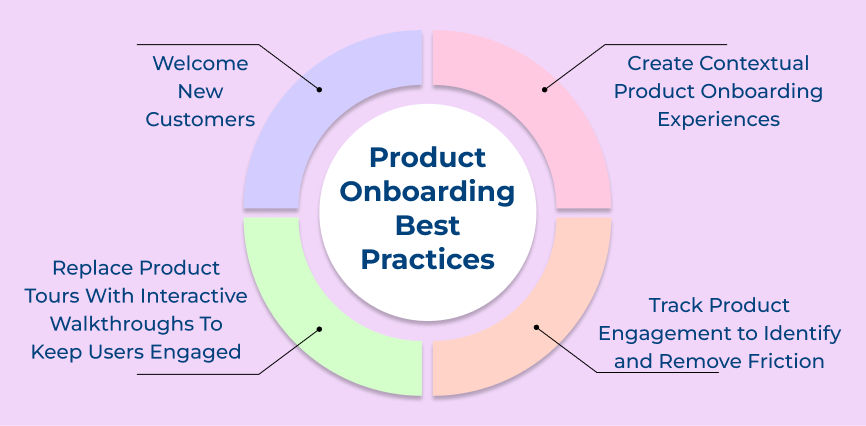
Once users have signed up for the product, it’s essential to make them feel welcome. Send a personalized welcome message thanking them for signing up and providing the information to help them start. Businesses can also consider adding a welcome video to guide users through the initial steps of using the product.
Tailor the onboarding experience to each user’s needs and preferences. Use data analytics to understand how users are interacting with the product. Provide personalized onboarding experiences based on their behavior. Let’s assume a user is struggling to navigate a specific feature. Businesses can offer in-app guidance or tips to help them overcome any obstacles.
Traditional product tours can be quite boring and may not effectively engage users. Instead, consider using interactive walkthroughs to guide users through the product features. Interactive walkthroughs allow users to participate in the onboarding process, making it more engaging. Interactive elements like buttons, animations and quizzes help users learn product usage effectively.
Tracking product engagement is essential in understanding how users interact with the product during the onboarding process. Analyzing user behavior can help identify any points of friction that may be causing users to drop off. It could be confusing user interfaces, unclear instructions or excessive steps in the onboarding process. Once businesses identify the pain points, they can take steps to remove them and make the onboarding process smoother for users.
Explore the examples of brands that have focused on product onboarding and how it has impacted their business:
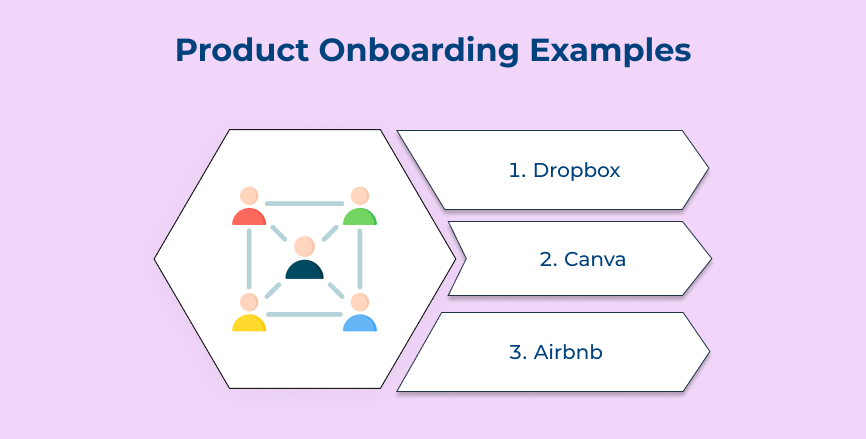
1. Dropbox
Dropbox is a cloud storage service that allows users to store and share files online. Dropbox implemented a step-by-step guide that shows new users how to upload and share files. It also shows how to collaborate with others.
Dropbox was able to increase user adoption rates and customer satisfaction, by simplifying the onboarding process. It resulted in higher customer retention and business growth.
2. Canva
Canva is a graphic design platform that enables users to create professional-looking designs with ease. Canva created a user-friendly interface with pre-designed templates and tools.
The platform made it easy for new users to get started with creating designs right away, without feeling overwhelmed. Canva saw a significant increase in user engagement and loyalty, driving their business success.
3. Airbnb
Airbnb is a popular online marketplace for booking accommodations around the world. Airbnb revamped its search and booking process to make it more user-friendly.
They also implemented a personalized recommendation engine that suggests tailored listings based on user preferences. The personalized approach led to a higher conversion rate and increased customer satisfaction, boosting Airbnb’s business growth.
Following are the top product onboarding tools that will help you craft an effective and memorable onboarding process, turning new users into lifelong advocates.
Veemo Guide is a powerful tool that helps businesses create effective product onboarding processes for their users. Businesses can easily create interactive and personalized onboarding experiences with Veemo Guide. It guides users through the product and helps them get the most out of it.
Key features:
Userpilot is a user onboarding and product adoption platform. It allows businesses to create personalized user experiences for customers. Businesses can use Userpilot to create interactive product tours, tooltips and checklists to guide users through products.
Features include user segmentation, analytics and A/B testing to optimize the onboarding process. Userpilot offers a flexible pricing structure based on the number of monthly active users, starting at $249 per month.
Appcues is another popular product onboarding tool that allows businesses to create personalized in-app experiences for their users. Businesses can create onboarding flows, NPS surveys and feature announcements with Appcues to engage their users.
Features include customizable templates, behavior-based targeting and analytics to track user engagement. Pricing for Appcues is based on the number of monthly active users, starting at $249 per month.
Product onboarding is a crucial step in ensuring the success of the product launch. Explaining product features can boost adoption, decrease churn and drive revenue growth.
Businesses can streamline user product usage through effective onboarding processes. It leads to higher customer satisfaction and loyalty. So don’t overlook the importance of onboarding in marketing strategy. Streamline the product launch today and set the business for success.

Product onboarding is important because it sets the tone for a customer’s overall experience with a product. It helps in product usage comprehension, boosting retention rates and customer satisfaction. A seamless onboarding process can prevent user frustration and reduce product abandonment rates. It is vital for driving product adoption and success.
Building a good onboarding process requires clear objectives, personalized training, feedback and a welcoming culture. Focusing on key elements ensures new employees feel supported and ready to succeed from day one. A well-executed onboarding process can lead to higher employee satisfaction and retention rates.
Product onboarding should include an easy-to-follow tutorial, highlighting key features and benefits. It must offer ongoing support through FAQs and customer service contacts. Personalized messages and progress tracking can help users feel engaged throughout the onboarding process.
The three stages of product onboarding are awareness, adoption and retention. The user learns about the product and its features in the awareness stage. The adoption stage involves the user actively using the product and exploring its capabilities. The retention stage focuses on keeping the user engaged and satisfied with the product to ensure long-term usage.
There are several key metrics businesses can use to measure the effectiveness of their onboarding process. It can involve user engagement, retention rates and completion rates of onboarding tutorials. Businesses can gather user feedback via surveys or forms to understand the onboarding experience and find areas for improvement.
Grow Customer Relationships and stronger team collaboration with our range of products across the Conversational Engagement Suite.
Omnichannel Customer Support & Help Desk Software
AI Enabled Business Messaging and Chatbot Software
Sales Engagement & CRM Software
Call Center Software & Virtual Phone System
Product Marketing & Experience Platform
Customer Experience & Feedback Management Software
 14 Invaluable Tools And Customer Service Resources
Scroll to top
14 Invaluable Tools And Customer Service Resources
Scroll to top