How to Manage the Sales to Customer Success Handoff: 6 Tips
Ensure a smooth transition! Craft a winning sales-to-customer success handoff for happy, empowered customers. Learn how to bridge the gap and set them on the path to achieving their goals.

Ensure a smooth transition! Craft a winning sales-to-customer success handoff for happy, empowered customers. Learn how to bridge the gap and set them on the path to achieving their goals.
Ever experienced a smooth transition from the sales team to the customer success team after making a purchase? Or did you feel like left in the dark once the sale was finalized? The handoff from sales to customer success is a crucial moment in the customer journey. It can make or break the overall experience.
The use of sales to customer success handoff templates is a common practice. Businesses need to have a seamless transition plan in place. It helps to ensure that customers receive the support and guidance they need after making a purchase.
A successful handoff from sales to customer success is vital for customer satisfaction and retention. The article discusses the handoff process’s importance and challenges for businesses. It also discusses best practices for ensuring a smooth and successful transition for customers.
The sales to CSM handoff refers to the critical transition process where a newly closed customer moves from the sales team to the customer success manager. The structured transfer ensures all vital account information and customer expectations flow seamlessly between teams. It sets the foundation for long-term customer relationships and prevents important details from falling through the cracks.
The handoff typically involves a formal meeting between the sales rep and CSM to review the customer’s goals and implementation needs. The sales team shares detailed notes about promises made and pricing negotiations. The CSM then takes ownership of onboarding and ongoing relationship management to drive product adoption.
Key objectives:
Let’s explore why the sales to customer success handoff is a cornerstone of sustained customer success to maximize customer satisfaction and loyalty.
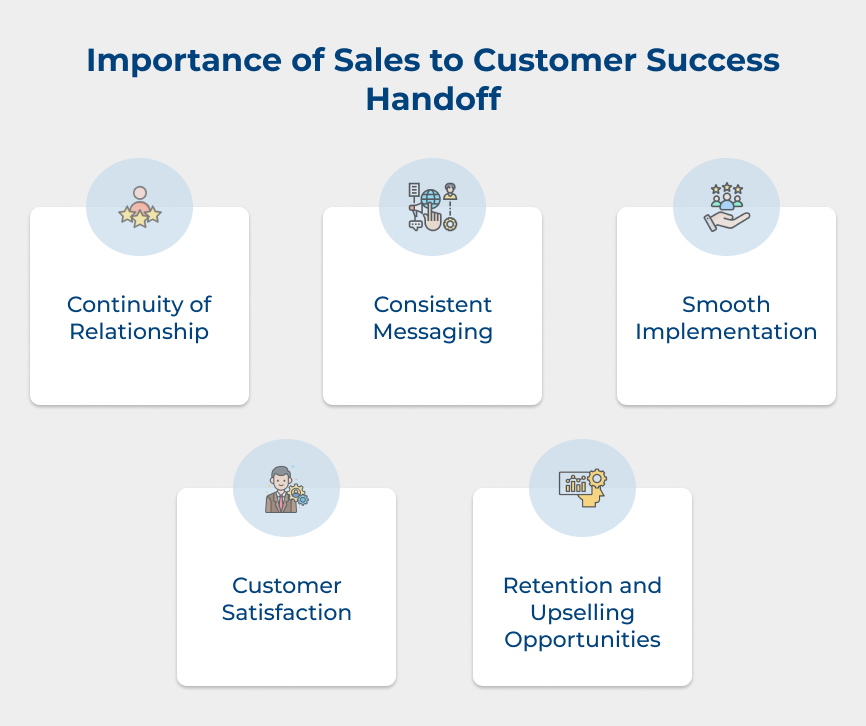
When the handoff from sales to CSMs is smooth, customers see it as a continuation, rather than a fresh start. The sense of continuity can help build trust and rapport with the customer, leading to better long-term relationships.
A seamless handoff ensures that the customer receives consistent messaging and information about their purchase. It helps avoid confusion that can arise when there are discrepancies between what the sales team promised and what the CSM offers.
When the transition from sales to customer success is seamless, the implementation of the product or service is typically smoother. The CSM can quickly pick up where the sales team left off, ensuring that the customer’s needs are met promptly.
A seamless handoff is key to ensuring that customers are satisfied with their purchase and the level of service they receive. When the customer feels like they are in good hands from the beginning, they are more likely to have a positive experience. It also increases the likelihood of them continuing to work with the company.
Companies can increase their chances of retaining customers and even upselling additional offerings by ensuring a smooth handoff from sales to CS. When customers feel well taken care of throughout their journey, they are more likely to stay loyal. They can also consider expanding their relationship with the company.
Check out the essential steps for creating an effective handoff that empowers your customer success team and delights your customers right from day one.

The goal of the presale stage is to identify potential customers, understand their needs and provide them with the information they need. It helps them to make an informed decision about purchasing the product or service.
During the pre-sale stage, the sales team conducts discovery calls, product demos and other activities. It helps to educate the customer about the features and benefits of the product. Let’s assume that a software company may offer a free trial period for potential customers to test out the product before making a purchase decision.
The goal is to finalize the sale by signing a contract that outlines the rules of the agreement between the customer and the company.
Once the customer has agreed to purchase the product or service, a contract is signed that outlines the pricing, delivery schedule and other details. Let’s consider that a SaaS company may have a subscription-based pricing model with specific terms for renewal and cancellation.
The goal of the internal handoff between the AE and CSM is to transfer all relevant details about the customer from the sales team to the customer success team.
The AE communicates key details about the customer including their goals, challenges and expectations, to the CSM. Let’s assume that the AE may provide a detailed handoff document that summarizes the customer’s needs and preferences.
The goal of introducing the CSM to the customer is to establish a personal connection and build trust with the customer. The CSM reaches out to the customer to introduce themselves, provide an overview of their role and explain how they will support the customer. The initial interaction sets the stage for a productive and collaborative relationship.
The goal of the onboarding process is to help the customer get started with using the product or service effectively and efficiently. The CSM guides the customer through the onboarding process, which may include training sessions and troubleshooting assistance. Let’s consider that a CS team may create customized onboarding plans for different customer segments to ensure a smooth transition to using the product.
Here are six tips to ensure a smooth and successful transition that sets your company and customers up for ongoing success.
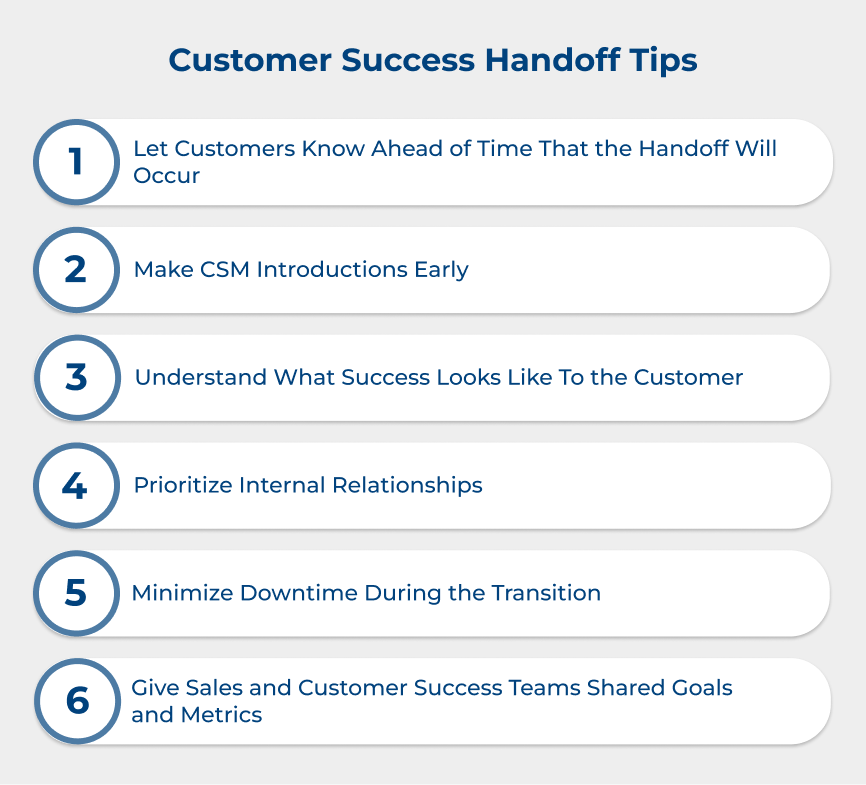
When transitioning a customer from the sales team to the CS team, it is crucial to let customers know ahead of time that the handoff will occur. The tip ensures a smooth transition and sets clear expectations for the customer moving forward. Informing customers in advance helps build trust and avoids confusion or frustration.
Let’s assume that a salesperson is closing a deal. They can mention to the customer that they will be passed on to the CS team for ongoing support. They can explain the benefits of the handoff, such as dedicated account management and specialized assistance.
How to implement:
Making customer success manager (CSM) introductions early in the sales process is crucial for a smooth transition from sales to customer success. It helps in establishing a personal connection between the customer and the CSM. It also ensures a seamless handoff between teams.
Let’s consider that a customer has already built a rapport with their CSM before the sale is even finalized. They will feel more comfortable in the product and the company. It will lead to a higher likelihood of customer satisfaction and retention.
How to implement:
When it comes to the handoff from sales to customer success, both teams must understand what success looks like to the customer. The tip is important because it ensures a smooth transition between the sales process and the ongoing customer relationship. It leads to customer satisfaction and loyalty.
Let’s assume that a customer’s definition of success is timely responses to their inquiries and proactive communication about updates. The customer success team needs to be aware of the expectations from the start. It will help them tailor their approach to meet the customer’s needs and maintain a positive relationship.
How to implement:
One of the key aspects of a successful handoff from sales to customer success is prioritizing internal relationships within the organization. Building strong connections between sales, customer success and other teams ensures a seamless customer transition. Without strong internal relationships, there may be miscommunication or gaps in the customer experience.
Let’s consider a customer who has just purchased a product or service from a company. If there is a lack of communication between sales and CS, the customer may feel frustrated. It leads to potential issues with retention and satisfaction.
How to implement:
When transitioning a customer from the sales team to the CS team, it is crucial to minimize downtime to ensure a smooth handoff. Minimizing downtime during the transition is important. It helps to maintain customer satisfaction and ensures that the customer receives continuous support.

Let’s assume that there is a significant delay in the handoff process. The customer may feel neglected or overlooked. It can lead to a decrease in satisfaction and potentially cause them to seek services elsewhere.
How to implement:
The handoff from sales to customer success is a critical moment in the customer journey and giving both teams shared goals can improve the transition. Aligning the two departments can ensure a seamless experience for the customer. It can also increase the likelihood of long-term success.
Sales and customer success teams are always working towards the same end goal – the success of the customer. Let’s consider that a shared goal for both teams could be to increase customer retention rates by a certain percentage within a specific timeframe. The goal requires both sales and customer success teams to work together. It ensures that customers are not only onboarded successfully but also supported throughout their journey.
How to implement:
Explore the crucial mistakes to avoid during a sales-to-CS handoff, ensuring your customers feel valued and supported throughout their journey.
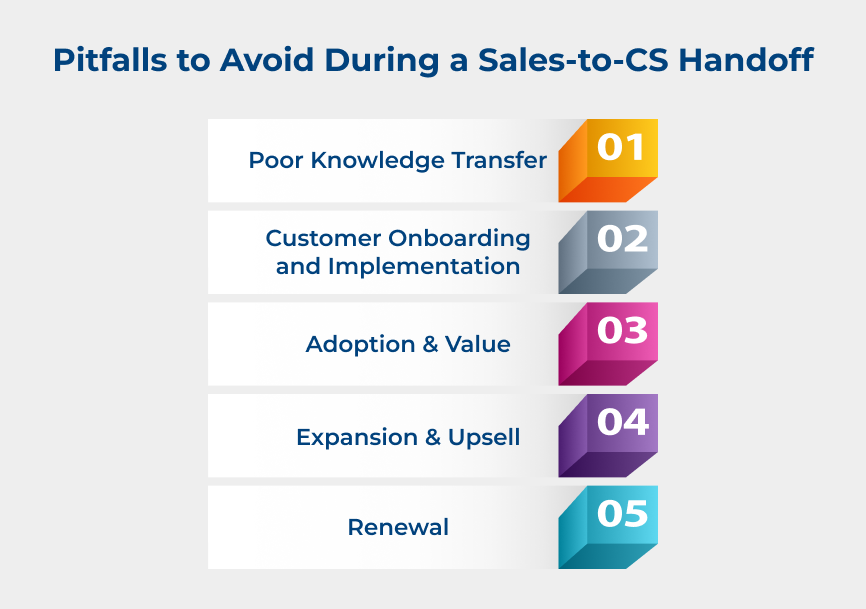
One of the biggest challenges during a sales-to-customer success handoff is the lack of proper knowledge transfer. An average employee spends 1.8 hours every day searching for and gathering company information. It is essential for the sales team to effectively communicate all information about the customer’s needs and expectations to the CS team.
Another common pitfall is ineffective customer onboarding and implementation processes. Inadequate training can obstruct customers from realizing product benefits if not tailored to their goals.
One key indicator of success in customer success is the level of adoption and perceived value by the customer. Silence from the customer may not always be a positive sign. It could indicate that they are not fully utilizing the product or service as intended. CS teams must proactively engage with customers to ensure they are achieving their desired outcomes.
Weak value realization post-implementation can also hinder expansion opportunities and upsell. Without visible ROI, customers are less inclined to make repeat purchases. CS teams should focus on demonstrating the value of the offering. They should also help customers achieve their business objectives.
Renewal rates can be negatively impacted if customers do not see a clear return on their investment. CS teams must work closely with customers to track the business impact of the offering. They should provide ongoing support to ensure continued success. Customer success teams can increase customer satisfaction and retention rates by demonstrating tangible ROI.
Ensuring a seamless handoff from sales to success is crucial for maximizing customer satisfaction and retention. Establishing clear communication channels, setting expectations and providing the necessary training can facilitate a smooth transition.
Promoting a customer-centered approach between sales and success teams can help build stronger relationships with clients. Investing time and effort into streamlining the handoff process will lead to happier customers.

A Sales-to-Customer-Success handoff document is a detailed guide outlining important information about a customer’s journey from the sales team to the CS team. It includes details about the customer’s needs, preferences and previous interactions with the company. The document ensures a smooth transition between departments. It also helps the CS team provide personalized support and guidance.
Perfecting the sales handoff process is crucial for ensuring a seamless transition from sales to marketing teams. A smooth handoff increases satisfaction, reduces the risk of miscommunication and improves efficiency within the organization. Having a well-defined handoff process can ensure that leads are properly nurtured. It leads to higher conversion rates and increased revenue.
Account handoff from sales to customer success is critical because it ensures a smooth transition for the customer. It allows for a seamless continuation of the relationship, ensuring that the customer’s needs are understood and met. The handoff also helps maintain customer satisfaction and loyalty, leading to long-term success for the business.
A smooth sales-to-customer success handoff is essential for ensuring a positive customer experience. It allows for a seamless transition between teams. It ensures that the customer’s needs are fully understood and met. Effective communication between sales and customer success teams is crucial for retaining customers.
The sales to customer success handoff should include important customer details, contract terms, challenges and any specific promises made during the process. It should outline the customer’s goals, needs and preferences to ensure a smooth transition. Effective communication between sales and customer success teams is crucial for customer satisfaction.
Grow Customer Relationships and stronger team collaboration with our range of products across the Conversational Engagement Suite.
Omnichannel Customer Support & Help Desk Software
AI Enabled Business Messaging and Chatbot Software
Sales Engagement & CRM Software
Call Center Software & Virtual Phone System
Product Marketing & Experience Platform
Customer Experience & Feedback Management Software

 How to Manage Multiple Email Accounts: 9 Effective Tips
Scroll to top
How to Manage Multiple Email Accounts: 9 Effective Tips
Scroll to top