8 Effective Ways to Align Sales and Customer Success
Learn how to align sales and customer success, ensuring smoother handoffs and long-term retention. Explore ways to improve collaboration and drive sustainable growth across both teams.

Learn how to align sales and customer success, ensuring smoother handoffs and long-term retention. Explore ways to improve collaboration and drive sustainable growth across both teams.
Most businesses are dealing with a costly problem of their sales and customer success team working in silos. The result shows up fast in the form of awkward handoffs. Promises that don’t land, customers who feel excited during the deal and are forgotten right after.
When teams don’t talk to each other, customers hear different stories at different stages. Sales sets expectations that customer success never saw coming. Success teams step in without context and spend weeks undoing confusion. Trust drops, churn creeps in and growth stalls if businesses don’t align sales and customer success teams.
Companies see an average of 19% faster revenue growth and 15% profitability when their teams are aligned. Strong alignment changes the entire experience and journey of the customers. How? Let’s find out!
Sales and customer success alignment means both teams support the same goal of helping customers succeed, not just closing a deal or fixing issues later. Sales brings in new customers, while customer success helps them achieve results and stay long-term. When these teams work in sync, customers get a smoother experience, from first contact through growth and renewal.
The alignment depends on clear communication and shared responsibilities. Sales shares what the customer expects and why they signed on. Customer success then tracks how things are going and shares that feedback to help sales improve future outreach.
Key objectives:
The following are the importance of sales and customer success alignment. Let’s check them out in more detail.
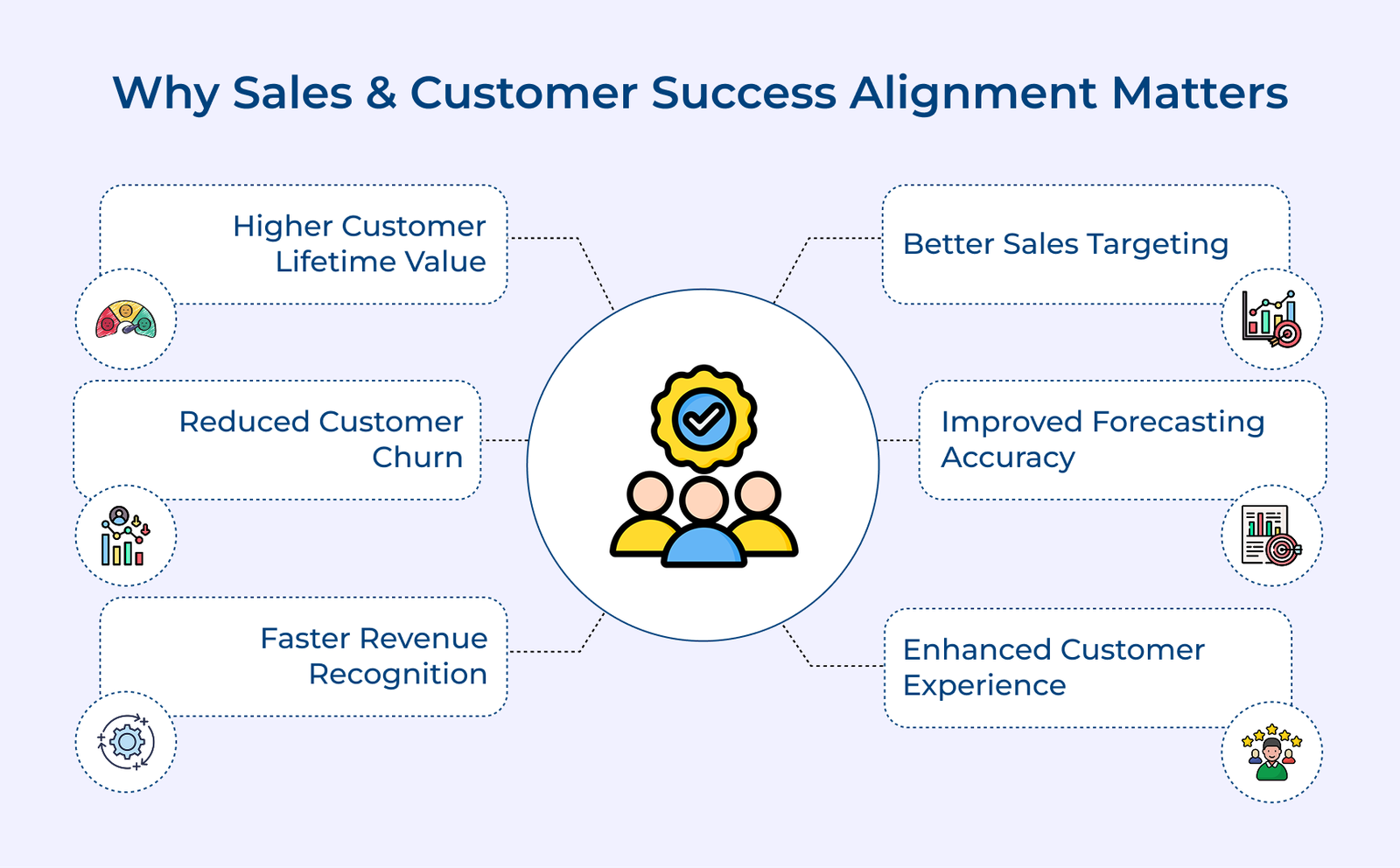
Higher Customer Lifetime Value
Aligned teams focus on the complete customer journey rather than just closing deals. Sales brings in genuinely good customer fits while customer success nurtures them toward expansion. The coordination leads to customers who stay longer and spend more over time.
Reduced Customer Churn
If Sales is honest about what to expect and customer success follows through, customers don’t feel let down. The simple consistency builds trust and keeps them from looking elsewhere.
Faster Revenue Recognition
When success knows exactly what was promised during the sale, they can guide new customers to value faster. The early momentum often leads to quicker renewals, upgrades or referrals.
Better Sales Targeting
Successful teams know which customers thrive and which struggle. Sharing the insights helps sales avoid poor-fit leads and go after better ones. It means less wasted time and more meaningful conversations.
Improved Forecasting Accuracy
Sales knows who’s likely to renew. Success knows who might upgrade. Put the pieces together, and your revenue projections become far more reliable, making planning easier for everyone.
Enhanced Customer Experience
Customers receive consistent messaging and support throughout their entire journey when teams coordinate their efforts. No more contradictory information or dropped context during handoffs. The seamless experience builds trust and positions your company as a reliable long-term partner.
Below are the effective ways to align sales and customer success teams, driving your business to new heights of success.
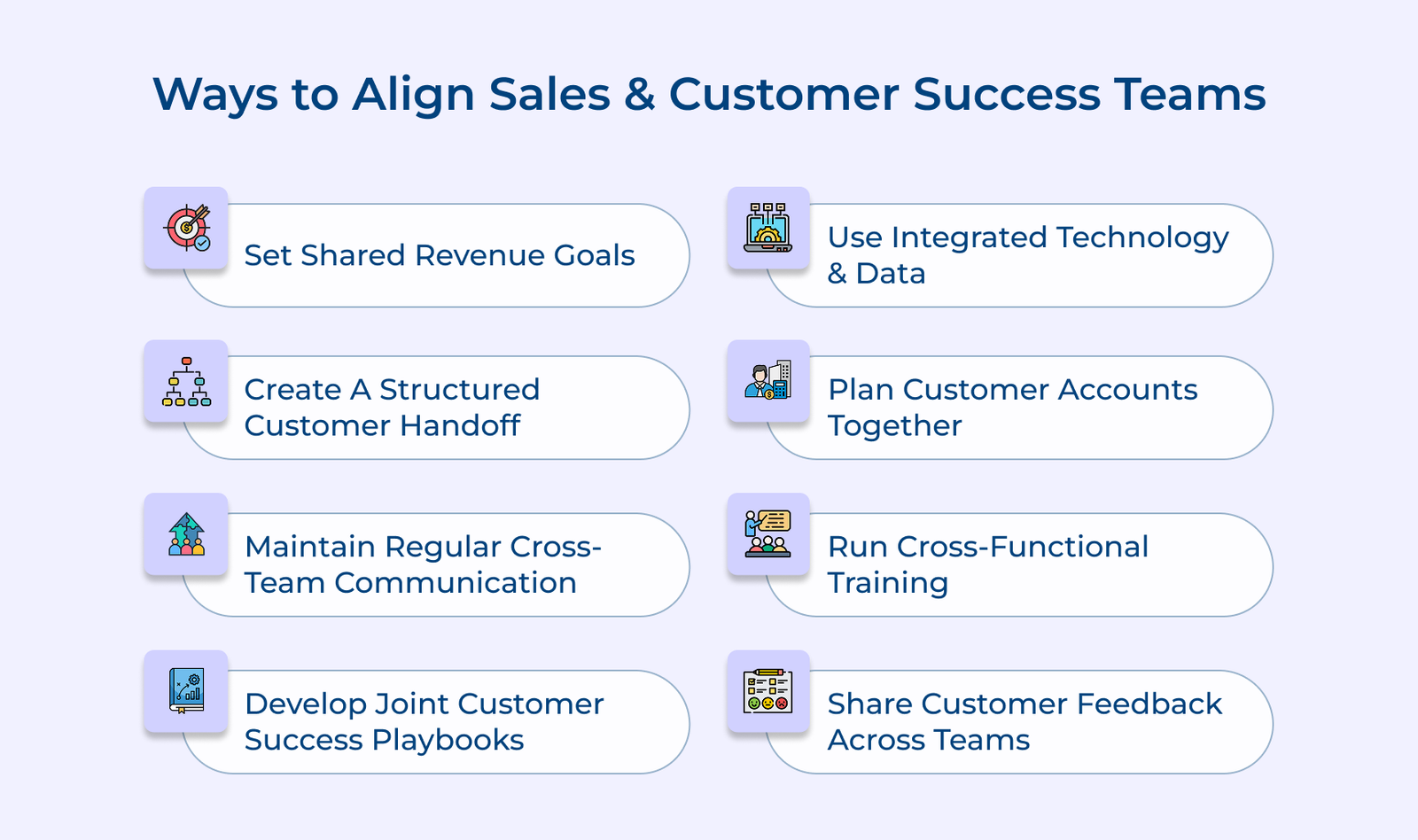
When Sales and Customer Success operate separately, their goals often clash. Sales focuses on closing deals. Success focuses on keeping customers happy. Without a shared purpose, it turns into a tug-of-war that hurts the customer experience and slows growth.
Why does the transformation matter so much? When teams chase the same revenue goals, they naturally start working together instead of against each other. Suddenly, sales cares about customer fit and success managers actively support expansion conversations.
Customer handoffs often feel like a broken game of telephone where key details get dropped, confusion sets in and teams waste time piecing things back together. It results in frustrated customers and delayed value.
Key questions:
The questions prevent the most common handoff failures by ensuring nothing important gets overlooked. They create accountability for sales teams to document properly while giving customer success the context needed for immediate impact.
Create mandatory handoff meetings where sales reps present each new customer like they’re introducing a friend. Use standardized templates that capture not just what was sold but why it mattered to that specific customer.
Sporadic communication between sales and customer success creates missed opportunities for collaborative growth. Regular, structured communication keeps both sides in sync and focused on what matters most, helping the customer succeed.
Weekly alignment meetings between department leaders create the rhythm needed for consistent collaboration. The sessions address immediate customer issues and strategic planning simultaneously while preventing small problems from becoming major disconnects.
Key criteria:
They transform individual experiences into shared learning opportunities where both teams understand what works and what doesn’t. Everyone learns from real customer situations rather than theoretical scenarios. Quarterly business reviews with shared customer insights serve as the capstone of the regular communication cadence.
When sales and success teams use different playbooks, customers get mixed messages and trust breaks down. A shared approach creates consistency, accountability and a smoother experience from day one.
Create Unified Onboarding Sequences Referencing Sales Promises
Customers shouldn’t feel like they’re starting over after the deal closes. Build onboarding steps that clearly connect to the promises made during sales conversations so expectations stay aligned and progress feels familiar.
Build Shared Troubleshooting Guides for Common Customer Challenges
When problems arise, both teams should respond with the same understanding. Build simple guides that explain common issues, what sales discussed, and how customer success should handle them so customers aren’t left confused or frustrated.
Design Coordinated Expansion and Upselling Conversation Frameworks
The customer success team is the one that often spots growth opportunities first, but sales are best at closing them. Agree on when and how to loop each other in, so upsells feel helpful, not forced.
When sales and customer success teams use disconnected tools, critical information gets lost. Important details live in separate systems and both sides end up duplicating work, missing cues, or confusing customers.
Key tools:
Account planning breaks down when sales and customer success work in silos, leading to clashing priorities and missed opportunities. When both teams plan together, they align on what matters most to the customer and coordinate their efforts for stronger results.
The strategy works by bringing both teams together for regular strategic sessions focused on high-value accounts. Sales bring insight into market trends and competition. Customer success adds real-time feedback from ongoing interactions. Together, they create a clearer picture of how to help the customer grow and how to grow with them.
Best practices:
Cross-functional training helps sales and customer success teams understand each other’s work. When teams don’t know how the other operates, coordination breaks down and customers notice.
Key programs:
When sales and customer success collect feedback separately, they miss the full story. Customers may share different opinions with each team, leading to confusion, missed signals and incomplete understanding.
A shared feedback system fixes the issue. It ensures both teams hear the same messages, work from the same insights and respond in sync. Joint interviews and surveys also prevent mixed signals, while showing customers that your company listens as one, not in fragments.
Key questions:
The real impact comes from analyzing patterns across responses and implementing changes that both teams can execute together. Hold monthly feedback reviews where sales and customer success create joint action plans to improve the overall customer experience.
The following are the practical strategies that help you align customer success and sales in your daily operations with immediate impact
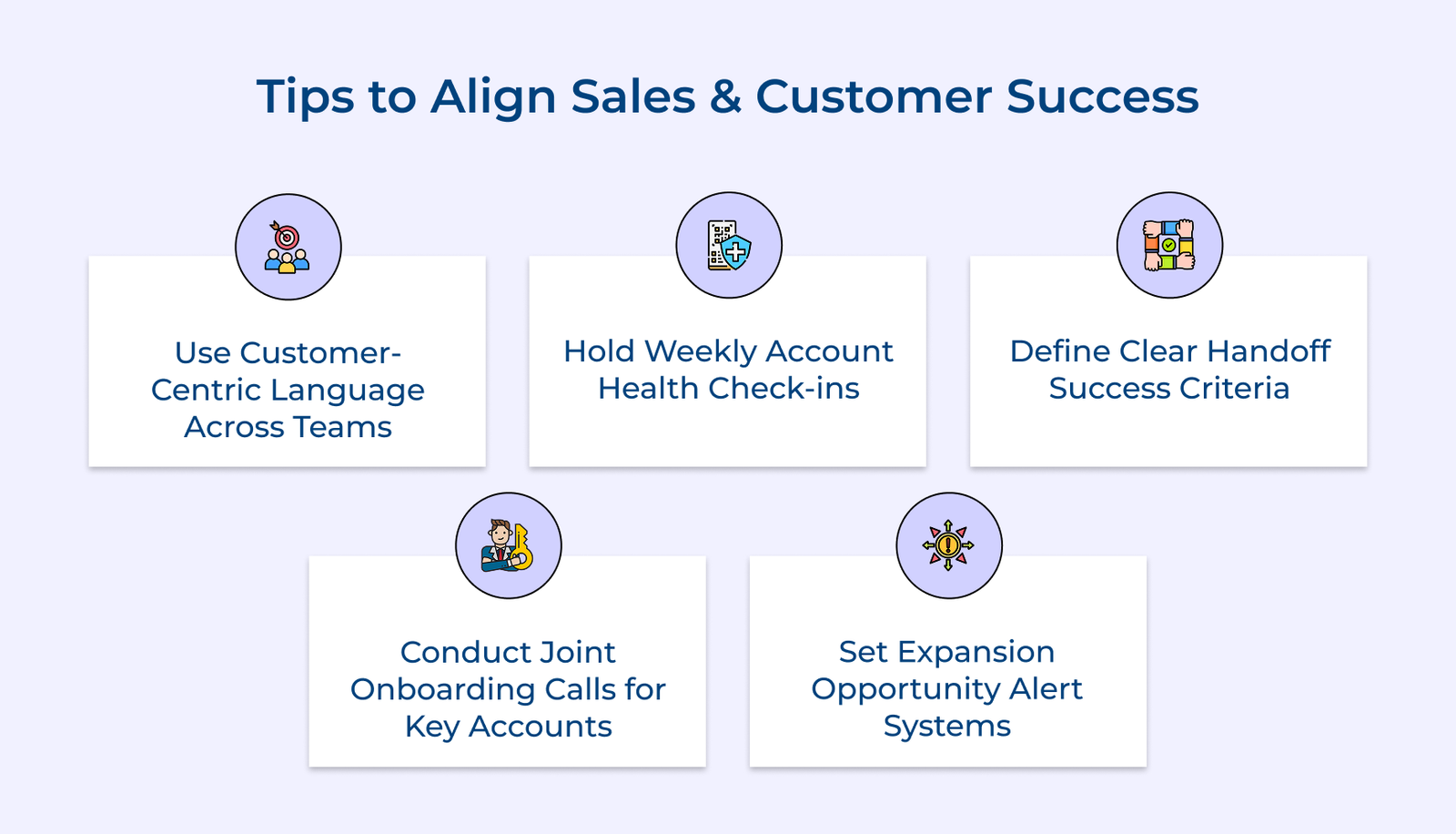
Start with Customer-centric Language Across Both Teams
Help both teams shift from internal metrics to customer outcomes. When sales talks about helping customers hit their goals and customer success focuses on delivering real value, alignment happens naturally.
Create Weekly Account Health Check-ins Between Teams
Set up short weekly check-ins where customer success shares account health updates and sales adds context or changes on the customer’s side. It keeps both teams aligned without overloading calendars.
Establish Clear Handoff Success Criteria Before Implementation
Define measurable handoff criteria such as documented use cases, stakeholder mapping and success metrics alignment. The quality checklist prevents customers from falling through cracks while ensuring customer success receives everything needed for immediate impact.
Implement Joint Customer Onboarding Calls for Key Accounts
Invite the sales representatives to initial customer success onboarding calls for high-value accounts to provide continuity and reinforce relationships. It helps customers feel supported while giving customer success immediate access to the sales context that accelerates time-to-value.
Design Expansion Opportunity Alert Systems Between Departments
Set up an easy way for customer success to alert sales about potential expansion based on usage or customer changes. It’s a small step that leads to better timing, stronger relationships and more consistent growth.
Below are the common obstacles that help you address the root causes of your customer success and sales team working in silos. Let’s check them out in detail.
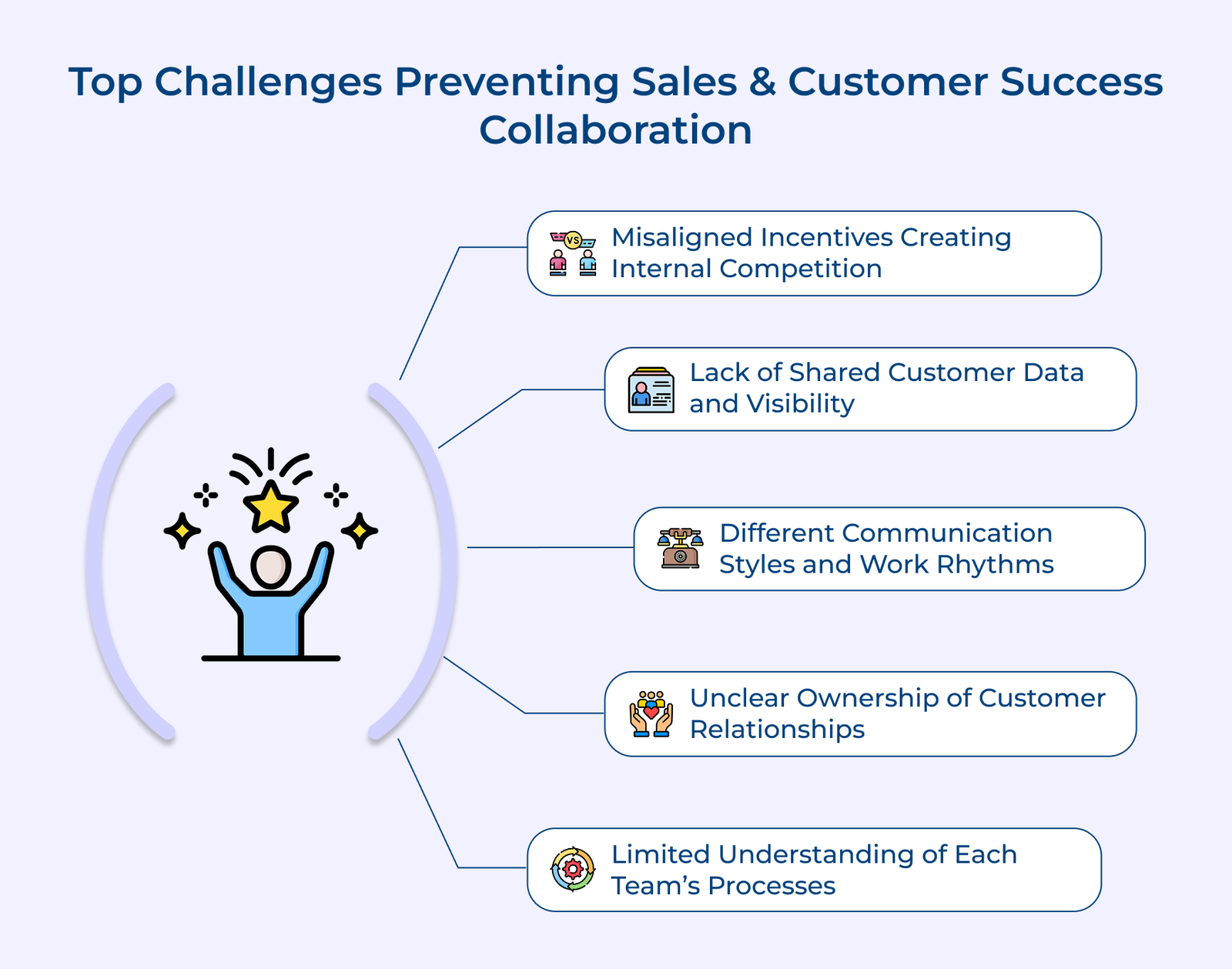
Sales gets paid for landing new customers. Customer success is judged by how long those customers stick around. Without shared goals, sales may rush to close deals that aren’t the best fit, while the success team is left to clean up the mess.
Teams work with separate tools that don’t communicate effectively, creating information silos. Sales uses CRM systems for pipeline management while customer success tracks health metrics in different platforms, preventing a unified customer understanding.
Sales run fast, chasing short-term wins. Customer Success moves more slowly, building long-term trust. The different rhythms can lead to miscommunication and poor handoffs when teams don’t pause to get on the same page.
Teams struggle with defining who owns which customer relationship aspects, especially during renewals, expansions or problem resolution. The ambiguity leads to duplicated efforts, conflicting communications and missed opportunities when both assume others handle interactions.
Sales might not see how complex onboarding is. Customer success may not realize what it takes to win a deal. Without that mutual understanding, it’s easy to blame each other instead of working together.
Implementation steps:
Check out the examples that show how major companies have created seamless collaboration between their sales and customer success teams.
Amazon Web Services (AWS)
AWS integrates sales and customer success through shared account ownership, where technical account managers collaborate with sales teams. It provides consistent technical guidance from first contact through ongoing support and growth.
The alignment enables AWS to maintain high customer retention while growing account values through coordinated expansion. Their unified approach accelerates customer cloud adoption success, naturally leading to increased platform usage and stronger long-term loyalty.
Nike Business Solutions
Nike’s B2B teams share goals tied to partner success. Sales and customer success teams collaborate to create tailored merchandising plans, helping retail partners improve performance. The joint effort boosts product sales and strengthens long-term relationships with retailers.
Puma Corporate Partnerships
Puma brings both teams together to plan and manage strategic partnerships with sports organizations. They jointly deliver on commitments and spot new ways to grow each partnership. The coordination ensures partners get a consistent experience while helping Puma grow its brand and revenue.
Aligning sales and customer success turns separate teams into one customer-focused unit. When you ensure they have shared goals, open communication and coordinated efforts, it creates smoother handoffs along with clearer expectations. Customers feel supported from the first conversation through long-term use, which makes growth feel natural rather than forced.
This alignment shows up in real outcomes. Customer value increases, churn drops and growth becomes more predictable. Sales brings customers in with the right promises, customer success delivers on them and the relationship stays strong well beyond the initial deal.

Start by tying both teams to long-term customer value. Give them shared goals, not just new deals for sales or renewals for success. Hold regular check-ins like weekly handoff meetings and monthly planning sessions. Use tools that give both teams access to the same customer details, so they’re not working with half the story.
Build a shared playbook that connects sales promises to the onboarding processes. Use clear handoff templates that pass along important customer information. Let team members shadow each other to see how their work fits together. When you gather customer feedback, do it as one team to catch gaps and spot patterns early.
Sales provides Customer Success with detailed customer context including pain points, use cases and stakeholder relationships from discovery conversations. Customer success identifies expansion opportunities and provides sales with customer health insights, usage patterns and renewal likelihood data. Together they create seamless customer experiences where promises made during sales get delivered through success management.
Expect small wins like better handoffs and smoother communication within two to three months. Bigger changes like higher renewals and longer customer relationships often take six to twelve months. If you’re aiming for full alignment where teams collaborate naturally, give it at least a year. It’s a process, but it’s worth it.
Grow Customer Relationships and stronger team collaboration with our range of products across the Conversational Engagement Suite.
Omnichannel Customer Support & Help Desk Software
AI Enabled Business Messaging and Chatbot Software
Sales Engagement & CRM Software
Call Center Software & Virtual Phone System
Product Marketing & Experience Platform
Customer Experience & Feedback Management Software
 Scroll to top