Enterprise Customer Service Software: Buyer’s Guide (2026)
Scale conversations, build workflows and improve support operations with Veemo’s enterprise customer service software solution.
No credit card required. Easy setup

Trusted By Leading Brands


Scale conversations, build workflows and improve support operations with Veemo’s enterprise customer service software solution.
No credit card required. Easy setup
Scale support operations with advanced automation, personalized interactions and real-time insights. Make sure your enterprise meets the demands of a dynamic customer base.

Superior customer service enhances the company’s credibility and attracts new customers. Providing prompt support allows enterprises to differentiate themselves and create a positive perception in customers’ minds.
Promptly addressing customer concerns and resolving issues effectively reduces customer churn. When customers feel that their concerns are acknowledged and resolved, they are more likely to continue doing business with the enterprise.
Interacting with customers during the customer service process provides valuable insights into their preferences and pain points. Actively listening to customers and addressing their needs allows businesses to identify patterns in customer behavior.
Efficient customer service operations streamline processes by resolving inquiries and issues more quickly. Leverage various communication channels to provide effective support to customers.

The gap between businesses’ commitment and customers’ demand grows wider as expectations continue to rise. It led to increased customer churn, negative reviews and a tarnished brand that takes years to repair. An enterprise customer service software comes into play.
Explore the process of selecting the best enterprise customer support software for a large organization. Look for features and benefits to turn customer service from a cost centre to a strategic asset that drives loyalty.
Enterprise customer service software lets large businesses manage customer support at scale. It combines ticketing, knowledge base, analytics and automation into one platform to deliver personalized service while reducing operational costs across complex environments.
Key objectives:
Selecting the right enterprise customer service solution requires careful evaluation. Here are six key factors to consider before committing to a platform.
Map your organization’s specific support needs such as ticket volume, team structure and department workflows. A solution designed for mid-sized companies often falls short for enterprises managing complex needs that require multi-region customer service operations at scale.
Enterprises operating across regions need to confirm where customer data is stored. Industries such as finance and healthcare require strict requirements, making this a critical factor instead of an afterthought during evaluation.
Consider how vendors perform during traffic spikes, such as product launches or seasonal surges. A system that slows down under pressure can severely damage customer trust at their worst moment.
Consider the adaptability rate to a new system without affecting ongoing support operations. A steep learning curve slows adoption, so factor in onboarding time and internal training require upfront.
Look beyond upfront price to evaluate implementation costs, training time and pricing as your organization scales. An affordable plan can quickly become expensive when add-ons and growing usage costs are included as your support volume increase.
Research the vendor’s track record with enterprise clients and evaluate their own support responsiveness and uptime. A dependable vendor reduces onboarding friction and make sure issues get resolved quickly.
Choosing the right software can make all the difference in the level of customer satisfaction a business achieves. Here we will review some of the best customer service software options available.
Best enterprise customer service software for team collaboration
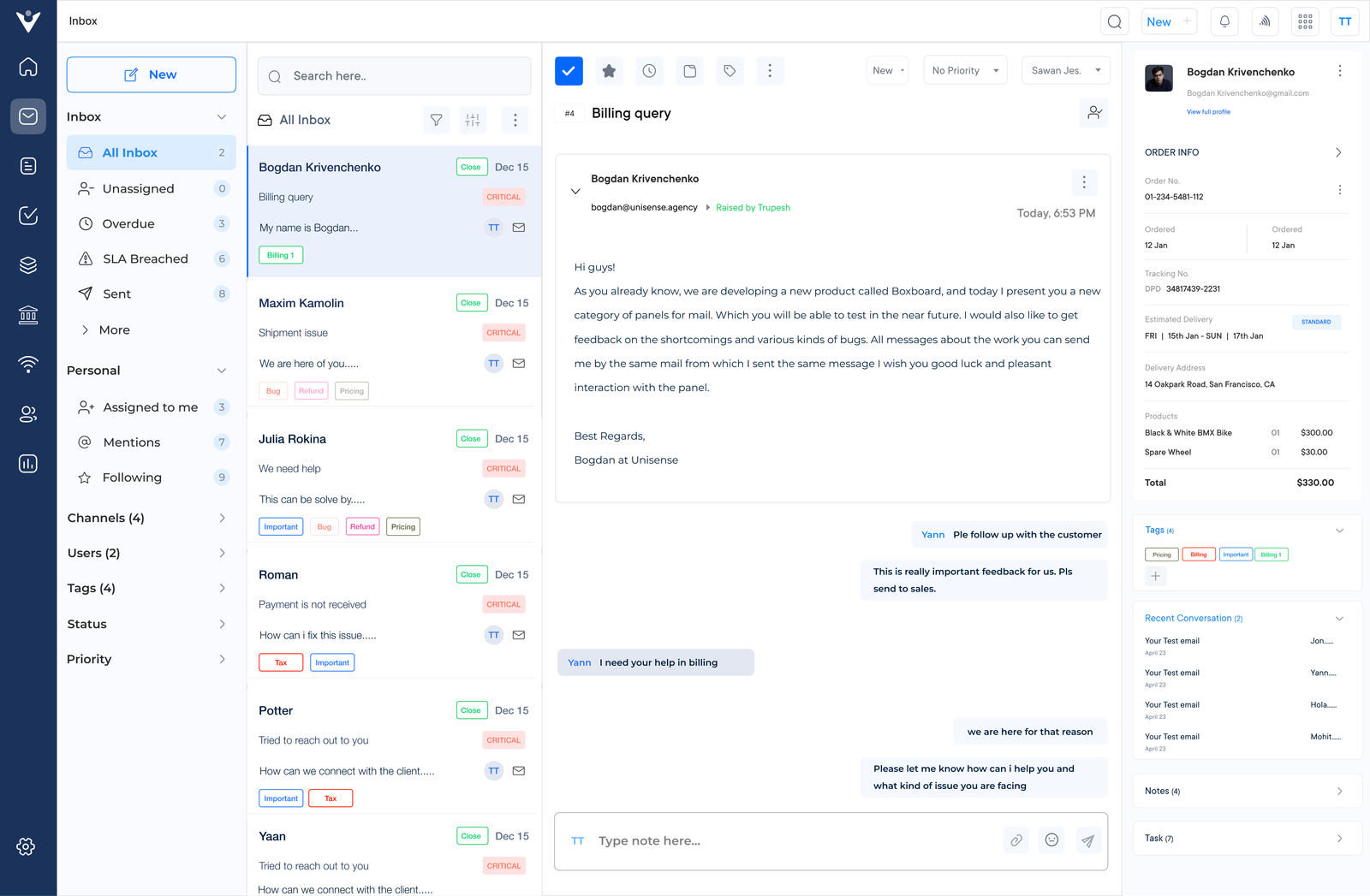
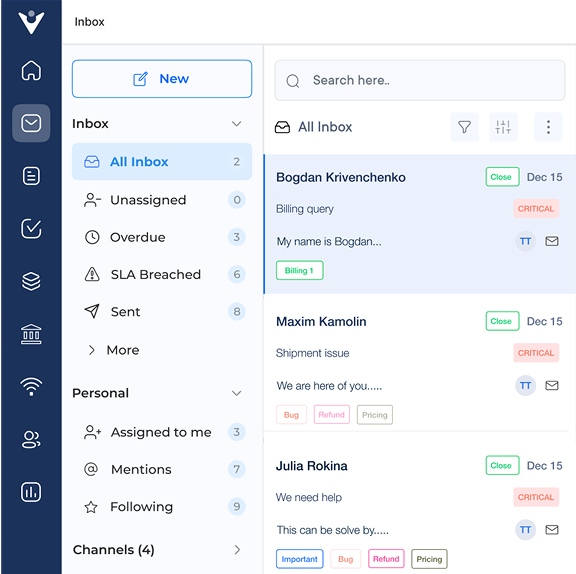
Veemo Support is the best customer service and help desk software built specifically for enterprise businesses, combining ticketing, automation and AI-driven insights into one unified place. It helps large organizations deliver consistent service across every customer touchpoint.
Veemo Support streamlines tickets across omnichannel and provides automated routing to help enterprises manage high-volume support operations. This unified approach reduces response times and ensures customer satisfaction as ticket volume scales.
Key Features:
Pricing: Veemo offers plans ranging between $29 and $129. Businesses can avail their 14-day free trial offer by signing up now!
Top enterprise customer service solution for omnichannel engagement
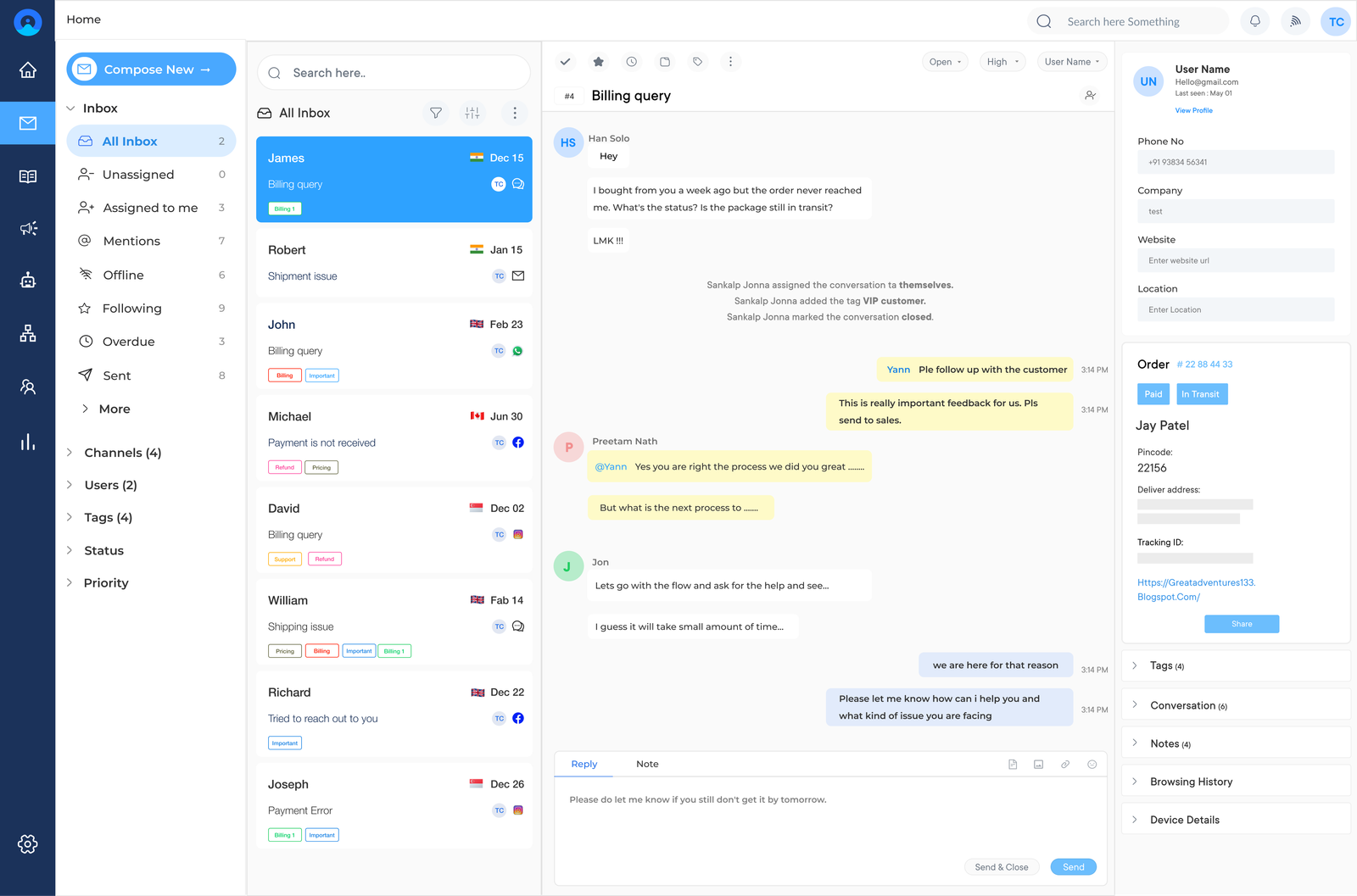
Omni24 is an AI-powered engagement platform unifying marketing, sales and support suite in place. It centralizes customer data for a complete journey view while AI-driven automation powers every workflow seamlessly. The team can collaborate faster than scattered, disconnected tools.
Omni24’s support suite includes an AI-powered chatbot and automation to deliver fast, consistent service across every channel. This keeps all customer context in one place across every marketing or sales communication, leading to seamless support experiences.
Key Features:
Pricing: The pricing starts from $29/month and can go up to $149/month, depending on various factors. Check out their pricing for more details.
HubSpot’s Service Hub is a comprehensive customer service platform designed for enterprises. It seamlessly integrates with HubSpot’s CRM, marketing and sales tools providing a unified solution for managing customer relationships.
HubSpot’s Service Hub is ideal for large businesses looking to streamline their support operations and enhance customer satisfaction. It’s particularly effective for companies with complex support needs, multiple teams and a desire to leverage data for continuous improvement. Exploring top help Scout alternatives that better fit your business needs.
Zendesk stands out as one of the best enterprise customer service software solutions. It offers a comprehensive platform that caters to the complex needs of large organizations. The cloud-based system provides a unified workspace for managing customer interactions across multiple channels including email, phone and self-service portals.
Zendesk offers a ticketing system that efficiently organizes and tracks customer inquiries. It integrates advanced features like AI-powered automation, customizable workflows and robust reporting tools. The platform’s flexibility allows enterprises to tailor the software to their specific requirements. Choosing the right Zendesk Support alternatives.
Gladly is a comprehensive customer service platform designed for enterprise-level businesses seeking to deliver personalized and efficient support at scale. Gladly organizes customer interactions around the customer rather than tickets or case numbers. The people-centric approach allows agents to view a customer’s entire history across all channels in a single conversation thread.
The platform integrates various communication channels including email, phone, chat, SMS and social media into a unified interface. Gladly’s AI-powered routing and automation capabilities ensure that customer inquiries are directed to the most appropriate agent.
The key features of enterprise customer service software enable businesses to deliver exceptional customer service and gain valuable insights into customer behavior.

Enterprise customer support software must offer seamless integration across multiple communication channels. It includes email, phone, live chat, social media and messaging apps. The platform should provide a unified interface for agents to manage all interactions.
Advanced AI capabilities are crucial for handling high volumes of inquiries efficiently. Chatbots can provide instant responses to common questions, freeing up human agents for more complex issues. These AI assistants should be able to understand natural language and seamlessly hand off to human agents when necessary.
A robust knowledge base is essential for both customers and agents. The software should include an easily searchable repository of articles, FAQs and solutions. The system should be dynamic, allowing for easy updates and the ability to suggest relevant content based on the context of customer inquiries.
Enterprise customer support software should offer powerful workflow tools to automate routine tasks and route inquiries appropriately. It includes the ability to set up custom rules, triggers and escalation procedures to ensure efficient handling of customer issues.
Comprehensive analytics capabilities are vital for continuous improvement. The software should provide detailed insights into key metrics such as response times, resolution rates and customer satisfaction scores. It should also offer customizable dashboards and the ability to generate reports for different stakeholders.
Empowering customers to find solutions on their own is increasingly important. Enterprise customer service software should include customizable self-service portals with features like FAQs and guided troubleshooting tools. The portals should be easily accessible and optimized for all devices.
Seamless integration with customer relationship management (CRM) systems is crucial for providing context-aware support. Agents should have instant access to customer history, purchase information and previous interactions. Brands can personalize their responses and provide more effective solutions.
The software must be highly scalable and secure as enterprises deal with large volumes of sensitive customer data. It should be able to handle sudden spikes in customer inquiries. The platform must comply with industry standards and offer features like audit trails.
Explore the key steps to build a robust and effective enterprise customer support strategy that ensures long-term success.

The first step in building an effective customer service strategy is to gain a deep understanding of customers’ needs. Conduct thorough market research, collect feedback from existing customers and analyze customer behavior. It helps the brands identify the pain points and expectations of their customers.
Key actions to strengthen customer understanding:
Once the brand has a comprehensive understanding of its customers, it is crucial to define clear objectives for customer service strategy. The objectives should be specific, measurable, attainable, relevant and time-bound (SMART). An example here can be of an objective to reduce response time by 20% within the next six months.
Consider implementing the right enterprise customer service tools to manage, track customer interactions and streamline processes. Leverage advanced analytics tools to gain insights into customer behaviour and preferences. The data-driven approach will enable the brand to personalize customer interactions and tailor its services to meet their needs.
One of the key factors in building an effective customer service strategy is having a well-trained and empowered customer service team. Provide comprehensive training to the team members on effective communication, problem-solving and conflict resolution skills. Encourage a customer-centric mindset and empower them to make autonomous decisions that benefit the customers.
Practical ways to strengthen team training efforts:
Building an effective customer service strategy goes beyond training the team. It requires establishing a customer-centric culture throughout the entire organization. It ensures that every employee understands the importance of customer service and their role in delivering exceptional experiences.
Customers today expect seamless and convenient support across multiple channels. It is crucial to implement a multichannel support system to meet these expectations. It offers support through various channels such as phone, email, chat, social media and self-service portals.
Building an effective customer service strategy is an ongoing process that requires continuous measurement and improvement. Establish key performance indicators (KPIs) aligned with objectives such as average response time or customer satisfaction score. Regularly monitor the metrics and use the data to identify areas of improvement.
Measure and drive continuous improvement:
Enterprise customer support goes beyond the basic level of support, giving businesses the advantage of creating meaningful user connections.

1. Improved brand reputation and credibility
Delivering superior customer service helps build a positive brand reputation. Satisfied customers share their positive experiences with others which enhances the company’s credibility and attracts new customers. A strong brand reputation also establishes trust and sets the company apart from its competitors.
2. Higher customer retention rates
Enterprise customer service plays a crucial role in reducing customer churn. Businesses can retain their existing customers by promptly addressing customer concerns. Retaining customers is more cost-effective than acquiring new ones, making it essential for long-term success.
3. Enhanced customer insights and feedback
Interacting with customers during the customer service process provides valuable insights into their preferences and expectations. Enterprises can make informed business decisions by tailoring their strategies. The brand can meet customer needs more effectively by actively listening to customers and gathering feedback.
4. Increased efficiency and productivity
Efficient customer service operations streamline processes. It enables businesses to resolve customer inquiries and issues more quickly. Enterprises can enhance team productivity, optimize resource allocation and reduce response times. It leads to greater overall efficiency by implementing tools and technologies that automate repetitive tasks.
5. Expanded customer base and revenue growth
Satisfied customers are more likely to become brand advocates, referring others to the enterprise’s products or services. With word-of-mouth marketing and positive online reviews, enterprises can attract new customers.
6. Empowered and motivated employees
Delivering excellent customer service can have a positive impact on employee morale and motivation. When employees see the impact they make on customer satisfaction and business outcomes, they feel valued. It results in boosting the satisfaction and productivity of the employees.
Check out the five key areas where AI and automation technologies are transforming the role of customer support in enterprises.

AI chatbots are designed to interact with customers in real-time, providing instant assistance and resolving common issues. Chatbots understand and respond to customer queries, making them a valuable asset. They address frequently asked questions, provide product information and even help with troubleshooting.
AI plays a crucial role in analyzing customer data to deliver personalized recommendations and targeted upselling. AI can suggest relevant services to individual customers, enhancing their overall experience.
AI algorithms can identify patterns that indicate future issues or potential customer dissatisfaction by analyzing historical data. It allows support teams to intervene before a problem escalates to improve customer experience. Predictive analytics helps enterprises anticipate customer needs proactively.
Enterprises cannot afford to turn a blind eye to what customers say about their products or services online in the age of social media. Automation technologies enable sentiment analysis allowing support teams to monitor social media platforms and other channels for customer feedback.
Automation technologies have made self-service portals increasingly sophisticated and user-friendly. Customers can now access comprehensive knowledge bases, FAQs and step-by-step guides to troubleshoot common issues on their own.
Let our specialists help you in every step to deliver an awesome customer service your customers deserve. Comes with 30 days money back guarantee.
Sed ut perspiciatis unde omnis iste natus error sit voluptatem accusantium doloremque laudantium, totam rem aperiam, eaque ipsa quae ab illo inventore veritatis et quasi architecto beatae vitae dicta sunt explicabo.
Sed ut perspiciatis unde omnis iste natus error sit voluptatem accusantium doloremque laudantium, totam rem aperiam, eaque ipsa quae ab illo inventore veritatis et quasi architecto beatae vitae dicta sunt explicabo.
Enterprise customer support is often viewed as a cost centre that requires investment without generating revenue. This overlooks the real strategic value support can bring to large organizations.
Brands need to realize this value by investing in the right tools, technology and training. Implementing good enterprise customer service software that offers AI and automation streamlines processes, while continuous agent training transforms support into a CX-centric function.
Enterprise customer service directly impacts customer retention by shaping how customers perceive and trust a brand over time. Providing exceptional support and resolving issues promptly enhances the overall experience, while positive interactions consistently lead to stronger word-of-mouth and long-term loyalty.
Automation significantly improves efficiency and reduces response times across large-scale support. It let teams manage growing ticket volumes without increasing headcount or operational overhead. Common applications include:
The success of enterprise customer support requires monitoring several key metrics consistently over time. Some of the common metrics include CSAT scores, NPS and average response times.
Additional KPIS such as resolution time, first-contact resolution rate and customer retention rate are also important. These reveal the effectiveness of support strategies and highlight specific areas needing improvement.
Dealing with difficult customers is a common challenge that is often amplified by the higher stakes involved in accounts. Calm, empathetic and maintaining professionalism across the interaction matters most. Actively listening helps in validating concerns and involve managers when require to handle complex situations.
Enterprise customer support teams rely on several tools to streamline processes and deliver efficient service. This ensures inquiries are tracked and resolved without delays across departments. Some of the widely used tools are:
Enterprise customer support professionals need a diverse skill set to excel in their roles. The professional should possess excellent communication and interpersonal skills to effectively interact with clients. Technical proficiency, problem-solving abilities and attention to detail are crucial. The willingness to adapt to evolving technologies and a customer-centric mindset are also essential.
Grow Customer Relationships and stronger team collaboration with our range of products across the Conversational Engagement Suite.
Omnichannel Customer Support & Help Desk Software
AI Enabled Business Messaging and Chatbot Software
Sales Engagement & CRM Software
Call Center Software & Virtual Phone System
Product Marketing & Experience Platform
Customer Experience & Feedback Management Software