9 Best Sales Software Platforms for Businesses in 2025

Explore the best sales software platforms, reviewed for features, pricing and performance. Discover the top solutions to streamline your sales processes and boost revenue.

No credit card required. Easy setup

Best Sales Software Solution

Trusted By Leading Brands

Sales Software for Streamlined and Automated Sales Processes

Teams can boost productivity and track performance from lead management to closing deals.

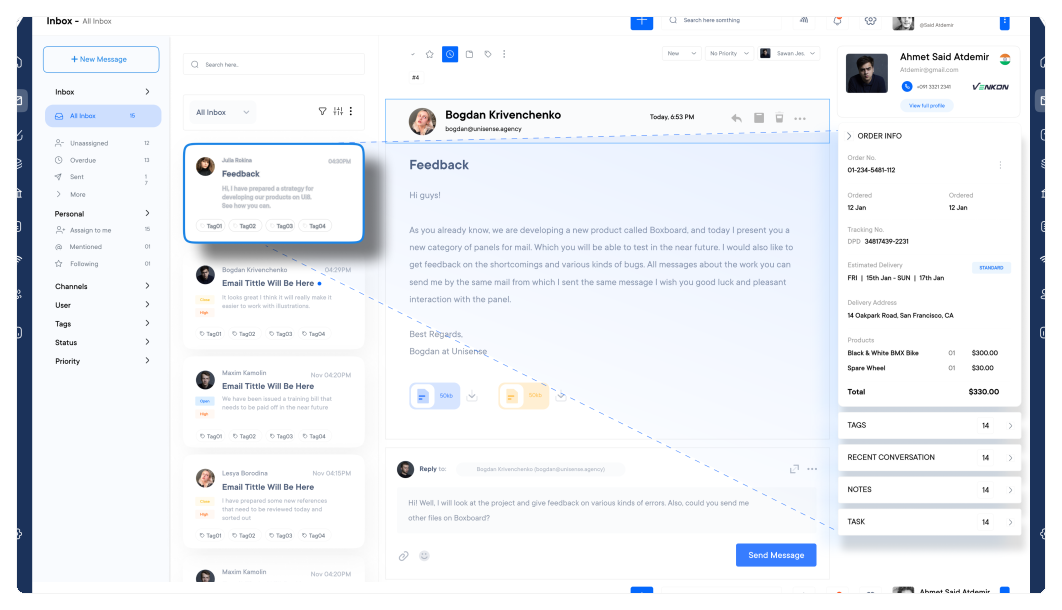
Best Sales Software Dashboard 1

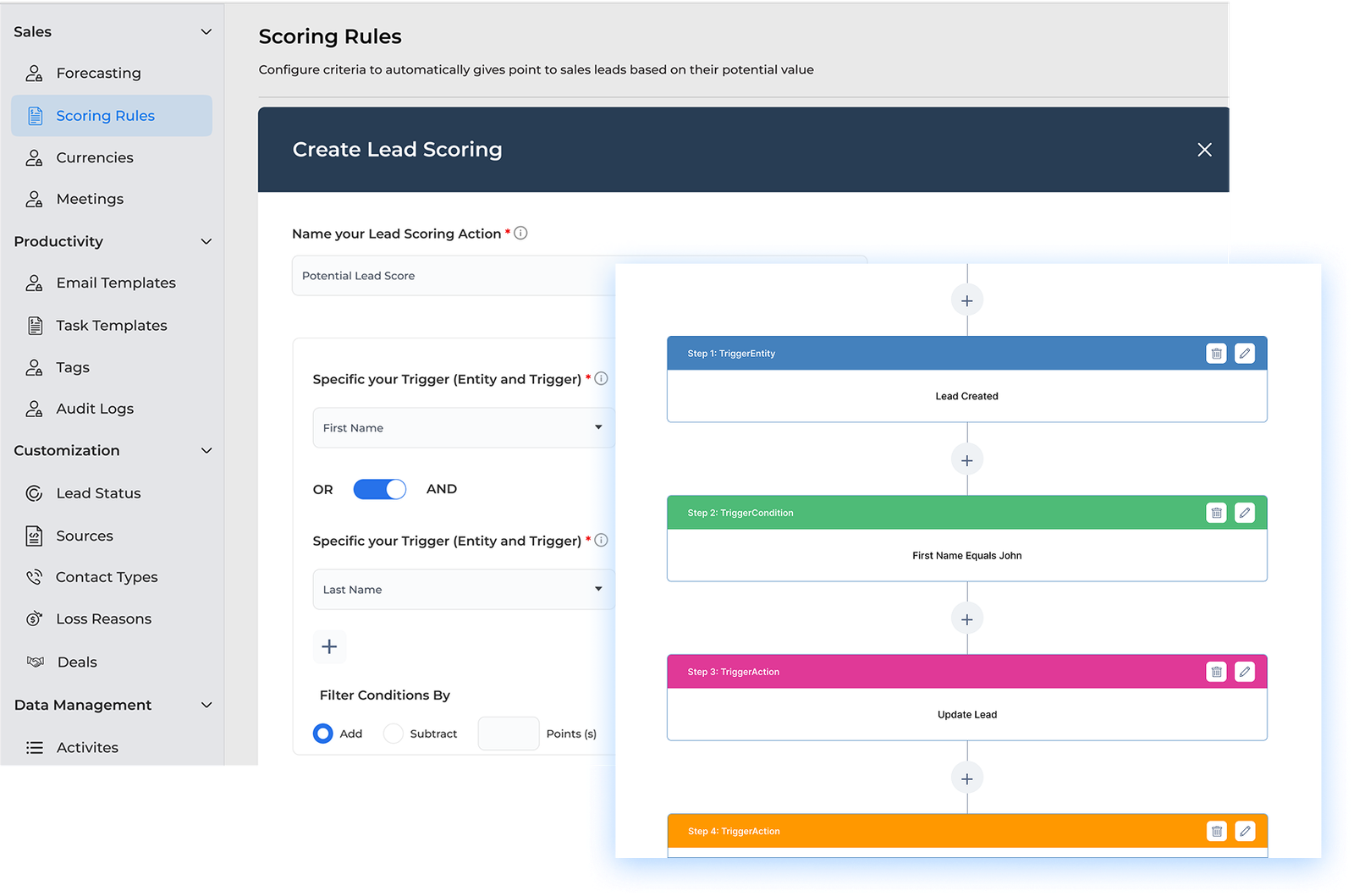
Lead Scoring

Help teams engage prospects more effectively to boost conversions and speed up sales. They can then tailor their strategies based on the customer’s purchasing intent.

Sales Automation

Repetitive tasks are automated to streamline workflows and focus on selling. Sales reps can shift their focus towards more crucial tasks and operate more efficiently.

CRM Integration

The software seamlessly integrates with the CRM for a unified system. The team gets actionable customer data all in one place which helps them make more informed decisions and streamline their workflows.

Collaborative Tools

Share information, track progress and stay updated on the latest developments, ensuring everyone is on the same page. Facilitate seamless information sharing and real-time updates!

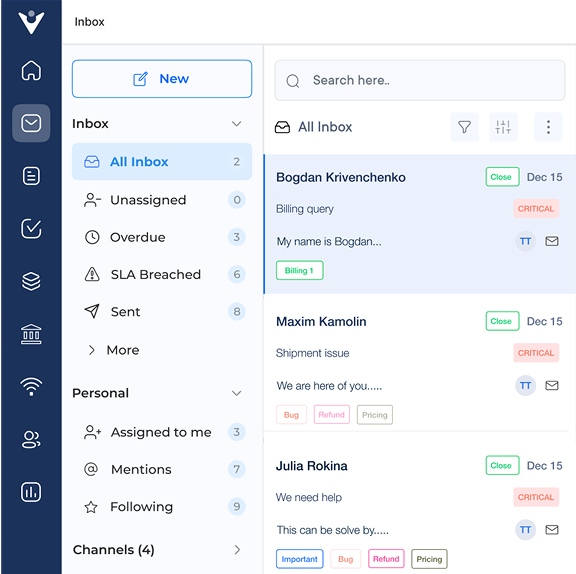
Best Sales Software Dashboard 2

Sales teams often drown in a sea of data, struggling to manage leads and losing precious time on administrative tasks. The pressure to meet quotas is relentless, yet outdated tools and fragmented systems are holding them back.

Enter the world of modern software which has been revolutionizing the sales process and driving results. But with so many options available, which one to go for? Let’s explore the best sales software, comparing features, pricing and real-world performance to help businesses find the perfect fit for the team.

What is Sales Software?

Sales software refers to a comprehensive solution designed to optimize and streamline the sales process for businesses. It is a centralized platform with various functions essential for managing customer relationships and improving sales performance.

The software consolidates customer data, sales activities and communication history into a user-friendly interface. It automates routine tasks such as data entry, follow-up reminders and lead assignments, allowing representatives to focus on high-value activities.

Key objectives:

  • Boost efficiency by automating repetitive tasks and streamlining workflows.
  • Enhance lead management and conversion rates through improved tracking.
  • Promote team collaboration and communication across the sales department.
  • Deliver data-driven insights for informed decision-making and strategy development.
  • Increase sales performance through optimized processes and better customer relationships.

Comparison Table of Top Sales Software

The table compares features, pricing and features of popular sales softwares to help businesses find the best fit for their business.

Software Pricing
Plan/Free Trial 5 Key Features
Veemo Sales $29/user/month 14-days free trial
  • Sales Pipeline Visualization
  • Analytics
  • Contact Management
  • Multi-channel Engagement
  • Automated Lead Nurturing
Freshsales $15-$69/user/month 21-days free trial
  • AI-Powered Lead Scoring
  • Built-in Phone & Email
  • Workflow Automation
  • Custom Reports.
  • Territory Management
Zendesk $19-$99/user/month 14-days free trial
  • Sales Forecasting
  • Email Tracking
  • Lead Enrichment
  • Task Automation
  • Advanced Analytics
HubSpot Free – $1,200/month Free plan available
  • Contact Management
  • Deal Tracking
  • Email Tracking & Templates
  • Meeting Scheduling
  • Reporting Dashboard
Zoho $14-$52/user/month 15-days free trial
  • Omnichannel Communication
  • AI Sales Assistant
  • Process Management
  • Customization
Pipedrive $14.90-$99/user/month 14-days free trial
  • Visual Sales Pipeline
  • Email Integration
  • AI Sales Assistant
  • Customizable Dashboards
  • Mobile App
SalesRabbit $39-$99/user/month 14-days free trial
  • Territory Management
  • Lead Tracking
  • Digital Contracts
  • Route Planning
  • Field Sales Tools
Salesmate $12-$40/user/month 15-days free trial
  • Built-in Calling
  • Email Automation
  • Pipeline Management
  • Custom Fields
  • Mobile App
Monday $10-$20/user/month 14-days free trial
  • Visual Pipelines
  • Customizable Workflows
  • Team Collaboration
  • Integrations
  • Automation

Key Features of a Good Sales Platform

Let’s explore the essential features that every sales platform should offer to drive the business forward and achieve its sales goals.

Key Features of Sales Platform

1. Contact Management

A strong contact management system is the foundation of any sales software. The feature allows teams to store, organize and access customer information in a centralized database. The system typically includes contact details, interaction history, notes and custom fields. Advanced systems may incorporate social media integrations and automatic data enrichment to provide a comprehensive view of each contact.

2. Lead Scoring

Lead scoring is a crucial feature that helps sales teams prioritize their efforts. Numerical values are assigned to leads based on various criteria such as demographics, online behavior and engagement level. Some systems use AI to continuously refine scoring models based on historical data and outcomes.

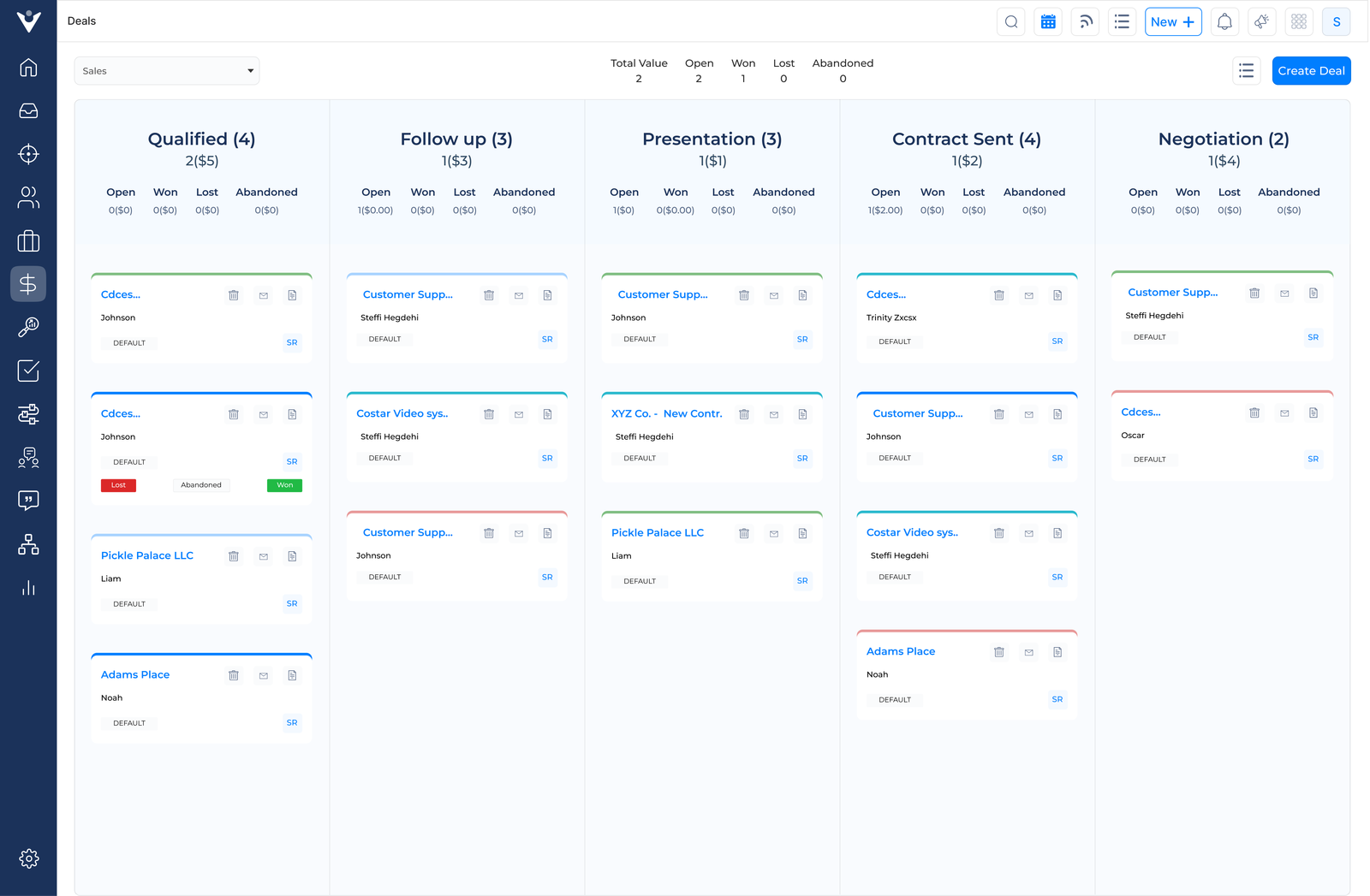
3. Sales Pipeline Visualization

Visual representations of the sales pipeline offer a clear overview of deals at various stages.
The feature typically presents a customizable, drag-and-drop interface where sales reps can move deals through different stages. The representation provides instant insights into the health of the sales pipeline, helps identify bottlenecks and allows for better resource allocation.

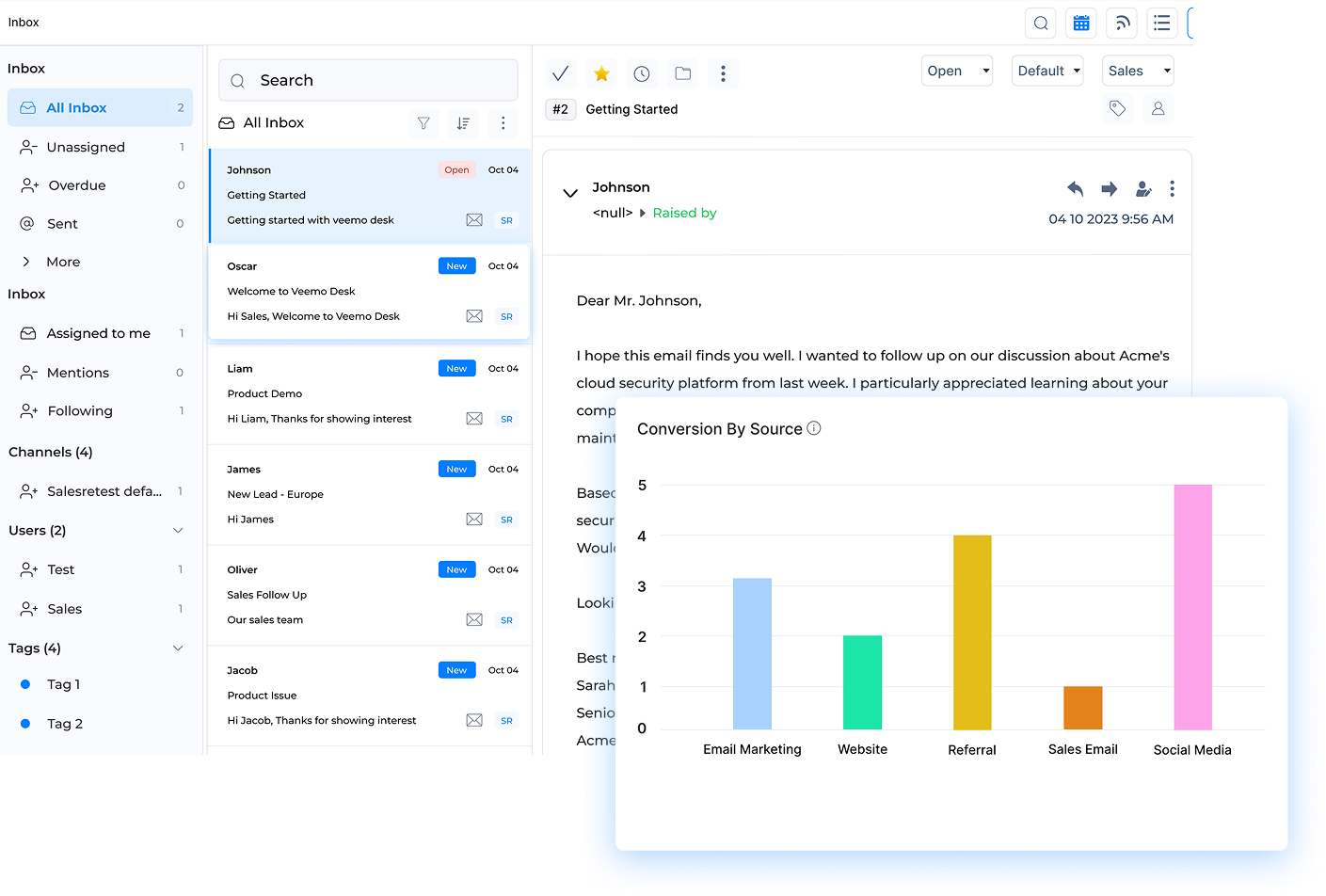
4. Sales Inbox

A sales inbox integrates email communication directly into the sales software. It often includes features like email tracking, templates and scheduling tools. The integration ensures that all customer communications are logged and accessible within the CRM. It provides a complete interaction history and eliminates the need to switch between multiple applications.

5. Workflow Automation

Workflow automation streamlines repetitive tasks and processes. The tasks can involve the automatic assignment of leads, triggering of follow-up actions and updating of records. The feature not only saves time but also ensures consistency in sales processes and reduces the chance of human error.

6. Automated Sequences

Automated sequences, also known as drip campaigns, allow sales teams to create a predefined series of touchpoints with prospects. It consists of emails, phone calls, or other actions triggered at specific intervals or based on prospect behavior. The feature ensures consistent follow-up and nurturing of leads without requiring manual intervention for each step.

7. Multichannel Lead Capture

Modern sales platforms often include the ability to capture leads from various channels such as web forms, social media, email, phone calls and chatbots. The feature automatically creates new contact records or updates existing ones. It ensures that no potential opportunity is missed and that all lead sources are tracked for analysis.

8. Reporting & Analytics

Comprehensive reporting and analytics tools are essential for gaining valuable insights. The feature typically includes customizable dashboards, standard reports and data visualization tools. Advanced systems may incorporate AI-driven analytics to uncover trends, predict outcomes and provide actionable recommendations.

9. Sales Forecasting

Sales forecasting features use historical data, pipeline information and often AI algorithms to predict future sales performance. It can include revenue projections, win probability calculations and trend analysis. Accurate forecasting is crucial for strategic planning, resource allocation and setting realistic targets for sales teams.
9 Best Sales Software for Businesses

We have curated a list of the best sales software that can elevate business sales to the next level.

1. Veemo Sales

Best sales software for lead management

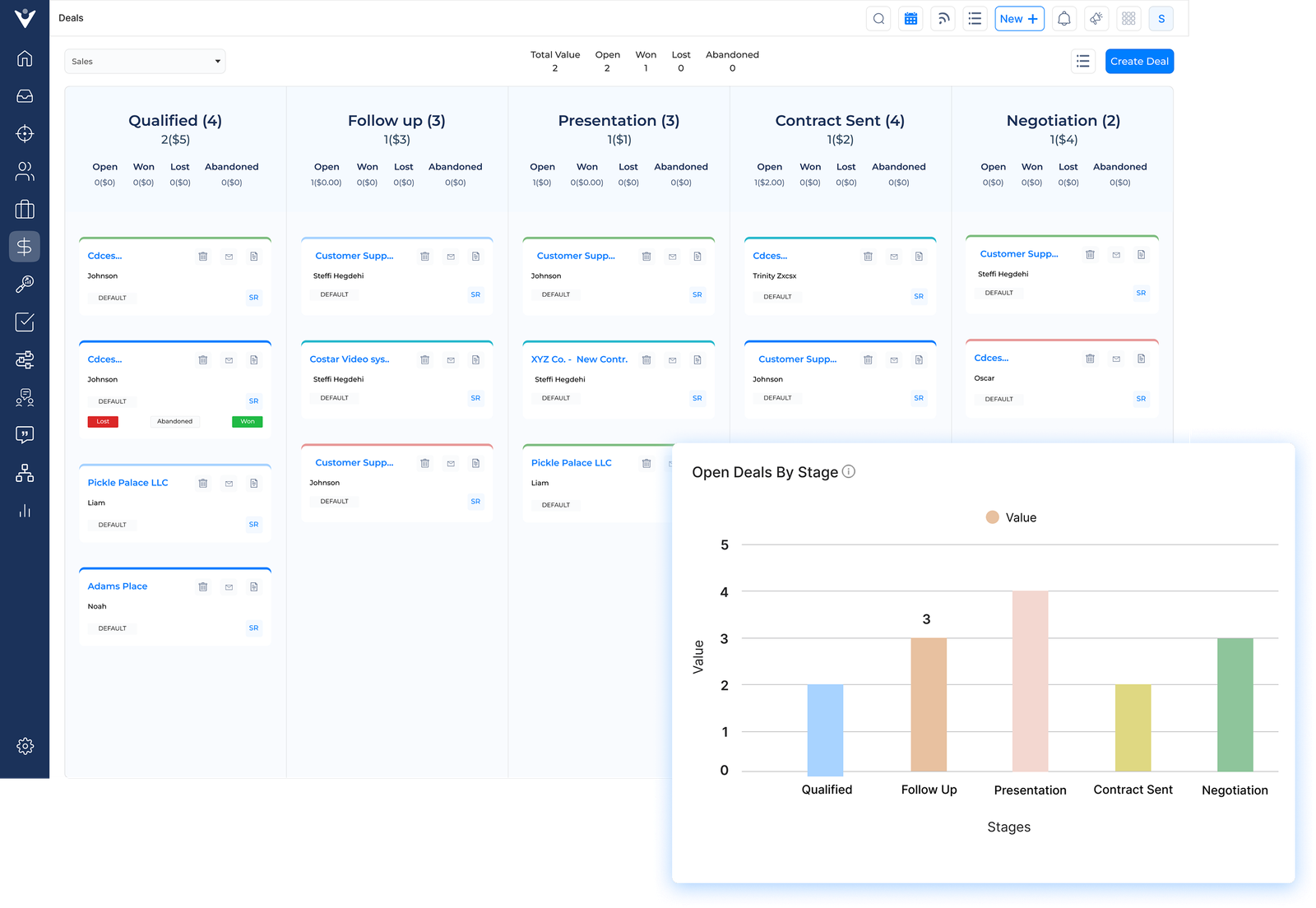
Veemo Sales Deals

Veemo Sales is a cutting-edge sales software solution designed to empower businesses of all sizes with powerful tools to streamline their sales processes and drive growth.

The comprehensive platform combines an intuitive user interface with advanced features, making it an ideal choice for companies looking to optimize their sales operations.

Key Features:

  • Intelligent lead scoring: Veemo Sales employs AI-driven algorithms to automatically rank and prioritize leads.
  • Advanced pipeline management: The software offers a highly visual and customizable sales pipeline. The sales team can easily track and manage deals at every stage of the process.
  • Integrated communication hub: Veemo Sales centralizes all customer interactions across multiple channels.
  • Automated workflow engine: The platform features a robust automation system that streamlines repetitive tasks and triggers personalized follow-ups.
  • Comprehensive analytics dashboard: Veemo Sales delivers real-time, actionable insights through its powerful analytics suite.

Pricing: Veemo’s plans range from $29/user/month to $129/user/month. Visit Veemo’s pricing page for more details.

2. Freshsales

Top sales platform to streamline sales process

FreshSales Sales Software

Freshsales is a customer relationship management (CRM) platform designed to streamline sales processes for businesses of all sizes. The platform offers an intuitive interface that combines contact management, deal tracking and communication tools in one unified system.

Freshsales offers AI-powered lead scoring, a built-in phone, a visual sales pipeline and customizable reporting. The unique selling point is the AI assistant, Freddy, which provides actionable insights, significantly boosting productivity.

3. Zendesk

Robust sales tool for customization of sales pipeline

Zendesk Sales Software

Zendesk is a versatile customer service and sales platform that offers comprehensive solutions for businesses of all sizes. Sales teams can manage leads, track customer interactions and close deals efficiently within a unified workspace.

Some of the highlighted attributes of Zendesk include AI-powered lead scoring, customizable sales pipelines and omnichannel communication capabilities. The unique selling proposition lies in its ability to combine sales and customer support functionalities.

4. HubSpot

Comprehensive sales software for seamless integrations

HubSpot Sales Software

HubSpot is a cloud-based sales and marketing platform that offers a robust suite of tools designed to streamline business operations. It provides an all-in-one solution for CRM, marketing automation, content management and sales processes.

The solution offers a user-friendly interface, powerful CRM capabilities and seamless integration. The unique selling proposition lies in its inbound marketing methodology and the ability to provide a cohesive view of the customer journey.

5. Zoho

Extensive sales solution for scalability

Zoho Sales Software

Zoho is a comprehensive sales solution designed to streamline and optimize business processes. The platform offers a user-friendly interface that integrates seamlessly with various Zoho applications.

Some of the key features of Zoho CRM include AI-powered sales assistance, multichannel customer engagement, workflow automation and advanced analytics. The unique selling point lies in its versatility and scalability, catering to businesses of all sizes.

6. Pipedrive

Comprehensive sales software to improve team collaboration

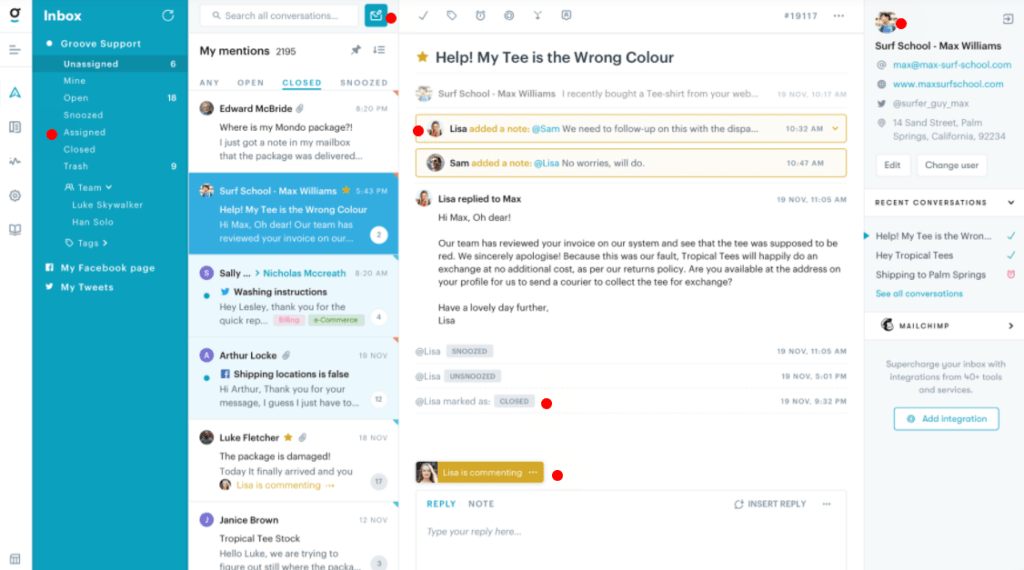
Groove Saas Help Desk Software

Pipedrive is a leading sales CRM software designed to streamline sales processes and boost productivity for businesses of all sizes. The platform offers a user-friendly interface that focuses on visualizing the sales pipeline, making it easy for teams to track deals.

Pipedrive’s notable features include customizable pipelines, automated workflows and integrations with popular business tools. The unique selling proposition lies in its simplicity and visual approach to sales management which allows the users to easily drag and drop deals through various stages.

7. SalesRabbit

Seamless sales solution for automated lead tracking

SalesRabbit Sales Software

SalesRabbit is a comprehensive sales enablement platform designed to streamline field sales operations. The platform combines powerful mobile applications to support sales teams in managing leads, optimizing routes and closing deals efficiently.

The platform is particularly well-suited for industries that rely heavily on door-to-door or field sales. The primary features consist of real-time territory mapping, automated lead tracking, digital contract management and performance analytics.

8. Salesmate

Extensive sales tool for AI-powered analytics

Salesmate Sales Software

Salesmate is a sales CRM platform designed to streamline sales processes and boost productivity for businesses of all sizes. It offers a user-friendly interface that combines essential sales tools with advanced features.

The highlighted features of Salesmate include customizable sales pipelines, robust contact management, automated workflows and detailed analytics. The unique selling point lies in its seamless integration capabilities, mobile accessibility and AI-powered insights that help sales teams make data-driven decisions.

9. Monday

Robust sales solution for to maximize sales productivity

Monday Sales Software

Monday is a versatile project management and collaboration platform that has evolved to offer robust sales management capabilities. It provides businesses with a flexible, visually intuitive interface to manage their sales processes and collaborate effectively across teams.

Monday’s primary attributes consist of customizable sales pipelines, contact management and integration with popular tools like Gmail. The unique selling point is its highly adaptable nature which allows businesses to tailor the platform to their specific sales workflows.

Benefits of Using a Sales System

Sales software offers numerous advantages that can significantly enhance a company’s sales operations.

Benefits of Using Sales Software

1. Improved Efficiency and Productivity
Sales software automates time-consuming tasks such as data entry, follow-up reminders and lead scoring. The automation allows sales teams to focus more on high-value activities like building relationships and closing deals. Sales representatives can manage more leads and opportunities in less time by significantly eliminating manual processes.

2. Enhanced Customer Relationships
Businesses get a comprehensive view of each customer’s history with centralized contact management and interaction tracking. Sales teams are enabled to personalize their approach and provide better customer service with a 360-degree view. The result is stronger, more meaningful customer relationships that lead to increased loyalty and repeat business.

3. Data-Driven Decision Making
The platform offers powerful analytics capabilities, providing insights into sales performance, trends and forecasts. The data-driven insights enable managers to make informed decisions about resource allocation and performance improvements. Businesses can respond quickly to market changes and optimize their sales processes for better results by leveraging real-time data.

4. Improved Team Collaboration
Many sales solutions include collaboration features that facilitate better communication and information sharing among team members. The improved collaboration leads to more consistent sales processes. It also helps break down silos between departments, enabling smoother handoffs between teams.

5. Accurate Sales Forecasting
Advanced sales software uses historical data, current pipeline information and often AI algorithms to generate accurate sales forecasts. The predictive capability allows businesses to plan more effectively and make informed decisions. Accurate forecasting is crucial for strategic planning and financial management.

6. Scalability and Flexibility
As businesses grow, their sales processes often become more complex. Sales software provides the scalability and flexibility to adapt to changing needs. Whether it’s adding new users, customizing workflows, or integrating with other systems, the sales system can grow and evolve with the business.

You can rely on us

Let our specialists help you in every step to deliver an awesome customer service your customers deserve. Comes with 30 days money back guarantee.

Omnichannel Helpdesk and Ticketing System

Turn Every Support Issues into Personalized Conversations with Veemo’s Omnichannel Helpdesk and Ticketing System. Make customer happiness your top priority with a digital first customer experience (CX) approach

Radically new solutions for data

Sed ut perspiciatis unde omnis iste natus error sit voluptatem accusantium doloremque laudantium, totam rem aperiam, eaque ipsa quae ab illo inventore veritatis et quasi architecto beatae vitae dicta sunt explicabo.

Radically new solutions for data

Sed ut perspiciatis unde omnis iste natus error sit voluptatem accusantium doloremque laudantium, totam rem aperiam, eaque ipsa quae ab illo inventore veritatis et quasi architecto beatae vitae dicta sunt explicabo.

How to Choose the Right Sales Solutions for a Business?

Selecting the appropriate sales solution is crucial for optimizing business operations and driving growth. Here’s a comprehensive guide to help businesses make an informed decision:

How to Choose the Right Sales Solution for Your Business

1. Identify the Business Requirements

Begin by thoroughly assessing the organization’s specific needs. Consider the sales process, team size, industry and growth plans. Determine pain points in the current system and outline clear objectives for the new solution. The step ensures businesses focus on software that aligns with their unique business goals rather than being swayed by unnecessary features.

2. Examine Essential Features and Functionality

Once the requirements are identified, evaluate potential solutions based on their core features. Look for capabilities such as contact management, analytics, email integration and mobile access. Prioritize features that directly address the needs and contribute to the sales objectives. Consider scalability to ensure the solution can grow with the business.

3. Ensure User-Friendliness

The effectiveness of any sales solution hinges on user adoption. Opt for software with an intuitive interface and easy navigation. A user-friendly system reduces the learning curve, increases adoption rates and improves productivity. Request demos to allow the team to test the software’s usability first hand.

4. Check Integration Capabilities

The sales solution should seamlessly integrate with the existing tech stack. Ensure compatibility with the CRM, marketing tools, accounting software and other systems. Smooth integration eliminates data silos, enhances workflow efficiency and provides a holistic view of the sales.

5. Support and Training

Evaluate the level of support and training offered by the vendor. Look for comprehensive onboarding processes and readily available resources such as tutorials. Adequate support ensures smooth implementation and helps the team maximize the software’s potential.

Pricing

Consider the total cost of ownership, including initial setup fees, subscription costs and any additional charges for premium features or user limits. Compare pricing models (per user, tiered, etc.) and assess the value provided relative to the cost. While budget is important, prioritize solutions that offer the best long-term value and ROI rather than simply the lowest price.

Read User Reviews and Testimonials

Gain insights from real-world experiences by reading reviews and testimonials from similar businesses. Pay attention to feedback on reliability, customer support and how well the solution addresses specific pain points. The information can provide valuable perspectives and help businesses avoid potential pitfalls.

Say Hello to a New Era of Sales Efficiency with Veemo Sales

Veemo Sales heralds a transformative era in sales efficiency, addressing the evolving challenges of modern business landscapes. The platform empowers sales teams to streamline their processes by leveraging cutting-edge technology and data-driven insights.

Veemo Sales provides the necessary tools to optimize lead management, automate repetitive tasks and deliver personalized customer experiences. The platform equips businesses with the agility to adapt to changing customer preferences and market dynamics. Businesses can allocate resources more effectively and focus on high-value activities by centralizing sales operations.

FAQs about Sales Software

Sales software brings value to a business by streamlining the sales process, increasing efficiency and improving customer relationship management. It provides real-time data to help track sales performance and personalize communication with customers. Sales platform helps businesses increase sales, boost productivity and drive revenue growth.

A good sales platform includes CRM integration, analytics, lead management, email marketing automation and mobile compatibility. It should also have social media integration, customizable dashboards and seamless communication tools. A user-friendly interface, scalability and a solid customer support system are essential features of a successful sales platform.

Sales software focuses on managing the sales process, while CRM (Customer Relationship Management) software focuses on managing relationships with customers. The sales system is more sales-focused, helping with tasks like tracking leads and closing deals.

CRM software is more customer-focused, helping with tasks like managing customer information and improving customer interactions.

One example of software sales is selling customer relationship management (CRM) software to businesses. CRM software helps companies manage interactions with current and potential customers. Sales representatives need to understand the product features, benefits and how it can improve a company’s efficiency. They demonstrate the software, negotiate pricing and close the sale.

The cost of sales software can vary depending on the vendor, the number of users and the features included. Some sales platforms are available for a monthly subscription fee, while others may require a one-time purchase. It’s important to consider the budget and the value that the software will bring to the business before making a decision.

Most sales software is designed to be user-friendly and easy to implement. The ease of use can vary depending on the complexity of the software and the level of customization required.
Providing training to the sales team is crucial to ensure a smooth transition to the new software.