1. Building a Sales Acceleration Strategy
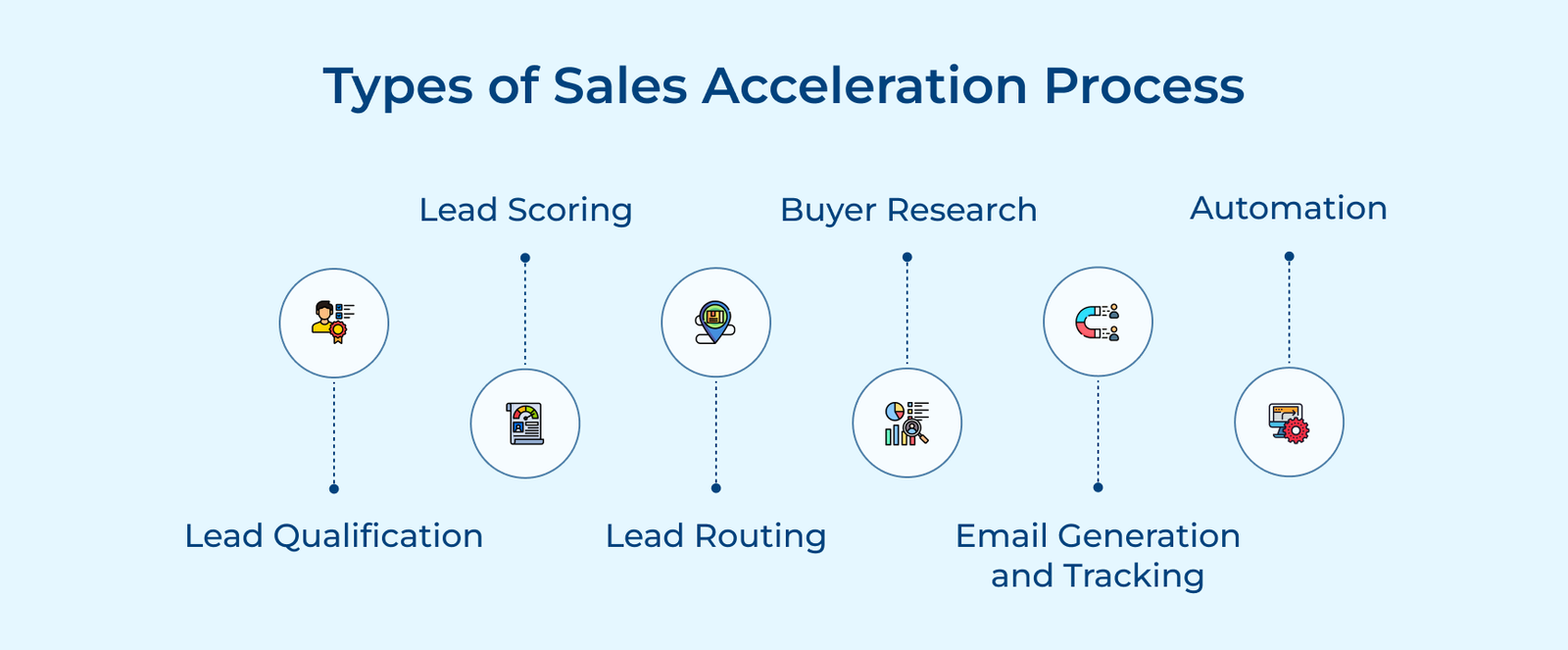
Optimizing lead qualification processes is a crucial step in an effective sales acceleration strategy. Implementing a robust lead scoring system can help companies prioritize prospects based on their likelihood to convert. Sales teams are enabled to focus their efforts on high-potential leads.
Developing ideal customer profiles helps identify the characteristics of valuable prospects and streamline the qualification process. Automating initial screening processes through AI-powered tools and chatbots can quickly filter out unqualified leads.
Pro tips:
- Use data analytics to continuously refine and update the lead scoring criteria.
- Collaborate with marketing and customer success teams to create comprehensive ideal customer profiles.
- Integrate automation tools with the CRM system for seamless data flow and lead management.
2. Use Scenario-Based Learning
Sales teams can practice handling various customer interactions and objections in a safe environment by creating realistic sales simulations. The approach allows them to refine their techniques and build confidence before facing real-world situations. Developing role-playing exercises further enhances the learning process.
Sales representatives can step into both customer and seller roles, gaining valuable perspective, and improving their empathy. Analyzing and learning from past sales scenarios provides invaluable insights into successful strategies. Teams can identify patterns for future engagements by examining both successful and unsuccessful sales interactions
Pro tips:
- Use real customer data and feedback to create authentic scenarios.
- Incorporate technology like AI to enhance immersion and realism.
- Establish a regular schedule for scenario training and debriefing sessions.
3. Adopt Value-based Selling
The approach shifts focus from product features to customer outcomes that emphasize the tangible benefits and value a solution brings to the client’s business. Salespeople can demonstrate how their offering addresses pain points and contributes to the client’s success by aligning product features with specific customer needs.
Quantifying the value proposition is essential, as it provides concrete evidence of the solution’s impact on the customer’s bottom line, often through metrics like ROI or productivity gains. The strategy enhances stronger relationships, differentiates from competitors and accelerates the sales process by clearly communicating the unique value offered.
Best practices:
- Conduct thorough research on each prospect’s industry and specific challenges.
- Develop customized value calculators to quantify potential benefits for clients.
- Train sales teams to ask probing questions that uncover the customer’s true pain points and goals.
4. Engage through Social Media
Businesses can leverage platforms like LinkedIn, Twitter and Instagram to connect with potential customers by developing a social selling strategy. The approach involves sharing valuable content that establishes thought leadership in the industry and positions the brand as a trusted source of information and expertise.
The strategy allows for a more personalized approach to sales, as it enables reps to understand prospects’ needs and pain points before initiating direct contact. Social media engagement also provides valuable insights into customer behavior and allows sales teams to tailor their approach.
Pro tips:
- Optimize profiles with keyword-rich content and professional visuals.
- Use social listening tools to identify and engage with high-potential leads.
- Develop a content calendar to ensure consistent, valuable posting across platforms.
5. Enhance Sales Communication
Enhancing sales communication is a crucial step in an effective sales acceleration strategy.
Sales representatives can better understand customer needs and tailor their approach by improving active listening skills. Developing clear messaging ensures that key points are delivered effectively which helps to avoid confusion and information overload.
Utilizing multiple communication channels effectively allows sales teams to reach customers through their preferred mediums and increase engagement. Sales teams can accelerate the sales process, build stronger relationships with prospects and increase conversion rates by focusing on communication enhancements.
Best practices
- Practice reflective listening by paraphrasing customer statements to confirm understanding.
- Create a standardized messaging framework that highlights unique value propositions succinctly.
- Implement an omnichannel approach, integrating email, phone, social media and in-person interactions seamlessly.
6. Promote Collaborative Selling
Collaborative selling is a crucial component of an effective sales acceleration strategy, emphasizing the power of teamwork to drive results. Businesses can leverage diverse expertise and perspectives to address complex customer needs more effectively by enhancing cross-functional collaboration.
The enhanced communication allows for quicker response times and more informed decision-making throughout the sales process. Encouraging knowledge transfer among members creates a culture of continuous learning, enabling the entire sales force to benefit from individual successes and lessons learned.
Pro tips:
- Establish regular cross-departmental meetings to align goals and share insights.
- Invest in a robust CRM system that facilitates real-time information sharing and collaboration.
- Create a mentorship program to pair experienced sales professionals with newer team members.
7. Leverage Customer Success Stories
Leveraging customer success stories is a powerful step in an effective sales acceleration Plan. Businesses build credibility and trust with potential clients by showcasing real-world examples of how the product or service has benefited others. Begin by documenting comprehensive case studies that highlight the challenges faced by customers, the solutions provided and the measurable results achieved.
Use the testimonials strategically in sales presentations to demonstrate value and address specific pain points. Create a diverse library of success stories categorized by industry, use case or problem solved which will allow sales teams to quickly access relevant examples for each prospect.
Pro tips:
- Develop a systematic process for gathering and updating success stories regularly.
- Train sales teams on effectively incorporating testimonials into their pitches.
- Utilize multimedia formats (e.g., video, infographics) to make success stories more engaging and shareable.