Sales Operations

Sales Operations Guide: Benefits, Examples & Tools

Unlock the full potential of your sales team with our sales operations guide! Explore key benefits, real-world examples and essential tools to streamline processes, boost efficiency, and drive revenue growth.

No credit card required. Easy setup

Sales Operations

Trusted by Leading Brands

Sales operations streamline sales processes to boost efficiency

Sales operations streamline sales processes to boost efficiency, drive revenue and enhance team performance.

Process Optimization

Unlock the full potential of your sales operations with a process optimization feature. Designed to streamline and refine sales workflows, the powerful tool maximizes efficiency at every turn.

Data-driven Insights

Having access to actionable insights is essential. Our operation harnesses the power of analytics to provide your team with a clear view of sales performance.

Sales Forecasting

Predicting the future has never been easier! The advanced sales forecasting tools empower businesses to anticipate trends and outcomes with remarkable accuracy.

Effective Resource Allocation

Strategic resource allocation is key to driving sales success. Representatives can focus their efforts where they matter most, targeting high-impact areas based on performance and potential.

Enhanced Sales Training

The operation implements structured training programs to equip the team with essential skills and knowledge. Teams can standardize sales techniques and best practices.

Improved CRM Integration

The tool integrates seamlessly with CRM systems for unified data management and visibility. The integration ensures that sales activities and customer interactions are tracked accurately.

Many companies struggle to optimize their sales processes, resulting in missed opportunities, inefficient resource allocation and stagnant growth. Sales teams often find themselves overwhelmed by administrative tasks, lacking clear performance metrics and unable to adapt quickly to market changes. Understanding what sales pipeline is can help address these challenges.

Without a robust sales operations strategy, businesses risk falling behind competitors, losing valuable leads and failing to maximize revenue potential. It can be the key to unlocking the full potential of the sales teams. Let us discover how you can streamline the sales processes, boost productivity and drive sustainable growth in an organization.

What is Sales Operations?

Sales operations refer to the strategic function within an organization that supports, enables and optimizes the sales team’s performance. The function acts as a bridge between sales and other departments, ensuring smooth processes.
What do sales operations do?
Sales operations teams are responsible for a wide range of activities that enhance sales effectiveness and efficiency. They manage sales data, implement sales technologies, develop sales processes, provide training to sales reps and generate insights to guide sales strategies. They often handle sales forecasting, territory management, compensation plans and performance metrics.

Key objectives:

  • Increase sales productivity by optimizing processes and removing obstacles
  • Provide data-driven insights to inform sales strategies and decision-making
  • Implement and manage sales technologies to enhance performance
  • Develop effective sales training and onboarding programs
  • Align sales activities with business goals and other departmental objectives

What are the Benefits of the Sales Operations Process?

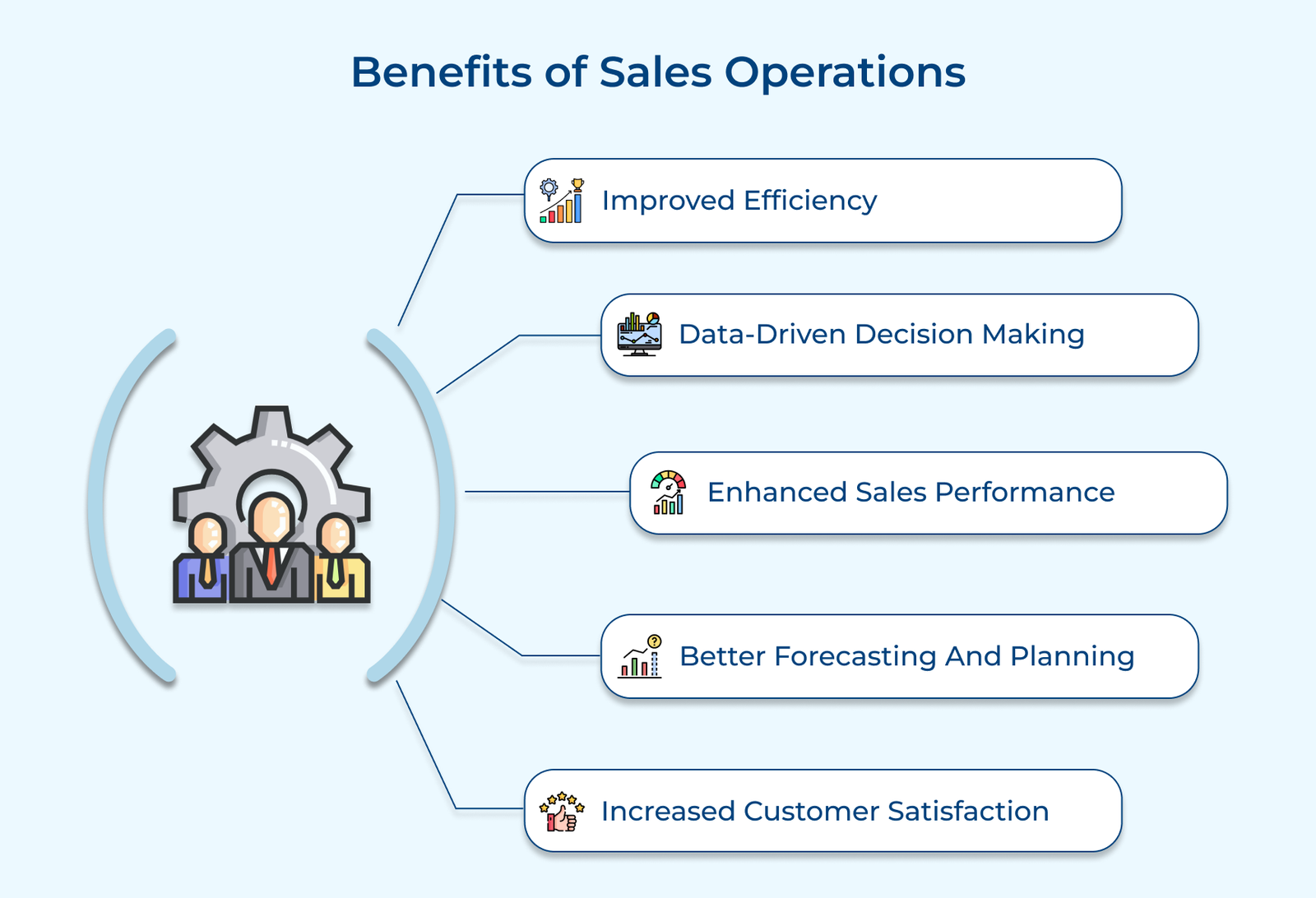
Let’s delve into the key benefits that effective sales operations process can deliver and explore how they can drive success.

Benefits of Sales Operations

1. Improved Efficiency
Sales operations streamline processes, automate routine tasks and eliminate bottlenecks. Sales representatives are enabled to spend more time on high-value activities like building relationships and closing deals. The approach can significantly boost the productivity of the entire sales team by optimizing workflows and implementing effective tools.

2. Data-driven Decision Making
Sales operations functions analyze and interpret vast amounts of sales data. The operation provides valuable insights into market trends, customer behaviors and sales performance. Management can make more informed strategic decisions, adjust tactics quickly and allocate resources more effectively with the information.

3. Enhanced Sales Performance
The sales operations process directly contributes to improved performance by providing sales teams with the right tools, training and support. They can identify best practices, develop effective sales methodologies and create targeted training programs. It leads to higher win rates, larger deal sizes and shorter sales cycles.

4. Better Forecasting and Planning
Sales operations develop and maintain accurate sales forecasting models. It helps organizations predict future revenue, plan resources and set realistic targets. Improved forecasting allows for better inventory management, more accurate budgeting and aligned business strategies.

5. Increased Customer Satisfaction
Sales ops indirectly enhances the customer experience by ensuring smooth operations and providing sales teams with the right information. Representatives can respond more quickly and accurately to customer needs, leading to higher satisfaction.

Sales Operations Roles and Responsibilities

One must delve into the specific roles and responsibilities that make the function indispensable to the success of a sales organization.

Sales Operations Roles and Responsibilities

1. Cross-Functional Collaboration

Sales operations act as a bridge between sales and other departments. The role involves coordinating with marketing, finance, product development and customer service teams to optimize the sales process. Let’s assume that a sales ops manager works with the marketing team to refine lead qualification criteria and can ensure that only high-quality leads are passed to the sales team.

2. Sales Data Management

The responsibility involves collecting, organizing and analyzing sales data to provide actionable insights. Sales Ops professionals manage CRM systems, maintain data integrity and create reports that help drive informed decision-making. Let’s consider that a Sales Ops analyst creates a dashboard that tracks key performance indicators (KPIs) such as conversion rates, average deal size and sales cycle length.

3. Sales Forecasting

Sales operations functions is responsible for developing and maintaining accurate sales forecasts. The process involves analyzing historical data, market trends and current pipelines to predict future sales performance. Let’s assume that a Sales Ops manager uses advanced forecasting tools to create monthly, quarterly and annual sales projections. They consider factors such as seasonality, new product launches and economic indicators to refine their forecasts.

4. Lead Generation

While often associated with marketing, Sales Ops plays a crucial role in lead generation by optimizing lead scoring models and ensuring efficient lead nurturing processes. Let’s consider that a Sales Ops specialist implements a lead scoring system that assigns points based on demographic information, online behavior and engagement with marketing content. They also set up automated workflows to route leads to the appropriate sales representatives based on territory, industry or product interest.

5. Performance Management

The process of sales operations is responsible for analyzing sales team performance, identifying areas for improvement and implementing strategies to enhance productivity. Let’s assume that a Sales Ops manager creates individual and team performance scorecards, tracking metrics such as quota attainment, win rates and activity levels. They use this data to identify top performers and those who may need additional support or training.

6. Sales Strategy

Sales ops contributes to the development of sales strategies by providing data-driven insights and recommendations for improving sales processes. Let’s consider that a Sales Ops director analyzes market trends and competitor activities to recommend new target markets or industries for expansion. They also suggest changes to the sales methodology based on data showing which approaches are most effective for different customer segments.

7. Sales Team Communications and Organization

The role involves managing internal communications within the sales team, organizing sales meetings and ensuring that sales representatives have the information they need to succeed. Let’s assume that a sales Ops coordinator organizes weekly sales team meetings, prepares agendas and distributes relevant reports. They also manage a central repository of sales collateral, ensuring that all team members have access to the latest product information, case studies and pitch decks.

8. Technology Management

Sales operations is responsible for evaluating the various technologies used by the sales team, including CRM systems, sales enablement platforms and analytics tools. Let’s consider that a Sales Ops manager leads the selection and implementation of a new sales engagement platform. They work with IT to integrate the platform with existing systems and monitor adoption rates to ensure the technology is effectively supporting the team’s needs.

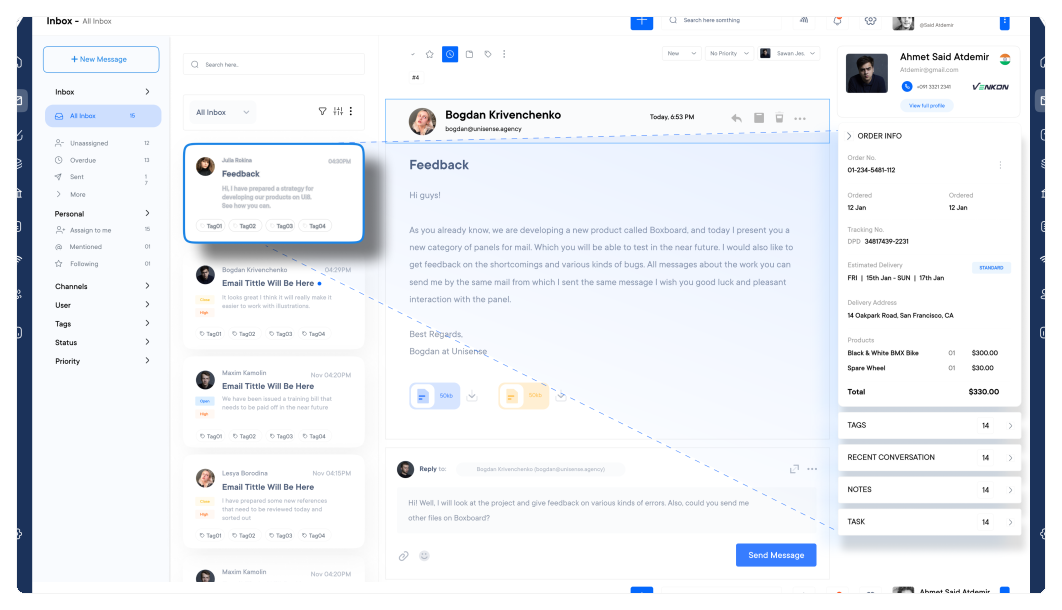
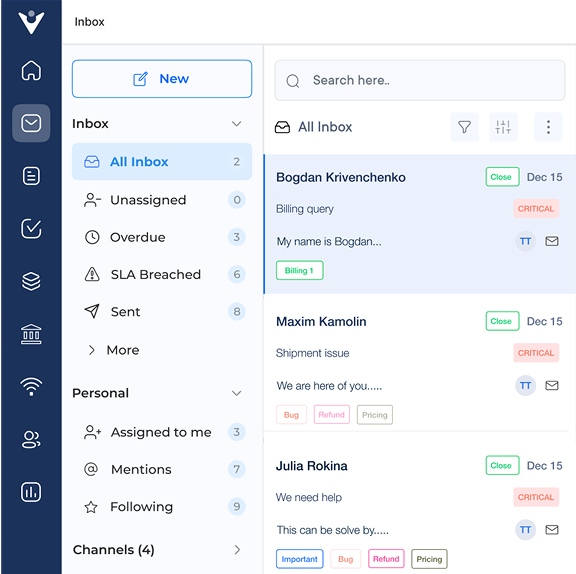
Omnichannel Helpdesk and Ticketing System

Turn Every Support Issues into Personalized Conversations with Veemo’s Omnichannel Helpdesk and Ticketing System. Make customer happiness your top priority with a digital first customer experience (CX) approach

Radically new solutions for data

Sed ut perspiciatis unde omnis iste natus error sit voluptatem accusantium doloremque laudantium, totam rem aperiam, eaque ipsa quae ab illo inventore veritatis et quasi architecto beatae vitae dicta sunt explicabo.

Radically new solutions for data

Sed ut perspiciatis unde omnis iste natus error sit voluptatem accusantium doloremque laudantium, totam rem aperiam, eaque ipsa quae ab illo inventore veritatis et quasi architecto beatae vitae dicta sunt explicabo.

How to Build a Sales Operations Strategy?

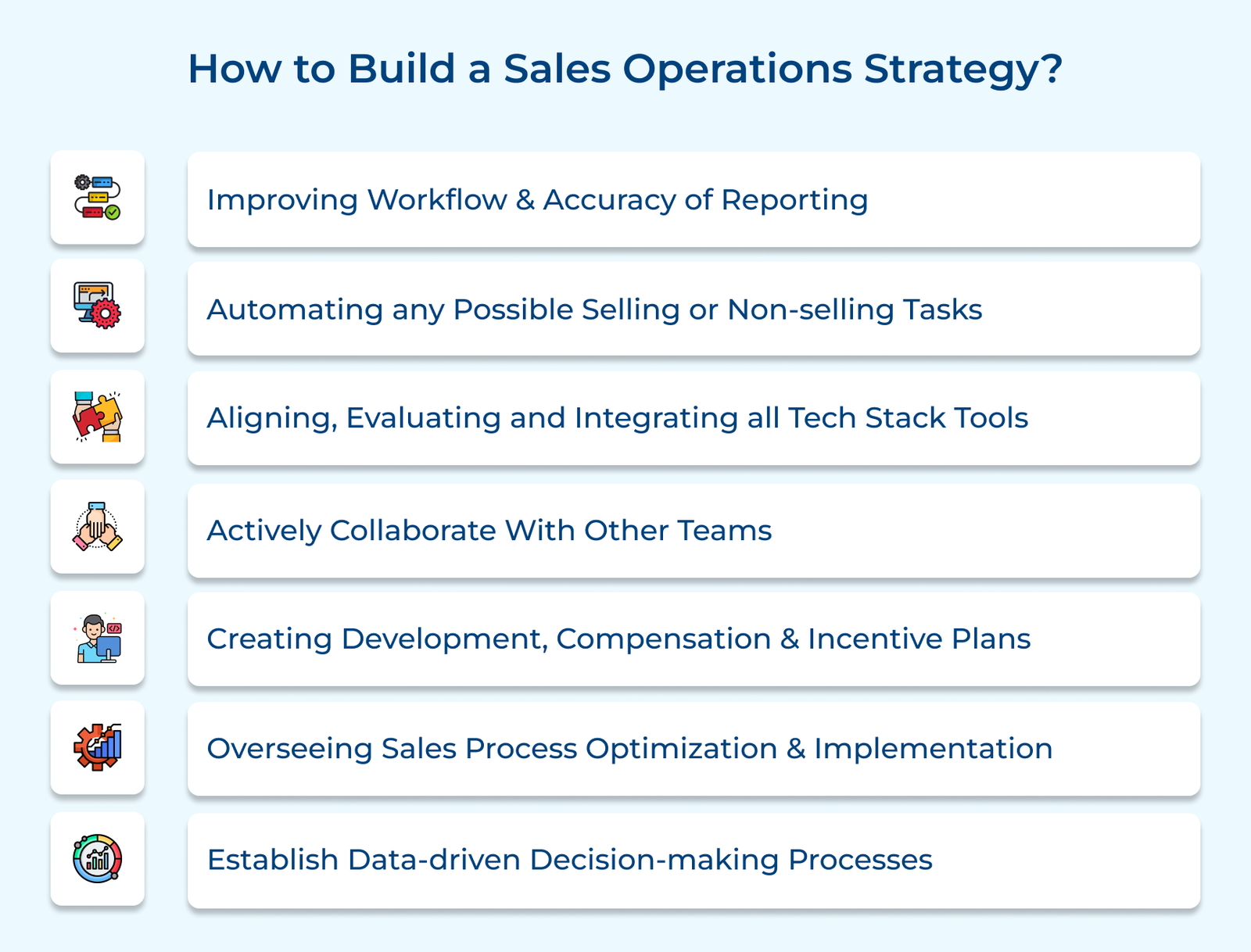
Let’s delve into the essential steps to help businesses create a winning sales operations process strategy that drives results.

How to Build a Sales Operations Strategy

1. Improve Workflow and Accuracy of Reporting

Improving workflow and accuracy of reporting is a crucial step in building an effective sales operations strategy. Begin by assessing current workflow processes, examining how data flows through the organization and identifying bottlenecks or inefficiencies.

Identify areas for improvement, focusing on processes that are time-consuming, error-prone or lack consistency. Implement streamlined reporting systems that automate data collection, standardize reporting formats and provide real-time insights to decision-makers.

Pro tips:

  • Conduct regular audits of the reporting processes to ensure data accuracy and relevance.
  • Invest in user-friendly reporting tools that integrate seamlessly with the existing systems.
  • Provide comprehensive training to the team on new reporting systems and best practices.

2. Automate Selling and Non-Selling Tasks

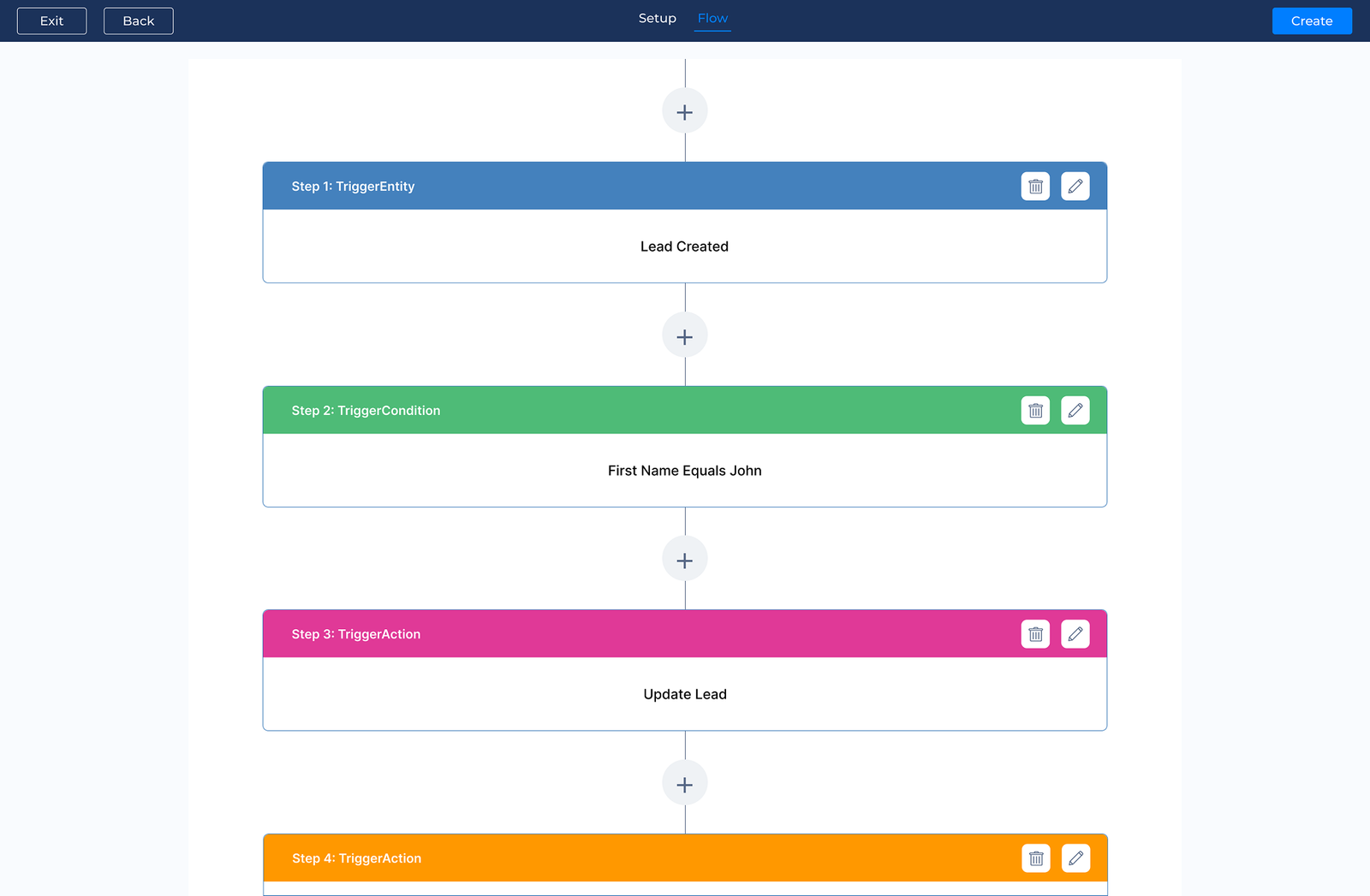
Automating selling and non-selling tasks is a crucial step in building an effective sales ops strategy. Begin by evaluating current manual processes to identify bottlenecks and time-consuming activities. Identify tasks suitable for automation, such as data entry, lead scoring, email follow-ups and report generation.

Implement automation tools and software that integrate seamlessly with the existing tech stack to streamline the processes. The approach not only saves time but also reduces errors and frees up sales representatives to focus on high-value activities like building relationships. Automating repetitive tasks helps sales teams increase productivity, improve data accuracy and enhance efficiency.

Pro tips:

  • Start small with pilot projects to demonstrate value and gain buy-in
  • Provide thorough training to ensure team adoption and maximize tool utilization
  • Continuously monitor and optimize automated processes for ongoing improvement

3. Align, Evaluate and Integrate Tech Stack Tools

Aligning, evaluating and integrating tech stack tools is a crucial step in building a robust sales operations strategy. Begin by conducting a comprehensive tech stack audit to identify all current tools and their functionalities. The process involves cataloging each tool, its purpose, user base and integration points within the sales ecosystem. Assess the effectiveness of each tool and identify any overlaps or redundancies.
Based on the analysis, develop a plan to streamline and optimize the tech stack. It may involve consolidating tools with similar functions, eliminating underutilized solutions or identifying gaps that require new technologies. Prioritize integration between tools to ensure seamless data flow and a unified user experience across the sales tech ecosystem.

Pro tips:

  • Involve key stakeholders from sales, IT and leadership in the evaluation process
  • Develop a phased implementation plan to minimize disruption to ongoing sales activities
  • Establish clear metrics to measure the impact of tech stack changes on sales performance

4. Actively Collaborate with Other Teams

Actively collaborating with other teams is crucial in building an effective sales operations strategy. Begin by identifying key cross-functional relationships, such as marketing, finance and customer success. The teams possess valuable insights that can enhance the strategy’s effectiveness.

Establish regular communication channels through scheduled meetings, shared platforms and informal check-ins to ensure consistent information flow. Develop collaborative projects that align with common goals, enhancing a sense of shared ownership and leveraging diverse expertise.

Ways to implement:

  • Create a cross-functional task force with clear roles and responsibilities
  • Set up a shared dashboard to track joint KPIs and progress
  • Implement a feedback loop to continuously improve collaborative efforts

5. Create Development, Compensation and Incentive Plans

Creating development, compensation and incentive plans is crucial for building an effective sales operations strategy. The plans attract top talent, motivate sales teams and drive performance. A well-designed compensation structure should balance base salary with performance-based incentives that align individual goals with company objectives.

Development plans focus on continuous learning and skill enhancement, ensuring sales representatives stay competitive in a dynamic market. Incentive programs, such as bonuses, commissions and non-monetary rewards, encourage desired behaviors. The plans should be transparent, achievable and adaptable to market changes. When implemented correctly, they enhance a culture of high performance, retention and engagement within the sales team. Regular review and adjustment of the plans ensure they remain effective which supports the sales strategy.

Pro tips:

  • Conduct regular market research to ensure competitive compensation packages
  • Implement a clear, metrics-based performance evaluation system
  • Provide ongoing training and development opportunities aligned with company goals

6. Oversee Sales Process Optimization and Implementation

Creating development, compensation and incentive plans is crucial for building an effective sales operations strategy. The plans attract top talent, motivate sales teams and drive performance. A well-designed compensation structure should balance base salary with performance-based incentives which helps in aligning individual goals with company objectives.

When implemented correctly, they enhance a culture of high performance, retention and engagement within the sales team. Regular review and adjustment of the plans ensure they remain effective.

Pro tips:

  • Conduct regular market research to ensure competitive compensation packages
  • Implement a clear, metrics-based performance evaluation system
  • Provide ongoing training and development opportunities aligned with company goals

7. Establish Data-Driven Decision-Making Processes

Establishing data-driven decision-making processes is crucial for building an effective Sales support operations process strategy. Implementing robust data collection methods can help organizations gather comprehensive information on sales activities, customer behaviors and market trends.

Developing key performance indicators (KPIs) allows teams to measure and track progress toward specific goals, ensuring alignment with business objectives. Creating data analysis and reporting frameworks enables the transformation of raw data into actionable insights, facilitating informed decision-making at all levels of the organization.

Pro tips:

  • Invest in data quality management to ensure the accuracy and reliability of information
  • Enhance a culture of data literacy through training and education programs
  • Integrate data visualization tools to make complex information more accessible and understandable
Sales Operations vs Sales Enablement

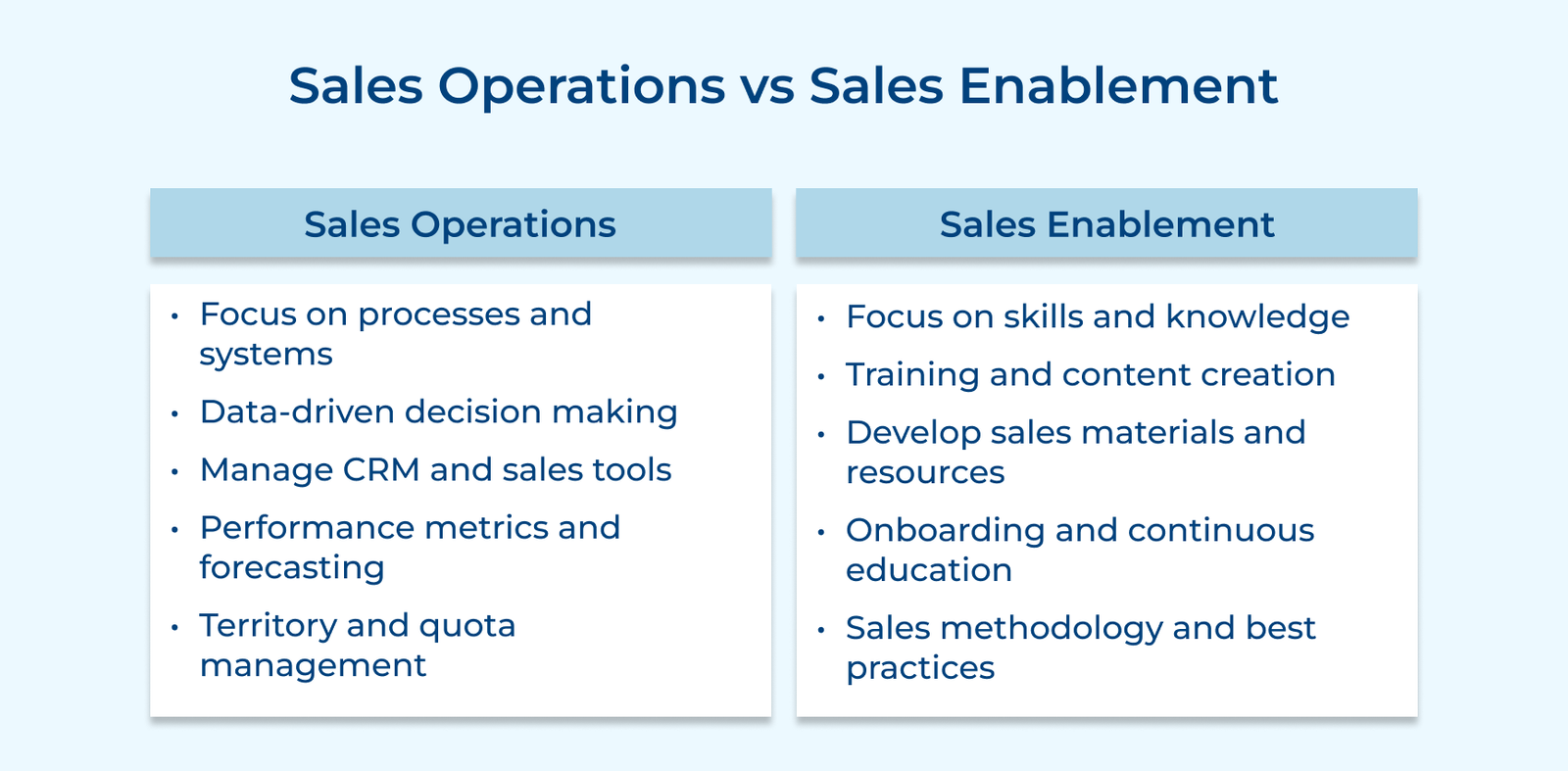
Let’s delve deeper into the key differences between sales operations vs sales enablement to empower the sales team for success.

Sales Operations vs Sales Enablement

1. Focus and Objectives
Sales operations primarily concentrate on optimizing the sales process, managing data and improving efficiency. It deals with the tactical aspects of sales, such as forecasting, pipeline management and territory planning.

Sales enablement focuses on equipping sales teams with the knowledge, skills and resources needed to engage effectively with prospects. Its main objective is to enhance the sales team’s ability to sell more effectively.

2. Scope of Responsibilities
Sales ops typically handle tasks like CRM management, sales analytics, commission structures and process optimization. It’s concerned with the operational backbone of the sales organization.

Sales enablement is responsible for training programs, content creation, onboarding new sales hires and providing ongoing support to help salespeople improve their performance.

3. Metrics and KPIs
Sales operations functions often measure success through quantitative metrics such as sales cycle length, win rates and revenue forecasts. The feature focuses on operational efficiency and sales performance.

Sales enablement tends to track metrics related to the effectiveness of training programs, content utilization and individual salesperson improvement. It may also measure qualitative aspects like customer engagement and sales team confidence.

4. Technology Usage
While both functions utilize technology, Sales ops typically employs tools for data analysis, forecasting and process automation.

Sales enablement leverages learning management systems, content management platforms and sales readiness tools to deliver training to the sales team.

5. Interaction with Sales Teams
Sales operations generally interact with sales leadership to provide insights and implement strategic decisions. Its day-to-day engagement with individual salespeople is often limited.

Sales enablement, works closely with salespeople at all levels, providing direct support, training and resources to help them succeed in their roles.

Top 5 Sales Operations Software And Tools

Check out the top sales operations tools that are redefining how modern sales teams operate by automating processes, enhancing visibility and driving data-backed decisions.

1. Veemo Sales

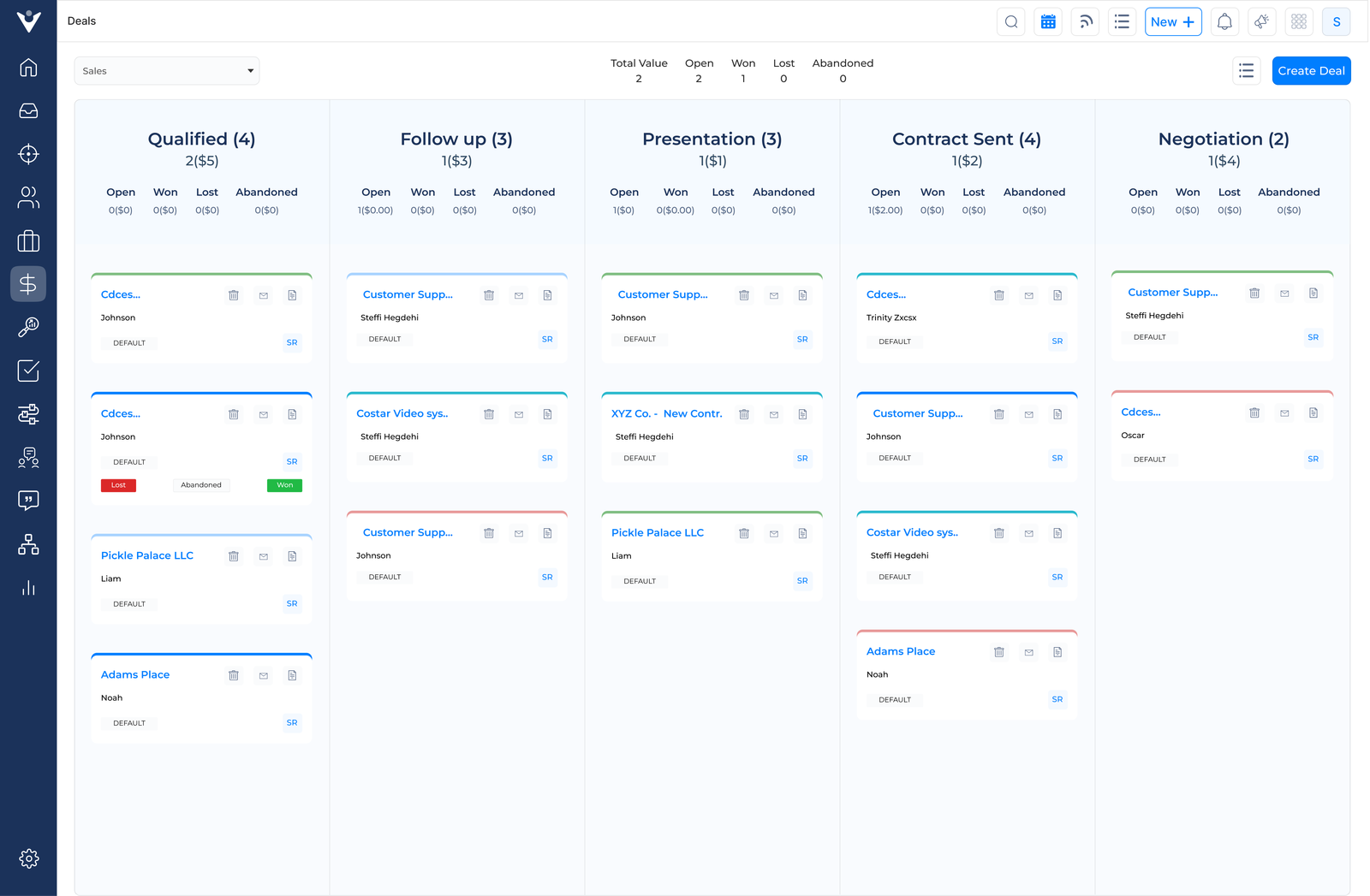
Veemo Sales Deals

Veemo Sales is a Cloud-based CRM software solution that provides sales operations capabilities, designed to streamline and optimize the entire sales process for businesses of all sizes. The innovative platform combines customer relationship management with advanced sales tools. It provides a unified interface for managing leads, tracking opportunities and closing deals efficiently.

Key features:

  • Intelligent lead scoring and prioritization to focus efforts on high-potential prospects.
  • Automated workflow management for streamlined sales processes and improved team productivity.
  • Real-time analytics for data-driven decision-making and performance tracking.
  • Advanced forecasting and pipeline management capabilities to accurately predict sales outcomes.

Pricing: Veemo offers plans ranging between $29 and $129. Businesses can avail their 14-day free trial offer by signing up now!

2. Hubspot

HubSpot is an all-in-one inbound marketing, sales and customer service platform with robust sales operations capabilities. The tool offers a comprehensive suite of tools designed to help businesses attract, engage and delight customers throughout their journey.

Key attributes include contact management, email tracking, meeting scheduling and pipeline visualization. HubSpot’s USP lies in its user-friendly interface, seamless integration across marketing functions and scalability for businesses of all sizes. Its free CRM core with paid upgrades allows companies to start small and expand as needed.

3. Salesforce

Salesforce is a cloud-based CRM platform that offers robust sales operation capabilities.
The tool provides a comprehensive suite of tools designed to manage customer relationships, streamline sales processes and boost business productivity. The platform integrates various aspects of sales, marketing and customer service into a single, user-friendly interface accessible from anywhere.

Salesforce consists of lead management, opportunity tracking and sales forecasting. Its unique selling proposition lies in its highly customizable nature, extensive third-party app ecosystem and powerful analytics tools. Salesforce’s AI-powered insights, mobile accessibility and scalability make it suitable for businesses of all sizes, from startups to large enterprises.

4. Gong

Gong is a cutting-edge software platform that revolutionizes sales ops through its innovative use of artificial intelligence and machine learning. Gong captures customer interactions across various channels, including phone calls, emails and video conferences, to provide actionable insights.

The primary capabilities of Gong include real-time conversation intelligence, deal pipeline analytics and team performance tracking. Its USP lies in its ability to automatically identify winning behaviors and best practices from top performers. Organizations are enabled to replicate success across their sales teams.

5. Zoho CRM

Zoho CRM is a powerful software platform with sales operation capabilities that helps businesses manage their customer relationships efficiently. Users can streamline their sales processes, track customer interactions and analyze data to make informed decisions. The platform offers a comprehensive overview of all customer information, including contact details, communication history, deals in progress and more.

Key attributes of Zoho CRM include lead management, sales pipeline management, contact management, email integration, reporting and workflow automation. Its USP lies in its user-friendly interface, customizable features and integration with other Zoho applications, offering a seamless experience for businesses of all sizes.

Key Metrics and KPIs to Measure Sales Operations Functions

Businesses must have a deep understanding of the sales operations KPIs and metrics that matter most to truly excel in the realm of sales operations.

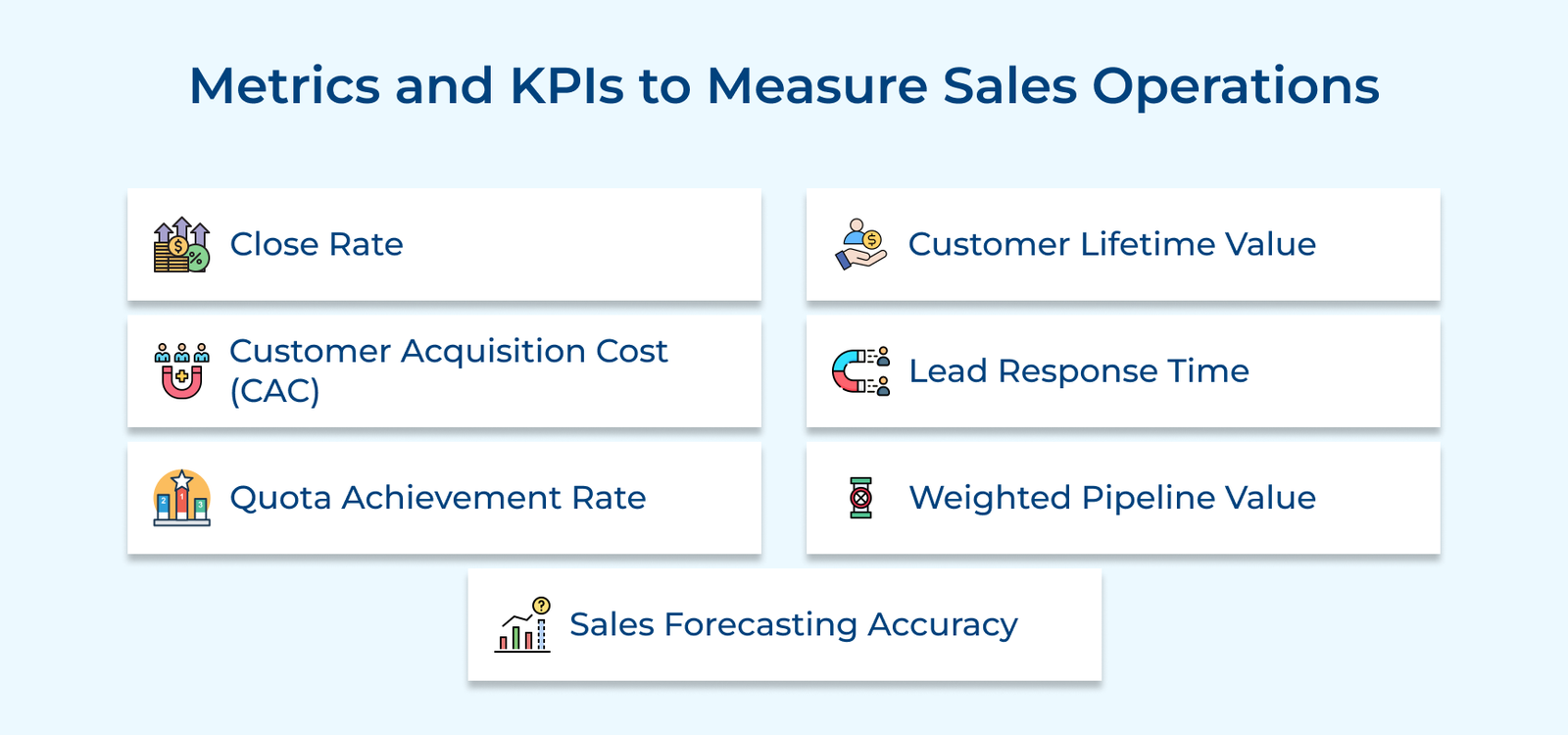
Metrics and KPIs to Measure Sales Operations

Close Rate
The metric measures the percentage of leads that result in successful sales. It’s calculated by dividing the number of closed deals by the total number of leads or opportunities. A high close rate indicates effective sales processes and skilled salespeople. Focus on lead quality, sales training and refining the sales pitch.

Customer Acquisition Cost (CAC)
CAC represents the total cost of acquiring a new customer, including marketing expenses, sales salaries and other related costs. It’s calculated by dividing total acquisition costs by the number of new customers acquired in a given period. A lower CAC indicates more efficient sales and marketing efforts. Streamline the sales process, target high-quality leads and improve marketing efficiency to optimize CAC.

Quota Achievement Rate
The KPI measures the percentage of sales representatives meeting or exceeding their assigned quotas. It’s calculated by dividing the number of reps who achieved their quota by the total number of reps. A high quota achievement rate suggests effective sales strategies and motivated teams. Provide better training, optimize territory assignments and offer performance-based incentives.

Customer Lifetime Value (CLV)
CLV estimates the total revenue a business can expect from a single customer account throughout the business relationship. It’s calculated by multiplying the average purchase value by the average purchase frequency rate and the average customer lifespan. A high CLV indicates strong customer relationships and effective upselling/cross-selling strategies. Focus on customer retention, personalized experiences and value-added services to improve CLV.

Lead Response Time
The metric measures the average time it takes for sales representatives to respond to new leads or inquiries. Faster response times correlate with higher conversion rates. Implement automated lead routing, prioritize high-quality leads and establish clear response time guidelines for the sales team to improve lead response time.

Weighted Pipeline Value
The KPI provides a more accurate forecast of potential revenue by assigning probability percentages to deals in various stages of the sales pipeline. It’s calculated by multiplying the value of each opportunity by its probability of closing. A robust weighted pipeline value indicates a healthy sales funnel and potential for future growth. Focus on moving deals through the pipeline efficiently and accurately assessing deal probabilities.

Sales Forecasting Accuracy
The sales forecasting metric compares actual sales results to forecasted sales, typically expressed as a percentage. High forecasting accuracy enables better resource allocation and strategic planning. Use historical data, implement advanced forecasting tools and regularly adjust the forecasting methods to improve forecasting accuracy.

Best Practices For Sales Operations Process

Understanding the best practices in sales operations can make a significant difference even if it’s a seasoned sales professional or a budding entrepreneur looking to scale the business.

Best Practices to Improve Sales Operations

1. Define a Sales Operations Mission Statement

A clear mission statement aligns the sales operations team with business objectives. It should articulate the team’s purpose, goals and value proposition. The statement serves as a guiding light, ensuring all activities contribute to the organization’s success. Let’s assume: “To optimize sales processes, leverage data-driven insights and provide strategic support to maximize revenue growth.”

2. Collaborate on Core Strategy Formulation

Sales operations should work closely with sales leadership and other departments to develop the core sales strategy. The collaboration ensures that operational processes align with strategic goals. The process can provide valuable insights into market trends, customer behavior and internal capabilities by participating in strategy sessions. The strategy leads to more informed decision-making and effective execution.

3. Motivate the Team to Increase Efficiency

Implement performance metrics and incentives that encourage efficiency. Regularly recognize and reward team members who contribute to process improvements or achieve outstanding results. Facilitate a culture of continuous learning, providing opportunities for skill development and career growth. Encourage open communication to drive collective improvement and maintain high team morale.

4. Enhancing Customer Relationship Management with Data-driven Insights

Leverage advanced analytics and CRM tools to gain a deeper understanding of customer behavior, preferences and pain points. Use the insights to personalize sales approaches, improve lead scoring and identify cross-selling or upselling opportunities. Regularly analyze customer data to detect trends, forecast demand and inform product development or marketing strategies.

5. Clarify Roles Between Sales Operations and Sales Enablement

While both functions support the sales team, it’s crucial to define distinct responsibilities to avoid overlap and ensure efficient resource allocation. Sales operations typically focus on strategy, analytics and process optimization. Sales enablement concentrates on training, content creation and direct sales support. Communicate the roles to the entire organization and establish seamless collaboration mechanisms between the two functions to maximize their combined impact.

Examples of Sales Operations

Here are five examples of brands that have taken significant steps to improve their sales operations.

1. Amazon
As one of the largest e-commerce companies in the world, Amazon continuously works on optimizing its sales operations. Amazon has invested heavily in streamlining its sales processes from its user-friendly website interface to its fast and reliable shipping options. Amazon uses advanced data analytics and machine learning algorithms to personalize product recommendations for its customers, increasing the likelihood of making a sale.

2. McDonald’s
McDonald’s, the fast-food chain, has revamped its sales ops by introducing digital ordering and delivery options. Partnering with third-party delivery services and implementing mobile ordering systems has helped McDonald’s expand its customer reach. The company’s focus on digital innovation has helped drive sales growth and adapt to changing consumer preferences.

3. Coca-Cola
Coca-Cola is a global beverage company that focuses on improving its sales operations through strategic partnerships and innovative marketing campaigns. Coca-Cola ensures that its products are readily available to consumers worldwide by collaborating with distributors and retailers. The company also leverages digital marketing strategies to engage with customers and drive sales through online channels.

4. Tesla
Tesla, the electric vehicle manufacturer, has revolutionized the automotive industry with its direct-to-consumer sales model. Tesla has simplified the purchasing process and eliminated unnecessary intermediaries by bypassing traditional dealerships and selling vehicles directly to customers. The approach improves sales efficiency and allows Tesla to maintain control over its brand image.

5. Zappos
Zappos, known for its exceptional customer service, is highly focused on improving sales operations process. The company offers free shipping, a generous loyalty program and 24/7 customer support to provide a seamless shopping experience. Zappos has built a loyal customer base by prioritizing customer satisfaction and investing in sales training for its employees.

Streamline Sales Processes with Sales Operations

Streamlining sales processes through effective sales operations is crucial for modern businesses aiming to stay competitive. Companies can optimize their sales strategies, improve efficiency and boost performance by focusing on key metrics. Sales Ops provides the framework for data-driven decision-making, allowing teams to identify bottlenecks, refine tactics and allocate resources more effectively.

As markets become increasingly complex and customer expectations evolve, sales operations help businesses adapt quickly to changing conditions. A well-executed Sales Support Operations strategy results in increased revenue, reduced costs and enhanced predictability in sales forecasting. Continuously optimizing key metrics helps businesses create a scalable, efficient sales machine that drives sustainable growth.

FAQs about Sales Operations

Revenue operations is a strategic approach that aligns marketing, sales and customer success teams to drive growth. Revenue operations create value by improving collaboration, increasing productivity by streamlining processes, implementing efficient technology and optimizing data management.

Sales analytics is the process of analyzing sales data to improve sales forecasting and strategies. It matters because it helps businesses understand customer behavior, optimize sales processes and make data-driven decisions to boost revenue. Utilizing sales analytics can help companies track performance, identify trends and increase sales effectiveness.

The four sectors of sales ops functions include strategy, analytics, sales process optimization and tools management. The sectors work together to streamline sales processes, improve data analysis and enhance sales team productivity. Sales operations can drive revenue growth and business success by focusing on the key areas.

Sales ops teams are structured with a director overseeing the team, supported by analysts who focus on different aspects of sales operations such as data analysis and sales technology. The team works closely with sales, marketing and finance departments to streamline processes, improve sales performance.

A successful sales ops strategy includes clear goals, effective communication, data-driven decision-making, streamlined processes and ongoing performance evaluation. Companies can drive revenue growth by aligning sales with operations, optimizing systems and prioritizing customer needs.