1. Prospecting
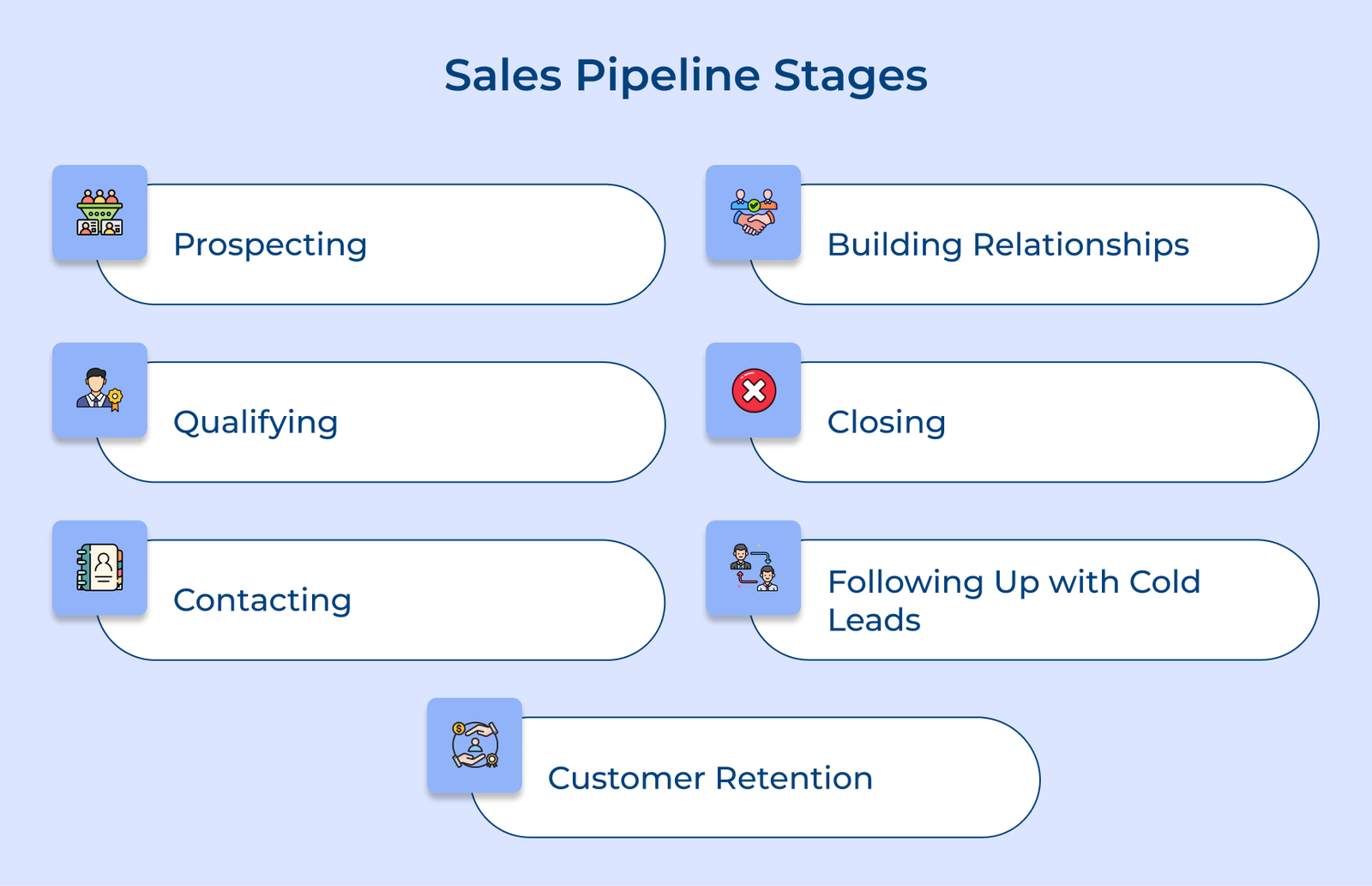
Prospecting is the initial stage where the business identifies potential customers who might be interested in the product or service. It involves researching the target market, generating leads through various channels and creating a list of prospects to pursue.
Here’s how businesses typically source new prospects:
- Industry events and trade shows: Create opportunities to meet decision-makers directly, understand their needs and start conversations that can lead to qualified sales opportunities.
- Referrals from existing customers: Bring in prospects through trusted recommendations. It gives the sales teams access to leads who already have some level of interest and confidence in the business.
- Inbound inquiries: Attract potential customers through valuable content and website visits, allowing interested prospects to reach out when they are actively exploring a solution.
2. Qualifying
Once the business identifies potential leads, the next step is to qualify them. The stage involves assessing if a prospect has a genuine need for the offering, the budget to afford it and the authority to make purchasing decisions.
Qualification often involves initial conversations or surveys to gather more specific information about the prospect’s needs, challenges and buying timeline. The stage is critical for focusing the efforts on the most promising leads and avoiding wasted time on those unlikely to convert.
3. Contacting
Once prospects are qualified, the business initiates more formal contact to introduce the product or service. It often involves sending personalized emails, making phone calls, or arranging initial meetings.
Let’s consider that the sales rep sends a tailored email to the IT director. It highlights how their project management tool has helped similar companies improve efficiency. They propose a brief demo call to showcase the software’s features.
4. Building Relationships
Once initial contact is made and the prospect shows interest, the focus shifts to building a relationship. Businesses might share relevant content, provide product demonstrations, or offer free trials.
Here’s what typically strengthens trust during this stage:
- Customer case studies: Share examples that reflect the prospect’s industry, challenges and goals.
- Personalized product walkthroughs: Focus the demo on relevant use cases instead of covering features that may not matter to the prospect.
- Early stakeholder introductions: Bring key stakeholders into the conversation early to build internal alignment before the closing stage.
The key is to position the business as a trusted advisor rather than just a salesperson.
Businesses gain a deeper understanding of the prospect’s needs and decision-making process.
5. Closing
The closing stage is where the business aims to convert the prospect into a customer.
It typically involves presenting a formal proposal or quote, negotiating terms and addressing any final concerns.
Make sure the business has the adaptability and creativity necessary to come up with solutions that benefit all sides. The closing stage may involve multiple touchpoints and stakeholders, especially in complex B2B sales.
6. Following Up with Cold Leads
Not all leads will progress smoothly through the pipeline. Some may go cold due to timing issues, budget constraints, or other factors.
The follow-up stage involves periodically reaching out to cold leads to rekindle interest.
It might include sharing new product features, case studies, or industry insights that could reignite their interest. The key is to stay on their radar without being pushy, so when their circumstances change, the solution is top of mind.
7. Customer Retention
The final stage of the pipeline focuses on retaining and growing relationships with existing customers. It involves ensuring customer satisfaction through excellent support, regular check-ins and proactive problem-solving.
The factors that keep customers engaged and support long-term retention at this stage:
- Proactive renewal check-ins: Connect with customers before renewal concerns emerge, giving teams time to address issues and reinforce value.
- Personalized upsell offers: Recommend relevant upgrades based on actual product usage, customer needs and changing behavior.
- Dedicated support channels: Give customers a direct way to get help so teams can resolve issues quickly and reduce unnecessary frustration.
Businesses secure repeat business and increase the likelihood of referrals by nurturing the relationships. A virtuous cycle is created that feeds back into the prospecting stage of the pipeline.