Inside Sales

Inside Sales Guide: Tools, Tips & KPIs

Unlock the potential of inside sales with strategies designed to optimize sales workflow. Learn about the key metrics and accelerate growth for lasting success!

No credit card required. Easy setup

Inside Sales

Trusted by Leading Brands

Turn Conversations into Conversions—Inside Sales That Drive Success!

Streamline your process, close deals faster and build stronger customer relationships with inside sales that truly work!

Cost-Efficient Operations

Now reduce travel and accommodation expenses by empowering your sales teams to close deals remotely. Allocate the budget more effectively and focus those efforts where they can make the most impact.

Broadened Reach

The approach helps reps to engage with prospects across multiple regions without geographical constraints. Expand your market presence from anywhere now with just an internet connection.

Accelerated Sales Cycle

Speed up the journey from lead generation to deal closure through instant communication and timely follow-ups. When prospects are engaged and nurtured in real time, the sales cycle becomes short, enabling the team to close deals faster.

Data-Driven Decisions

Leverage the power of analytics to track performance, identify trends and optimize your sales strategies. The real-time insights being at the fingertips lets the team make smarter, more informed decisions that directly impact results.

Stay Flexible and Adaptable

Inside sales allow reps to stay agile and quickly adjust strategies to meet the ever-changing demands of the market. Be it responding to new trends, competitive shifts or customer feedback, the team can seize emerging opportunities.

Increased Productivity

Maximize efficiency by streamlining workflows and focusing on high-impact tasks. Inside sales eliminate downtime by automating routine activities, freeing your reps to prioritize what truly drives results—closing deals and building relationships that matter.

Traditional field sales methods are becoming increasingly inefficient and costly. Companies struggle to reach potential customers effectively, resulting in missed opportunities. The pressure to close deals is mounting, while budgets tighten and competition intensifies. Sales teams find themselves trapped in a cycle of inefficiency, unable to adapt to changing buyer behaviors and expectations. Enter inside sales – a modern approach that leverages technology and remote communication to connect with prospects.

Let us explore the benefits of remote sales, strategies for implementation, common challenges faced by teams and essential tools that drive success. Let’s dive in to revolutionize the sales process and boost the bottom line.

What is Inside Sales?

Inside Sales refers to a sales approach where representatives conduct the majority of their sales activities remotely. It typically involves an office setting, using phone calls, emails, video conferencing and other digital communication tools. The approach contrasts with traditional outside sales, where salespeople meet clients face-to-face.

How does Inside Sales Work?

Inside sales works by leveraging technology to reach and engage potential customers efficiently. Sales representatives use customer relationship management (CRM) software to track leads, manage interactions and analyze data. They conduct research on prospects, initiate contact through various channels and guide them through the sales process remotely.

The process typically involves a series of touchpoints, including initial outreach, qualification calls, product demonstrations, proposal submissions and follow-ups. Reps use their product knowledge to build relationships, address concerns and close deals without the need for in-person meetings.

Key objectives:

  • Increase sales efficiency and reduce costs associated with travel and face-to-face meetings.
  • Expand market reach by contacting a larger number of potential customers.
  • Improve lead qualification and nurturing through data-driven insights.
  • Enhance customer experience with timely and personalized communication.
  • Accelerate the sales cycle by leveraging technology and streamlined processes.

What are the Benefits of Inside Sales?

We’ll explore the compelling benefits of adopting an inside sales strategy and how it can lead to increased profitability for the business.

Benefits of Inside Sales

1. Enhanced Team Productivity
Inside sales representatives can handle more customer interactions per day compared to field sales. They leverage technology to manage their time, schedule follow-ups and nurture leads efficiently. The approach allows for a higher volume of customer touchpoints, leading to increased sales opportunities.

2. Accelerated Sales Cycles
The remote nature of inside sales enables quicker response times to customer inquiries. Representatives can instantly access information, share digital resources and schedule virtual demonstrations. The immediacy helps move prospects through the sales funnel faster, reducing the time from initial contact to closing the deal.

3. Lower Customer Acquisition Costs
Inside sales significantly reduce travel expenses, accommodation costs and other overheads associated with field sales. The ability to reach a broader audience remotely also means businesses can expand their market reach without proportionally increasing costs, resulting in a lower cost per acquisition.

4. Enhanced Visibility and Analytics
Digital tools used in remote sales provide detailed insights into customer interactions, sales activities and performance metrics. The data-driven approach allows managers to track progress in real time, identify bottlenecks and make informed decisions to optimize the sales process.

5. Improved Revenue Forecasting
The wealth of data collected through inside sales enables more accurate revenue predictions. Businesses can forecast future sales with greater precision by analyzing historical data, conversion rates and pipeline metrics, aiding in strategic planning.

6. Better Sales and Marketing Alignment
Remote sales teams often work closely with marketing departments, sharing valuable customer insights. The collaboration leads to more targeted marketing campaigns, better-qualified leads and a smoother handoff between marketing and sales. The result is a more cohesive customer journey and improved conversion rates.

What is the Inside Sales Process?

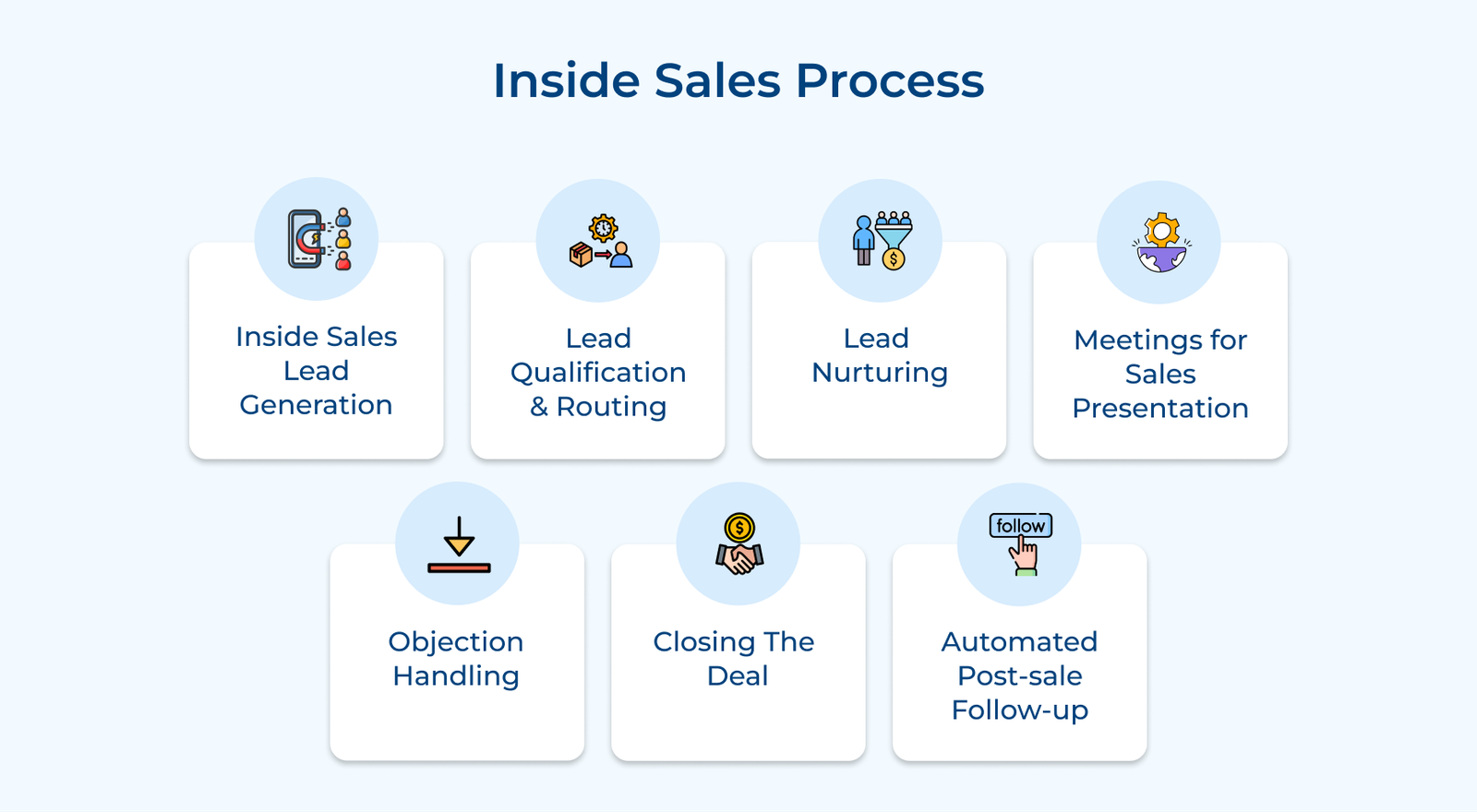
Let’s delve into the key stages of the inside sales process that can help businesses maximize their sales potential and drive success for their organization.

Inside Sales Process

1. Inside Sales Lead Generation

Lead generation is the crucial first step in the inside sales process. It involves identifying and attracting potential customers through various channels. The step can include inbound marketing techniques like content marketing and social media engagement, as well as outbound methods such as cold calling, email and targeted advertising. The goal is to create a steady stream of prospects interested in the product or service.

2. Lead Qualification & Routing

Once leads are generated, they must be qualified to determine their potential value and readiness to purchase. The process involves assessing factors like budget, authority, need and timeline (BANT). Qualified leads are then routed to the appropriate sales representatives based on factors such as industry expertise, geographic location, or product specialization. Effective lead qualification ensures that sales efforts are focused on the most promising opportunities.

3. Lead Nurturing

Not all qualified leads are immediately ready to buy. Lead nurturing is the process of building relationships with prospects over time. They must be provided with valuable information and maintain engagement until they’re ready to make a purchase decision. It often involves targeted email campaigns, personalized content and periodic check-ins to keep the company top-of-mind.

4. Meetings for Sales Presentation

Once a lead shows strong interest, the next step is to schedule a sales presentation. It typically occurs via phone or video conference in inside sales. The presentation should be tailored to the prospect’s specific needs and challenges, demonstrating how the offering can provide value. Effective presentations are concise, engaging and focused on addressing the prospect’s pain points.

5. Objection Handling

During the sales process, prospects often raise concerns or objections. Skilled remote sales professionals anticipate common objections and prepare thoughtful responses. The key is to listen carefully, acknowledge the prospect’s concerns and provide clear, confident answers that address their reservations. The process often involves reframing objections as opportunities to highlight your product’s strengths.

6. Closing the Deal

Closing is the culmination of the sales process, where the prospect commits to making a purchase. Effective closing techniques in inside sales include creating a sense of urgency, offering limited-time incentives and clearly outlining the next steps. The goal is to make it easy for the prospect to say “yes” while ensuring they feel confident in their decision.

7. Automated Post-sale Follow-up

The sales process doesn’t end with closing the deal. Automated post-sale follow-up helps ensure customer satisfaction and can lead to upsells, cross-sells and referrals. It may include automated email sequences to onboard new customers, surveys to gather feedback and periodic check-ins to identify additional needs. Effective post-sale follow-up not only improves customer retention but also generates valuable insights for improving the product and sales process.

Omnichannel Helpdesk and Ticketing System

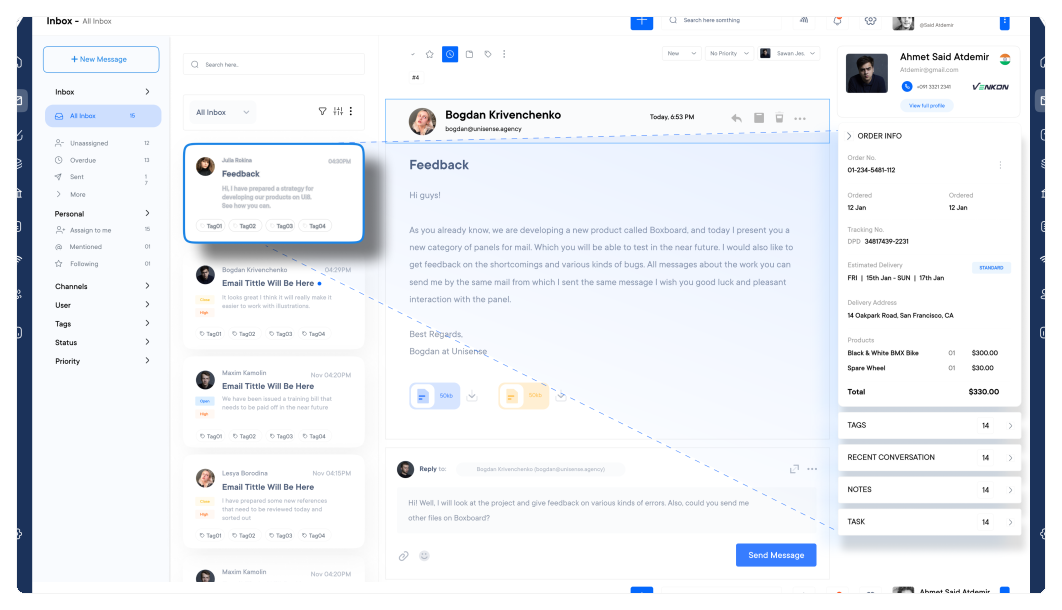
Turn Every Support Issues into Personalized Conversations with Veemo’s Omnichannel Helpdesk and Ticketing System. Make customer happiness your top priority with a digital first customer experience (CX) approach

Radically new solutions for data

Sed ut perspiciatis unde omnis iste natus error sit voluptatem accusantium doloremque laudantium, totam rem aperiam, eaque ipsa quae ab illo inventore veritatis et quasi architecto beatae vitae dicta sunt explicabo.

Radically new solutions for data

Sed ut perspiciatis unde omnis iste natus error sit voluptatem accusantium doloremque laudantium, totam rem aperiam, eaque ipsa quae ab illo inventore veritatis et quasi architecto beatae vitae dicta sunt explicabo.

Inside Sales vs Outside Sales

Check out the key distinctions of inside sales vs outside sales, uncover the advantages of each and help you determine which approach aligns best with the goals.

Inside Sales vs Outside Sales

1. Location and Meeting Style
Inside Sales representatives work primarily from an office or remotely, conducting sales activities via phone, email and video conferencing. Outside Sales reps, travel to meet clients face-to-face at their locations or industry events. The fundamental difference impacts the nature of client interactions and relationship-building approaches.

2. Cost Efficiency
Remote Sales typically have lower operational costs due to reduced travel expenses and the ability to manage a larger number of accounts. Outside Sales, while potentially more expensive due to travel and entertainment costs, may be more effective for high-value, complex sales that benefit from in-person interactions.

3. Geographic Reach
Inside Sales can easily cover a broader geographic area, even global markets, without the limitations of travel time and expenses. Outside Sales are often restricted to specific territories or regions due to the need for physical presence, although it can lead to deeper local market knowledge.

4. Sales Cycle Length
Remote Sales generally have shorter sales cycles, as interactions are more frequent and easily scheduled. The approach is often more suitable for transactional or less complex sales. Outside sales may have longer cycles but can be more effective for building long-term relationships and closing larger, more complex deals.

5. Technology Utilization
Inside Sales relies heavily on technology tools such as CRM systems, video conferencing platforms and sales automation software. While Outside Sales also uses the tools, there’s a greater emphasis on in-person presentation skills and adapting to various meeting environments.

How to Build a Successful Inside Sales Strategy: 8 Tips & Best Practices

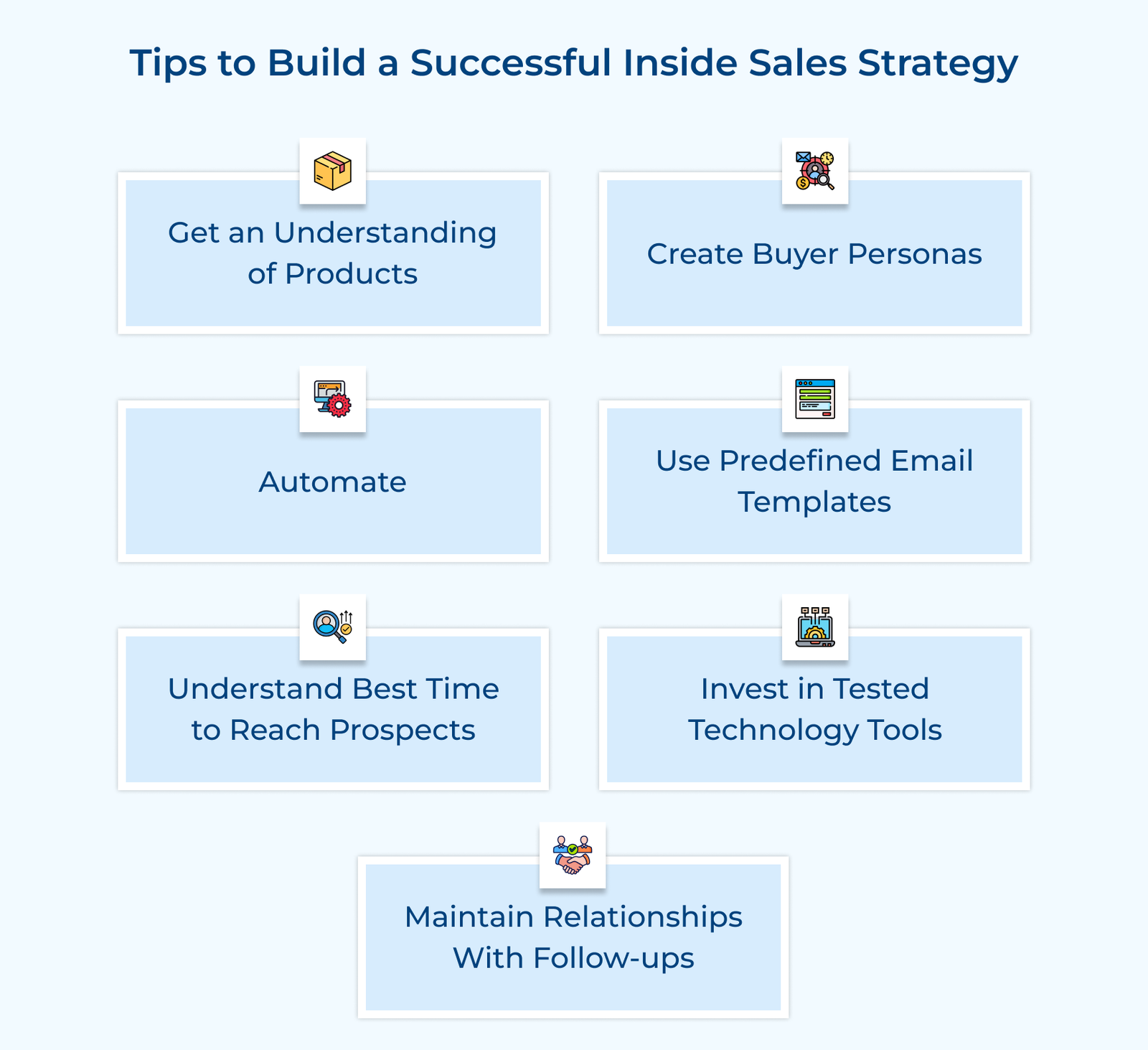
Ready to refine your approach? Let’s dive into the essential tips that will transform the inside sales strategy into a powerhouse for success.

Tips to Build a Successful Inside Sales Strategy

1. Get a Thorough Understanding of the Products

Getting a thorough understanding of the products is crucial for building a successful inside sales strategy. In-depth product knowledge allows sales representatives to confidently address customer inquiries and overcome objections.

Understanding unique selling points helps differentiate the offerings from competitors, enabling reps to position products effectively. The ability to articulate product benefits clearly and concisely is essential for connecting features to customer needs.

Best practices:

  • Develop a comprehensive product training program that includes hands-on experience and regular knowledge refreshers.
  • Create detailed comparison guides highlighting the products’ unique selling points against competitor offerings.
  • Practice benefit-focused pitches that translate technical features into tangible customer advantages.

2. Create Buyer Personas

Creating buyer personas is a crucial step in building a successful inside sales strategy. The fictional representations of ideal customers help sales teams understand their target audience’s needs, pain points and decision-making processes. Start by analyzing existing customer data, conducting interviews and researching market trends. Gather information on demographics, behavior patterns, motivations and goals.

Using personas allows sales teams to tailor their approach, messaging and solutions to specific customer types. Personalization increases the relevance of sales interactions and improves conversion rates. Teams can prioritize leads, customize pitches and address objections more effectively by aligning sales strategies with buyer personas.

Best practices:

  • Regularly update personas based on new data and market changes.
  • Train sales teams to recognize and adapt to different persona types.
  • Use personal insights to create targeted content and sales materials.

3. Automate as Much as You Can

Automation is a crucial step in building a successful remote sales strategy, offering numerous benefits such as increased efficiency, improved lead quality and enhanced engagement. Sales teams can focus on high-value activities that drive revenue by automating repetitive tasks.

Key areas:

  • Lead generation: Use AI-powered tools to identify and qualify prospects.
  • Email follow-ups: Implement automated sequences to nurture leads systematically.
  • Scheduling: Utilize calendar integration tools to streamline appointment setting.

While automation streamlines processes, it’s essential to balance it with personalization. Tailoring automated communications to individual prospects ensures a human touch remains in the sales process, enhancing stronger relationships and higher conversion rates.

Best practices:

  • Start small: Identify one process to automate and gradually expand.
  • Regularly review and refine: Continuously optimize automated workflows based on performance data.
  • Train the team: Ensure sales reps understand how to leverage automation tools effectively.

4. Use Predefined Email Templates

Incorporating predefined email templates into the inside sales strategy can significantly enhance efficiency and effectiveness. The advantages of using email templates include saving time, maintaining consistency in messaging and increasing the chances of conversion.

Focus on clarity, conciseness and a compelling call to action that drives engagement to create effective templates. Consider customization strategies like addressing the recipient by name, incorporating industry-specific jargon and referencing news related to their company to tailor the outreach.

Pro tips:

  • Segment your audience: Tailor templates for different customer personas to boost relevance.
  • Test and refine: Regularly analyze response rates and tweak templates based on performance data.
  • Follow up strategically: Use a series of tailored follow-up emails to encourage engagement while keeping the conversation alive.

5. Research and Understand the Best Time to Reach the Prospects

Timing is everything in sales outreach. Connecting with prospects at the right moment can significantly boost engagement and conversion rates. Understanding when the audience is most receptive to communication is vital for effective outreach. Consider analyzing data from previous interactions to determine optimal contact times.

Examine email open rates, response times and sales activity to identify patterns. Adapting to prospect preferences is essential. Each prospect may have different schedules or peak hours for communication. Sending surveys to gauge their preferred contact times can help tailor the approach for better results.

Pro tips:

  • Analyze historical engagement data using the CRM to pinpoint trends in response times.
  • A/B test outreach times by segmenting the audience into groups and monitoring results.
  • Continuously adapt the contact strategy based on feedback and insights, ensuring alignment with evolving prospect preferences.

6. Invest in Highly Tested Technology Tools

Investing in highly tested technology tools is a crucial step in building a successful inside sales strategy. The tools streamline processes, enhance productivity and provide valuable insights into customer behavior. Essential tools for remote sales include CRM systems, sales engagement platforms, analytics software and communication tools like VoIP or video conferencing solutions.

When selecting appropriate tools, consider factors such as integration capabilities, scalability, user-friendliness and alignment with the specific sales processes. Look for solutions with proven track records and positive user reviews. It’s also important to assess the vendor’s reputation, support services and long-term viability.

Pro tips:

  • Provide comprehensive training to ensure all team members can leverage the tools’ full potential.
  • Regularly analyze tool performance metrics to identify areas for improvement and optimization.
  • Continuously gather feedback from the sales team to address pain points and refine the technology stack.

7. Building and Maintaining Relationships with Regular Follow-ups

Building and maintaining relationships through regular follow-ups is crucial for a successful inside sales strategy. Consistent follow-ups demonstrate commitment, keep the company top-of-mind, and provide opportunities to address prospects’ evolving needs. Developing a follow-up strategy involves creating a schedule, personalizing communications and using various channels like email, phone or social media.

The key is balancing persistence with respect for the prospect’s time, which means being consistent without becoming a nuisance. Tailor the approach based on the prospect’s preferences and engagement level, adjusting frequency.

Pro tips:

  • Use a CRM system to track interactions and set reminders for follow-ups.
  • Provide value in each communication, sharing relevant insights or resources.
  • Establish clear next steps after each interaction to maintain momentum.
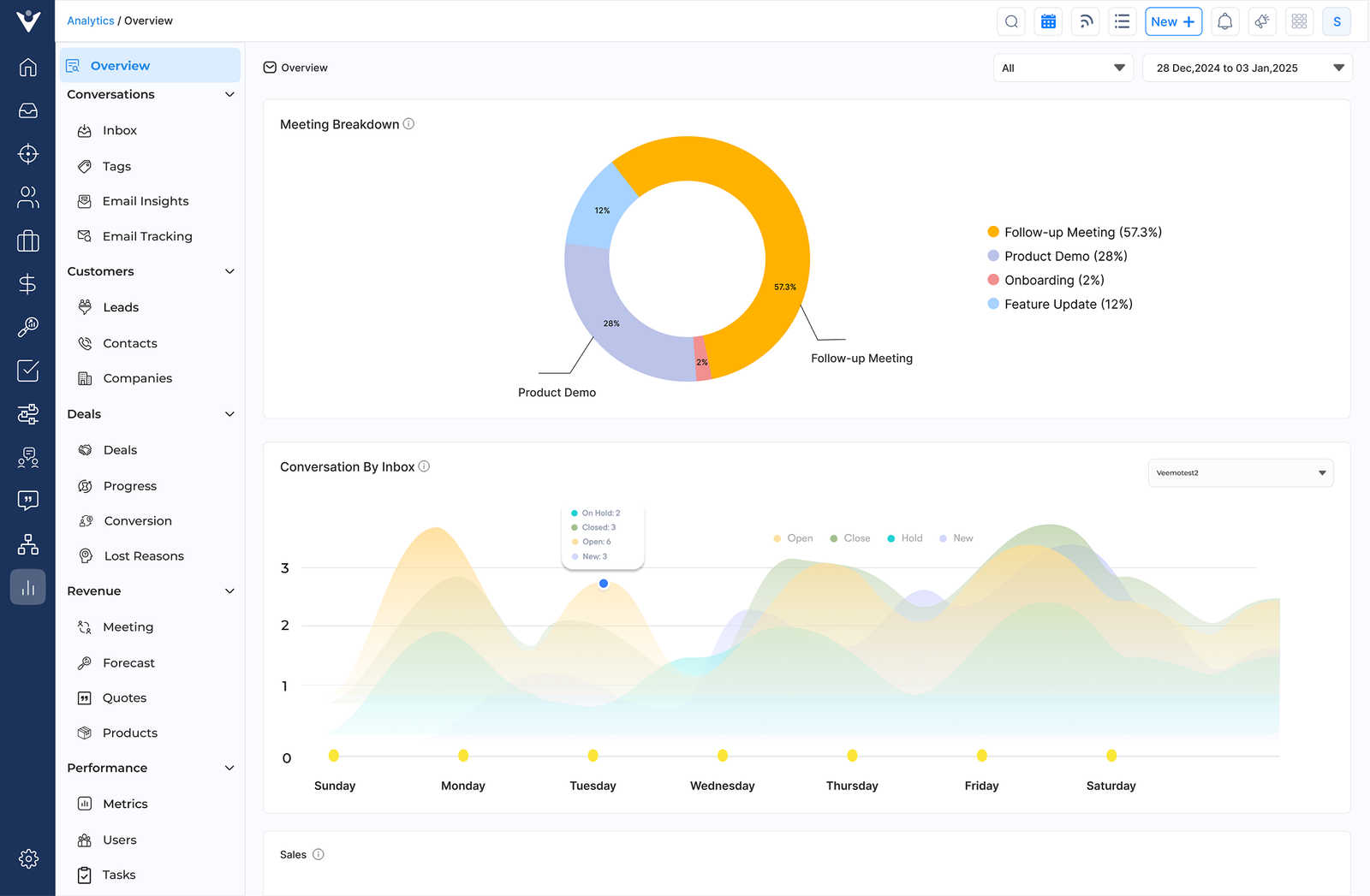
5 Best Inside Sales Tools

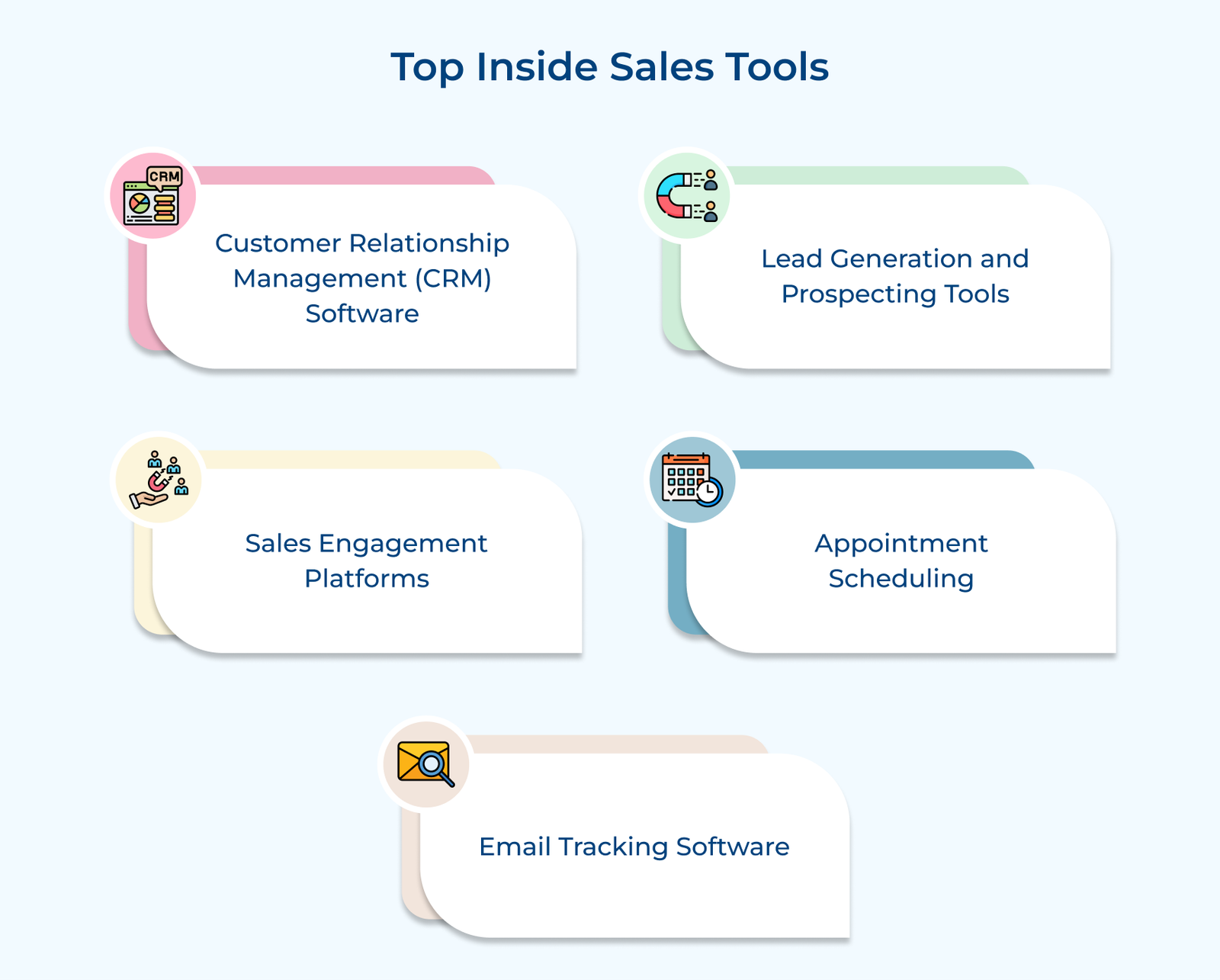
Following are the best inside sales tools that can elevate the sales strategy, enhance collaboration, and drive organizational success. Get ready to unlock the team’s full potential!

Top Inside Sales Tools

1. Customer Relationship Management (CRM) Software

CRM systems are the backbone of inside sales operations. They centralized customer data, interactions and sales pipelines in one place. Popular options like Salesforce, HubSpot and Pipedrive allow sales teams to track leads, manage deals and analyze performance metrics. CRMs enhance collaboration, automate routine tasks and provide valuable insights to optimize sales strategies.

2. Lead Generation and Prospecting Tools

The tools help sales teams identify and qualify potential customers. Platforms like ZoomInfo, LinkedIn Sales Navigator and Hunter.io provide access to vast databases of business contacts and decision-maker details. They often include features for building targeted prospect lists, verifying email addresses and enriching lead data. The tools enable sales reps to focus on high-quality leads and improve conversion rates by streamlining the prospecting process.

3. Sales Engagement Platforms

Tools like Outreach, SalesLoft and Groove centralize and automate multi-channel sales communications. They allow reps to create personalized email sequences, track phone calls and manage social media interactions from a single interface. The platforms often integrate with CRMs and provide analytics to help optimize outreach strategies.

4. Appointment Scheduling

Scheduling tools like Calendly, ScheduleOnce and Chili Piper simplify the process of booking meetings with prospects. They eliminate the back-and-forth of finding mutually available times by allowing leads to self-schedule based on the sales rep’s availability. Many of the tools integrate with CRMs and video conferencing platforms, streamlining the entire meeting process.

5. Email Tracking Software

Email tracking tools such as Yesware, MixMax and Mailtrack provide real-time notifications when prospects open emails, click links, or download attachments. The insights help sales reps gauge interest levels and effectively time follow-ups. Many email tracking solutions also offer templates, scheduling features and integration with CRMs to enhance email productivity.

Inside Sales Metrics and KPIs

The following are the most important inside sales metrics and KPIs that can help you optimize your sales processes.

Inside Sales Metrics and KPIs

1. Lead to Opportunity Ratio
The metric measures how efficiently sales reps convert leads into viable opportunities. A higher ratio indicates better lead qualification and targeting. Focus on refining lead scoring, enhancing qualification processes and aligning marketing efforts with sales criteria to improve the metric.

2. Quota Attainment
The KPI shows the percentage of sales reps meeting or exceeding their assigned targets. It reflects overall team performance and individual effectiveness. Provide targeted coaching, optimize territory assignments and ensure realistic yet challenging goals to boost quota attainment.

3. Sales Cycle Length
The metric tracks the average time from initial contact to deal closure. Shorter cycles generally indicate more efficient processes and better-qualified leads. Streamline the sales process, provide effective sales enablement tools and focus on high-quality leads.

4. Average Deal Size
The average deal size measures the typical monetary value of closed deals. Larger deal sizes often correlate with higher revenue and more efficient resource utilization. Focus on upselling and cross-selling strategies, target higher-value prospects and enhance value proposition communication to increase average deal size.

5. Call to Deal Ratio

The metric shows how many calls, on average, are required to close a deal. It helps gauge the effectiveness of sales conversations and targeting. Enhance call quality through training, refine prospect targeting and optimize the sales pitch and follow-up strategies.

Challenges Faced by Inside Sales Reps

Check out the unique challenges faced by inside sales reps and get insights on how to tackle them head-on, ensuring their success in the vital role.

Challenges Faced by Inside Sales Reps

1. Limited face-to-face Interaction
Inside sales reps lack the benefit of in-person meetings, making it harder to build rapport and read non-verbal cues. Develop strong phone and video conferencing skills. Use technology like screen sharing to enhance presentations. Focus on active listening and asking insightful questions to create meaningful connections.

2. High Call Volumes and Rejection
Remote sales often involve making numerous calls daily, leading to burnout and discouragement from frequent rejections. Set realistic goals and celebrate small wins. Develop a thick skin and view rejection as a learning opportunity. Use call analytics to identify peak times for reaching decision-makers and optimize the schedule.

3. Difficulty Qualifying Leads
Without face-to-face interactions, it can be harder to accurately assess a prospect’s needs and buying potential. Develop a strong qualification framework. Ask targeted questions to uncover pain points and budget. Leverage CRM data and social media research to gather insights before calls. Collaborate with marketing to refine lead scoring systems.

4. Complex Products or Services
Explaining intricate offerings without visual aids or in-person demonstrations can be challenging. Master the product knowledge. Create compelling verbal descriptions and analogies. Use digital presentation tools and video demos effectively. Develop a library of case studies and success stories to illustrate real-world applications.

5. Keeping Up with Evolving Technology
Inside sales rely heavily on technology, which is constantly changing. Staying current can be overwhelming. Embrace a growth mindset. Set aside time for regular training and self-education on new tools and techniques. Participate in industry webinars and conferences. Collaborate with colleagues to share best practices and tips for leveraging new technologies efficiently.

Inside Sales: Where Connections Turn Into Conversions

Inside sales has revolutionized the way businesses connect with customers, transforming cold calls into warm relationships. The sales team can build meaningful connections that drive conversions by leveraging technology and personalized communication. The approach is necessary because customers expect tailored experiences and instant responses.

The approach allows companies to reach a wider audience efficiently, scale their sales efforts and adapt quickly to market changes. The human touch of remote sales, combined with data-driven insights, creates a powerful formula for success. As businesses continue to evolve, remote sales will remain crucial for fostering customer relationships, boosting revenue and maintaining a competitive edge.

FAQs about Inside Sales

Inside sales involve selling products or services remotely, often through phone calls or email. Let’s assume that a software sales representative works from an office to close deals via video calls. Outside sales involve face-to-face interactions. An example would be a sales agent meeting clients at their locations to demonstrate products and negotiate deals in person.

Successful inside sales professionals possess a diverse skill set, including strong communication, active listening and relationship-building skills. They should be comfortable using technology and CRM systems, as well as have a solid understanding of their products or services. Remote sales reps need to be self-motivated, resilient and goal-oriented, as they often work independently to meet their sales targets.

Inside sales are prevalent across various industries, including technology, telecommunications, software as a service (SaaS), pharmaceuticals, financial services and more. Businesses in these sectors often find remote sales more efficient, as they can handle a high volume of leads without the travel expenses associated with outside sales. Industries that rely on quick sales cycles and a consultative selling approach often turn to inside sales for effective customer engagement.

Inside sales professionals rely heavily on various tools and technologies to facilitate their workflows and optimize sales performance. Some commonly used tools include CRM software to manage leads and customer interactions, sales engagement platforms for scheduling calls and analytics tools to measure performance. Communication tools like video conferencing software and chat applications are vital for fostering connections with potential clients.