What is Inbound Lead Generation? Types, Benefits & Tools
Discover how inbound lead generation can boost your sales pipeline. Let’s learn proven strategies to attract, engage and convert high-quality leads through valuable content.
Discover how inbound lead generation can boost your sales pipeline. Let’s learn proven strategies to attract, engage and convert high-quality leads through valuable content.
Tired of chasing leads that never turn into real opportunities? Cold calls and mass blasts usually pull in people who were never a good fit to begin with. Inbound lead generation changes the entire dynamic. You put out content that answers real problems and end up attracting people who already care about what you offer. It feels more natural, builds trust faster and brings in leads who are actually ready to move forward.
The shift to a modern lead capture system takes patience, though the return is worth it. Inbound tactics generate 54% more leads than traditional outbound practices and cost 62% less. Teams that commit to it often outgrow those stuck on old tactics. Strong planning, steady action and the right tools help you build a system that improves month after month. We’ll walk you through the core benefits, simple strategies and useful tools that make inbound work.
Inbound lead generation is a strategic marketing approach focused on attracting potential customers to your business rather than actively pursuing them. Unlike cold calls or direct mail that interrupt people, the approach focuses on helping your audience find you when they’re looking for answers. Offering useful content that speaks to their needs, you attract the right people at the right time, without the hard sell.
Modern B2B buyers don’t rely on sales pitches; they start with research. Inbound lead gen fits this behavior by helping them find clear, useful information as they evaluate their options. B2B buyers are nearly 70% through their purchasing process before engaging with sellers.
Key principles:
Let us go through the key benefits of an inbound lead generation strategy to understand why it has become essential for sustainable business growth.
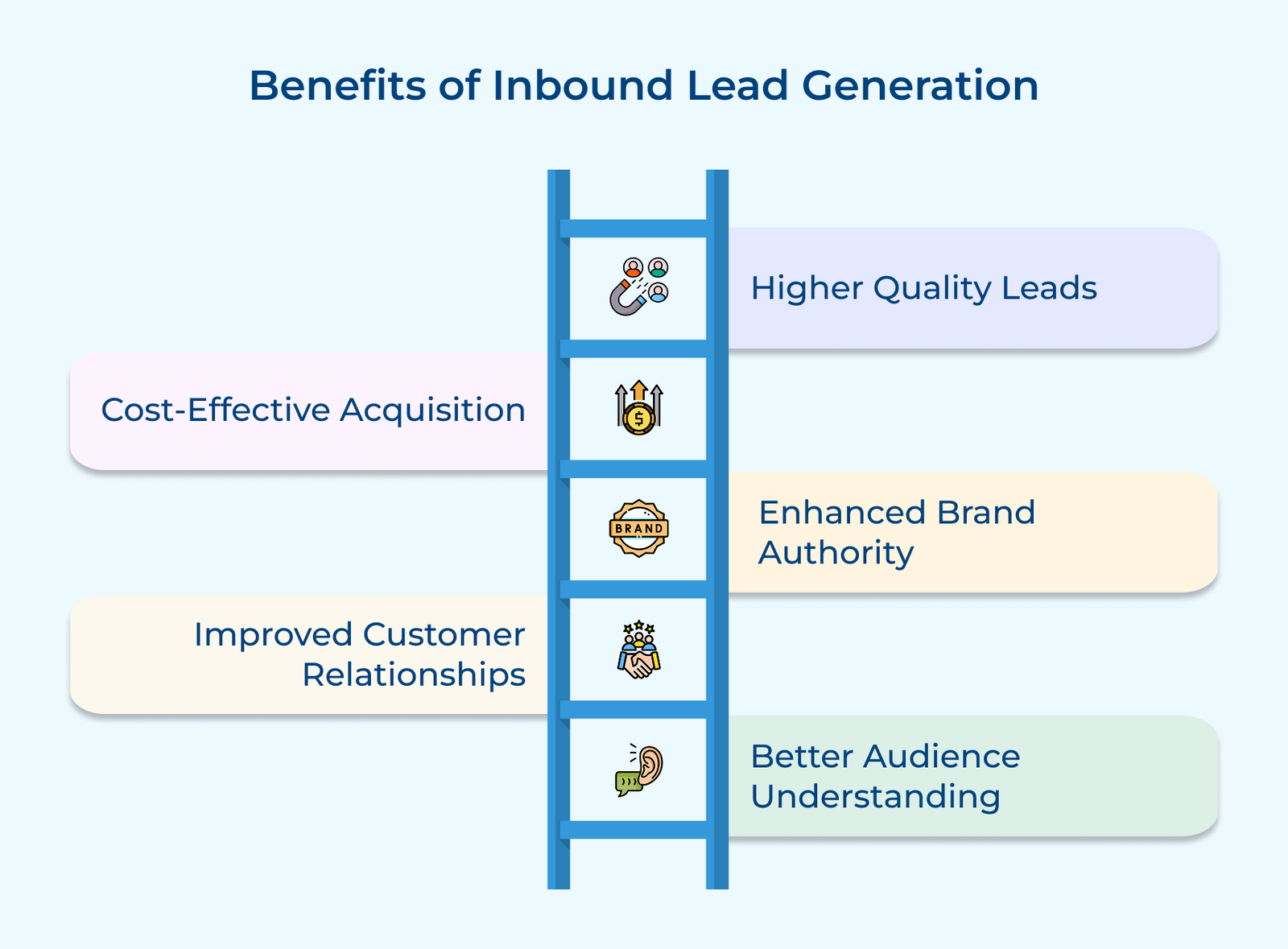
Higher Quality Leads
Inbound leads are typically more qualified because they’ve actively sought out solutions to their problems. The prospects are genuinely interested in what they found in your content and have chosen to engage on their own. The self-selection process means they’re more likely to convert and become valuable long-term customers.
Cost-effective Acquisition
Inbound strategies generally cost less per lead than traditional advertising or outreach methods. Creating good content takes effort upfront but once it’s out there, it keeps working for you without ongoing costs. Evergreen quality creates a compounding effect where your content library builds value and generates leads for months or years.
Enhanced Brand Authority
Publishing helpful and informative content positions your business as a trusted authority in your industry. When people consistently find useful information from you, they start to trust that you know what you’re doing. Established credibility makes them more receptive when you eventually present your products or services as solutions.
Improved Customer Relationships
Inbound methodologies focus on building relationships before making sales pitches. When you share useful, clear information upfront, people are more likely to trust you. The kind of honest, helpful approach builds stronger relationships that last well beyond the first sale.
Better Audience Understanding
Inbound marketing generates substantial data about your prospects’ behaviors and preferences. You can see which topics people care about, the questions they ask most and how they move through your content. The insights help you refine your understanding of customer needs and develop more targeted solutions.
Below are the stages of inbound lead generation and insights on how you can transform your business’s marketing approach to drive results.
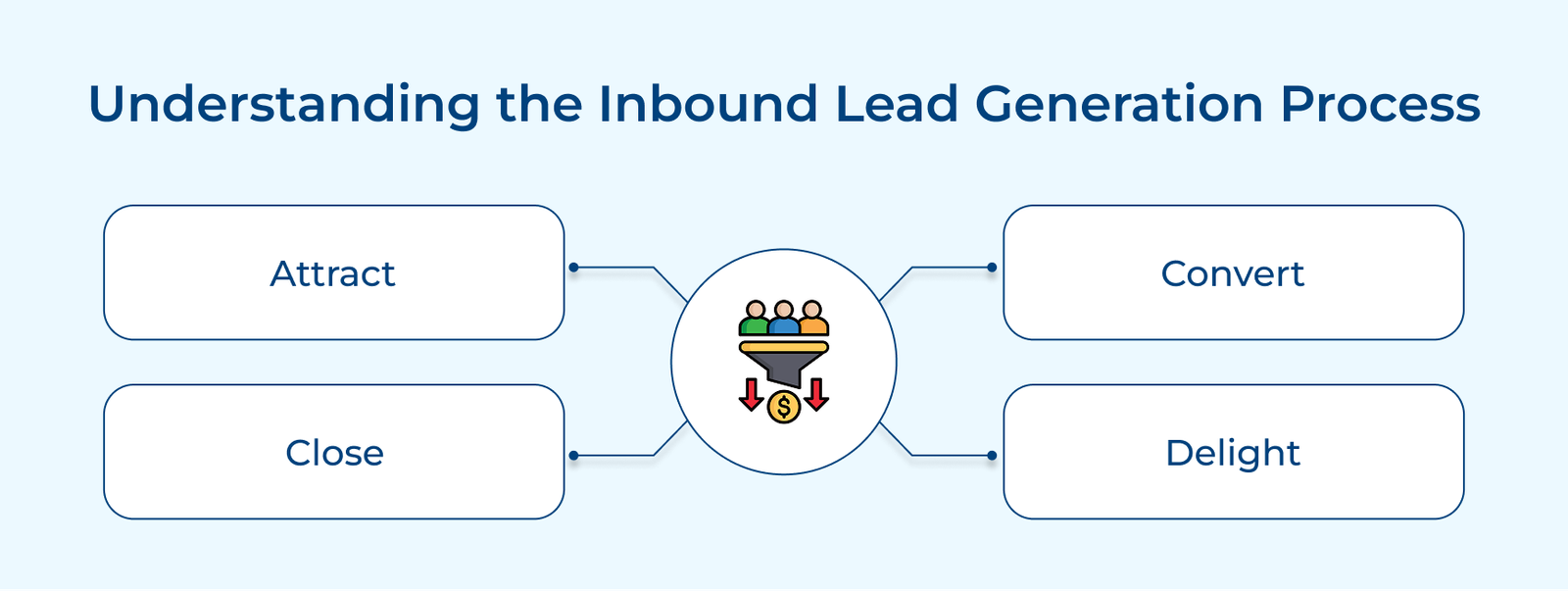
Attract
The first stage focuses on drawing potential customers to your digital properties by creating content that addresses their specific needs and challenges. It starts with knowing who your ideal customer is and creating content that helps answer their questions early in their search for a solution.
Your content strategy should include a mix of blog posts, videos, infographics and social media updates that demonstrate your expertise without overtly selling. Your content should be easy to find when people search for help with their problems and that means making sure it shows up in search results.
Convert
Once visitors arrive at your digital properties, the next challenge is transforming them from anonymous traffic into identified leads. The step involves placing simple, useful prompts like forms or downloads, where they make sense, giving people a reason to share their info without slowing them down.
Good ways to encourage sign-ups include things like useful guides, webinars, free tools and clear landing pages. Whatever you offer should be worth the visitor’s time, something that helps them learn more or solve a problem. In return, you start to understand what they need and they start to trust you.
Close
The final step is about staying in touch and sharing helpful, relevant info until the lead feels ready to decide. It’s about being useful, not pushy. It requires aligning sales and marketing efforts to deliver consistent messaging that addresses each prospect’s unique considerations.
Effective closing strategies include personalized email sequences, targeted case studies that match the prospect’s industry, detailed product demonstrations and consultative sales conversations. Focusing on real problems and clear solutions, you make it easier for buyers to see the value. It becomes easier to explain that value to others involved in the decision.
Delight
The connection doesn’t end after the sale. Continuing to be helpful and responsive, you can turn customers into people who trust you, recommending you to others. It involves proactive education, ongoing support and creating meaningful connections that extend beyond transactional interactions.
Successful delight strategies include customer onboarding programs, exclusive educational content, user communities and personalized check-ins at strategic intervals. Happy clients often share their good experiences, bringing in new people who trust their recommendations, helping you attract prospects naturally.
The following are different types of inbound lead generation strategies, equipping you with insights to refine your approach and enhance your customer acquisition efforts.
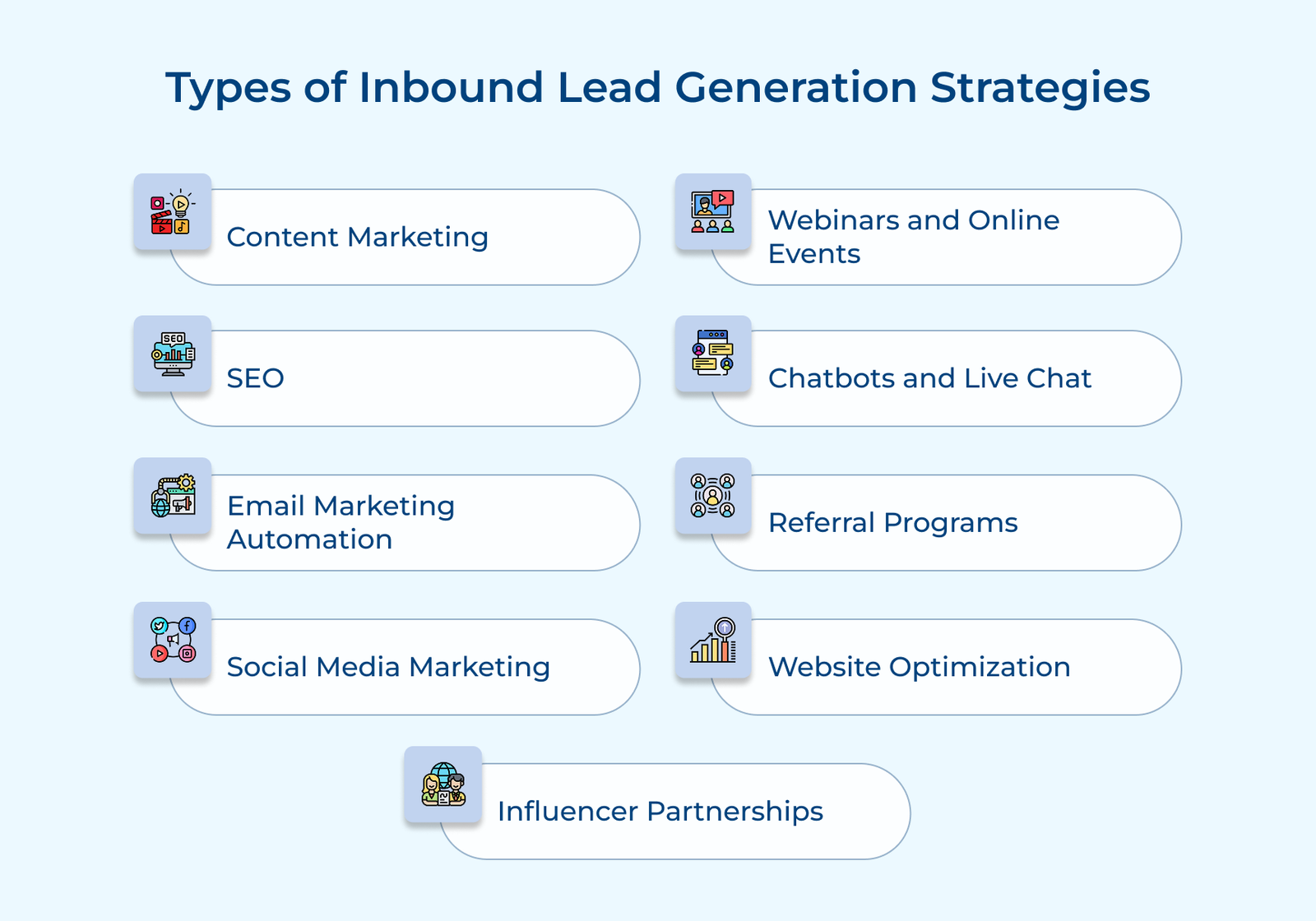
Content marketing focuses on creating valuable information assets that address customer pain points rather than directly promoting your products. Regularly sharing helpful information, you show that you understand your audience’s problems and guide them toward your solution without pressure.
Key content formats for marketing:
Effective content strategies align specific content types with each stage of the buyer’s journey from awareness through consideration to decision. Regular content audits identify performance gaps by analyzing engagement metrics like time on page and conversion rates for each asset.
Best practices:
Search engine optimization represents the foundational practice of optimizing your digital content to improve visibility in search engine results when potential customers are actively looking for solutions. The approach works because it reaches people right when they’re looking for solutions you offer, making it easy to engage without disrupting their day.
Pro tips:
Email marketing automation transforms standard email communications into sophisticated, behavior-triggered sequences that nurture relationships with prospects throughout their buying journey. Inbound lead generation works because it delivers the right content at the right time, based on what each person is interested in.
Creating Behavior-Triggered Pathways
Modern email automation platforms enable you to design complex decision trees where recipient actions determine subsequent communications. When using this strategy, track link clicks, site visits and downloads to tailor content paths. Prospects get information that fits their interests and how far they are in the process.
Personalizing Beyond First Name
Effective automation requires looking beyond basic merge fields to create truly personalized experiences. Use CRM data to group your audience by industry challenges, company size and past content interactions. After that, create messages that address the specific needs and issues each group faces every day.
Maintaining Compliance Standards
When setting up email automation for inbound lead generation, include permission management from the start. Use double opt-in, clear unsubscribe options and handle data properly to stay compliant and build trust with your audience.
Social media marketing draws in the right audience by sharing useful content, building genuine connections and guiding people toward your business naturally. The approach is essential because it allows your brand to engage directly with potential customers where they already spend time, building trust and awareness.
Effective platform selection by business type:
Webinars and online events function as interactive digital gatherings that provide in-depth education while showcasing your expertise directly to interested prospects. Webinars and online events give people useful information in real time. It helps you connect with those already interested enough to show up, while showing that you know your stuff.
Successful implementation begins with selecting topics that address specific pain points in your industry, then promoting them through email campaigns and social channels. During the event, focus on teaching something useful while briefly showing how your solution fits in. Use polls and Q&As to keep people involved, helping them learn what matters most to them.
Chatbots and live chat tools create immediate, personalized communication channels that engage website visitors at their moment of highest interest. Inbound lead generation gives prospects quick answers and collects their contact information at the same time. It turns casual visitors into leads without making them dig through pages or wait for a reply.
How chatbots and live chat generate leads:
A SaaS company implemented an intelligent chatbot on their pricing page that engages visitors after 45 seconds with a simple question about their primary business challenge. The inbound approach helped start real conversations with visitors who might’ve left unnoticed. Offering useful case studies, it captured contact info and sent larger prospects straight to sales for help with tougher questions.
Understanding the differences between inbound vs outbound lead generation will help you spot which one fits your goals, how each brings in leads and where they deliver the strongest results.
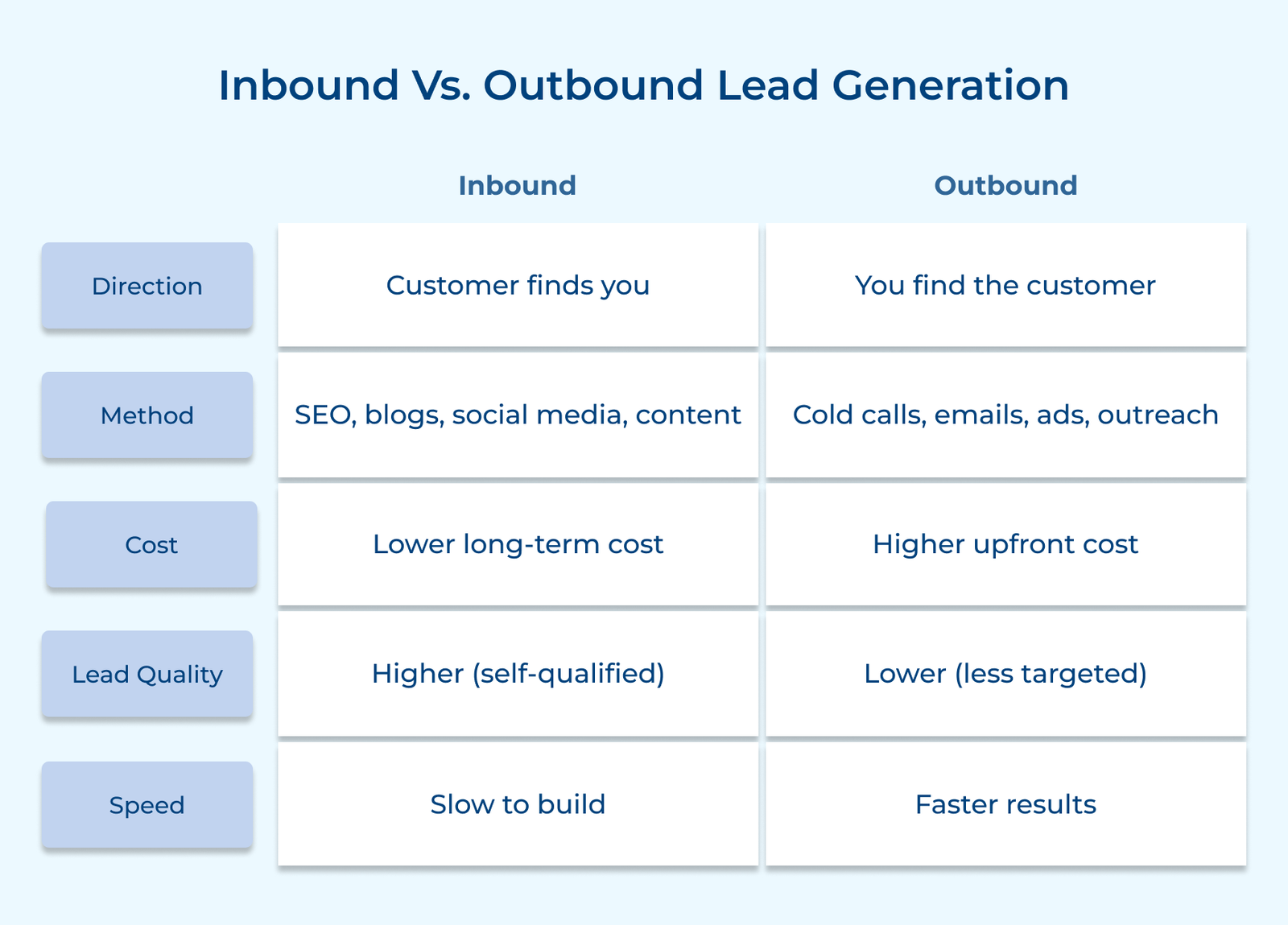
1. Approach and Philosophy
Inbound lead generation operates on a permission-based model where businesses create valuable resources that draw potential customers toward them naturally. This approach honors the buyer’s journey by offering useful info at every step, letting prospects learn and decide on their timeline, without any pressure.
Outbound lead generation follows a direct approach where businesses proactively identify and contact potential customers regardless of whether they’ve expressed interest. The method depends on sales reps or ads interrupting prospects with messages that demand attention and push for quick decisions.
2. Customer Experience and Relationship Building
Inbound methodologies create positive first impressions by offering immediate value before asking for anything in return. The approach earns trust over time by offering useful help and showing your company as a reliable expert, not just a seller, laying the groundwork for lasting relationships.
Outbound techniques often create transactional relationships where the first interaction focuses on securing immediate interest or meetings. While direct sales can work well with ready buyers, it can turn off those still researching who aren’t clear on their needs yet. It risks a negative impression from unwanted interruptions.
3. Cost Structure and Resource Allocation
Inbound strategies require significant upfront investment in content creation, technical infrastructure and audience research before generating leads. The assets keep working long after they’re made, adding value over time and lowering the average cost per lead as your content library grows.
Outbound approaches have more predictable short-term costs directly correlated with campaign scale and frequency. Though quick to start, these costs stay steady or rise as competition grows, forcing you to spend more just to keep up, without creating lasting value.
4. Lead Quality and Sales Alignment
Inbound lead generation produces prospects who have demonstrated specific interests through their content consumption and digital behavior. The self-qualified leads often convert faster since they’ve already learned about their challenges and possible solutions before talking to sales.
Outbound lead generation often delivers higher lead volumes but with more variable quality and buying intent. It means needing stronger qualifications and skilled sales teams to spot which prospects truly fit your solutions, sometimes leading to wasted time on those not ready to buy.
The following are the effective steps to manage your inbound leads successfully, ensuring you not only capture interest but also convert it into action.
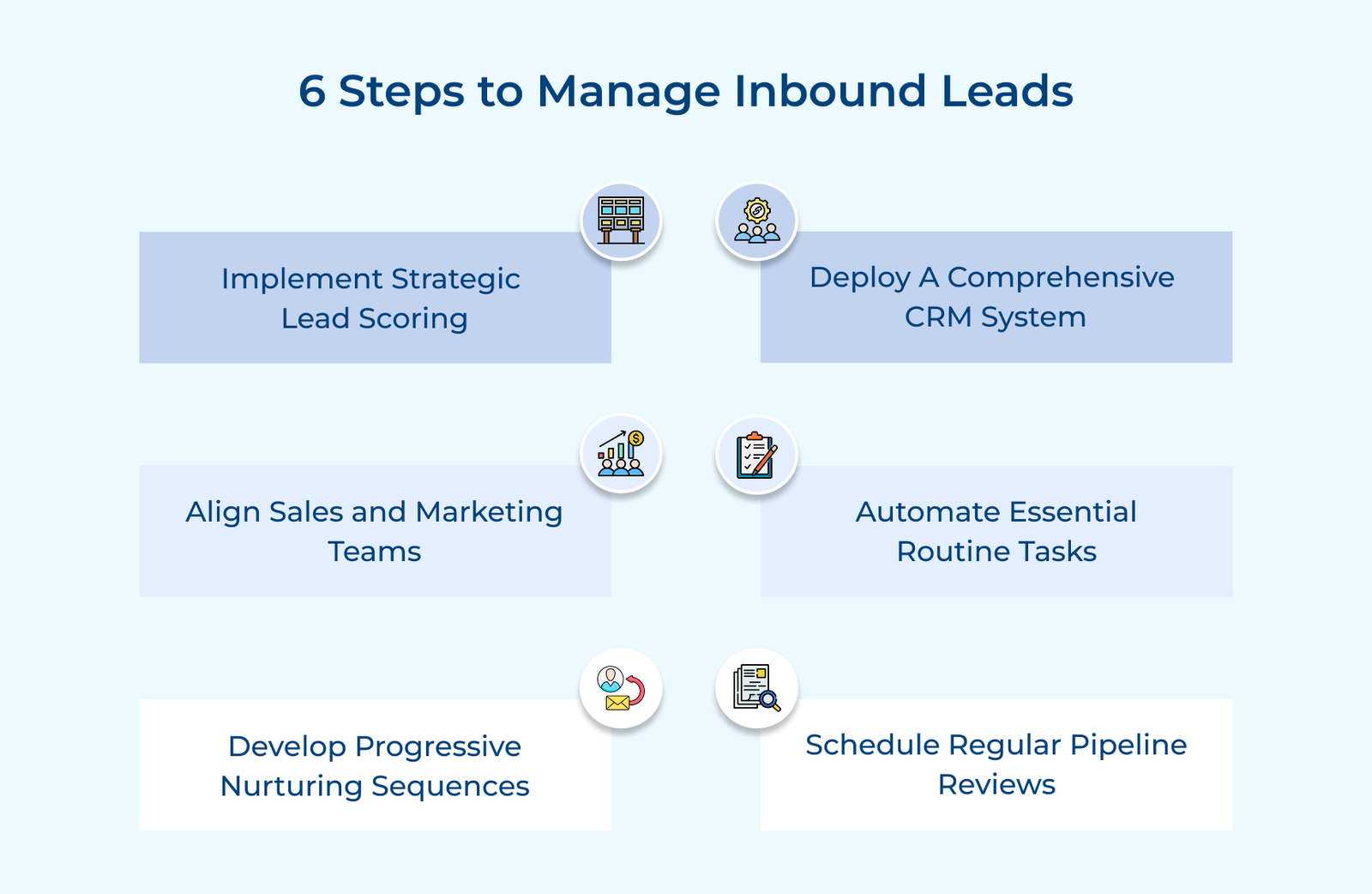
Lead scoring is a systematic approach to ranking prospects based on their perceived value to your organization and their readiness to purchase. The key step helps sales focus on qualified leads, making sure top prospects get timely attention before their interest fades or competitors reach them first.
Identify High-value Behavior Indicators
Begin by analyzing your historical data to determine which prospect actions most reliably predict eventual purchases. Go past simple metrics like email opens and watch for signs like repeated visits to pricing pages or downloading detailed content signals that show genuine buying interest not just casual browsing.
Create a Point-based Qualification System
Develop a comprehensive scoring matrix that assigns appropriate point values to different actions based on their predictive strength. Give basic points for factors like company size and industry, but weigh purchase signals more heavily. Set score thresholds that prompt sales to reach out when prospects show enough interest.
A customer relationship management system serves as the central nervous system for your lead management process. The important step centralizes prospect info, automates key tasks and gives a clear view of the customer’s journey from first contact to final purchase.
Centralize All Prospect Interactions
Set up your CRM to track all key interactions like website visits, content downloads, emails and sales calls to keep a complete record of every touchpoint. Create a complete interaction timeline that shows the prospect’s journey rather than isolated events. The comprehensive view enables more contextual conversations that acknowledge previous engagements instead of treating each interaction as the first.
Establish Consistent Data Protocols
Develop standardized procedures for data entry that ensure information is captured uniformly across all team members. Create required fields for essential qualification data while implementing validation rules that prevent incomplete or inconsistent entries. The steps keep your data clean and make sure decisions are based on clear, accurate information not on incomplete or mixed-up records.
Team alignment happens when sales and marketing are on the sam page. They agree on goals, define what a qualified lead looks like and set a smooth handoff process. It cuts out the usual confusion, keeps the message sharp at every touchpoint and makes both teams accountable for moving prospects toward a sale.
Begin by facilitating structured meetings where both teams define what constitutes a qualified lead and establish shared terminology. Write clear agreements that spell out when and how leads move between teams. Include who’s responsible, expected response times and what actions each person should take at every step.
Actionable tips:
Task automation involves implementing technological solutions that handle repetitive, time-consuming aspects of lead management without human intervention. The key step takes admin tasks off your team’s plate and keeps important processes running smoothly, so sales can spend more time building relationships instead of updating records.
Start by identifying repetitive tasks consuming disproportionate time, such as lead routing, follow-up reminders or data entry. Lay out each step clearly to see where decisions happen, then set up your CRM or automation tools to follow those steps, while leaving room to adjust when needed.
Improved inbound lead handling at a manufacturing company involved setting up a system that assigns leads by region and industry. It sends personalized emails with relevant case studies and triggers follow-up tasks when interest is high, ensuring no lead is overlooked, even during busy periods.
Actionable tips:
Progressive nurturing sequences are strategically designed communication pathways that gradually deepen engagement with prospects based on their demonstrated interests and behaviors. The key step avoids overwhelming new contacts with too much at once, while gradually delivering content that fits their pace and guides them through their decision process.
The working of progressive nurturing sequences:
Effective nurturing sequences transform anonymous visitors into qualified opportunities through purposeful, relevant communications that respect the prospect’s timeline. Sharing the right content with the right person at the right time helps build genuine connections that move smoothly toward purchase decisions, without feeling forced or salesy.
Pipeline reviews are structured assessment sessions where teams evaluate the health, movement and composition of their lead portfolio. The vital step holds your team accountable for moving leads forward, spots ongoing issues that block conversions and helps use resources wisely while improving forecast accuracy.
Working of pipeline reviews:
Regular pipeline reviews transform lead management from a reactive process to a proactive system of continuous improvement. Regularly reviewing what’s effective helps your team convert more qualified leads and spot problems early, keeping your revenue on track.
Check out the most effective inbound lead generation tools that will empower your marketing strategy and help you attract the right audience effortlessly.
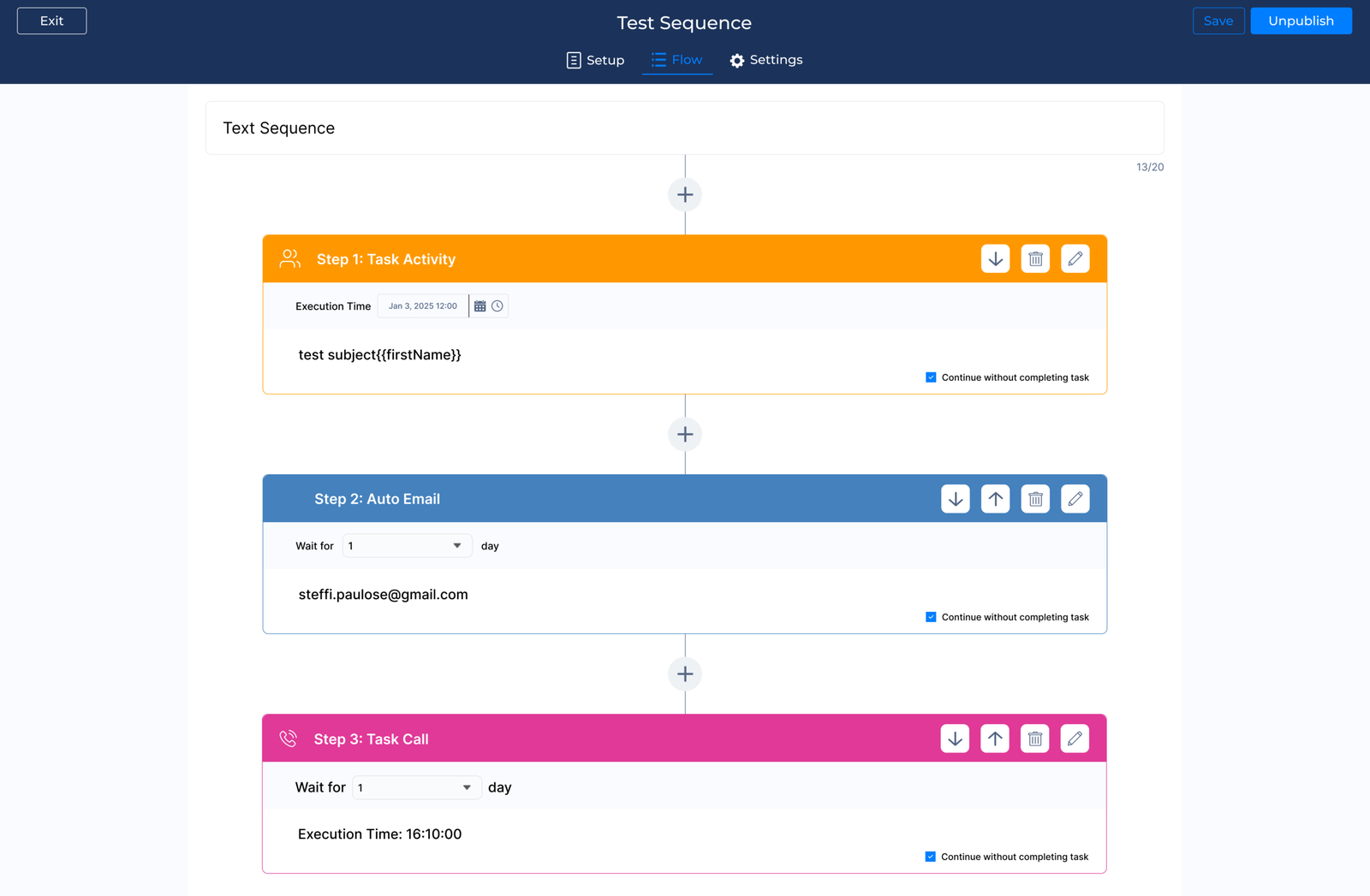
Salesmate offers a comprehensive customer relationship management platform specifically designed for small to mid-sized businesses seeking to streamline their sales processes. The cloud-based system blends strong contact management with automation to help teams convert inbound leads efficiently. It can be done while keeping communication personal throughout the customer journey.
Key features:
HubSpot Marketing Hub offers an all-in-one inbound marketing platform that integrates content management, social media, email marketing and lead capture functionality. Offering flexible plans from entry-level to enterprise, this solution scales with your contact database and feature needs, supporting businesses as they grow.
HubSpot’s primary advantage lies in its seamless integration between marketing, sales and service hubs, creating a unified customer data platform. The system tracks leads with clear analytics that reveal which content drives conversions. It includes easy drag-and-drop tools for marketers to create polished content without needing technical skills.
Drift pioneered conversational marketing with its intelligent chatbot platform that engages website visitors in real-time dialogue. Unlike standard forms, Drift starts conversations triggered by visitor actions, qualifying prospects through natural, human-like chats that run around the clock without pause.
Drift’s conversational approach generates significantly higher engagement rates than traditional forms by meeting prospects at their moment of highest interest. The platform uses AI to qualify leads by asking smart, relevant questions, then its meeting scheduler quickly links interested prospects to the right sales reps. It cuts the time between first contact and real conversations.
Inbound lead generation transforms your marketing approach from interruption-based tactics to value-driven engagement that attracts qualified prospects naturally. Creating content that meets customers’ needs at every stage builds trust and captures details from prospects actively seeking solutions to their problems.
The multi-channel nature of inbound methodologies creates numerous touchpoints across digital platforms, enabling prospects to engage with your brand according to their preferences. The approach builds trust through helpful content, boosting conversions more than cold outreach. Inbound lead gen builds a stronger pipeline over time, delivering more qualified leads at a lower cost by focusing on connections, not spending.

Inbound lead generation works by creating valuable content that addresses specific challenges your target audience faces. Prospects find your resources while searching for solutions, engage with your content, share their contact info to access deeper help, starting a relationship that marketing and sales guide toward a decision.
Inbound leads usually fit into four groups based on how ready they are to buy. These include Information Qualified Leads (IQLs) who’ve viewed basic content, Marketing Qualified Leads (MQLs) showing deeper interest, Sales Qualified Leads (SQLs) with clear buying signals and Product Qualified Leads (PQLs) who’ve tried your product through trials or free versions.
An inbound lead generation strategy is a comprehensive plan that coordinates content creation, distribution channels, conversion pathways and nurturing sequences to attract potential customers naturally. The approach combines SEO, content, social media, email and website improvements to guide prospects step-by-step from recognizing their problems to exploring how your solutions fit.
Inbound leads mainly come from search engines when prospects find your content during their research, social media where your content is shared, and email subscriptions that keep contacts engaged. They also come from referrals by happy customers, webinars and virtual events that offer useful information, also from website visitors exploring your resources through various online channels.
Measure success by tracking traffic sources, engagement rates and qualified leads. The most valuable indicators include content-specific conversion rates, lead-to-customer conversion percentages, customer acquisition costs and ultimately the ROI from different content investments.
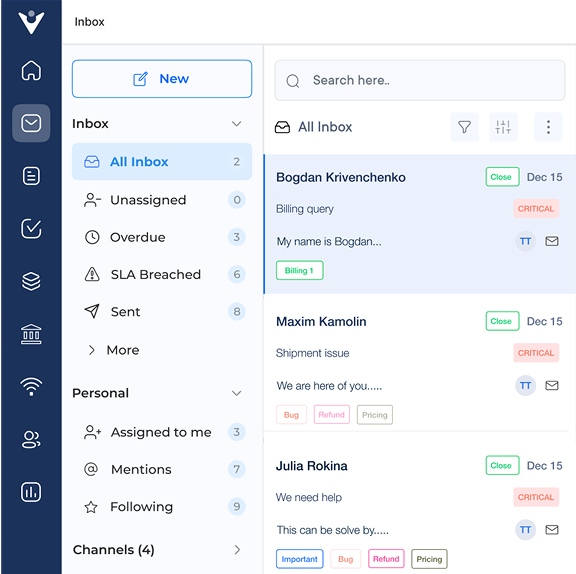
Grow Customer Relationships and stronger team collaboration with our range of products across the Conversational Engagement Suite.
Omnichannel Customer Support & Help Desk Software
AI Enabled Business Messaging and Chatbot Software
Sales Engagement & CRM Software
Call Center Software & Virtual Phone System
Product Marketing & Experience Platform
Customer Experience & Feedback Management Software
 What is a Sales Invoice? Types, Steps & Best Practices
Scroll to top
What is a Sales Invoice? Types, Steps & Best Practices
Scroll to top