What is Sales Quota? Types, Strategies and Tips
A sales quota is a performance target for sales teams. Learn about its different types, benefits and strategies, offering practical tips to set realistic quotas.

A sales quota is a performance target for sales teams. Learn about its different types, benefits and strategies, offering practical tips to set realistic quotas.
Picture a sales team putting in the hours yet falling short every month. The effort is there, but the results are not. When quotas are unclear, reps move from lead to lead without a real sense of direction or a solid way to measure progress. A study found that only 47% of sales reps consistently achieve sales quota attainment, highlighting a major issue in quota setting.
That lack of clarity snowballs fast. High performers start looking elsewhere, average reps drift without accountability and revenue becomes hard to predict. Sales quotas bring order to that chaos. Clear targets give salespeople something concrete to work toward and tie daily actions to bigger business goals.
So without further ado, let’s move on to learn about its different types, real examples and practical approaches that help teams start hitting numbers with consistency.
A sales quota refers to a set target that tells a salesperson how much revenue or how many accounts they need to close within a given time. Think of it like a monthly assignment, only the grade comes in dollars. Quotas give your sales reps direction and make it easier for companies to measure performance.
Selling quotas work as a roadmap. They guide a salesperson’s daily priorities, while management sets them based on business goals and market conditions. Hitting the targets often ties directly to pay, making the link between effort and reward crystal clear.
Key objectives:
Let’s go through the key reasons sales quotas matter and how they keep both salespeople as well as companies on track.
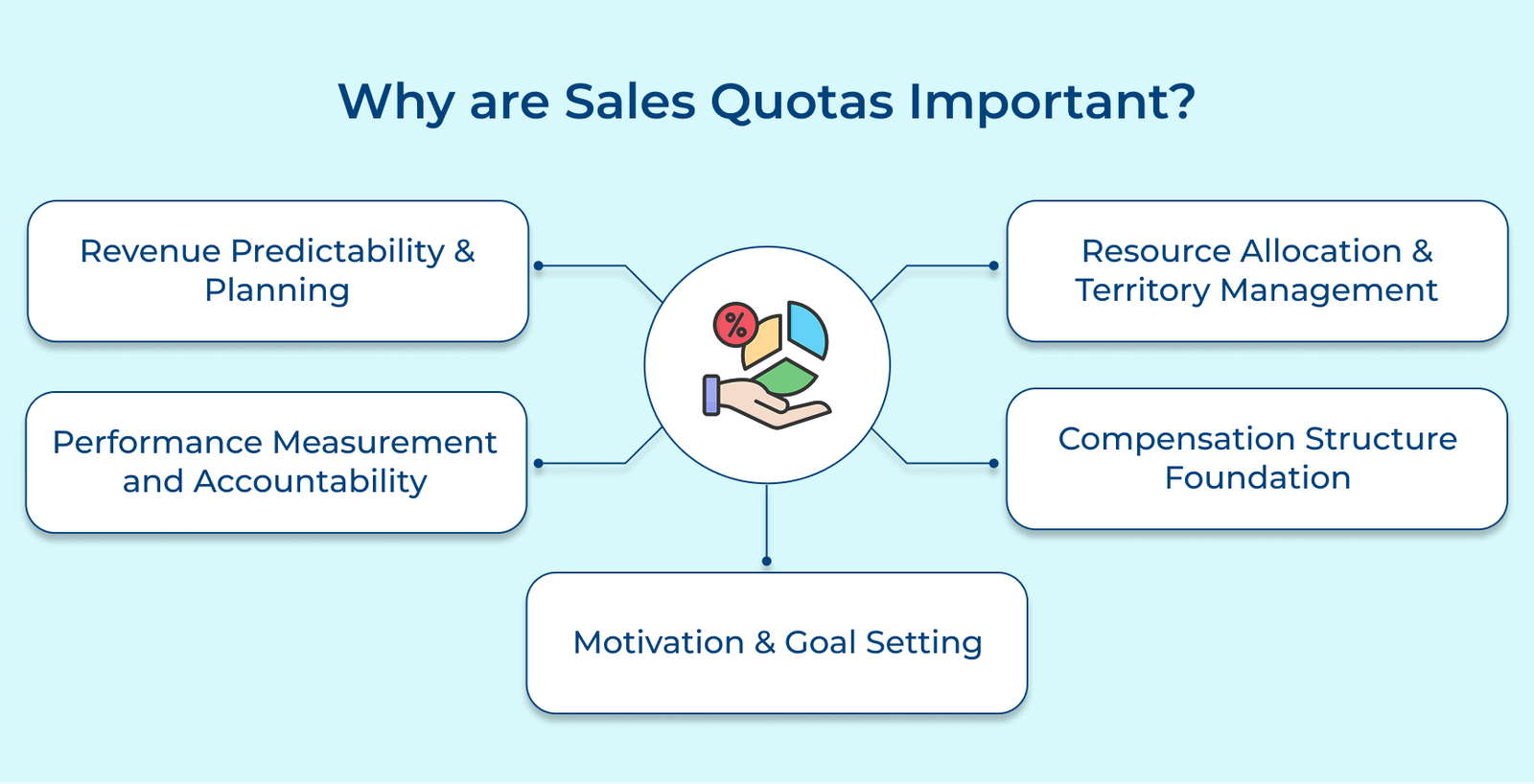
Revenue Predictability and Planning
Sales quotas give companies clearer expectations. Businesses can budget wisely and make confident strategic choices with predictable revenue.
Performance Measurement and Accountability
Quotas act as a scorecard, showing who’s excelling and who needs support. It makes evaluations fairer and helps sales managers decide on promotions, coaching, or training.
Motivation and Goal Setting
Quotas transform abstract company objectives into concrete personal challenges that salespeople can visualize and pursue daily. They create urgency and focus by giving everyone a clear goal instead of drifting without direction.
Resource and Territory Management
Smart quota setting helps companies distribute leads and territories fairly while ensuring no market opportunities slip through the cracks. It prevents situations where some salespeople feast while others starve, maximizing the effectiveness of your sales investment.
Compensation Structure Foundation
Quotas provide the mathematical foundation for fair and motivating commission structures that reward results over activity. They reward top performers while preventing overpayment for average results.
Check out the different types of sales quotas that guide performance, helping teams stay aligned with business goals.
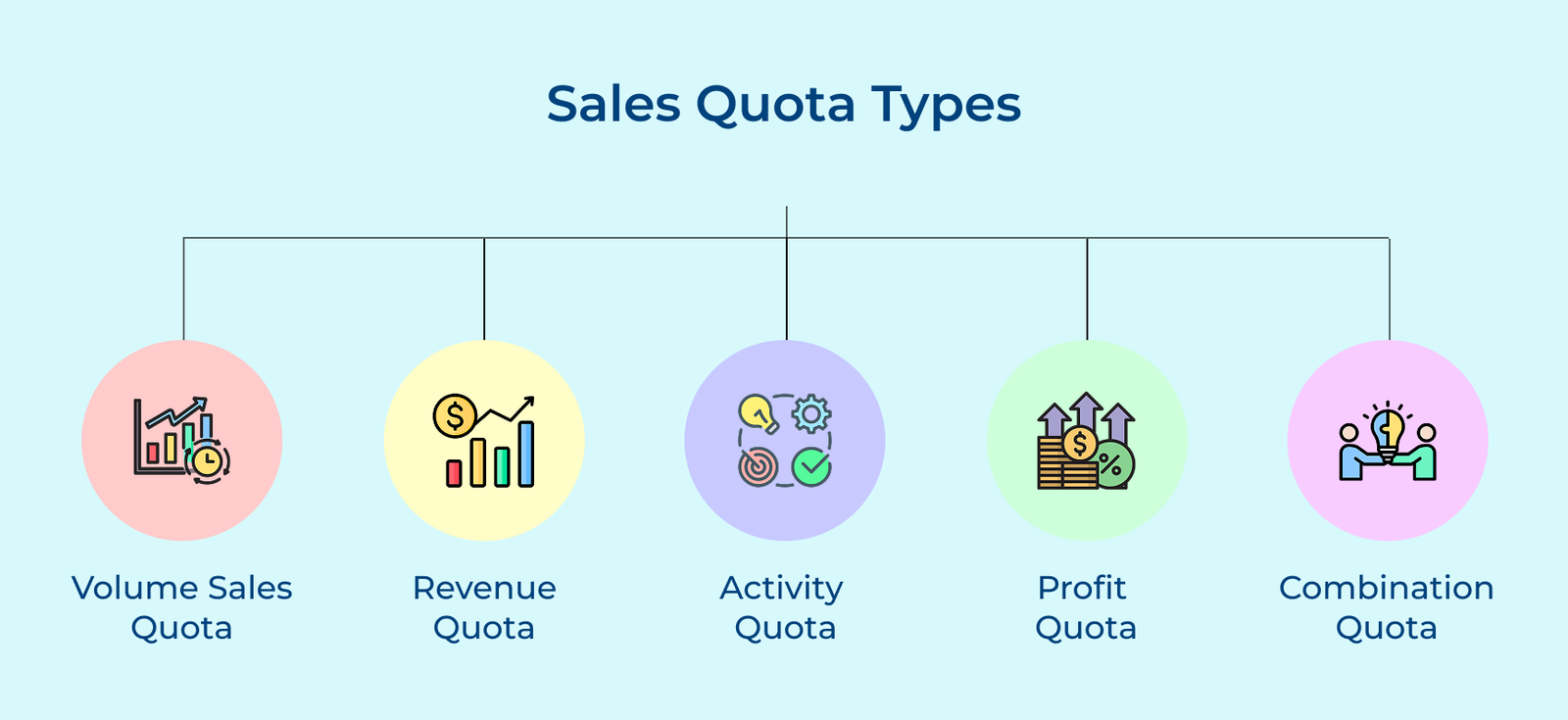
Volume sales quotas measure performance by the number of units sold rather than revenue. They work best when moving inventory quickly matters or when products have similar profit margins.
The drawback is that volume quotas push salespeople toward cheap, easy sales while neglecting high-value products. It creates a situation where you hit your unit targets but miss revenue goals that matter for business growth.
Key industries:
Revenue quotas measure the total dollar value sold in a given period. They align sales directly with company financial goals and push reps toward larger deals or premium products.
Revenue quotas risk profit loss by encouraging discounting or chasing high-revenue, low-margin deals. Salespeople may chase big numbers but hurt profits with poor pricing.
Major industries:
Picture a software salesperson with a $500,000 annual recurring revenue sales target from new clients. That kind of number shapes every decision they make. Enterprise deals suddenly matter more. Upselling existing customers becomes a priority. Small accounts slip down the list, not because they lack value, but because the goal demands bigger, faster wins.
Activity quotas track actions like calls made, emails sent, or meetings booked. They help ensure consistent effort, especially for new reps or companies entering fresh markets.
The major flaw is that activity quotas can create busy work without meaningful results since they measure effort rather than effectiveness. Salespeople might make numerous low-quality calls just to hit their numbers while missing opportunities that require deeper relationship building.
Key industries:
Profit quotas focus on margins rather than just revenue or units sold. They encourage smarter selling, like balancing volume, pricing and product mix to maximize actual profitability.
Profit quotas can slow decisions as salespeople must grasp complex cost and margin details. The approach needs profit data that many companies prefer to keep confidential.
Key industries:
Combination sales quotas track more than one metric at a time, like revenue goals paired with activity requirements or profit margins alongside sales volume. The approach balances performance by addressing the limits of single-metric systems and considering multiple objectives.
The downside is that combination quotas can confuse salespeople when metrics conflict. Managing multiple targets simultaneously can also dilute focus and make it harder to excel in any single area.
Key industries:
Below are the proven strategies to effectively set and implement sales quotas that align with your business goals.
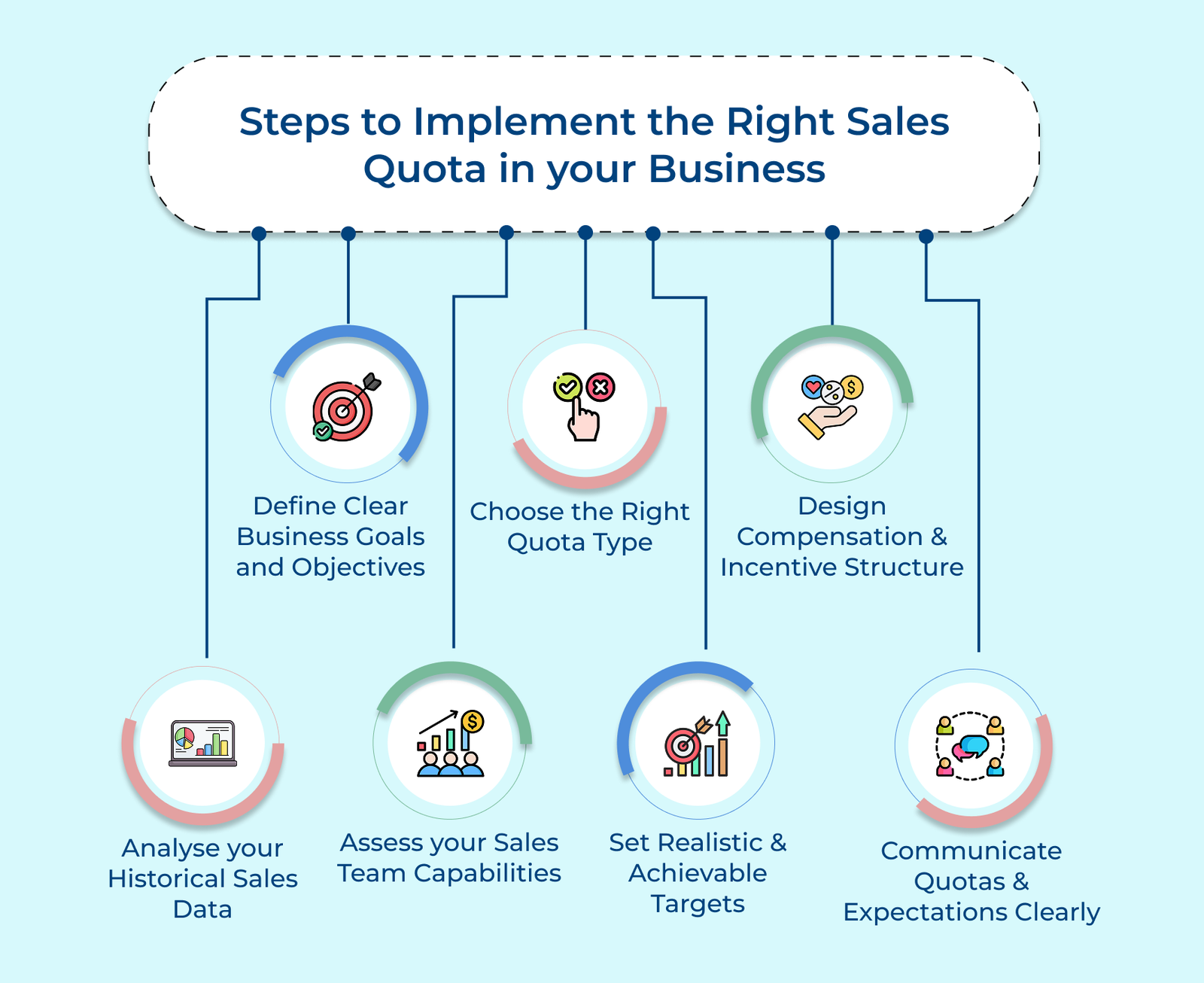
Looking at past sales data is the first step to setting realistic quotas by revealing patterns that accurately predict future performance. Without the crucial step, you’re essentially shooting arrows in the dark and hoping they hit some imaginary target.
Key ways:
You should also consider average deal size and conversion rates. If your average deal is $50,000 and you close 20% of qualified leads, you can work backward to see how many prospects you need to reach a revenue goal.
Clear business goals turn scattered sales efforts into focused work with a real direction. Without them, sales reps may be busy but not necessarily moving forward.
Key questions:
The questions help you create focused objectives that translate abstract company dreams into specific sales targets that your team can understand. They ensure that every sales quota you set serves a larger purpose rather than existing as isolated numbers.
Team capability assessment ensures that your quotas match reality rather than wishful thinking about what your salespeople can deliver. The step prevents the common mistake of setting quotas that look good on paper but crush morale in practice.
Key elements:
The goal is to set quotas that stretch people without breaking them. A new hire shouldn’t carry the same expectations as a seasoned rep with years in a strong territory.
Additional tips:
The sales quota you choose directly influences how your sales rep behaves. A well-designed quota pushes the right actions and steady growth. A poorly chosen one can encourage shortcuts where numbers look good on paper but hurt the business over time.
Key factors:
CloudFlow Solutions, a project management SaaS firm, uses a combination quota: $400,000 in annual recurring revenue plus 30 product demos each month. It balances closing deals while keeping the pipeline healthy.
The best quotas push salespeople to stretch without setting them up for failure. Too easy and potential is wasted. Too hard, and you risk losing top talent.
Consider TechParts manufacturing, a B2B industrial equipment supplier. It sells specialized machinery components to factories and production facilities across the manufacturing sector.
Realistic targets:
Start with slightly conservative targets during implementation, then gradually increase them as your team adapts. It builds confidence and momentum instead of overwhelming the team on day one.
Compensation structures tie quotas directly to rewards, making them one of the strongest levers for driving performance. Without the right incentives, even well-designed quotas risk being ignored.
Key questions:
The questions help you create a balanced compensation system that attracts quality salespeople while protecting company profitability. They ensure incentives drive the right behaviors without encouraging shortcuts that harm long-term customer relationships.
Start by benchmarking industry standards to ensure your package remains competitive. Next, calculate total costs across performance scenarios to prevent budget surprises. Test your compensation plan with a small group before rolling it out company-wide to identify potential issues early.
Clear communication turns quotas from abstract numbers into shared goals that everyone understands and commits to. Without it, the sales reps risk chasing different targets than management expects, leading to wasted effort and frustration.
Key steps:
The toughest part is avoiding confusion when quotas involve multiple metrics. Visual aids, like charts or worked examples, can make the math clear and show exactly how progress is measured.
Check out the strategies that provide the structural support beams that turn ambitious numbers into realistic accomplishments.
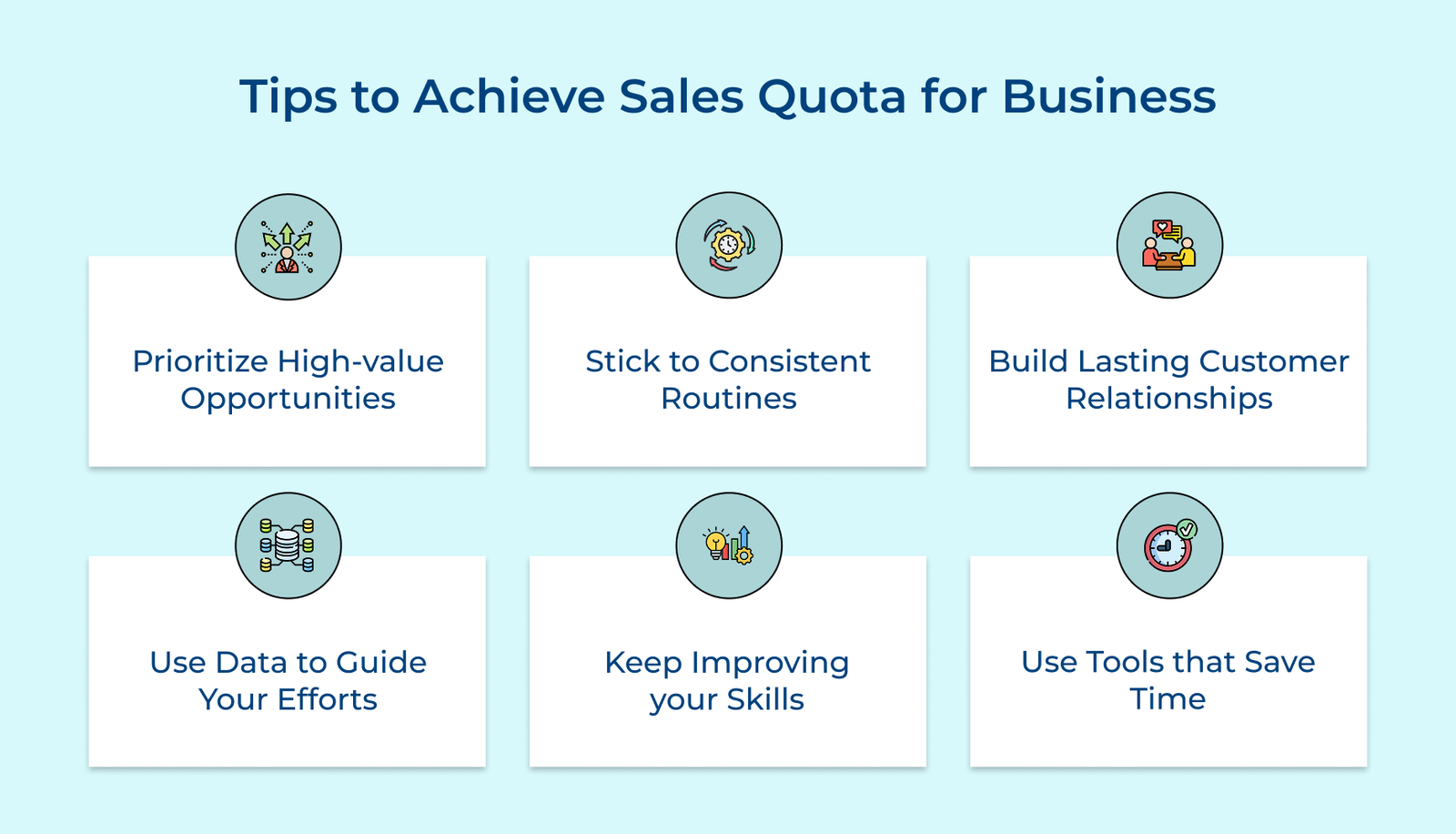
1. Prioritize High-value Opportunities
Not every lead deserves equal effort. Focus on prospects with the greatest revenue potential and faster decision timelines. It ensures your time is spent where it has the most impact.
2. Stick to Consistent Routines
Quota achievement flows from consistent daily habits rather than sporadic bursts of intense activity followed by periods of neglect. Successful salespeople treat prospecting, follow-ups and relationship building as non-negotiable daily tasks.
3. Build Lasting Customer Relationships
Strong relationships create trust, which makes future deals smoother, faster and often larger. Loyal customers buy more, recommend you to others and usually spend less time negotiating over price.
4. Use Data to Guide Your Efforts
Modern sales success depends on understanding which activities produce results and which waste precious time and energy. Track conversion rates, deal sizes and sales cycles to spot patterns or repeat what works.
5. Keep Improving Your Skills
Markets and customer expectations change constantly. Ongoing learning helps you handle objections better and close deals that might otherwise slip away.
6. Use Tools that Save Time
Sales planning tools along with the other sales technology eliminate repetitive tasks and provide insights that help you work smarter rather than just harder on quota achievement. CRM systems, email automation and sales analytics tools free up time for high-value activities like relationship building.
Below are the signs that show your sales quota needs a revision. Let’s check them out in more detail.
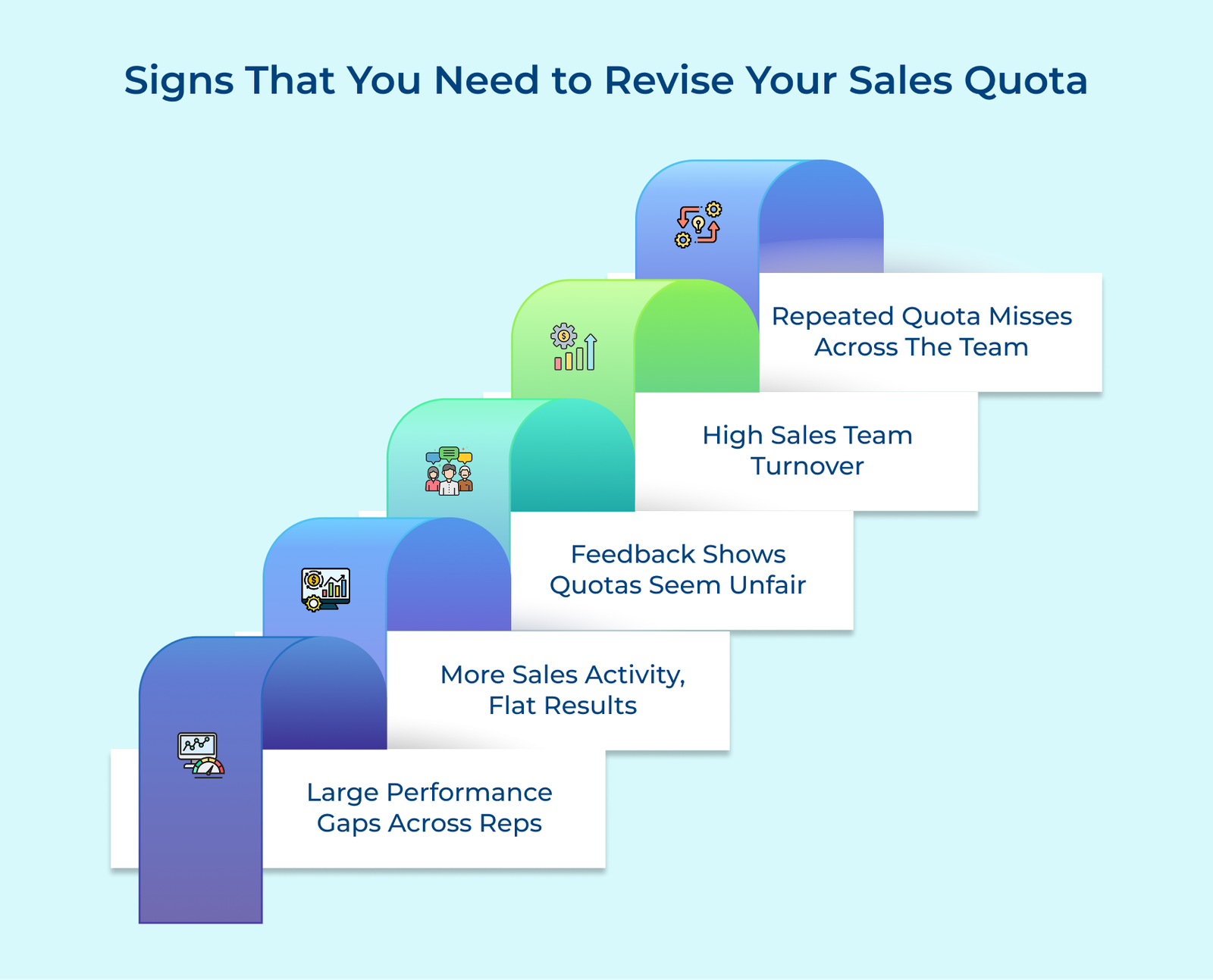
1. Repeated Quota Misses Across the Team
If your whole team keeps missing targets, the issue is unrealistic expectations, not individual performance. It shows that market shifts or competition have made current quotas unachievable.
2. High Sales Team Turnover
Good salespeople won’t stay if they can’t earn fair commissions. If you’re losing talent to competitors, your quotas may be driving them out.
3. Feedback Shows Quotas Seem Unfair
When your team says quotas are impossible instead of challenging, it’s a red flag. Pay attention to concerns about territory size, resources or other imbalances.
4. More Sales Activity, Flat Results
If calls and meetings rise without revenue, quotas may be driving the wrong behaviors. The disconnect suggests that your current system encourages activity over results, leading to busy work.
5. Large Performance Gaps Across Reps
If similar reps perform very differently in comparable territories, your quota system likely has flaws. The variation indicates that some quotas are too easy while others are impossibly difficult, creating an unfair playing field.
Check out the common pitfalls in sales quota settings that businesses often face, which can hinder performance.
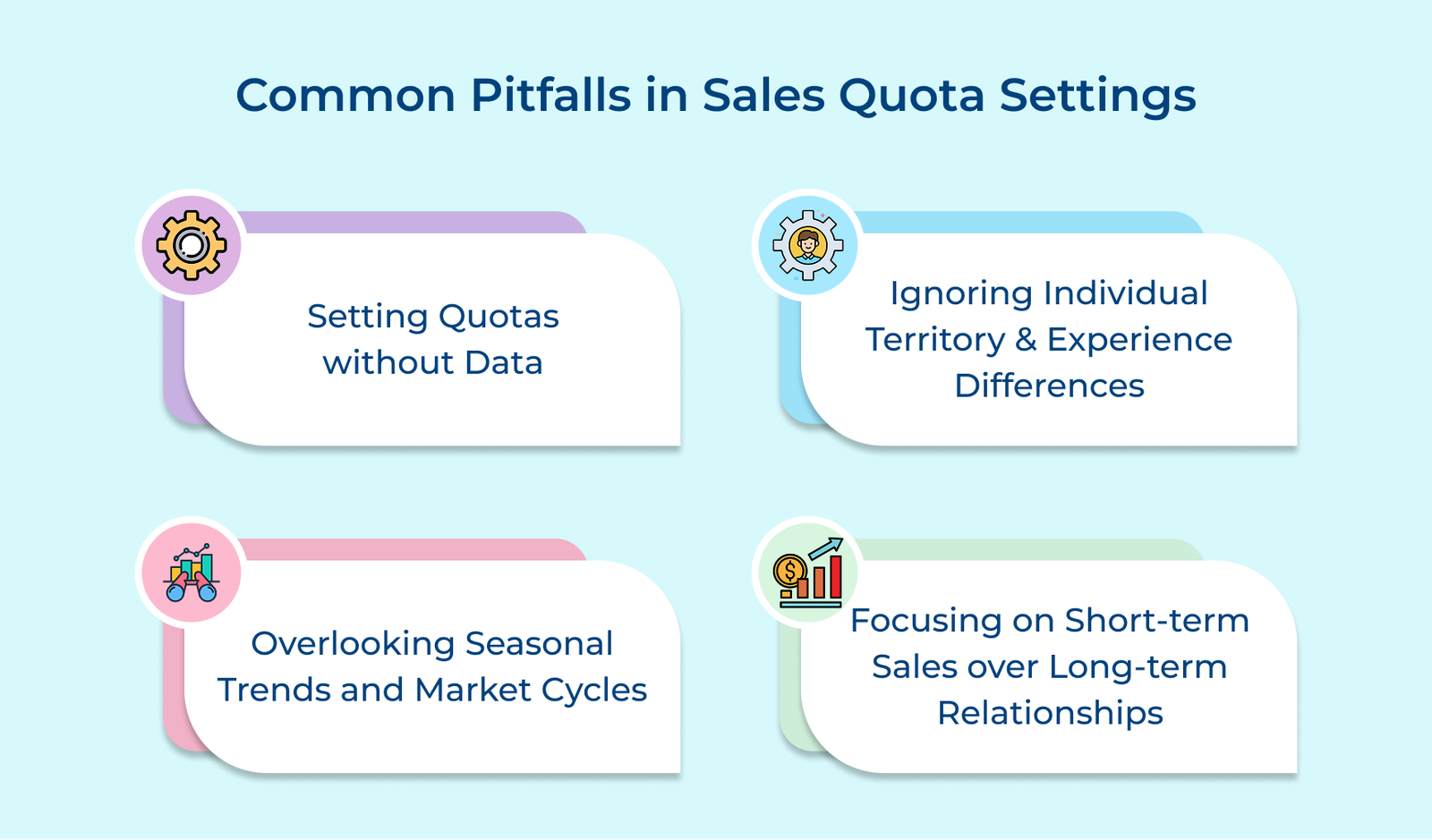
Setting Quotas Without Data
Many businesses set quotas based on desired outcomes rather than actual market conditions and team capabilities. It turns quotas into unrealistic targets, leaving hard-working teams frustrated when effort doesn’t match results.
Ignoring Individual Territory and Experience Differences
Assigning identical quotas to every salesperson overlooks differences in territory potential and experience. Treating your team as interchangeable parts prevents you from leveraging individual strengths effectively.
Overlooking Seasonal Trends and Market Cycles
Monthly quotas that ignore predictable seasonal fluctuations create impossible targets in slow periods during peak seasons. Understanding customer behavior throughout the year is essential for realistic goal setting.
Focusing on Short-term Sales Over Long-term Relationships
The most damaging pitfall involves designing quota systems that reward immediate sales at the expense of customer satisfaction. It may lift quarterly numbers, but it harms your business by eroding customer trust and repeat sales.
Implementation steps to overcome the challenges:
Sales quotas work like a compass for your team. When designed with intention and backed by real data, they turn big business goals into clear, everyday actions people can actually execute. A well-set quota brings focus, direction and consistency to performance without feeling arbitrary.
Effective quota systems need regular review and fine-tuning as markets shift and teams grow. Treat quotas as practical tools that evolve with real conditions, not fixed numbers that stay untouched while everything else changes.

Think of a sales quota as your destination and commission as the reward for reaching it. A quota is the target to hit, while commission is the percentage you earn from your actual sales. Quotas define expectations; commissions provide financial incentives to meet them.
The most effective approach combines historical performance analysis with forward-looking business goals to create realistic sales targets. Analyze 12–24 months of sales data for deal sizes and conversion rates, then adjust for market conditions. Factor in territory potential and salesperson experience when setting quotas for the best results.
Use CRM systems to monitor quota progress in real time through dashboards and automated reports. Schedule regular one-on-one meetings to discuss progress and tackle obstacles early. Weekly team reviews help track trends, keeping performance on track.
Top-down sets quotas from company revenue goals, bottom-up builds them from individual past performance. Historical quotas base targets on past performance with market adjustments. Activity-based quotas focus on sales behaviors, like calls made, instead of results.
A commission tied to quotas motivates salespeople to achieve sales targets and rewards top performers proportionally. It can encourage short-term focus, risk damaging customer relationships and create income volatility during slow periods.
Grow Customer Relationships and stronger team collaboration with our range of products across the Conversational Engagement Suite.
Omnichannel Customer Support & Help Desk Software
AI Enabled Business Messaging and Chatbot Software
Sales Engagement & CRM Software
Call Center Software & Virtual Phone System
Product Marketing & Experience Platform
Customer Experience & Feedback Management Software

 8 Proven Ecommerce Customer Retention Strategies for 2026
Scroll to top
8 Proven Ecommerce Customer Retention Strategies for 2026
Scroll to top