1. Personalization That Makes Every Customer Feel Valued
Personalization is about giving customers an experience that feels relevant to their interests, preferences and shopping habits. Customers are more likely to return when a store remembers what they like and helps them find what they need without extra effort.
Many ecommerce businesses collect large amounts of customer data but very little of it in meaningful ways. Strong ecommerce customer retention often comes from turning browsing history, purchase behavior and customer preferences into experiences that feel useful rather than generic.
Key areas:
- Product recommendations: Suggesting products based on their actual browsing and purchase history rather than generic bestseller lists.
- Email campaigns: Sending emails that reflect customer actions such as abandoned carts, recent purchases or frequently viewed categories.
- Dynamic pricing offers: Rewarding high-frequency buyers with personalized discounts that feel exclusive rather than broadly distributed.
- Post-purchase communication: Following up with content or suggestions that are directly relevant to what the customer just bought.
Start personalization by segmenting your customer base into behavioral groups rather than demographic ones. A customer who buys every 30 days needs a completely different experience than someone who purchased once six months ago and your retention strategy should reflect that difference clearly.
2. Loyalty Programs That Keep Customers Coming Back
A good loyalty program gives customers a clear reason to return instead of trying a different store the next time they need a product. Customers who feel appreciated or rewarded are far more likely to make repeat purchases and stay connected to your brand over time.
Key structure:
- Points-based rewards: Give customers points for every purchase so they can easily track their progress and see the value of returning.
- Tiered membership levels: Create levels such as Bronze, Silver and Gold that unlock additional benefits as customers continue spending.
- Exclusive member perks: Offer early access to sales or new products specifically for loyalty members to make the program feel genuinely privileged.
- Redemption simplicity: Keep rewards easy to earn and redeem because customers lose interest when the process feels confusing or time-consuming.
Strong ecommerce customer retention often comes from making customers feel recognized for their continued support. Connect your loyalty program directly to the shopping experience so rewards are earned automatically with every order. Seeing rewards accumulate over time gives customers another reason to come back and purchase again.
3. Improved Customer Service That Builds Lasting Trust
Customer service has a direct impact on if customers return or leave after a bad experience. Small ecommerce businesses often have an advantage here because excellent support can create trust that larger competitors struggle to match.
Key questions:
- Are customers receiving a response quickly after reaching out for help?
- Can your support team resolve most issues without unnecessary delays or approvals?
- Are you proactively communicating delays and problems before customers have to ask?
- Is your post-resolution follow-up strong enough to turn a frustrated customer into a loyal one?
Strong ecommerce customer retention often comes from how a business handles problems rather than how it handles successful orders. When a customer contacts you with a complaint, that is your highest-value retention moment, not a liability. Resolving it quickly or generously leaves a stronger impression than a flawless purchase ever could and that impression is what brings them back.
Key tools:
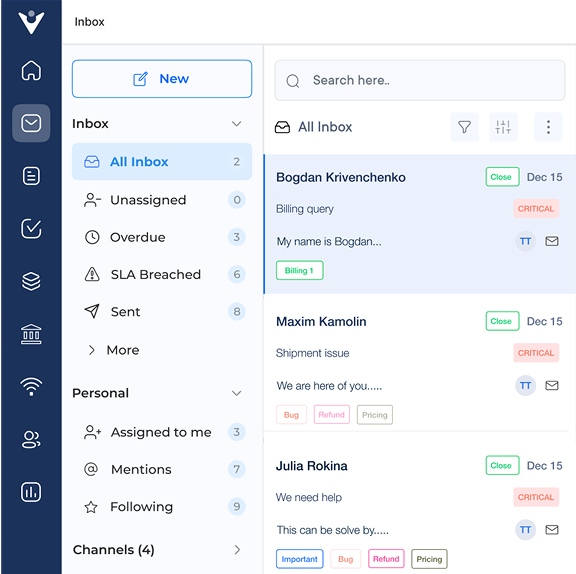
- Live chat software: Provides immediate support when customers have questions before or after a purchase.
- Helpdesk ticketing systems: Organizes every customer interaction so no query falls through the cracks during high-volume periods.
- AI-powered chatbots: Handles repetitive queries instantly at any hour so your human agents focus on complex and high-stakes conversations.
- CRM platforms: Gives support team access to customer history so conversations feel informed and relevant instead of repetitive.
4. Omnichannel Experience That Meets Customers Everywhere
An omnichannel experience ensures customers receive the same level of service and convenience across every channel they use. Strong ecommerce customer retention often depends on consistency, as customers are more likely to return when every interaction feels familiar and reliable.
Syncing experience across all touchpoints seamlessly
Customers regularly switch between websites, mobile apps, social media pages and email while shopping. They expect their experience to remain consistent throughout that journey. Missing information, inconsistent messaging or interrupted shopping experiences can quickly create frustration and reduce the likelihood of a return visit.
Enabling a seamless cart experience across all devices
A customer who adds products on mobile during their commute expects to find that exact cart waiting on their desktop when they sit down to complete the purchase. Every friction point in that cross-device journey is a silent drop-off you are not tracking but are absolutely paying for in lost revenue.
Unifying online and offline customer data effectively
Customers expect brands to remember their preferences and purchase history regardless of where they shop. Keeping online and offline customer data connected creates a more complete understanding of customer behavior. Better visibility into those interactions helps businesses deliver more relevant experiences and improve retention over time.
5. Get Tech-Savvy to Retain Customers Smarter
Being tech-savvy in ecommerce means using the right tools or data systems to predict customer behavior and act on it before you lose them. The stores that retain customers best are not the ones spending the most on ads; they are the ones making every customer interaction smarter and more timely. Successful ecommerce customer retention often depends on how effectively businesses use tools to keep customers engaged and encourage them to return.
Key factors:
- Customer data platform: Bringing customer data into one place makes it easier to understand behavior and make better retention decisions.
- Predictive analytics tools: Identifying which customers are about to churn before they do gives you a critical window to intervene with the right offer.
- Marketing automation software: Sending timely messages based on customer actions helps maintain engagement without requiring constant manual effort.
- AI-powered personalization engines: Delivering real-time personalized experiences at scale is something no manual process can match in speed or accuracy.
Many ecommerce businesses add new tools as they grow, but rarely connect them into a single system. Customer information ends up scattered across different platforms, making it difficult to understand the full customer journey and act on it effectively.
Start by auditing what data you are already collecting but not acting on. Most stores are sitting on behavioral signals that could trigger powerful retention workflows today. The goal is not the most sophisticated stack but a connected one where every tool shares data toward the same retention outcomes.
6. Develop A Comprehensive Customer Onboarding Program That Reduces Drop-Offs
A strong onboarding program helps new customers feel confident from the moment they make their first purchase. Ecommerce customer retention often improves when customers receive guidance, support and useful information during their first interactions with your brand.
Key ways:
- Welcome email sequence: A structured 3 to 5 email sequence introducing your brand story, product tips and support channels makes new customers feel they made the right choice.
- Post-purchase education content: Provide product guides, tips or tutorials that help customers get the most value from what they purchased.
- Early check-in touchpoints: Reach out within the first 7 days signals that you care about outcomes and not just about completing the transaction.
The biggest mistake most ecommerce stores make is treating onboarding as a single welcome email instead of a structured journey. A customer who feels supported in their first 30 days is significantly more likely to make a second purchase and that second purchase is where long-term retention truly begins.
7. Collect and Act on Customer Feedback Consistently
Customer feedback gives you a clear understanding of what customers appreciate and what is pushing them away. Strong ecommerce customer retention often depends on paying attention to the insights and making improvements that directly address customer concerns.
Key questions:
- How satisfied are you with your overall shopping experience?
- Was there anything that almost stopped you from completing your purchase?
- How likely are you to return to our store for your next purchase and why?
- What could we improve to make your experience better next time?
Technology can make feedback collection and analysis much easier. AI tools can identify common themes across large volumes of responses, while automation helps deliver feedback requests at the right time after a purchase. It allows businesses to spot issues earlier and respond more effectively.
Negative feedback handled poorly turns a recoverable situation into permanent churn, but handled well, it becomes one of your strongest retention tools. Responding quickly and specifically to a complaint shows every customer reading that exchange that your brand takes accountability seriously.
Key phrases:
- “We understand your concern and here is how we are going to resolve it.”
- “Your experience is not the standard we hold ourselves to and we want to make it right.”
- “Thank you for telling us. It helps us improve for you and every customer after you.”
Pro tip: Publicly resolving customer issues demonstrates accountability and transparency. Customers often pay close attention to how businesses handle problems and a respectful response can leave a lasting positive impression.
8. Re-Engagement Campaigns That Win Back Dormant Customers
Dormant customers are not gone forever. Many of them have already bought from your store and just need a relevant reason to return. Strong ecommerce customer retention often improves when businesses focus on bringing these customers back instead of constantly chasing new ones.
Key types:
- Win-back discount campaign: A short-term personalized offer sent to customers inactive for 60 to 90 days creates urgency without permanently damaging your margin.
- Product update campaign: Sharing new arrivals or updates linked to their past purchases gives customers a simple reason to revisit your store.
- Loyalty reactivation campaign: Reminding inactive members of unused or expiring points is one of the most frictionless ways to trigger a return visit.
Setting this up starts with defining what “inactive” means for your store. That timeline changes based on how often customers usually buy. After that, automate the segments so customers enter campaigns based on behavior instead of manual tracking.
Key phrases:
- “We have something new for you since your last visit.”
- “It has been a while, here is something that might interest you again.”
- “Your rewards are still waiting for you on your next order.”
Use Cases of Customer Retention Strategies in eCommerce
Below are the real use cases of customer retention strategies in ecommerce that show how different approaches work in practical situations to improve repeat purchases.