1. Build a Customer-First Service Culture
A customer-first culture shows up in everyday decisions, not in policies or training sessions alone. Teams that deliver exceptional customer experiences take personal responsibility for how each interaction feels.
Key ways:
- Train teams to respond with empathy: Many customer service issues happen because the emotional side of a situation is ignored. Acknowledging how the customer feels before offering a solution makes the interaction more meaningful.
- Resolve issues at first contact: Repeat follow-ups usually mean the issue was not handled completely the first time. Teams should have the information and authority to close problems without delays.
- Make service consistency strong: One exceptional CX followed by a poor one destroys trust faster than a consistently average experience ever could. Clear standards and regular reviews help maintain a steady level of service across all interactions.
2. Place the Customer at the Core
Many businesses assume they are customer-focused until they look closely at how their processes actually work. Most systems are designed for internal ease, not for the customer’s experience.
Key questions:
- Does the decision make things easier for the customer or just simplify internal work?
- Where do customers drop off silently without ever telling us why?
- Are response times and customer service standards built around customer needs or internal convenience?
- If our best customer described their experience today, would they sound like a promoter?
The questions reveal gaps that internal metrics often miss. Honest answers usually show that what feels smooth inside the organization can feel confusing or effortful to the customer.
A customer-focused business aligns teams so everyone understands how their work affects the customer journey. Responsibility does not sit with one team; it is shared across the organization.
Actionable tips:
- Assign clear ownership for each stage of the customer journey so accountability stays defined
- Review every process change with one simple check: does it make the customer’s experience easier or more difficult?
3. Leverage Technology to Enhance Interactions
Technology works best when it supports a clear customer need instead of leading the approach. The focus should stay on improving the experience, with tools helping make it faster and easier to deliver.
The right setup gives teams immediate access to customer history, reducing repetition and saving time. Connected systems also ensure each interaction continues smoothly instead of starting from scratch.
Key tools:
- CRM platforms that give teams access to purchase history, past conversations and customer preferences before any interaction begins
- Omnichannel support tools that connect conversations across channels, so customers do not have to repeat themselves
- Real-time analytics dashboards that help teams spot issues early and respond before they affect more customers
- Self-service knowledge bases that allow customers to find answers on their own, making the experience quicker and more convenient
Adoption is often the real challenge with new technology. Tools fail when teams are expected to use them without being part of the decision process. Involve frontline teams while choosing tools so the solution fits how they actually work. It makes adoption smoother and ensures the technology is used effectively.
4. Deliver Deeply Personalized Experiences
Personalization goes beyond using a name. It shows customers that their actions and preferences are being noticed. When customers feel that level of attentiveness, the relationship shifts from transactional to something far more durable. If done well, personalization can lift revenues by 5 to 15 %.
Basic demographic data gives limited insight. Real value comes from understanding how customers behave, what they use and how they engage over time. The deeper understanding helps you respond in ways that actually match the customer expectations and needs.
Key takeaways:
- Identify groups based on purchase frequency, product usage and past interactions instead of static details
- Separate customers who need more guidance from those who prefer quick and independent experiences
- Use the insights to adjust onboarding, communication timing and the kind of messages each group receives
Past behavior is the clearest signal of intent. It shows what matters to the customer and when they are likely to engage again. Consistent use of the insight makes interactions feel more relevant and less generic.
Key scenarios:
- Phase 1-Post-Purchase: A new customer receives guidance tailored to what they bought instead of a general welcome message
- Phase 2-Mid-Journey: A customer exploring an upgrade multiple times receives information based on how they are already using the product
- Phase 3-At-Risk: An inactive customer receives a message that connects back to their last meaningful interaction
The difference between helpful personalization and intrusive targeting is context, whether the customer understands why you are making that offer. A SaaS business recommending an upgrade based on actual usage feels like a trusted advisor, while referencing browsing behavior in cold outreach feels like surveillance.
5. Deploy AI and Automation Strategically
AI adds value when it is used for the right tasks, especially repetitive interactions that take up time but do not require human judgment. The focus should stay on improving the customer experience, not just reducing workload.
Automate repetitive queries without losing human warmth
Automation often fails when it feels cold or rigid. Customers notice quickly when interactions lack understanding or context. A better approach handles routine tasks efficiently while keeping human support easy to access.
Pro tips:
- Design chatbot flows that recognize customer frustration before offering solutions
- Create simple escalation paths so customers can reach a human as soon as needed
- Conduct monthly audits of automated responses to ensure tone and empathy stay consistent with your brand
Use AI to predict customer needs before they arise
AI can help teams act earlier instead of reacting after problems appear. Early signals allow support teams to step in before issues grow or customers disengage. It makes interactions feel more timely and reduces the chances of issues escalating further.
Key elements:
- Behavioral Data Integration
- Trigger-Based Proactive Outreach
- Continuous Model Retraining
Keep human handoff smooth and timely
The shift from AI to a human agent is a critical moment. A poor transition forces customers to repeat themselves and breaks the flow of the interaction. A smooth handoff ensures the agent has full context and continues the conversation without interruption, making the experience feel seamless.
6. Close the Loop on Customer Feedback
Many businesses collect feedback but never respond to it and that silence slowly reduces trust. Closing the loop means acting on what customers say and letting them know their input led to real change.
Key ways:
- Acknowledge every piece of feedback within a clear response time so customers know they have been heard
- Organize feedback by urgency and common themes to respond in a more focused way
- Assign ownership for each type of feedback so nothing gets ignored or delayed
- Set internal SLAs for resolution and communicate those timelines directly to the customer upfront
- Follow up after the issue is resolved so customers see the outcome of their input
Feedback is often treated as the vital customer data to review instead of a conversation to complete. Customers notice when their input goes unanswered and that gap affects trust. Closing the loop shows customers that their input matters and directly influences decisions.
Key phases:
- Phase 1-Capture: Collect feedback from surveys, support interactions, reviews and direct conversations without missing important signals
- Phase 2-Analyze: Look for patterns and repeated issues instead of focusing only on individual cases
- Phase 3-Act: Prioritize changes, assign responsibility and set clear timelines for action
- Phase 4-Communicate: Share what changed and why, so customers can see the direct impact of their feedback
7. Empower Frontline Teams to Own Decisions
Frontline teams shape how customers experience your business, yet many are held back by unnecessary approvals. Giving them the right level of authority leads to faster, more confident interactions.
Key approaches:
- Give agents authority to resolve independently: Customers lose confidence when simple issues need multiple approvals. Clear boundaries help teams handle common problems without delays.
- Reduce escalations through clear decision frameworks: Many escalations happen because teams are unsure of what they can decide. Simple guidelines help them act with clarity instead of passing issues upward.
- Recognize and reward customer-first behaviors: Teams focus on what gets measured. Highlighting actions that truly help customers encourages better decisions in real situations.
What makes empowerment difficult and how can it be handled? Concerns usually come from the risk of inconsistent decisions. Clear guidelines and defined limits reduce that risk while still giving teams the freedom to act. Strong frameworks bring consistency, while autonomy allows teams to respond quickly and effectively.
8. Design Proactive Customer Engagement Touchpoints
Many businesses wait for customers to reach out before responding. Proactive engagement shifts the approach by reaching customers at the right moment with information that actually helps.
Proactive engagement is not about increasing the number of messages. It is about choosing the right moment so the interaction feels useful instead of unnecessary. Timing and relevance shape how the message is received.
Best practices:
- Map your journey for silence gaps: Identify points where communication stops completely, as these moments often lead to confusion or drop-offs
- Use behavioral triggers for outreach: Connect messages to specific actions, such as completing onboarding or nearing a limit, to stay relevant
- Re-engage silent customers intentionally: Customers who go quiet can often be brought back with a thoughtful and timely message that reconnects them
A simple onboarding check-in or a personalized reminder before renewal can make a noticeable difference. Reaching out before a problem appears helps customers feel supported and makes the overall experience more reliable.
Exceptional Customer Experience Examples
Check out four brands that have built their competitive advantage almost entirely on the quality of experience they deliver.
1. Amazon-frictionless Convenience at Every Step
Amazon focuses on removing effort from every interaction, from quick purchasing to clear delivery updates that keep customers informed without needing to check. The experience is built to save time and reduce unnecessary steps.
The result is one of the highest customer retention rates in retail, with Prime members spending nearly double compared to non-Prime customers annually. Convenience as a customer experience strategy has directly translated into compounding revenue growth and fierce customer loyalty for Amazon.
2. Apple- Premium Experience Beyond the Product
Apple delivers exceptional customer experience by making every touchpoint, from unboxing to in-store Genius Bar support, feel intentional and premium. The experience is so consistent across channels that customers feel the same quality whether they are online or walking into a physical store.
The consistency builds trust and keeps customers coming back. High repeat purchase rates show how experience can influence long-term preference. Customers begin to rely on that consistency, making the brand an easy and familiar choice.
3. Zappos-human-first Customer Service
Zappos stands out through its focus on human interactions. Support teams are encouraged to go beyond basic solutions and genuinely connect with customers. It creates conversations that feel personal and memorable rather than routine.
The human-first approach turned Zappos into a word-of-mouth powerhouse where customer advocacy became its most powerful and cost-effective acquisition channel. Their CX culture was so distinctive that Amazon acquired them specifically to learn from their customer service model.
4. Ritz-Carlton-Anticipatory Service as a Standard
The Ritz-Carlton operates on a customer service philosophy where staff are empowered to spend up to $2,000 per guest to resolve an issue or create a memorable moment without manager approval. It means every guest interaction has the potential to become a story worth sharing.
The business impact is a loyal guest base that returns not because of the rooms but because of how the experience makes them feel. Ritz-Carlton consistently ranks at the top of luxury hospitality satisfaction indices and its repeat guest rate reflects the power of anticipatory service done right.
Provide your Exceptional Customer Experience (CX) with Veemo
Exceptional customer experience comes from consistent effort in how customers are treated every day. The strategies discussed only work when teams have the right support to apply them in real situations.
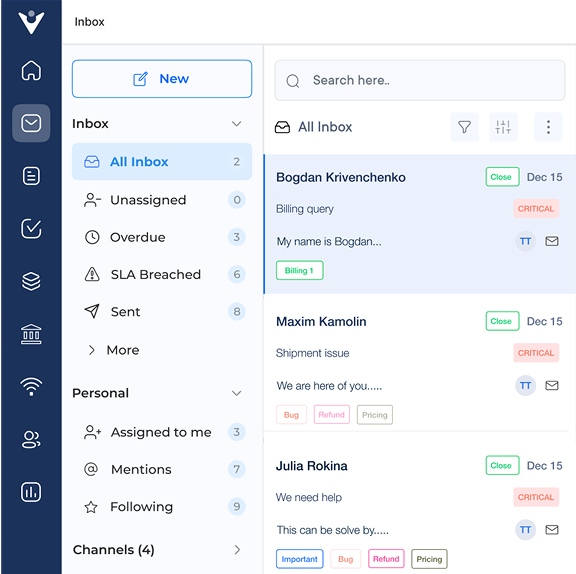
Veemo helps bring customer interactions into one place so teams can respond with better context and consistency across touchpoints. The businesses that win on CX tomorrow are the ones making the right tool decisions today.