What is Customer Dissatisfaction (DSAT)? A Detailed Guide
Customer dissatisfaction occurs when expectations are not met. The blog explores its causes, impact on businesses and practical strategies to improve long-term retention.
Customer dissatisfaction occurs when expectations are not met. The blog explores its causes, impact on businesses and practical strategies to improve long-term retention.
Customers walk away from brands not because of price but because they feel ignored or simply undervalued during their experience. That silent exit is customer dissatisfaction and it is costing businesses more than most leadership teams are willing to admit.
According to reports, 63% of consumers will stop buying from a brand they love after just two poor experiences. It makes user dissatisfaction not just a service problem but a direct business risk that demands immediate leadership attention. Below we’ll go through the breakdown of the real causes of dissatisfaction, the warning signs businesses often miss and the practical ways to reduce frustration before customers decide to leave.
Customer dissatisfaction refers to when a customer’s experience falls short of what they expected from a product or service. Once expectations are not met consistently, trust starts weakening and the relationship slowly begins to break down. Dissatisfaction is not always caused by one major mistake.
Most of the time, it grows through repeated small frustrations that slowly change how a customer feels about a business. A delayed reply, an unresolved issue or a poor interaction may seem minor individually, but together they create a negative experience that customers remember.
Does customer dissatisfaction always mean the product itself is bad? Not at all. Many customers leave even when the product works well because the experience around it feels frustrating or careless. A confusing return process, an unhelpful support conversation or a lack of communication can make customers feel ignored even after making a purchase.
Key factors:
Let’s go through the most common causes of customer dissatisfaction that slowly damage customer trust, experience and long-term loyalty toward a brand.
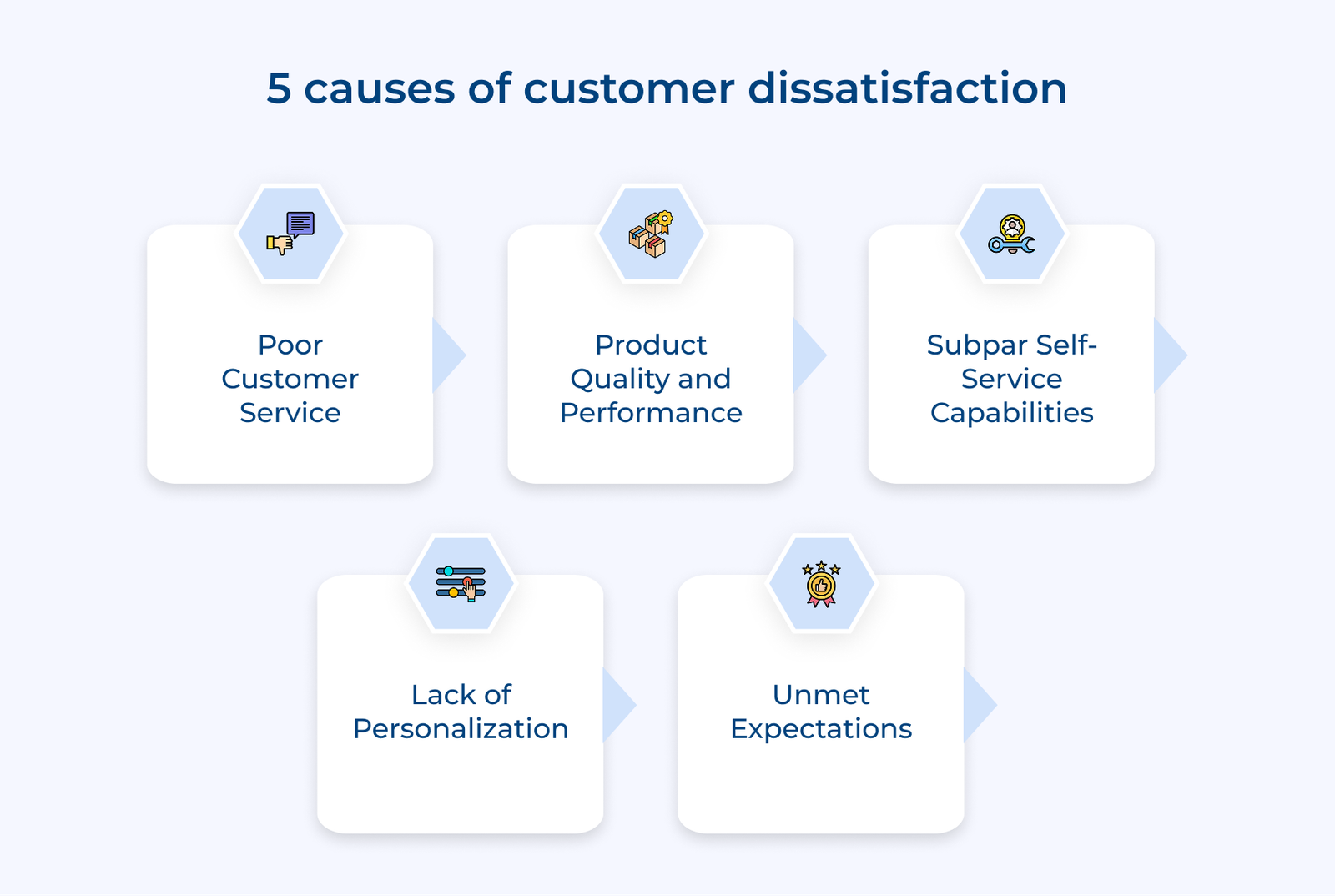
1. Poor Customer Service
Poor customer service is rarely caused by one rude conversation. Most customers become frustrated when they repeatedly feel ignored, unheard, or unimportant to the business. Support teams that are undertrained, unavailable, or rushed create an experience customers notice immediately.
2. Product Quality and Performance
Customers feel disappointed when a product fails once. They feel misled when it keeps failing after strong promises were made during the buying process. That feeling is much harder to repair and often creates lasting customer dissatisfaction.
Can good customer service save a brand from poor product quality? Yes, but only temporarily. When poor performance becomes a pattern, no amount of good service can hold that customer relationship together for long.
3. Subpar Self-service Capabilities
Customers want quick answers without always needing to contact support. Frustration builds fast when help centres, FAQs or self-service tools are confusing, outdated or difficult to use. Poor self-service experiences often increase dissatisfaction more than the original issue itself.
Many businesses struggle with self-service because they build it for cost-cutting rather than for customer convenience. Self-service is not a backend efficiency tool; it is a direct and visible extension of your overall service quality.
4. Lack of Personalisation
When every customer receives the same templated response regardless of their history or context, it sends a clear signal that the brand is not really paying attention. Customers today expect businesses to remember who they are and what they have been through.
Personalisation is not just about using a customer’s name in an email. Customers value businesses that remember their preferences, understand their history and respond with relevant solutions at the right time.
5. Unmet Expectations
Customer dissatisfaction often begins long before the experience happens. Many businesses create unrealistic expectations through exaggerated promises during marketing or sales conversations. Customers feel disappointed when the experience fails to match what they were led to expect.
Customers rarely complain about every disappointment directly. Many simply leave without saying anything and start looking for alternatives. Trust becomes difficult to rebuild once customers feel they were promised something the business could not truly deliver.
Below are the most common types of dissatisfied customers and how to handle them effectively.
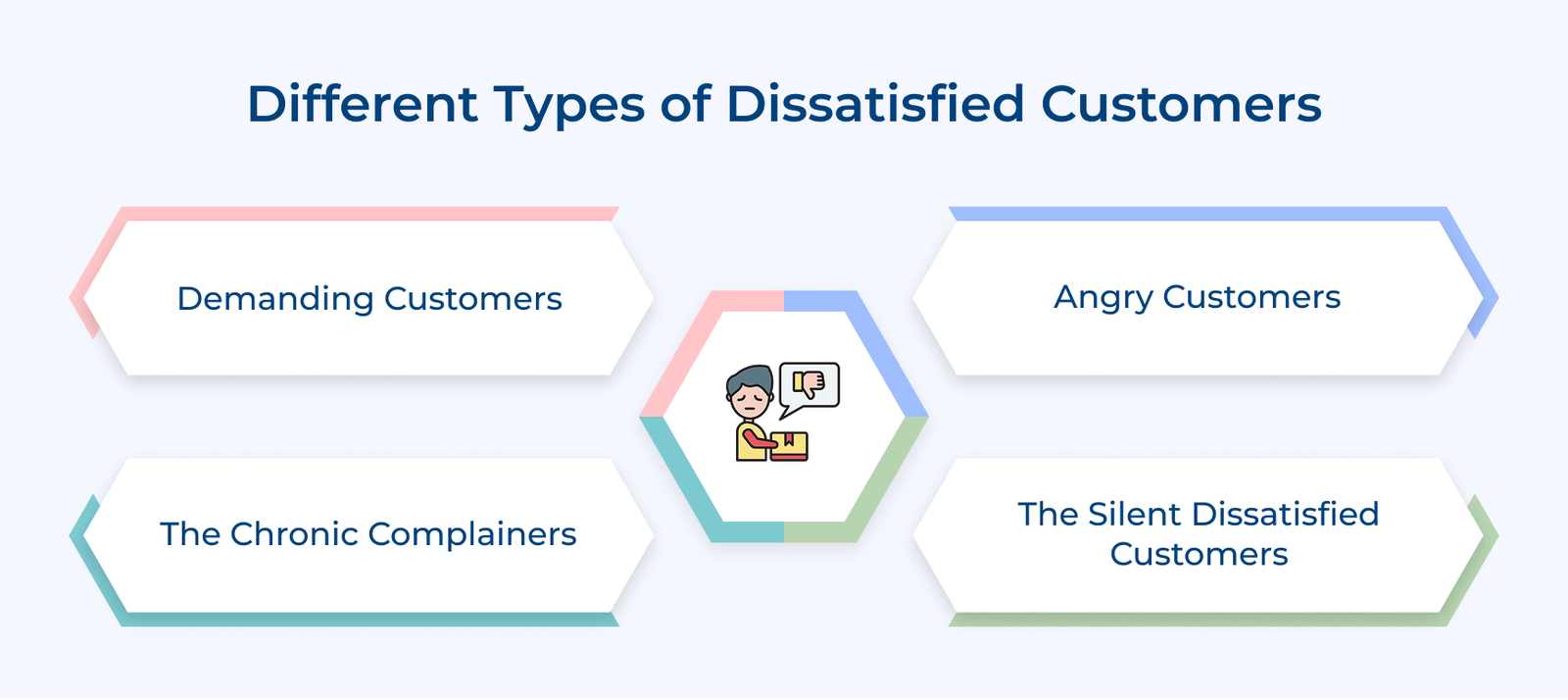
Demanding customers are not always unhappy customers. Most simply expect high standards, quick action and consistent service every single time they interact with a business. They pay close attention to details and notice immediately when something falls short of expectations.
Let’s assume that a long-term subscriber contacts support, expecting faster assistance and priority handling because they have stayed loyal to the brand for years. Their frustration usually comes less from the issue itself and more from feeling that their loyalty is no longer being recognised or valued.
Pro tips:
Stay calm, confident and direct. Acknowledge what customers expect, explain clearly what can realistically be done and follow through exactly as promised. Demanding customers usually respond well to people who communicate clearly and solve problems without creating false expectations.
Angry customers are often the result of accumulated frustration. It is rarely just about the current issue but about everything that went wrong before they reached out. Their anger is a signal that the brand has already failed them more than once, leading to growing customer dissatisfaction.
Let’s consider that a customer receives a damaged product and calls support furiously after waiting three days just to receive a reply to the original complaint. That frustration comes from the entire experience, not only from the damaged item itself.
Actionable tips:
Listen carefully before trying to fix the issue. Acknowledge their frustration clearly, avoid making excuses and explain what steps will be taken next. Angry customers respond far better when they feel someone is taking their problem seriously instead of rushing them through the conversation.
Chronic complainers tend to find problems in almost every interaction, no matter how smoothly the experience goes. Constant customer dissatisfaction becomes part of their behaviour, which makes it difficult to tell the difference between genuine concerns and habitual negativity.
Let’s assume that a customer repeatedly contacts support about small inconveniences like a slightly delayed notification email, even though the main product and service are working properly.
Best practices:
Stay patient, acknowledge what is reasonable and avoid arguing over every detail. Clear boundaries matter just as much as empathy in these situations. Chronic complainers often become less difficult once they feel consistently heard instead of repeatedly brushed aside.
Silent dissatisfied customers are the hardest to deal with because they never complain, never escalate and never give the brand a chance to fix what went wrong. They simply stop using the product and walk away. Their customer dissatisfaction stays hidden until the relationship is already lost.
Let’s consider that a customer has a frustrating onboarding experience and quietly stops using the product after two weeks. No support request comes in and the business never realises there was a problem.
Key takeaways:
Pay attention to early signals instead of waiting for complaints. Usage drops, reduced engagement and inactivity often say more than words ever will. Simple check-ins, clear feedback options and timely outreach help surface problems early, before customers quietly leave.
Check out the key signals that help you identify dissatisfied customers early and take action before the relationship breaks down.
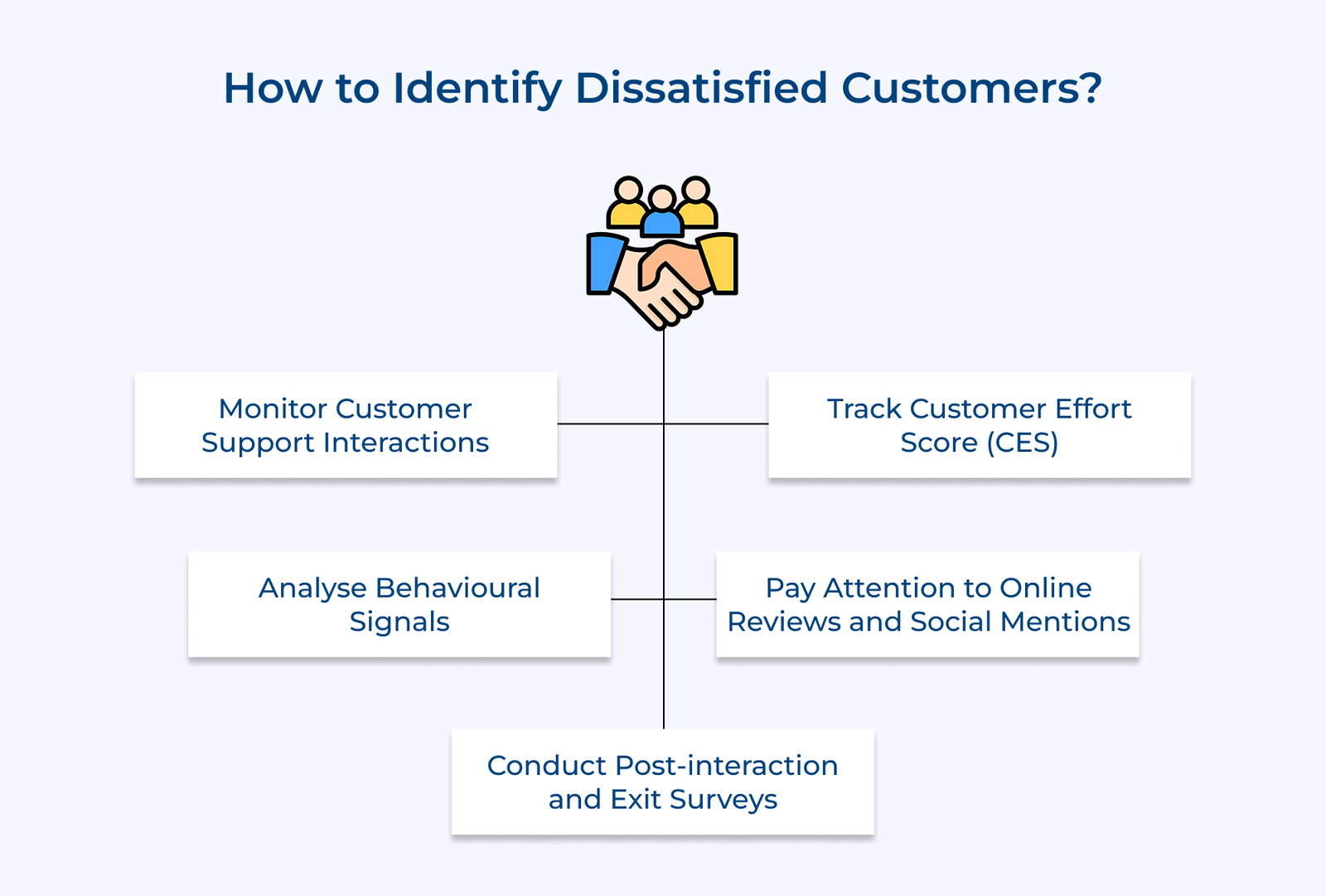
1. Monitor Customer Support Interactions
Support conversations often reveal more than customers say directly. Repeated contacts for the same issue usually point to unresolved problems and growing customer dissatisfaction that is already building beneath the surface. Tracking tone, frequency and the type of issues raised helps you spot patterns that single tickets cannot show.
2. Track Customer Effort Score (CES)
Effort is one of the clearest signals of dissatisfaction. When customers have to repeat themselves, follow up multiple times or struggle to get a simple issue resolved, customer dissatisfaction builds quietly but steadily. CES helps you see how difficult the experience really is. High effort almost always shows up before a customer decides to leave.
3. Analyse Behavioural Signals
Customer dissatisfaction does not always come through complaints. Reduced usage, fewer logins or declining engagement often signal something is wrong even when nothing is said directly. The behavioural shifts are early warnings. Acting on them quickly gives a chance to fix the experience before the customer fully disconnects.
4. Pay Attention to Online Reviews and Social Mentions
Online reviews often reveal what customers avoid saying in direct conversations. Repeated themes across reviews usually point to consistent customer dissatisfaction linked to specific parts of the experience. Treating reviews as feedback instead of reputation damage helps uncover real problems.
5. Conduct Post-interaction and Exit Surveys
Well-designed surveys help capture where the experience starts to break down. Clear, specific questions give better insight into customer dissatisfaction compared to generic rating-based surveys. Exit feedback is often the most honest. Customers who have already left tend to share exactly what went wrong, giving direct clues on what needs to change.
Customer dissatisfaction can often be prevented when the right actions are taken early. The following are the key strategies that help retain customers longer.
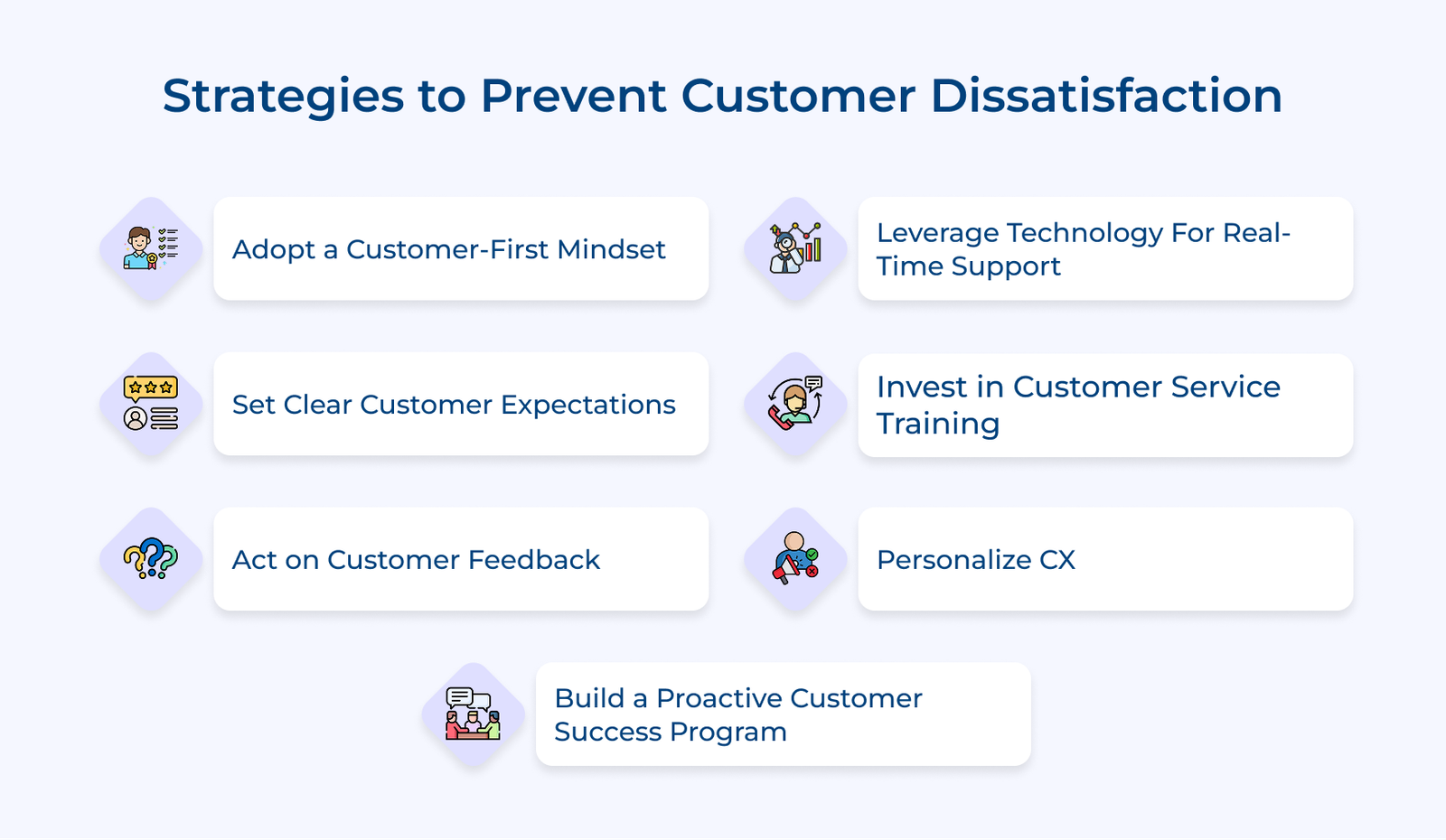
A customer-first mindset is more than a statement companies use internally. It shapes how decisions are made across every team and every customer interaction. Businesses that genuinely put customers at the centre usually create experiences that feel smoother, more respectful and far less frustrating. That directly reduces long-term customer dissatisfaction.
A customer-first mindset is when, when a policy conflicts with a customer’s genuine need, you question the policy rather than hiding behind it. That shift in thinking alone separates brands that retain customers from brands that constantly lose them.
Key ways:
A customer-first culture requires leadership to model it consistently in every decision they make. When teams see leadership prioritising customer outcomes, they naturally start making better experience decisions themselves.
Pro tips:
Customer dissatisfaction often starts long before something actually goes wrong. Many problems begin when customers are promised more than the business can realistically deliver. Unrealistic timelines, exaggerated claims and vague communication create completely avoidable frustration.
Clear and honest communication matters from the very beginning. Customers should understand exactly what they will receive, how long it will take and what happens if delays or changes occur. Customers handle problems far better when they are informed early instead of being left confused.
Key moments:
Trust grows naturally because customers feel the business is reliable and transparent. Positive surprises create stronger loyalty than exaggerated promises ever can. When expectation-setting becomes a deliberate strategy, it reduces inbound complaints and builds trust faster. The brands that master this make customer retention look completely effortless.
Customers expect quick answers when problems happen. Long wait times and delayed responses create frustration quickly, especially when customers feel they are being left without updates. Customer dissatisfaction often grows during the waiting period more than during the issue itself.
Can support technology actually improve customer satisfaction? Yes, but only when it genuinely helps customers solve problems faster and more smoothly. Technology becomes frustrating when it creates extra steps, blocks access to human support or forces customers to repeat information multiple times.
Key technologies:
The biggest mistake businesses make is deploying support technology as a cost-reduction tool rather than an experience-enhancement tool. When technology is built to genuinely serve customers, it becomes one of your most powerful dissatisfaction prevention assets.
Actionable tips:
A well-trained customer service team can prevent customer dissatisfaction long before it becomes a serious problem. The quality of a single support interaction can either rebuild a damaged relationship or permanently end it.
Many teams are trained to follow scripts instead of understanding customers. Customers notice immediately when responses sound robotic or disconnected from the actual situation. Strong training helps agents think clearly, communicate naturally and respond with good judgment instead of repeating memorised lines.
Best practices:
What does strong customer service training actually create? It creates support teams that see customer interactions as real conversations instead of tickets that need to be closed quickly.
Customers remember support experiences where they felt understood and genuinely helped. Training should never be a one-time onboarding exercise. It needs to be continuous and informed by real front-line interactions. Brands that treat training as an ongoing investment consistently outperform competitors on every satisfaction measure that matters.
Collecting feedback without acting on it quietly signals to customers that their opinion does not really matter. Brands that prevent customer dissatisfaction most effectively have built a closed-loop system where every piece of feedback leads to a meaningful response.
Strong businesses treat feedback as something that leads to action, not just data collection. Customers feel valued when they see that their comments directly influenced a change or improvement.
Key ways:
Key ways:
Personalisation is no longer a premium feature. It is a baseline expectation customers carry into every interaction with a business. When a customer feels treated as an individual rather than a transaction, the entire experience shifts in their favour and reduces the likelihood of customer dissatisfaction.
How can businesses personalise the experience without making it feel artificial? The answer usually lies in using existing customer information more thoughtfully. Purchase history, previous support conversations and customer preferences already reveal what matters to people. Customers notice when businesses actually pay attention to those details.
Key takeaways:
When personalisation is embedded into the experience strategy, it makes customers feel valued before a problem even arises. Customers who feel genuinely valued are significantly more forgiving when things occasionally go wrong.
Most businesses are built to react to dissatisfaction, but the most customer-centric organisations prevent it through proactive customer success. The approach helps identify early signs of customer dissatisfaction before they grow into larger relationship problems.
What makes proactive customer success different from regular support? Traditional support usually reacts after a customer reaches out with a problem. Proactive customer success pays attention to warning signs earlier and checks in before frustration grows into a larger issue. Customers feel more valued when businesses notice problems without needing to be chased for help.
Actionable tips:
Why does proactive customer success work so well? Waiting for complaints usually means trust has already started weakening. Early communication helps businesses solve smaller problems before they turn into reasons for customers to leave. Customers are far more likely to stay loyal when they feel supported consistently instead of only hearing from the business during problems.
Customer dissatisfaction should never be ignored. Most unhappy customers leave quietly after repeated frustrations that left them feeling unheard or disappointed, and catching these moments early gives businesses a chance to rebuild trust before it is lost.
Start with one part of the customer journey and examine it honestly. Small, consistent improvements build more loyalty than big one-time fixes, because customers remember how meaningfully a brand made things right.

Early signs of customer dissatisfaction usually appear long before customers submit formal complaints. Reduced engagement, repeated support requests, slower responses and sudden drops in usage often signal that frustration is already building. Businesses that pay attention to these behavioural patterns can step in before the customer decides to leave.
Social media is where customers say publicly what they would never say directly to your support team. Monitoring the conversations gives you an unfiltered and real-time view of exactly how customers feel about their experience with your brand.
Many businesses focus only on calming the customer in the moment instead of fixing the real issue that caused the frustration. Delayed replies, defensive responses and generic apologies often make customer dissatisfaction worse because customers feel their concerns are not truly being taken seriously.
Tracking metrics like customer effort score, resolution time and repeat contact rate gives you a clear picture of if your efforts are genuinely moving the needle. The most telling measure, however, is if your churn rate and customer retention numbers are improving consistently over time.
Customer feedback, when taken seriously, acts as a direct diagnostic tool that shows you exactly where your experience is breaking down. The key is building a system where feedback does not just get collected but actively drives decisions that customers can eventually see and feel in their experience.
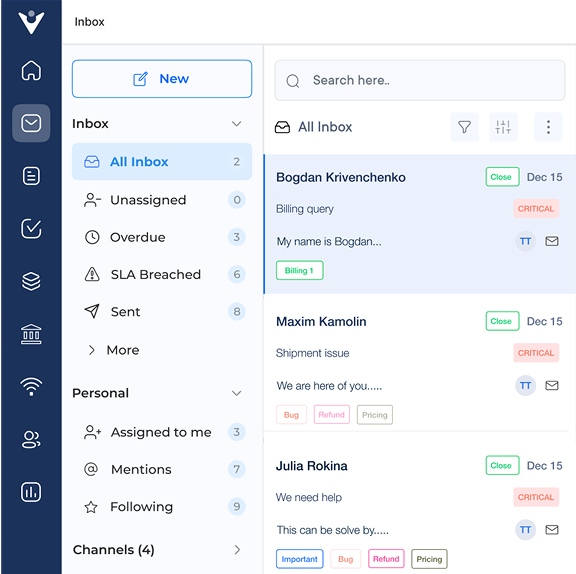
Grow Customer Relationships and stronger team collaboration with our range of products across the Conversational Engagement Suite.
Omnichannel Customer Support & Help Desk Software
AI Enabled Business Messaging and Chatbot Software
Sales Engagement & CRM Software
Call Center Software & Virtual Phone System
Product Marketing & Experience Platform
Customer Experience & Feedback Management Software
 Scroll to top