Digital Transformation for Small Businesses: The Complete Guide
Learn everything about the digital transformation for small businesses. Learn the proven strategies to boost organizational productivity and drive a competitive edge.

Learn everything about the digital transformation for small businesses. Learn the proven strategies to boost organizational productivity and drive a competitive edge.
Running a small business on manual processes drains time, money and energy. Digital transformation for small businesses is no longer optional when competitors move faster with smarter tools. A whopping 92% of SMEs believe digital transformation is crucial for their business.
The important thing is that modern customers do notice all this. They expect quick responses, smooth interactions and digital convenience that manual systems struggle to deliver consistently. Each day without digital change quietly pushes customers toward businesses that feel easier to work with.
Well, we’ve got your back! Let’s dive in to understand how you can leverage digital transformation to save time, reduce friction and grow in a way that actually feels manageable.
Digital transformation for small businesses refers to using simple, practical technology to make your daily work easier and your customer service better. Instead of relying on slow, manual tasks, you shift to digital tools that save time, cut costs and help you grow.
Digital transformation fundamentally changes how small businesses operate and deliver value to customers. It enables remote work capabilities and reduces operational costs through automation. Most importantly, it opens new revenue streams and helps businesses adapt quickly to changing market conditions while improving customer satisfaction.
Key components:
The following are the key benefits of small business digital transformation. Let’s check them out in detail below.
Key questions to see how digitalization can change your business:
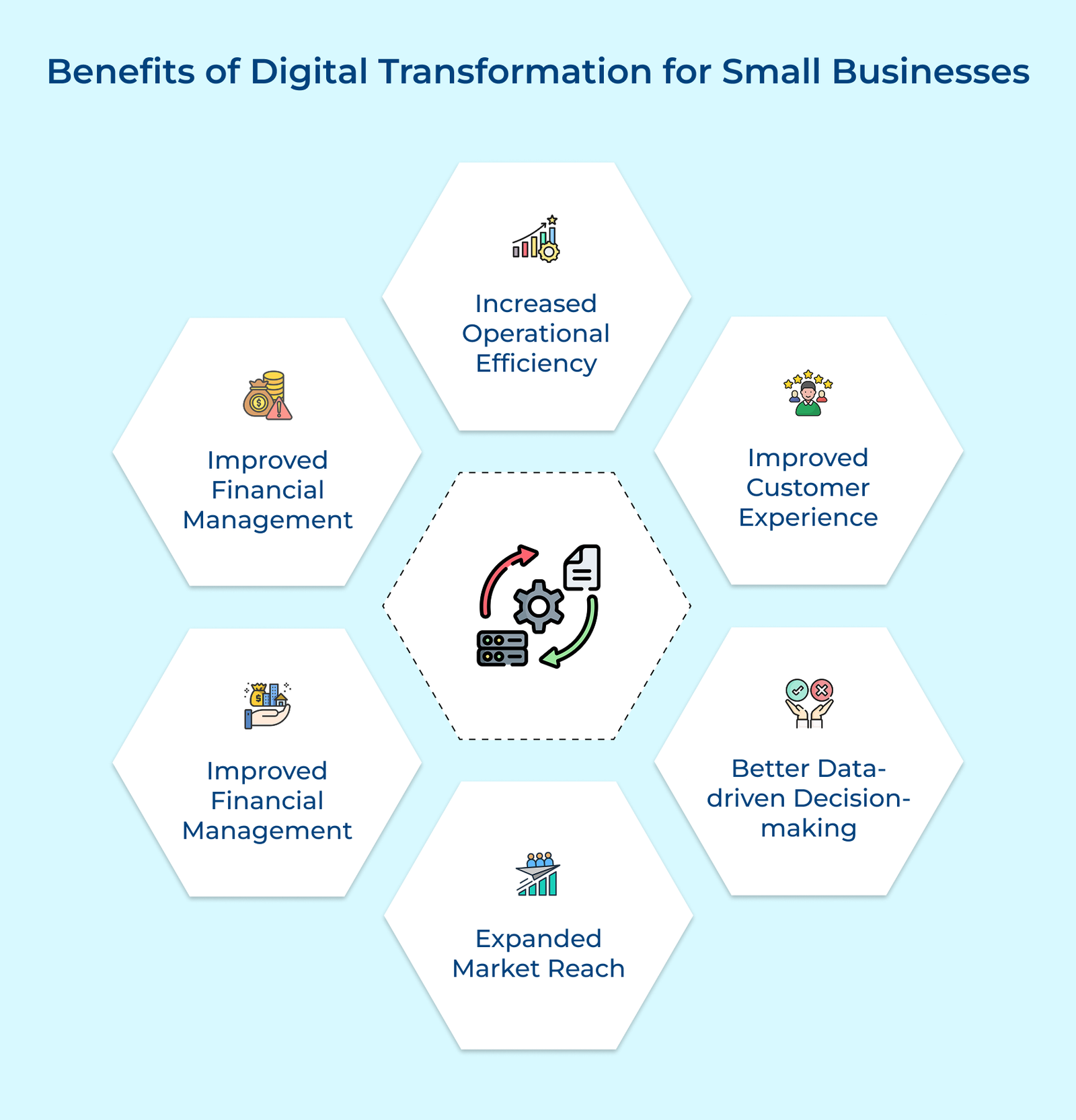
1. Increased Operational Efficiency
Digital tools automate repetitive tasks like invoicing and inventory management. It reduces human error and frees up your time for strategic activities. Your team can focus on growing the business instead of handling manual paperwork.
2. Improved Customer Experience
Let people book appointments online, message you quickly, or get help without long waits. The easier you make things for them, the more likely they are to come back and bring others with them. 35% of organizations have improving customer experience as a main goal of their digital transformation plan.
3. Better Data-driven Decision-making
Digital tools collect useful information about what your customers do and how your business performs. It helps you spot patterns, make better choices and stop guessing when planning your next steps.
4. Expanded Market Reach
E-commerce platforms and social media marketing extend your business beyond geographical boundaries. You can attract customers from different cities or regions without physical expansion. Digital presence also helps local customers discover your business online.
5. Improved Financial Management
Simple accounting software helps you see how much money is coming in and going out. You’ll stay on top of bills, avoid surprises or make more confident decisions about spending and saving.
6. Greater Business Flexibility
Running your business online means you’re not tied to one place. No matter if the leaders are home, on the go, or adjusting to something unexpected, they can keep things running without missing a beat.
The following are the practical, effective strategies to leverage digital transformation for small businesses, helping you enhance efficiency, boost customer engagement and drive growth.
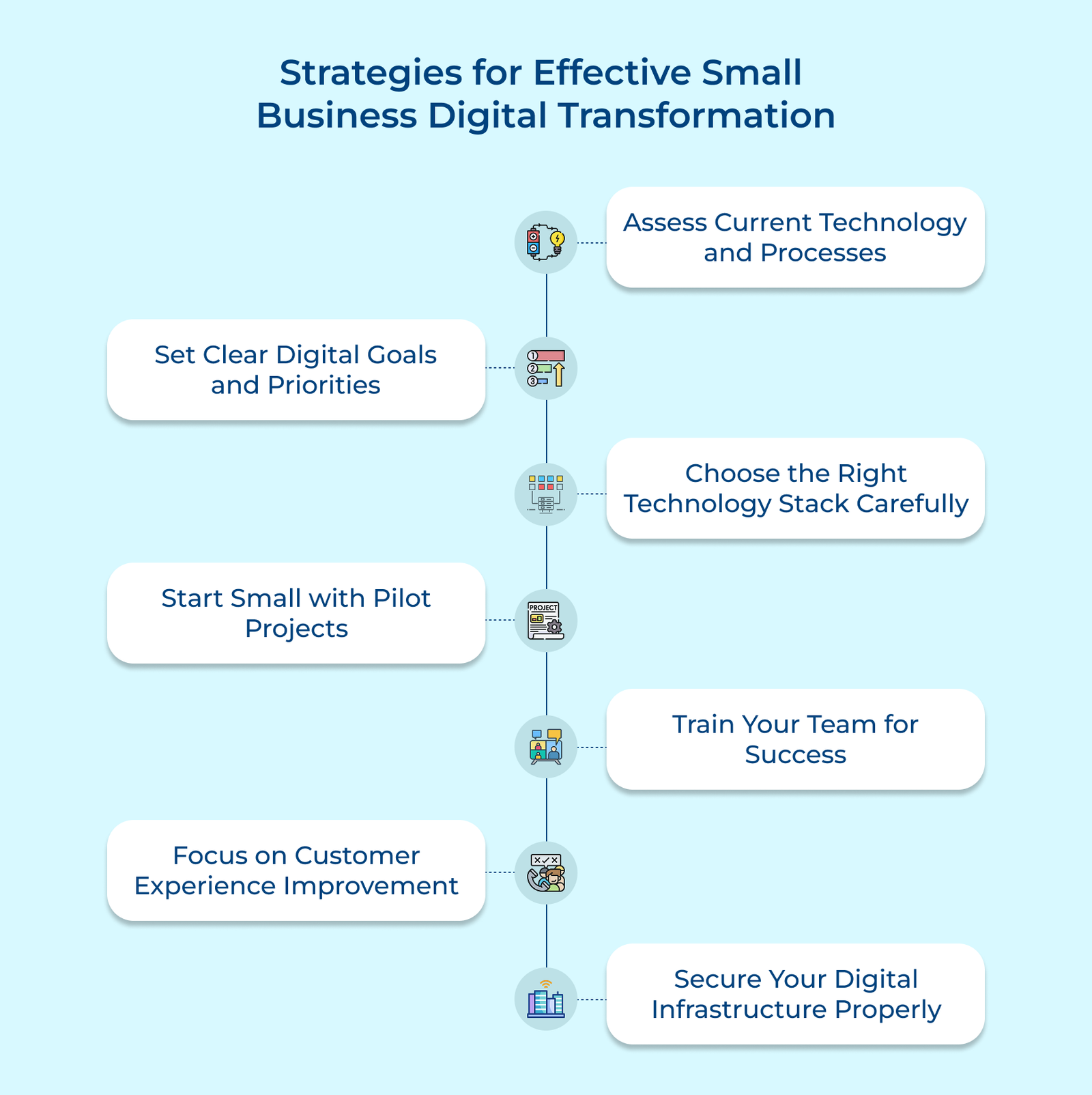
Before making any changes, get a clear picture of what you already have. You can’t fix what you haven’t fully understood. The step helps you spot what’s slowing you down and where to focus first.
Key methods:
Jumping into new tech without clear goals can waste time and money. When you set specific targets, it’s easier to choose the right tools and see what’s working. Focus your energy and budget on the changes that matter most to your daily operations.
Essential goals:
Start by asking yourself what keeps you awake at night, worrying about your business operations. Is it slow customer service or manual processes eating up your time?
Your biggest pain points often reveal your most important digital transformation priorities. Begin with the problem that costs you the most money or time each month, then work backward to identify which technology solutions address that specific challenge most effectively.
Picking the right tech is like laying a foundation. If it’s not solid, everything you build on top of it starts to crack. The wrong tool can slow your team down, waste money and be a pain to replace later.
Key questions:
The questions help you avoid costly mistakes by focusing attention on practical considerations rather than flashy features. They force you to think about long-term implications instead of short-term excitement about new technology.
Think about a restaurant owner who chose a complex point-of-sale system with dozens of features they never used. The staff struggled with basic orders because the interface was confusing and customer service suffered during the learning period. Here are four core technology categories that form the backbone of most small business stacks:
Once you’ve picked the right tools, don’t rush into changing everything at once. A smarter approach is to test things on a small scale first. You spot issues early, learn what works and avoid disrupting your entire business.
Start with one department or process, like handling orders, tracking inventory, or sending invoices. Use the new system just in that area. Watch how it performs, listen to your team’s feedback and make adjustments before expanding it to the rest of the business.
Pro tips:
The best software in the world won’t help if your team doesn’t know how to use it. Poor training is one of the biggest reasons digital changes fail. Good training builds confidence, reduces confusion and helps your business benefit from the tools you invest in.
Key areas:
Improving customer experience means making every interaction easier, faster and more reliable with help from the right tools. When customers enjoy a smooth process, they’re more likely to come back and spread the word.
Streamlined online booking and payment solutions
Online booking systems cut out back-and-forth phone calls. Customers can book anytime they like and the built-in payment tools make checkouts quick. There’s no more waiting involved for follow-ups.
Mobile-responsive website design that works
If your site is slow or clunky on mobile, you’ll lose people fast. A well-designed mobile-friendly site loads quickly and makes it easy to browse, buy or book without frustration.
Automated communication workflows for better service
Automated messages like appointment reminders or order updates keep customers in the loop without eating up your team’s time. It’s a simple way to stay reliable and responsive without stretching your staff thin.
Digital security isn’t just for big companies; small businesses are just as vulnerable, often with fewer resources to recover when things go wrong. One breach can damage trust, invite legal trouble and cost far more than prevention ever would.
Key factors:
Why should you prioritize security from day one of your digital transformation? Because recovering from a security breach costs ten times more than preventing one and most small businesses never fully recover their reputation after customer data gets compromised.
Check out the growing role of AI and automation in digital transformation for SMBs, the technologies that help boost efficiency without overwhelming small teams.
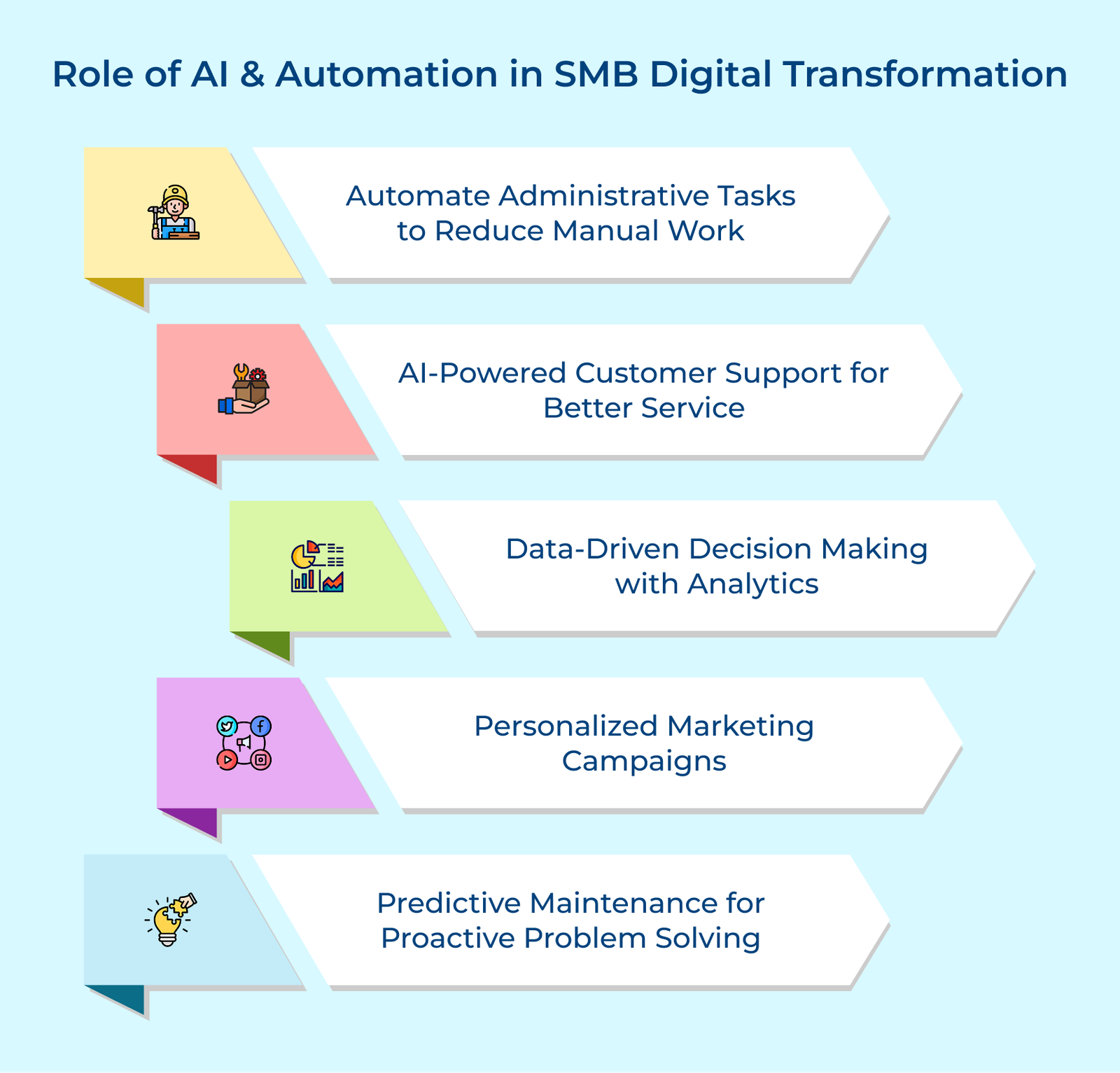
1. Streamlining Administrative Tasks and Reducing Manual Work
AI tools can handle tasks like invoicing, scheduling and inventory updates on their own. The background systems reduce errors and free your staff to focus on higher-value work.
2. Enhancing Customer Service Through Intelligent Support Systems
Chatbots and virtual assistants give quick answers to routine questions and pass on complex issues to your team. They learn from each interaction and respond to more people at once, so customers aren’t left waiting.
3. Improving Decision-making with Data Analytics and Insights
AI looks at your business data and spots patterns, like what’s working or what’s not. It alerts you to unusual changes and helps you base decisions on facts instead of guesswork.
4. Optimizing Marketing Efforts through Personalized Campaigns
Automation platforms analyze customer preferences to create targeted messages for specific audience segments. AI tools determine optimal email timing and recommend products based on purchase history. The personalized approach increases conversion rates while reducing marketing costs through efficient resource allocation.
5. Enabling Predictive Maintenance and Proactive Problem Solving
AI tracks your equipment’s condition and catches early warning signs of trouble. Fixing small issues before they turn into big ones reduces downtime and keeps operations running smoothly.
The following are the common hurdles small businesses might face while initiating digital transformation and provide insights to overcome them effectively.
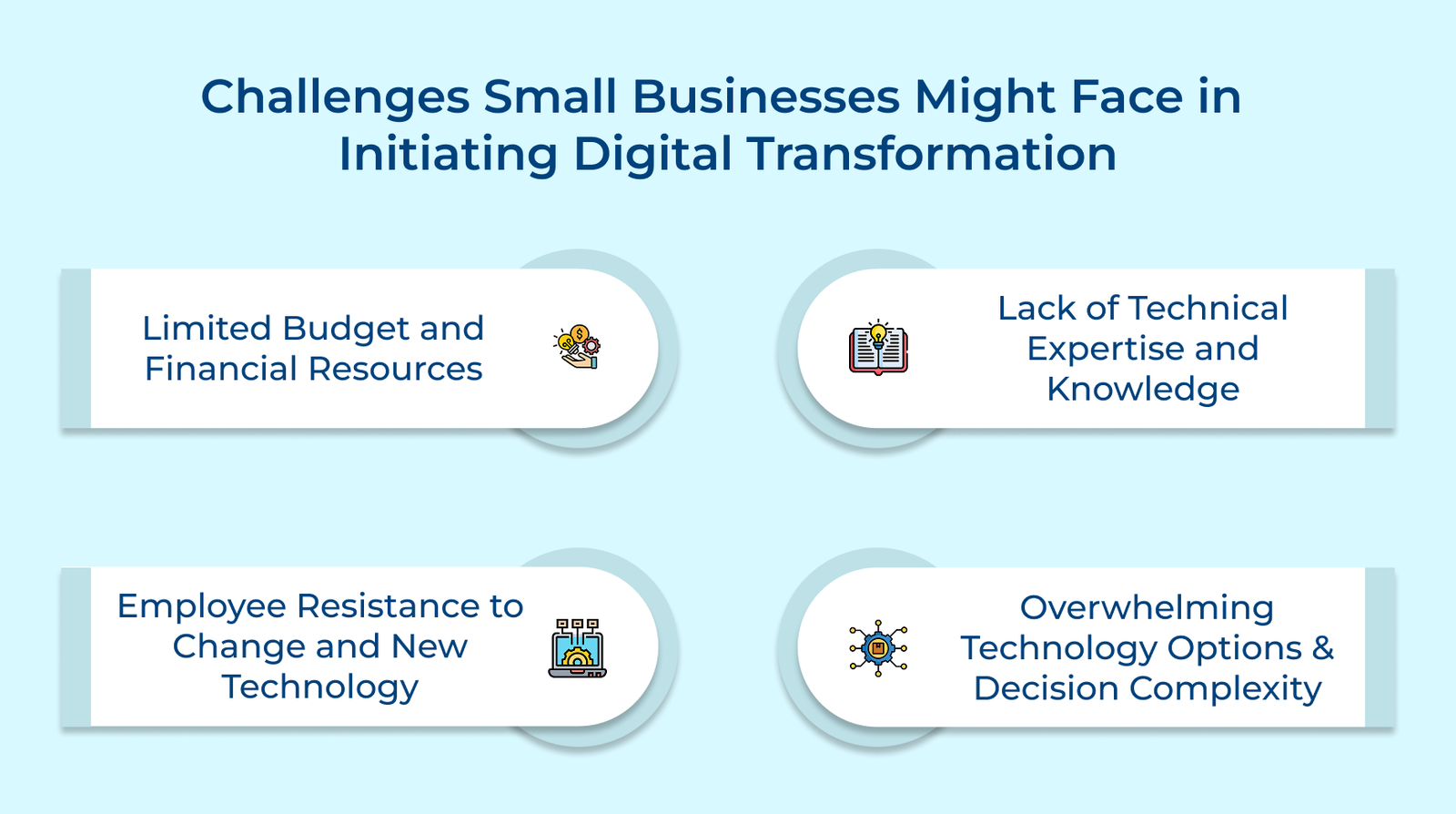
Small businesses face tight cash flow that makes technology investments feel overwhelming or impossible. Upfront costs for software licenses and implementation services strain already stretched finances. Many owners worry about spending money on technology when covering immediate expenses like payroll and inventory.
Many business owners know their trade inside out but feel lost when it comes to tech. Choosing the right tools isn’t easy when you don’t fully understand what each one does or how it might help. The knowledge gap often leads to guesswork or poor choices.
People naturally stick to what they know. When you introduce new systems, employees might worry about losing control or having to relearn everything. It can lead to pushback or worse, they avoid the new tools altogether and stick to old habits.
There’s no shortage of apps and tools promising to fix your problems. But sorting through dozens of options, each with different features and pricing, can be exhausting. Without clear guidance, it’s easy to delay decisions or choose based on price alone, not fit.
Steps to overcome the challenges:
Check out the real-world examples of small businesses using digital tools to solve everyday problems without needing huge budgets or technical teams.
Key statistics:
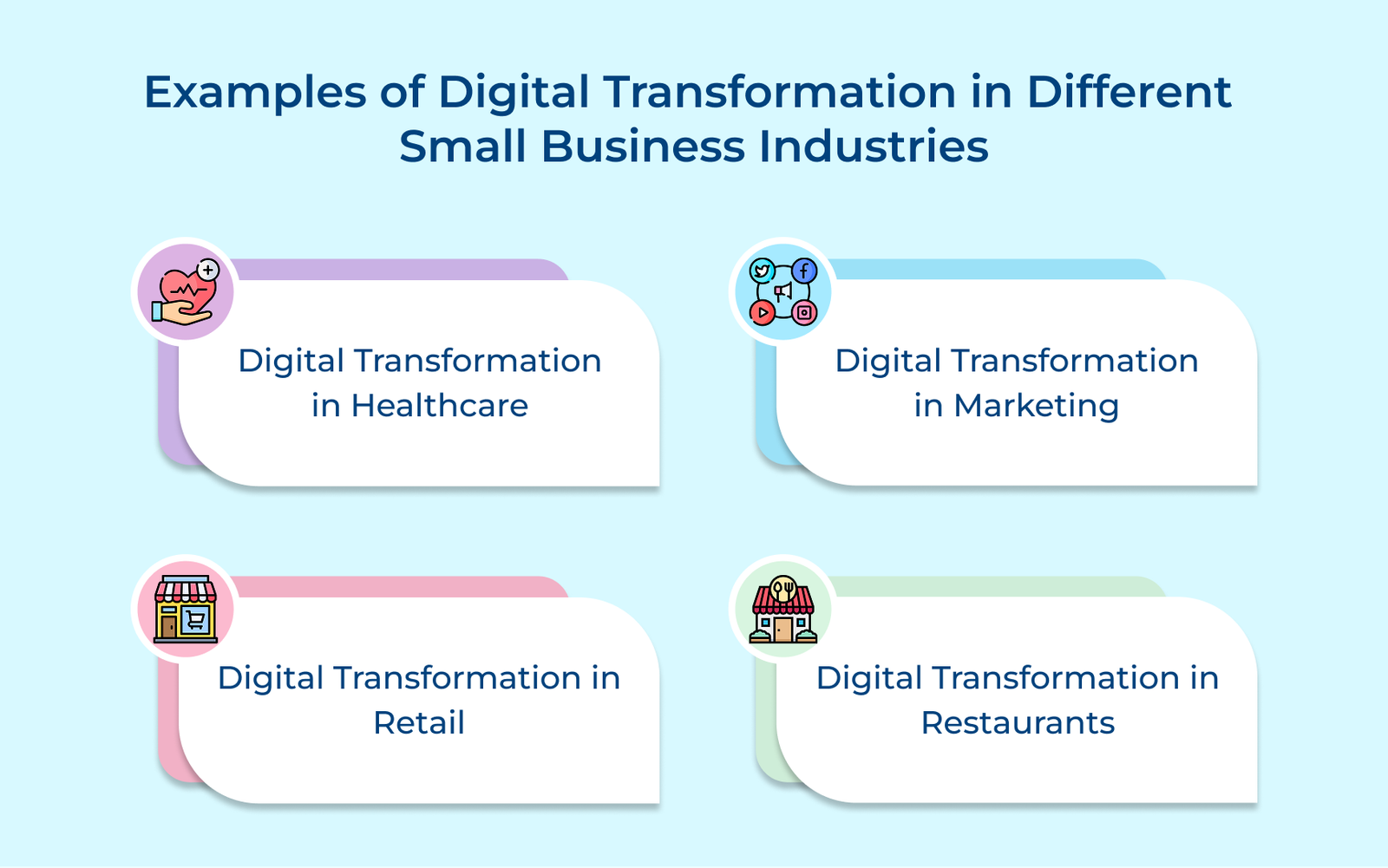
A small family clinic switched from paper records to digital systems, making it easier for patients to book appointments and request refills online. Appointment reminders cut down on no-shows and staff spent less time on the phone or filing paperwork. It resulted in happier patients and smoother day-to-day operations.
A boutique marketing agency adopted automation platforms for social media management and email campaigns across client accounts. AI-powered analytics provide detailed performance insights that create more effective campaigns for diverse portfolios. The agency increased client retention while handling 60% more accounts with an unchanged team size.
An independent bookstore set up an online store that connects with in-store inventory. They send tailored emails about new books and sales come from beyond their town. The changes helped the shop stay afloat during tough times and grow a loyal following.
A family-run restaurant introduced digital ordering and kitchen screens. It helped them cut down on order errors and save time. Nearly half of their sales now come from online orders. Smart inventory tools help them avoid waste and a simple rewards program keeps regulars coming back without relying on expensive delivery apps.
Below are the authentic transformation stories that demonstrate how small businesses overcame common challenges through strategic technology adoption.
Thompson’s Auto Repair Shop
Thompson’s moved away from messy paperwork by switching to a digital system that handles appointments, inventory and billing in one place. Customers now book online and mechanics pull up vehicle histories on their phones without wasting time.
The change cut down on missed appointments and parts mix-ups. Automated reminders kept customers in the loop and the shop’s monthly revenue went up due to smoother scheduling and better service that kept people coming back.
Bella’s Boutique Clothing Store
Bella’s Boutique grew from a local shop into an online-and-offline business by syncing its website with in-store inventory along with the customer info. They now track what each shopper likes and send personalized updates to match.
Selling online helped the store stay steady during slow seasons and shoppers appreciated the custom touches. Behind the scenes, auto restocking and a quicker checkout made running the business more efficient.
Green Valley Landscaping Services
Green Valley Landscaping adopted mobile workforce management, connecting field crews with office operations through real-time communication and job tracking. The transformation included GPS scheduling, customer portals and digital invoicing that eliminated paperwork delays across multiple job sites.
The digital overhaul improved customer satisfaction through transparent project updates while reducing costs through optimized routing and resource allocation. The company took on bigger projects with better coordination while keeping quality high, setting them apart from traditional competitors.
Digital transformation isn’t just about using new tools, it’s about rethinking how your business works, serves customers and grows. The strategies shared show that real progress comes from thoughtful planning, involving your team and making changes step by step.
Start by identifying your biggest pain points and choosing simple solutions that match your needs as well as the budget. Don’t treat it as a one-time project; keep checking what’s working, listen to feedback and make small improvements regularly to stay ahead in a fast-changing world.

Start by assessing your current technology and identifying specific business problems that digital solutions can solve effectively. Choose user-friendly, affordable tools that integrate with existing systems, then implement changes gradually through pilot projects. Train your team thoroughly, provide ongoing support and continuously monitor progress to ensure your transformation delivers measurable results for sustained business growth.
Digital transformation for small businesses usually means moving away from pen-and-paper or manual work. You might switch to online booking, use cloud software for managing inventory or finances or set up a proper website with customer support options. You’ll likely start with one process like invoicing or scheduling and expand as you see results.
Customers now expect faster service, online options and clear communication. Digital tools help you deliver on that, while also saving time and reducing costs. If you don’t adapt, you risk falling behind businesses big or small that already have.
Digital transformation costs vary widely depending on business size and complexity, but can start as low as a few hundred dollars monthly for basic cloud software subscriptions. Initial investments might include software licenses, training or setup fees, while ongoing costs cover monthly subscriptions or maintenance. Many solutions offer scalable pricing that grows with your business, making transformation accessible regardless of current budget constraints.
Complete digital transformation typically takes six months to two years, depending on business complexity and the scope of changes being implemented throughout operations. Simple changes like cloud accounting or online booking take weeks, while full system overhauls take longer. Start small and scale gradually for lasting results.

Grow Customer Relationships and stronger team collaboration with our range of products across the Conversational Engagement Suite.
Omnichannel Customer Support & Help Desk Software
AI Enabled Business Messaging and Chatbot Software
Sales Engagement & CRM Software
Call Center Software & Virtual Phone System
Product Marketing & Experience Platform
Customer Experience & Feedback Management Software

 Client vs Customer: What’s the Difference?
Scroll to top
Client vs Customer: What’s the Difference?
Scroll to top