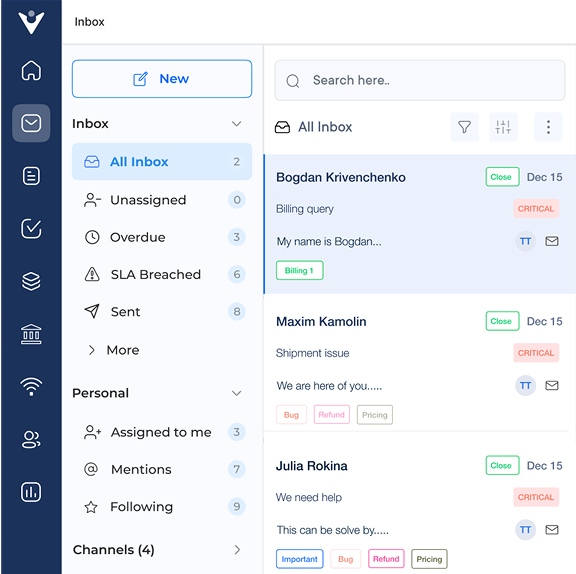
Key elements:
- Omnichannel inbox: Centralizes SMS, email, live chat and social media conversations in a single workspace.
- AI-powered routing: Automatically directs conversations to the most appropriate team member based on context and availability.
- Campaign management: Runs segmented SMS and email campaigns from the same platform used to manage customer support.
3. Omnisend
Omnisend is built specifically for e-commerce businesses and that focus is reflected throughout the platform. The software combines email and SMS marketing tools designed to help online stores communicate with customers at key moments throughout the buying journey.
What does that look like in practice? When a customer abandons a cart, browses a product three times without buying, or crosses a spending threshold, Omnisend automatically fires a relevant message without anyone on your team lifting a finger.
Key features:
- Unified automation flows: Combine SMS and email into a single workflow for a more connected customer experience.
- Ready-to-use sequences: Includes pre-built workflows for cart abandonment, post-purchase follow-ups, and win-back campaigns.
- Live product picker: Pulls products directly from your store into campaigns without manual updates.
- Native store integrations: Connects with Shopify, WooCommerce and BigCommerce without requiring manual data exports.
One area where Omnisend stands out is customer segmentation. Businesses can group customers based on purchase frequency, average order value, and shopping behavior, making it easier to send relevant messages and improve campaign performance.
Pros:
- E-commerce automation depth is unmatched at this price point.
- SMS and email campaigns work together within the same platform.
Cons:
- Less suitable for service-based or non-e-commerce businesses.
- SMS credits are charged separately from subscription plans.
4. Brevo
Brevo, previously known as Sendinblue, is one of the SMS marketing platforms that combines email, SMS, WhatsApp and live chat within a single dashboard. The tool is a practical option for businesses that want to manage customer communication across multiple channels without relying on separate tools.
One detail that often gets overlooked is Brevo’s pricing model. Unlike many platforms that charge based on contact count, Brevo charges according to the number of emails sent. Businesses with large contact lists and moderate sending volumes can often keep costs under control with this approach.
Key functions:
- Transactional SMS: Sends order confirmations, OTPs, delivery updates and promotional messages from the same platform.
- Built-in CRM: Tracks full contact interaction history without needing a separate relationship management tool.
- WhatsApp campaigns: Supports customer communication through one of the world’s most widely used messaging apps.
- Multi-channel automation: Creates automated workflows across email, SMS and WhatsApp using a visual workflow builder.
Can Brevo handle both marketing campaigns and operational messaging effectively? Yes. Businesses can manage promotional communication and transactional notifications from one place, making customer communication easier to organize.
Pros:
- Unlimited contact storage, even on the free plan.
- Multi-channel communication from a single platform.
Cons:
- SMS features are less advanced than dedicated SMS focused platforms.
- Reporting and analytics are not as detailed as ActiveCampaign.
5. Mailchimp
Mailchimp is one of the most widely used email marketing tools and has gradually expanded into SMS, landing pages or audience management. The tool’s clean interface and ease of use make it a popular choice for small businesses looking for a straightforward way to manage customer communication.
The challenge most growing businesses run into is Mailchimp’s pricing structure. Unlike Brevo, Mailchimp charges based on the number of contacts in your account and costs can escalate quickly once your list crosses the 5,000 mark, which catches many small business owners off guard.
Core features:
- AI subject line tool: Suggests subject line ideas using historical campaign performance data.
- Customer journey builder: Maps and automates multi-step engagement sequences visually.
- Lookalike audiences: Helps identify and reach new prospects who share characteristics with existing customers.
- Behavioral segmentation: Organizes contacts based on engagement activity and purchase behavior.
When is Mailchimp the right fit for a small business? The platform works particularly well during the early stages of growth when your list is under 2,000 contacts and you need a reliable or easy-to-use platform to build your email marketing foundation before committing to a more advanced tool.
Pros:
- Extensive template library and beginner-friendly interface.
- Large integration ecosystem that connects with many popular business tools.
Cons:
- Pricing can become expensive as contact lists grow.
- SMS functionality is limited to US-based businesses on select paid plans.
6. ActiveCampaign
ActiveCampaign is what the SMS marketing platforms landscape calls a customer experience automation tool and that distinction matters more than it sounds. The tool goes well beyond sending scheduled emails; it tracks how individual contacts behave across your website, emails or sales pipeline and then responds to that behavior automatically in real time.
Many business owners spend a significant amount of time manually following up with leads and customers. ActiveCampaign reduces that workload through automation workflows that adapt based on customer behavior, helping teams stay consistent without constant manual effort.
Key elements:
- Behavioral site tracking: Triggers automated actions when contacts visit specific pages on your website.
- Built-in deal pipeline: Manages sales opportunities directly within the platform’s CRM.
- Conditional workflow branching: Sends different messages based on customer actions and engagement patterns.
- Lead scoring engine: Automatically ranks prospects by engagement level to prioritize the hottest follow-ups.
Which businesses benefit most from ActiveCampaign? Service-based businesses, consultants, SaaS companies and B2B organizations with longer sales cycles often find the platform particularly useful because it is designed to support ongoing customer relationships and lead nurturing.
Pros:
- Automation logic depth is the strongest available at this price range.
- Unified CRM and marketing data eliminate the need for separate sales tools.
Cons:
- Setup and workflow creation require time and planning.
- SMS is not available on entry-level plans, which limits out-of-the-box utility.
7. Podium
Podium is designed for local businesses that rely on customer conversations, reviews and repeat visits to grow. The tool is commonly used by businesses such as dental clinics, automotive dealerships, home service providers and retail stores that need a simple way to communicate with customers through text messaging.
What sets Podium apart from everything else on the list is where it places its focus. While other SMS marketing platforms optimize for campaign reach or open rates, Podium optimizes for revenue collection, review generation and lead response speed, three things that directly impact a local business’s bottom line.
Pros:
- Text-to-pay directly connects SMS to revenue collection in a unique way.
- Review requests sent through text messages often generate higher response rates than email.
Cons:
- Pricing can be expensive for small or early-stage businesses.
- Limited focus on email marketing and large-scale content campaigns.
6 Key Criteria for Choosing an SMS Marketing Platform
Let’s go through the key criteria for choosing an SMS marketing platform, including pricing, automation and the features that matter most to your business.