Chatbot Funnels Guide: Stages, Key Steps & Examples
Chatbot funnels guide users through structured conversations to capture leads, qualify prospects and drive conversions. Understand how they work and how to build them for better results.
Chatbot funnels guide users through structured conversations to capture leads, qualify prospects and drive conversions. Understand how they work and how to build them for better results.
One of the common reasons many businesses lose potential customers is that no one engages, qualifies or guides a visitor when buying intent is highest. Nearly 67% of consumers worldwide interact with chatbots for customer support and sales conversations. Just think, brands not using automated funnels are just handing warm leads directly to competitors.
A chatbot sales funnel is an automated conversation sequence that moves a prospect from first interaction through qualification and toward a conversion point. It does it all without requiring human intervention at every step. So without further ado, let’s dive in to understand how they work and what it takes to not just build but seamlessly integrate one.
Chatbot funnels refer to a structured, automated conversation flow that guides potential buyers from their first interaction to a purchase decision. It works across awareness, consideration and conversion stages, replacing slow manual touchpoints with instant, consistent responses.
Most sales teams lose leads not because the product is weak but because the follow-up is too slow. Chatbot funnels respond instantly and keep prospects engaged before they leave for a competitor.
Traditional funnels rely on human availability, which creates gaps during off-hours and busy traffic periods. A chatbot closes those gaps and continuously qualifies leads without adding extra headcount.
Key objectives:
Let’s go through the stages of a chatbot funnel and understand how each step helps guide visitors from their first interaction to eventual conversion.
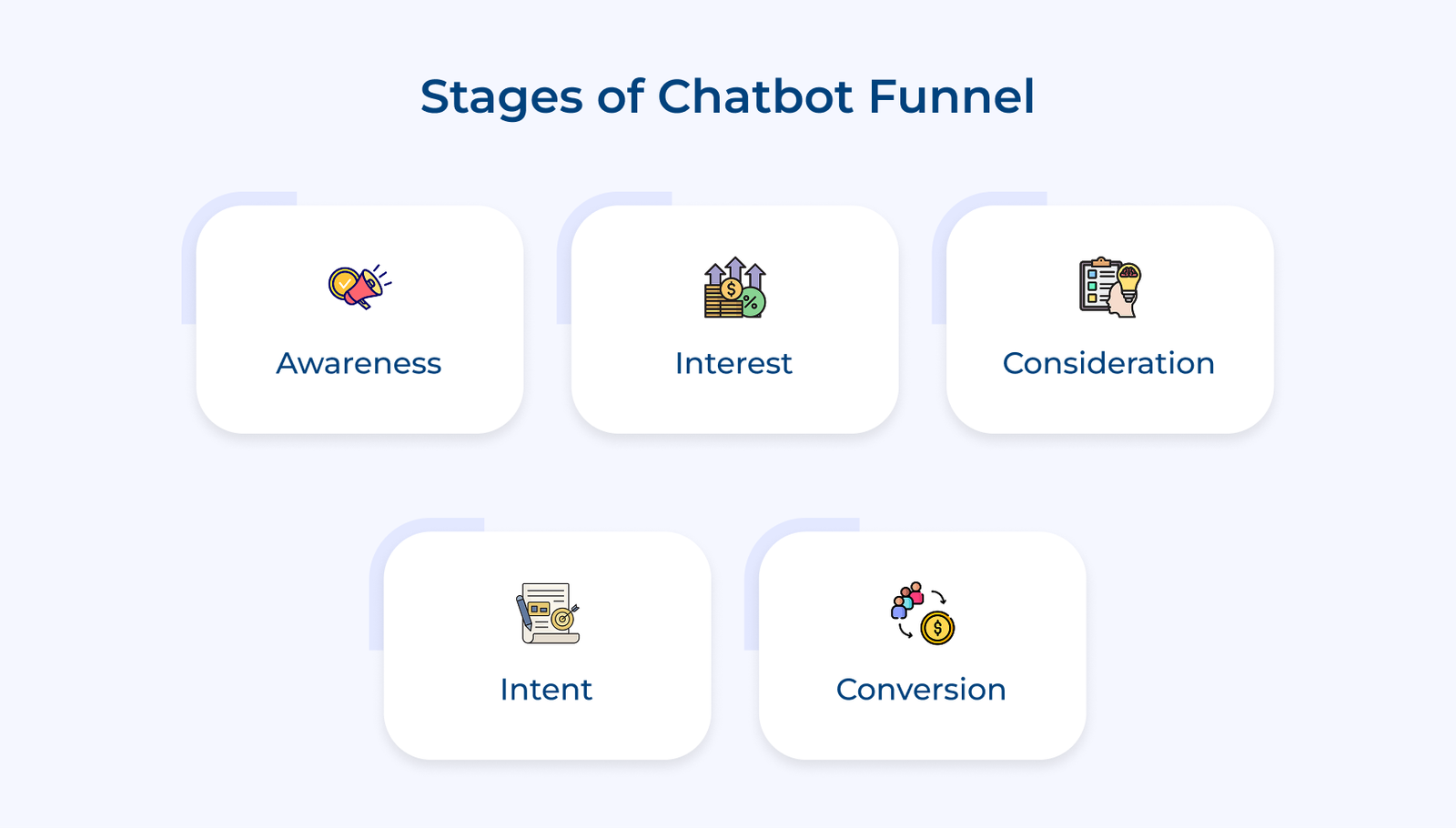
Visitors at the awareness stage arrive with a problem but are still trying to understand their options. Chatbot funnels help start the conversation at the right moment, keeping visitors engaged and guiding them toward information that matches their interests.
Key ways:
Once a prospect shows interest, the conversation moves beyond basic introductions. Chatbot funnels enter the stage by gathering more context about the prospect and helping them find information that is most relevant to their situation.
Pro tips:
Prospects at this stage are actively evaluating different options and looking for answers that help them make a confident decision. Chatbot funnels play a key role here by stepping in as a guide that provides quick answers and helps prospects move closer to a decision without waiting for a sales rep.
Best practices:
A prospect at the intent stage has mentally shortlisted your solution and just needs the right push. Chatbot funnels detect the high-intent signals and immediately route the conversation toward a conversion action.
Key takeaways:
The prospect at the conversion stage is ready to take action. The chatbot’s role is to make the final step simple, clear, and free from unnecessary delays so the prospect can complete their decision with confidence.
Key ways:
The following are the key benefits that show exactly why forward-thinking sales teams are making the shift.
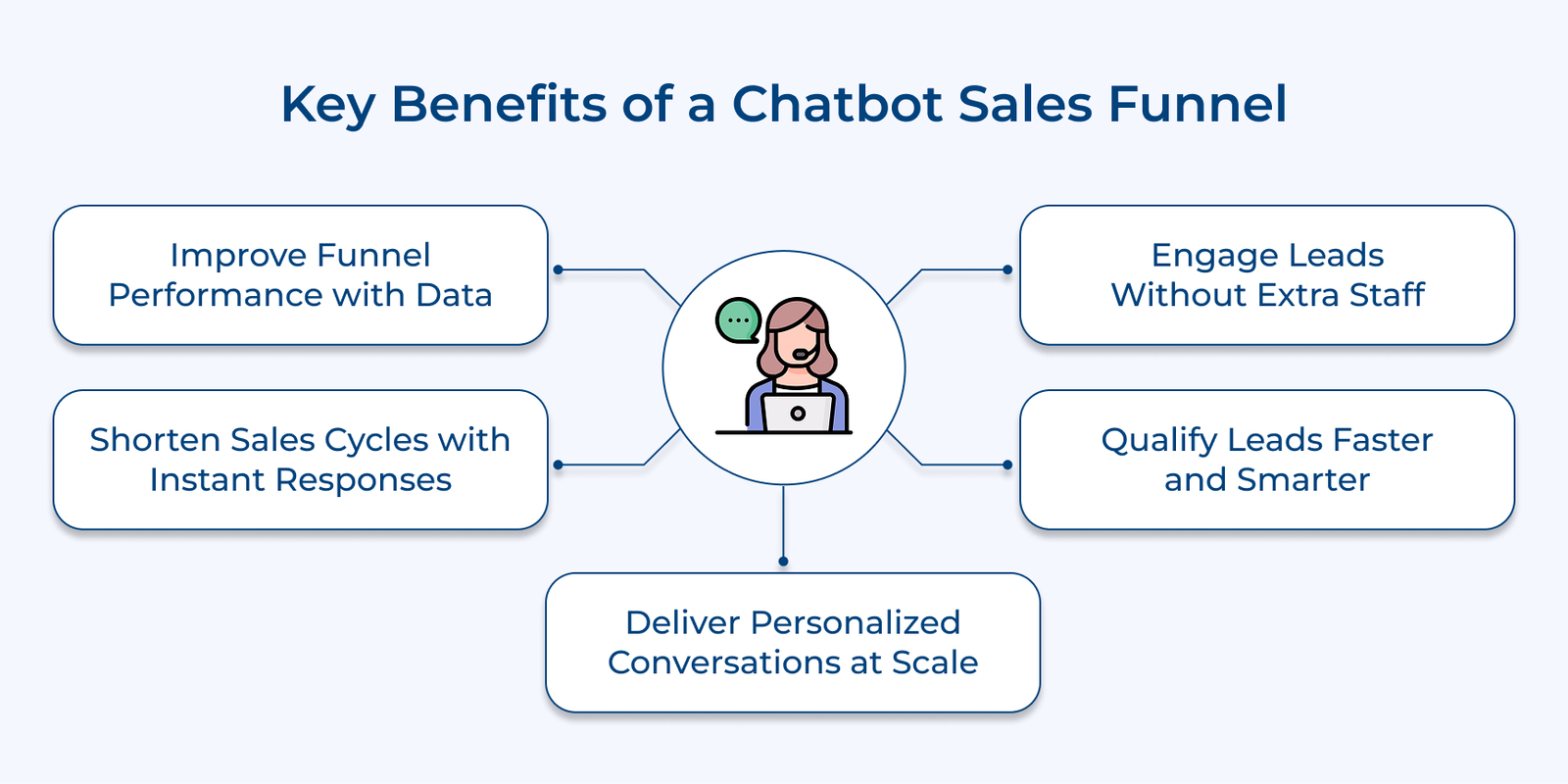
1. 24/7 Lead Engagement Without Additional Headcount
Prospects do not limit their research to business hours. Chatbot funnels keep conversations running around the clock, ensuring visitors receive an immediate response whenever they arrive on your website. That constant availability helps prevent potential leads from leaving before a conversation even begins.
2. Faster and More Accurate Lead Qualification
Sales teams perform best when they spend time with the right prospects. Chatbot funnels qualify visitors through structured questions, helping identify serious buyers early and reducing the time spent on low-fit leads that are unlikely to convert.
3. Personalized Conversations At Scale
Every prospect arrives with different goals, questions and challenges. Well-built chatbot funnels use visitor responses and behavior to tailor conversations, creating a more relevant experience without requiring a sales representative to manage every interaction manually..
4. Shorter Sales Cycles Through Instant Objection Handling
Many deals slow down because prospects are waiting for answers. Chatbot funnels respond to common questions about pricing, features, implementation or comparisons, helping prospects stay engaged and move forward with greater confidence.
5. Consistent Funnel Performance Backed By Data
Sales conversations often vary from one person to another, which can lead to inconsistent results. Chatbot funnels follow the same process every time while capturing valuable data at each stage, making it easier to identify what is working and where improvements are needed.
Below are the essential steps of a chatbot funnel, showing how prospects move from first interaction to conversion through structured and goal-driven conversations.
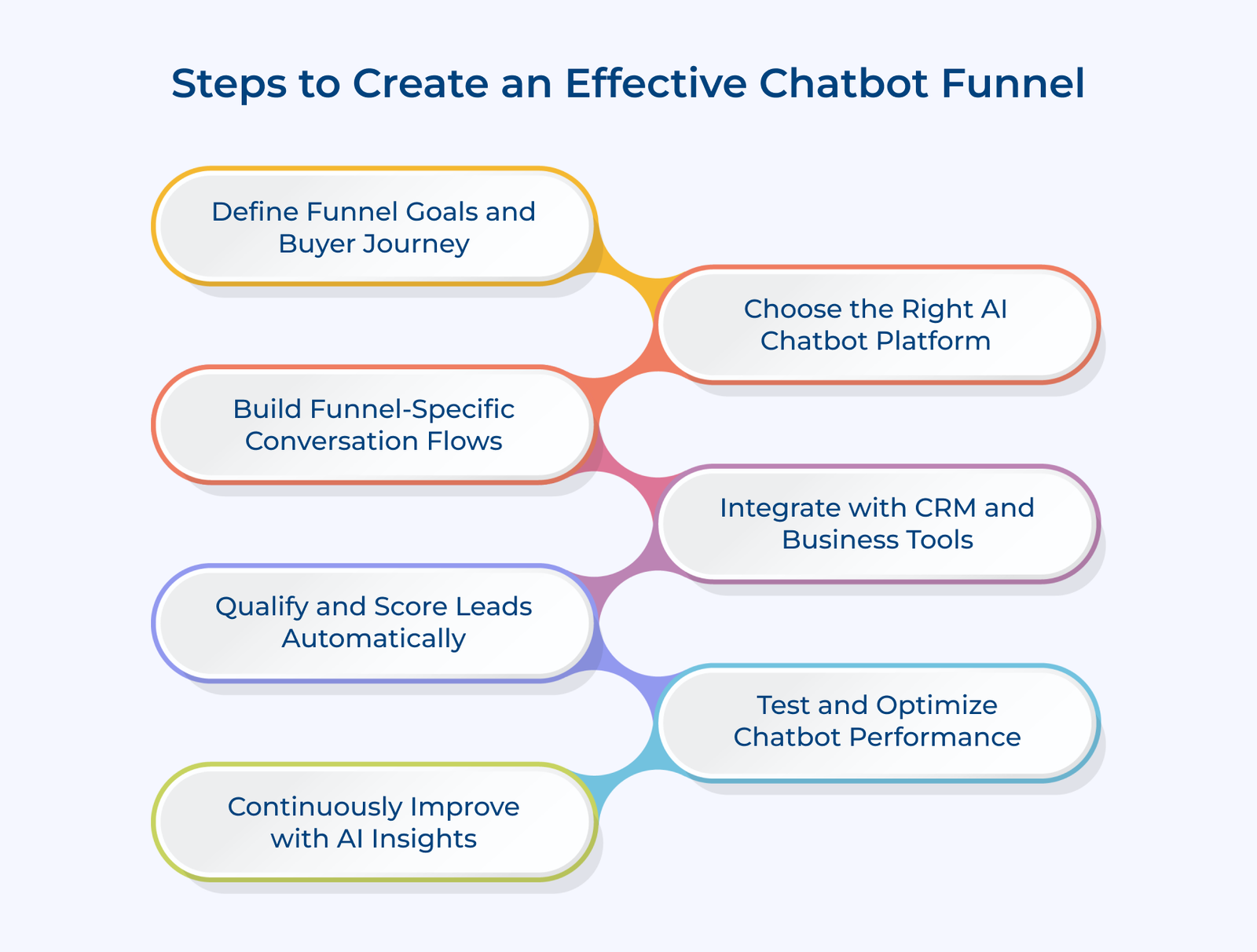
Most chatbot funnels struggle because the goals were never clearly defined before the chatbot was built. When there is no clear destination, conversations become disconnected and prospects are left without a meaningful path forward.
Every buyer journey contains moments where prospects are deciding what to do next. A strong chatbot funnel recognizes those moments and responds accordingly. Someone researching a problem needs different guidance than someone comparing solutions or preparing to make a purchase.
Pro tips:
The platform you choose has a direct impact on how well your chatbot funnel performs. Many businesses focus only on pricing and later discover that the platform cannot support the conversations, integrations or reporting their sales process requires.
Key factors:
Switching platforms after your chatbot funnel is already running can create unnecessary disruption. Lead data, conversation history and workflow consistency can all be affected, making the selection process far more important than many teams realize.
Key platforms:
Chatbot funnels work best when conversations are tailored to where prospects are in the buying journey. A single generic flow treats every visitor the same, even though their needs and intent can be completely different.
Key ways:
Chatbot funnels deliver the most value when they are connected to your CRM and the rest of your sales tools. Conversations should not end inside the chat window. Every interaction should contribute to a more complete view of the prospect and help move the deal forward.
Sync lead data directly into your CRM in real time
Prospect details collected during a conversation should appear in your CRM immediately. Real-time updates give sales reps the full conversation history before they reach out, making every follow-up more informed and relevant.
Connect chatbot triggers with your email and ad tools
When a prospect completes a specific chatbot flow, that action should immediately trigger a personalized email sequence or suppress them from top-of-funnel ad retargeting. It ensures your prospect is not receiving mixed messages from different parts of your marketing stack simultaneously.
Enable real-time alerts for sales rep handoffs
High-intent prospects should reach your sales team as quickly as possible. Instant notifications with the full chat history allow reps to continue the conversation while interest is still high instead of following up after valuable momentum has been lost.
Many sales teams still rely on form submissions and manual lead reviews before deciding who to contact. That delay often gives interested prospects enough time to lose momentum. Chatbot funnels solve this by qualifying and scoring leads during the conversation, allowing sales reps to focus on prospects with the strongest potential.
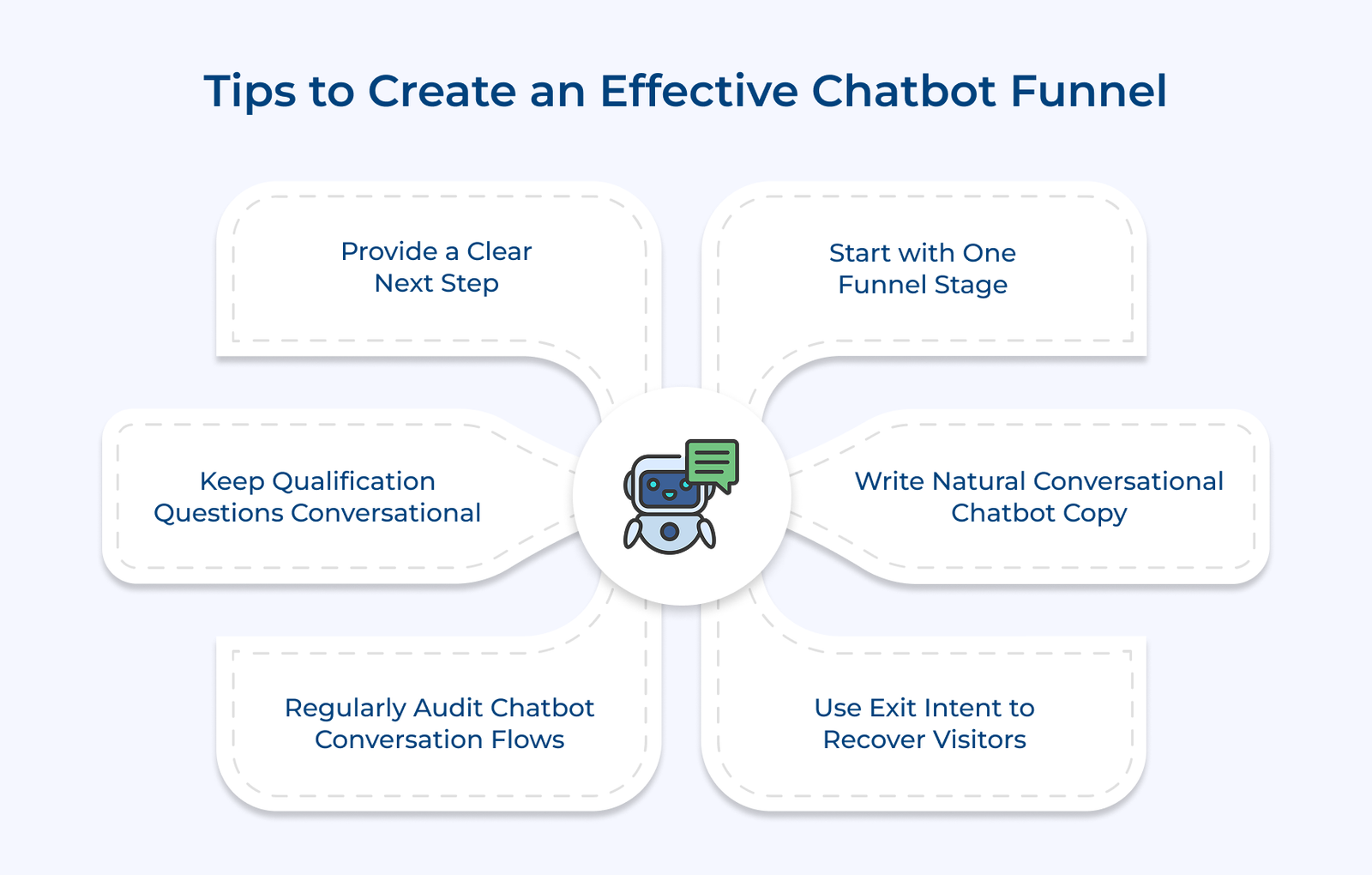
Lead qualification should come before building your chatbot conversations, not after. Spend time with your highest-performing sales reps and identify the questions they use to separate qualified buyers from casual visitors. The insights should shape the logic behind your chatbot from the start.
Pro tips:
Many teams launch chatbot funnels and leave them untouched for months. That approach limits long-term results because the first version of any conversation is only a starting point. Real improvements happen after prospects begin interacting with your chatbot and reveal what works.
Your opening message has the biggest influence on how many visitors start a conversation. Test different approaches such as a question, a value-focused message or a problem-focused opening. Let real user behavior guide your decisions instead of relying on assumptions.
Key takeaways:
If you are not looking at where prospects abandon your chatbot conversations, you are essentially flying blind on a significant chunk of your pipeline. Pull drop-off data weekly and spend time each month reading actual transcripts because the data tells you where people left, but the transcripts tell you why.
Here is something many teams overlook. The chatbot funnels you build today will not stay effective forever. Buyer language changes, new objections come up and competitor messaging shifts over time. A chatbot that is left untouched slowly becomes less useful, even if it performed well when it first launched.
The biggest mistake is treating chatbot flows like something you build once and never revisit. Set a monthly review schedule to go through real conversations. Keep an eye for places where your chatbot failed to understand a question, gave an outdated answer or created unnecessary friction.
Key structure:
Check out the practical tips below to create a chatbot funnel that keeps conversations engaging and guides more prospects toward taking the next step.
Below are the practical examples that show how different funnel types operate across industries.
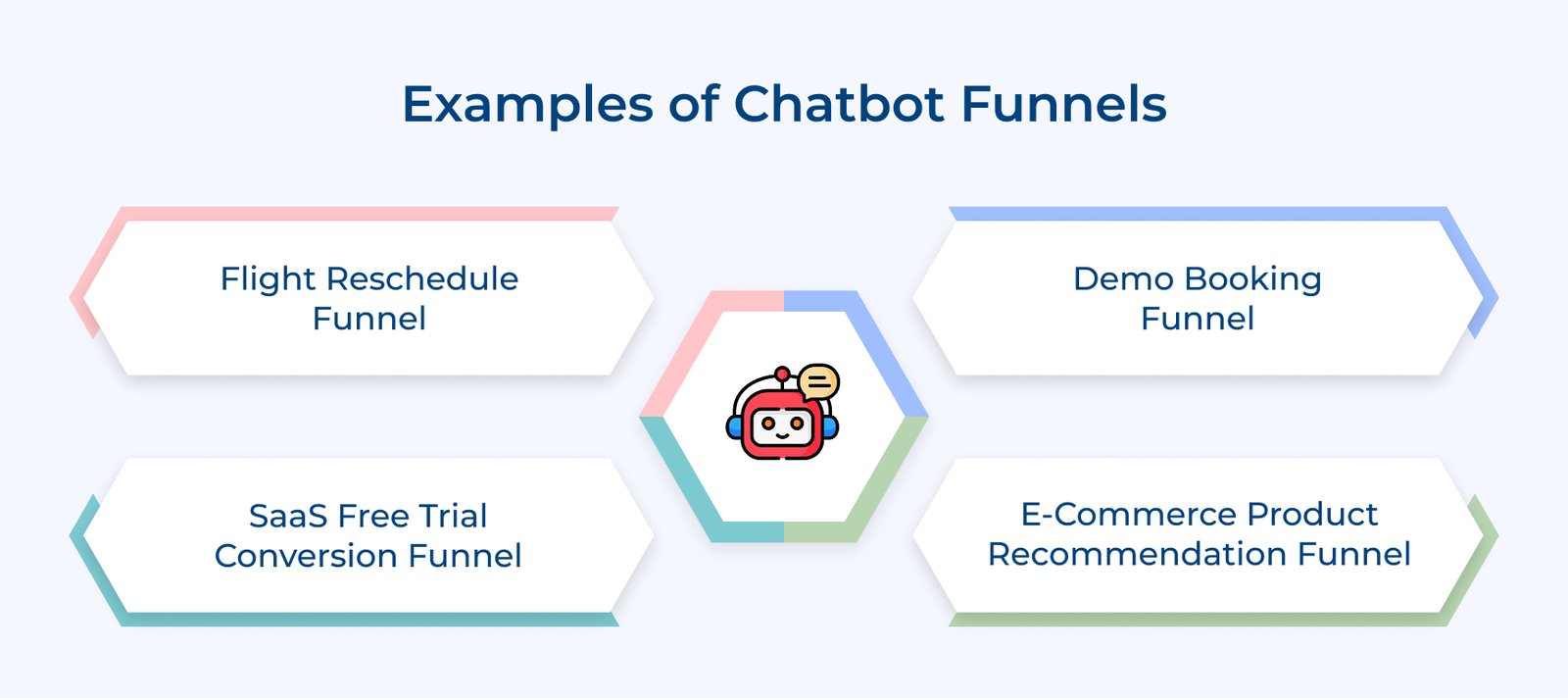
Demo booking chatbot funnels help prospects book a meeting without waiting for emails or manual follow-ups. A chatbot can greet visitors on your pricing page, ask a few simple qualification questions and schedule a suitable time in just a few minutes.
Flight delays are stressful, but the rescheduling process does not have to be. Reschedule chatbot funnels can instantly pull up booking details, show available flight options and confirm a new itinerary. It ensures the passengers get quick answers when they need them most.
Many shoppers leave without buying because they are unsure which product is right for them. A recommendation chatbot asks a few simple questions, understands customer preferences and suggests products that match their needs.
Many free trial users leave before they experience the real value of a product. A chatbot can identify where users stop engaging, offer helpful guidance at the right time and connect them with support when needed.
A well-designed chatbot sales funnel helps prospects move from their first interaction to a purchase with less effort and fewer delays. Each conversation should answer questions, build confidence and guide people toward the next step at the right time.
Key takeaways:
Ready to build a chatbot funnel that keeps working even when your team is offline? Check out our guides on chatbot automation and conversational marketing to learn the next steps. A chatbot sales funnel works best when every conversation has a clear purpose, every step feels natural and every interaction helps prospects move closer to a decision.

Sales chatbots start conversations with website visitors, answer their questions and guide them toward the next step. They use predefined workflows or AI to respond based on what a prospect says and where they are in the buying journey.
An AI chatbot funnel is an automated conversation sequence that moves a prospect from initial awareness through qualification and toward a conversion point without human intervention. Unlike rule-based chatbots, AI-powered funnels adapt their responses based on what the prospect says, making each interaction feel personalised and contextually relevant.
Chatbots qualify leads by asking simple questions about a prospect’s needs, budget, timeline and purchase intent. Responses help identify which leads are ready for sales, allowing your team to focus on conversations with the highest potential.
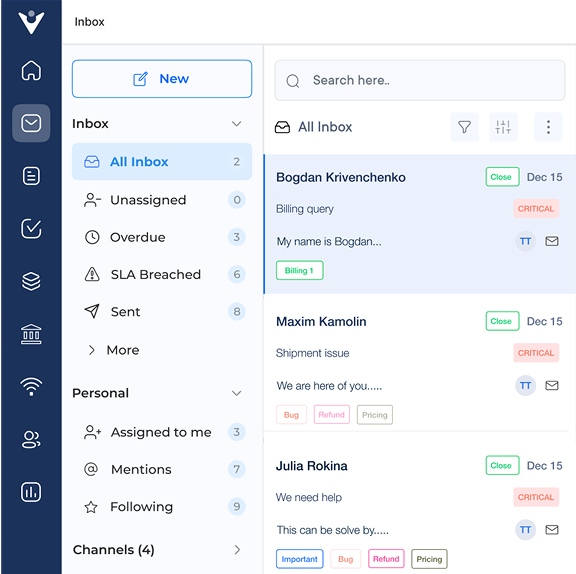
Grow Customer Relationships and stronger team collaboration with our range of products across the Conversational Engagement Suite.
Omnichannel Customer Support & Help Desk Software
AI Enabled Business Messaging and Chatbot Software
Sales Engagement & CRM Software
Call Center Software & Virtual Phone System
Product Marketing & Experience Platform
Customer Experience & Feedback Management Software
 Scroll to top