Best in Class Customer Service: Benefits, Strategies & Examples
Discover what defines best-in-class customer service, why it matters and how to deliver exceptional experiences that build loyalty while driving business growth.

Discover what defines best-in-class customer service, why it matters and how to deliver exceptional experiences that build loyalty while driving business growth.
Customer expectations keep rising while patience keeps shrinking. 55% of consumers expect better customer service year-on-year. Service that feels slow, cold or scattered pushes people away fast. The fallout isn’t just a lost sale, it chips at your reputation and loyalty over time. Think of service challenges as moments to show what your business is really made of.
A steady, clear approach can turn quick exchanges into trust. When people feel respected, even small efforts can shape relationships that actually last and keep your competition from creeping in.
The strongest teams treat customer service as the core of how they operate. They train well, give their people room to fix problems and keep the experience steady across every touchpoint. The ideas you’ll explore here give you a simple path to deliver best in class customer service, the kind that makes your business stand out in ways customers remember.
Best in class customer service is an approach that consistently exceeds customer expectations rather than merely meeting them. It involves creating meaningful interactions that make customers feel valued, heard and important at every touchpoint. The kind of service goes beyond fixing problems. It spots needs before they’re voiced, makes interactions feel personal and turns routine moments into reasons to come back.
The approach works by putting customers at the center of every business decision and process. Companies gather and analyze customer feedback systematically, using these insights to continuously refine their approach. They focus on training their team not just in technical skills but also in understanding and empathy, so they can handle tough situations calmly.
Key principles:
Let’s explore the key benefits of providing best in class customer service and how they can elevate your business to new heights.
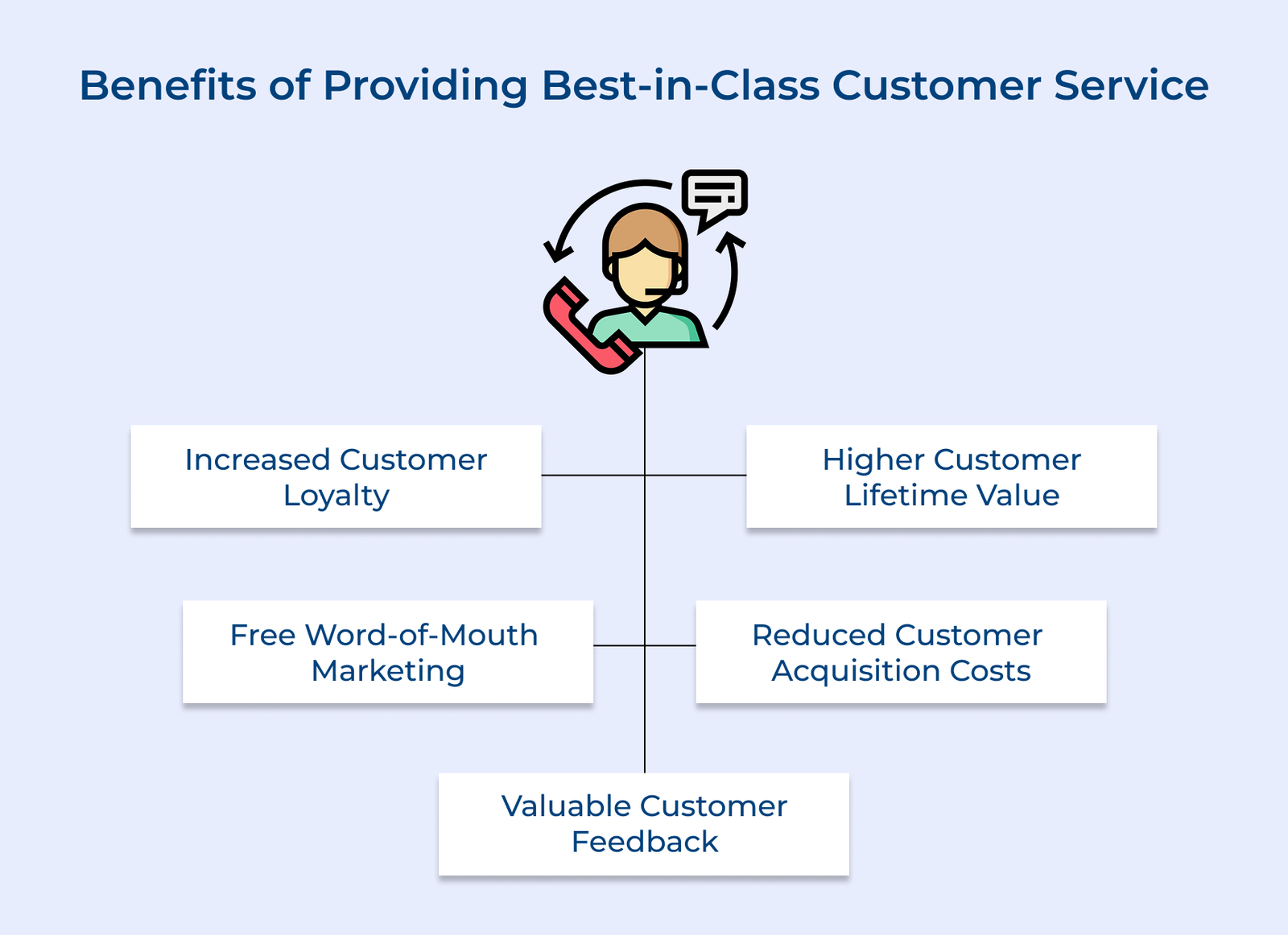
1. Increased Customer Loyalty
When you solve problems quickly and make people feel valued, they stick around. Customers who get great service form a genuine connection to your brand that lasts beyond just buying something. More than 45% of users cite poor customer service as a loyalty breaker.
2. Higher Customer Lifetime Value
Happy customers spend more money with you over time. They not only make repeat purchases but also tend to explore your additional products and services. They’re more willing to try your new offerings and often upgrade to premium options. The lasting relationships lead to more revenue as customers keep coming back year after year.
3. Free Word-of-mouth Marketing
People naturally share remarkable experiences. When someone receives service that genuinely impresses them, they tell their friends, family and colleagues about it. Personal recommendations matter more than any ad because they come from people customers trust. One excellent customer retention can bring several new ones to your door without you spending a penny on marketing.
4. Reduced Customer Acquisition Costs
Finding new customers typically costs five times more than keeping existing ones. When you deliver great service, you keep more customers and reduce the need to spend heavily on finding new ones. The improved retention rate means you can invest those saved resources in other areas of your business or in further enhancing your customer experience.
5. Valuable Customer Feedback
Customers who receive great service are more willing to provide honest feedback. Customers who feel heard are more willing to share honest feedback, both praise and criticism. It helps you understand what’s working and what needs fixing, so you can improve based on real experiences, not guesses.
Let’s look at the key traits of delivering best in class service that help your team improve, making customers feel truly valued and understood.
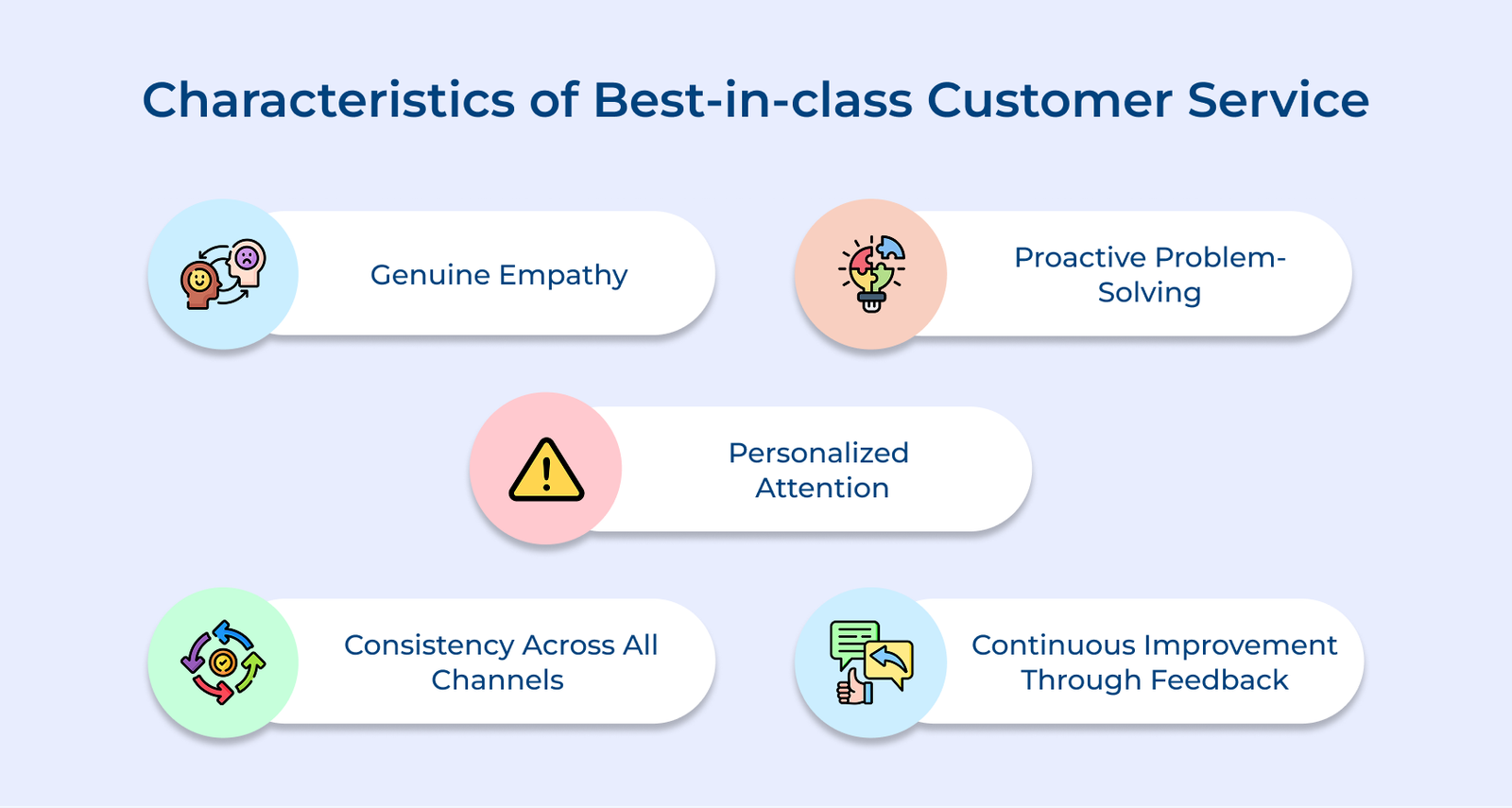
1. Genuine Empathy
Empathy means truly understanding how customers feel and seeing situations from their perspective. It means understanding when a customer is frustrated or excited and responding in a way that fits the moment. Emotional intelligence helps service reps handle each situation with the right approach.
When customers sense genuine empathy, their guard comes down. When a representative genuinely says, “I understand how frustrating this must be for you,” it creates an instant connection. The human touch can turn a tough moment into a chance to build trust and show what your company truly stands for.
2. Proactive Problem-solving
Proactive service anticipates issues before they become problems. It means spotting problems before they happen and fixing them without waiting for the customer to speak up. It is like sending shipping updates early or checking in after unusual account activity.
The forward-thinking approach demonstrates that you value customers’ time and peace of mind. Instead of waiting for complaints, proactive teams constantly ask themselves, “What might go wrong here and how can we prevent it?” Shifting from reacting to acting ahead changes how customers see your brand and cuts down on frustrating experiences.
3. Personalized Attention
Personalization goes beyond using a customer’s name in an email. It means knowing their preferences, keeping track of their history and offering solutions that fit their unique needs. Effective personalization makes customers feel recognized as individuals rather than transaction numbers.
The power of personalization lies in its ability to make customers feel valued. When a representative says, “I see you’ve been with us for three years, usually choosing our premium options,” customers feel noticed and valued. The level of personal consideration creates an emotional connection that generic service simply cannot match.
4. Consistency Across All Channels
Channel consistency means providing the same high-quality experience whether a customer reaches out by phone, email, social media or in person. It means sharing information smoothly between departments and training every team member to deliver the service your customers expect.
The unified approach prevents the frustration of having to repeat information or receiving different answers from different representatives. When customers switch between social media, email and calls without repeating themselves, they trust your professionalism.
5. Continuous Improvement Through Feedback
Exceptional service organizations actively seek customer feedback and more importantly, act on it. They view every piece of feedback as valuable data that can drive improvements. Listening, making changes and tracking results show customers their feedback matters plus taken seriously.
The most powerful aspect of this feedback loop is showing customers that their input matters. When someone gives feedback and sees their suggestion put into action, they feel heard as part of the process. It turns them from a customer into someone who’s genuinely invested in what you do.
Let’s see the compiled list of essential practices to deliver best in class that will also help you set your brand apart as a leader in your industry.
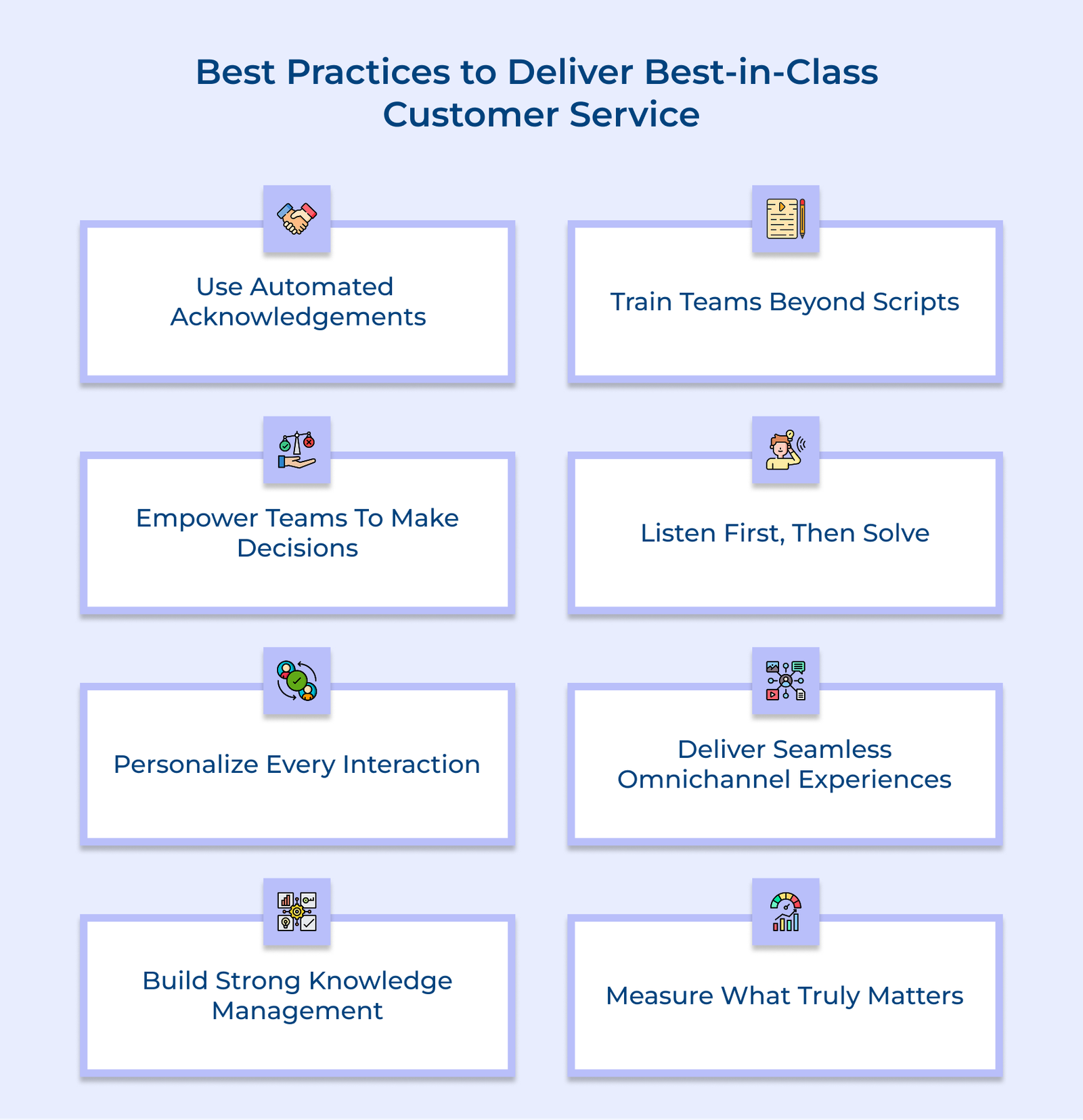
Automated responses provide immediate confirmation that a customer’s issue has been received, even outside business hours. The simple acknowledgment gives peace of mind and sets clear expectations, easing the worry that their message was ignored or lost. Effective Automated Responses include:
Set up trigger-based replies in your support system to send the right acknowledgment depending on the type of request, its urgency or who the customer is. Include accurate time estimates and alternative self-service options while maintaining a warm, human tone throughout.
Training customer service representatives beyond standardized scripts creates authentic problem-solvers who can handle complex situations with confidence. 82% of customers would be much more loyal to a brand that lets customer service agents solve problems instead of being stuck with a script.
Develop Comprehensive Product Knowledge
Product expertise forms the foundation of exceptional service interactions. When staff truly understand what you offer, they can answer questions, suggest the right solutions and point out helpful features without needing to pause or ask for help.
Practice Emotional Intelligence Skills
Emotional intelligence enables representatives to read between the lines, recognize customer feelings and respond appropriately to different emotional states. Practicing tough situations through role-play, staff learn how to calmly handle tense moments and connect with customers, even when the conversation is hard.
Create Continuous Learning Pathways
Ongoing skill development ensures team members stay current with evolving products, customer needs and best practices to deliver best-in-class customer service. Creating clear training paths with chances to grow shows you value your team and helps them get better at delivering solid, reliable service.
Empowering frontline staff to resolve issues without escalation dramatically reduces customer frustration and resolution time. The best way to deliver excellent customer service is to replace “let me check with my manager” with quick answers right when customers need them.
Establish Clear Authority Guidelines
Well-defined decision-making boundaries give representatives confidence about when they can act independently. Setting clear rules for common cases like refund limits or policy exceptions helps staff make quick decisions, while still flagging bigger issues when needed.
Provide Comprehensive Information Access
Access to customer history, product details and company policies equips team members with everything needed to make informed decisions. Having connected systems that give staff the info they need right away cuts delays and saves customers from having to repeat themselves.
Recognize Good Judgment Calls
Celebrating thoughtful decision-making reinforces a culture of empowerment and continuous improvement. When managers point out good judgment calls by team members, it gives others a chance to learn and encourages everyone to step up when it counts.
Listening before attempting to solve problems creates space for customers to fully express their concerns while allowing representatives to gather complete information. The core habit of listening first helps avoid rushed or off-target fixes. It shows real respect for the customer’s experience, builds the trust needed to solve problems and keeps the relationship strong.
Handled the right way, the approach turns tense moments into chances to build real connections. Understanding the customer’s point of view, staff can spot hidden needs, pick up on emotions and offer solutions that truly fit the situation.
Pro tips:
Meaningful personalization makes customers feel recognized as individuals rather than anonymous transaction numbers. The simple habit of recognizing a customer’s history, preferences and needs builds a real connection. 96% of professionals agree that personalization is key to providing high-quality experiences.
You can implement personalization through integrated systems that surface relevant customer information during interactions. Reps should learn to naturally include details from past conversations, purchases, and preferences in their responses, without sounding scripted or forced.
Pro tips:
Seamless omnichannel experiences eliminate the frustration of disconnected interactions across different communication platforms. The best way to offer great service is to make sure customers get clear, consistent help, no matter if they contact you by phone, email, social media or in person.
Synchronize Customer Data Effectively
Data synchronization creates a unified view of each customer across all touchpoints. When systems work together, reps can see a customer’s full history like past issues, purchases and messages, without making them repeat everything, making it feel like one ongoing conversation.
Maintain Consistent Brand Voice
Consistency in language, tone and messaging across all channels reinforces your brand identity. The unified approach means customers get the same clear answers and thoughtful treatment, no matter if they chat online, message on social media or talk to someone in-store.
Enable Cross-channel Conversation Continuity
Conversation continuity allows customers to switch between channels without starting over. If a customer starts a chat and then switches to a call, strong systems carry the full context forward. It means they don’t have to repeat themselves and feel their time is respected.
Knowledge management systems centralize information for quick access by both customers and staff. A solid customer service approach shortens wait times, keeps answers consistent and gives customers the tools to solve problems on their own when they want to.
Organize Information Strategically
A strategic organization makes finding answers intuitive and efficient. Clear categories, good search tools and related links help reps find answers fast, making it easier for customers to use self-service without getting stuck.
Update Content Systematically
Systematic content updates keep information accurate and relevant. Regular reviews, tracking what people search for and gathering feedback after support calls help keep your knowledge base up to date as things change.
Share Solutions Across Teams
Cross-departmental knowledge sharing prevents information silos that lead to inconsistent customer experiences. When one team’s solutions are shared with everyone, customers get accurate answers no matter who they talk to.
Measuring meaningful customer service metrics provides actionable insights that drive genuine improvement. Real quality measures go beyond flashy numbers to show how well your service meets customer needs, earns loyalty and builds connections that help your business grow.
A software company realised its fast replies weren’t doing much for customer happiness. The team shifted its attention to complete resolutions and lower customer effort. That’s when the real issue showed up. Quick but shallow answers pushed people to reach out again and again, which only added to their frustration. This wake-up call pushed the company to rethink its entire support process.
Let us go through some brands that have transformed customer service from a cost center into a powerful competitive advantage.
1. Zappos
Zappos has built its entire brand identity around delivering “WOW” through service. Customer service representatives have no call time limits and are empowered to spend as long as needed to resolve issues. They’ve spent over 10 hours on a single call and even sent flowers to support customers going through tough times. The 365-day return policy, with free shipping both ways, removes the hassle and risk for customers.
The impact on Zappos’ business has been transformative, turning customer service into its primary marketing strategy. Memorable customer experiences have helped them cut back on advertising while building strong loyalty and encouraging word-of-mouth referrals.
2. Ritz-Carlton
Ritz-Carlton empowers every employee, from housekeepers to management, with $2,000 in discretionary funds to solve guest problems without approval. The policy has sparked standout moments like staff flying to another hotel to return a forgotten laptop or preparing a custom gluten-free meal for a child. They also maintain detailed preference profiles for returning guests.
The approach has helped Ritz-Carlton maintain premium pricing in a competitive industry. They’ve built a strong reputation by noticing what guests need before being asked, turning stays into personal experiences that keep people coming back, even at higher prices.
3. Amazon
Amazon prioritizes customer convenience through innovations like one-click ordering, same-day delivery and hassle-free returns. The customer service system remembers past purchases and interactions, allowing representatives to provide context-aware support. The company issues refunds for late deliveries before most customers even notice, solving the problem before it becomes a complaint.
The relentless focus on removing friction from the shopping experience has helped Amazon expand from books into countless product categories. Through steady convenience and reliability, they’ve earned customer trust. The step has made it easier to expand into new markets and become a go-to choice for more kinds of purchases.
4. Nordstrom
Nordstrom has built a service culture around their legendary “use good judgment” employee policy. The approach has led to well-known moments like taking back tires they don’t even sell and hand-delivering forgotten items straight to customers’ homes. The personal stylist service creates relationships that transcend typical retail interactions.
The service-first philosophy has allowed Nordstrom to thrive despite intense competition from online retailers. They’ve kept customers loyal by offering a personal shopping experience that online stores can’t match, helping them stay strong in a price-driven industry where many others have struggled.
5. Trader Joe’s
Trader Joe’s turns grocery shopping into a delightful experience through enthusiastic staff who go beyond typical expectations. They’ve brought groceries to elderly customers during snowstorms, offered product tastings on request and organized scavenger hunts for kids. The return policy simply asks, “Did you enjoy it?” rather than requiring receipts or explanations.
The approach has helped Trader Joe’s build extraordinary customer loyalty with minimal advertising. Turning everyday grocery trips into enjoyable moments, they’ve built a loyal crowd who shop more often and happily recommend the store to others.
Exceptional customer service doesn’t fall into place on its own. It grows from clear actions, steady habits and a team that knows how to show up for customers every single day. Strong practices help turn routine moments into experiences people remember. When staff feel trusted to make smart decisions, add personal touches, listen with intent and keep communication smooth across channels, service begins to stand out in a real way.
What really sets great service apart is the emotional connection it creates. Customers stay loyal when they feel seen and supported, even if things go wrong now and then. With focused training, open knowledge sharing and useful metrics, teams can build the kind of trust that turns satisfied customers into genuine advocates. It’s an ongoing commitment. Companies that review their performance often, pay attention to real feedback and adjust to changing expectations stay ahead.

World-class customer service creates emotional connections that transform one-time buyers into loyal advocates. Exceptional service not only cuts churn but also lowers costs by resolving issues quickly and reducing the need for new customer acquisition. Customers are willing to pay more for experiences where they feel valued and understood.
Achieving best-in-class service requires a comprehensive approach that starts with leadership commitment and permeates every aspect of the organization. Start by defining what exceptional service means to your customers, then create systems to support it through hiring, training, performance tracking and the right technology. The most successful companies view service excellence as an ongoing journey rather than a destination, continuously gathering feedback and refining their approach.
Effective training equips employees with both technical knowledge and emotional intelligence skills necessary to handle complex customer interactions. Beyond script development programs train representatives to read emotions, adapt to different personalities and make sound judgments in tricky situations. Ongoing coaching and skill-building create confident employees who feel valued themselves, a critical foundation for their ability to make customers feel valued in turn.
The most meaningful metrics capture the customer’s experience rather than just operational efficiency. While quick responses matter, prioritize complete resolution rates, customer effort scores and emotional outcomes from follow-up surveys. Link these metrics to retention, repeat purchases and referrals to show how great service drives business results, supporting ongoing investment.
Technology serves as a critical enabler of exceptional service when implemented thoughtfully to augment, not replace human connection. The right systems help representatives access complete customer information instantly, maintain consistency across channels and resolve issues efficiently. However, technology alone cannot create best-in-class service; it must be balanced with empathetic human interaction and a genuine desire to help. Top companies use technology to handle routine tasks, freeing representatives to focus on empathy and solving complex problems.
The key to balancing efficiency with personalization lies in understanding which interactions benefit most from a human touch. Offer easy self-service for simple tasks, while giving representatives time and tools to personalize support for complex or sensitive issues. True efficiency means fully resolving problems, not just quick interactions.
Grow Customer Relationships and stronger team collaboration with our range of products across the Conversational Engagement Suite.
Omnichannel Customer Support & Help Desk Software
AI Enabled Business Messaging and Chatbot Software
Sales Engagement & CRM Software
Call Center Software & Virtual Phone System
Product Marketing & Experience Platform
Customer Experience & Feedback Management Software

 A Detailed Guide on SaaS Metrics Cheat Sheet (2026)
Scroll to top
A Detailed Guide on SaaS Metrics Cheat Sheet (2026)
Scroll to top