Brand Awareness: The Ultimate Guide
The blog explains what brand awareness is, why it’s important and how to build it effectively. Get insights from real examples to help businesses create stronger, more recognizable brands.

The blog explains what brand awareness is, why it’s important and how to build it effectively. Get insights from real examples to help businesses create stronger, more recognizable brands.
Most brands fade into the background not because they lack quality, but because they fail to stick in people’s minds. 59% of the customers prefer purchasing new products from brands they are already familiar with. Attention is fleeting and with every scroll, thousands of messages blur together. What separates the brands we remember from the ones we forget is consistency, clarity and the ability to connect on more than just a surface level.
Building real brand awareness isn’t about being everywhere at once or shouting the loudest. It’s about creating signals people instantly recognize, showing up where it matters most and earning trust one interaction at a time. The question is, how do you turn those principles into action that actually makes people remember you? Let’s find out!
Brand awareness refers to how well people recognize and remember your brand, your name, logo, products or services. It shows how familiar your audience is with what you offer and how easily they can tell you apart from others. It’s often the first step in someone’s journey to becoming a customer.
When people see your brand often, through ads, social media, conversations or real-life experiences, they start forming mental connections. The repeated moments help your brand stick in their minds. Eventually, they might think of you automatically when they need something you offer, without even realizing why.
Key principles:
Let’s go through the key importance of brand awareness that makes investing in it a game-changer for companies of all sizes.
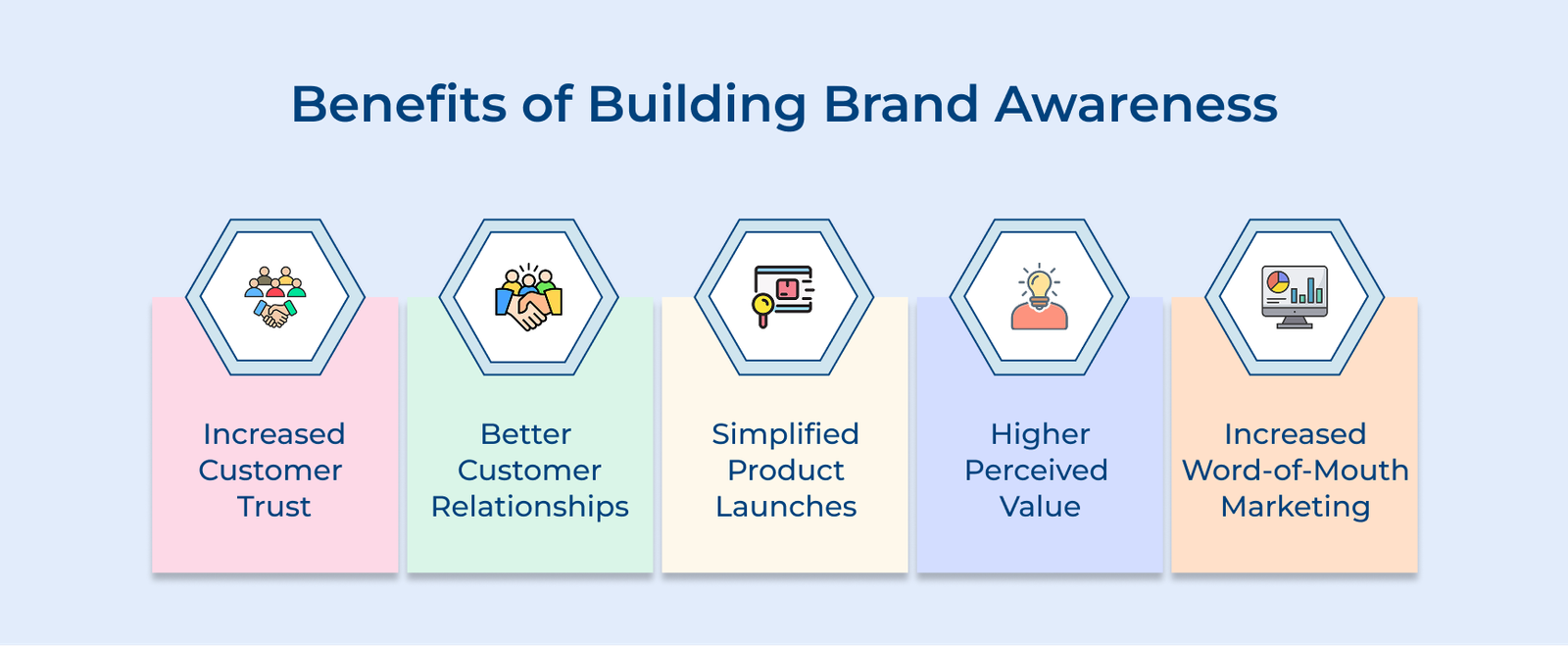
1. Increased Customer Trust
The more often someone sees your brand, the more familiar and trustworthy it starts to feel. 63% of customers are more willing to buy from familiar brands. Just like getting to know a person, repeated contact builds comfort. Over time, the comfort turns into trust.
2. Better Customer Relationships
When people recognize your brand, they’re more likely to interact with it. They leave comments, share your content and talk about their experiences. It feels less like a transaction and more like being part of something they care about.
3. Simplified Product Launches
Launching something new is a lot easier when people already know who you are. You don’t have to work as hard to earn attention or build trust; it’s already there. The head start can make a big difference.
4. Higher Perceived Value
A familiar brand often feels more reliable. If people trust you, they’re more open to paying a bit more because they believe your product is worth it. The trust carries over to everything else you offer, too.
5. Increased Word-of-mouth Marketing
People like to share what they know. When your brand is familiar and trusted, customers are more likely to recommend it. The word-of-mouth spreads quickly and it doesn’t cost you a thing.
Let us go through the key differences between brand recognition and brand awareness, because even though the two terms are often used interchangeably, each plays a unique role.
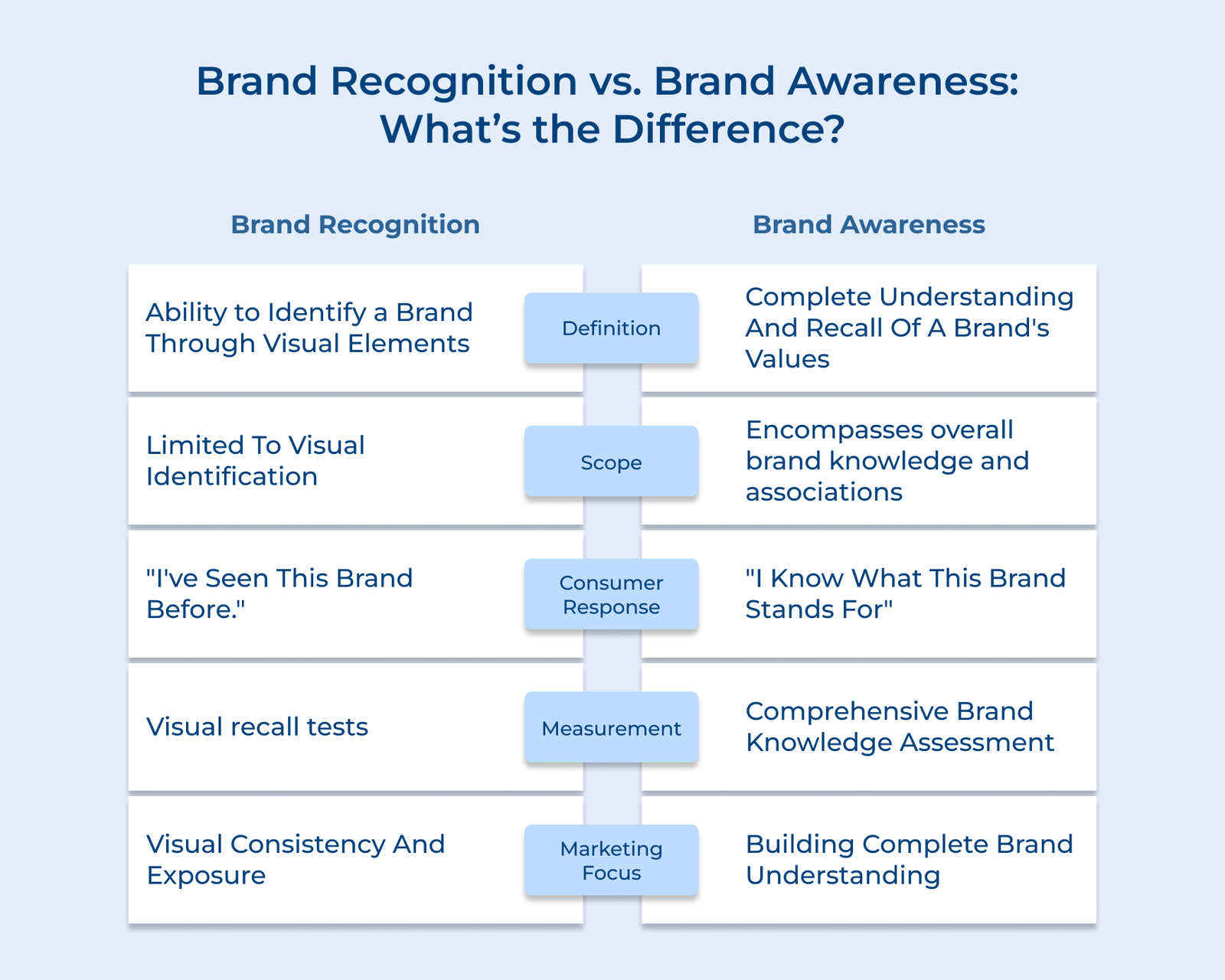
1. Definition and Core Purpose
Brand recognition is all about the visuals, like logos, colors, fonts or packaging. It’s that moment when someone sees your branding and immediately knows it’s you.
Brand awareness goes further. It’s about people knowing who you are, what you do and what you stand for and not just how you look.
2. Depth of Consumer Understanding
The connection is more surface-level with brand recognition. People recognize your logo or ad but may not know much else.
Brand awareness means people not only know your name. They understand your message, values and how you’re different from others.
3. Marketing Approach Required
Focus on visual consistency to build brand recognition. It includes the same logo, colors and style wherever you show up.
Brand awareness takes storytelling. It’s built through thoughtful messaging, educational content and sharing what makes your brand meaningful.
4. Consumer Relationship Stage
Brand recognition is an entry point. It’s when someone sees your brand and says, “It looks familiar.”
Brand awareness shows a stronger bond. It means people not only remember you, but they get you and they’re more likely to choose you.
5. Business Impact
Recognition helps grab attention and spark initial interest, often key for quick or first-time buys.
Awareness creates trust and loyalty. Customers who truly know your brand are more likely to stick around and recommend you to others.
Below are the effective brand awareness strategies you can implement right away to enhance your brand and ensure your business shines even in the most saturated market shares.
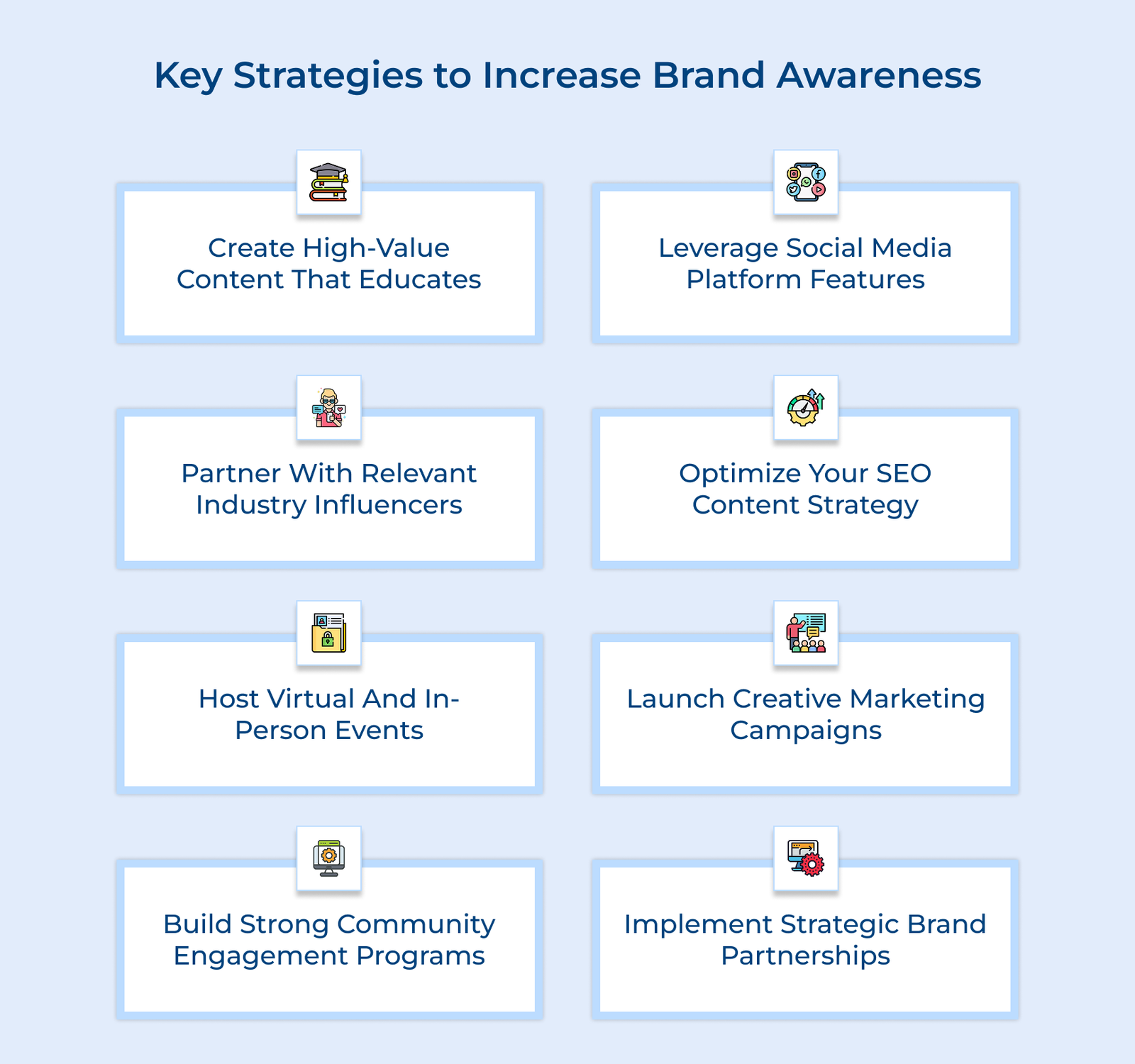
Creating genuinely useful content is one of the most effective ways to improve brand awareness. Instead of pitching your products, you offer knowledge that helps your audience solve everyday problems. When people regularly turn to your brand for answers, you become more than just a business; you become a trusted source they rely on.
All social media channels have their own strengths and knowing how to use them will help your brand stand out in a way that feels natural, not forced. 89% of marketers found an increase in brand exposure through social media. When you create content that fits the format and tone of each platform, it feels more personal to the people using it:
Stories and challenges are another way to connect with people in the moment. Stories let you ask quick questions or run polls, while challenges invite people to create and share their content in response to yours. Both are easy ways to turn casual followers into active participants who help spread your message.
Influencer partnerships help brands tap into established communities through trusted voices. These collaborations provide authentic ways to reach new audiences who already trust the influencer’s recommendations. When done right, influencer partnerships feel natural and create meaningful connections that improve brand awareness through social proof.
Co-created content needs to blend the influencer’s authentic voice with your brand message. Work together to develop content that serves both audiences while maintaining authenticity. This could include the influencer hosting product tutorials, creating behind-the-scenes content or sharing personal experiences with your brand.
Pro Tips:
SEO optimization helps your brand become more discoverable through search engines. A well-planned SEO strategy increases your brand’s visibility when potential customers search for solutions related to your industry. Organic discovery builds credibility and creates sustainable long-term brand awareness without constant advertising investment.
Target relevant long-tail keywords by researching specific phrases your audience uses when searching for solutions. Focus on terms with clear intent and manageable competition. A project management software company can target phrases like “best project tracking tools for remote teams” rather than just “project management software.”
Pro Tips:
Events create direct touchpoints with your audience and provide immersive brand experiences. Whether virtual or in-person, these gatherings help humanize your brand and create memorable interactions.
Events establish deeper connections by allowing real-time engagement, which builds stronger brand awareness through personal experiences and emotional connections.
Design industry-focused learning workshops
Create specialized workshops that address specific industry challenges or skills gaps. Design interactive sessions that combine theoretical knowledge with hands-on practice. These workshops should demonstrate your brand’s expertise while providing tangible value to participants through actionable takeaways and skill development opportunities.
Build community through regular meetups
Organize recurring meetup sessions that bring together people with shared interests or challenges. Focus on creating environments that encourage networking and knowledge sharing. These gatherings should feel less like promotional events and more like community gatherings where your brand facilitates valuable connections.
Develop engaging online learning sessions
Create webinars that combine educational content with interactive elements like live Q&As and practical demonstrations. Structure these sessions to maintain engagement through varied content formats and participation opportunities. Include features like polls, breakout rooms and collaborative exercises to keep participants actively involved.
Consistent creative campaigns keep your brand fresh in people’s minds while showcasing your unique value proposition. Regular campaign launches create anticipation and give audiences new reasons to engage with your brand. The ongoing presence helps in boosting brand awareness through varied touchpoints, along with memorable experiences.
Craft distinctive campaign themes
Develop campaign themes that align with current trends while maintaining your brand identity. Each theme should tell a compelling story that captures attention and encourages sharing. Your campaigns should feel fresh and relevant while building upon your established brand narrative.
Create multi-platform content experiences
Adapt your campaign content for different platforms while maintaining consistent messaging. Design platform-specific content that leverages each channel’s unique features and audience behaviors. The approach ensures your campaign reaches audiences where they’re most active and receptive.
Monitor campaign performance analytics
Implement comprehensive tracking systems to measure campaign impact across all social media channels. Track key metrics like reaching engagement and brand mention increases during campaign periods. Use these insights to refine future campaigns and optimize your brand awareness strategies.
Community engagement programs transform passive followers into active brand advocates. These programs create a sense of belonging and shared purpose around your brand values. When people feel connected to your brand community, they naturally share their experiences with others, which organically increases brand visibility through authentic word-of-mouth recommendations.
Regular engagement activities:
Monthly community challenges: Launch themed challenges that encourage members to share their experiences with your products or industry-related achievements. These challenges should include rewards to motivate participation and celebrate community successes.
Expert AMA (Ask Me Anything) sessions: Schedule regular sessions where industry experts or your team members answer community questions. These sessions provide valuable insights while making your brand more approachable and transparent.
Community spotlight program: Create a recurring feature that highlights active community members’ achievements along with their contributions. The recognition encourages continued engagement and shows potential members the value of joining your community.
Strategic brand partnerships create mutual growth opportunities by combining audience reach and brand strengths. These collaborations help both brands expand their visibility to new but relevant audiences. When executed thoughtfully, partnerships amplify brand awareness through shared resources, expertise and customer bases while building credibility through association.
Identifying complementary brand collaborations requires careful evaluation of potential partners’ values, missions and audience overlap. Start by mapping out brands that share similar customer profiles but aren’t direct competitors. Look for partners whose strengths complement your weaknesses and vice versa.
Pro tips:
Let’s explore the key metrics that help measure brand awareness effectively and provide insights into your brand’s market presence.
Questions you can consider to measure brand awareness:
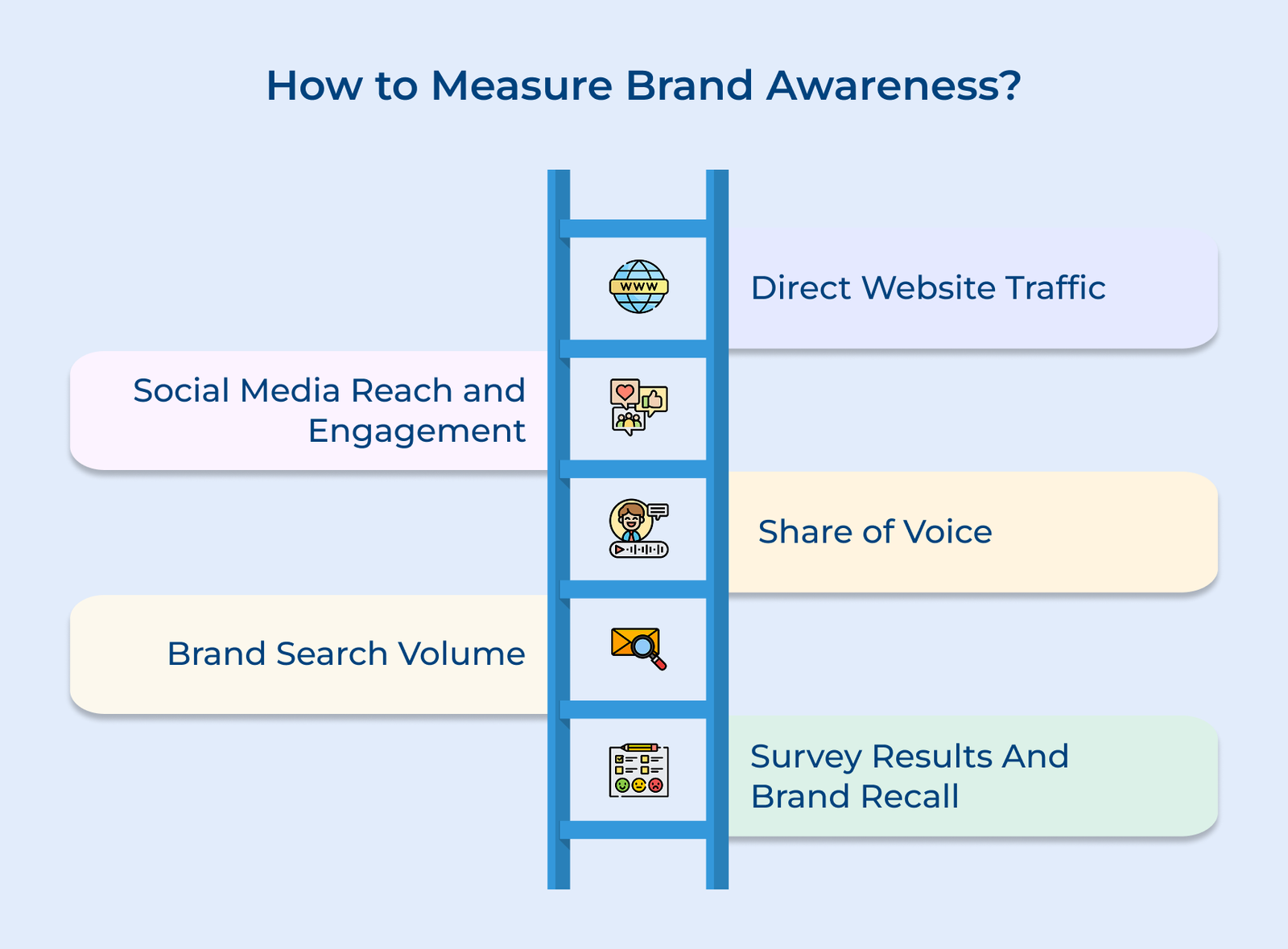
1. Direct Website Traffic
Businesses can comprehend how many people visit their website by typing their URL directly into their browser. It indicates strong brand awareness because these visitors already know your brand name and website. The higher your direct traffic number, the stronger your brand recognition tends to be.
2. Social Media Reach and Engagement
Track the total number of people who see and interact with your social media posts. It includes followers, post reach, shares, comments and mentions. Higher engagement rates suggest your brand resonates with your audience. Pay special attention to organic mentions and shares as they indicate genuine brand advocacy.
3. Share of Voice
Calculate your brand’s visibility compared to competitors in your industry. It consists of measuring mentions across social media, news articles, blog posts and other online platforms. A growing share of voice is a strong sign of increasing brand visibility. Compare your mention volume against total industry mentions to understand your market position.
4. Brand Search Volume
Monitor how often people search for your brand name and related terms on search engines. It indicates intentional interest in your brand. Track both branded search terms and variations of your brand name. Rising search volumes will suggest there’s a growing brand awareness and interest.
5. Survey Results and Brand Recall
Conduct regular surveys to measure unaided and aided brand recall among your target audience. Unaided recall shows how many people mention your brand without prompting, while aided recall measures recognition when shown your brand name. Higher recall rates indicate a stronger brand presence in consumers’ minds.
Below are the notable examples of brands that have effectively increased their visibility and market presence through innovative approaches.
Spotify transforms user data into shareable personal music stories through their annual Wrapped campaign. They create personalized infographics showing users’ listening habits and encourage sharing on social media. The approach combines data storytelling with social sharing to generate organic conversations about the brand.
The campaign’s impact extends beyond immediate social media buzz. Spotify sees increased app downloads, user engagement and brand loyalty during and after Wrapped releases. The anticipation for yearly Wrapped releases has become a cultural moment that strengthens Spotify’s position as the leading music streaming platform.
Dollar Shave Club revolutionized their industry through memorable content marketing, starting with their viral launch video. They maintain engagement through humorous educational content about grooming and lifestyle topics while keeping their brand voice consistent across all platforms.
Their approach has helped them build a loyal customer base that sees them as more than just a razor company. The brand’s personality-driven content strategy creates emotional connections with customers and makes traditionally boring product categories more interesting.
Airbnb expands brand awareness by focusing on local experiences beyond just accommodation. They create content highlighting unique stays and adventures while partnering with local hosts to offer authentic travel experiences. Their approach emphasizes storytelling through real traveler experiences.
The strategy has helped Airbnb become synonymous with unique travel experiences rather than just accommodation. Their focus on local authenticity and personal stories creates emotional connections with travelers.
Duolingo builds brand visibility through its distinctive social media personality, particularly on TikTok. They create trending content featuring their mascot and engage with users through humorous interactions while maintaining their educational mission.
Their playful approach has helped them reach younger audiences and make language learning more appealing. The brand’s social media success has increased app downloads and user engagement while creating a more approachable image for language education.
Building brand awareness isn’t about being everywhere at once. It’s about showing up in ways that people actually care about. That means clarity in your message, consistency in how you share it and a genuine connection with the people you want to reach. When your efforts reflect your values and speak to real needs, awareness turns into recognition.
Visibility alone doesn’t cut it. What matters is being remembered for something useful or meaningful. Share knowledge, create spaces for people to engage, and put out campaigns that feel relevant rather than forced. If you keep adding value and stay true to your voice, your brand naturally earns a place in your audience’s daily life.

Building brand awareness is a gradual process that varies based on your industry competition and marketing efforts. While some initial recognition can develop within 3-6 months consistent brand visibility typically takes 12-18 months of strategic effort. The key is maintaining consistent messaging and engagement across all channels while regularly adjusting your brand awareness strategies based on audience response.
Brand awareness encompasses a deeper understanding of your brand’s values, personality and offerings, while brand visibility simply means being seen by your target audience. Think of visibility as someone noticing your brand’s logo or name. The awareness means they understand what your brand stands for and can recall specific details about your products or services.
Investment in brand visibility depends on factors like market size, competition and your business goals. Rather than focusing on a specific budget percentage, focus on creating sustainable long-term strategies. Start with foundational elements like content creation and social media engagement. Then gradually expand into paid campaigns based on performance metrics and ROI analysis.
Yes, brand awareness significantly influences purchasing decisions through the familiarity and trust it creates. When consumers recognize and understand your brand, they’re more likely to consider your products when making buying decisions. Strong brand visibility shortens the sales cycle and reduces the need for heavy promotional marketing to drive conversions.
Maintaining brand awareness in competitive markets requires consistent differentiation and value delivery. Focus on highlighting your unique value proposition through targeted content, engaging community initiatives and innovative campaigns. Regular audience engagement, authentic storytelling and staying current with industry trends help maintain visibility while building deeper connections.
Grow Customer Relationships and stronger team collaboration with our range of products across the Conversational Engagement Suite.
Omnichannel Customer Support & Help Desk Software
AI Enabled Business Messaging and Chatbot Software
Sales Engagement & CRM Software
Call Center Software & Virtual Phone System
Product Marketing & Experience Platform
Customer Experience & Feedback Management Software

 Top 7 CRM Challenges and Ways to Overcome Them in 2026
Scroll to top
Top 7 CRM Challenges and Ways to Overcome Them in 2026
Scroll to top