7 Effective Ways for Building Rapport with Customers
Learn the practical tips for building rapport with customers through empathy, active listening and honest communication.

Learn the practical tips for building rapport with customers through empathy, active listening and honest communication.
Many customers feel like they’re just another entry in a database. They get scripted replies, long queues and copy-paste messages that miss what they actually need. That gap in real connection creates distance and makes loyalty a lot harder to earn.
Here’s the thing. Strong rapport isn’t luck. It comes from small, intentional actions that show people you’re paying attention. Everyday conversations can turn into moments that make customers feel valued when you approach them with simple, people-focused habits. Let’s dive in and see how building rapport with customers becomes a lot easier the moment they feel understood and respected.
Customer rapport refers to the natural connection that forms when a business treats a customer like a person, not a problem to solve or a sale to make. It’s built through honest, respectful conversations where the customer feels heard, understood and appreciated.
A good rapport doesn’t require grand gestures. It starts with listening closely, responding sincerely and showing real interest in what the customer needs. When someone feels they’re talking to a person who cares, not just reading from a script, they open up.
Over time, small positive interactions add up. Each helpful conversation becomes part of a track record customers can count on. When people feel like they’re in good hands, they’re far more likely to stick around even when mistakes happen or other options appear.
Key principles:
Below are the remarkable advantages of building rapport with customers and how it can be the game-changer your business needs.
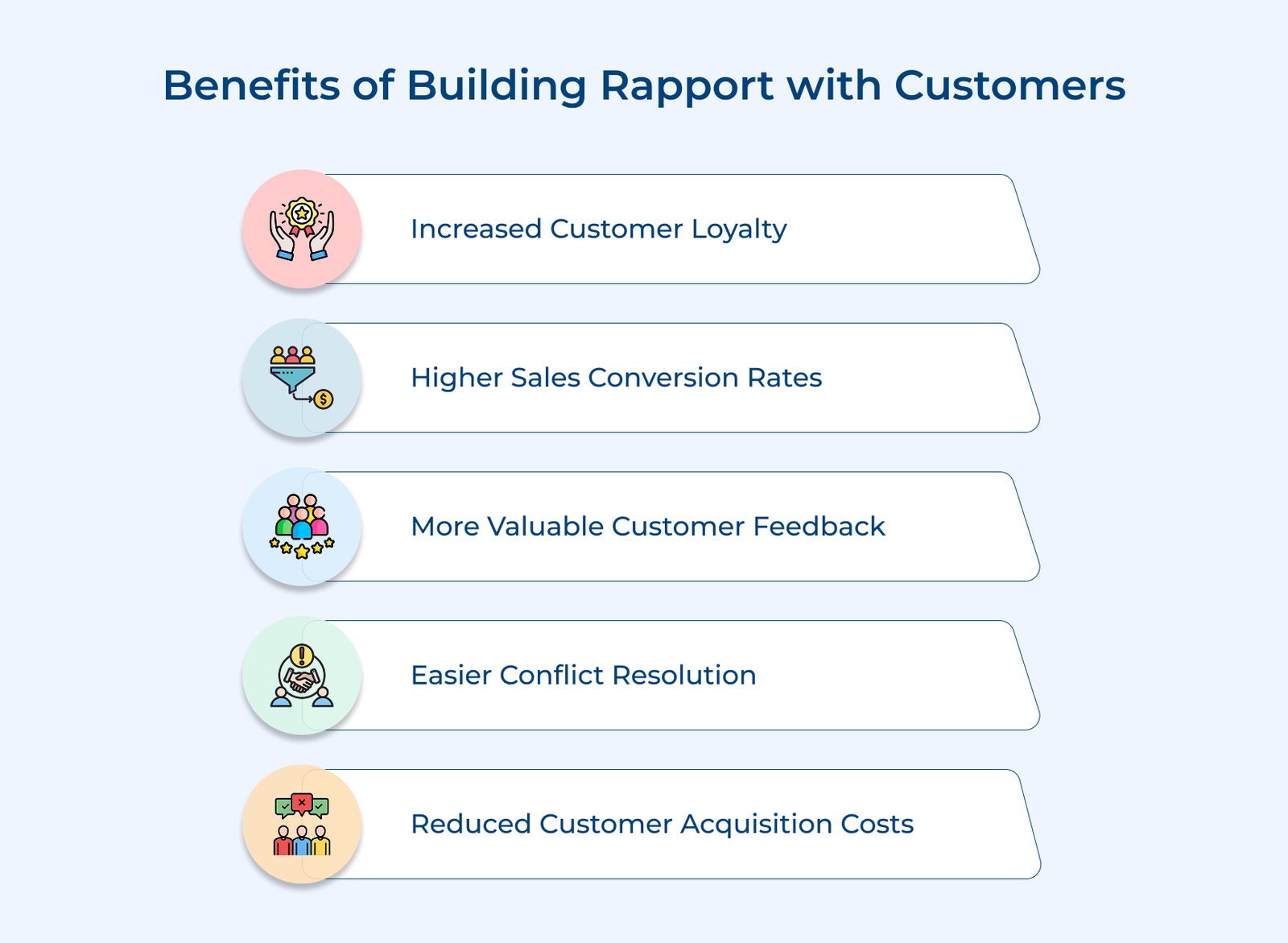
1. Increased Customer Loyalty
When people feel a real connection to your business, they’re more likely to come back. The personal bond makes them loyal, not because of discounts or deals, but because they feel valued. Loyal customers often recommend you to others without needing an incentive.
2. Higher Sales Conversion Rates
People are more likely to buy from someone they trust. Building rapport lowers the guard that customers naturally have during sales conversations. When there’s real trust, your suggestions carry more weight and customers feel confident saying yes.
3. More Valuable Customer Feedback
Customers who feel connected to your team are more likely to tell you what they think, both the good and the bad. The feedback is incredibly useful. It helps you improve without having to guess what’s going wrong.
4. Easier Conflict Resolution
Mistakes happen, but when you’ve built a good relationship, customers are usually more patient. Instead of reacting with anger, they’ll be more willing to hear you out and work toward a solution.
5. Reduced Customer Acquisition Costs
Happy customers talk. When someone has a great experience with your team, they’re likely to share it with others. The personal recommendations often bring in new customers, without you needing to spend extra on ads or marketing.
Below are the proven ways for building rapport with customers, ensuring your business stands out and thrives for years to come.
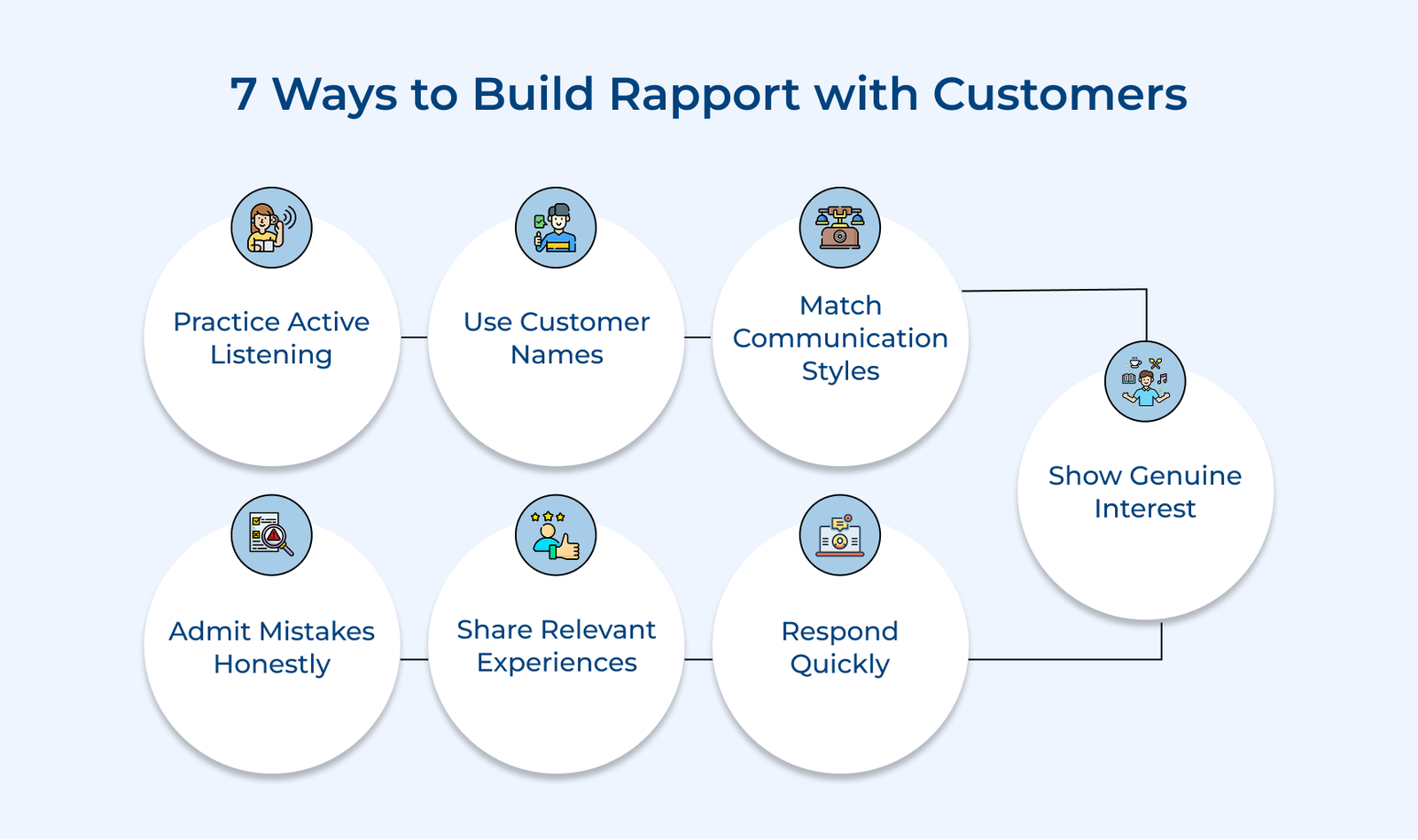
Genuine customer connection starts with listening, not just hearing, but truly paying attention. When customers feel like you’re listening, not just waiting to respond, it changes the whole tone of the conversation.
Put away distractions. Don’t multitask. Focus on what the customer is saying and let them finish before jumping in. Jot down quick notes if needed so you can circle back to the details they care about.
Key questions:
Using someone’s name in conversation is a small gesture that makes a big difference. It tells the customer they’re not just another ticket or transaction, they’re a person you see and respect. That sense of recognition helps turn a routine interaction into something more personal and memorable.
Thoughtful use of names throughout customer interactions transforms standard service into personal care. When building rapport with customers, the practice creates memorable experiences that distinguish your service from competitors who treat customers as faceless transactions.
Example phrases:
Matching your customer’s communication style creates immediate comfort and subconscious connection by meeting them in their preferred interaction zone. The adaptive approach signals respect for their preferences and reduces the cognitive effort they need to engage with you, making it easier to build rapport with customers naturally.
Primary channels:
Building rapport starts with paying attention to how someone talks. Notice their pace and the kind of words they use. A fast talker who leans on technical terms will respond better when you keep things sharp and to the point. A relaxed, story-driven communicator opens up when you take a moment to share something relatable. Matching their style helps them feel understood and makes the conversation flow more easily.
Real customer relationships start when you stop assuming and start listening. When you show honest interest in a customer’s situation, like what they’re trying to do or what’s getting in the way, you make space for a real connection and better service.
Ask thoughtful situation questions
Thoughtful questions go beyond surface-level information to understand the context behind customer needs. Ask about their goals, challenges and priorities using open-ended questions that invite detailed responses rather than simple yes-or-no answers. The deeper exploration reveals opportunities to provide value that they might not have considered.
Remember Personal Details Shared
Maintaining mental notes or documented records of personal information that customers share demonstrates exceptional attentiveness. Reference these details in future conversations like their coffee preference to show you value them as individuals beyond their purchasing power. The recognition builds emotional connection.
Fast replies tell your customers one simple thing: you matter. The responsiveness builds rapport with customers by demonstrating reliability and commitment, helping establish the trust necessary for long-term relationships.
Acknowledge messages before solutions
Sending immediate confirmation that you’ve received a customer’s inquiry provides reassurance even when immediate answers aren’t possible. The quick acknowledgment prevents the frustration of feeling ignored and sets appropriate expectations about when they’ll receive a complete response. The simple courtesy creates positive impressions.
Set clear response expectations
If a fix will take a while, say so clearly. Let the customer know what to expect and when they’ll hear from you next. People appreciate honesty even if the news isn’t perfect because it gives them something to rely on.
Prioritize urgent communications appropriately
Developing systems to identify and escalate time-sensitive customer needs ensures critical issues receive immediate attention. Train team members to recognize urgency signals in customer language and implement protocols for expedited handling. The prioritization shows customers you understand what matters most.
Sharing a bit of your own experience at the right time and for the right reason can go a long way in making customers feel understood. It turns the interaction from a support ticket into a conversation between two people.
Offer personal stories that relate to the customer’s issue. Keep it short and focused on how what you learned might help them. The goal isn’t to shift the spotlight; it’s to say, “You’re not alone and here’s something that worked for me.”
Pro tips:
When something goes wrong, how you respond matters more than the mistake itself. Owning up to an error, without deflecting, shows customers that you take their experience seriously. It turns a frustrating moment into one that builds trust.
Key phrases:
Don’t wait until the customer brings it up. If you spot an issue, even a small one, call it out first. The honesty shows customers they can trust you to look out for them, even when things go off track. Mistakes happen. But when you own them, you earn something stronger than a clean record; you earn respect.
Check out the missteps and how you can avoid them to create meaningful connections that resonate with your audience.
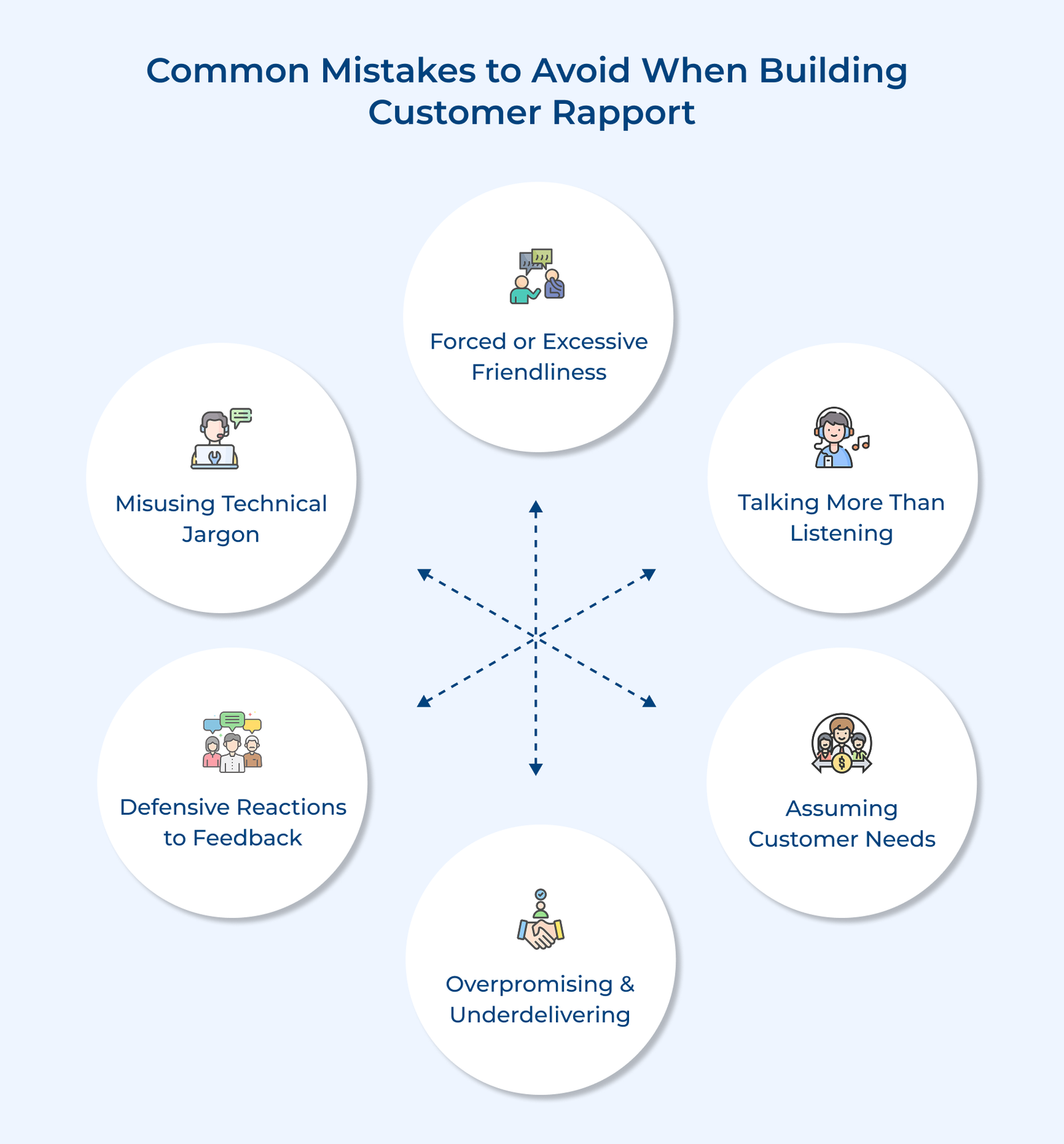
1. Overusing Forced Friendliness
Over-the-top cheerfulness that feels rehearsed or out of place puts people on edge. Customers know when they’re being spoken to with a script instead of sincerity. Instead of forcing a smiley tone, aim to be calm, present and respectful. It goes further than fake warmth ever will.
2. Talking More than Listening
When conversations turn into monologues about features, stats, or achievements, customers tune out. If you’re not asking questions or pausing to truly hear their answers, you’re missing the point and the opportunity to be helpful. Let them talk. You’ll learn more and say less.
3. Making Assumptions About Needs
Presuming you understand customer requirements without proper investigation leads to misaligned solutions and frustration. The assumptions often stem from stereotyping based on demographics or past experiences with similar customers. The approach demonstrates a lack of genuine interest in their unique situation and creates barriers to meaningful connection.
4. Overpromising and Underdelivering
Creating unrealistic expectations to please customers in the moment destroys trust when you inevitably fail to meet them. The short-sighted approach prioritizes immediate customer satisfaction over sustainable relationship building. The disappointment that follows broken promises creates lasting damage that is difficult to repair and undermines all future interactions.
5. Reacting Defensively to Feedback
When you react to criticism by explaining it away or shifting blame, you shut down the conversation. Instead, listen and thank them. Then fix it or at least try. Customers don’t expect perfection. They expect accountability.
6. Using Technical Jargon Inappropriately
Throwing around technical terms or acronyms may feel like expertise, but if customers don’t follow, it just builds frustration. Speak clearly. If you need to explain something complex, break it down simply. The goal is to connect, not impress.
Implementation steps to overcome the challenges:
Building real customer rapport turns everyday interactions into something that lasts. People stick around when they feel seen and treated like more than a name on a list. They’ll choose you even when another option looks cheaper or quicker because trust carries its own weight. Tough moments become easier to navigate and growth becomes more natural once that bond is in place.
Rapport isn’t luck. It shows up when your team listens with intent, adjusts how they speak to each person and stays honest, especially when something goes wrong. That kind of consistency leaves an impression. Strong relationships lead to feedback you can actually use, kind words that travel on their own and a bit of grace when you slip. Genuine human connection stands out in a way no algorithm can copy.

Building rapport varies significantly depending on interaction frequency, customer personality and your approach. Initial rapport can develop within minutes through active listening and genuine interest, but deeper trust typically develops over multiple positive interactions. The relationship-building process is ongoing rather than a one-time achievement, requiring consistent nurturing throughout the customer lifecycle.
Yes, and they should be. While some people naturally connect well with others, anyone can learn the key habits, like listening carefully, showing empathy and personalizing interactions. The best training goes beyond scripts. It teaches people to pay attention, ask thoughtful questions and respond with genuine care.
Customer service is about solving problems and answering questions. Rapport is about how you make people feel in the process. You can fix an issue and still leave someone feeling like just another number. But when you build rapport through kindness, patience or remembering small details, you create a deeper connection that keeps people coming back.
The impact of rapport appears in both quantitative and qualitative indicators. Track metrics like customer retention rates, repeat purchase frequency, referral rates and net promoter scores for numerical evidence. Qualitatively, look for increased customer willingness to provide feedback, more personal communication, higher engagement with your content and unprompted positive mentions on social media or review platforms.
Yes, but in different ways. In fields like healthcare, finance, or consulting, where trust is everything, rapport isn’t optional. In more transactional settings, it might seem less important, but it’s often what makes customers choose you over a competitor. Even in simple purchases, being treated with care and attention still matters.
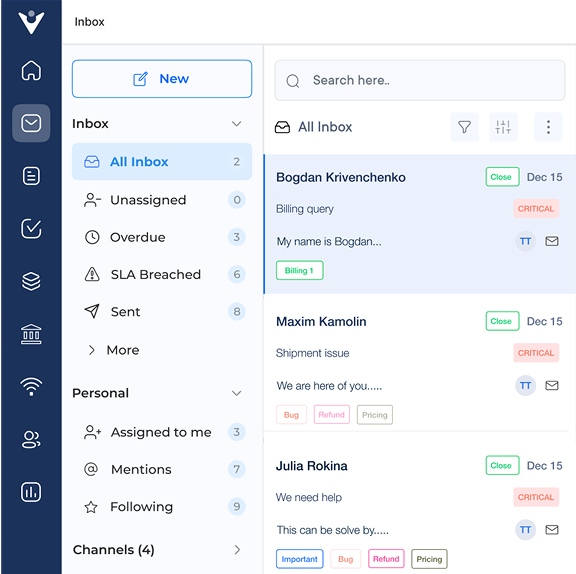
Grow Customer Relationships and stronger team collaboration with our range of products across the Conversational Engagement Suite.
Omnichannel Customer Support & Help Desk Software
AI Enabled Business Messaging and Chatbot Software
Sales Engagement & CRM Software
Call Center Software & Virtual Phone System
Product Marketing & Experience Platform
Customer Experience & Feedback Management Software

 40+ Essential Sales Statistics For Businesses in 2026
Scroll to top
40+ Essential Sales Statistics For Businesses in 2026
Scroll to top