1. Show Customers They Truly Matter
Customers notice indifference almost immediately and even a small moment of feeling overlooked can damage the relationship. Customer service psychology shows that making customers feel valued builds trust, strengthens customer loyalty and encourages them to return.
Key ways:
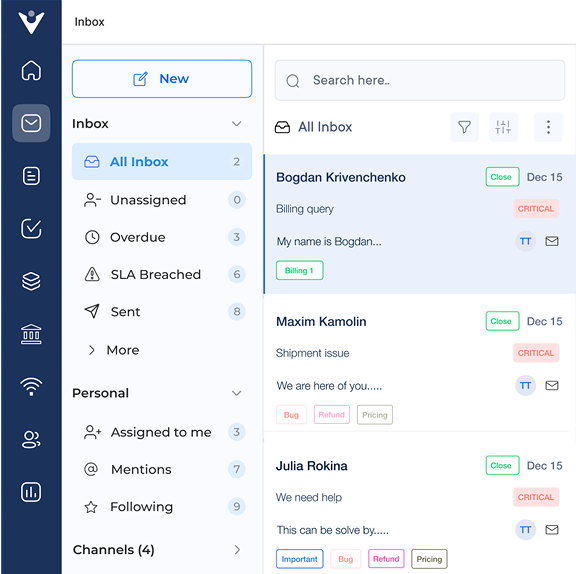
- Acknowledge concerns without delay: Let customers know you have received their message and are actively looking into it. A quick acknowledgment reassures them that their concern is being taken seriously.
- Use their name intentionally: Addressing customers by name makes the conversation feel more personal and reminds them they are being treated as an individual, not just another support request.
- Follow up proactively: Checking in after a problem has been resolved shows genuine care for the customer’s experience. That simple follow-up often leaves a stronger impression than the resolution itself.
2. Answer Every Question Politely and Clearly
Customers want answers they can understand without extra effort. Psychology of customer service shows that clear, respectful communication reduces frustration, builds trust and helps customers feel confident that they are receiving the right support.
Avoid jargon to keep communication accessible and clear
Internal language and technical terms often confuse customers instead of helping them. Simple, everyday language makes explanations easier to understand and gives customers greater confidence in your guidance.
Confirm understanding before closing any interaction
Ending an interaction without confirming resolution is one of the most common service mistakes. A simple “Does that fully answer your question?” gives the customer space to clarify and the agent a chance to catch gaps.
Keep your tone calm even under pressure
Customers pay close attention to tone, especially during stressful situations. A reassuring response helps reduce tension and makes it easier to guide the conversation toward a positive outcome.
3. Exhibit a High Level of Reliability
Reliability in customer service is built through consistency, not perfection. Customer service psychology shows that customers trust businesses that keep their promises, communicate consistently and deliver the same quality of service every time.
Key questions:
- Are you setting timelines you are confident you can meet?
- Are commitments being tracked before they are missed?
- Are your tone and service quality consistent throughout the week?
- Are customers receiving the same level of service across email, chat and phone?
Reviewing the questions regularly helps teams spot gaps before customers experience them. Small inconsistencies often appear internally long before they show up in customer feedback. What does reliability look like in practice? It means customers never have to chase your team for an update because your team follows through before they need to ask.
Pro tips:
- Document every commitment made during a customer interaction and set reminders before deadlines.
- Review service consistency regularly to identify patterns and improve team performance.
4. View Customer Complaints as Growth Opportunities
Every complaint points to something that can be improved in your service, communication or processes. Customer service psychology helps teams see complaints as valuable feedback that can strengthen customer trust and improve future experiences.
Key methods:
- Listen fully before responding: Allow customers to explain the entire situation before offering a solution. Careful listening often reveals details that lead to a faster and more accurate resolution.
- Identify the root cause: Many complaints are signs of a deeper process or communication issue. Solving the underlying problem reduces the chances of the same complaint happening again.
- Turn the resolution into a positive experience: Customers often remember how their complaint was handled more than the issue itself. A thoughtful resolution can rebuild trust and leave a lasting positive impression.
5. Show Empathy in Every Interaction
Empathy is not about agreeing with the customer. Customer service psychology shows that making customers feel understood before solving the problem builds trust and makes conversations far more productive.
Key considerations:
- Acknowledge the emotion first: Recognize what the customer is feeling before focusing on the solution.
- Avoid scripted empathy: Overused lines like “I understand your frustration” land as hollow without genuine follow-through.
- Match your tone to the customer’s state: Customers who are upset need a calm and reassuring response that helps reduce tension.
- Separate the problem from the emotion: Address how they feel and what went wrong as two distinct parts of the same conversation.
- Train teams for different situations: Empathy looks different in a billing concern than it does during a service outage. Teams should know how to adjust their approach based on the situation.
6. Use Positive Language to Shape Perception
The words your team chooses do more than explain a solution. Customer service psychology shows that positive language reduces frustration, builds confidence and keeps conversations moving in a productive direction.
Actionable tips:
- Replace “I can’t” with what you can do: Customers respond better when they are given an alternative instead of a dead end. Focusing on available solutions shows that you are working to help, not just enforcing limitations.
- Present limitations as options: Policies and processes sometimes limit what can be done, but customers appreciate having clear choices. Explaining the available options makes the conversation feel collaborative instead of restrictive.
- End every interaction on a positive note: The last thing a customer hears or reads in an interaction carries disproportionate weight in how they remember the experience. Closing with a clear next step or a genuine offer to help further leaves the interaction feeling complete.
Many teams fall into the habit of using negative phrases during busy periods without noticing the effect. Replacing common responses with more constructive alternatives creates a more positive experience and improves communication across every customer interaction.
What difference does positive language make? It helps customers feel that your team is focused on finding solutions, making it easier to reduce tension and build trust throughout the conversation.
7. Listen Actively Before You Respond
Active listening is one of the most valuable customer service skills because it helps agents fully understand the customer’s concern before offering a solution. Customer service psychology shows that customers feel more respected and cooperative when they know they have been genuinely heard.
Key checklist:
- Are agents allowing customers to finish speaking before responding?
- Is your team summarizing key points to confirm understanding?
- Are clarifying questions being asked before offering solutions?
- Is non-verbal cue awareness being practiced on voice or video channels?
8. Build Trust Through Consistent Communication
Trust grows through consistent communication, not a single great interaction. Customer service psychology shows that honest updates and reliable follow-through help customers feel confident every time they interact with your team.
Update customers before they need to follow up
Proactive updates show customers that their time matters and that their issue has not been forgotten. Regular communication reduces uncertainty and prevents customers from feeling the need to chase progress.
Keep every message clear and genuinely honest
Clear communication sets realistic expectations and reduces misunderstandings. Honest updates help customers stay informed and maintain confidence, even when the resolution takes longer than expected.
Never overpromise on timelines or outcomes
Setting an expectation you cannot meet is far more damaging than setting a longer but accurate one. Customers can accept difficult timelines when they are given honestly; what they cannot accept is being told one thing and experiencing another.
9. Personalize Interactions Beyond the Basics
Personalization is much more than using a customer’s first name. Customer service psychology shows that customers feel more valued when conversations reflect their history, preferences and unique situation instead of treating every interaction the same.
Key considerations:
- Reference previous interactions: Mentioning a past purchase, support request or conversation shows customers that their history matters and creates a more connected experience.
- Tailor solutions to individual context: A solution that works for one customer may not work for another. Taking time to understand the customer’s context leads to more relevant and effective support.
- Avoid overusing scripted responses: Templates can improve consistency, but every response should be adjusted to fit the customer’s specific concern and show genuine attention.
- Use CRM data to inform the conversation: Knowing a customer’s tier, purchase history or past escalations before the interaction starts changes the quality of every response.
- Acknowledge loyalty explicitly: Long-term customers notice when their history with the brand is invisible to the agent and that invisibility quietly erodes the relationship.
10. Manage Your Own Emotions Under Pressure
Emotional self-regulation is the skill that holds every other customer service psychology tip together. An agent who loses composure during a difficult interaction can undo every positive impression built across multiple previous touchpoints in a single exchange.
Key questions:
- Are agents able to identify their own emotional triggers before they influence a response?
- Is there a clear protocol for stepping back during high-tension interactions?
- Are team leaders creating psychological safety so agents can flag when they are overwhelmed?
- Is emotional recovery time built into workflows after back-to-back difficult interactions?
- Are agents trained to separate a customer’s frustration from a personal attack?
Actionable tips:
- Schedule a short debrief after particularly difficult interactions so agents can reset before helping the next customer.
- Include emotional regulation training during onboarding so it becomes a core customer service skill from day one.
5 Psychology Strategies for Exceptional Customer Service
Check out the psychology strategies below to understand customer behavior, strengthen service interactions and create positive experiences that build trust.