How to Build Good Customer Service Ethics? A Detailed Guide
Learn how customer service ethics build trust through honesty, fairness, transparency and accountability.

Learn how customer service ethics build trust through honesty, fairness, transparency and accountability.
A single dishonest answer during a customer interaction can undo months of trust in just a few minutes. Many companies still treat ethics as a policy document instead of something employees apply in every customer conversation.
Customer service ethics influences everyday decisions, from explaining product limitations honestly to resolving similar complaints consistently for every customer.
Research shows that 87% of consumers would stop doing business with a company if they had concerns about its security. It shows that ethical practices directly affect customer trust and business performance. So, let’s dive in to learn about it!
Customer service ethics refers to treating every customer with honesty, fairness, transparency and respect throughout every interaction. It guides employees’ daily decisions and helps businesses build trust that lasts beyond a single purchase.
Why do some brands earn customer trust so easily? The answer often lies in how they respond when something goes wrong. Mission statements may describe a company’s values, but ethics in customer service is reflected in everyday actions. Explaining a product limitation honestly, admitting a mistake or taking responsibility for a delay shows customers they can rely on the business even when situations are difficult.
Key objectives:
Let’s go through the key benefits of customer service ethics and see how ethical service supports long-term growth.
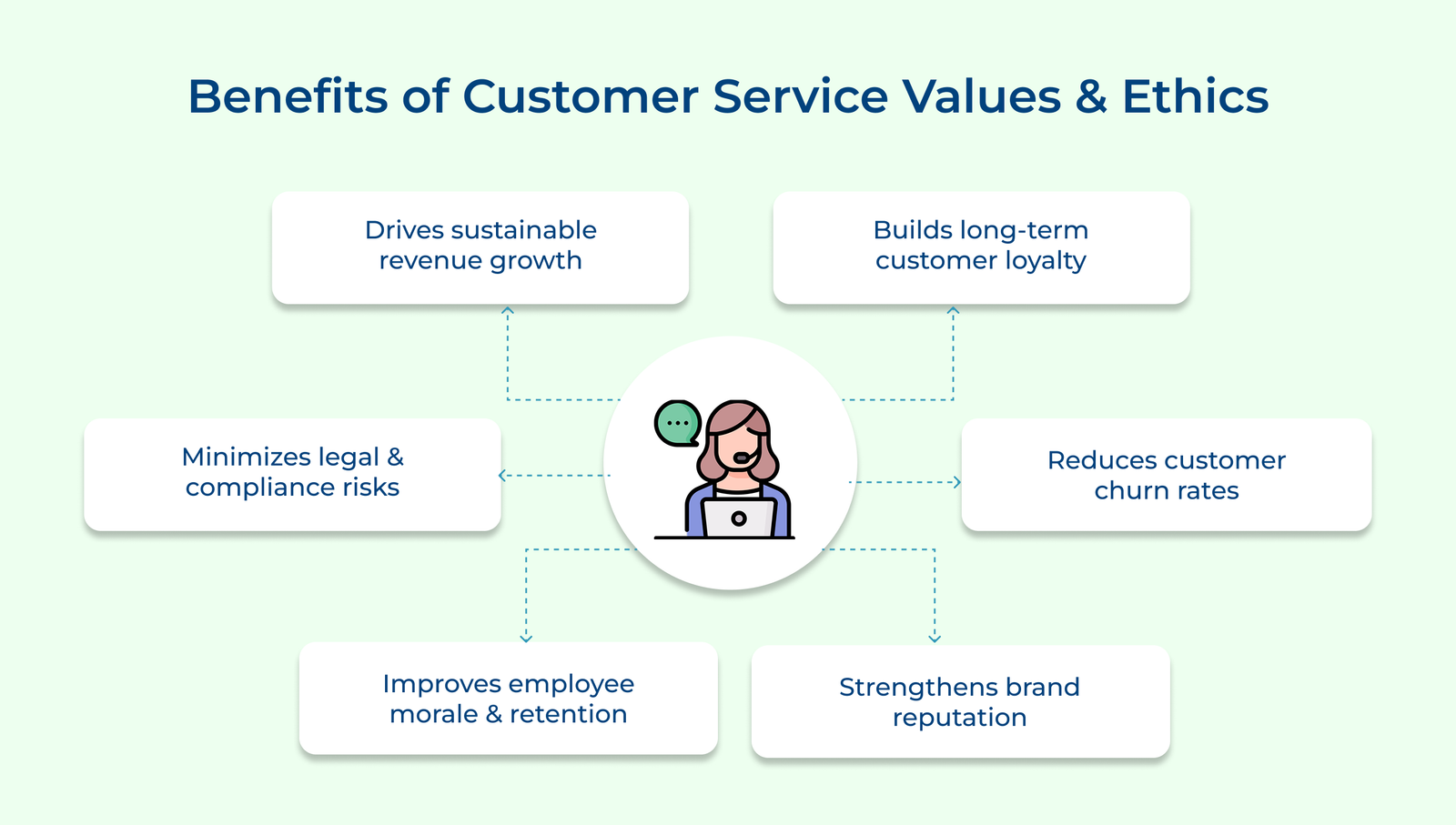
1. Builds Long-Term Customer Loyalty
Customers are more likely to return when they feel respected throughout every interaction, not just during the sales process. Strong customer service ethics build lasting trust, turning first-time buyers into loyal customers who continue choosing the brand.
2. Reduces Customer Churn Rates
Customers are less likely to leave when complaints are handled fairly, honestly and without unnecessary delays. Ethical service helps resolve problems before they grow into cancellations, refunds or lost customer relationships.
3. Strengthens Brand Reputation
Strong support ethics encourage transparent communication that customers remember and share. A well-handled customer issue often strengthens a brand’s reputation more than an advertising campaign.
4. Improves Employee Morale and Retention
Employees are more confident representing a business that values honesty and fairness in customer interactions. Experienced teams stay longer, creating more consistent service and better customer experiences.
5. Minimizes Legal and Compliance Risks
Strong customer service ethics encourage responsible data handling and transparent communication. It reduces the risk of legal issues, regulatory penalties or damage to customer trust. Addressing the responsibilities early is much easier than responding after a compliance issue occurs.
6. Drives Sustainable Revenue Growth
Trust encourages repeat purchases and helps customers feel more confident doing business with the same company again. Strong ethics support steady business growth by building long-term customer relationships that competitors cannot easily replace.
The following are the most important ethics in customer service every business should practice to build trust and deliver respectful service across every interaction.
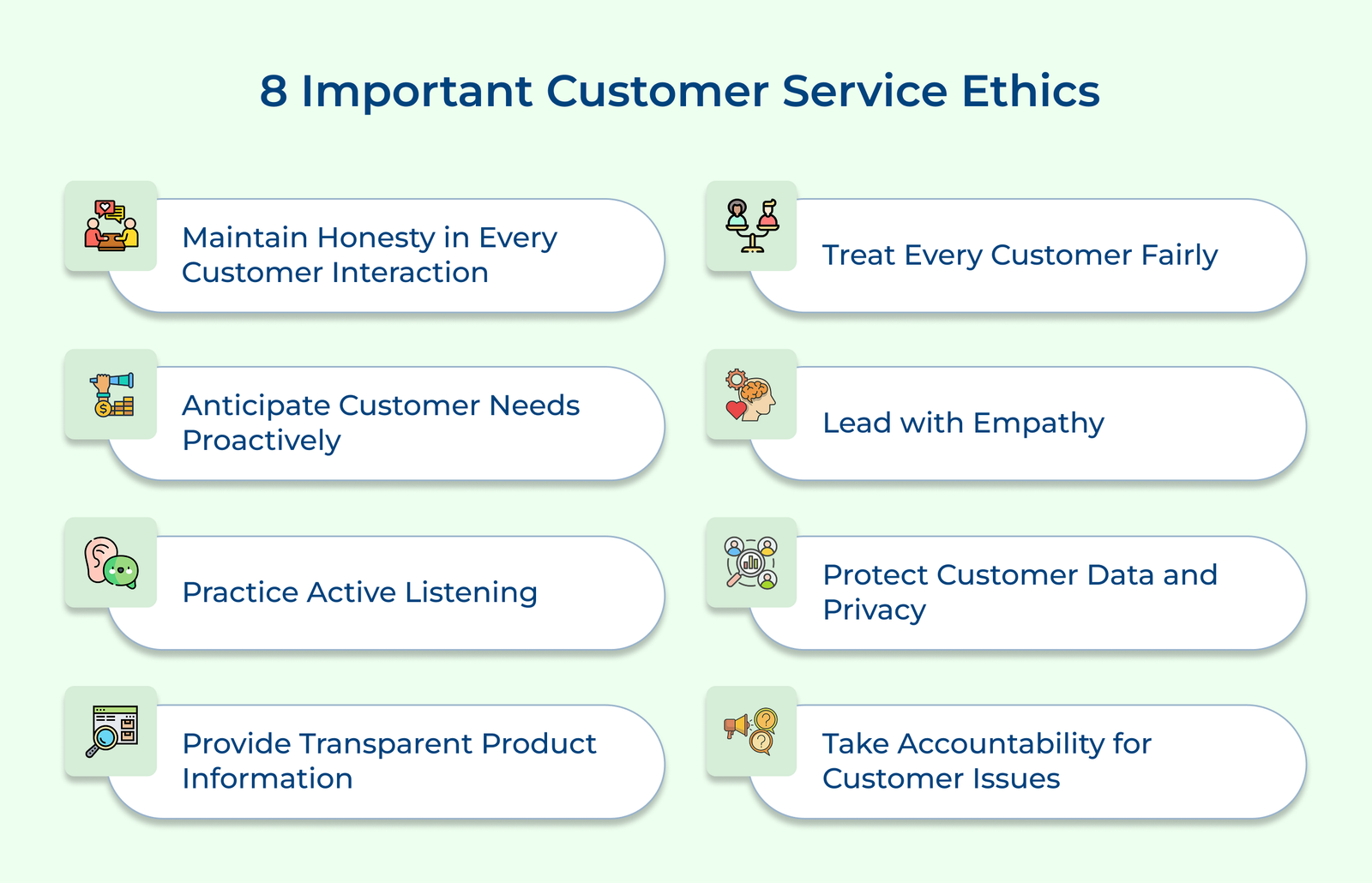
Honesty becomes most important when customers ask difficult questions, such as why an order is delayed or why a promised timeline has changed. Strong customer service ethics encourage agents to share accurate information instead of making promises they cannot keep. Honest answers build trust, while inaccurate reassurance often creates bigger problems later.
Key signs:
Reactive support begins after a customer reports a problem, while proactive support identifies potential issues before they turn into complaints. Customer support ethics encourage businesses to act early, helping customers avoid unnecessary frustration instead of simply responding after the damage is done.
Kew categories:
Why is it especially important for large organizations? A small issue affecting hundreds of customers can quickly become thousands of support requests if no one acts early. Many businesses also confuse proactive service with selling.
Active listening means understanding the reason behind a customer’s concern instead of simply waiting for a chance to respond. Customer service ethics encourage agents to listen with patience, acknowledge concerns and understand the complete situation before offering a solution.
Key ways:
A customer who says “It is the third time I’ve called about this” is sharing more than the issue itself. That statement signals frustration and deserves acknowledgment before the conversation moves to solving the problem.
Key questions:
Listening becomes a measurable skill when it is included in quality reviews. Add “confirmed the customer’s concern” as a required evaluation point so active listening is assessed consistently instead of being left to assumption.
Customers should know about important product limitations before making a purchase, not after they discover them on their own. Customer service ethics require businesses to communicate accurate product information openly, helping customers make informed decisions and avoid unnecessary disappointment.
Key situations:
Key checklist:
Fairness means resolving the same issue the same way, regardless of how much a customer spends or how loudly they complain. Customer service ethics require businesses to apply policies consistently so every customer receives equal treatment based on the situation, not personal opinions or account value.
Pro tips:
Empathy means understanding why a situation matters to the customer instead of simply acknowledging that something went wrong. Customer service ethics encourage agents to understand the customer’s perspective, respond thoughtfully and give every concern the attention it deserves.
Empathy goes beyond being polite. Politeness follows a standard script, while empathy changes the conversation based on the customer’s situation and emotional state. A delayed delivery means something very different to someone waiting for a birthday gift than to a customer ordering office supplies. Responding with the same apology in both situations ignores what matters most to each person.
Customer information should only be accessed by people who need it to complete their responsibilities. Customer service ethics require businesses to protect customer privacy through responsible data access and careful handling of sensitive information. Limiting unnecessary access reduces the risk of data breaches and privacy violations.
Key steps:
A simple question can help identify unnecessary data access. Would the customer be surprised to learn this information was viewed or shared? A “yes” usually means the information was accessed without a valid business reason.
Below are the essential steps to build customer service ethics that guide everyday decisions and help teams handle customer interactions with honesty.
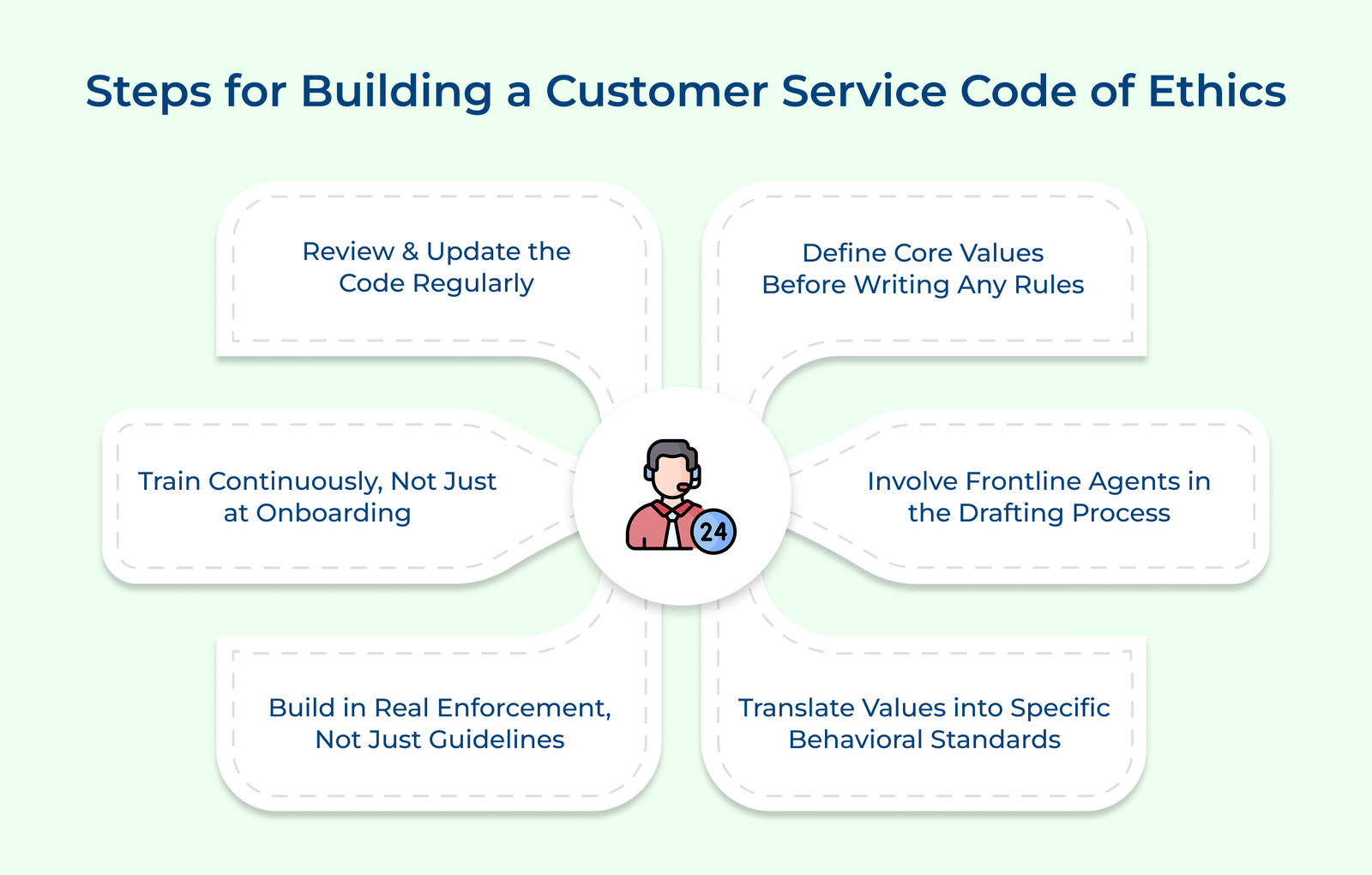
1. Define Core Values Before Writing Any Rules
Core values should come before policies because they give every decision a clear purpose, especially when employees face situations that are not covered by existing guidelines. Customer service ethics start with a small set of shared values that help teams make consistent decisions and respond with confidence.
Many organizations begin by writing policies and only later realize that employees interpret them in different ways. Starting with three or four clear values, such as honesty, fairness or accountability, gives every policy a consistent standard to follow.
Key steps:
2. Involve Frontline Agents in the Drafting Process
Frontline agents interact with customers every day, so they understand the situations that policies often miss. Customer service ethics become more practical when the people handling real customer conversations help create the guidelines. Their experience helps identify gaps, reduce confusion and make policies easier to apply.
Employees are more likely to follow a code they helped develop than one introduced without their input. Discussions with frontline teams also reveal challenges that leadership may not see during day-to-day operations.
3. Translate Values into Specific Behavioral Standards
Core values become useful only when employees know how to apply them during real customer interactions. Saying “be honest” or “be fair” is not enough without clear examples that show what those values look like in practice. Customer service ethics become much easier to follow when expectations are specific instead of open to interpretation.
Many ethical guidelines fail because they explain what to believe but not what to do. Customer support ethics are easier to apply when every principle is supported with practical examples that employees can use during customer conversations.
Pro tips:
4. Build in Real Enforcement, Not Just Guidelines
An ethics code has little value if no one is responsible for following it. Customer service ethics should include clear enforcement measures so employees understand that ethical behaviour is part of everyday responsibilities, not optional suggestions. Consistent accountability helps teams apply the same standards across every customer interaction.
Many ethics codes lose their purpose because no clear process exists for handling violations. Employees gradually stop treating the document as something that guides daily decisions when ethical standards are not applied consistently.
5. Train Continuously, Not Just at Onboarding
Training should continue long after onboarding because employees face new situations as customer expectations and business practices change. Customer service ethics become part of everyday decision-making when teams revisit them regularly instead of treating ethics as a one time training topic. Regular discussions help employees make better decisions during real customer interactions.
Training is most effective when it uses real situations instead of textbook examples. Reviewing recent customer interactions and discussing ethical decisions helps employees build practical judgment they can apply with confidence.
Actionable tips:
Check out the most common ethical issues in customer service and learn how recognizing them early helps businesses protect customer trust.
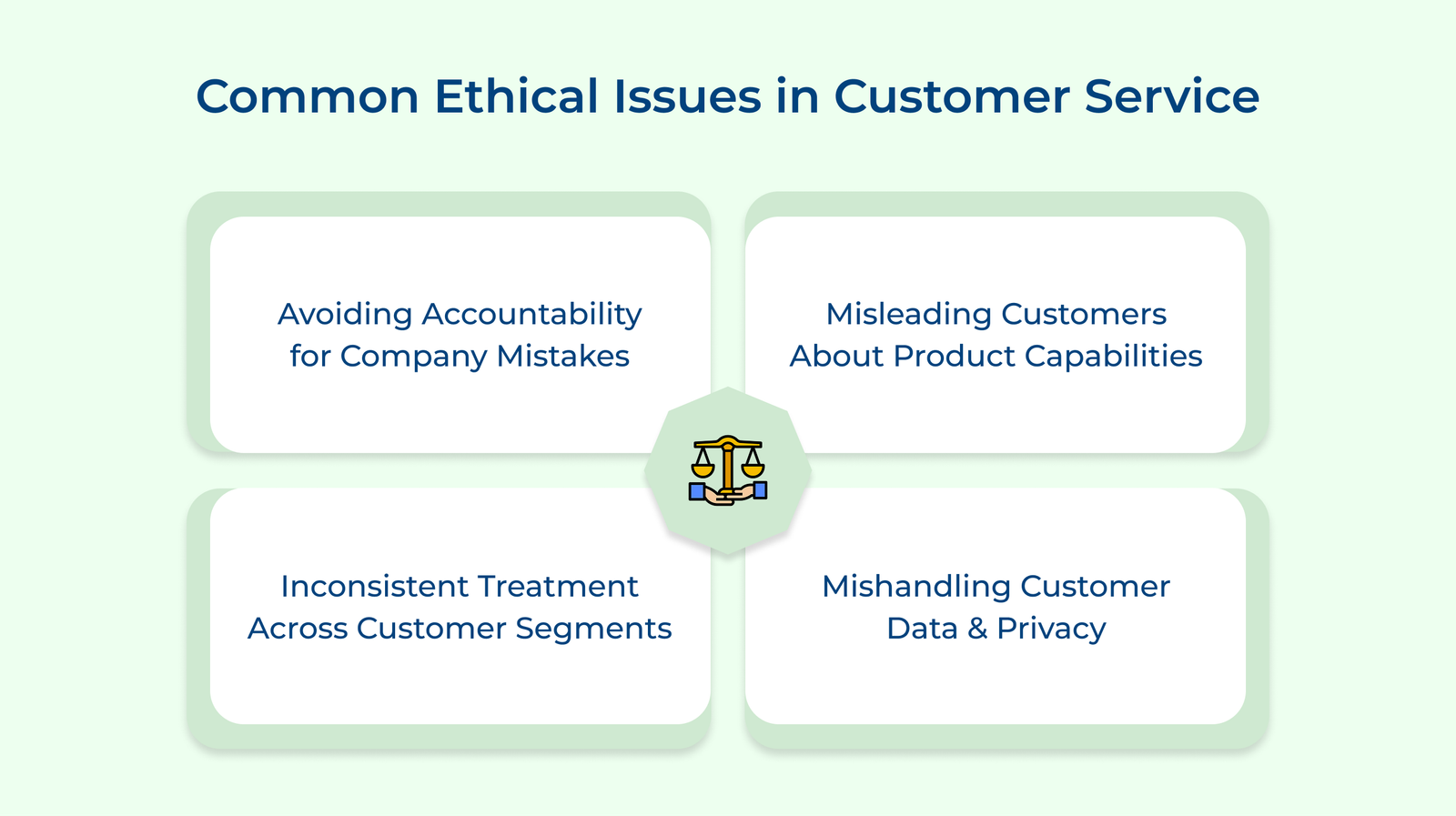
1. Misleading Customers About Product Capabilities
Sales targets can sometimes lead agents to exaggerate features or overlook important product limitations. Strong customer service ethics encourage honest communication so customers can make informed decisions and avoid disappointment after the purchase.
2. Mishandling Customer Data and Privacy
Customer information should only be accessed or shared when it is necessary to resolve a customer’s request. Many privacy issues happen because of unclear processes or careless habits, making strong data protection an essential part of ethical customer service.
3. Inconsistent Treatment Across Customer Segments
Customers with the same issue should receive the same level of service, regardless of how much they spend or how loudly they complain. Customer service ethics help businesses apply policies fairly and consistently so every customer is treated equally.
4. Avoiding Accountability for Company Mistakes
Customers expect businesses to take responsibility when something goes wrong instead of shifting blame to another team or system. Customer service ethics encourage employees to own customer issues and focus on resolving them with honesty and accountability.
Key solutions to overcome the common issues:
Customer service ethics is not a one-time policy. It is reflected in the everyday decisions employees make through honesty, fairness and accountability. Businesses that make ethics part of daily operations build stronger customer trust, improve retention and reduce compliance risks over time.
Key takeaways:

Ethical considerations influence how employees communicate, resolve problems, protect customer information and make decisions during every interaction. Strong customer service ethics help businesses build trust through honest communication, fair treatment and consistent service.
A customer service code of ethics should include clear core values, practical behavioral standards, accountability measures and examples of expected conduct. Regular training and periodic reviews help employees apply these standards consistently.
Ethical behavior reduces churn, strengthens brand reputation and lowers legal exposure, while building loyalty that’s difficult for competitors to replicate quickly. It directly impacts revenue, not just customer sentiment scores or customer satisfaction surveys.
Good customer service combines honesty, empathy, patience, clear communication, accountability, responsiveness and strong product knowledge. Together, the qualities help employees resolve customer issues with confidence and professionalism.
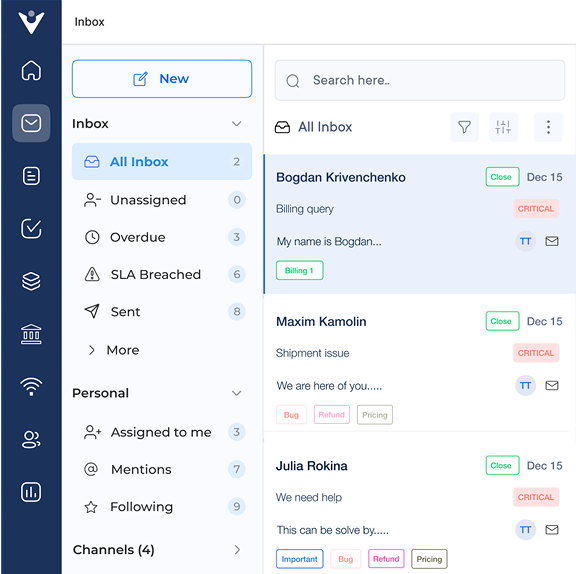
Grow Customer Relationships and stronger team collaboration with our range of products across the Conversational Engagement Suite.
Omnichannel Customer Support & Help Desk Software
AI Enabled Business Messaging and Chatbot Software
Sales Engagement & CRM Software
Call Center Software & Virtual Phone System
Product Marketing & Experience Platform
Customer Experience & Feedback Management Software

 Automotive Chatbot Guide: Benefits, Use Cases and Examples
Scroll to top