What is a Customer Timeline & How to Build One?
Learn what a customer timeline is and why it matters for your business. Check out how to map every interaction for better customer experiences and long-term business growth.

Learn what a customer timeline is and why it matters for your business. Check out how to map every interaction for better customer experiences and long-term business growth.
Every customer leaves behind a trail of interactions with your business, including website visits, marketing emails, purchases, support requests and more.
Most companies collect the data across multiple systems, but disconnected records make it difficult to understand the complete customer journey or respond with the right context at the right time.
A customer timeline solves the problem by bringing every interaction into a single chronological view. The teams get a complete picture of each customer’s history and make every conversation more informed. Let’s dive in to understand why it matters and how a well-structured timeline will help you deliver more consistent customer experiences.
A customer timeline refers to a chronological record of every interaction a customer has with your business, from their first touchpoint to their most recent engagement. It brings every important interaction into one place, making it easier to understand the customer’s history and make informed decisions.
Think of it as a complete record of the customer’s relationship with your business. It includes much more than purchases and transaction history. Support conversations, onboarding progress, product usage, feedback and other important interactions all become part of the same timeline.
Key factors:
Customer timelines do much more than organize customer data. Let’s go through its biggest benefits to get a clear idea about its importance for modern businesses.
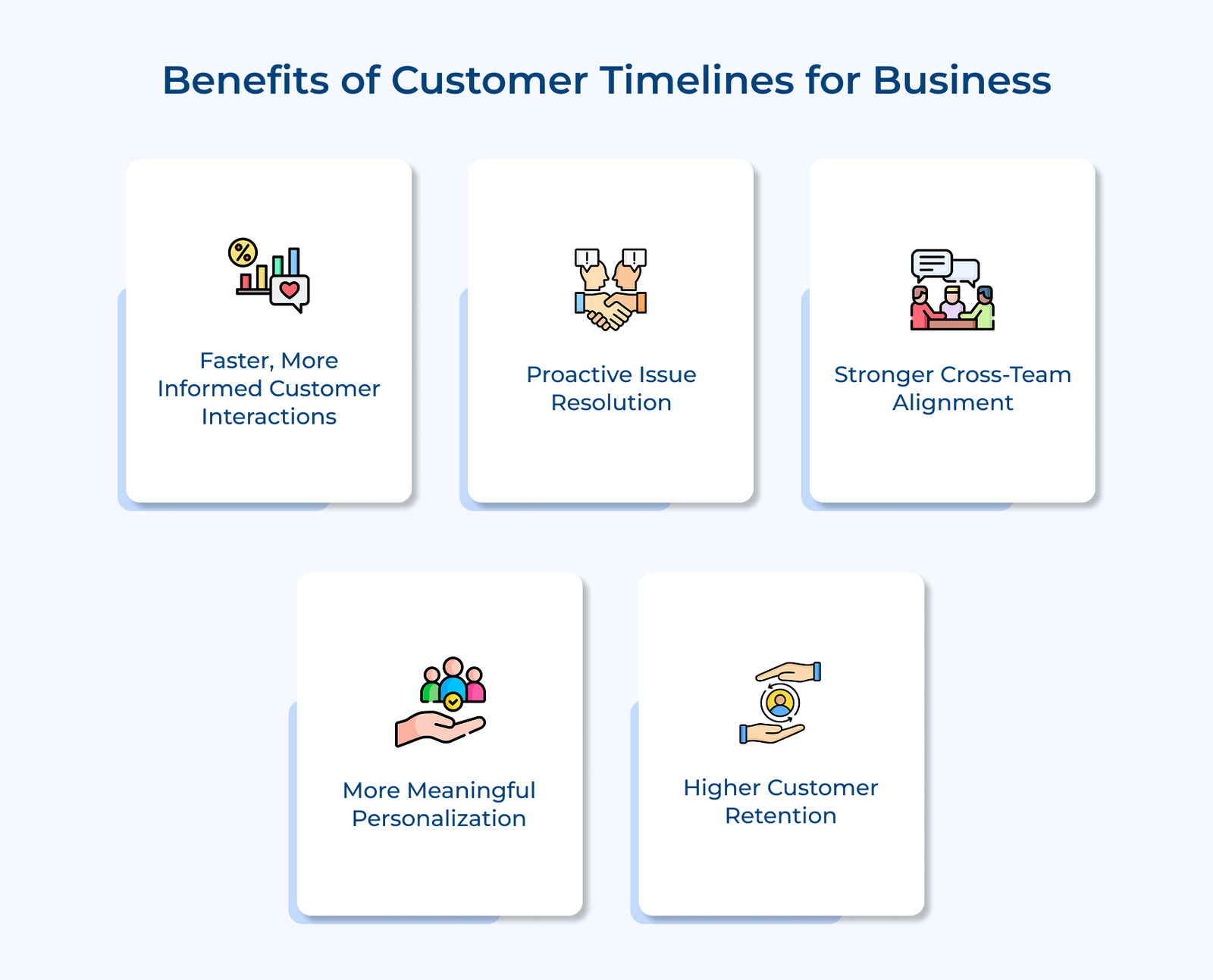
When a support rep or account manager can see the full history of a customer in seconds, response quality improves immediately. Your team stops asking redundant questions and starts solving real problems faster.
A customer timeline makes it easier to identify warning signs early, such as repeated support requests, lower engagement or incomplete onboarding. Teams can address the issues before they grow into larger problems or lead to customer churn.
Sales, support and customer success often operate with different versions of the same customer story. A shared timeline creates one source of truth that every team can act on without confusion or duplicated effort.
Every interaction becomes more relevant when your team understands a customer’s previous purchases, conversations and support history. Customer timelines provide the context needed to make recommendations and follow-ups that feel timely instead of generic.
Customers stay when they feel understood and a timeline gives your team the tools to consistently deliver that feeling. Catching renewal risks early, acknowledging loyalty milestones and following up on unresolved issues all become far more manageable.
The following are the key stages of a customer timeline. Understanding each stage of a customer timeline helps you track interactions more effectively.
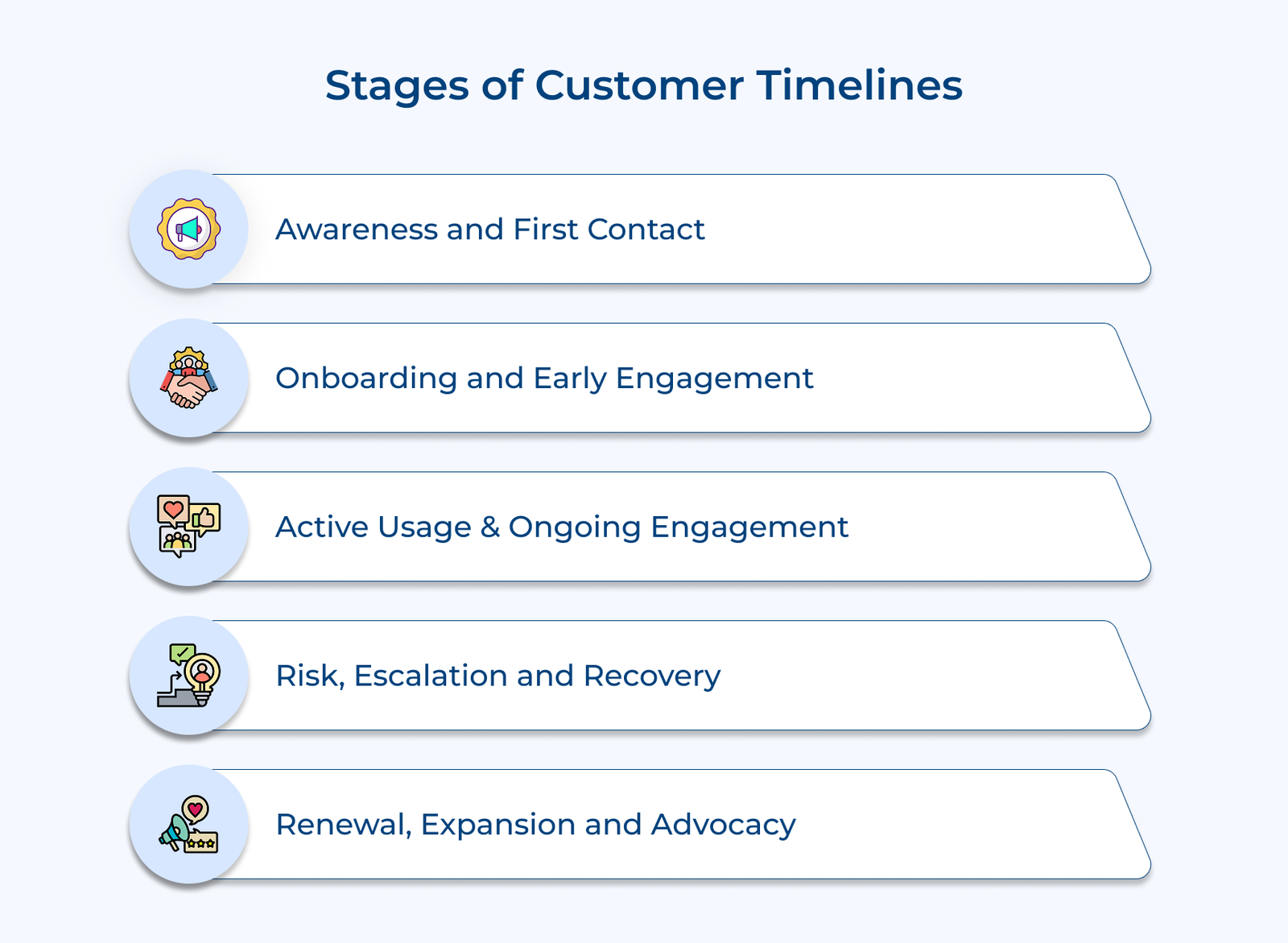
Every customer relationship starts with the first interaction. It could be an ad, a referral or a search result that introduces someone to your business. Recording the first touchpoint gives your team valuable context that can improve future conversations and decisions.
Many businesses record where a lead came from but miss the details that explain why the customer engaged. The message that caught their attention, the problem they wanted to solve and the content they viewed all provide useful insights that can shape future interactions.
Key questions:
Onboarding is one of the most important stages in the customer timeline because it shapes the customer’s first real experience with your business. Customers who understand your product or service early are more likely to continue using it with confidence.
Key moments:
That skipped onboarding step is usually the exact capability a customer complains about missing six months later, right before they churn. A timeline that captures the gaps gives your team a window to intervene before the damage is done.
This is the stage where customers use your product or service regularly and create the largest share of customer data. Daily activity, purchase behavior, feature usage or support interactions help you understand how customers are using your business and where they may need additional support.
Every login, every feature used and support request should be recorded in the customer timeline. Tracking the interactions over time helps your team understand normal customer behavior and makes unusual changes easier to identify.
Key patterns:
Every customer relationship faces challenges at some point, such as billing issues, delayed deliveries or product problems. The way your team responds during these situations often has a greater impact than the issue itself. A well-maintained customer timeline provides the context needed to understand what happened and respond more effectively.
Key points:
The stage reflects the long term value of maintaining a complete customer timeline. Past interactions, purchases, support history or product usage help your team understand what the customer values and identify the right time to discuss renewals, upgrades or referrals.
Key signs:
Below are the essential steps to create a timeline that keeps customer information organized, accurate and useful.
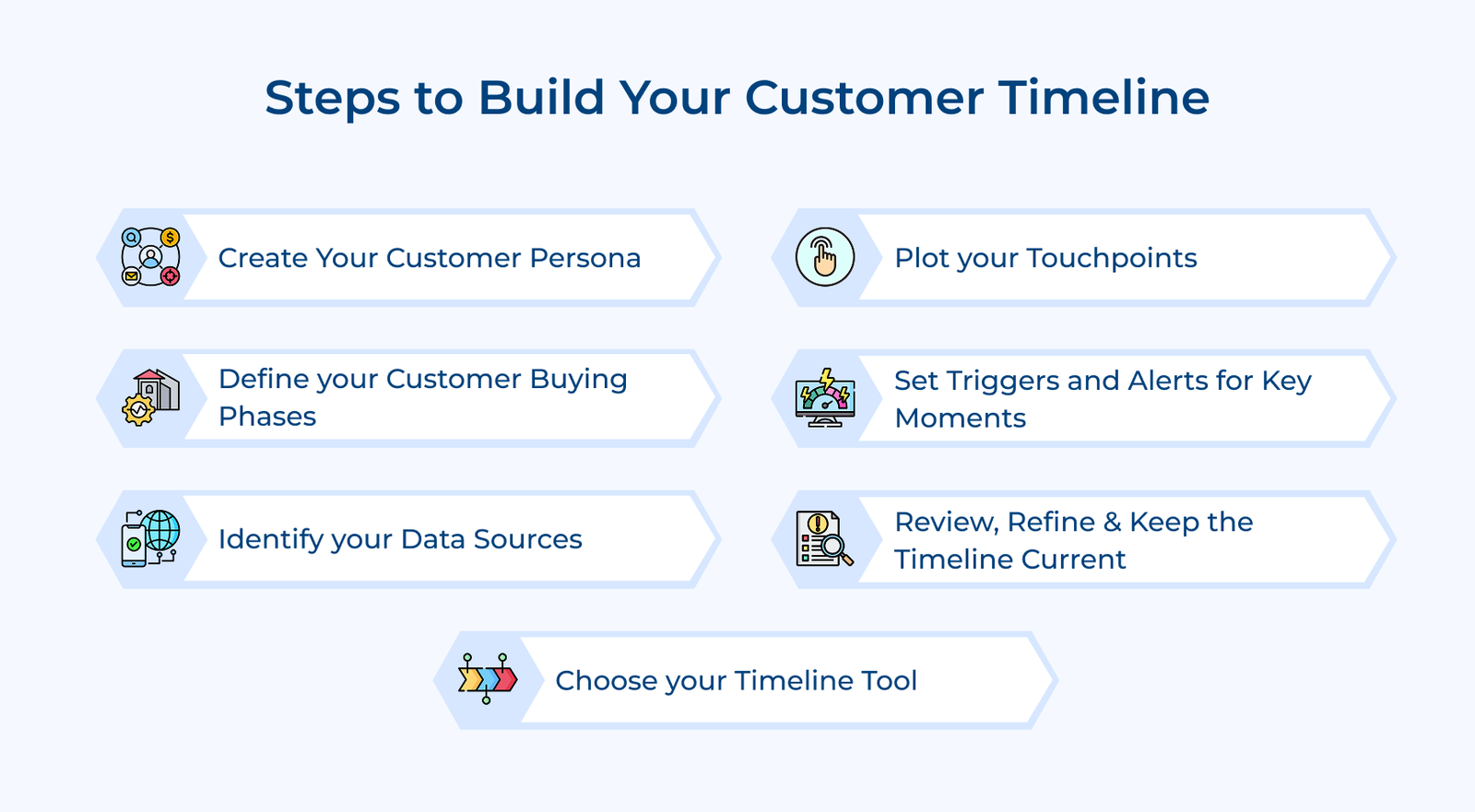
A customer timeline becomes much more useful when it is built around a clear customer persona. Knowing who your customer is, what they want to achieve and the challenges they face helps you understand the meaning behind every interaction recorded in the timeline.
Many businesses rely on a single customer persona, even though different customer groups have different goals, buying habits and expectations. Creating separate personas gives your team a more accurate picture of each customer’s journey from the very beginning.
Key questions:
Before plotting any touchpoints, your team needs to agree on what the actual phases of the customer journey look like for your business. Without defined phases, the customer timeline becomes a flat list of interactions with no structure to interpret them.
Key phases:
Clear buying phases add meaning to every interaction recorded in the timeline. A support request during the evaluation stage often signals something very different from the same request after months of product use. Understanding where an interaction occurs helps your team respond with the right context and make better decisions.
A customer timeline depends on the quality of the information you collect. Choosing the right data sources from the beginning helps you build a timeline that reflects the complete customer relationship instead of leaving out important interactions.
The structural backbone of every customer timeline
Your CRM holds deal history, contact records and communication logs that form the foundation of any customer timeline. Without clean and consistently updated CRM data, every other source you layer on top will have gaps that undermine the full picture.
Support and ticketing data: where real customer friction lives
Support requests, complaints or resolutions show where customers need help and where problems occur most often. Recording the interactions helps your team identify recurring issues and respond more effectively.
Product usage data: The behavioral story behind every account
Product usage data shows how customers interact with your product or service over time. Login activity, feature usage or engagement patterns help your team understand adoption, identify changes in customer behavior and recognize opportunities to provide additional support.
The right timeline tool should fit naturally into your team’s daily workflow. A simple tool that everyone updates consistently is far more valuable than a feature-rich platform that rarely gets used.
Key questions:
Touchpoints are the events that tell the story of your customer’s relationship with your business. Focus on recording interactions that influence the customer experience instead of trying to capture every small activity.
Key ways:
A customer timeline becomes much more valuable when it notifies your team about important changes at the right time. Timely alerts help teams respond before small issues grow into larger customer problems.
Key moments:
A customer timeline that does not get regularly reviewed is just an archive. The entire value lies in using it as a live decision-making tool and that requires a deliberate rhythm of review built into how your team operates.
Key questions:
Check out the following examples to see how businesses use customer timelines to track and improve customer relationships.
A SaaS company serving mid-market HR teams uses a customer timeline to record every interaction from the first demo request to contract renewal. It gives customer success teams a clear view of product adoption, support history and customer engagement throughout the relationship.
Key touchpoints:
A management consulting firm uses a customer timeline to record every client interaction from the first consultation to the final project review. It helps consultants quickly understand the client’s history and continue the relationship with the right context.
Key areas:
An online skincare brand uses a customer timeline to connect purchase history, support interactions and loyalty activity. It helps the customer experience team understand each customer’s relationship with the brand and provide more relevant support.
Key touchpoints:
A private healthcare provider uses a customer timeline to record appointments, treatment updates, billing interactions and follow-up care. It gives every staff member the information needed to provide consistent support throughout the patient’s care journey.
Key areas:
A customer timeline brings every interaction together in chronological order, giving your team a complete view of each customer relationship. Instead of searching through disconnected records, everyone can quickly understand what has happened and make better decisions with the right context.
Key takeaways:

A customer-centric selling approach focuses on understanding and meeting customers’ preferences. Businesses can build strong relationships by actively listening, gathering feedback and tailoring solutions. The strategy not only boosts loyalty but also drives sales and ensures long-term success.
Customer centricity is a business philosophy that places customers’ needs and preferences at the heart of every decision. Companies can deliver personalized experiences that align with expectations by understanding customer behavior and enhancing strong relationships. The approach boosts satisfaction, driving business growth and ensuring lasting success.
Customer-centric selling enhances retention and loyalty by prioritizing customer success over merely closing deals. Salespeople enhance trust and become valuable partners by addressing customer needs. The approach results in greater customer satisfaction, increased repeat business and more referrals.
Key skills for successful sales professionals include active listening, empathy and problem-solving. They should excel at asking probing questions to uncover deep customer needs and be skilled in analyzing complex situations. Effective communication, adaptability and patience are essential, as building strong relationships takes time.
Transitioning to a customer-centric approach demands a cultural shift. Organizations should invest in training that prioritizes customer understanding and relationship-building. Revamping sales processes and KPIs to reflect customer-centric values is essential.
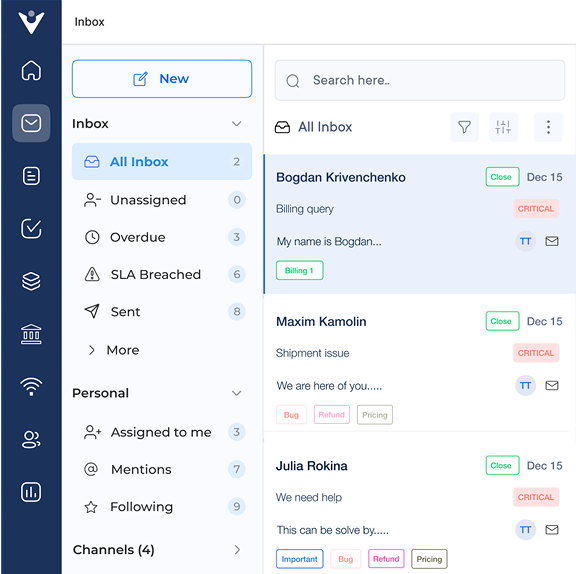
Grow Customer Relationships and stronger team collaboration with our range of products across the Conversational Engagement Suite.
Omnichannel Customer Support & Help Desk Software
AI Enabled Business Messaging and Chatbot Software
Sales Engagement & CRM Software
Call Center Software & Virtual Phone System
Product Marketing & Experience Platform
Customer Experience & Feedback Management Software
 Scroll to top