A Detailed Guide on Small Business Customer Experience
The blog explores small business customer experience through simple, practical actions. It builds trust, increases loyalty and encourages repeat customers without complex tools or large budgets.

The blog explores small business customer experience through simple, practical actions. It builds trust, increases loyalty and encourages repeat customers without complex tools or large budgets.
The modern customers have endless choices, yet many small businesses lose sales without knowing the real reason. Most of the time, it comes down to how people feel after interacting with your business, not price or product. 1 in 3 customers will leave after just one bad interaction.
When customers feel ignored, confused or unappreciated, they rarely complain. They simply leave and take future purchases as well as the referrals with them. It quite hurts more than most owners expect, especially since winning new customers takes far more effort than keeping existing ones.
Strong customer experiences do not need big budgets or complex systems. When customers feel heard, they return, recommend you to others and help your business grow steadily. The blog below breaks down what small business customer experience really means and shows how you can improve it in practical ways.
Small business customer experience refers to the sum of every interaction someone has with your business, from first discovery to post-purchase follow-ups. It reflects how customers feel when they browse your website, visit your store, ask questions or face a problem that needs fixing. The feelings decide if they return or quietly move on.
A positive experience encourages repeat purchases and genuine recommendations. A poor one pushes customers away, often without warning. Many small businesses succeed or struggle based on the difference alone.
Key principles:
Let’s go through the key benefits of small business customer experience and see how positive interactions build long-term growth.
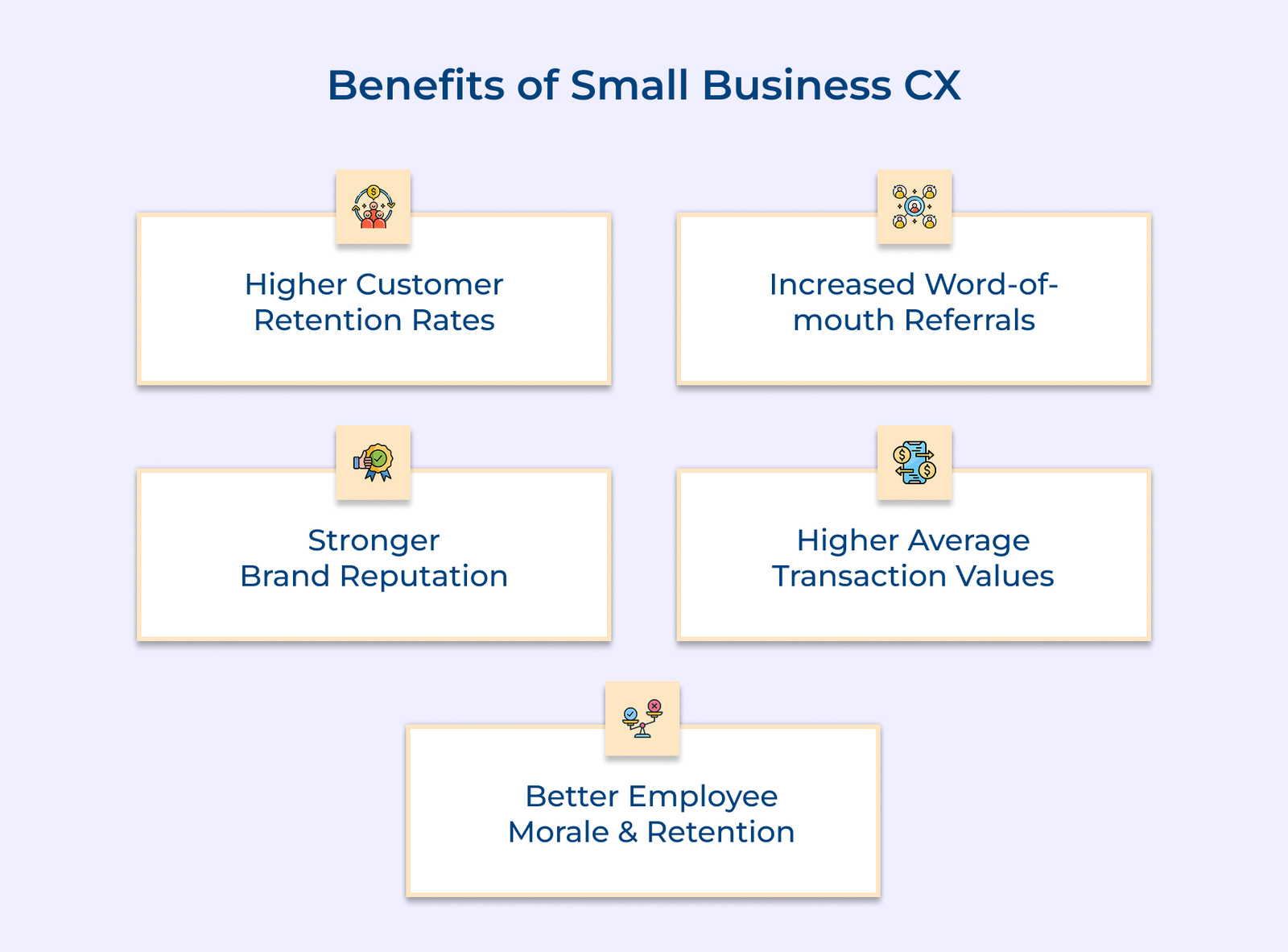
Higher Customer Retention Rates
Customers come back when doing business with you feels easy and pleasant. Every smooth interaction builds trust and familiarity that keeps them from looking elsewhere. Returning customers also cost less to serve and tend to spend more over time.
Increased Word-of-mouth Referrals
Happy customers become your most effective marketing team by telling friends and family about their experiences. The personal recommendations carry more credibility than ads and often bring in new customers without extra effort or expense.
Stronger Brand Reputation
Good experiences shape how people talk about your business online and offline. A solid reputation gives you breathing room when small mistakes happen. Customers are more patient and understanding because past experiences have earned their confidence.
Higher Average Transaction Values
People spend more when they feel respected and understood. Trust makes customers comfortable asking questions and accepting suggestions. The comfort leads to better choices for them and higher value purchases for your business.
Better Employee Morale and Retention
Happy customers make work more rewarding. Employees feel proud when they see the impact of their efforts firsthand. A positive daily experience encourages teams to stay longer and attracts people who genuinely care about doing good work.
The following are eight actionable best practices that can transform how customers perceive and engage with small businesses.
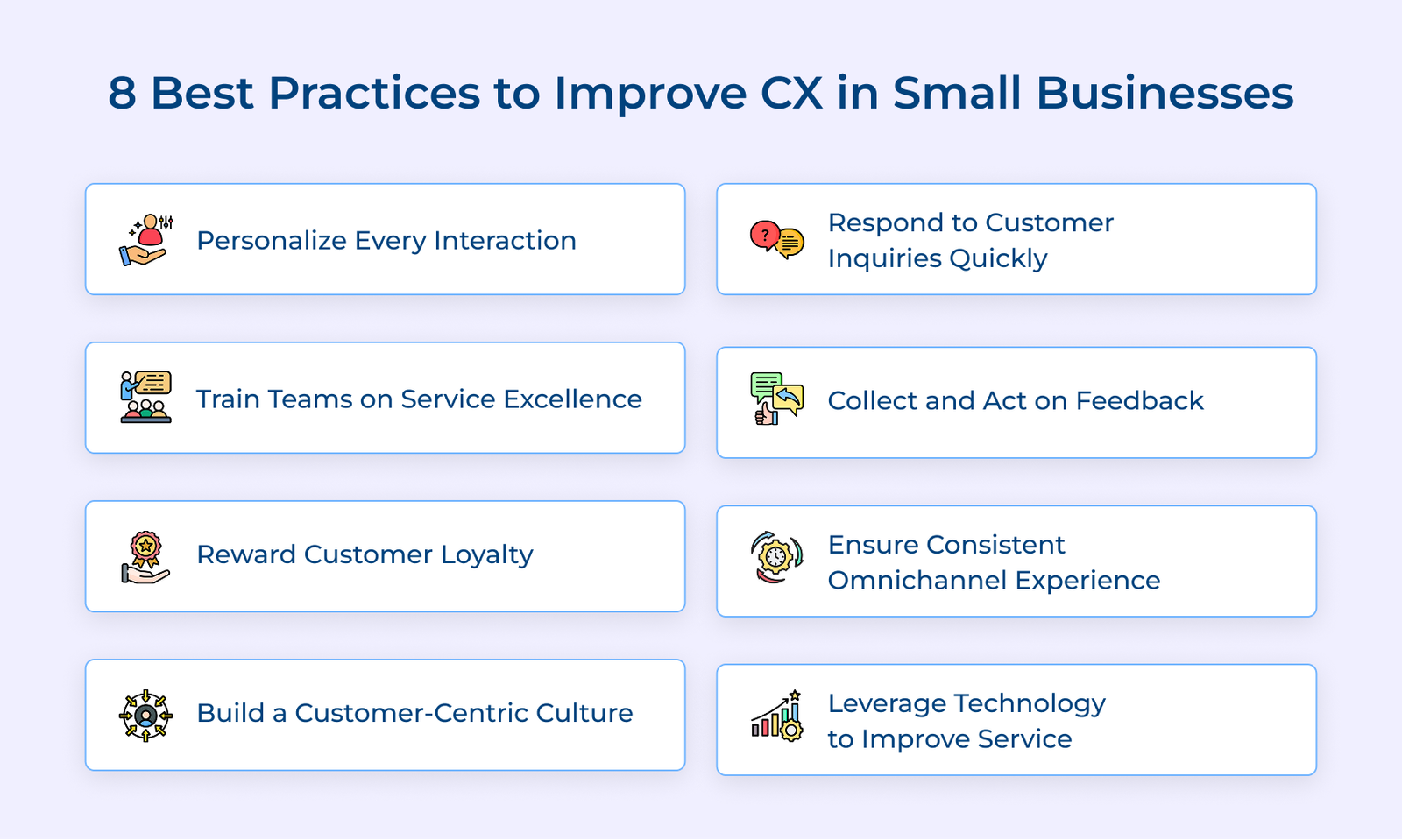
Personalization means treating customers as individuals with unique needs rather than generic transactions. The approach builds emotional connections that turn casual buyers into loyal advocates who feel genuinely valued by your business.
The most important thing to remember for small business customer experience is to keep it simple. Start with basics like names, past purchases and communication preferences.
Key ways:
The beauty of personalization in small businesses is that you can start today with simple notes about customer preferences. Over time, the small gestures compound into relationships that competitors with generic approaches simply cannot replicate or break.
Fast responses tell customers their time matters. Waiting for answers creates doubt and irritation, even when the question is small. Quick replies prevent unnecessary frustration and keep customers from looking elsewhere.
Pro tips:
Training gives employees the confidence to handle real customer situations without second-guessing themselves. Customers notice when staff feel comfortable, capable and genuinely helpful during every interaction.
Ongoing training keeps everyone aligned on how to listen carefully, respond clearly and solve problems in ways that feel natural. Prepared employees stay calmer under pressure and make better decisions when conversations get tough.
Pro tips:
Customer feedback shows the difference between what you believe is happening and what customers actually experience. Decisions feel clearer when they come from real input rather than guesswork. Customers pay attention when their opinions lead to visible changes. Asking for feedback signals that improvement matters and that good service is never treated as finished.
Actionable tips:
Targeted questions reveal issues that are easy to miss from inside the business. Customers might point out a confusing parking layout or a checkout step that causes unnecessary friction.
Key ways:
Loyalty rewards are about saying thank you to customers who keep choosing you. Recognition matters and customers notice when their repeat business is appreciated rather than taken for granted.
Simple rewards work best when they feel useful and easy to enjoy. Complicated systems often confuse people and reduce the impact of the gesture. The focus should stay on making customers feel seen and valued.
Key takeaways:
Consistent omnichannel experiences refer to customers receiving the same quality service whether they interact through your website or walk into your store. When the practice falters, customers feel confused and lose trust because each channel feels like dealing with a different company.
64% of consumers expect a seamless experience across all channels. Clear and consistent messaging keeps trust intact. Prices, policies and promises should sound the same no matter where the conversation happens. Writing the core messages down helps everyone stay aligned.
Key platforms:
Train your team to access the same customer information across all channels so conversations continue naturally. A local office supply company used a shared system that let sales staff see a customer’s online browsing and continue the conversation during an in-person visit.
A customer-centric culture means people make decisions with the customer in mind, even when no one is checking. Culture shows up in everyday choices and determines if great service happens consistently or only once in a while.
Key questions:
Honest answers expose the gap between your stated values and actual daily practices. If you can’t name recent examples of celebrating customer-focused behavior, then you’ve identified where cultural change needs to begin.
Start by sharing specific stories in team meetings of how your work affected real people. Then link recognition to customer outcomes so employees see that putting customers first leads to personal growth and appreciation.
Technology amplifies your team’s ability to serve more customers better without sacrificing the personal touch that small businesses are known for. The practice is most important because the right tools let you compete with larger companies while maintaining your advantage in personalized connections.
Key ways:
Beyond the core tools, consider implementing appointment scheduling software or inventory management systems that prevent out-of-stock situations. The key is choosing technology that removes friction rather than adding complexity to customer interactions.
Below are the real-world examples of small business customer experience that show how simple actions create meaningful moments and lasting customer relationships.
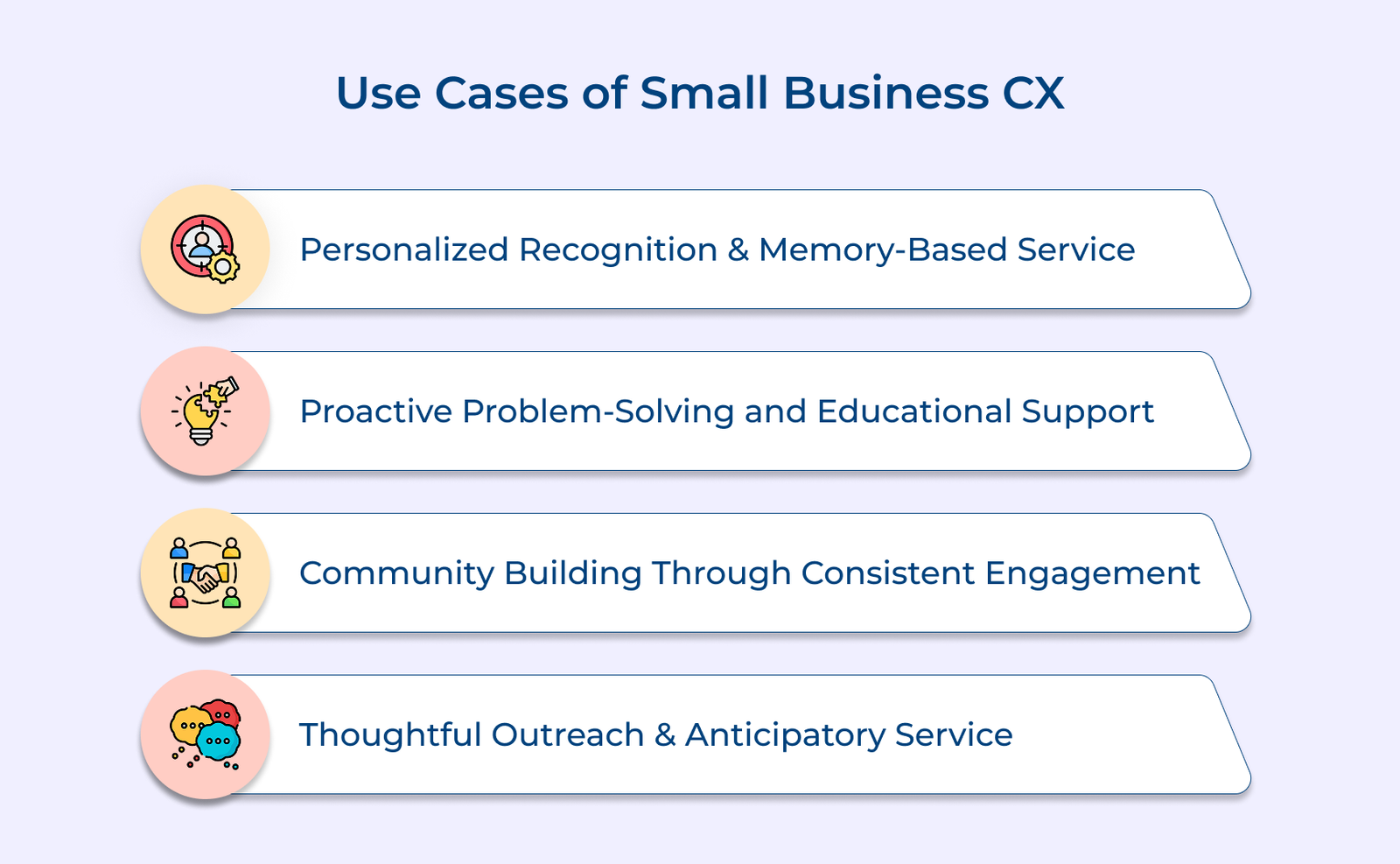
Personalized Recognition and Memory-based Service
A small business uses customer history and preferences to create tailored interactions that make each person feel uniquely valued. The business maintains notes about individual customers, including their usual purchases and personal details they’ve shared.
When customers return, they experience immediate recognition that recalls meaningful context about their lives. This approach transforms routine transactions into continuations of ongoing relationships where customers feel genuinely known rather than processed through a generic service model.
Proactive Recognition and Memory-based Service
Small businesses act as trusted advisors by helping customers solve underlying problems rather than simply selling products or services. Staff members invest time in understanding the customer’s actual challenge and guide them toward the most effective solution.
The consultative relationship builds deep trust because customers recognize the business prioritizes their success over short-term profits. Education builds customer confidence and creates lasting value that brings them back for future guidance.
Community Building through Consistent Engagement
A small business builds belonging by engagement patterns and reaching out during milestones or quiet periods. The business celebrates individual achievements and creates opportunities for customers to connect around shared interests.
The community-centered approach transforms the business from a service provider into a hub of social connection among like-minded people. Customers develop loyalty not just to the business but to the relationships they’ve found there, which creates powerful retention.
Thoughtful Outreach and Anticipatory Service
A small business anticipates customer needs and offers timely recommendations before they ask. The business uses purchase history and seasonal patterns to anticipate when customers might benefit from specific products or services.
The anticipatory service demonstrates attentiveness that makes customers feel genuinely cared for rather than just marketed to with generic promotions. Proactive communication makes the business a trusted partner, not just a vendor.
Exceptional customer experience comes from consistently showing customers they matter in every interaction, not from expensive tools or big budgets. Simple actions like remembering preferences and solving problems proactively build loyalty that lasts.
Choose one area to improve today and focus on making each customer feel valued. Small, consistent efforts grow into strong relationships and a reputation that becomes your most important business advantage.

Small businesses can improve customer experience by focusing on personalization and quick responses that larger competitors often struggle to match. Track customer preferences, train your team to interact with genuine care and make every customer feel valued through consistent attention to their needs.
Great customer experience drives growth by turning satisfied customers into loyal advocates who naturally refer others. Collect feedback, reward repeat customers and build relationships that generate steady revenue. When customers feel valued, they spend more and stay longer, creating sustainable growth.
Use your small size as an advantage by offering personalized service that big companies cannot match. Train your team to recognize regular customers, remember their preferences and respond quickly to concerns. Flexibility becomes your competitive edge.
Understand what your customers truly value through surveys and direct conversations. Implement changes based on their feedback and maintain consistent standards across every channel, from your website to in-person interactions. Tools like CRM systems help keep interactions personal and organized.
Create a customer-focused culture where every team member knows their role in shaping customer interactions. Set clear service standards, train employees regularly and monitor satisfaction through feedback. Use insights to refine your approach and continuously improve the experience.
Grow Customer Relationships and stronger team collaboration with our range of products across the Conversational Engagement Suite.
Omnichannel Customer Support & Help Desk Software
AI Enabled Business Messaging and Chatbot Software
Sales Engagement & CRM Software
Call Center Software & Virtual Phone System
Product Marketing & Experience Platform
Customer Experience & Feedback Management Software

 12 Essential Ticketing System Features (2026)
Scroll to top
12 Essential Ticketing System Features (2026)
Scroll to top