The Definitive Guide to Conversational CRM Software: Benefits, Use Cases, Strategies
Explore what is conversational CRM and how it helps brands to manage 1:1 conversations at scale
No credit card required. Easy setup
Trusted By Leading Brands


Explore what is conversational CRM and how it helps brands to manage 1:1 conversations at scale
No credit card required. Easy setup
Learn to assess the level of engagement a lead has with your business. Leave a great conversation impression on your customers.

Enables businesses to automate repetitive tasks such as answering common customer inquiries and providing support. Saves a considerable amount of time and cost, also providing a more satisfying customer experience.
Leverages the data gathered from automated conversations to score leads based on certain behaviors. Chatbots can assess the level of engagement that a lead has with your business.
Empower sales teams by providing them with real-time insights and guidance during customer interactions. Assist sales representatives by suggesting relevant product recommendations.
Enhances marketing campaigns by delivering targeted and personalized messages to customers. Engages with customers at various touchpoints, such as on websites, social media platforms.

The traditional CRM systems have been marred with a host of challenges such as disjointed sales & marketing processes, implementation costs, and lack of user buy-in. This has led to disillusionment among managers and users alike, as they fail to achieve the desired outcomes.
Conversational CRM offers a holistic solution by integrating marketing, sales, and customer service functions in a seamless manner. In this comprehensive guide, we will explore the key elements of conversational CRM and provide valuable insights on how to effectively implement it in your organization.
Conversational CRM uses conversational technologies such as chatbots, voice assistants and messaging platforms to enhance customer interactions. It aims to deliver real-time customer service while maintaining a human touch.

Key objectives:
Traditional CRM usually involves collecting data about customer interactions to help businesses understand their customers better. Conversational CRM includes chatbots, AI, and automation to improve customer interactions.

Here are some of the key differences between these two types of CRM:
Implementing Conversational CRM offers businesses multiple benefits that can save time, streamline operations, and ultimately increase revenue. Some of the key benefits include:

Scale your Customer Interactions without Losing Human Touch
Conversational CRM incorporates chatbots to handle routine queries & tasks, freeing up human agents to focus on more complex customer interactions. It ensures that customer support is available 24/7 across all channels while satisfying customers who prefer self-service options.
Delivering a Positive & Seamless Customer Experience
Thanks to conversational CRM, businesses deliver timely interactions with customers. While it creates a positive experience, the process also reduces customer churn and strengthens relationships.
Communicating your Brand Messaging Clearly & Consistently
Conversational CRM enables businesses to set predefined answers for frequently asked questions and frequently used responses. Customers always receive consistent messaging and branding across all brand interactions.
Deliver Higher Sales ROI and Lower Cost of Support
You see an improvement in lead qualification and sales funnel management through data-driven analytics. It also reduces the cost of support by automating routine tasks. This results in higher sales returns with lower overall operational costs for the business.
Implementing an effective conversational CRM strategy involves a combination of technology, processes, and human touch. Let’s explore the key steps to successfully implement a strategy that delivers tangible results.

Customers expect to communicate with a business on their preferred channels. Unifying customer conversations across channels involves creating a single customer view that captures all interactions customers have with a business across different channels. When all this information is consolidated into one system, it helps businesses create personalized experiences that result in better engagement and satisfaction.
Best practices:
AI-powered digital assistants are transforming the customer experience by providing customers with instant responses, personalized content and personalized experiences. They help businesses reduce wait times, answer customer questions 24/7 and provide customers with tailored experiences based on their behaviors.
Best practices:
A great conversational CRM strategy should involve a combination of human engagement and conversational automation. Human interaction provides a personal touch while automation helps businesses provide quick support to customers across different channels. This hybrid approach results in better customer experiences & higher engagement.
Best practices:
Data orchestration is the process of collecting and utilizing data from various sources to improve customer conversations. With conversational data orchestration, businesses can collect data from conversations across various touchpoints, identify trends, and personalize conversations. By analyzing customer data, businesses understand areas of strengths and weaknesses, making data-driven decisions for overall growth.
Best practices:
Conversational automation allows businesses to automate the communication process with customers, including lead generation, lead scoring, scheduling, and follow-up messaging. Automation provides businesses with the ability to scale their operations effectively and focus more on personalized communication.
Best practices:
An all-in-one conversational CRM platform offers an easy and convenient way of managing customer interactions across different channels. These platforms combine customer data collection, communication and engagement, enabling businesses to keep track of all customer interactions centrally.
Best practices:
The ultimate goal of conversational CRM strategies is to build exceptional customer experiences. Businesses that prioritize customer experience can increase their conversion rates and gain customer loyalty. Customer experience encompasses every aspect of customer interactions and talking to customers in a manner that will make them feel valuable & heard. The goal of every conversation should be to offer personalized experiences for each customer.
Best practices:
Conversational metrics is all about tracking customer interactions across different channels. It helps businesses identify areas of improvement, make data-driven decisions and refine their strategies. Measuring conversational metrics enables businesses to improve team performance, provide personalized experiences and increase customer satisfaction.
Best practices:
Conversational CRM, also known as Chatbot CRM is revolutionizing the way businesses interact with their customers. Here are the key use cases across various business functions:

Businesses embed Chatbots to resolve routine inquiries, which include password resets, order tracking, and returns. It uses live data directly from the CRM to resolve instead of depending on static scripts. When queries exceed the threshold, it escalates to a human agent with full context so that customers don’t have to repeat information.
Conversational CRM poses adaptive follow-up to assess budget and decision-making authority in real time. This provides sales teams with a prioritized queue of qualified leads instead of after a form has gone unreviewed.
Use conversational assistants to identify relevant collateral such as case studies and pricing sheets based on prospect inquiries. It reduces time spent searching through shared repositories because interactions are logged directly to the CRM. Sales reps enter the call with awareness of objections.
Conversational CRM can enhance marketing campaigns by delivering targeted and personalized messages to customers. Chatbots engage with customers at various touch points such as on websites, social media platforms, or through messaging apps. Businesses create highly tailored marketing messages that resonate with their target audience.
Conversational CRM can drive sales in e-commerce by providing personalized product recommendations to customers. Analyzing customers’ browsing behavior, purchase history, and preferences help chatbots suggest relevant products as well as upsell opportunities. It enhances the customer experience and increases the likelihood of repeat purchases.
Conversational CRM tools evaluate tone and response patterns during interactions to gauge sentiment in real time, flagging frustration or dissatisfaction before it escalates. This data is used in CRM for teams to identify at-risk accounts and adjust outreach strategies proactively.
Conversational CRM software represents a shift towards more natural, intuitive customer interactions, aligning with the growing expectation for instant service.

A crucial feature of conversational CRM is its ability to integrate seamlessly across multiple communication channels. It includes social media platforms, email, voice calls, and website chat. The software provides a unified interface for managing all customer interactions to ensure consistent communication across the customer journey.
A comprehensive, easily accessible knowledge base is important for both customers and agents alike. It provides quick answers to common questions, reducing response times while also improving self-service options. It serves as a valuable resource during customer interactions, ensuring accurate and consistent information delivery.
Conversational CRM software includes powerful automation tools to streamline repetitive tasks and processes. It includes automated follow-ups, appointment scheduling, as well as task assignment. Automation reduces manual workload to ensures timely actions throughout the customer journey.
The software automatically scores and qualifies leads based on their interactions along with other responses. Engagement levels and other predefined criteria, it can prioritize high-potential leads for sales follow-up making sales teams focus their efforts on the most promising opportunities.
Incorporates advanced AI chatbots to handle initial inquiries, qualify leads, and provide instant responses to common questions. They learn from interactions over time, improving their ability to understand context and provide relevant information.
Leverages smart routing algorithms to direct conversations to the most appropriate team or individual. The feature considers factors such as agent expertise, workload, and customer history to ensure that each inquiry is handled by the best-suited representative.
If you’re looking to implement conversational CRM tools into your business strategy, it’s important to choose the right ones that align with your goals. Let’s explore some of the best tools available:
Best conversational CRM software suite for sales, marketing and support

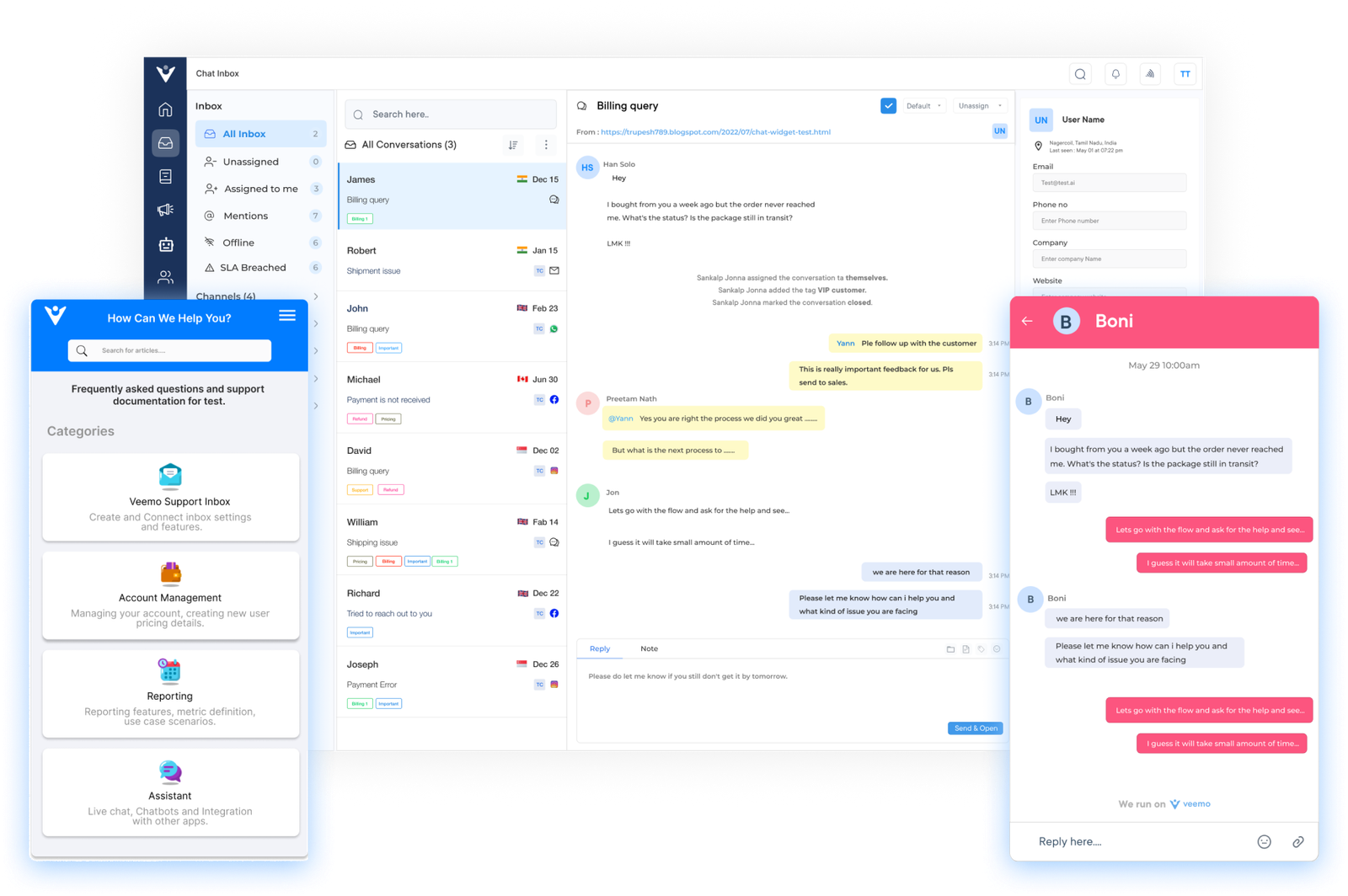
Veemo Chat leading communication platform unifying live chat, chatbots and support operations into a single interface. It empowers businesses to manage customer conversations while maintaining customer relationship management at every touchpoint. Together with built-in automation workflows streamline customer engagement and reduces response times.
Key features:
Top conversational CRM platform for omnichannel engagement
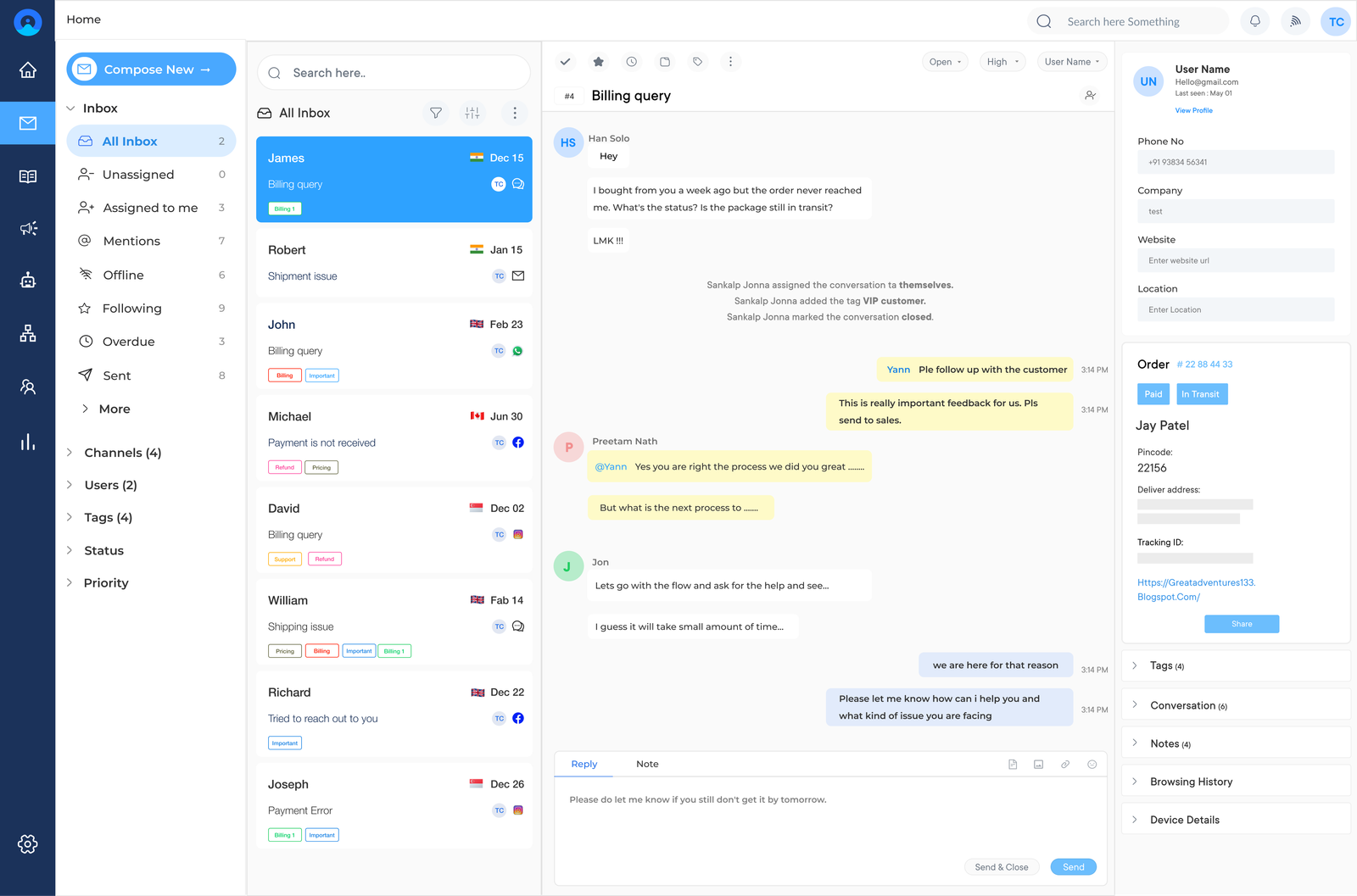
Omni24 is an omnichannel customer engagement platform that offers businesses a unified way to manage business operations. It acts as a conversational CRM that connects support tickets, sales conversations and marketing outreach from one unified platform to eliminate data silos. Teams gain real-time context across every interaction for smarter lead handoffs and strengthen relationships.
Key features:
Drift is a conversational sales and marketing platform specifically designed for B2B companies using Salesforce. It focuses on converting high-intent website visitors into sales opportunities through real-time conversations. Drift’s Conversational AI can qualify leads, book meetings, and route conversations to the appropriate sales representatives.
HubSpot offers a powerful conversational CRM as part of its comprehensive inbound marketing and sales platform. HubSpot’s conversational CRM is designed to create seamless, personalized experiences for customers. The software also includes robust reporting along with analytics tools, allowing businesses to track conversation metrics and optimize their strategies.
Zoho CRM is a versatile customer relationship management platform that includes powerful conversational features. It offers a wide range of tools to help businesses manage customer interactions, streamline sales processes, and improve overall customer experience. Zoho CRM also includes features for email tracking, social media engagement, and customer journey mapping.
Managing Conversational CRM also presents some challenges that organizations must address. Here, we will discuss six key challenges companies may face during the implementation and management.

1. Integration and implementation: One of the primary challenges faced while implementing conversational CRM is integrating it seamlessly into existing systems. This requires a deep understanding of the organization’s infrastructure and processes to ensure smooth data flow as well as synchronization.
2. Data privacy and security: As conversational CRM involves collecting & analyzing customer data, ensuring data privacy and security becomes crucial. Businesses must establish strict protocols to protect customer information while complying with relevant data protection laws.
3. Accuracy and contextual understanding: Conversational CRM relies heavily on analyzing customer messages accurately, especially as conversations can be complex and context-dependent. Implementing algorithms that can accurately interpret customer intent is a challenge that businesses need to overcome.
4. Natural language processing accuracy: NLP is a backbone for conversational CRM to learn customers queries. The technology isn’t always perfect and struggles with nuances, context as well as regional variations. Ensuring high accuracy in understanding customer intent is crucial to provide satisfactory responses.
5. Scalability: Managing conversations at scale can be a significant challenge as businesses grow. Make sure that conversational CRM can handle a large volume of customer queries in real-time. It should also provide accurate responses for maintaining customer satisfaction.
6. Maintaining a human touch: Conversational CRM aims to provide personalized and engaging experiences but maintaining a human touch is essential. Striking the right balance between automation & human intervention is a challenge that businesses must tackle every time.
Traditional CRM systems tend to store customer data across disparate systems, which makes it difficult to gain a complete view of the customer’s journey. Veemo chat solves this by organizing data in one place while enabling personalized as well as seamless interactions.
Veemo chat goes beyond data aggregation with advanced features such as automated chatbots and AI-driven analytics to engage customers in real-time. This process of customer data centralization helps brands scale operations while ensuring consistent service across all touchpoints.
Conversational CRM depends on artificial intelligence to understand and respond to customer inquiries across every channel and touchpoint used by customers. The chatbot analyzes the customer’s message to identify intent while providing a relevant response in real time.
Seamless integration with existing CRM systems helps in capturing and storing valuable customer data across every interaction. It ensures no conversation history is lost, instead of which channel handled the original inquiry.
Conversational CRM pricing depends on features, number of users and conversation volume handled. Most vendors offer different levels of plans, from small business affordable options utp scaling up to enterprise pricing as automation and integration require growth.
Most platforms integrate smoothly with tools already in use across marketing and sales teams, which eliminates the need for manual data transfer between disconnected systems. Common integrations include:
Businesses that are managing high volumes of repetitive customer inquiries across multiple channels benefit most from conversational CRM. Automation directly reduces their workload across the entire journey. Industries that see strong results are:
Yes, security features in most platforms safeguard customer data, including compliance with data privacy regulations and protections such as encryption as well as multi-factor authentication. Businesses also need to choose a trusted vendor and implement proper internal security protocols to make sure customer data remains protected.

Grow Customer Relationships and stronger team collaboration with our range of products across the Conversational Engagement Suite.
Omnichannel Customer Support & Help Desk Software
AI Enabled Business Messaging and Chatbot Software
Sales Engagement & CRM Software
Call Center Software & Virtual Phone System
Product Marketing & Experience Platform
Customer Experience & Feedback Management Software