The Definitive Guide to Conversational Commerce: Benefits, Use Cases & Strategies

Learn everything you need to know about conversational commerce: definition, strategies and key use cases. Be more available to your ecommerce customers.

No credit card required. Easy setup

Conversational Commerce

Trusted By Leading Brands

Make Conversational Commerce Center of your Omnichannel Strategy

Automate conversations, personalization at scale and increase customer lifetime value with Veemo’s conversational commerce tools

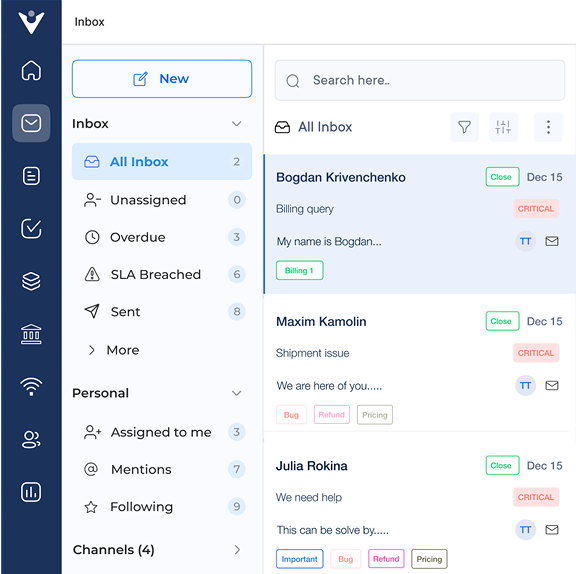
Conversational Commerce Dashboard1

Improved Customer Service

Shoppers can chat with brands in real time. You vouch for high level customer service by providing instant responses that increase customer satisfaction.  

Boost Conversation Rate

Consumers easily discover products, receive personalized recommendations and promotional offers via messaging apps. They make faster purchase decisions, which increases sales conversions.

Reduce Cart Abandonment

Put conversations between brands as well as their customers during the online buying journey. Conversational commerce helps to resolve customer queries faster and reduces cart abandonment significantly.

Higher Customer Lifetime Value

Incorporate all discussions that encompass the commitment of a shopper or a discussion via their preferred channel makes them stick to your brand for a long time.

Conversational Commerce Dashboard2

The rapid shift towards a digital-first world has conditioned customers to expect on-demand services. This is why brands face heightened consumer expectations and increased competition.

Conversational commerce is a kind of modernization of traditional eCommerce to meet ever changing customer expectations. It is also crucial for businesses to come out of their comfort zone and embrace the shifts to excel in the volatile market.

We are presenting a comprehensive guide on what is conversational commerce: its benefits, best practices and key use cases.

What is Conversational Commerce?

Conversational commerce is the fusion of messaging as well as shopping. Businesses use chat interfaces to recommend products, answer questions and complete transactions, taking the role of a helpful in-store salesperson in a digital-first setting. 

How does Conversational Commerce Work?

Conversational commerce works by integrating chat-based tools into customer journey. It combines messaging platforms, AI and automation to simulate human-like shopping conversations at scale.

Key functionalities: 

  • Chatbot Engagement: Responds instantly with relevant product suggestions or answers.
  • Human Handoff: Complex queries are escalated to live agents for personalized support.
  • Transaction Processing: Customers complete purchases directly within the chat without switching platforms.
  • Post-Purchase Support: Order tracking, returns and follow-ups are performed through the same conversational interface.

How to Build an Effective Conversational Commerce Strategy

Products or pricings aren’t the ones that leaves a lasting impressionon a customer, but an overall positive experience that a brand delivers throughout their purchasing journey.

1. Discover the Products

Product Discovery has one clear goal: help teams identify and focus on customer pain points, create products or services that solve the genuine needs of those customers.

Discovering products is crucial for reducing risk and ensuring that your product has potential value for your customers. It also offers teams higher confidence in their path forward to successful implementation and delivery.

  • Customers receive accurate answers to their questions online as if they were speaking directly to a representative in-store.
  • Deploying an AI chatbot to such scenarios ensures 24×7 availability for consumers to seek answers intantaneously. They can handover the conversation to the right team/agent at any point of time with seamless transition.

2. Product Recommendations

Brands have started using sophisticated product recommendation algorithms so that each user feels they are getting a completely personalized experience. Identifying the right opportunities to recommend the most appropriate products for the user can amplify the visitor experience, push the visitor to purchase and increase the total purchase value.

Brands are using conversational commerce to their advantage. Recommendations via chat is a great way to boost your average order value (AOV) and drive sales. It also encourages additional spending while providing a more engaging user experience.

How product recommendations help customers?

  • Create a Consistent Brand Experience
    A consistent brand experience begins with product recommendations. By drawing data from multiple channels to inform your recommendations, you can optimize your omnichannel customer experience so that the customers don’t feel as if they’re starting fresh with each interaction.
  • Avoid Customer Frustration
    Customers quickly lose patience when they experience frustrations like being served with irrelevant recommendations. Such experiences should be avoided by offering relevant recommendations that lead to sales and revenue.

3. Effective Customer Support

Conversational commerce is a great way to accelerate customer engagement, deliver superior support, and increase customer lifetime value (CLTV). Customers prefer brands that offer real time support. So, your support teams should focus on providing a frictionless service experience and improving customer handoff.

When customers get what exactly they need, there is an increase in the satisfaction rate. If you focus on putting extra effort towards exceeding customer expectations, it will certainly be worth it. You are able to delight your customers with excellent service.

How can you enhance your customer support quality?

Provide real time support: Connect with your customers with live chat to deliver real time assistance for sales and support queries.
Automate your customer support: Leverage an AI bot to collect information and engage with customers 24×7 while also answering their simple queries promptly.

4. Boost Conversion Rates

Shopping cart abandonment is a major challenge that rates around an average of 70%, to the online retailers. But with the boost in conversion rates and average order value can result in significant profits. Implementing conversational commerce rightly can improve key metrics.

Here are the key ways to use chatbots and instant messaging:

  • Help consumers focus on their research by asking questions and identifying products that align with their needs.
  • Suggest promotions, upgrades, related products, and add-on items to shoppers considering a purchase.
  • Provide assistance during the checkout process, who have last-minute questions or concerns can receive instant help.
  • Take and process orders directly from customers, using pre-stored payment & shipping information.
  • Send reminders to shoppers who still have items waiting in their shopping carts.

5. Enhance the Post-Purchase Experience

A simple yet important question – How can you build loyalty, generate repeat business, and turn customers into advocates after they buy your products? By providing superior customer service not only during the purchase journey but also post purchase. It is one way for brands to set themselves apart from the competition.

Enhance the Post-Purchase Experience

A conversational format can make it simpler and easier for customers to find the support they need. Deploying AI chatbots allows brands to answer customer service queries instantly via many channels. They offer 24×7 support and can be scaled to reduce the number of touchpoints.

As a result, customers no longer have to wait for a response, search for information on their own, or struggle to find the right place to get their questions answered.

6. Set Clear Objectives and KPIs

A conversational commerce strategy requires measurable goals to determine its outcome.  Businesses without clear objectives risk implementing chatbots which impact on revenue or customer experience.

Defining success early helps in prioritizing which conversational touchpoints deserve most investment and attention. It ensures resources go toward the stages of the customer journey that matter most.

Key objectives to define upfront:

  • Conversion Rate Targets: define benchmarks for influencing conversational touchpoints up to purchase completion.
  • Response Time Goals: Establish acceptable thresholds for both chatbot and human response.
  • Customer Satisfaction Benchmarks: Define target CSAT or NPS scores for conversational interactions.
  • Revenue Attribution: Track total revenue originated directly from chat-based conversations.

How Is Conversational Commerce Used Across Business?

Conversational commerce combines the power of AI and messaging platforms to facilitate seamless communication. We explored some popular use cases of and how it transforms ecommerce engagement.

Conversational Commerce Use Cases

1. Customer Support Automation

Businesses can integrate chatbots or live chat features into their websites/messaging apps for multiple uses. It can be to assist customers with their queries, offer personalized recommendations, and resolve issues efficiently. It improves customer satisfaction while reducing the need for customers to wait on hold or send emails for support.

2. Personalized Recommendations

Conversational commerce software enables businesses to offer personalized product recommendations based on customer preferences and browsing history. Brands can create more targeted recommendations, increasing the chances of conversion by analyzing customer data and using natural language processing.

3. Order Placement and Tracking

As more customers prefer to shop online, conversational commerce apps offer a convenient way to place orders and track their status. Customers can use messaging apps to browse products, select items, and make payments seamlessly. Businesses can also send automated updates on order status, shipping details, and delivery notifications, keeping customers informed throughout the process.

4. Appointment Scheduling

Whether it’s booking a doctor’s appointment or reserving a table at a restaurant, conversational commerce simplifies the process. Businesses can integrate virtual assistants that allow customers to check availability, book appointments, and receive reminders. It reduces the need for phone calls or going through complex online booking systems, enhancing the customer experience.

5. Feedback and Surveys

Conversational commerce provides an interactive platform for collecting customer feedback and conducting surveys. D2C brands can collect insights and address concerns promptly by asking feedback in real time or at certain touchpoints in their journey. It helps businesses to measure customer sentiments and leverage them to deliver superior CX, reduce any friction in their purchase journey or improve online conversions.

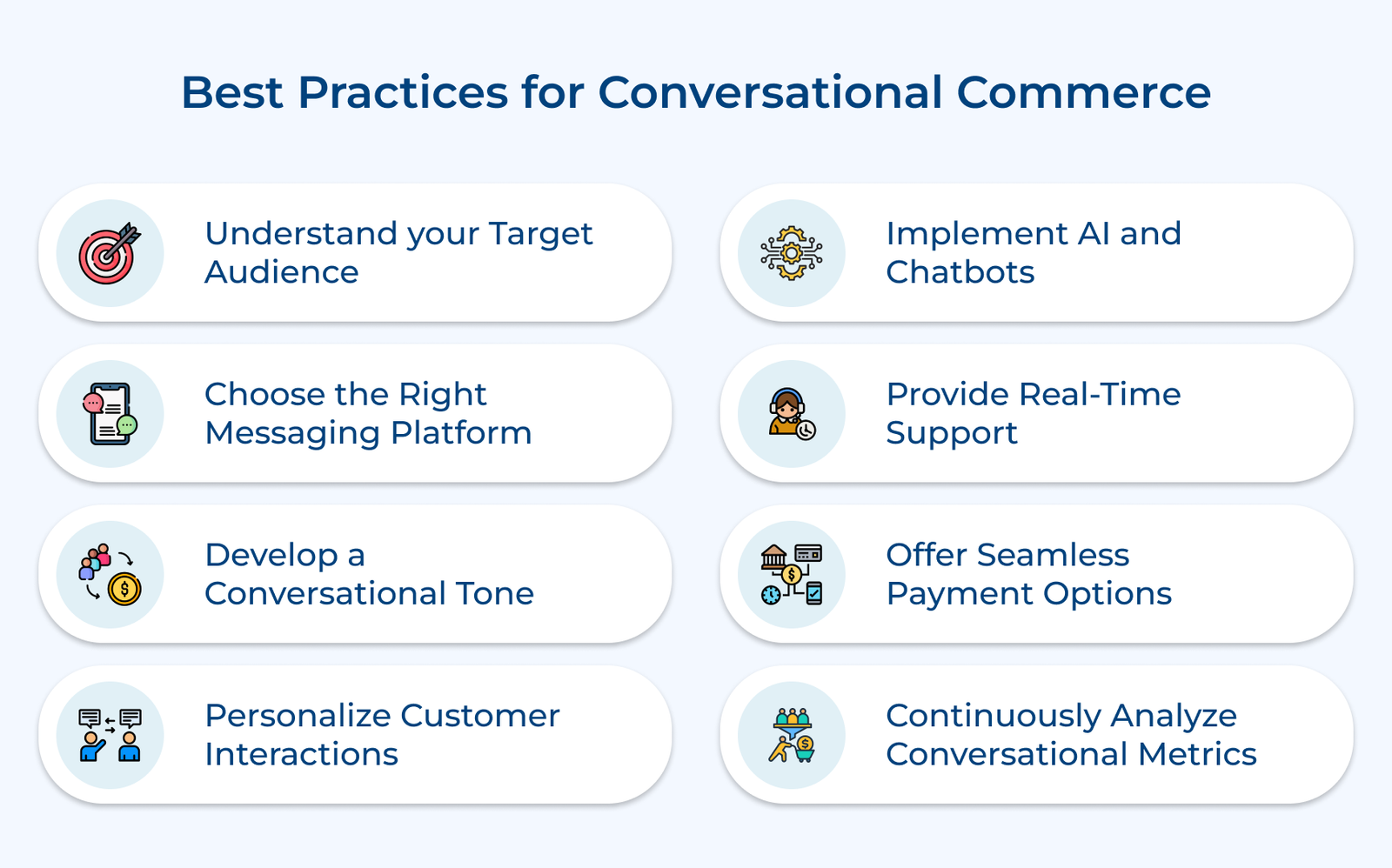
8 Best Practices for Successful Conversational Commerce

Brands are now able to provide personalized experiences and drive sales with the rise of messaging apps. Here are some of the best practices to ensure successful conversational commerce experience.

Best Practices for Conversational Commerce

1. Understand your Target Audience

Before diving into conversational commerce, it is crucial to have a deep understanding of your target audience. Research and analyze your customers’ needs as well as pain points. It’ll enable you to tailor your conversational approach to provide solutions and enhance their overall experience.

2. Choose the Right Messaging Platform

When it comes to conversational commerce, choosing the right messaging platform is vital. Consider the platforms that your target audience is most likely to use and make sure your business is active on those channels. Popular messaging platforms include WhatsApp, Facebook Messenger, WeChat, and Slack.

3. Develop a Conversational Tone

Conversational commerce relies on natural conversations between businesses and their customers. To achieve this, it is significant to develop a conversational tone that aligns with your brand personality. Avoid using overly formal language and instead, aim for a friendly style that makes customers feel comfortable engaging with your business.

4. Personalize Customer Interactions

One of the main advantages of conversational commerce is the ability to provide personalized experiences. Leverage customer data, preferences, and purchase history to offer tailored suggestions. By personalizing interactions, you can make customers feel valued and increase their likelihood of making a purchase.

5. Implement Artificial Intelligence (AI) and Chatbots

Chatbots can handle high volumes of customer inquiries, provide instant responses, and even assist with transactions. Implementing AI technology in your conversational commerce strategy improves efficiency while also enhancing the overall customer experience.

6. Provide Real-Time Support

Customers expect immediate responses to their inquiries and concerns. To meet these expectations, it is significant to provide prompt support. Invest in a system that allows your team to respond effectively. Incorporate features like live chat and chatbots to ensure continuous support.

7. Offer Seamless Payment Options

Implement secure and user-friendly payment methods that allow customers to complete transactions seamlessly within the conversation. It eliminates friction and ensures a smooth customer journey from start to finish.

8. Continuously Track and Analyze Conversational Metrics

Continuously track and analyze conversational metrics to measure the success of your conversational commerce efforts. Monitor key performance indicators such as response time, customer satisfaction, conversion rates, and average order value. Use this data to identify areas for optimizing your conversational strategy over time.

6 Benefits of Conversational Commerce

Customers are more likely to research first, then make their own purchase decision. That’s where the beauty of conversational commerce comes in.

Benefits of Conversational Commerce

Improved customer service: Conversational commerce is a way through which shoppers can chat with brands in real time. You vouch for high level customer service by providing instant responses that increase customer satisfaction.

Boost conversation rate: When consumers easily discover products, receive personalized recommendations and promotional offers via messaging apps they make faster purchase decisions. This, in a way, increases sales conversions.

Reduce cart abandonment: Conversational commerce puts conversations between brands and their customers during the online buying journey. It helps to resolve customer queries faster and reduce cart abandonment significantly.

Higher customer lifetime value: Conversation is the new marketing! It incorporates all discussions that encompass the commitment of a shopper or a discussion via their preferred channel making them stick to your brand for a long time.

Cost and time efficient: Customers are highly impatient for a response these days. Businesses can leverage conversational commerce tools to reduce their customer service costs by up to 30% and receive consistent service.

Deliver personalized CX: When brands offer personalized suggestions to the customers can reduce the time involved in searching for a suitable product. With advanced NLP capabilities, you can understand customer intent and help make relevant recommendations.

5 Conversational Commerce Trends to Watch Out

As technology continues to advance, there are several emerging trends that are shaping the future of conversational commerce.

Conversational Commerce Trends

1. Omnichannel Chatbots

Businesses are deploying chatbots across multiple platforms such as websites, WhatsApp, Messenger and Instagram for unified customer experiences. This omnichannel approach enable seamless conversation regardless of the channel customers choose to engage with a brand.

2. Voice-Activated Commerce

Voice assistants such as Alexa and Google Assistant are enabling hands-free shopping experiences. Customers can search products, place orders and track deliveries using simple voice commands, making shopping accessible for busy consumers.

3. Personalized Recommendations

AI-driven algorithms analyze customer behavior, preferences and purchase history to deliver personalized product suggestions. This level of personalization boosts customer satisfaction and builds long-term brand loyalty through relevant engagement.

4. Augmented Reality (AR) for Product Visualization

 AR technology allows customers to visualize products in real-world scenarios before purchasing. It bridges the gap between online browsing and in-store confidence, from clothes try-on to previewing furniture at home.

5. In-app Payments

Integrated payment gateways within chat platforms help eliminate the need to switch apps during checkout. This streamlined process reduces cart abandonment, speeds up transactions and creates an end-to-end shopping experience for customers.

Redefine your ECommerce Growth with Omnichannel Conversational Commerce

Conversational commerce brings in significant benefits for the brands that are investing in it. By following a conversational approach to the current marketing strategy, you can naturally link the core capabilities to every channel and experience what matters most.

  • Real-time conversations shorten the gap between customer interest and purchase.
  • Two-way dialogue for building credibility that one-way marketing messages can’t replicate.
  • Personalized conversations to encourage repeat purchases and long-term loyalty.

Chat commerce when executed well surely brings back higher RoI. Mine the data from two-way conversations to draw insights and make changes to better serve customers. Make sure the customer conversations are personalized, timely, and relevant. That is what it takes to attract and retain customers, an exceptional shopping experience that keeps them coming back.

Last update: August 18, 2026

FAQs about Conversational Commerce Strategy

Conversational commerce is designed to augment human customer support. Complex issues require a human touch for satisfactory resolution. AI-powered assistants handle simple inquiries and basic assistance using as a complement, not to replace, the existing support team.

Conversational commerce integrated into existing systems is typically a seamless process for most businesses. Common integration options include:

  • APIs connecting directly with existing e-commerce platforms
  • Plugins syncing with CRM systems for unified customer data
  • Native integrations with popular messaging apps and channels
  • Webhooks for real-time data flow between systems

Conversational commerce isn’t meant to replace traditional e-commerce, instead ti is for enhancing additional channels. Although it offers a more personalized shopping experience, traditional e-commerce platforms still play a vital role. Businesses can combine both to engage customers and provide more responsive assistance.

Security is a crucial aspect of conversational commerce when given the sensitive customer data exchanged during transactions. Businesses must make sure platforms combine with data protection regulations through:

  • Encryption protecting data during every transaction
  • Authentication measures verifying customer identity securely
  • Secure data storage preventing unauthorized access
  • Clear customer education on safe information sharing

Industries such as retail, e-commerce and customer service-based businesses are the earliest adopters of conversational commerce. Also, industries like travel, hospitality and healthcare services benefit from this technology. Any businesses that require customer interactions and transactions in their workflow can leverage it to enhance the overall experience.