9 Best Conversational Commerce Platforms & Software (2026)
Deliver a superior shopping experience to your ecommerce customers with Veemo’s best in class conversational commerce platform & solutions.
No credit card required. Easy setup
Deliver a superior shopping experience to your ecommerce customers with Veemo’s best in class conversational commerce platform & solutions.
No credit card required. Easy setup
Regardless of being a D2C or ecommerce brand, Leverage the combination of AI and messaging to transform the way your consumers purchase.
Businesses can provide tailored recommendations and answer customer queries in real-time through personalized conversations, leading to increased sales conversions.
Allows customers to complete purchases and make payments directly within the messaging app. Eliminates the need for customers to navigate external websites or applications.
Allows brands to be available to their customers round the clock. Customers can reach out for support or make purchases at any time, leading to increased customer satisfaction.
Automating customer interactions can reduce the need for human customer support agents. It also ensures faster response times and consistent service quality.
More and more brands are recognizing the potential to revolutionize the customer journey by enabling real-time conversations as well as personalized experiences. Conversational commerce software combines the power of messaging apps and artificial intelligence to enable businesses to have real-time conversations with their customers.
Finding the best platform that seamlessly integrates with your existing systems, and offers the right capabilities is crucial. We have compiled a list of top-rated platforms that are designed to enhance your customer engagement.
A conversational commerce platform enables businesses to engage in real-time and personalized conversations with their customers through various digital channels. The platform utilizes artificial intelligence, natural language processing and automation to create a seamless customer experience.
It integrates digital channels with AI-powered chatbots that understand customer queries to deliver contextually relevant responses. This combination boosts engagement to simplify the customer journey and drive higher sales conversions..
We have compiled a comprehensive comparison of top conversation commerce tools, the features, enabling brands to choose the solution that aligns with their goals and budget.
| Software | Pricing |
Free trial | Key Features |
| Veemo | $29/ month | 14-days free trial |
|
| Omni24 | $29/user/month | 14-days free trial |
|
| Liveperson | Request a quote | N/A |
|
| LiveChat | $20/month | N/A |
|
| User.com | Based on formula | 14-days free trial |
|
| ManyChat | Free | N/A |
|
| Drift | Request on quote | N/A |
|
| Twilio | $19.95/month | 100 emails/day |
|
| Intercom | $29/agent/month | 14 days free trial |
|
The right conversational commerce platform for your business requires evaluating several distinct factors. Below are key considerations businesses should assess before committing.
Look for a platform that supports specific channels and conversation styles your customers prefer during their buying journey. A platform for quick purchases may not suit businesses with long-term planning or high-touch sales processes.
Assess how seamlessly the software connects with your existing e-commerce platform and payment gateways. Unstructured integrations often create data gaps that prevent accurate product recommendations or real-time order tracking.
The right conversational software should scale its performance during high-traffic periods, when conversation volume spikes suddenly. Software that degrades under pressure risks damaging customer trust when engagement matters most.
Research whether the vendor has proven experience serving businesses in your industry, as business needs vary. A provider with retail expertise may not support healthcare or hospitality use cases.
Look beyond the advertised subscription fee for implementation costs, transaction fees and pricing as conversation volume increases. An affordable plan for small businesses might feel costly once these additional expenses are included.
Verify where customer conversation data and purchase history will be stored and its ownership when you switch providers later. Some vendor lock-in can become a significant obstacle if migration becomes necessary down the line.
Navigate the crowded market of conversational commerce software, with well researched information. Let’s explore the top ones to help you make an informed decision for your business.
Best conversational commerce platform for omnichannel engagement
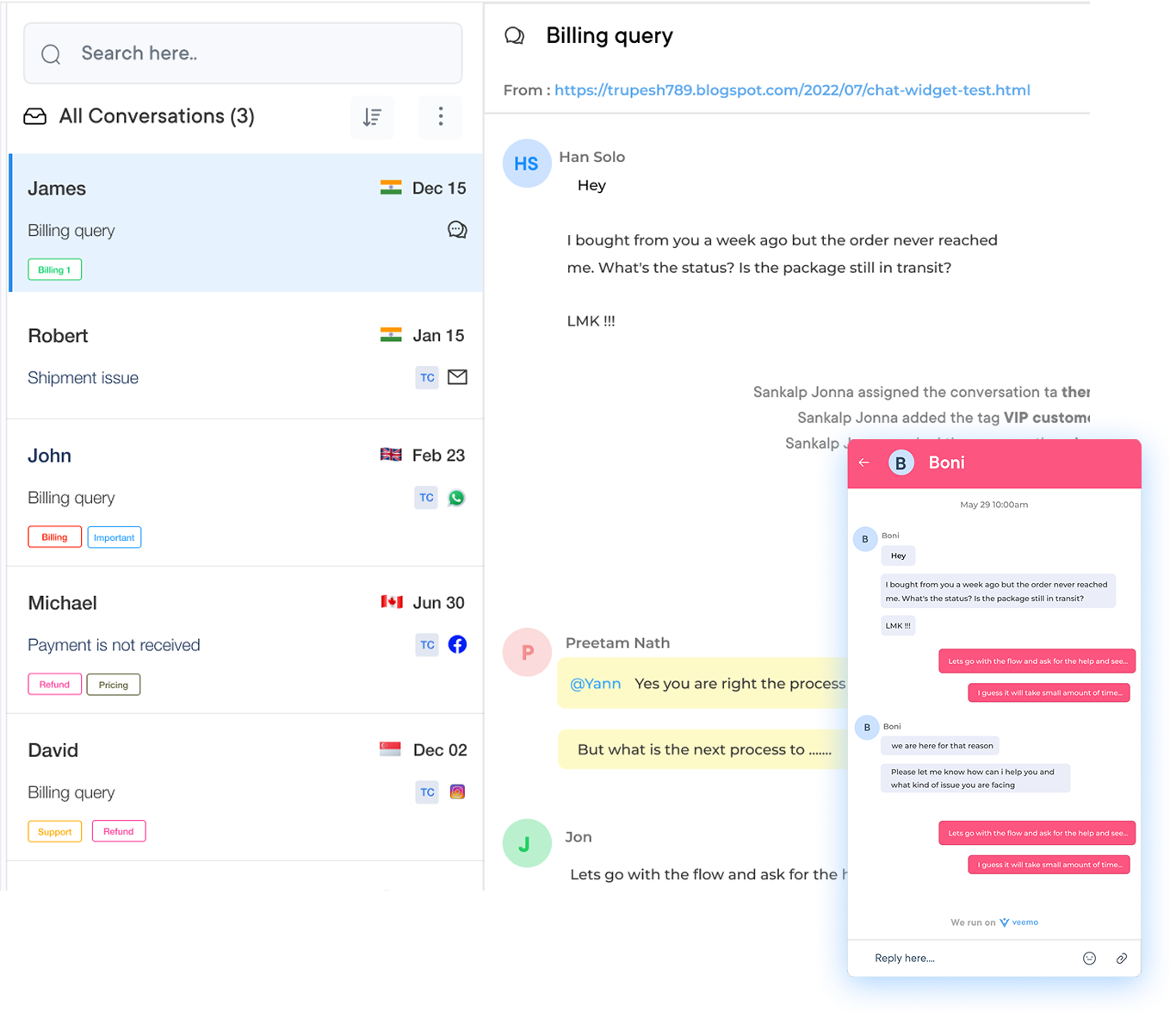
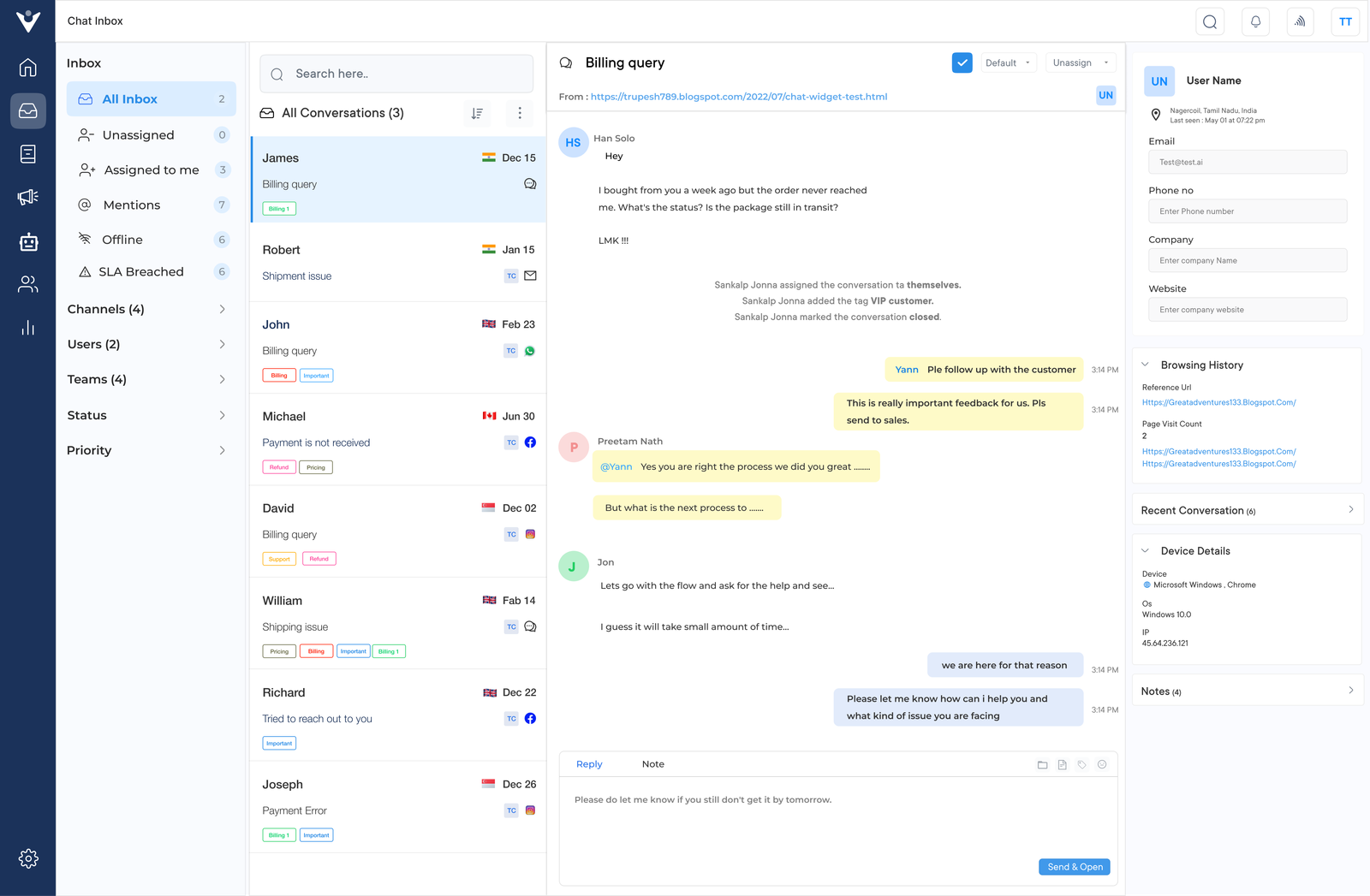
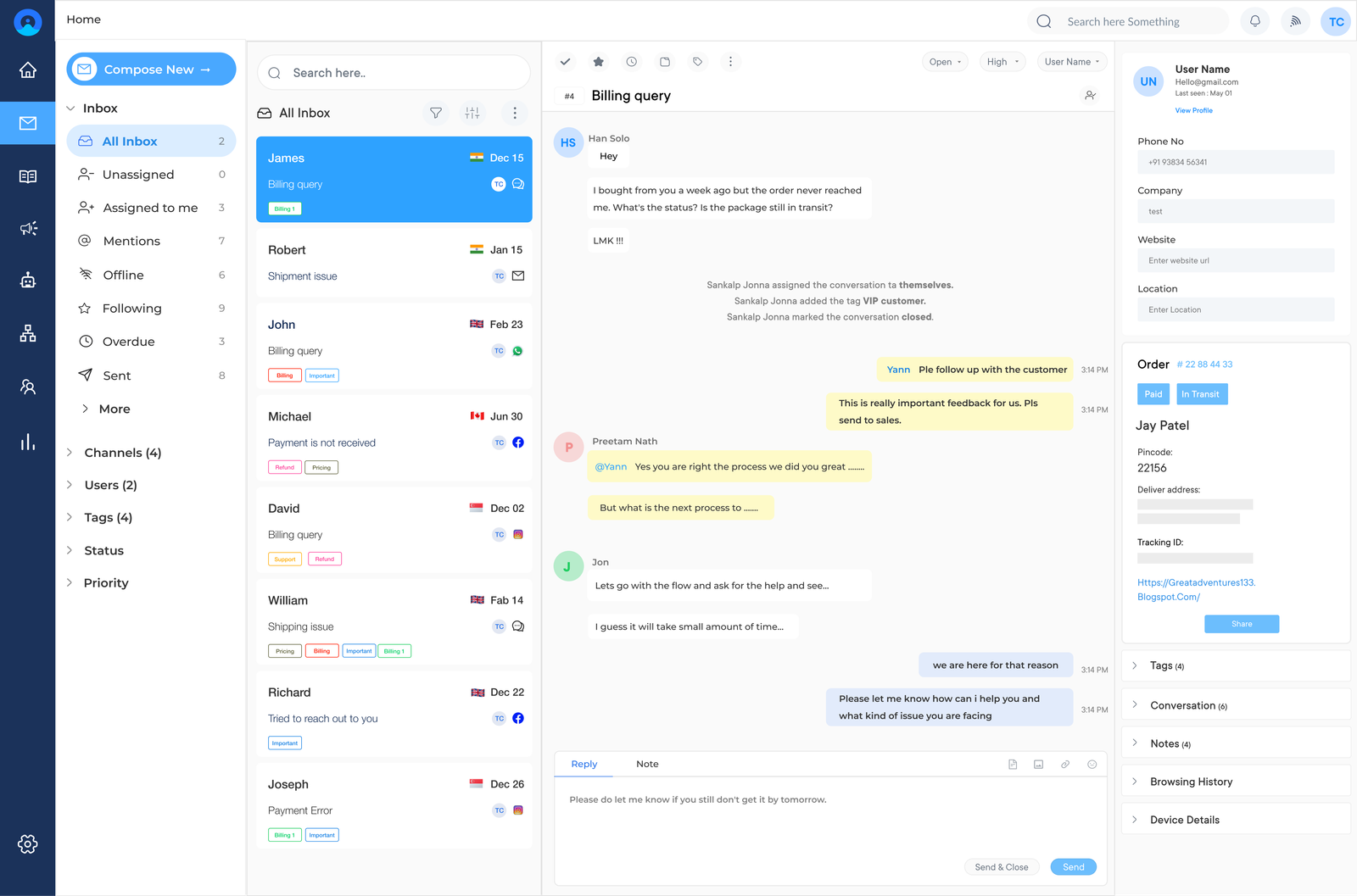
Veemo Chat is an AI-powered business messaging platform for better customer communication. Businesses can chat with customers in real time to drive sales and the blend of omnichannel support helps deliver exceptional customer experiences.
The platform brings conversational commerce through AI chatbots that automate customer interactions. This automation helps in recommending products, recovering abandoned carts and drive repeat purchases for businesses.
Key features:
Pricing: Veemo has a pricing plans starting at $29/user/month suitable for small ecommerce brands, whereas the Team plan is priced at $59 with multiple features. It also offers a 14-days free trial. Refer to what more offerings they provide that suit your business requirements.
Top conversational commerce solution for unified CX
Omni24 is an AI-powered customer engagement platform with three integrated suites: support, sales and marketing. Businesses use it to manage customer conversations across every stage of the journey, creating consistent experiences.
Omni24’s AI, automation, and omnichannel capabilities help in conversational commerce by providing personalized product recommendations directly within conversations. It also offers automated, context-aware follow-ups to keep buying decisions moving forward without leaving the chat.
Key features:
Pricing: Omni24 provides one inbox feature at just $29/month and its unlimited inbox for $149/month. The pricing can be customized as per the scale of customer support operations. Omni24 also offers a 14-day free trial, check out their website to know more.
Intuitive conversational commerce tool for all-in-one AI platform
LivePerson’s conversational AI platform empowers businesses to engage with their customers in real-time. The platform also offers agent messaging, allowing businesses to seamlessly transfer conversations from bots to human agents for a more personalized customer experience.
LivePerson offers a comprehensive suite of tools that allow businesses to integrate messaging capabilities into their websites, mobile apps, and even social media platforms. It ensures that customers can easily reach out to businesses and have their queries answered instantly. The tool also provides advanced AI-powered chatbots that can handle customer inquiries and provide personalized recommendations.
Best conversational commerce tool with live chat capabilities
LiveChat is one of the best live chat software for businesses to connect with their website visitors, answer their questions, and guide them through the sales process. It also provides chatbots which can automate responses and provide instant answers to FAQs.
LiveChat offers a range of tools such as canned responses, file sharing, and chat transfers which enhance the effectiveness of customer interactions. The software offers integrations with popular business tools like CRM and help desk software. Tools that serve as solid LiveChat competitors for different use cases.
Powerful conversational commerce solution with visitor analytics
User.com is another sales CRM software that enables companies to maximize their sales, provide exceptional customer support, and create personalized marketing campaigns. With its email marketing capabilities, drag-and-drop editor and customizable templates, businesses can create visually appealing email campaigns.
User.com offers advanced segmentation and targeting options, ensuring that the right message reaches the right audience at the right time. It also offers a chatbot feature that can automate responses and handle routine inquiries.
ManyChat is a chatbot platform that enables businesses to leverage the power of messaging to connect with customers, automate conversations, and increase sales. Businesses can easily build chatbots and deploy them across various messaging platforms such as Facebook Messenger, WhatsApp, Instagram, etc.
The platform offers an intuitive visual bot builder that requires no coding knowledge so that even non-technical users can create customized chatbots with ease. ManyChat also provides a wide range of templates and pre-built flows that can be tailored to suit specific business needs.
Drift is a revenue acceleration platform that specializes in conversational commerce and sales. It uses AI-powered chatbots and real-time personalization to engage website visitors, qualify leads, as well as schedule meetings with sales representatives automatically.
Drift addresses the challenge of converting website traffic into qualified leads through instant engagement. Its key features include custom chatbots, visitor intelligence, meeting scheduler, account-based marketing, live chat routing, and conversation analytics. Why businesses are exploring best Drift competitors.
Twilio is a cloud based conversational commerce platform that enables businesses to integrate various communication channels into their applications. It provides APIs for SMS, voice, video, WhatsApp, and email communications, allowing developers to build custom conversational commerce solutions.
Twilio solves multi-channel communication challenges by providing programmable APIs. It offers flexible deployment options and scalable infrastructure for businesses of all sizes.
Intercom is a customer messaging platform that combines chat, support, and customer engagement tools. It provides a unified inbox for managing customer conversations across multiple channels, including website chat, email, and mobile apps.
Intercom addresses customer support efficiency and engagement challenges. Key features include targeted messaging, custom chatbots, team inbox, help center articles, product tours, and customer segmentation. It helps businesses provide personalized support at scale and improve customer satisfaction.
The conversation commerce platform brings the power of artificial intelligence and messaging apps to provide a seamless customer experience. Let’s find out their key features.
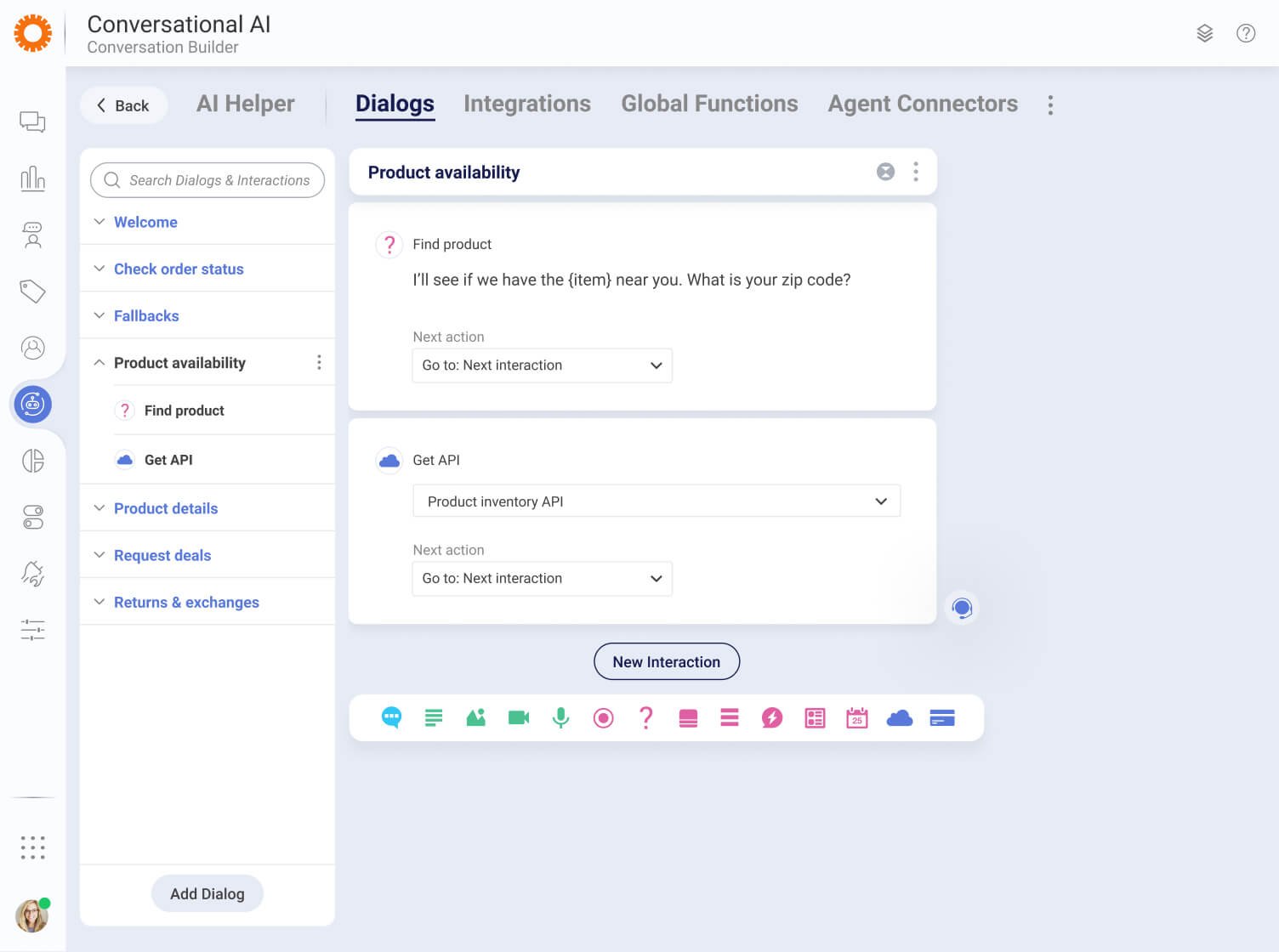
The heart of any Conversational Commerce Platform lies in the intelligent chatbots. These AI-powered bots are capable of understanding natural language and can provide personalized responses to customer queries. They can handle multiple conversations simultaneously, saving time for both customers and businesses alike.
A robust Conversational Commerce Platform integrates seamlessly with various messaging apps and social media platforms. It allows businesses to connect with their customers across multiple channels, providing a consistent and convenient experience across all touchpoints.
Businesses can automate their customer support processes with a conversational commerce solution. Chatbots can handle common queries, resolve complaints, offer product recommendations, and guide customers through the purchasing journey, all in real-time.
A feature rich conversational commerce platform should have the ability to gather customer data and employ it to provide personalized recommendations, tailored offers, relevant information, etc. Contextual information such as browsing history, purchase preferences, and geographic location allows for a more individualized shopping experience.
Another key feature of a Conversational Commerce Platform is its ability to process orders and facilitate secure payments within the messaging app itself. Customers can browse through products, add them to their cart, and make a purchase seamlessly, without having to visit a separate website.
While AI can handle many interactions, there will always be complex situations requiring human intervention. A good conversational commerce platform should be benchmarking when it comes to handoff capabilities, allowing conversations to be seamlessly transferred to human agents when necessary.
A good conversational commerce software provides comprehensive analytics and reporting capabilities. It allows businesses to track customer engagement, monitor chatbot performance, and gain valuable insights into customer behavior. The data can then be used to optimize marketing strategies and improve overall customer satisfaction.
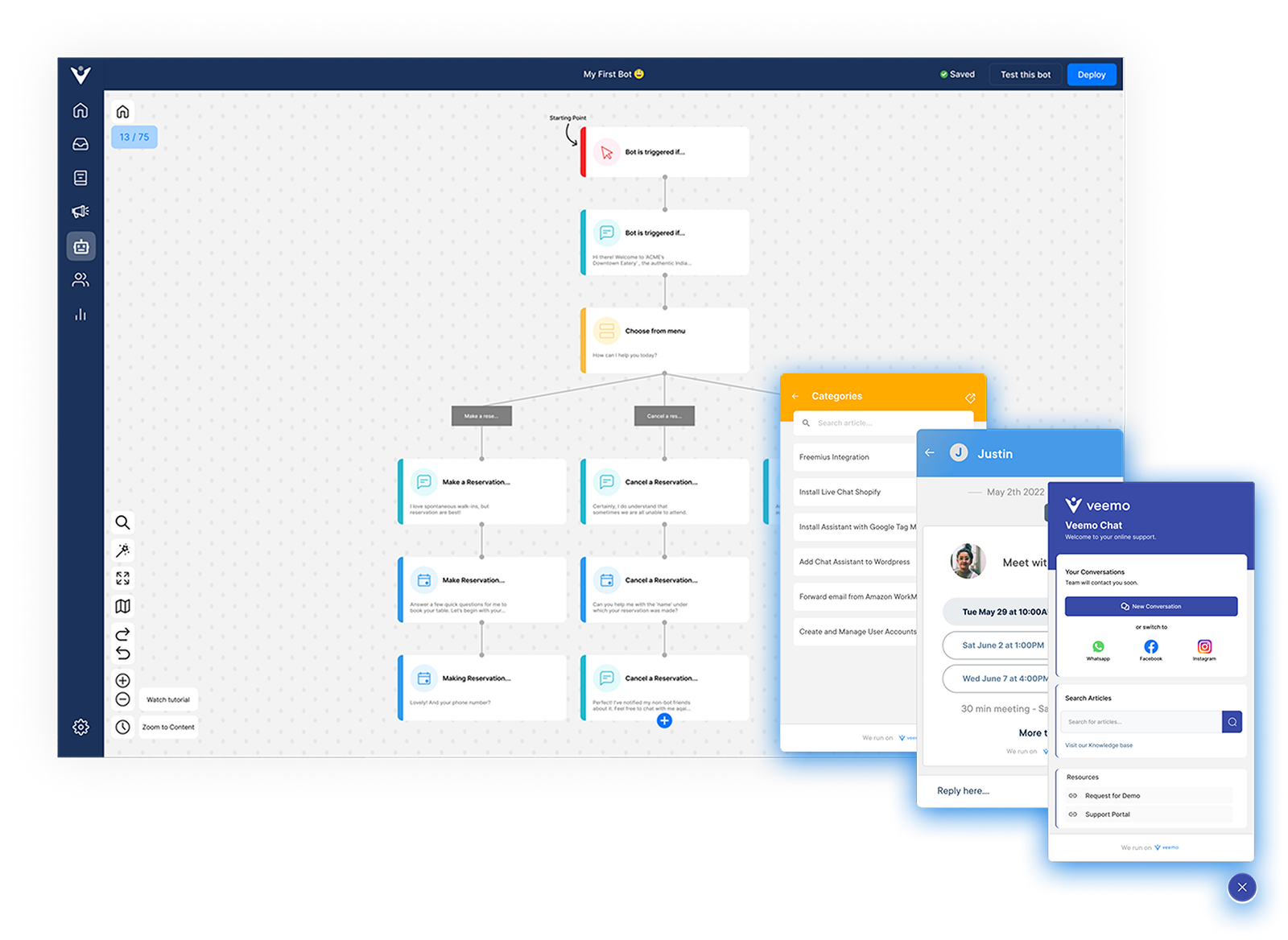
Conversational commerce platforms combine the power of artificial intelligence with messaging apps to create effective communication and personalized customer experience.
Lower Support and Acquisition Costs
Automating customer interactions through a conversational commerce platform, businesses can reduce the need for human customer support agents. It not only cuts down on labor costs but also ensures faster response times and consistent service quality.
Boost in Sales Conversions
Conversational commerce platforms can be powerful sales tools. Through personalized conversations, businesses provide tailored recommendations and answer customer queries in real-time. This leads to increase in turning potential customers in to loyal brand ambassadors.
Process In-app Payments
Customers here get to complete purchases and make payments directly within the messaging app. The platform eliminates the need for customers to navigate external websites or applications, reducing the friction in the buying process and increasing conversion rates.
Hyper Personalized Customer Experience
Leverage user data and AI algorithms to deliver highly personalized recommendations as well as offers. The Level of personalization not only enhances the customer experience but also helps businesses understand their customers better, leading to improved customer retention.
Improved Operational Workflows
Conversational commerce platforms streamline processes and improve operational efficiency. By automating repetitive tasks and handling customer interactions seamlessly, businesses can focus on other strategic initiatives, leading to more efficient workflows.
More Team Accountability
Businesses are delivered with detailed analytics and insights into customer interactions. It enables better tracking of team performance as well as accountability, leading to improved customer service.
Conversational commerce tools let brands meet customers where they prefer most. AI-powered chatbots and omnichannel support combine to deliver personalized assistance. The right tools help businesses to build stronger relationships and drive engagement across the customer experience.
An omnichannel AI-powered platform such as Veemo Chat or Omni24 streamlines customer interactions while gathering insights and data. It helps in making informed decisions by tailoring their marketing and customer service strategies to optimize conversational commerce efforts.
A conversational commerce platform operates by leveraging AI and natural language processing for responding customer queries. It manages a wide range of interactions such as product inquiries, order placements, appointment scheduling and personalized recommendations within a single conversation thread.
Pricing for conversational commerce platforms varies based on their features provided along with conversation volume and integration complexity needed. Key pricing factors include:
No, most platforms aren’t limited to large businesses with dedicated support teams. Small and medium-sized enterprises with limited resources also benefit even more by adopting them.
SMEs can level the playing field against larger competitors by implementing a conversational commerce solution.. This delivers a personalized customer experience without the need for significant investment in staff or infrastructure.
Most conversational commerce platforms offer integration capabilities with systems that are already in use across the business. It helps in syncing all customer context, such as conversation, information for providing seamless customer service. Common integrations include:
Adoption of the right software depends on the provider and your specific business goals and objectives. Many offer user-friendly interfaces and intuitive setup tools that simplify the implementation process effectively. It also requires ongoing maintenance, typically involves regular updates and performance monitoring to ensure the solution continues functioning over time.