Lead Nurturing What is Lead Nurturing

Lead Nurturing Guide: Importance, Best Practices & Examples

Unlock the secrets to effective lead nurturing by diving deep into its importance, explore proven best practices and learn from real-life examples to effortlessly convert prospects into loyal customers.

No credit card required. Easy setup

Lead Nurturing What is Lead Nurturing

Trusted by Leading Brands

Lead Nurturing: Convert Prospects into Lifelong Customers

Discover how effective lead nurturing transforms prospects into loyal, lifelong customers. Learn the strategies to build lasting relationships and drive long-term business growth.

Personalized Engagement

Create deeper connections with your audience by tailoring communications to their unique interests and behaviors. Analyze data to craft personalized messages that truly resonate, making every interaction more meaningful and impactful.

Automated Follow-ups

Keep leads engaged effortlessly with automated workflows that ensure timely follow-ups throughout the sales cycle. The consistent approach drives momentum, keeping prospects moving toward conversion without missing a beat.

Lead Segmentation

Segment your leads by industry, behavior or other key criteria to deliver content that speaks directly to their needs. Offering targeted, relevant solutions helps ensure your message hits home with every unique group.

Improved Conversion Rates

Increase your chances of conversion with personalized, timely interactions that nurture leads through every stage. Delivering relevant content and building stronger relationships enable the teams to turn prospects into loyal customers.

Behavioral Tracking

Refine your strategies by tracking lead activities and responses in real-time. Understand customer behavior, address specific concerns and adapt your approach to meet evolving needs, ensuring higher engagement.

Enhanced Relationship Building

Establish long-lasting relationships by providing valuable insights and solutions tailored to your leads’ pain points. Offering the right information at the right time helps build trust, leading to deeper connections and future success.

Many companies need help to convert leads into loyal customers. The journey from initial interest to purchase can be long, often resulting in lost opportunities and wasted resources.
Without a proper nurturing strategy, potential customers may lose interest, forget about the brand or choose a competitor. It leads to decreased conversion rates, lower ROI on marketing efforts and stunted business growth.

Enter lead nurturing – a powerful approach that guides prospects through the buyer’s journey with personalized, timely and relevant communications. We’ll explore the benefits, features and strategies of lead nurturing to help businesses transform their sales pipeline.

What is Lead Nurturing?

Lead nurturing refers to a marketing process that builds relationships with potential customers during their buying journey, even before they are ready to purchase. The process involves providing relevant information and engaging content to prospects at various stages of the sales funnel, gradually guiding them toward a buying decision. It works by first identifying and segmenting leads based on their characteristics.

Marketers then create tailored content and communication strategies for each segment. The personalized approach involves various targeted interactions providing value while subtly promoting the company’s offerings.

Key objectives:

  • Building trust and credibility with potential customers.
  • Educating leads about industry trends and solutions to their problems.
  • Keeping the brand top-of-mind throughout the decision-making process.
  • Qualifying leads to identify those most likely to convert.

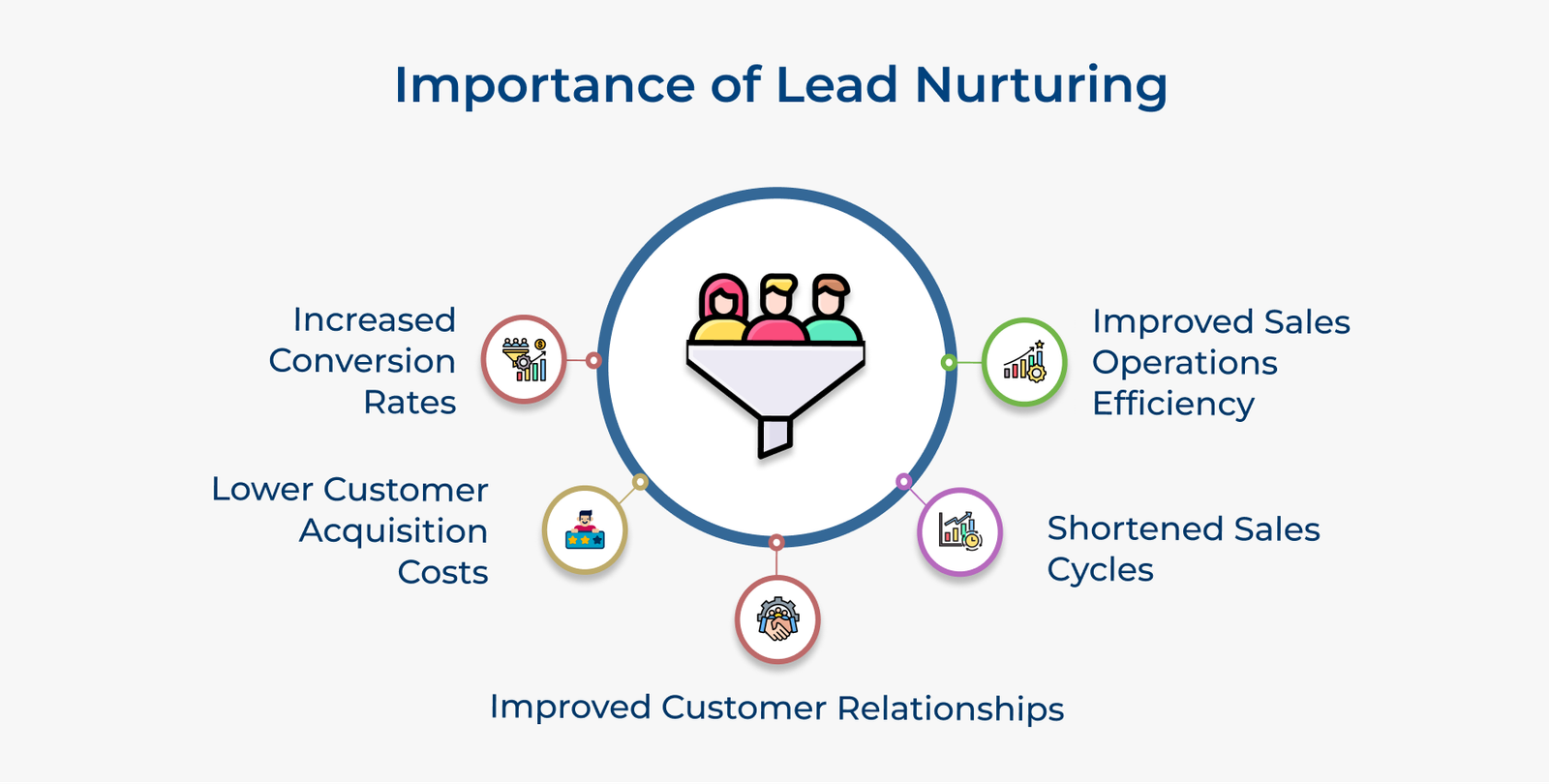
Importance of Lead Nurturing

Lead nurturing offers several significant benefits to businesses which helps them to improve their marketing effectiveness:

Importance of Lead Nurturing

Increased Conversion Rates
Lead nurturing significantly boosts conversion rates by providing prospects with relevant information throughout their buying journey. Companies build trust and credibility by consistently engaging leads with valuable content, making prospects more likely to choose their solution when ready to purchase. Nurtured leads are typically more informed, leading to higher conversion rates compared to non-nurtured leads.

Lower Customer Acquisition Costs
Lead nurturing reduces overall customer acquisition costs by focusing resources on leads already showing interest. Companies can allocate their marketing and sales efforts more efficiently, targeting those most likely to convert. It minimizes wasted resources on unqualified leads, resulting in a more cost-effective customer acquisition strategy.

Improved Customer Relationships
Lead nurturing enhances stronger, long-lasting customer relationships by providing value before, during and after the sale. Companies demonstrate their commitment to solving customer problems by consistently delivering helpful content and personalized communication. The approach builds trust, potentially leading to increased customer lifetime value and positive word-of-mouth referrals.

Shortened Sales Cycles
Effective lead management can significantly reduce the time it takes to convert a lead into a customer. Companies can help leads move through the decision-making process more quickly by educating prospects and addressing their concerns proactively. The acceleration of the sales cycle allows businesses to generate revenue faster and more predictably.

Improved Sales Operations Efficiency
Lead nurturing automates many aspects of the lead management process, freeing up sales teams to focus on high-value activities. Sales representatives can concentrate on engaging with the most promising prospects by qualifying leads and providing them with relevant information automatically. The teams can handle a larger volume of leads effectively, driving more conversions.

Better Sales and Marketing Alignment
As both departments work together to create and implement nurturing strategies, they develop a shared understanding of the customer journey. It leads to more consistent messaging for prospects as they move from marketing-qualified leads to sales-qualified opportunities.

8 Steps to Create a Lead-nurturing Strategy

Let’s explore eight key steps to help businesses create an effective lead-nurturing strategy that drives results.

Steps to Create a Lead-Nurturing Strategy

Understand the Customer Journey

Understanding the customer journey is a crucial first step in developing an effective lead-nurturing strategy. The process involves mapping out the typical stages of the sales funnel, from initial awareness to the final purchase decision and beyond. Businesses can identify key touchpoints where potential customers interact with the brand and pinpoint critical decision-making moments by visualizing the journey.

The comprehensive view allows businesses to tailor their nurturing efforts to each stage, ensuring that they provide relevant information at the right time. It also helps in recognizing potential drop-off points where leads might lose interest.

Pro tips:

  • Conduct customer interviews to gain first-hand insights into their decision-making process.
  • Use analytics tools to track user behavior across digital platforms and identify patterns.
  • Create a visual representation of the journey to share with the team, ensuring everyone understands and aligns with the customer’s perspective.

Know the Customers

Knowing the customers is a crucial step in creating an effective lead development strategy.
It involves developing detailed buyer personas that capture the characteristics, needs and behaviors of the ideal customers. The personas should include demographic information, pain points, goals and preferred communication channels.

Dividing the audience based on relevant criteria such as industry, company size, or stage in the buying process can help businesses deliver more targeted content. The approach allows businesses to address the unique challenges and preferences of each segment, increasing the effectiveness of the nurturing campaigns.

Pro tips:

  • Conduct regular surveys and interviews with existing customers to refine the personas.
  • Regularly refine the segmentation criteria based on campaign performance and customer feedback.

Plan Nurturing Across Channels

Plan nurturing across channels is a crucial step in an effective lead nurturing strategy. It involves identifying the most relevant communication channels for the target audience and developing a cohesive multi-channel approach. The strategy ensures that the message reaches potential customers through their preferred platforms, regardless of email, social media, content marketing, or direct outreach.

Businesses reinforce the brand identity and value proposition by creating a consistent messaging framework across all channels. Consistency helps build trust and recognition among leads, increasing the likelihood of conversion. Each channel should complement the others, creating a seamless experience for the prospect.

Pro tips:

  • Map out the customer’s journey to determine touchpoints for each channel.
  • Create channel-specific content that aligns with messaging and goals.
  • Implement tracking to measure performance across channels and optimize accordingly.

Create Content by Channel

Creating content by channel is a crucial step in an effective lead-nurturing strategy.
Businesses can guide potential customers through the sales funnel more effectively by developing targeted content for each stage of the customer journey. The approach involves tailoring content to suit different channels and formats, ensuring that the message resonates with the audience regardless of where they encounter it.

Each piece of content should be designed to address specific customer pain points and interests. The personalized approach helps build trust and credibility, making leads more likely to convert.

Pro tips:

  • Map out the key touchpoints for content creation.
  • Use analytics to determine which channels the target audience prefers and focus efforts there.
  • Regularly update the content strategy based on performance metrics and customer feedback.

Set up Effective Lead Scoring

Lead scoring is a crucial component of an effective lead nurturing strategy, allowing businesses to prioritize and personalize their marketing efforts. Start by defining criteria for qualifying leads based on the ideal customer profile. Consider factors such as demographics, firmographics and behavioral data. Next, implement a scoring system that assigns point values to these criteria, weighing them according to their importance in predicting conversion likelihood.

As leads interact with the content, their scores should automatically update, reflecting their level of engagement and buying intent. Use the scores to segment the leads and tailor the nurturing efforts accordingly. High-scoring leads may warrant immediate sales outreach, while lower-scoring leads might benefit from continued educational content.

Pro tips:

  • Align sales and marketing teams to define scoring criteria collaboratively.
  • Regularly review and adjust the scoring model based on actual conversion data.
  • Integrate the lead scoring system with the CRM and marketing automation tools for seamless execution.

Get the Right Tools

Getting the right tools is crucial for an effective lead development strategy. Evaluate and select appropriate marketing automation software that aligns with the business needs. Look for features such as email marketing, lead scoring, segmentation and analytics. Ensure the software integrates well with the existing CRM and other systems.

Proper data management and synchronization are essential. Implement a robust system to collect, organize and maintain accurate lead information across all platforms. It ensures personalized and timely communications throughout the nurturing process.

Pro tips:

  • Conduct thorough research and trial periods before committing to a marketing automation platform.
  • Invest in training the team to maximize the potential of the chosen tools.
  • Regularly audit and clean the data to maintain its integrity.

Measure Results with KPIs

Measuring results with KPIs is a crucial step in an effective lead nurturing strategy. Key performance indicators provide quantifiable metrics to assess the success of the nurturing efforts and identify areas for improvement. First define relevant KPIs such as conversion rates, engagement metrics and pipeline velocity. The indicators should align with the overall marketing and sales objectives.

Set up robust tracking and reporting mechanisms. Utilize CRM systems to collect data on lead interactions, behavior and progression through the sales funnel. Establish regular reporting schedules to analyze trends and gain insights into the effectiveness of the nurturing campaigns.

Pro tips:

  • Choose a mix of leading and lagging KPIs to get a comprehensive view of performance.
  • Regularly review and adjust KPIs to ensure they remain relevant to the evolving strategy.
  • Share KPI insights across teams to enhance collaboration and continuous improvement.

Iterate & Optimize the Lead Nurturing Process

Iterating and optimizing the lead nurturing process is crucial for maintaining a successful strategy. Continuously refine the approach by analyzing performance metrics, A/B testing different content and adjusting touch points based on results. Stay updated on industry trends by attending conferences, following thought leaders and participating in relevant online communities.

Gather feedback from sales teams and customers to gain valuable insights into the effectiveness of the nurturing efforts. Sales teams can provide information on lead quality and readiness, while customer feedback can highlight areas for improvement in the messaging.

Pro tips:

  • Implement a robust analytics system to track key performance indicators.
  • Schedule regular strategy review meetings with cross-functional teams.
  • Create a feedback loop with automated surveys for leads and customers.
Omnichannel Helpdesk and Ticketing System

Turn Every Support Issues into Personalized Conversations with Veemo’s Omnichannel Helpdesk and Ticketing System. Make customer happiness your top priority with a digital first customer experience (CX) approach

Radically new solutions for data

Sed ut perspiciatis unde omnis iste natus error sit voluptatem accusantium doloremque laudantium, totam rem aperiam, eaque ipsa quae ab illo inventore veritatis et quasi architecto beatae vitae dicta sunt explicabo.

Radically new solutions for data

Sed ut perspiciatis unde omnis iste natus error sit voluptatem accusantium doloremque laudantium, totam rem aperiam, eaque ipsa quae ab illo inventore veritatis et quasi architecto beatae vitae dicta sunt explicabo.

Types of Lead Nurturing Campaigns

The following are the primary types of lead nurturing campaigns that can impact the marketing efforts:

Types of Lead Nurturing Campaigns

1. Welcome Campaign

A welcome campaign is the first interaction a new lead has with the brand after they’ve shown interest. It’s crucial for making a strong first impression and setting the tone for future communications. The campaign typically includes a series of emails that introduce the company, products, or services. The goal is to provide value immediately, establish trust and encourage further engagement. Welcome campaigns often include:

  • A warm greeting and thank you for subscribing
  • An overview of what the lead can expect from the communications
  • Highlights of the best content or most popular products
  • A call to action to explore the website or follow the social media accounts

2. Re-engagement Campaign

Re-engagement campaigns target leads who have become inactive or haven’t interacted with the brand in a while. The objective is to rekindle their interest and bring them back into the active sales funnel. The campaigns often involve:

  • Personalized messages acknowledging their absence
  • Updates on new products, features, or content they might have missed
  • Special offers or incentives to encourage renewed engagement
  • A survey to understand why they became inactive and how the brand can improve

3. Product Deep-dive Campaign

The campaign focuses on educating leads about specific products or services in detail.
It’s particularly effective for complex offerings or when targeting leads who have shown interest in a particular solution. A product deep-dive campaign might include:

  • Detailed explanations of product features and benefits
  • Case studies or success stories related to the product
  • Video demonstrations or webinars
  • Comparison guides to similar products in the market

4. Multichannel Campaign

Multichannel campaigns leverage various communication platforms to reach leads where they’re most active. The approach ensures a consistent message across different touchpoints and increases the chances of engagement. A multichannel campaign might incorporate:

  • Email marketing
  • Social media posts and ads
  • Retargeting display ads
  • Direct mail
  • SMS messages
  • Personalized website experiences

5. Promotional Campaign

Promotional campaigns are designed to drive immediate action, often through limited-time offers or exclusive deals. While they can be effective in generating quick conversions, it’s important to balance promotional content with value-added information to avoid fatiguing the leads. Elements of a promotional campaign might include:

  • Time-sensitive discounts or special pricing
  • Early access to new products or features
  • Bundle deals or package offers
  • Loyalty program incentives

Role of AI and Automation in Lead Nurturing

AI and automation play a pivotal role in modern lead nurturing strategies, revolutionizing how businesses interact with potential customers. The technologies enable marketers to create more personalized, timely and efficient nurturing campaigns at scale. AI can identify patterns that humans might miss by analyzing vast amounts of data. Automation tools, powered by AI, can deliver personalized content to leads based on their behavior, preferences and stage in the buyer’s journey.

Automated workflows can trigger specific actions based on lead interactions, such as sending follow-up emails or adjusting lead scores, freeing up marketing teams to focus on strategy. AI-driven chatbots and virtual assistants are transforming lead engagement by providing instant support. The tools can qualify leads, answer common questions and even schedule appointments, significantly improving response times. As AI and automation continue to evolve, they promise to make lead nurturing more effective to individual lead needs.

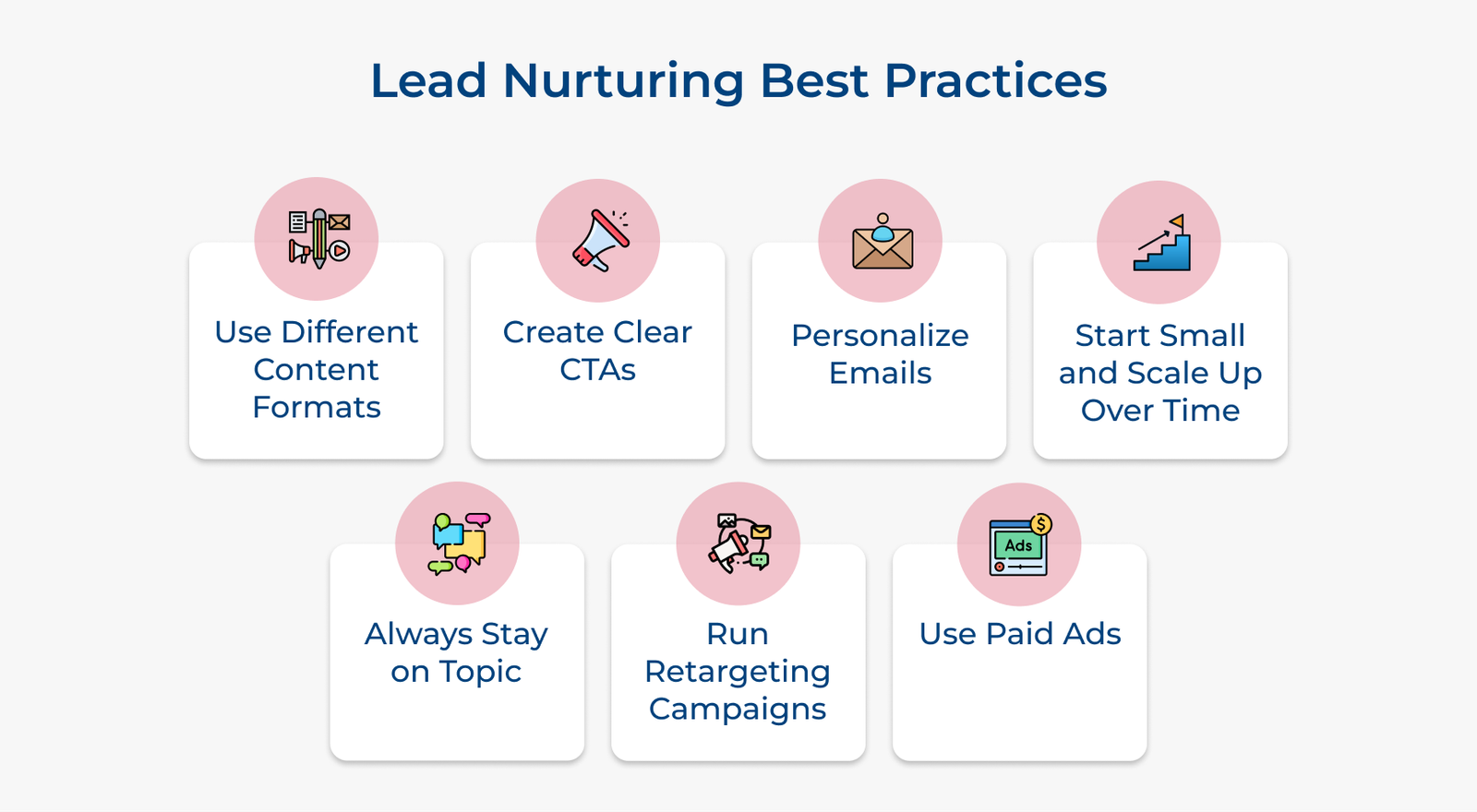
Best Practices for Effective Lead Nurturing

Let’s delve into the top lead-nurturing best practices that can help businesses nurture leads effectively and boost their sales performance.

Lead Nurturing Best Practices

1. Use Different Content Formats

Diversifying the content formats is crucial for effective lead nurturing. Different people prefer consuming information in various ways, so offering a mix of content types can help engage a broader audience. Consider using blog posts, infographics, videos, podcasts, webinars and interactive tools. The variety not only caters to different learning styles but also keeps the content fresh and interesting. Let’s assume that a business might create a blog post explaining a concept, then reinforce it with an infographic and a short video tutorial.

2. Create Clear CTAs

Clear and compelling calls-to-action (CTAs) are essential in guiding leads through the sales funnel. Each piece of content should have a specific purpose and a corresponding CTA that aligns with that goal. Make the CTAs visually distinct, use action-oriented language and ensure they stand out from the rest of the content. Be explicit about what the business wants the lead to do next, regardless of downloading a whitepaper, signing up for a demo or contacting a sales representative.

3. Personalize Emails

Personalization goes beyond simply using a lead’s name in the emails. Leverage the data the business collected about the leads to tailor the messaging and offers. Segment the email list based on factors like industry, job title, past interactions, or stage in the buying journey. Create targeted campaigns that speak directly to each segment’s specific needs and pain points. The approach can significantly improve engagement rates and move leads closer to a purchase decision.

4. Start Small and Scale Up Over Time

Implementing a comprehensive lead nurturing strategy can be overwhelming, so it’s often best to start small and gradually expand the efforts. Begin by focusing on a single buyer persona or a specific stage of the customer journey. Create a basic nurturing workflow and test its effectiveness. As the business refines the approach, it can add more complex sequences, additional content types and advanced personalization techniques.

5. Always Stay on Topic

Consistency in the messaging is key to building trust and maintaining engagement with the leads. Ensure that all the nurturing content aligns with the brand voice and focuses on topics relevant to the target audience. While it’s important to provide variety, avoid straying too far from the core value proposition. Each piece of content should contribute to moving the lead closer to a purchase decision. Regularly review the content to ensure it remains relevant and valuable to the audience.

6. Run Retargeting Campaigns

Retargeting allows businesses to re-engage leads who have shown interest in the product or service but haven’t yet converted. Use tools like Google Ads or social media platforms to display targeted ads to people who have visited the website or interacted with the content. The campaigns can serve as reminders, highlight specific features or benefits, or offer special promotions to encourage leads to take the next step in their journey.

7. Use Paid Ads

While organic lead generation is valuable, incorporating paid advertising into the nurturing strategy can help accelerate results. Use platforms like Google Ads, LinkedIn, or Facebook to reach potential leads with targeted messaging. Paid ads can be particularly effective for promoting gated content, webinars, or special offers to cold audiences. As leads engage with the ads and enter the nurturing funnel, businesses can then use retargeting to continue moving them toward a purchase decision.

How to Measure the Lead Nurturing Campaign Results

We’ll explore the key metrics businesses should be measuring to gauge the success of the lead nurturing efforts.

Measuring Lead Nurturing Campaign Results

1. Conversion Rate
The metric tracks the percentage of leads that complete a desired action, such as making a purchase or signing up for a demo. It’s crucial to assess how effectively the nurturing efforts move leads through the sales funnel. Calculate it by dividing the number of conversions by the total number of leads, then multiplying by 100.

2. Time to Conversion
Measure how long it takes for a lead to convert after entering the nurturing program. It helps businesses understand the efficiency of the lead nurturing process and identify potential bottlenecks. A shorter time to conversion generally indicates a more effective campaign.

3. Engagement Rate
Track how leads interact with the content across various channels. It includes email open rates, click-through rates, social media engagement and website visits. Higher engagement rates suggest the content is resonating with the audience and keeping them interested.

4. Lead Velocity
The metric measures the rate at which leads are moving through the sales funnel. It helps businesses forecast future conversions and revenue. Calculate it by comparing the number of qualified leads generated in the current period to the previous period.

5. Return on Investment (ROI)
Businesses want to know if their lead nurturing efforts are profitable. Calculate ROI by subtracting the cost of the nurturing campaign from the revenue generated, then dividing by the cost and multiplying by 100. It gives a percentage that indicates the efficiency of the investment.

Lead Nurturing Examples

Let’s explore four real-life lead nurturing examples to help businesses make an informed decision.

1. Amazon
Amazon, the e-commerce giant, is known for its personalized and targeted lead-nurturing tactics. The company uses data analytics to track customer behavior and preferences, allowing them to deliver personalized product recommendations. Amazon engages with customers through emails, notifications and targeted ads based on their browsing. Amazon effectively nurtures leads and encourages repeat purchases by offering relevant suggestions.

2. Starbucks
Starbucks is another brand that excels at lead development through its loyalty program, Starbucks Rewards. The company incentivizes customers to make repeat purchases by offering exclusive deals, personalized rewards and special offers based on their preferences. Starbucks also uses mobile apps and email marketing to engage with customers. It keeps them informed about new products and promotions. Providing a seamless and personalized experience has helped Starbucks effectively nurture leads.

3. Airbnb
Airbnb, the online marketplace for lodging and experiences, focuses on building trust with potential customers through lead nurturing. The company uses user-generated content, such as reviews and ratings, to showcase the quality of accommodations listed on the platform. Airbnb also engages with customers through personalized emails, social media interactions and targeted ads to provide relevant travel recommendations. Airbnb effectively nurtures leads and encourages bookings by providing personalized recommendations.

4. Apple
Apple, the technology giant, excels at lead management through its integrated marketing approach and product ecosystem. The company leverages its ecosystem of devices, services and apps to deliver a seamless experience to customers. Apple uses targeted ads, email marketing and in-store experiences to engage with customers. Offering personalized recommendations and exclusive content has helped Apple effectively nurture leads.

Lead Nurturing: Turning Prospects into Profits

Lead nurturing is a critical strategy for turning prospects into profits. It’s necessary because the modern buyer’s journey is often complex, requiring multiple touchpoints before a purchase decision is made. Effective lead nurturing builds trust, establishes authority and keeps the brand top-of-mind throughout this journey. Businesses can guide prospects through the sales and demonstrate the value of their offerings by providing valuable, personalized content.

The process not only increases conversion rates but also tends to result in higher-quality customers who are more likely to remain loyal. Lead nurturing allows companies to maximize their marketing ROI by focusing resources on prospects most likely to convert. It helps create a sustainable pipeline of qualified leads, ensuring steady growth and predictable revenue streams. Nurturing leads effectively is not just beneficial—it’s essential for long-term business success.

FAQs about Lead Nurturing

Businesses need a clear understanding of the target audience, quality content that provides value, a reliable CRM system and a well-defined lead scoring system. Consistently engaging and building relationships with leads can help businesses move them through the sales funnel.

In a nurturing campaign, it is recommended to have a series of 5 to 7 emails to maintain engagement with leads and guide them through the conversion process. It allows businesses to provide valuable content, build trust and drive action. Remember, quality over quantity is key in nurturing campaigns.

The timing of when to start lead nurturing can vary depending on the industry and the preferences of the target audience. Generally, it’s a good idea to start nurturing leads as soon as they show interest in the products or services. It could be through signing up for a newsletter, downloading a whitepaper, or attending a webinar. Businesses can start building relationships and providing valuable information by capturing leads early on.

When it comes to lead nurturing, it’s important to provide a variety of content to keep prospects engaged. It could include blog posts, whitepapers, case studies, webinars and email campaigns. The key is to provide valuable information that addresses the needs and pain points of the target audience.

There are several key metrics you can use to measure the effectiveness of the lead development campaigns, including open rates, conversion rates and sales revenue generated. Businesses can determine which campaigns are performing well and where there may be room for improvement by tracking the metrics.

The frequency of contacting leads during the lead nurturing process can vary depending on the industry and the preferences of the target audience. It’s important to find a balance between staying engaged with prospects and not overwhelming them with too much communication. Typically, it’s a good idea to reach out to lead at least once a week with valuable content to keep them engaged and moving through the sales funnel.