Sales Intelligence What is Sales Intelligence

Sales Intelligence Guide: Benefits, Data Points & Tools

Discover the benefits of harnessing data-driven insights, explore essential data points and find the best sales intelligence tools to elevate your sales performance.

No credit card required. Easy setup

Sales Intelligence What is Sales Intelligence

Trusted by Leading Brands

Transform Data into Decisions with Sales Intelligence Tools

Learn how to analyze trends, enhance customer understanding and make strategic choices that drive your business forward.

Lead Scoring Precision

Lead scoring precision lets the team zero in on the most promising prospects, significantly boosting conversion rates and maximizing sales efforts.

Targeted Outreach

Sales teams can craft personalized messages that significantly increase the likelihood of positive responses. Build stronger connections and promote a sense of trust to drive more successful conversions.

Market Trends Insight

Harness the power of market trends insight to keep your business at the forefront of your industry. Businesses can pivot strategies effectively and seize new growth avenues before competitors even recognize the change.

Forecast Accuracy

Now gain a competitive edge with in-depth insights! Get valuable insights into the rivals’ strategies, performance metrics, strengths and weaknesses.

Customer Retention

Leveraging insights into customer satisfaction helps businesses identify areas for improvement and discover opportunities for upselling or cross-selling.

Competitor Analysis

Businesses can gain valuable insights into their competitors’ strategies and performance metrics. The feature provides a detailed view of their strengths and weaknesses.

Imagine the sales team struggling to meet targets, wasting time on unqualified leads and constantly being outsold by competitors. The pain points are all too common in businesses. But what if there was a way to transform the sales approach, equipping the team with the insights they need to close deals faster and more effectively? Enter Sales Intelligence—a game-changing strategy that’s revolutionizing how businesses approach sales.

Businesses can empower the team to identify high-potential prospects and make informed decisions by leveraging data-driven insights. Let us understand its basics, explore its numerous benefits and provide practical steps for implementing it in an organization.

What is Sales Intelligence?

Sales Intelligence refers to a data-driven approach that provides sales teams with comprehensive, actionable insights about potential clients and competitive landscapes. The approach combines various data sources and analytical tools to help sales professionals make informed decisions.

How does Sales Intelligence Work?

Sales Intelligence works by analyzing data from multiple sources, including social media, company websites, financial reports and proprietary databases. Advanced algorithms process the information to identify patterns, predict trends and generate valuable insights. The insights are then presented to sales teams through user-friendly platforms or integrated into existing CRM systems.

Market Intelligence is crucial for modern conversational intelligence teams as it enables them to personalize their approach, prioritize leads and engage in meaningful conversations. Teams can understand their target audience better, anticipate customer needs and tailor their messaging accordingly, leading to improved conversion rates.

Key criteria:

  • Data accuracy and relevance to ensure reliable decision-making
  • Real-time updates to provide the most current information
  • Integration capabilities with existing sales tools and processes
  • Customizable insights to align with specific business needs
  • User-friendly interface for easy adoption and interpretation of data

Benefits of Sales Intelligence

Check out the key benefits of sales intelligence and how it can empower the sales team to tackle challenges head-on to achieve sustainable success.

Benefits of Sales Intelligence

1. Identify High-value Opportunities
Sales intelligence helps businesses pinpoint the most promising leads and prospects. Sales teams can focus their efforts on opportunities with the highest potential for conversion by analyzing various data points such as company size, trends and purchasing behavior. The targeted approach improves efficiency and increases the likelihood of closing deals.

2. Comprehensive Customer Profiles
Companies can build detailed and accurate customer profiles with market intelligence. The profiles go beyond basic contact information, incorporating data on purchasing history, pain points, preferences and interactions across multiple channels. The comprehensive view allows sales representatives to personalize their approach, addressing specific customer needs and increasing the chances of successful engagement.

3. More Effective Marketing Campaigns
Marketing teams can create highly targeted and relevant campaigns by leveraging sales intelligence. The data-driven insights allow for better segmentation, personalized messaging and optimized timing of marketing efforts. The approach results in improved campaign performance, higher engagement rates and a better return on marketing investment.

4. Streamlined Sales Process
Sales intelligence tools can automate many time-consuming tasks, such as data entry and lead scoring. The automation allows sales representatives to focus more on building relationships and closing deals. The insights provided can also help sales teams anticipate customer needs and objections, leading to more efficient sales processes.

5. Guides Product Development
The insights gained from market intelligence can inform product development strategies. Companies can adapt their offerings to better meet customer needs by understanding customer preferences, pain points and market trends. The alignment between product development and customer demands can lead to increased sales.

6. Access to Real-time Data
Sales intelligence platforms often provide real-time data on prospects and market conditions. The timely information allows teams to quickly adapt their strategies and take advantage of emerging opportunities. Real-time data also enables more accurate forecasting and decision-making, giving businesses a competitive edge in fast-moving markets.

Sales Intelligence: The Key Data Points

Let’s dive into the top sales intelligence data points businesses need to prioritize to drive a successful sales team.

Sales Intelligence Data Points

1. Accurate Contact Data

Accurate contact information is the foundation of effective sales outreach. The feature includes up-to-date details like names, job titles, email addresses, phone numbers and social media profiles of decision-makers within target organizations. Maintaining precise contact data ensures that sales teams can reach the right people, personalize their approach and avoid wasting time on outdated information.

2. Company and Account Data

Comprehensive company and account data provide valuable context for sales interactions. It encompasses information such as company size, industry, annual revenue, growth rate, organizational structure and key business challenges. Understanding the broader picture of a prospect’s business environment enables agents to tailor their pitches and offer solutions that align with the company’s specific needs.

3. Intent Data

Intent data offers insights into a prospect’s current interests and buying signals. The intelligence is derived from tracking online behaviors, content consumption patterns and engagement across various digital platforms. Sales teams can identify accounts actively researching relevant products or services by analyzing intent data. The data helps them to prioritize leads, personalize outreach and engage prospects at the right moment in their buying journey.

4. Technographic Intelligence

Technographic data provides information about a company’s current technology stack and digital infrastructure. The data includes details on hardware, software, cloud services and other technological solutions in use. Understanding a prospect’s existing tech ecosystem helps sales teams identify compatibility issues, integration opportunities and potential areas for improvement.

5. Sales Events Triggers

Sales event triggers are specific occurrences or changes within a company that may indicate an increased likelihood of purchasing. The triggers can include leadership changes, funding rounds, mergers, office expansions or regulatory shifts. Teams can engage prospects at opportune moments when they are more likely to be receptive to new solutions or partnerships by quickly responding to the triggers.

Omnichannel Helpdesk and Ticketing System

Turn Every Support Issues into Personalized Conversations with Veemo’s Omnichannel Helpdesk and Ticketing System. Make customer happiness your top priority with a digital first customer experience (CX) approach

Radically new solutions for data

Sed ut perspiciatis unde omnis iste natus error sit voluptatem accusantium doloremque laudantium, totam rem aperiam, eaque ipsa quae ab illo inventore veritatis et quasi architecto beatae vitae dicta sunt explicabo.

Radically new solutions for data

Sed ut perspiciatis unde omnis iste natus error sit voluptatem accusantium doloremque laudantium, totam rem aperiam, eaque ipsa quae ab illo inventore veritatis et quasi architecto beatae vitae dicta sunt explicabo.

7 Steps to Implement Sales Intelligence Strategy

Let’s explore key steps to help companies implement a successful sales intelligence strategy that positions their business for sustainable success.

Steps to Implement Sales Intelligence Strategy

1. Define the Objectives and KPIs

Defining objectives and KPIs is crucial when implementing a sales intelligence strategy. Start by identifying specific goals that align with the business strategy. The objectives might include increasing revenue, improving customer retention, or expanding into new markets. Establish measurable KPIs that will help track progress towards the objectives.

Ensure the objectives are SMART: Specific, Measurable, Achievable, Relevant and Time-bound. The approach will provide clear direction and allow for effective evaluation of the sales intelligence efforts. Remember that the objectives should support broader business goals and contribute to growth.

Pro tips:

  • Involve key stakeholders from sales, marketing and leadership in defining objectives and KPIs.
  • Use data-driven insights to set realistic targets and benchmark against industry standards.
  • Regularly adjust objectives and KPIs based on performance or changing market conditions.

2. Assess the Current Data and Processes

Begin by evaluating existing data sources, including CRM systems, marketing databases and customer feedback channels. Examine the quality, completeness and relevance of this data to identify areas for improvement. Next, analyze the current sales processes, focusing on how information flows through the organization and where bottlenecks occur.

The assessment helps uncover inefficiencies and opportunities for optimization. Consider how the team currently uses data in decision-making and customer interactions. Identify pain points and areas where enhanced intelligence could drive better outcomes. Businesses can tailor their sales intelligence strategy to address specific needs by thoroughly understanding the current state.

Pro tips:

  • Conduct a data audit to identify and prioritize high-value information sources.
  • Map the sales process to pinpoint where intelligence can have the most significant impact.
  • Involve key stakeholders early to gain buy-in and align the strategy with business goals.

3. Choose the Right Sales Intelligence Tools

Choosing the right sales intelligence tools is crucial for implementing an effective sales intelligence strategy. Start by thoroughly researching available sales intelligence platforms, considering factors such as data quality, integration capabilities and user-friendliness.
Evaluate the features of each tool, focusing on those that align with the specific sales objectives and processes.

Ensure compatibility with the existing systems to maximize efficiency and data flow. When assessing options, consider scalability, pricing and customer support. Look for tools that offer real-time updates, comprehensive contact information and predictive analytics. Seek platforms that provide insights into buyer behavior, company news and market trends to empower the sales team with actionable intelligence.

Pro tips:

  • Provide comprehensive training to ensure team-wide adoption and proficiency
  • Establish clear processes for data input and management to maintain accuracy
  • Regularly review and optimize the use of the tool based on performance metrics

4. Clean and Organize Data

Clean and organized data is the foundation of an effective sales intelligence strategy. Implementing data cleansing processes ensures accuracy by removing duplicate entries, correcting errors and updating outdated information. Standardizing data formats across all systems facilitates seamless integration and analysis, enabling a unified view of customer information.

The step includes defining roles, setting data quality standards and implementing access controls. Businesses can create a robust data infrastructure that supports informed decision-making and targeted sales strategies by focusing on the key areas. Clean data enhances the accuracy of predictive analytics, improves customer segmentation and enables more precise targeting of sales efforts, driving better business outcomes.

Pro tips:

  • Conduct regular data audits to identify and rectify inconsistencies.
  • Implement automated data validation tools to catch errors in real-time.
  • Train staff on data entry best practices and the importance of data quality.

5. Integrate Sales Intelligence with the CRM

Integrating sales intelligence with the existing system is a crucial step in implementing a market intelligence strategy. The process involves seamlessly merging sales data and insights with the current CRM or sales management platform.

Businesses create a unified view of customer interactions, preferences and behavior by ensuring a smooth data flow between systems. Customizing the integration to align with the specific sales workflows enhances efficiency and user adoption. The tailored approach allows sales teams to access relevant intelligence at the right moments in their process.

Pro tips:

  • Map data fields carefully to ensure accurate information transfer between systems.
  • Implement gradually, starting with a pilot group to identify and address issues early.
  • Establish clear metrics to measure the integration’s impact on sales performance.

6. Train the Sales Team

Training the sales team is a crucial step in implementing a successful sales strategy. Developing comprehensive training ensures that the team understands the importance of data-driven decision-making and how to leverage market intelligence tools. The programs should cover topics such as data analysis, customer profiling and predictive modeling.

Educating the team on sales intelligence best practices helps them stay up-to-date with the latest trends and techniques in the field. It includes teaching them how to interpret data, identify key insights and apply those insights to improve sales performance.

Pro tips:

  • Use real-world case studies to demonstrate the practical applications of sales intelligence.
  • Incorporate hands-on exercises with actual sales intelligence tools to build familiarity and confidence.
  • Establish a mentorship program pairing experienced team members with newcomers to facilitate ongoing learning and support.

7. Monitor, Analyze and Optimize

Regularly monitoring, analyzing and optimizing performance is crucial to implement a sales intelligence strategy effectively. The process involves consistently analyzing sales data, customer interactions and market trends to gain actionable insights. Sales teams can identify areas for improvement and make data-driven decisions by examining KPIs.

Continuous refinement and improvement of the strategy is essential. The step involves adapting to changing market conditions, customer preferences and competitive landscapes. Sales teams should be agile and ready to adjust their approach based on the insights gleaned from data analysis.

Pro tips:

  • Set clear, measurable KPIs aligned with overall business objectives
  • Invest in robust data analytics tools and train staff to interpret results accurately
  • Establish a feedback loop to quickly implement insights and measure their impact
5 Best B2B Sales Intelligence Tools

We have curated a list of the top 5 B2B sales intelligence tools that are revolutionizing the way sales teams prospect, engage and convert leads.

1. Veemo Sales

Best sales intelligence solution to improve lead prioritization

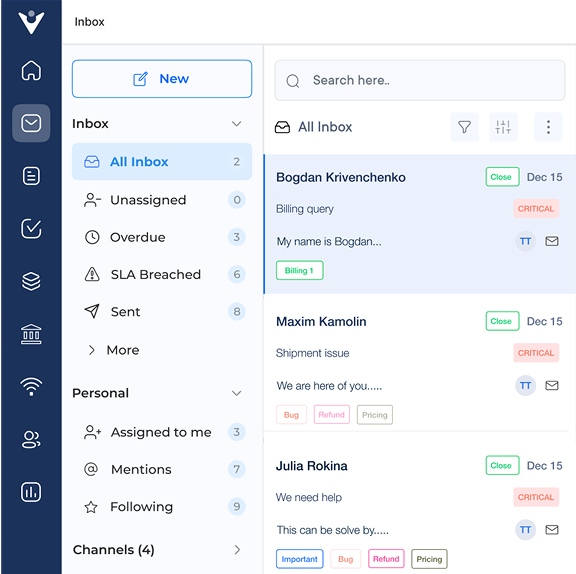
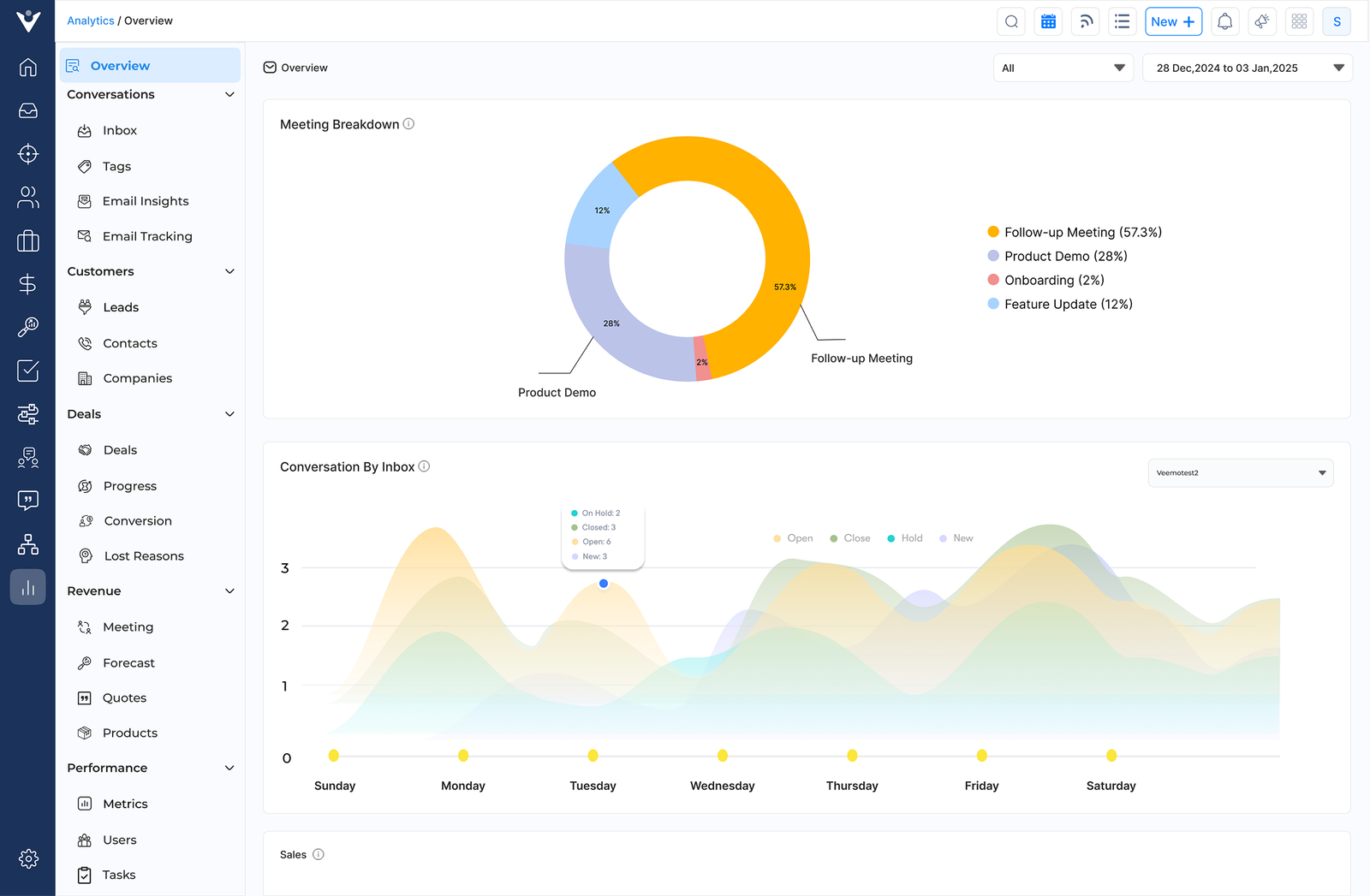
Veemo Sales Analytics Overview

Veemo Sales is an AI-Powered Customer Relationship Management (CRM) software that combines robust sales intelligence capabilities with traditional CRM functionalities. The powerful platform helps businesses streamline their sales processes, enhance customer interactions and make data-driven decisions to boost revenue. Veemo Sales empowers sales teams to work smarter, close deals faster and build lasting customer relationships by leveraging advanced analytics.

Key features:

  • Intelligent lead scoring automatically prioritizes prospects based on their likelihood to convert, helping sales teams focus on the most promising opportunities.
  • Advanced contact management system organizes and enriches customer data from multiple sources, providing a 360-degree view of each client.
  • AI-powered sales forecasting analyzes historical data and current trends to predict future sales performance with high accuracy.
  • Customizable sales pipeline visualization allows teams to track deals at every stage, identify bottlenecks and optimize the sales process.
  • Automated engagement tracking monitors customer interactions across various channels, providing valuable insights into client behavior and preferences.

Pricing: The Growth plan costs $29/user/month with 3 inboxes, 1 knowledge base and omnichannel support. The Team plan is $69/user/month with 10 inboxes, 3 knowledge bases and a support widget. The Enterprise plan is $129/user/month with unlimited inboxes, a client portal and advanced asset management. Visit Veemo’s pricing page for more details.

2. Hubspot

HubSpot is a comprehensive platform that empowers sales teams with data-driven insights and tools to enhance their performance. The platform combines CRM functionality with advanced analytics, providing a holistic view of the sales process and customer interactions.

Key attributes include lead scoring, predictive analytics, contact enrichment and engagement tracking. HubSpot also offers customizable dashboards, sales forecasting and integration capabilities with other business tools.

3. Salesforce

Robust sales intelligence tool for Lead and Prospect Data Enrichment

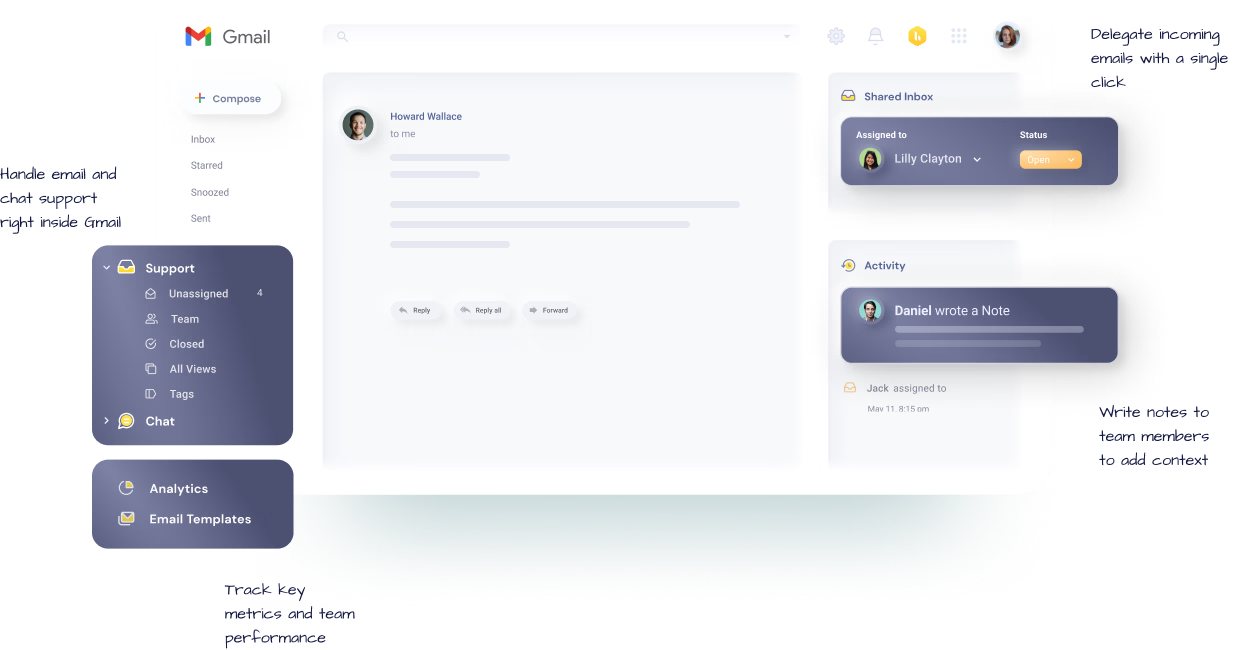
Hiver HQ shared Inbox

Salesforce, renowned as a comprehensive CRM, also excels in the market as an intelligence software company. The cloud-based platform integrates vast customer data with advanced analytics to provide actionable insights for sales teams. The platform offers a holistic view of customer interactions, market trends and sales performance, enabling data-driven decision-making.

The platform offers AI-powered lead scoring, predictive analytics for sales forecasting, real-time opportunity tracking and competitor intelligence. Salesforce’s Einstein AI enhances these capabilities by automating data analysis, identifying sales patterns and suggesting next best actions.

4. Gong

Seamless sales intelligence software for lead scoring and prioritization

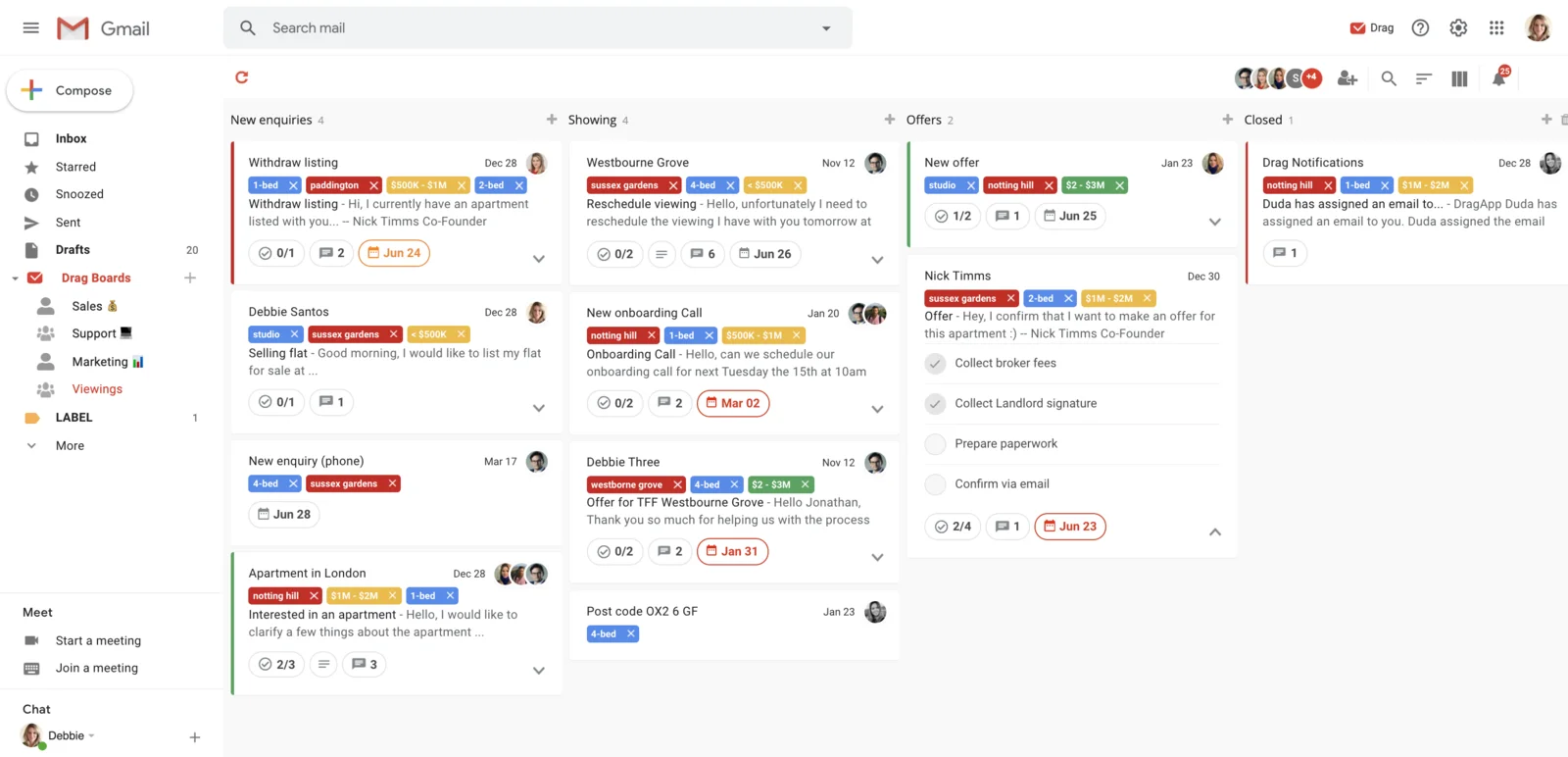
Drag

Gong is a well-known sales intelligence platform that leverages artificial intelligence to analyze customer interactions across various channels. The platform processes phone calls, emails and web conferences to provide actionable insights, helping sales teams optimize their performance.

Gong consists of conversation intelligence, which analyzes sales calls; deal intelligence, offering visibility into pipeline health risks and market intelligence, delivering insights. The platform also offers integrations with popular CRM systems and provides customizable dashboards for easy data visualization.

5. Highspot

Extensive sales intelligence solution for contact and account discovery

Drag

Highspot is a sales intelligence software designed to enhance sales performance and drive revenue growth. The platform integrates content management, sales enablement and analytics to provide sales teams with actionable insights to engage customers effectively.

The main abilities of Highspot include AI-powered content recommendations, customizable playbooks, engagement analytics and seamless integration with CRM systems. The platform offers robust search capabilities, allowing sales reps to quickly find relevant content.

Common Challenges Faced When Implementing Sales Intelligence

There are several common challenges that organizations face when implementing sales intelligence initiatives.

Sales Intelligence Implementation Challenges

1. Lack of Data Quality
One of the biggest challenges when implementing sales intelligence is ensuring that the data being used is accurate and up-to-date. Inaccurate or outdated data can lead to poor decision-making and hinder sales performance. Organizations should invest in data cleansing tools and regularly audit their data to ensure accuracy.

2. Integration of Data Sources
Another challenge organizations face is integrating data from different sources such as CRM systems, marketing automation platforms and external databases. The feature can lead to data silos and make it difficult to get a comprehensive view of the customer.
Organizations should invest in data integration tools that can consolidate data from multiple sources into one centralized platform.

3. Lack of Sales Team Adoption
Sales intelligence tools are only as effective as the sales team’s willingness to adopt and use them. Resistance to change or lack of proper training can hinder adoption rates and limit the impact of market intelligence initiatives. Organizations should provide comprehensive training to help sales teams understand the value of sales intelligence tools to address the challenge.

4. Overwhelming Amount of Data
The abundance of data available through sales intelligence tools can be overwhelming for sales teams to sift through and identify relevant insights. Companies should focus on providing actionable insights that are relevant to specific sales objectives and personalize the data to each salesperson’s needs.

5. Lack of Executive Buy-In
Without support from senior leadership, it can be challenging to secure the resources and budget needed to sustain sales intelligence initiatives. Organizations should communicate the benefits of market intelligence and provide evidence of how it can drive results.

Sales Intelligence Metrics and KPIs

Let’s explore the top five metrics that every sales professional should be measuring to enhance their sales intelligence.

Sales Intelligence Performance KPIs

1. Lead Conversion Rate
The metric measures the percentage of leads that convert into customers. A high conversion rate indicates that the sales intelligence system is effectively identifying and prioritizing high-quality leads. Divide the number of converted leads by the total number of leads generated, then multiply by 100. Tracking the over time can reveal improvements in lead quality and sales team effectiveness.

2. Average Deal Size
The metric reflects the average monetary value of closed deals. An increase in average deal size suggests that the market intelligence system is helping identify more valuable opportunities. Calculate by dividing the total revenue from closed deals by the number of deals. A rising trend may indicate better targeting of high-value prospects or improved upselling capabilities.

3. Sales Cycle Length
The measures the average time it takes to close a deal, from initial contact to signing. A shorter sales cycle often indicates more efficient use of sales intelligence, as teams can focus on the most promising leads and tailor their approach. Track the time between the first logged activity and deal closure for each opportunity, then calculate the average across all deals.

4. Win Rate
The win rate shows the percentage of opportunities that result in closed deals. A higher win rate suggests that the sales intelligence system is helping identify more qualified leads and providing insights that improve closing strategies. Calculate by dividing the number of won opportunities by the total number of closed opportunities (both won and lost), then multiply by 100.

5. Customer Lifetime Value (CLV)
CLV estimates the total revenue a business can expect from a single customer account throughout the business relationship. While it is a longer-term metric, it’s crucial for assessing the quality of customers acquired through sales intelligence efforts. Higher CLV suggests that market intelligence is helping identify and acquire more valuable, long-term customers.

Smarter selling starts with Sales Intelligence because it equips sales teams with crucial insights to make informed decisions and engage prospects effectively. Having access to accurate, timely and relevant information about potential customers is no longer a luxury—it’s a necessity.

Sales Intelligence empowers salespeople to understand their prospects’ needs, pain points and buying behaviors before even initiating contact. The knowledge allows for personalized outreach, more meaningful conversations and higher conversion rates.

FAQs about Sales Intelligence

Sales intelligence can be gathered from a variety of sources, including social media platforms, company websites, industry reports and networking events. Utilize resources like LinkedIn Sales Navigator, Google Alerts and CRM tools to gather valuable information about prospects. Stay informed about industry trends and customer behaviors to make informed sales decisions.

Sales intelligence is used to provide valuable insights and data to help sales teams make informed decisions. Analyzing market trends and competitor strategies, market intelligence helps in identifying new leads and improving sales performance. The data-driven approach allows sales teams to prioritize their efforts, personalize their interactions and increase revenue.

Sales intelligence data can come from a variety of sources, including CRM systems, social media platforms, market research reports, website analytics and sales prospecting tools. Businesses can gather valuable insights on customer behavior, preferences and trends to drive more effective sales strategies by leveraging these sources.

Sales intelligence reports provide valuable information such as customer insights, competitor analysis, market trends and sales performance data. The reports can help businesses make informed decisions, identify opportunities and improve their sales strategies. Market intelligence reports provide a comprehensive view of the sales landscape, allowing businesses to stay competitive and drive success.

Using Sales Intelligence involves analyzing relevant data to understand customer behavior and preferences. Sales teams can tailor their approach, anticipate needs and personalize interactions to close deals effectively by leveraging the information. The strategy not only boosts sales but also increases profits by improving efficiency and enhancing customer satisfaction.

Sales intelligence complements CRMs by providing valuable insights into customer behavior and preferences. Sales teams can analyze data, track customer interactions and make informed decisions to improve sales performance by integrating market intelligence tools with CRMs. The combination allows for a more personalized approach to engaging with customers and increasing sales effectiveness.