Lead Scoring What is Lead Scoring

Lead Scoring Guide: What is it & Why is it Important?

Discover what lead scoring is, why it matters and how it can transform your sales. Learn how to identify top prospects, prioritize leads and skyrocket your conversion rates.

No credit card required. Easy setup

Lead Scoring What is Lead Scoring

Trusted by Leading Brands

Prioritize Smartly, Close Confidently with Lead Scoring!

Boost your conversion rates and drive success by making informed, data-driven decisions that lead to confident closings – all with the help of lead scoring.

Precision Targeting

Teams can focus their efforts on high-potential leads and boost conversion rates by prioritizing quality over quantity.

Efficient Resource Allocation

The feature helps businesses maximize ROI by directing sales and marketing resources to leads that are more likely to convert.

Streamlined Sales Process

The feature allows teams to accelerate deal closure with a streamlined approach. Teams can address the most promising prospects first.

Enhanced Personalization

Businesses can tailor their engagement strategies with insights on lead interests and behaviors for more impactful interactions.

Improved Forecasting Accuracy

The feature enables businesses to refine their sales predictions with data-driven lead evaluations, leading to more reliable revenue forecasts.

Strategic Follow-up

Follow-up timing can be optimized by the team by understanding lead readiness and ensuring their outreach is always on point.

Companies often drown in leads but struggle to identify which ones are truly worth pursuing. Sales teams waste precious time chasing unqualified prospects, while marketing efforts often miss the mark, failing to nurture the right leads at the right time. The inefficiency leads to missed opportunities, wasted resources and frustration across teams. Without a systematic way to prioritize leads, businesses risk losing potential customers to competitors who can respond more effectively.

Enter lead scoring – a powerful strategy that can transform the lead management process.
Lead assessment helps businesses identify and focus on the most promising prospects by assigning numerical values to leads based on specific criteria. We’ll explore the definition of lead scoring and its benefits. We will also provide a step-by-step guide on how to implement an effective scoring system for a business.

What is Lead Scoring?

Lead scoring refers to a methodology used by sales and marketing teams to rank prospects based on their perceived value to the organization. It involves assigning numerical values to various attributes of potential customers to prioritize leads and determine their sales readiness. The process works by evaluating leads based on multiple criteria, including demographic information, company details, online behavior and engagement with marketing materials.

Each criterion is assigned a point value and the points are tallied to generate an overall score for each lead. Higher scores indicate leads that are more likely to convert, allowing sales teams to focus their efforts on the most promising prospects.

key principles:

  • Align scoring criteria with the ideal customer profile.
  • Use both explicit (demographic) and implicit (behavioral) data for scoring.
  • Regularly review and adjust the scoring model based on performance.
  • Implement a consistent scoring system across all channels and touchpoints.
  • Collaborate between sales and marketing teams to refine scoring criteria.

Importance of Lead Scoring

Lead scoring offers numerous advantages to organizations, helping them streamline their sales and marketing processes. Let’s explore some lead scoring importance:

Benefits of Lead Scoring

1. Improved Sales Efficiency
Lead scoring allows sales teams to focus their efforts on the most promising prospects. Sales reps can allocate their time and resources more effectively by prioritizing leads based on their likelihood to convert. The targeted approach reduces time wasted on unqualified leads and increases the chances of successful conversions, boosting company revenue generation.

2. Enhanced Marketing and Sales Alignment
Implementing a lead prioritization system requires close collaboration between marketing and sales teams. The process encourages both departments to agree on what constitutes a quality lead, enhancing better communication and alignment. Marketing can refine their efforts to generate leads that meet the agreed-upon criteria, while sales can provide valuable feedback to further optimize the scoring model. The improved alignment leads to a more cohesive and effective revenue generation strategy.

3. Personalized Lead Nurturing
Lead scoring enables more targeted and personalized nurturing campaigns. Marketers can tailor their communication to address specific needs by understanding where each lead stands in terms of interest and sales-readiness. The personalized approach helps build stronger relationships with prospects, increases engagement and moves leads more efficiently through the sales funnel.

4. Shorter Sales Cycles
Sales departments can identify and engage with high-quality leads earlier in the buying process with a well-implemented lead assessment system. The early engagement, combined with more relevant and personalized interactions, can significantly shorten the sales cycle. Sales representatives can close deals faster and more efficiently by focusing on leads that are more likely to convert.

5. Increased Conversion Rates
Lead scoring helps identify the most qualified leads, allowing sales teams to concentrate their efforts on prospects with the highest likelihood of conversion. The approach naturally leads to higher conversion rates, as agents spend more time engaging with leads who are genuinely interested and ready to make a purchase decision.

6. Data-driven Decision Making
Implementing a lead evaluation system requires organizations to analyze vast amounts of data about their leads and customers. The insights can inform not only sales or marketing strategies but also product development, customer service and business decisions. Companies can make more informed choices and continuously improve their processes by basing decisions on concrete data rather than assumptions.

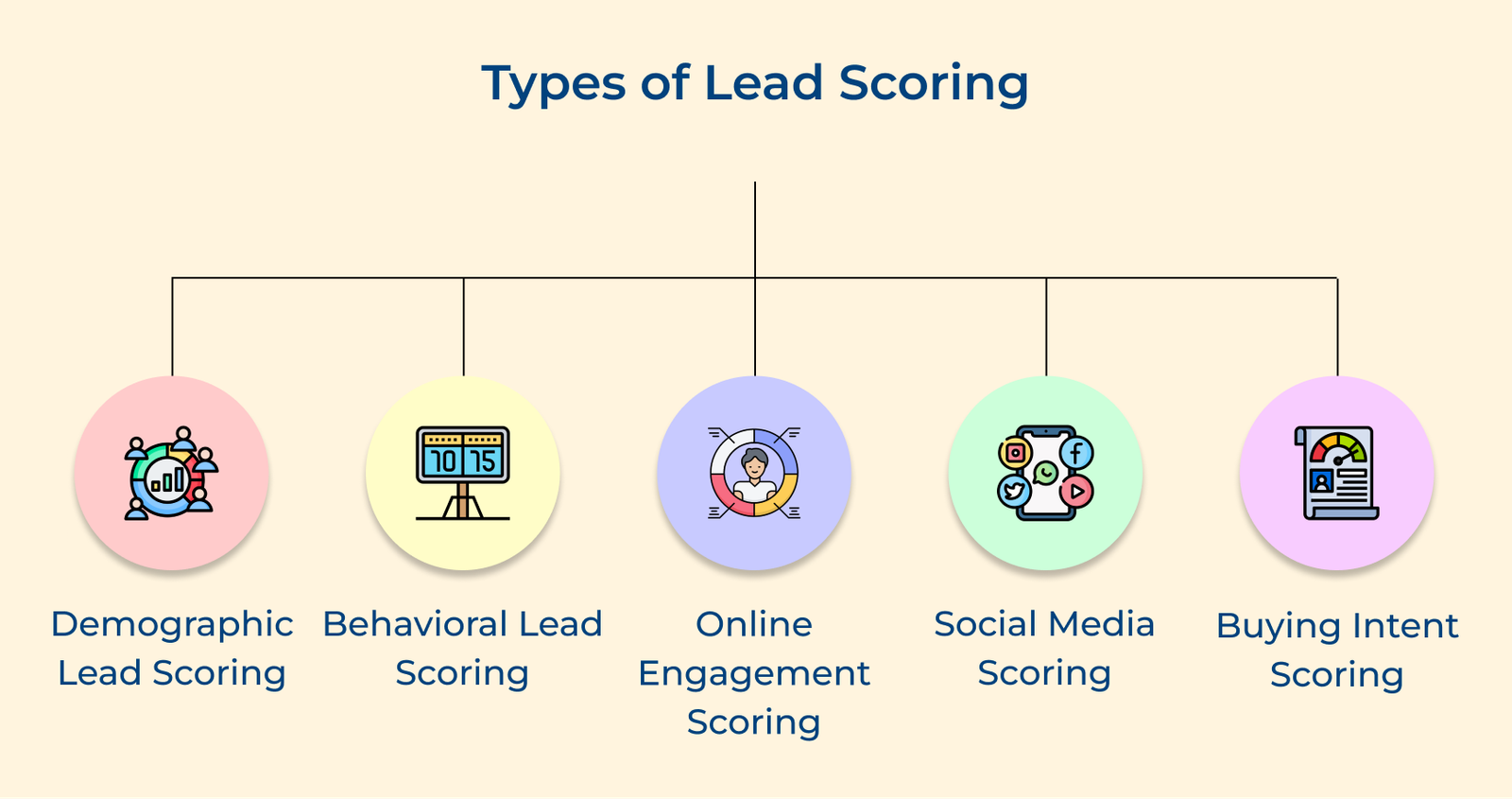
Different Types of Lead Scoring

Lead scoring is a multifaceted approach to evaluating potential customers. Let’s explore their different types below.

Types of Lead Scoring

1. Demographic Lead Scoring

Demographic lead scoring focuses on the characteristics of the individual or company, such as job title, industry, company size, annual revenue or geographic location. It helps businesses identify leads that match the ideal customer profile. Let’s assume that a B2B software company might assign higher scores to C-level executives in tech companies with 500+ employees. The method is particularly useful for quickly filtering out leads that don’t fit the target market.

2. Behavioral Lead Scoring

Behavioral scoring tracks and evaluates a lead’s interactions with the company across various touchpoints. It can include website visits, email opens, content downloads, webinar attendance, or social media engagement. Each action is assigned a point value based on its perceived importance in indicating buying intent. Let’s consider that downloading a product brochure might be worth more points than simply visiting the homepage.

3. Online Engagement Scoring

While similar to behavioral scoring, online engagement scoring specifically focuses on a lead’s interaction with the online presence. It includes metrics like time spent on the website, number of pages visited and engagement with specific pages (like pricing or product pages). Online engagement scoring can help identify leads who are deeply researching the product or service, indicating a higher likelihood of making a purchase decision soon.

4. Social Media Scoring

The scoring assesses a lead’s engagement with the brand on social media platforms. It can include factors such as following the company accounts, liking or sharing the posts, commenting on the content, or mentioning the brand. Social media scoring can provide valuable insights into a lead’s brand awareness and affinity. It’s particularly useful for businesses with a strong social media presence or those targeting younger, more digitally-engaged demographics.

5. Buying Intent Scoring

Buying intent scoring aims to gauge how close a lead is to making a purchase decision. The method combines elements of other scoring types but focuses specifically on actions that indicate a readiness to buy. It might include requesting a demo, using a pricing calculator, viewing case studies, or repeatedly visiting the pricing page. Buying intent scoring helps sales teams prioritize leads that are nearing the end of their buyer’s journey and may require immediate attention.

Omnichannel Helpdesk and Ticketing System

Turn Every Support Issues into Personalized Conversations with Veemo’s Omnichannel Helpdesk and Ticketing System. Make customer happiness your top priority with a digital first customer experience (CX) approach

Radically new solutions for data

Sed ut perspiciatis unde omnis iste natus error sit voluptatem accusantium doloremque laudantium, totam rem aperiam, eaque ipsa quae ab illo inventore veritatis et quasi architecto beatae vitae dicta sunt explicabo.

Radically new solutions for data

Sed ut perspiciatis unde omnis iste natus error sit voluptatem accusantium doloremque laudantium, totam rem aperiam, eaque ipsa quae ab illo inventore veritatis et quasi architecto beatae vitae dicta sunt explicabo.

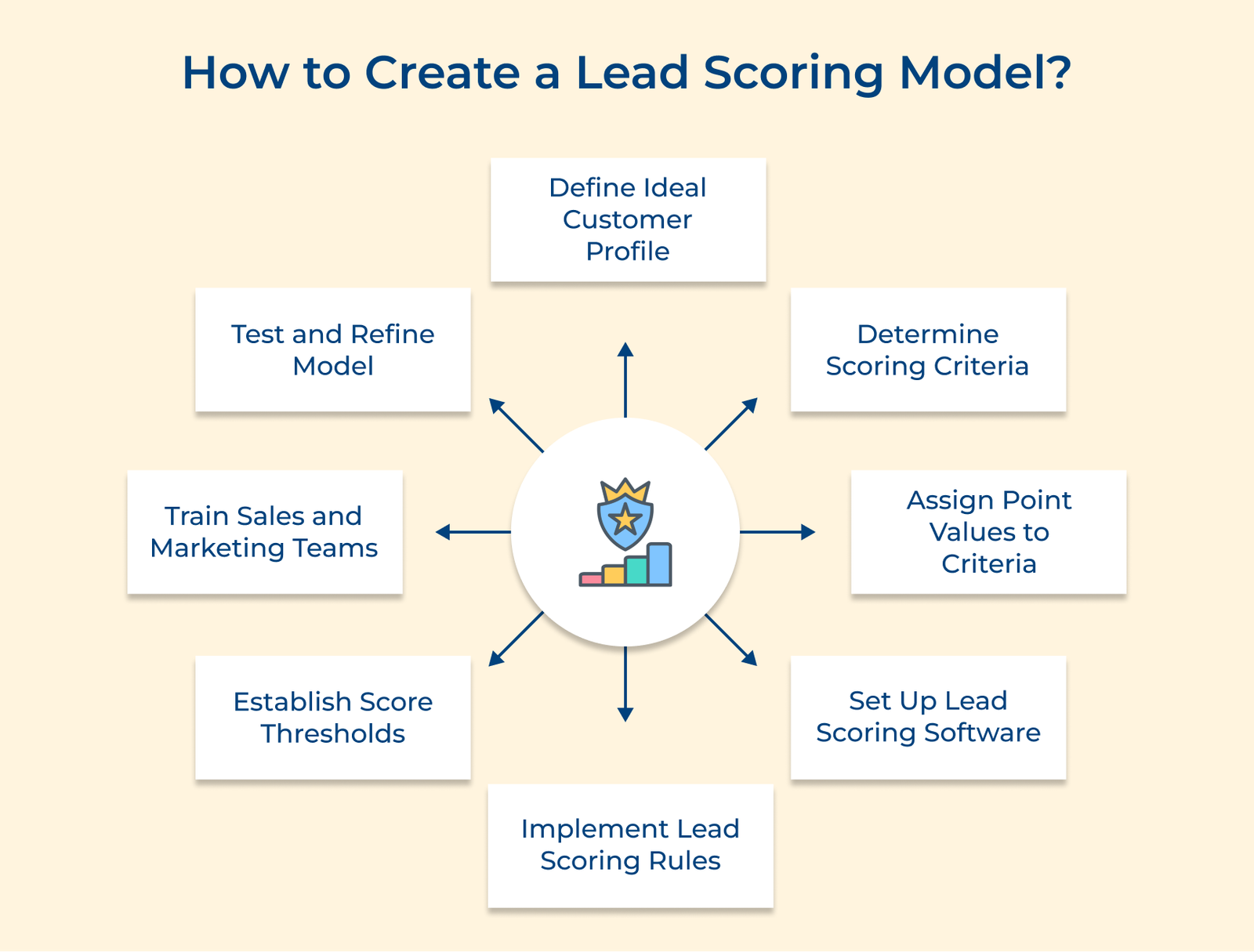
How to Create a Lead Scoring Model: 8 Steps

Let’s delve into the essential steps to creating a lead scoring model that drives tangible results for a business.

How to Create a Lead Scoring Model

1. Define the Ideal Customer Profile

Defining the ideal customer profile is a crucial first step in creating an effective lead-scoring model. The process involves identifying the key characteristics that distinguish the most valuable customers from the rest. Start by examining demographic factors such as company size, industry and geographic location. Then, consider firmographic details like annual revenue, number of employees and technology stack.

Thoroughly analyze the existing customer data. Look for common attributes among the most profitable and loyal customers. Examine their journey from lead to customer, noting significant touchpoints and actions that led to conversion. The analysis will reveal patterns that can inform the scoring criteria.

Pro tips:

  • Conduct in-depth interviews with the sales team and top customers to gather qualitative insights.
  • Use data analytics tools to identify correlations between customer characteristics and high lifetime value.
  • Regularly update the ideal customer profile as the business and market evolve.

2. Determine Scoring Criteria

Determining scoring criteria is a crucial step in creating an effective lead scoring model. It involves prioritizing the key factors that indicate a lead’s potential value and readiness to convert. The step is important because it forms the foundation of the entire scoring system, directly impacting its accuracy and effectiveness.

The implications are far-reaching, affecting everything from resource allocation to customer experience. When implemented correctly, it allows businesses to focus on high-potential leads, optimize marketing campaigns and increase conversion rates. Conversely, poorly chosen criteria can lead to misallocated resources and missed opportunities.

Pro tips:

  • Collaborate with sales and marketing teams to identify the most relevant criteria based on past successful conversions.
  • Assign point values to criteria based on their importance, using historical data to guide the decisions.
  • Regularly adjust the scoring criteria to ensure they remain aligned with changing business goals and market conditions.

3. Assign Point Values to Criteria

Assigning point values to criteria is a crucial step in creating an effective lead-scoring model.
The process involves carefully weighing various factors based on their importance to the business and creating a comprehensive scoring scale. Start by analyzing the historical data and consulting with the sales department to determine which criteria have the strongest correlation with successful conversions.

Let’s assume that a lead’s job title might be weighted more heavily than their geographic location. Create a scoring scale that allows for nuanced differentiation between leads. A common approach is to use a 0-100 scale, where 0 represents an unqualified lead and 100 represents an ideal prospect ready to purchase.

Pro tips:

  • Use relative weighting to ensure the most important criteria have the greatest impact on the overall score.
  • Implement negative scoring for actions that indicate disinterest or poor fit to refine the model further.
  • Regularly adjust point values based on ongoing performance data and feedback from sales teams.

4. Set Up Lead Scoring Software

Setting up lead-scoring software is a crucial step in creating an effective lead-scoring model. The process begins with choosing the appropriate CRM or marketing automation tool that aligns with the business needs and existing infrastructure. Look for software that offers robust lead assessment capabilities and integration options with the current tech stack.

Once the business has selected the right tool, the next step is to integrate it with the existing systems. It typically involves connecting the lead scoring software with the CRM, marketing automation platform and any other relevant data sources. Proper integration ensures that lead scores are updated in real-time across all platforms, providing a unified view of the leads for both sales and marketing teams.

Pro tips:

  • Prioritize user-friendly interfaces to encourage adoption across teams.
  • Invest time in thorough testing before full deployment to catch and resolve any issues.
  • Provide comprehensive training to all users to ensure they can leverage the system’s full potential.

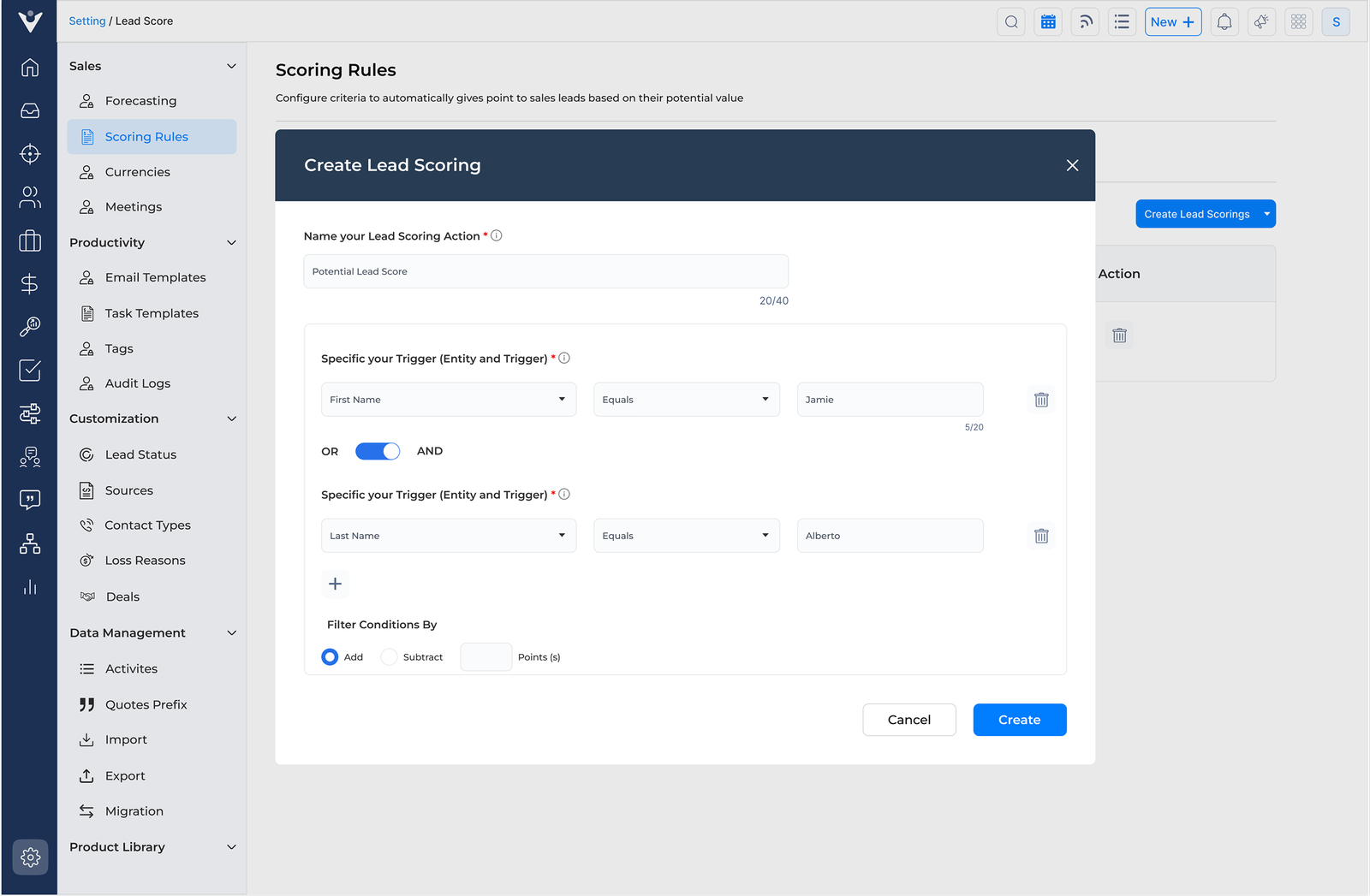
5. Implement Lead Scoring Rules

Once the business has chosen the scoring criteria and assigned point values, it’s time to configure the scoring logic in the selected software. Configure basic rules, such as assigning points for demographic matches or engagement activities like email opens or website visits. Then, move on to more complex rules that might involve multiple conditions or time-based triggers.

After setting up the rules, it’s essential to thoroughly test and validate them. Run sample leads through the system to ensure points are being assigned correctly and that the scores make sense in the context of the sales process.

Pro tips:

  • Start simple and gradually add complexity to the scoring rules as the business gains confidence in the system.
  • Regularly adjust the rules based on feedback from sales teams and actual conversion data.
  • Use A/B testing to compare different scoring approaches and optimize the model over time.

6. Establish Score Thresholds

Establishing score thresholds is a crucial step in building an effective lead-scoring model.
The process involves defining the point at which a lead is considered qualified and ready for sales engagement. Businesses create a systematic approach to lead management by setting clear thresholds, ensuring that sales efforts are focused on the most promising prospects.

Analyze historical data to identify common characteristics of leads that have successfully converted in the past. The analysis helps determine the minimum score a lead should have to be considered sales-ready. Setting triggers for a sales team handoff involves determining the specific score or combination of criteria that automatically alerts the sales team to engage with a lead.

Pro tips:

  • Regularly adjust thresholds based on feedback from sales and conversion data.
  • Use lead scoring software that integrates with the CRM for seamless handoffs.
  • Implement a tiered system with multiple thresholds for different levels of sales engagement.

7. Train the Sales and Marketing Teams

Training the sales and marketing teams is a crucial step in building an effective lead-scoring model. The process ensures that everyone understands and utilizes the new system correctly, maximizing its potential impact on the business. Start by educating both teams on the fundamentals of the new scoring system. Explain the criteria used, how points are assigned and what different score ranges signify.

Focus on aligning lead handling processes. Establish clear guidelines for how leads at different score levels should be approached. It might include defining when marketing should hand off leads to sales, or how frequently to engage with leads based on their scores.

Pro tips:

  • Use real-world examples and case studies to illustrate how the scoring system works in practice.
  • Conduct regular refresher sessions to reinforce knowledge and address any emerging questions or challenges.
  • Implement a feedback loop where team members can share insights and suggestions for improving the scoring model.

8. Test and Refine the Model

Testing and refining the lead scoring model is crucial for maintaining its effectiveness over time. Monitor key performance indicators such as conversion rates, sales velocity and revenue generated from scored leads. Gather feedback from sales teams to understand if the model accurately reflects their experiences with leads.

Incorporate new data sources or behavioral signals that may improve predictive accuracy. Remove or downgrade criteria that prove less relevant over time, while elevating those that demonstrate a stronger correlation with conversions. The iterative process ensures the lead scoring model remains aligned with the evolving business needs.

Pro tips:

  • Implement automated tracking of lead-to-customer conversion rates for scored leads.
  • Schedule quarterly reviews with sales and marketing teams to gather insights.
  • Use machine learning algorithms to dynamically adjust scoring weights based on historical performance data.
Role of AI and Automation in Lead Scoring

Let us understand the pivotal role that AI and automation play in lead scoring, eventually boosting sales performance.

1. Data analysis and pattern recognition: AI excels at processing vast amounts of data quickly and identifying patterns that humans might miss. AI can analyze historical data to uncover correlations between lead characteristics and conversion rates. Businesses can refine their scoring models continuously, ensuring they’re always based on the most up-to-date and relevant information.

2. Predictive scoring: AI-powered predictive lead scoring models go beyond traditional rule-based systems. The models use machine learning algorithms to predict which leads are most likely to convert based on complex combinations of factors. Predictive scoring provides a more nuanced and accurate assessment of lead quality by considering numerous variables simultaneously.

3. Real-time scoring updates: Automation allows for real-time updates to lead scores as new data becomes available. When a lead takes an action (like visiting a webpage or downloading a whitepaper), their score can be instantly recalculated. It ensures that sales teams always have the most current information when prioritizing their outreach efforts.

4. Personalized engagement: AI can help tailor the lead nurturing process based on individual lead scores. Automation tools can trigger personalized email sequences, content recommendations, or sales team notifications based on a lead’s score. The customization improves the customer experience and increases the likelihood of conversion.

Lead Scoring Challenges and How to Fix

Building a lead scoring model comes with its own set of challenges. Here are six challenges businesses may face when building a lead scoring model, along with possible solutions:

Lead Scoring Challenges

1. Lack of Quality Data
One of the biggest challenges in building a lead scoring model is the lack of quality data. Without accurate and up-to-date data, the model may not accurately predict lead behavior. Start by ensuring that all data being collected is relevant, accurate and complete. Regularly update and clean the data to maintain its quality.

2. Choosing the Right Criteria
Determining which criteria to use for scoring leads can be overwhelming. Businesses may struggle to identify the most important factors that indicate lead readiness. Start by analyzing historical data to identify patterns and behaviors that lead to conversions. Use the information to prioritize the most important criteria for the model.

3. Setting Weighting Values
Assigning the right weight to each scoring criterion is crucial for an effective lead scoring model. Deciding on the appropriate weighting values can be challenging. Utilize a data-driven approach to determine weighting values. Test different weightings and adjust them based on the results to ensure accuracy.

4. Lack of Alignment between Marketing and Sales Teams
Inconsistent communication between marketing and sales teams can hinder the effectiveness of the lead evaluation model. Enhance open communication and collaboration between marketing and sales teams. Define clear criteria for lead scoring that both teams agree upon and regularly adjust the model together.

5. Overlooking Lead Behavior
While demographic data is important, focusing solely on demographics and neglecting lead behavior can result in an inaccurate lead prioritization model. Incorporate lead behavior data, such as website visits, email opens and content downloads, into the scoring model. Behavioral data provides valuable insights into a lead’s readiness to convert.

6. Failure to Monitor and Adjust
Building a lead scoring model is not a one-time task. Without monitoring and adjusting the model regularly, it may become outdated. Continuously monitor the performance of the lead scoring model and make adjustments as needed. Analyze the results of the scoring model to identify areas for improvement and optimize its accuracy.

Lead Scoring Best Practices

Let’s delve into the top best practices that will help businesses master the art of lead scoring. Let’s explore some lead-scoring best practices:

Lead Scoring Best Practices

Don’t Forget About Negative Scoring

When setting up the lead scoring system, it’s important to not only assign points for positive actions, such as opening an email or visiting the website but also to consider negative actions. A negative score allows businesses to deduct points for actions that indicate a lead may not be a good fit for the product or service, such as unsubscribing from emails.

Use Different Lead Scoring Models for Unique Products

Not all products or services are created equal, so it’s important to tailor the lead-scoring models to fit the unique characteristics of each offering. Let’s assume that a high-ticket item may require a different set of criteria for a lead to be considered qualified compared to a lower-priced product. Businesses can better align the marketing and sales efforts with the specific needs of the target audience by creating separate lead assessment models for each product or service.

Create Lead Scoring Threshold Alerts for the Sales Team

Setting up lead-scoring threshold alerts is crucial if the business wants to make sure the sales team is informed when a lead reaches a particular level of engagement or interest. The alerts notify the sales team when a lead has surpassed a predetermined score, indicating that they may be ready for a sales conversation. Businesses can ensure that the sales team is reaching out to leads at the right time by implementing threshold alerts.

Talk to Both the Sales Team and Customers

One of the most important best practices for lead scoring is to regularly communicate with both the sales team and customers. The sales team can provide valuable insights into the types of leads that are most likely to convert, helping businesses to refine the lead evaluation models. Talking to the customers can help businesses better understand customer needs and preferences.

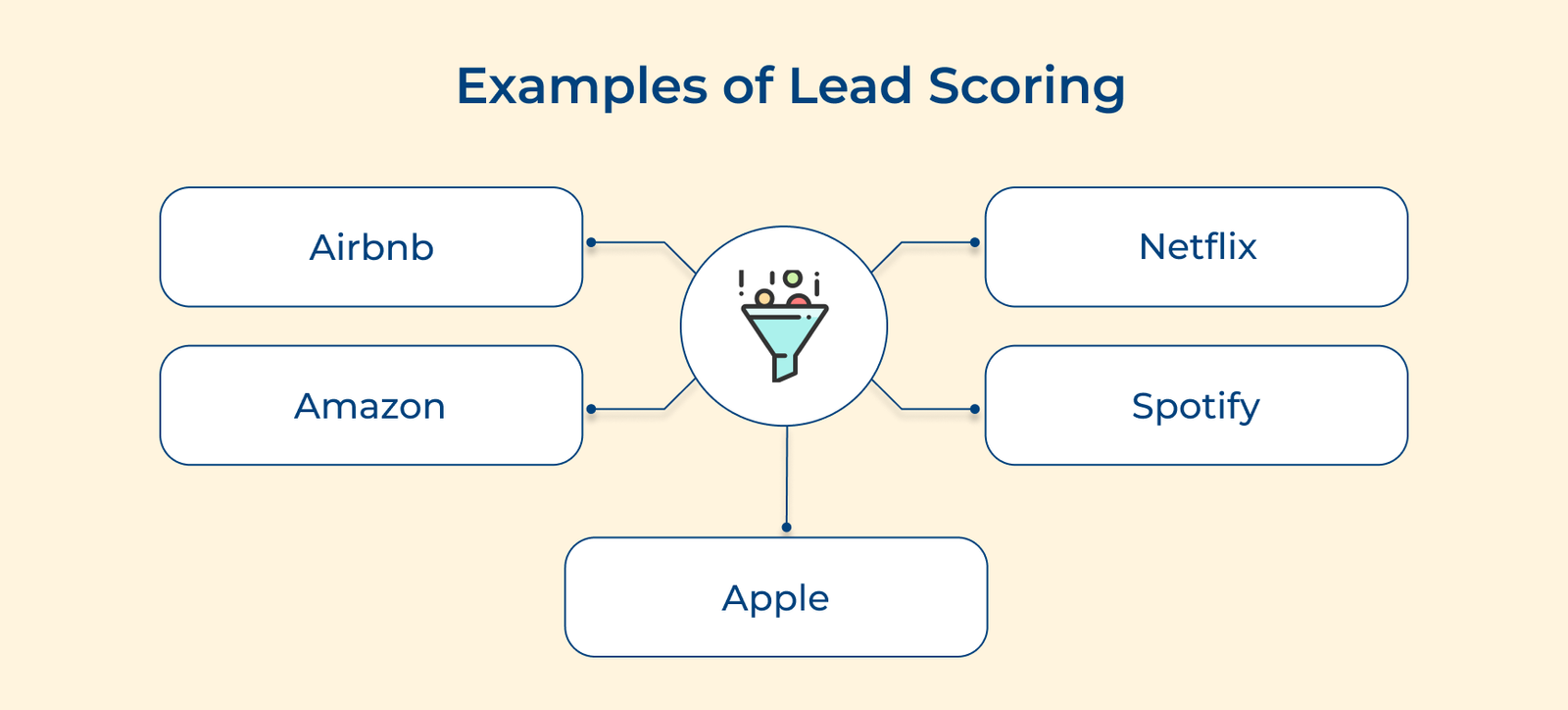
Real-life Examples of Lead Scoring

Let’s dive into some real-life lead scoring examples that made a significant impact on business success.

Examples of Lead Scoring

Airbnb
Airbnb, a popular online marketplace for short-term lodging, uses lead scoring to identify potential hosts and guests. Airbnb can prioritize leads that are most likely to list their properties or book accommodations by tracking actions such as property listings, booking inquiries and reviews. It helps them grow their platform and improve the user experience.

Netflix
Netflix uses lead evaluation to predict which users are most likely to become paid subscribers.
It assigns scores to each user to determine their likelihood of converting by analyzing user behavior, such as watching habits, genre preferences and interactions with the platform. The platform was able to tailor its marketing efforts to target high-scoring leads, increasing subscription rates and customer retention.

Amazon
Amazon uses lead scoring to personalize product offers and promotions for its customers. Analyzing purchase history, browsing behavior and demographic information has helped Amazon assign customer scores to predict their future buying preferences. The platform offered relevant suggestions to customers, driving repeat purchases and customer loyalty.

Spotify
Spotify, the music streaming platform, uses lead scoring to suggest songs and playlists to its users. Analyzing listening history, genre preferences and user interactions has helped Spotify assign scores to users to predict their music taste. The personalized recommendation system has been instrumental in attracting and retaining subscribers.

Apple
Apple, the technology giant, implements lead prioritization to identify potential product buyers. Apple assigns scores to leads indicating their interest in purchasing Apple devices by tracking user engagement with Apple’s website, emails and advertisements. The data-driven approach enables Apple to target high-scoring leads with customized marketing messages, driving sales and revenue.

Lead Scoring: Turning Leads into Gold

Lead scoring is a vital process that transforms the art of lead management into a science, effectively turning leads into gold for businesses. Companies can optimize their efforts by systematically evaluating and ranking potential customers based on their likelihood to convert. The approach is necessary for several reasons. It enhances efficiency by prioritizing high-potential leads, improves alignment and enables personalized engagement strategies.

Lead evaluation provides a crucial competitive advantage to businesses. They can nurture relationships more effectively, allocate resources wisely and increase their ROI in sales and marketing activities. It is not just a tool, but a strategic imperative for modern businesses aiming to thrive.

FAQs about Lead Scoring

Businesses typically develop a lead scoring model by identifying key criteria that indicate a prospect’s readiness to buy. They analyze past customer data, engage with sales teams and use marketing automation tools to score leads based on behaviors. It helps prioritize leads and improve sales efficiency.

Common criteria used in lead scoring include demographics (industry, company size), online behaviors ( email opens) and purchasing intent (requesting pricing information. The factors help prioritize leads based on their likelihood of converting, allowing sales teams to focus on the most qualified prospects.

Lead assessment can improve the efficiency of sales teams by helping them prioritize high-quality leads. Sales teams can focus their efforts on leads most likely to convert by assigning scores based on criteria like demographics, behavior and engagement. It allows for more effective use of time and resources, leading to higher conversion rates.

Data plays a crucial role in effective lead scoring by providing insights into the behavior and preferences of potential customers. Marketers can assign scores to leads based on their likelihood to convert by analyzing data such as demographics, website interactions and email responses. The data-driven approach helps prioritize leads and optimize marketing efforts for better results.

CRM systems can assist in implementing lead scoring by tracking customer interactions, analyzing data and assigning leads a score based on their behavior. Businesses can prioritize leads, improve sales efficiency and increase conversion rates by utilizing CRM software. Lead evaluation helps identify the most promising leads and tailor marketing efforts.