1. AI-Driven Personalization At Scale
AI-powered personalization lets businesses automatically tailor experiences to each customer. Personalization has become important because people now expect brands to understand their individual needs. Companies need efficient ways to deliver personalized experiences to millions of users without requiring massive teams.
Businesses implement AI personalization through recommendation engines that suggest relevant products based on browsing history. These systems look at what customers have bought before to guess what they might want next and update website content instantly. They also tailor marketing messages to fit each person’s interests and habits.
Pro tips:
- Start small by personalizing one customer touchpoint, like email subject lines, then gradually expand to more complex applications as you learn what resonates with your audience.
- Balance personalization with transparency by clearly explaining how customer data influences their experience and giving them control over their information.
2. Seamless Omnichannel Customer Experience
Omnichannel customer experience integrates all interaction channels to provide consistent brand engagement regardless of how customers connect. It is one of those customer engagement trends that cannot be ignored. It is now very common for the use to use multiple devices and platforms during their journey. So, they expect a consistent experience at every step.
Consistent Messaging Across Touchpoints
Customer engagement trends focus on delivering consistent messages across social media, websites and physical stores to build trust. Companies must maintain voice consistency while adapting content to each platform’s unique characteristics.
Frictionless Transitions Between Platforms
Modern consumers start journeys on one device and complete them on another without wanting to repeat steps. The aspect of the omnichannel customer engagement trend focuses on creating smooth handoffs between channels.
Unified Data Across the Customer Journey
Successful omnichannel experiences depend on consolidated customer data from all touchpoints into a single view. The key customer engagement trend lets representatives see the full history of interactions, no matter where they happened.
3. The Rise of Chatbots
Chatbots are digital assistants that answer customer questions instantly through text. Customer engagement trends meet the need for quick help without waiting for a human agent. Modern consumers expect 24/7 availability and quick resolution to their problems, regardless of time zones or business hours. For business, chatbots can save up to 30% of costs on customer support alone.
Let’s understand how businesses are adopting the customer engagement trend:
- Implementing proactive outreach programs: Companies now use chatbots that start conversations when users linger on a page or leave items in their shopping carts.
- Integrating with existing communication channels: Businesses place chatbots on messaging apps like WhatsApp and Facebook Messenger to connect with customers where they’re already active.
- Using sentiment analysis to improve interactions: Advanced chatbots recognize when clients are frustrated or confused and quickly pass complex issues to human agents before problems grow.
- Creating distinctive brand personalities: Companies create chatbots with distinct voices and styles that reflect their brand through everyday conversations with customers.
4. Immersive AR/VR Shopping Experiences
Immersive AR/VR shopping creates digitally enhanced retail environments where customers can interact with products virtually before purchasing. The customer engagement trend lets shoppers see how products look on themselves, overcoming the “try before you buy” challenge of online shopping without needing to visit a store.
A furniture store launched an AR app that lets customers use their phone cameras to place virtual furniture in their homes. It helps shoppers see how pieces fit and match their existing décor before buying. The feature increased conversion rates by helping customers make confident buying decisions while reducing returns.
Best practices:
- Begin with detailed 3D product models that show true size, shape and texture, so the virtual experience sets realistic expectations that match the real item.
- Use analytics to monitor how people engage with AR/VR tools. Track which products are tried the most and where users tend to lose interest, so you can improve the experience.
5. Social Commerce Transforms Shopping
Social commerce integrates shopping functionality directly into social media platforms, allowing users to discover and purchase products without leaving their social apps. The customer engagement trend reflects how more people find brands on social media and want a simple, quick path from discovering products to buying them.
Social commerce combines shopping with social interactions by letting people buy directly within apps, follow influencer advice and connect through shopping groups. The trend shows that today’s buyers trust friends and creators more than ads when deciding what to buy. The social context adds an element of validation that traditional e-commerce often lacks.
Pro tip:
- Create content that fits naturally on the platform and isn’t overly salesy. Posts that entertain or teach while casually showing products tend to connect better than straightforward ads.
- Encourage customers to share their experiences and photos of your products to build authentic, trusted connections. It creates authentic social proof and extends your reach through their networks.
6. Privacy-First Engagement Builds Trust
Privacy-first engagement means being clear about how customer data is collected and used while keeping it safe. The trend has grown as people worry more about their online privacy and as laws like GDPR and CCPA require businesses to handle personal data responsibly.
One major retailer changed how it handles customer data by launching a simple privacy center where shoppers can see what’s collected and decide how it’s used. Customers can select their preferences through simple toggles rather than navigating complex policy documents. It helped the company meet legal requirements and also built trust by showing customers their privacy is taken seriously.
Pro tip:
- Set up a preference center where customers can choose exactly what data they want to share, instead of forcing them to accept or reject everything at once. Privacy first engagement demonstrates respect for their choices while still collecting valuable information.
- Let clients know what they get in return for sharing their data, like better suggestions or a more tailored experience, so they can make informed choices. Make the value exchange clear and worthwhile from their perspective.
7. The Impact of Voice Search
Voice search optimization adapts digital content to be discoverable through spoken queries rather than typed text. The customer engagement trend reflects how more people are using voice assistants on phones and smart speakers. As more searches happen by voice, businesses need to adjust how they show up in those results.
Voice search changes how people look for information by using natural, spoken questions instead of short keyword phrases. The trend pushes companies to restructure their content around natural speech patterns. The technology is especially transforming local search as users frequently ask for nearby businesses while on the go.
Pro tip:
- Focus on long-tail conversational keywords that match how people naturally speak instead of the shortened phrases they might type into a search box.
- Structure your content with clear question-and-answer formats that voice assistants can easily identify as direct responses to user queries.
8. Real-Time Interactive Customer Engagement
Real-time interactive engagement creates dynamic two-way communication between brands and consumers, often through live digital experiences. It reflects the shift toward real interaction. People no longer want one-way messages as they expect to be part of the conversation.
Pro tip:
- Plan for spontaneity by preparing flexible content frameworks that allow you to incorporate audience suggestions while still maintaining your core message.
- Combine real-time elements with post-event content by recording live sessions and repurposing the most engaging moments for those who couldn’t participate.
9. Gamification to Drive Engagement
Gamification applies game design elements like points and achievements to non-game contexts to increase customer participation. The customer engagement trend addresses the human psychological need for recognition and competition. Now people often need a reason to keep paying attention to a brand. Let’s understand how businesses are doing it using the drive engagement approach.
- Creating tiered loyalty programs with visible progression paths. Some companies use levels or ranks to reward loyal customers, tapping into the basic drive to make progress and be recognized.
- Implementing digital badges and achievements for specific actions. Brands reward customers for actions like making a first purchase or referring friends, giving them clear signs of achievement.
- Designing challenges and competitions with time constraints. Businesses hold short-term events that prompt quick decisions, helping overcome the habit of putting off engagement.
- Building community leaderboards to foster friendly competition. Organizations highlight their most active customers, tapping into people’s natural desire to compete and be recognized by others.
Many businesses struggle to balance the game mechanics with authentic value delivery. When gamification feels forced or manipulative, customers quickly disengage. The real challenge is building systems that truly reward customers, not just ask for more effort without giving anything valuable in return.
Customer Engagement Trends Examples
Let’s look at some standout examples of brands that have turned engagement trends into real connections with their audiences.
Sephora
Sephora integrates AR technology with personalization through its Virtual Artist app that allows customers to try makeup products virtually before purchasing. Immersive shopping experience helps customers try cosmetics online by showing how products will look on their skin and features, removing the guesswork.
The implementation of these technologies has transformed Sephora’s business model from a traditional retailer to an experiential beauty destination. Customer satisfaction has increased significantly as shoppers make more confident purchase decisions, resulting in fewer returns. The brand has gained a reputation for innovation and built stronger ties with customers who embrace new technology.
Starbucks
Starbucks pioneered gamification in retail through its rewards program that uses point systems, challenges and personalized offers. Their mobile app combines loyalty features with AI-powered personalization to offer recommendations based on past orders, seasonal preferences and local store inventory.
The approach has revolutionized how Starbucks builds customer relationships by transforming routine coffee purchases into engaging experiences. Customer frequency has increased substantially as users work toward rewards and exclusive offers. Collecting customer preferences, the company creates new products that meet real needs while staying the top coffee retailer.
Nike
Nike embraces social commerce through its SNKRS app, which creates product drops and exclusive releases that generate community excitement. They’ve created online communities where customers share workout wins, product feedback and style ideas while shopping seamlessly through built-in features.
These social commerce initiatives have redefined Nike’s relationship with consumers from transactional to communal. Customer loyalty has intensified as enthusiasts feel connected to both the brand and fellow Nike fans. The company has built a group of loyal customers who naturally share and recommend products, reaching more people without traditional advertising.
Amazon
Amazon leverages voice engagement through Alexa to create frictionless shopping experiences that respond to conversational commands. Their voice assistant lets customers search for products, track orders, make shopping lists and complete purchases using just their voice without the need to touch a device.
Amazon’s voice-first approach has expanded Amazon’s presence beyond screens into daily household activities. Customer convenience has reached unprecedented levels as voice shopping eliminates traditional barriers to online purchasing. The company has become a leader in voice commerce while gathering useful insights from customer conversations to better meet their needs.
Bank of America
Bank of America implemented an AI-powered virtual assistant named Erica that provides personalized financial guidance through their mobile banking app. The chatbot helps customers understand their spending, manage bills and avoid fees, all while answering questions in a natural, easy-to-follow way.
The introduction of the intelligent assistant has transformed customer service from reactive to proactive in the banking sector. Customer financial literacy has improved as users receive tailored education about their specific situations. Offering instant help with common questions around the clock, the bank has cut costs and made customers happier.
Stay Ahead of the Curve with Cutting-Edge Customer Engagement Trends
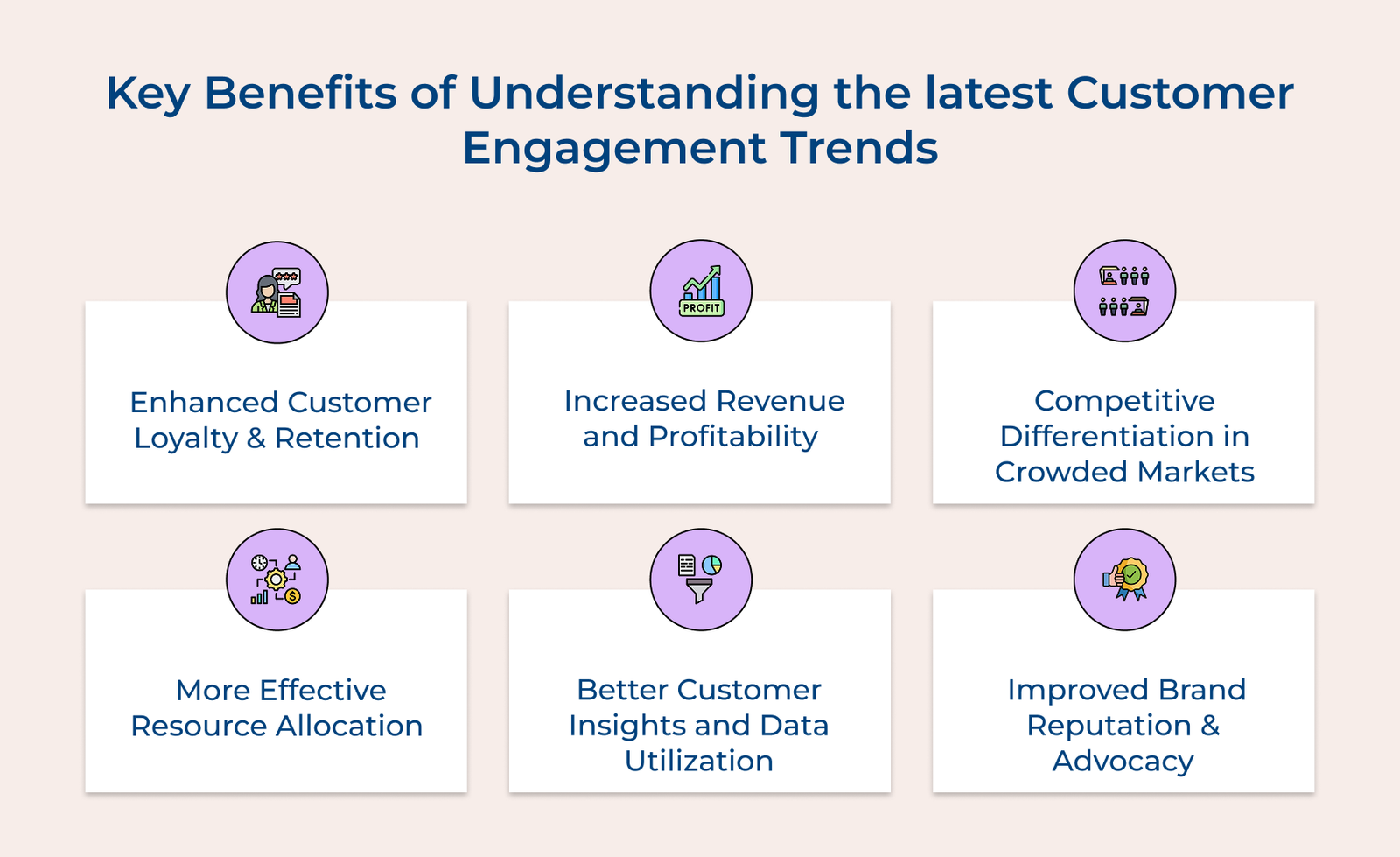
Customer engagement keeps evolving as technology and expectations move faster than ever. Companies that adapt grow stronger; those that don’t, eventually fade out. The real game isn’t about chasing trends but understanding what customers actually value and responding with clarity and intent.
Strong engagement starts with curiosity about people, not platforms. It means using technology wisely, listening closely and improving how teams connect with customers every day. When done right, the payoff isn’t just more sales. It’s deeper trust, sharper insights and relationships that stay steady even when markets shift.
Key takeaways:
- Prioritize technologies that remove friction from the customer journey while still maintaining the human element that builds emotional connections.
- Gather and act upon real-time feedback across all channels to continuously refine your engagement approach based on actual customer behaviors.
- Balance personalization with privacy by being transparent about data usage and delivering clear value in exchange for customer information.