What is Sales and Customer Service? A Detailed Guide
Learn about the roles of sales and customer service. Check out how aligning both functions enhances customer satisfaction, retention and long-term business growth.

Learn about the roles of sales and customer service. Check out how aligning both functions enhances customer satisfaction, retention and long-term business growth.
Most companies keep sales and customer service in separate lanes, chasing their own goals. The problem is, what customers are promised during the sale doesn’t always match what they get later.
Service teams collect useful feedback, yet without real communication, sales teams never see those insights that could help them close future deals. The result? Confused customers, wasted effort and growth that never reaches its potential.
The fix starts with understanding how both teams connect. Each plays a different role, but when they share information, align their goals and work through connected systems, customers feel the difference. It’s smoother, faster, and a lot more trustworthy.
Customer service refers to the support and assistance a company provides before, during and after a purchase. It’s the human side of business that involves solving problems, answering questions and making sure customers feel heard. When done well, customer service builds trust, encourages repeat business and turns satisfied buyers into long-term supporters.
Customer service works through multiple channels, be it through phone calls, emails, in-store visits, social media messages or live chat. Most companies have dedicated service teams trained to listen carefully, troubleshoot effectively and follow clear processes when resolving issues. Tools like CRM platforms help track customer history and AI chatbots often handle routine inquiries, leaving complex concerns to trained human reps.
Key principles:
Sales refers to the process of helping potential customers see how a product or service can solve a problem they care about and guiding them toward a confident decision to buy. Sales is about creating real value for both sides: the customer gains a solution and the business earns the revenue that fuels its future. More than just a transaction, effective sales build trust.
Sales are the engine of business growth. It’s how companies expand their customer base, compete in the market and fund everything from innovation to daily operations. While customer service may gather valuable feedback, it’s often sales teams who shape first impressions and set the tone for the entire customer relationship.
Key considerations:
Let’s go through the importance of sales and customer service coordination, shedding light on how their collaboration can turn your business into a customer-centric powerhouse.
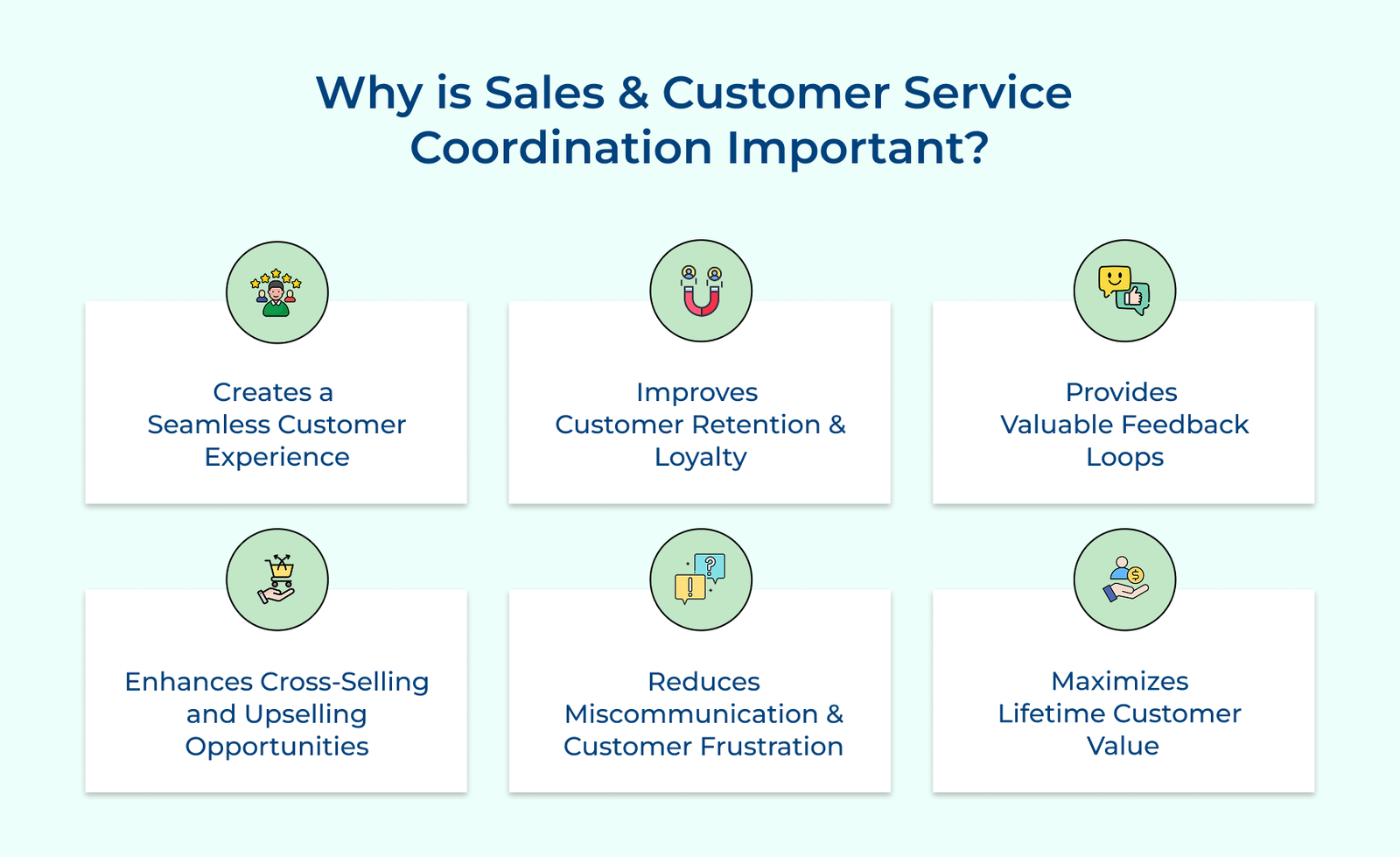
1. Creates a Seamless Customer Experience
When sales and service teams work together, customers don’t feel like they’re starting over after every step. Instead, they experience a seamless handoff from buying to getting support, building trust and confidence in your business.
2. Improves Customer Retention and Loyalty
Sales teams bring customers in, but service teams keep them coming back. When both sides deliver on the promises made during the buying process, customers are more likely to stay, return and recommend you to others.
3. Provides Valuable Feedback Loops
Service reps hear customer concerns firsthand. Sharing the feedback with the sales team helps refine messaging, anticipate objections and improve how the business connects with future buyers.
4. Enhances Cross-selling and Upselling Opportunities
Support conversations often reveal unmet needs. When service staff understand the full product range, they can alert sales to upsell or cross-sell opportunities, generating more value without chasing new leads.
5. Reduces Miscommunication and Customer Frustration
Disjointed messaging frustrates customers fast. Aligning your teams ensures they hear the same information at every step, preventing mixed messages and protecting your reputation.
6. Maximizes Lifetime Customer Value
Sales might start the relationship, but service helps it grow. Together, they keep customers satisfied, engaged and open to new solutions, leading to higher long-term value for both sides.
Below are the key differences between customer service vs sales, helping you to understand how they complement each other in the journey towards improved customer relations.
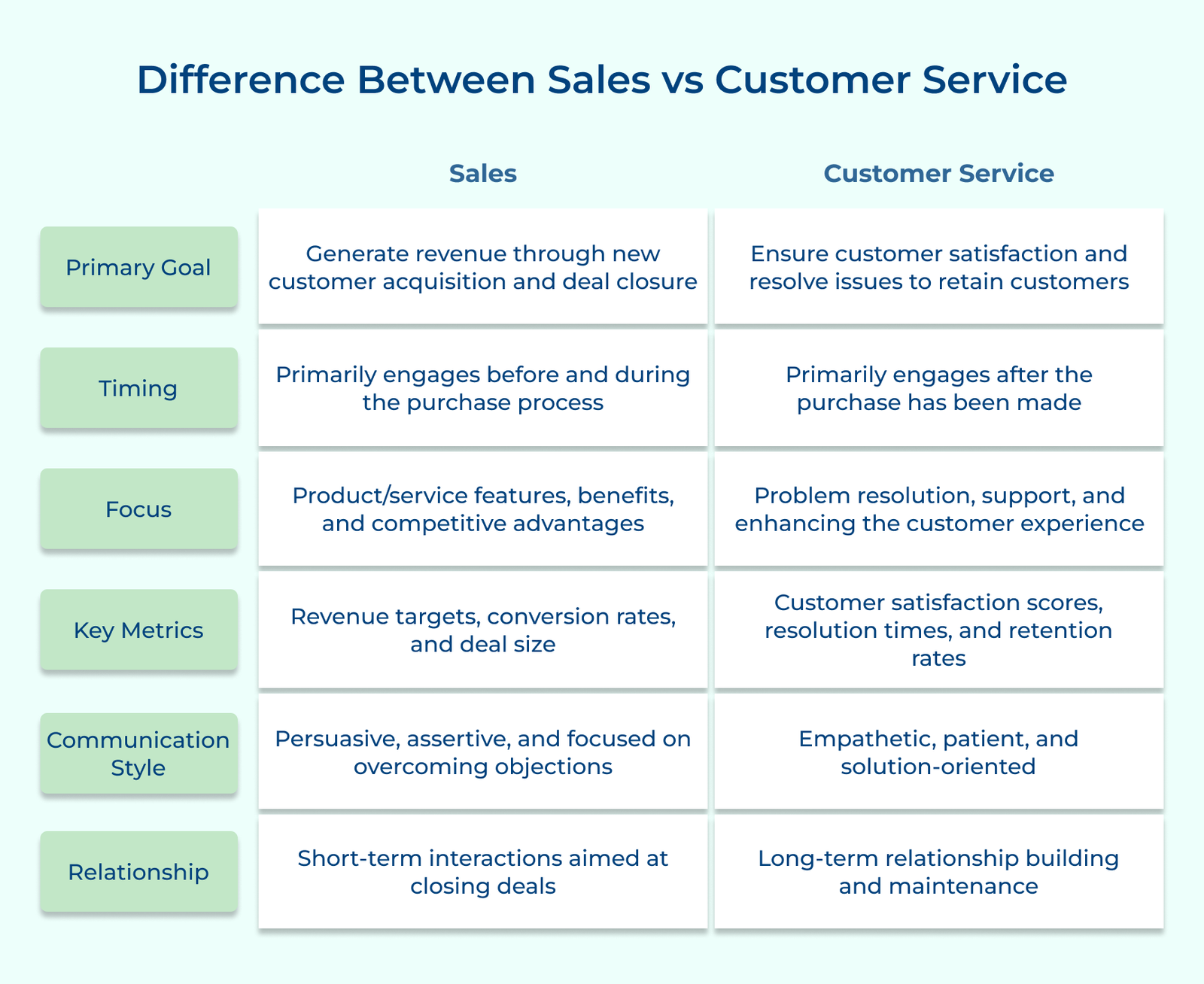
Sales teams work to bring in new business. Their job is to show potential customers how a product or service meets their needs, address any doubts and close the deal. Success is measured by how much revenue they generate, either through new customers or expanding existing ones.
Customer service supports customers after the sale. Their focus is on solving problems, answering questions and making sure customers get lasting value from what they’ve purchased. The goal is to build satisfaction and long-term loyalty, not just fix issues.
Sales gets involved early, during the research and decision-making phase. They help potential customers figure out if a product fits their needs and guide them through to the point of purchase.
Customer service steps in after the deal is done. They help with setup, resolve problems and make sure customers stay happy over time. While traditionally post-sale, modern service teams also reach out proactively to support customers before issues even arise.
Sales conversations are persuasive. The goal is to answer questions, clear up doubts and guide the customer to a confident yes. Salespeople frame benefits, address hesitations and keep the conversation moving toward a decision.
Customer service conversations are supportive. The aim is to understand the customer’s issue and solve it. It requires listening closely, being patient and making sure the customer feels heard—even if they’re frustrated.
Sales success is tracked using numbers, like how many deals are closed, how much revenue is brought in or how quickly leads convert. The metrics tie directly to business growth and performance targets.
Customer service success is about the quality of experience. Teams are measured by how quickly they resolve problems, how satisfied customers are after interactions and how well they retain those customers over time.
Sales roles require confidence, clear communication and the ability to handle rejection. Successful salespeople understand their product, ask good questions and tailor their pitch to each buyer.
Customer service roles call for patience, empathy and solid problem-solving. Service reps need to stay calm under pressure, explain things clearly and adjust their tone depending on who they’re talking to or what they’re dealing with.
While account managers may stay involved with key clients, most sales efforts aim to guide someone to a purchase. Once that’s complete, the job is largely finished. The focus is on helping a customer see the value of a product or service and convincing them it’s worth the investment.
Support teams stay connected with customers throughout their time using the product. Over months or even years, they help solve problems, answer questions and make sure things keep running smoothly. The ongoing support builds trust and often plays a big role in if the customers stay or leave.
Below are the vital elements that bind sales and customer service together and propel businesses toward success.
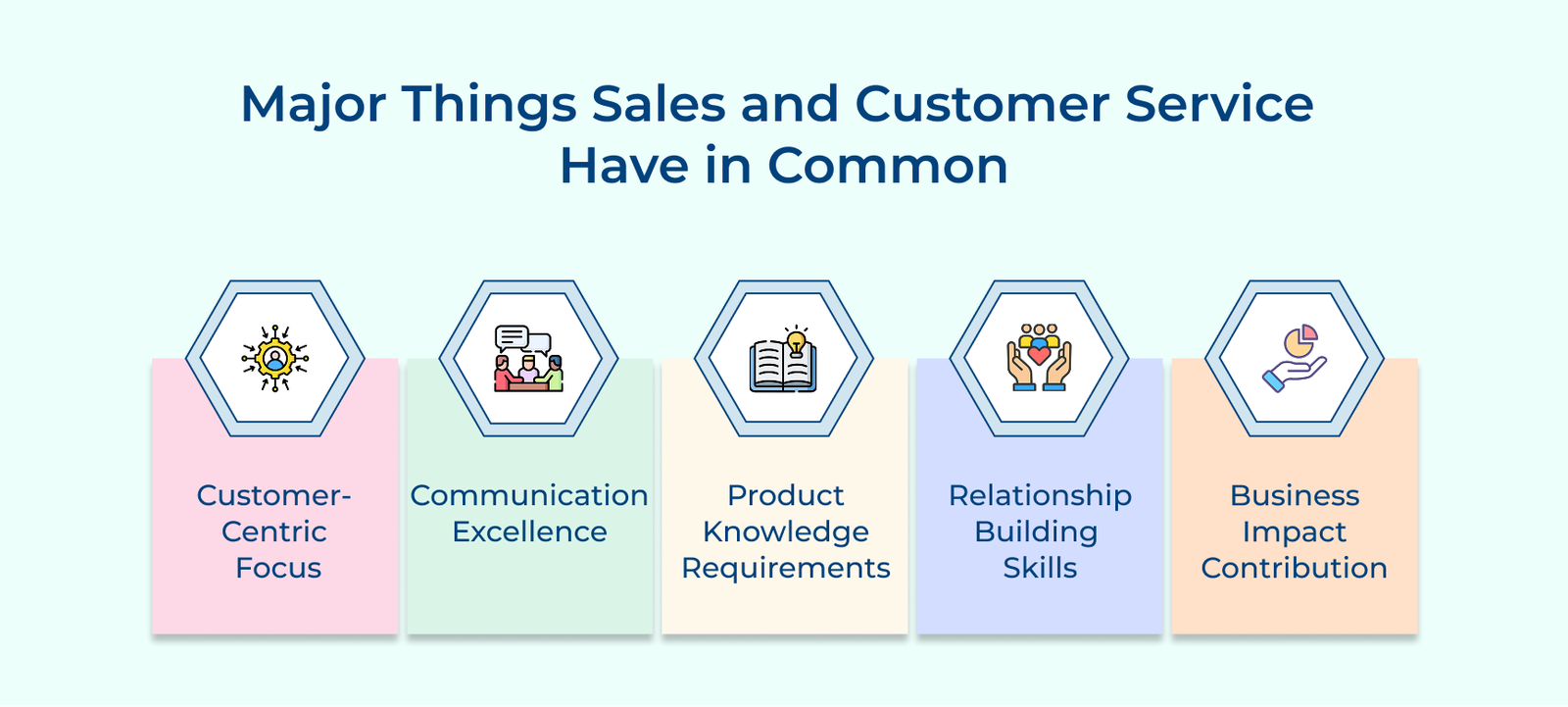
1. Customer-Centric Focus
Sales and customer service both revolve around what the customer needs. Be it the closing of a deal or solving a problem, both roles depend on paying close attention to the customer’s concerns and goals.
2. Communication Excellence
Clear, thoughtful communication is essential in both roles. Be it the explaining of product details or troubleshooting an issue, team members need to ask good questions, listen carefully and adjust their tone depending on who they’re talking to.
3. Product Knowledge Requirements
Both teams must know the product well, what it does well, where it has limits and how it can help. The knowledge allows them to speak with confidence and help customers make informed decisions or solve issues effectively.
4. Relationship Building Skills
Success in both sales and service depends on trust. Keeping promises, showing consistency and treating each customer like more than a number helps build relationships that last beyond a single transaction.
5. Business Impact Contribution
Sales bring in new customers while customer service keeps them around. Together, they influence long-term business success by driving revenue, reducing churn and uncovering new opportunities with existing clients.
Check out the effective ways that sales and customer service can work together, leading to a unified approach that benefits both the company as well as its customers.
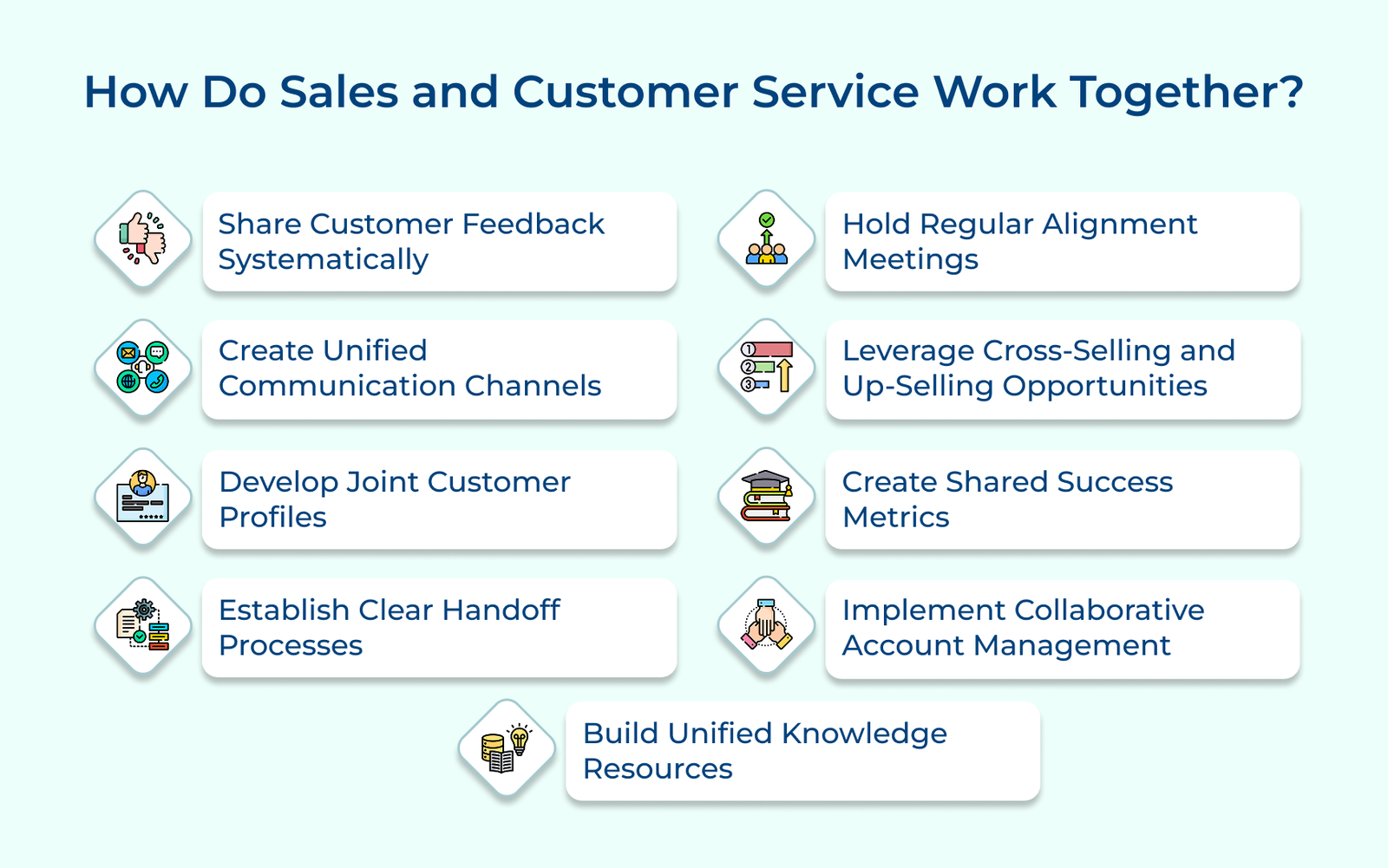
Organized feedback sharing turns scattered insights into actionable knowledge. Without a system, valuable observations from sales and service teams often stay trapped in silos, leading to missed opportunities. When both teams commit to regular feedback sharing, they create a steady flow of information. Service teams can warn sales about recurring product complaints, while sales can update service on promises made during deals or upcoming customer demands that might affect the workload.
Let’s assume that a software company created a shared internal database. In it, the customer service reps logged feature requests and sales reps added notes on pricing pushback or competitive comparisons. The simple setup helped other teams prioritize changes that improved both customer satisfaction and sales performance.
Pro tips:
Shared communication tools help sales and customer service teams stay on the same page. Both teams avoid silos, reduce communication and deliver a smoother customer experience from first contact through long-etrm support by working in the same system.
Switching to a shared platform isn’t always easy. Some teams may resist change, especially if they’re comfortable with their current tools. Show clear benefits early on, offer hands-on training and choose tools that make their jobs easier, not harder.
Joint customer profiles bring together all key information about each customer in one place that both sales and service teams can update. The profiles include purchase history, past support interactions, known preferences, recurring issues and notes from past conversations, giving everyone a full picture of the customer at every stage.
Sales and service teams collaborate continuously on the profiles throughout the customer lifecycle. The sales reps initiate profiles during prospecting and enrich them during the sales process with discovered needs.
Actionable tips:
Smooth handoff between sales and customer service is essential for keeping the customer experience consistent. Without clear transitions, customers can feel dropped or confused, especially if service teams are unaware of the promises made during the sales process.
A strong handoff process starts with the sales team thoroughly documenting what was discussed and agreed upon with the customer, such as specific needs, expectations, timelines or commitments. Before onboarding, the service team reviews this information so they’re prepared for their first interaction.
Best practices:
Alignment meetings are routine check-ins where sales and customer service teams meet to stay on the same page. The sessions keep communication flowing and help both sides work together toward improving the customer experience. Each meeting follows a clear agenda, with both teams contributing.
Sales might share updates on upcoming campaigns, new accounts or trends that could increase support needs. Customer service can highlight recurring issues, customer feedback or concerns that may affect future sales conversations. Leaders from both sides use the time to sort out misunderstandings, resolve process gaps and make sure everyone’s working toward the same goals.
Best practices:
When sales and customer service teams work together, they can spot and act on chances to offer customers more useful products or upgraded services. It turns routine interactions into meaningful ways to help customers while also growing revenue, without pressuring anyone.
The process starts with the sales team walking service reps through the full product lineup, including which tools or features work best in different scenarios. Then, during support calls or chats, service reps listen for clues like repeated frustrations, feature gaps or changing needs and note the in the shared customer profile.
Key takeaways:
Shared success metrics give both sales and customer service common goals and a shared responsibility for how customers experience your business. Instead of focusing on who owns what part of the journey, teams work together to improve the whole experience from first contact to long-term support.
Creating the metrics starts with leadership from both teams identifying what truly matters for customer success. Sales might highlight metrics like deal quality or onboarding success, while service contributes data on retention, issue resolution and satisfaction trends. Together, they build a simple scorecard, just a few metrics at first, that tracks both the start and the long-term health of each customer relationship.
Key takeaways:
Collaborative account management brings sales and customer service together as one team for managing high-value or complex accounts. Instead of handing customers off after the sale, both departments stay involved to ensure consistent support and long-term growth. It starts by identifying accounts where this joint model makes the most sense, typically large, high-potential or strategically important customers.
A sales lead and a service counterpart are paired to manage each account together. Sales focuses on identifying growth opportunities, while service ensures smooth onboarding, ongoing support and satisfaction. Both team members join customer meetings, share responsibility for outcomes and co-develop a customized account plan.
Key takeaways:
A centralized knowledge base helps both sales and customer service teams work from the same information. It reduces confusion, prevents mixed messaging and saves time by avoiding duplicated efforts across departments.
Both teams contribute their expertise. The sales share valuable insights like competitor comparisons and product positioning, while service adds how-to guides and troubleshooting instructions. The resulting resource is more complete and useful than anything built in isolation by combining their knowledge.
Best practices:
Let’s go through some inspiring cases that illustrate how sales and customer service can work hand in hand to create remarkable outcomes.
Amazon’s “Customer Obsession” Culture
Amazon instills customer-centricity across all departments through its leadership principles. Sales and customer service professionals share real-time access to purchase history, ensuring both sides stay informed.
When service teams hear about recurring issues or product gaps, the insights go straight to sales and product teams, helping shape offerings before problems grow. The tight feedback loop means fewer surprises for customers and smoother experiences. It results in repeat buyers, fewer complaints and a customer base that feels understood, not just sold to.
Apple’s Integrated Retail Experience
Apple Stores don’t draw a hard line between sales and support. The Genius Bar sits side-by-side with product specialists and both teams are trained to handle a mix of questions, from fixing a phone to explaining how a new product works.
Everyone shares the same customer history through a unified system, so conversations feel continuous, even when you switch between support and sales. The setup makes people feel supported throughout their time with Apple. When buying another device, customers know help is easy to reach and consistent. The trust keeps them in the Apple ecosystem.
Zappos’ Empowered Service Representatives
Customer service reps at Zappos do more than fix problems, they also help with product selection and even close sales. But they don’t do it with a script or a sales quota. They’re trained to know the products well and they’re given the freedom to take as much time as needed to help each person. It creates real conversations, not transactions.
Customers get honest advice, not upsells and that builds trust. People return not just for the products, but for the people. They recommend Zappos because of how they were treated, not because of a discount or ad campaign.
Below are some dynamic tools that can transform your customer service and sales coordination, enabling your business to flourish.
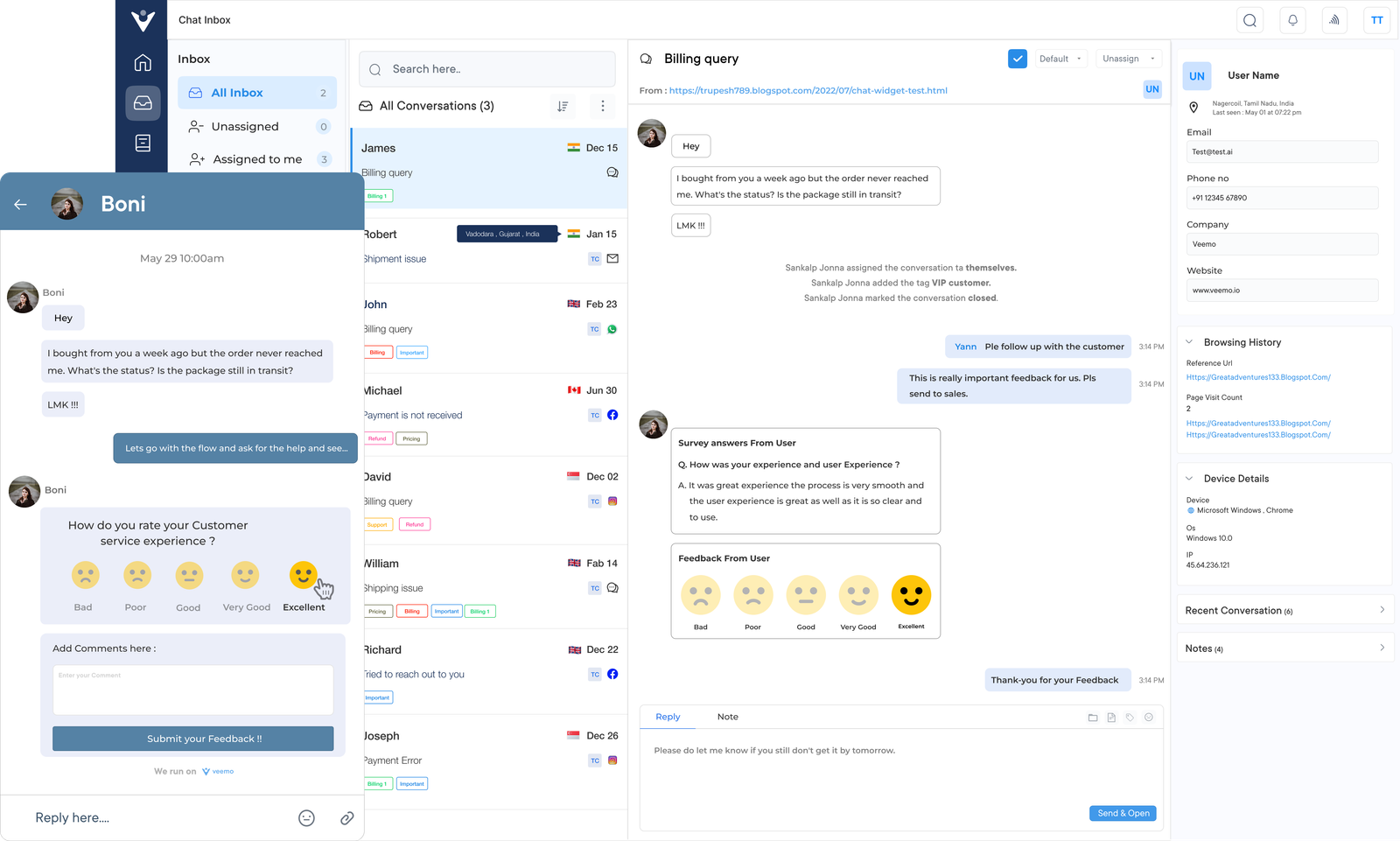
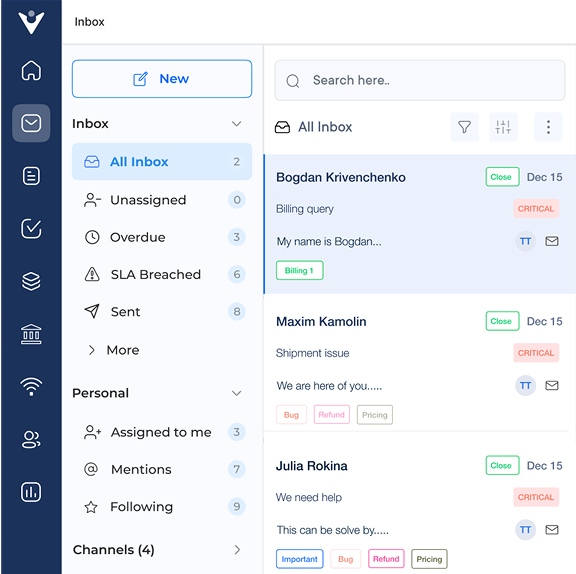
Veemo Chat is a messaging platform that helps businesses talk to website visitors in real time. Instead of using slow forms or disconnected channels, it brings together chatbots, live chat and automation so customers can quickly get the help they need, from sales, support or anyone else on the team. It’s built to keep conversations going across departments without customers having to repeat themselves or start over.
Key features:
Pricing: The tool offers four pricing plans: growth, team, premium and enterprise. The pricing for the plans starts at $19 / user/month.
Zendesk has grown from a basic support ticketing tool into a platform that brings together sales, support and engagement in one place. It gives teams a shared view of every customer interaction across email, chat, phone and more, so conversations stay connected.
Sales and service can work side by side using a unified timeline, access the same knowledge base and see customer profiles that update as relationships develop. Support tickets can even convert into sales leads, helping teams respond faster and more effectively without switching tools.
Zoho CRM gives mid-sized businesses a practical way to manage customer relationships without heavy tech demands. It brings contact info, sales pipeline, communication and analytics into one system that’s easy to use. Teams can see a full timeline of customer interactions across departments, making handoffs smoother and follow-ups more informed.
Zoho’s built-in AI assistant helps both sales and support by suggesting actions or automating routine tasks. Shared templates, collaborative account portals and a central knowledge base help teams stay aligned.
Freshworks brings together Freshsales and Freshdesk into one system that helps sales and support teams work more closely without needing a complex setup. It gives both teams access to a complete view of each customer, with a shared inbox that pulls in messages from all channels.
AI tools highlight when a support conversation could lead to a sales opportunity, making it easier to act quickly. Teams also share contact records, use automated rules to assign tasks and manage accounts together – all within a simple, easy-to-navigate interface.
When sales and customer service teams work as one, the result is a smoother, more thoughtful experience for customers. Instead of being passed between disconnected departments, customers move through a process that feels consistent and well-informed. Sales reps know what issues a customer has faced and the customer service agents understand what was promised during the sale. The shared context turns everyday interactions into moments that build trust.
The benefits go well beyond better conversations. When teams are aligned, customers are more likely to stick around, buy again and recommend your business to others. It’s a shift from simply handling transactions to building long-term relationships—something that’s hard for competitors to copy.

Start by giving both teams access to the same tools – shared communication platforms, joint customer profiles and real-time updates. Hold regular meetings focused on improving the customer journey, not just hitting team goals. Define clear handoff rules so everyone knows when and how to step in. Use shared metrics to measure joint success and make sure both teams understand each other’s roles. Train service reps to spot sales opportunities and teach salespeople to set honest expectations that service can deliver on.
When sales and service are aligned, customers get a smoother, more consistent experience. There’s less chance of confusion or disappointment and more chances to build real trust. It also opens the door for relevant cross-sells, saves time by avoiding repeated work and makes customers feel like they’re dealing with one team, not a series of disconnected departments.
Different goals and pay structures can pull teams in opposite directions—sales wants to close, service wants to retain. When departments use separate tools or don’t share information, things fall through the cracks. Each team often has its own culture and past friction between them can cause resistance. Fixing this takes more than tech—you need clear leadership, aligned goals and a strong push for collaboration.
Modern CRMs let both teams see the full customer story in one place. Shared inboxes and chat tools keep communication flowing. Joint dashboards track performance across departments, while automated workflows reduce the chance of dropped tasks. AI tools can even suggest when a support case might turn into a sales lead. The right tech doesn’t just organize—it helps teams stay on the same page and build trust.
Look at customer retention to see if people are sticking around. Use customer effort scores to find handoff issues. Check first-contact resolution rates to make sure expectations are realistic. Track how much revenue comes from service-led sales and use Net Promoter Scores at different stages to spot breakdowns. Most importantly, monitor customer lifetime value – the clearest sign of a well-coordinated experience.
Grow Customer Relationships and stronger team collaboration with our range of products across the Conversational Engagement Suite.
Omnichannel Customer Support & Help Desk Software
AI Enabled Business Messaging and Chatbot Software
Sales Engagement & CRM Software
Call Center Software & Virtual Phone System
Product Marketing & Experience Platform
Customer Experience & Feedback Management Software

 What is Contact Management? Key Steps, Features and Limitations
Scroll to top
What is Contact Management? Key Steps, Features and Limitations
Scroll to top