1. Functional Requirements: Core Operational Needs
Functional requirements spell out the essential tasks a product or service must perform. They are the non-negotiables; if they’re missing, the product simply doesn’t work for the customer.
They’re not about impressing users; they’re about meeting the basic promises that prompted the purchase in the first place. The requirements help product teams stay focused on what matters. They become the blueprint for development, guiding what features are built, how they’re tested and what defines success.
Pro tips:
- Prioritize functional requirements using a must-have/should-have/could-have framework to ensure core functionalities are developed first before nice-to-have features.
- Validate functional requirements through prototypes or minimum viable products that allow customers to test core functionality and provide feedback before full development.
2. Reliability Requirements: Consistency Under Stress
Reliability requirements define how often a product or service must perform under various conditions, including unexpected situations. The requirements are crucial because customers need assurance that offerings will work consistently when needed, without unexpected failures that could damage trust or disrupt operations.
Businesses use reliability requirements to establish quality control processes, testing protocols, and service level agreements. Companies can engineer systems that maintain performance even during challenging circumstances and develop contingency plans for when issues inevitably arise by setting clear expectations for uptime, failure rates or recovery capabilities.
Actionable tips:
- Implement stress testing under extreme conditions beyond what customers would typically encounter to identify potential failure points before they occur in real-world situations.
- Develop clear metrics for reliability, such as mean time between failures or uptime percentage, to objectively measure performance and identify areas for improvement.
3. Usability Requirements: Ease of Use
Usability requirements define how simple, intuitive and accessible a product or service should be for people to use it successfully. No matter how many features something offers, if it’s hard to use or confusing, customers will give up. Good usability makes it easy for people to get what they need without frustration.
Key requirements:
- Use interviews, journey mapping and testing to see how people interact with your product or service, then adjust based on what you learn.
- Stick to layouts that follow established patterns, use clear language and provide visual cues that guide users naturally through tasks without requiring extensive training.
- Include features like screen reader support, proper contrast and keyboard navigation to ensure usability isn’t limited by ability.
- Use progressive disclosure, show the basics first and reveal advanced options only when they’re needed.
Usability isn’t just about products with buttons and screens. Services also need to be easy to use. It means clear instructions, short wait times and processes that don’t leave people confused. Be it digital or in person, every touchpoint should make things simpler, not harder.
4. Performance Requirements: Speed Efficiency Metrics
Performance requirements describe how fast, responsive, and efficient a product or service must be to meet real-world customer expectations. Even if something does everything it’s supposed to, it can still fall short if it runs slowly, freezes under load or wastes system resources. Performance shapes how people feel about your product and if they keep using it.
- Run real-world performance tests and identify where things drag. Then improve or replace the weakest parts until the whole system runs smoothly.
- Design systems that can grow with demand. Choose tools that make it easy to add capacity without tearing everything down and starting over.
- Use tools to track how much memory, CPU and bandwidth are being used. Find bottlenecks early and adjust before they cause real problems.
- Keep frequently used information close at hand through caching and organized storage to minimize the time it takes to retrieve data.
The greatest challenge with performance requirements is balancing competing priorities. Enhancing performance often requires additional development time, more expensive hardware or complex optimization techniques.
Businesses frequently struggle to determine how much performance is “good enough” versus when diminishing returns make further improvements impractical. The balance becomes even more difficult as systems grow more complex.
5. Security Requirements: Protection Against Threats
Security requirements define how a product or service protects customer data and prevents unauthorized access or misuse. The requirements have become essential as cyber threats grow more sophisticated and customers increasingly trust businesses with sensitive information. Strong security builds trust and helps businesses meet regulatory compliance obligations.
Key requirements:
- What types of data are we collecting and how sensitive are they from the customer’s point of view?
- How will we secure data both at rest in our systems and when it’s being transmitted between different points?
- What login or identity checks strike the right balance between keeping accounts secure and keeping things usable?
- What is our response plan if a security breach occurs despite our preventive measures?
- How will we keep up with new threats and make sure protections don’t fall out of date?
Businesses meet security requirements through layered protection strategies, including strong encryption, regular security audits, access controls and comprehensive security policies. They implement security by design, incorporating protection from the earliest planning stages rather than adding it later. The approach ensures security is woven into the core architecture rather than bolted on as an afterthought, where vulnerabilities might remain.
6. Support Requirements: Post-Purchase Assistance
Support requirements define the kind of help customers expect after purchasing a product or service. Even the most reliable and well-designed offerings will eventually raise questions or require troubleshooting. When customers get the help they need, quickly and clearly, they’re far more likely to feel confident in their decision to choose your brand.
Key types:
- Helping solve complex problems, often with live support from someone knowledgeable. It might include remote troubleshooting, access to a support team or a clear path for escalating issues that can’t be resolved quickly.
- Many people prefer to solve issues on their own. It means they’ll need access to clear, searchable documentation, video tutorials, how-to guides and FAQs.
- Establish what educational resources customers need to fully utilize a product or service, including initial setup guidance, feature walkthroughs and best practice recommendations.
- Determine expectations for updates, upgrades, preventive care and regular check-ins that keep products functioning optimally throughout their lifecycle.
Consider a customer who purchases enterprise software. They require 24/7 technical support, comprehensive documentation, personalized onboarding sessions for their team and quarterly check-ins to review usage patterns. The support requirements are as crucial to their satisfaction as the software’s core functionality.
How to meet:
- Offer more than one support channel, like chat, phone and email, so customers can choose what works best for their situation.
- Track support interactions to identify recurring issues that might indicate product design problems requiring permanent fixes rather than repeated assistance.
7. Emotional Requirements: Feeling Connection Satisfaction
Emotional requirements are about more than what a product does; they’re about how it makes people feel. The feelings can be just as important as any feature or function. Be it a sense of comfort, trust, confidence or delight, the emotional experience often plays a big role in whether customers stick around, recommend a brand or decide to come back.
Key effects:
- Increased customer loyalty develops naturally when products or services create positive emotional associations, making customers less likely to switch brands even when competitive alternatives exist.
- People pay more for experiences that make them feel seen, appreciated or aligned with their values. The emotional payoff becomes part of the value.
- More enthusiastic word-of-mouth occurs spontaneously when products fulfill emotional requirements, turning customers into passionate advocates who share their positive experiences with friends and colleagues.
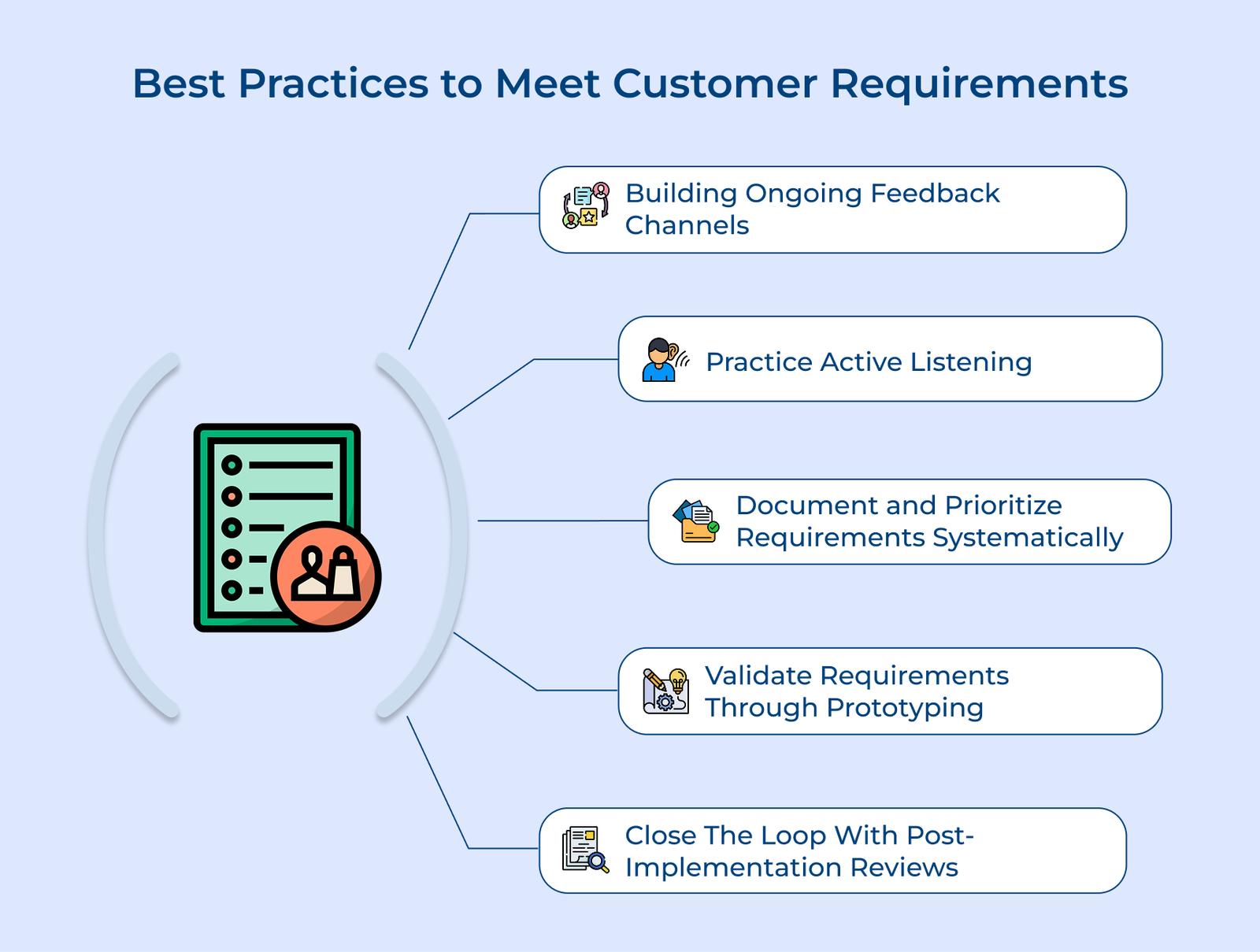
Best Practices to Meet Customer Requirements
Below are the best practices that can guide you to not only meet but exceed customer expectations, ensuring your business thrives.