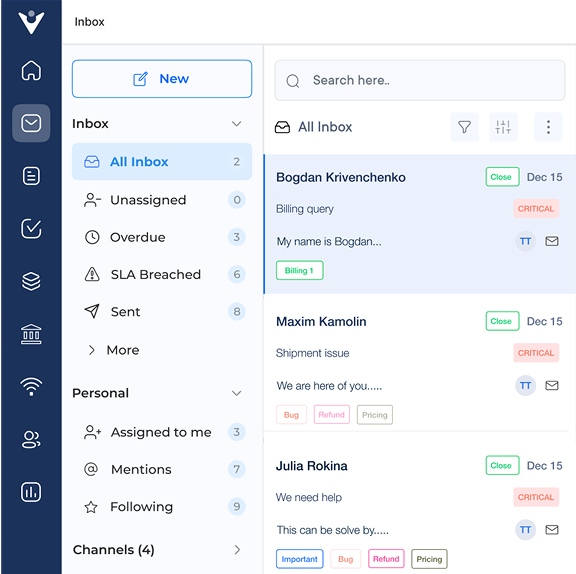
1. Map Your Current Customer Journey
Understanding your current customer journey serves as the foundation for any modern customer experience strategy. The step shows where customers connect with your business and points out what needs fixing or improving.
Most businesses should track these essential customer touchpoints throughout their journey:
- Website visit: First impression through your digital storefront and product discovery experience.
- Social media engagement: Brand interactions through posts, comments and direct messages across platforms.
- Sales process: Direct communication with sales representatives and product demonstration experiences.
- Purchase transaction: Payment processing, checkout experience and order confirmation communications.
- Customer support: Help desk interactions, troubleshooting assistance and problem resolution experiences.
But how do you identify what specific touchpoints matter most for your business? Begin by seeing things from your customer’s perspective, from first hearing about you to after they buy. Note where they meet your brand and what they do along the way.
What else should you focus on during this mapping process? Look for moments where customers might feel frustrated, confused or delighted. The emotional peaks and valleys reveal the most critical areas for improvement in your overall experience.
2. Define Your Customer Experience Vision
Your customer experience vision acts as the North Star that guides every decision and interaction across your organization. The simple statement spells out what a great customer experience looks like for your business and industry.
Here are three proven approaches to craft a compelling customer experience vision:
- Start with customer emotions: Decide how you want customers to feel when they interact with your brand. Aim for genuine emotions, not just practical results.
- Align with brand values: Make sure your vision matches your company’s values and mission. The customer experience should be a true reflection of who you are.
- Make it measurable: Set clear metrics to track how you’re moving toward your vision. Use numbers and real customer feedback to see what’s working.
Consider how Amazon’s vision centers around being “Earth’s Most Customer-Centric Company.” The clear statement guides decisions and sets expectations for how your team should act.
3. Understand Your Customer Segments Deeply
Deep customer understanding forms the backbone of personalized experiences that drive loyalty and satisfaction. If you don’t know your customers and what they want, you can’t create experiences that truly connect.
Comprehensive customer research involves gathering both quantitative and qualitative data. Key questions for effective customer segment research:
- What problems are customers trying to solve when they choose your product or service?
- How do customers prefer to interact with brands in your industry?
- What factors influence their purchasing decisions most strongly?
- Where do customers spend time researching before making buying decisions?
The questions help you understand not just what customers do but why they make specific choices. The insights uncover what drives your customers, helping you design better experiences and communicate more clearly.
After thorough research, create detailed buyer personas based on customer groups. The personas turn data into clear, relatable profiles that help guide decisions throughout your business. Key elements to include in buyer personas:
- Demographics and psychographics
- Goals and motivations
- Pain points and challenges
- Preferred communication channels
Why should you analyze customer behavior patterns and preferences as the final step? The analysis shows the difference between what customers say they want and how they behave.
4. Build Your Omnichannel Experience Framework
An omnichannel approach ensures a smooth, consistent experience across all customer touchpoints. The approach breaks down silos between departments and creates seamless transitions across all customer touchpoints. 7 out of 10 retail shoppers use multiple channels in their shopping journey.
Connect all channels for seamless customer transitions
Modern customers expect to start conversations on one channel and continue them on another without repeating information or losing context completely. Your system should let customers switch channels without losing their history or preferences.
Ensure consistent brand messaging across all platforms
Your brand’s voice and tone should stay the same across email, social media, your website or in-person. The consistency builds trust and gives customers a clear, unified experience.
Enable unified customer data across all touchpoints
Centralized customer data allows you to personalize experiences and make informed decisions based on complete customer histories from all channels. The unified view combines purchase history, support, preferences and messages across systems.
5. Design Your Ideal Customer Experience
Designing your ideal customer experience turns your vision and insights into clear, practical plans that truly meet customer needs. The step bridges the gap between understanding what customers need and providing experiences that exceed their expectations.
Answer these essential questions before designing your ideal customer experience:
- What specific emotions do you want customers to feel at each stage of their journey?
- How can you anticipate customer needs before they even express them?
- What would make your customers choose you over competitors every single time?
- How can you create memorable moments that customers will share with others?
The questions push you past simple service to create experiences that truly connect with customers. Here are three proven strategies businesses use to deliver truly exceptional customer experiences:
- Personalize interactions based on individual customer history and preferences across all touchpoints.
- Proactively solve problems before customers realize they exist through predictive analytics and monitoring.
- Create surprise moments that exceed expectations without being asked or expected.
What happens when you try to design the perfect experience but lack the resources to implement everything? Begin by improving one or two key touchpoints instead of overhauling everything. It lets you test ideas and gain momentum before moving on.
6. Build Your CX Implementation Team
Creating a team focused on customer experience helps turn plans into action with clear responsibility and expert focus. The team serves as the driving force that coordinates efforts across departments and maintains momentum throughout the transformation process.
Successful implementation starts by assigning clear roles that match your customer experience goals. Every team member should know their tasks and how their work shapes the bigger customer experience.
The four key roles form the backbone of the most effective customer experience implementation teams:
- CX program manager: Oversees the entire implementation process and ensures all initiatives align with strategic objectives.
- Data analyst: Monitors key metrics and offers insights to help guide decisions, improving results.
- Training coordinator: Develops and delivers educational programs that build customer experience skills across the organization.
- Technology specialist: Manages system integrations and ensures all platforms work together to support seamless customer experiences.
Once roles are set, create processes for teams to collaborate and share information across departments. How do you ensure marketing, sales and support work together instead of operating in isolation? Create regular cross-functional meetings and shared goals that require departments to collaborate rather than compete with each other.
Training your staff is key to improving how they interact with customers and boosting satisfaction. Well-trained employees understand how their daily actions impact customer perceptions and business outcomes.
- Customer experience fundamentals training
- Emotional intelligence development program
- Communication skills enhancement workshop
7. Establish Customer Feedback Collection Systems
Customer feedback collection systems provide the real-time insights necessary to understand how your experience strategy performs in actual customer interactions. Without regular feedback, you’re flying blind, missing chances to fix small issues before they grow bigger.
The systems create several ways for customers to share their thoughts and experiences at every step of their journey. The key lies in making feedback collection feel natural and valuable rather than burdensome or intrusive to customers.
Pro tips:
- Ask for feedback immediately after key interactions while the experience remains fresh in customers’ minds.
- Use multiple collection methods to capture different types of feedback from various customer segments and preferences.
8. Measure Results and Optimize Continuously
Regular measurement keeps your customer experience strategy working well, adapting as needs change. The ongoing process transforms your initial strategy into a dynamic system that improves over time through data-driven decision-making.
Regularly tracking key metrics gives you the hard data needed to see if your customer experience efforts are making a difference. The metrics reveal trends, patterns and areas that require immediate attention or strategic adjustments.
- Net promoter score (NPS)
- Customer satisfaction score (CSAT)
- Customer effort score (CES)
- Customer lifetime value (CLV)
Customer feedback adds the human side to the numbers, showing how people truly feel, something data alone can’t reveal. The feedback helps you understand not just what’s happening but why customers feel the way they do about their experiences.
Here are four essential questions for gathering comprehensive customer feedback about their experience:
- How would you describe your overall experience with our company today?
- What specific aspect of your experience exceeded or fell short of your expectations?
- How likely are you to recommend our services to someone in your situation?
- What one change would make your experience significantly better next time?
Modern Customer Experience Examples
Top companies prove that clear, customer-focused strategies give them an edge and drive growth.
1. Starbucks: Personalized Mobile Experience
Starbucks revolutionized coffee purchasing through their mobile app that remembers individual preferences and enables seamless ordering across locations. The app suggests items based on what you’ve bought before, lets you order ahead and rewards you for sticking with the brand.
The mobile-first approach transformed Starbucks from a traditional coffee shop into a technology-driven experience company. Easier service brought customers back more often and built stronger loyalty, leading to higher spending along with recommendations.
2. Amazon: Anticipatory Customer Service
Amazon anticipates customer needs through predictive analytics and proactive communication about order shipping delays and product recommendations. The system spots problems early and fixes them automatically, before customers even notice.
The proactive approach reduced customer service costs while simultaneously improving satisfaction levels and purchase confidence. Customers feel genuinely cared for, building trust that leads to bigger purchases and long-term subscriptions like Prime.
3. Disney: Seamless Omnichannel Magic
Disney’s MagicBand technology connects park visits, hotel stays, dining reservations and ride experiences into one unified system. Guests use one wearable to unlock rooms, make purchases and enjoy attractions, personalizing their Disney visit.
The integrated experience increased guest spending per visit and extended stay durations while reducing operational friction. When logistics disappear, families enjoy more magic, letting Disney charge more for hassle-free experiences.
4. Sephora: Virtual Beauty Consultation
Sephora combines in-store expertise with digital tools through virtual try-on technology and personalized beauty consultations via video chat. The app lets customers try products virtually and get expert advice anytime, no matter where they are.
The hybrid approach helped Sephora reach more customers beyond stores while keeping the personal feel that drives sales. Customers feel confident buying beauty products online, leading to increased conversion rates and reduced return rates.
5. Tesla: Direct-to-Customer Innovation
Tesla skipped traditional dealerships, connecting directly with customers through online orders, showrooms and mobile technicians. Over-the-air updates keep improving cars long after purchase.
The direct model allowed Tesla to maintain premium pricing while building a community of brand advocates who promote the company organically. Ongoing improvements keep customers engaged well after buying, building loyalty that leads to future purchases.
Emerging Trends in Modern Customer Experience Management
Customer experience keeps changing fast as new tech and shifting expectations change how businesses connect with people. The emerging trends represent the next frontier of customer engagement strategies.