What Is Social Media Branding? The Complete Guide
Learn how social media branding shapes audience perception, builds trust and strengthens engagement. Now create a consistent brand presence that drives long-term growth across platforms.
Learn how social media branding shapes audience perception, builds trust and strengthens engagement. Now create a consistent brand presence that drives long-term growth across platforms.
Have you noticed that most businesses have social media accounts, but very few are building a recognizable brand through them?
If your visuals, voice and content feel disconnected across platforms, your audience will struggle to remember what your brand actually stands for. Social media branding is the process of shaping how your business looks, sounds and is perceived across social platforms through consistent identity.
A weak brand presence can directly limit customer trust, visibility and revenue growth, with 77% of shoppers more likely to purchase from brands they follow on social media. So without further ado, let’s understand how to build a branding strategy that people actually remember.
Social media branding refers to the process of shaping how your business looks, sounds or communicates across social platforms through consistent visuals, messaging and engagement. Strong branding helps people recognize your business quickly and associate it with a specific experience, reputation or level of trust.
Having a strong social media brand presence is no longer optional for businesses. When your audience sees a consistent brand experience across every platform, they begin to associate your name with reliability and reliability is what drives purchase decisions.
Key statistics:
The numbers reveal something important. Your social media profile is often the first real interaction someone has with your brand. If the experience feels inconsistent, inactive, confusing or disconnected, trust starts weakening before the customer even visits your website or speaks to your team.
Key objectives:
Let’s go through the biggest benefits of social media branding and why a strong brand presence directly impacts long-term business growth.
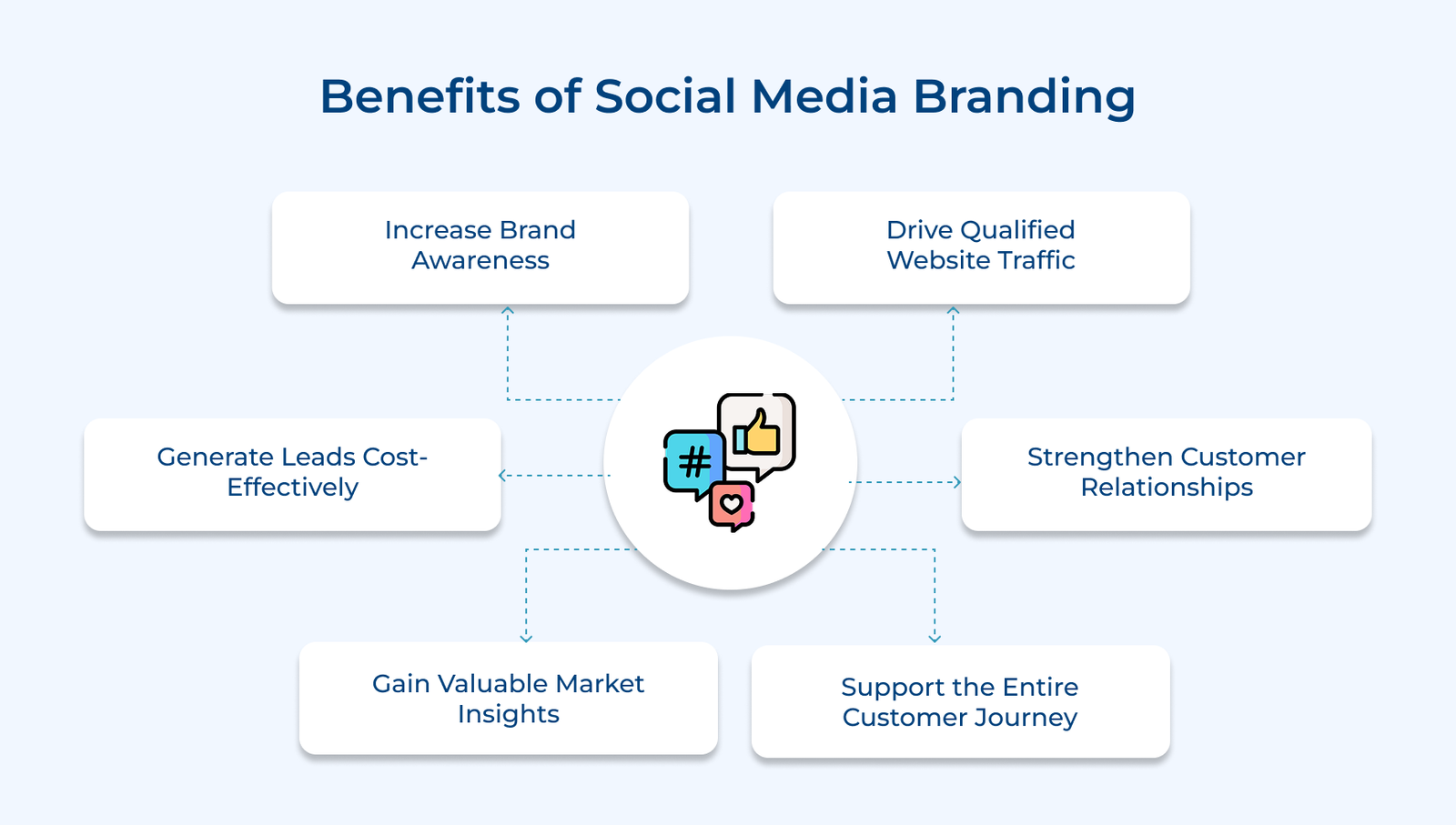
1. Build Brand Awareness Where Your Audience Already Spends Time
Most people discover and remember brands through repeated exposure on social media long before they become customers. Strong social media branding is built when your audience repeatedly sees the same visual identity, tone and messaging across their feeds consistently.
2. Drive Qualified Traffic Back to Your Website
Every post, reel or story is an entry point that can guide a genuinely interested user toward your website or product page. Unlike cold traffic from ads, an engaged social audience already carries some level of trust toward your brand before they even click.
3. Generate Leads Without Heavy ad Spend
Organic social content can attract and nurture leads without relying entirely on expensive advertising campaigns. A well-placed call-to-action in a value-driven post often converts better than a highly produced ad because it feels earned rather than pushed.
4. Strengthen Customer Relationships Through Real-time Engagement
Responding to comments, addressing concerns publicly or acknowledging customer posts builds trust in ways most retention campaigns cannot. Strong social media branding becomes much more believable when people consistently see real interaction instead of one-sided promotional content.
5. Gather First-hand Market Intelligence
Your social media comments section and DMs are honestly one of the most underused research tools available to any business. Strong social media branding becomes much easier when you understand the exact language, frustrations and interests your audience is already expressing publicly.
6. Support Every Stage of the Customer Journey
Social media influences much more than initial brand awareness. It shapes consideration, trust, purchase decisions and even post-purchase loyalty over time. Customers who continue following your brand after buying are far more likely to return, recommend your business to others, and stay connected to your brand long term.
The following are the key elements that shape a strong social media brand identity and help your business stay consistent across every platform.
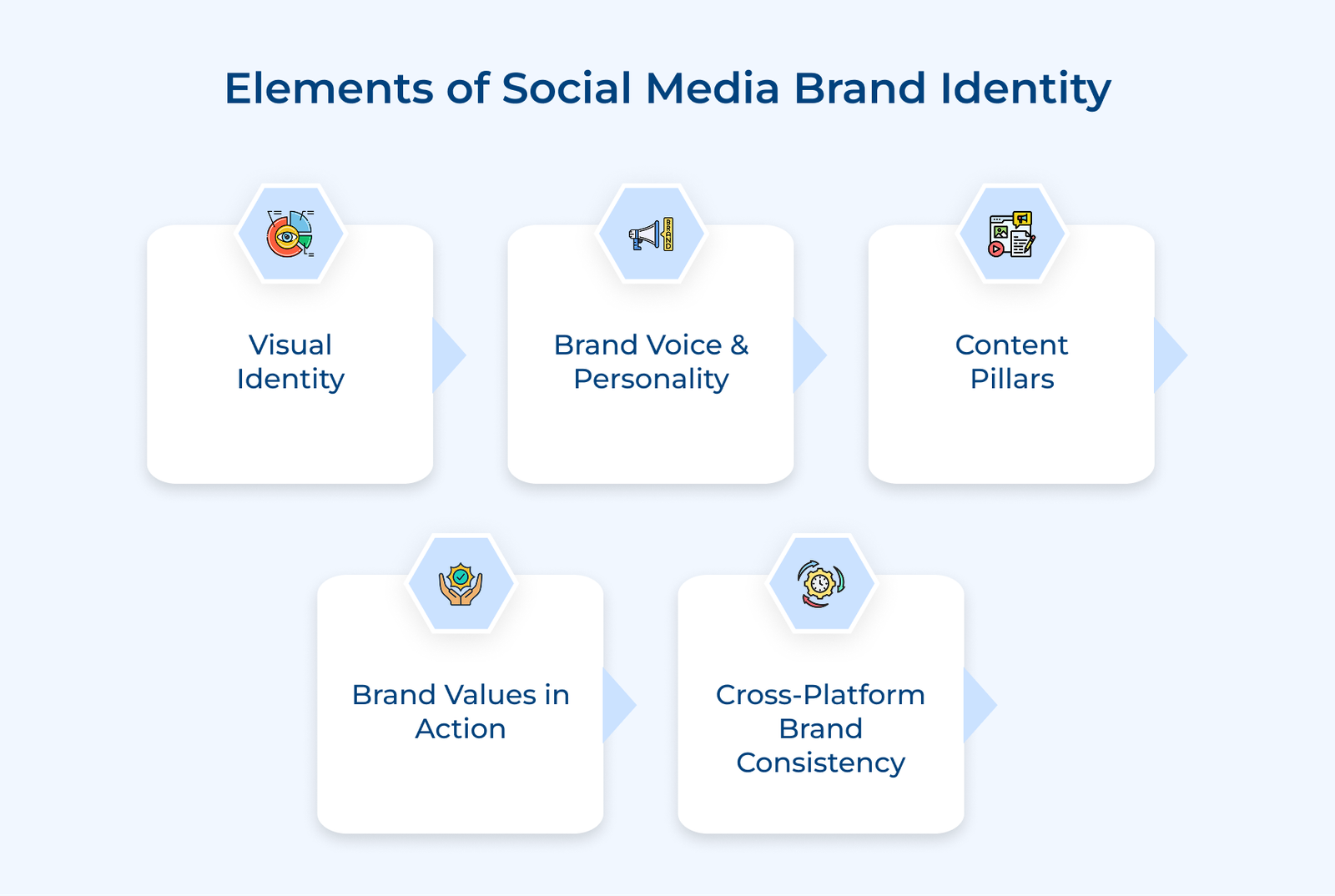
Visual identity is much more than a logo placed on social posts. It is the complete recognition system that helps people instantly identify your brand across every platform, region and piece of content they see online. Strong branding depends heavily on visual consistency because audiences recognize brands long before they read a caption or message.
When Coca-Cola posts content in Germany and India on the same day, the visual experience still feels unmistakably connected to the same brand. The moment your visuals start varying across platforms or regions, you are quietly eroding the brand equity you have spent years building.
Brand voice is much more than the wording chosen for a single post. It is a defined communication style that shapes how your brand speaks across every caption, reply, campaign and customer interaction.
Strong branding becomes easier to recognize when the tone and personality stay consistent, regardless of who creates the content. Enterprise brands like Salesforce and Apple do not sound different depending on who wrote the post, because the voice is institutionalized.
Your personality should remain consistent when sharing a product update and when responding to a public complaint. Brands lose trust quickly when their voice changes completely depending on the situation.
Content pillars are the core topics your brand consistently talks about across social media. They should be chosen deliberately and aligned with what your audience cares about most, not based on what happens to fit next week’s content schedule.
Every post should connect back to a small set of themes such as education, product value, industry insights or customer outcomes. Strong social media branding becomes much easier when audiences can quickly recognize what your brand stands for and what type of content they can expect from you.
Key ways:
Your brand values are a behavioral standard your audience measures every post and response against. When Patagonia takes a public stand on environmental policy, it is proof that its values are operational, not decorative.
Values that stay invisible on social media effectively do not exist in your audience’s mind. The brands building the deepest loyalty are the ones whose values show up in how they respond to criticism and which conversations they choose to enter or avoid.
Enterprise brand consistency means your audience should have the same brand experience if they find you on LinkedIn, Instagram or X. Strong social media branding relies on maintaining a consistent voice, visual style, messaging approach and customer experience across all platforms. Each platform may require a different content format, but the brand itself should still feel familiar and recognizable.
Key issues:
Check out the steps and insights to help you curate a winning social media branding strategy that not only boosts your brand’s visibility but also builds a lasting connection.
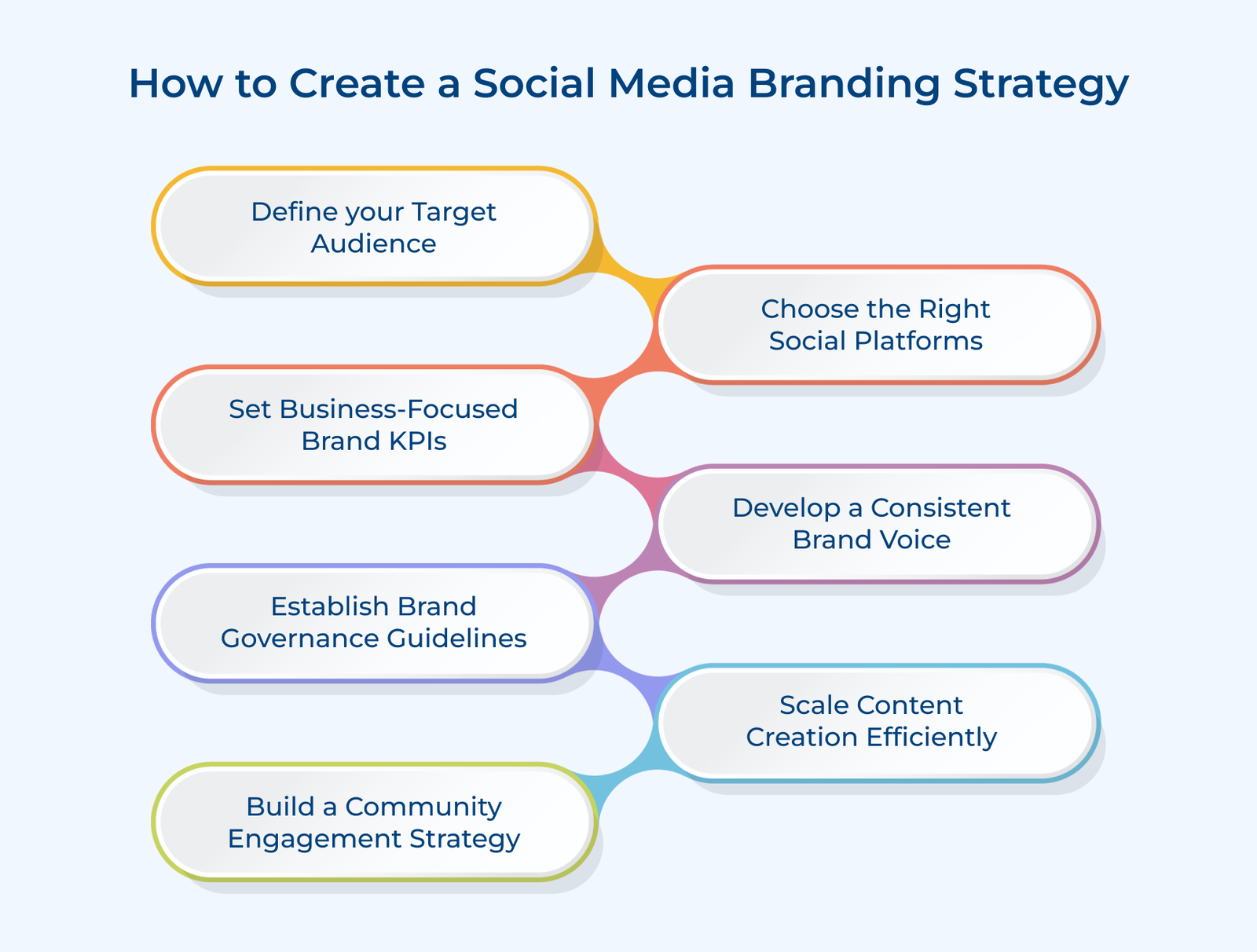
Understanding your target audience is the foundation of effective social media branding. If you do not know exactly who you are trying to reach, even great content can attract the wrong people and create very little business value.
Key questions:
The questions help you move beyond basic demographics and start understanding how your audience actually thinks, behaves and makes decisions. That is where the strongest branding marketing strategies are built.
So, how do you actually document your target audience once you have the answers? You translate every answer into a living audience persona and document your entire brand team’s consults before creating anything.
Best practices:
Choosing social media platforms should start with audience behavior, not platform popularity. Strong branding happens when your brand shows up where your audience already spends time, consumes content and makes buying decisions.
Most brands pick platforms based on popularity rather than audience fit and that is where budgets start bleeding without results. Your buyers are concentrated on two or three platforms where they are most receptive to brand content.
Pro tips:
Do you need to be present on every platform available? Not at all. A strong presence on two platforms will almost always outperform a weak presence on six. A brand that consistently delivers valuable content on LinkedIn and YouTube is likely to achieve better results than a brand posting occasionally across multiple channels without a clear direction.
Key platforms:
Many businesses spend months tracking social media numbers that look impressive but reveal very little about actual business impact. Great branding starts with measuring outcomes that help you understand brand visibility, audience perception and long-term growth.
The real value of KPIs in your social media brand strategy is connecting content decisions directly to business outcomes. If a KPI cannot link back to audience growth, pipeline or retention, it is likely a distraction dressed up as a metric.
Key KPIs:
Once your KPI data starts coming in, your response must be strategic and not reactive. If brand sentiment is dropping, audit your messaging tone and community engagement approach, not just post more content, hoping numbers recover. Review and reset your social media branding KPIs every quarter to stay aligned with evolving business goals or platform changes.
A brand voice that only works when one person is creating content is not sustainable. Building a voice that holds up across teams, agencies and markets is operationally critical for any serious social media branding strategy.
Document your brand tone with clear do’s and don’ts
Documenting your brand tone means showing your team exactly what your brand sounds like with real examples. Pair what to say alongside what never to say because vague tone descriptors like “friendly and professional” give your team nothing actionable to work with.
Create platform-specific voice adaptation guidelines
Your core personality should remain consistent across platforms, but the way it is expressed should adapt to the environment. A brand may sound more conversational on X and more educational on LinkedIn. The tone changes to match audience expectations, but the underlying personality remains recognizable.
Test voice consistency across every content format
A brand voice that reads well in a caption does not automatically translate into a Reel script or community reply. Regularly test your voice guidelines across every content format because consistency gaps almost always appear in formats that feel the most informal or spontaneous.
Brand governance is the system that keeps your social media branding consistent as more people, teams and external partners become involved in creating content. Without clear guidelines and accountability, even a well-defined brand can start looking or sounding different across platforms.
Think of brand governance as the rulebook that removes ambiguity from every content decision your team makes. It defines who approves what, what is on-brand and what gets rejected before it reaches your audience.
Best practices:
Creating more content without losing brand quality is one of the most operationally complex challenges any growing brand faces. The answer is not more people; it is smarter systems that enforce consistency while enabling speed.
Key ways:
Community engagement is what turns social media branding from a content activity into a relationship-building effort. Brands that consistently interact with their audience create stronger trust, deeper connections and a more loyal community over time.
When your audience feels genuinely heard, they stop being followers and start becoming active brand advocates. That shift drives organic reach, word-of-mouth referrals and long-term brand loyalty without additional ad spend.
Pro tips:
Let’s go through the strategies that can strengthen your social media branding and help your brand stay relevant.
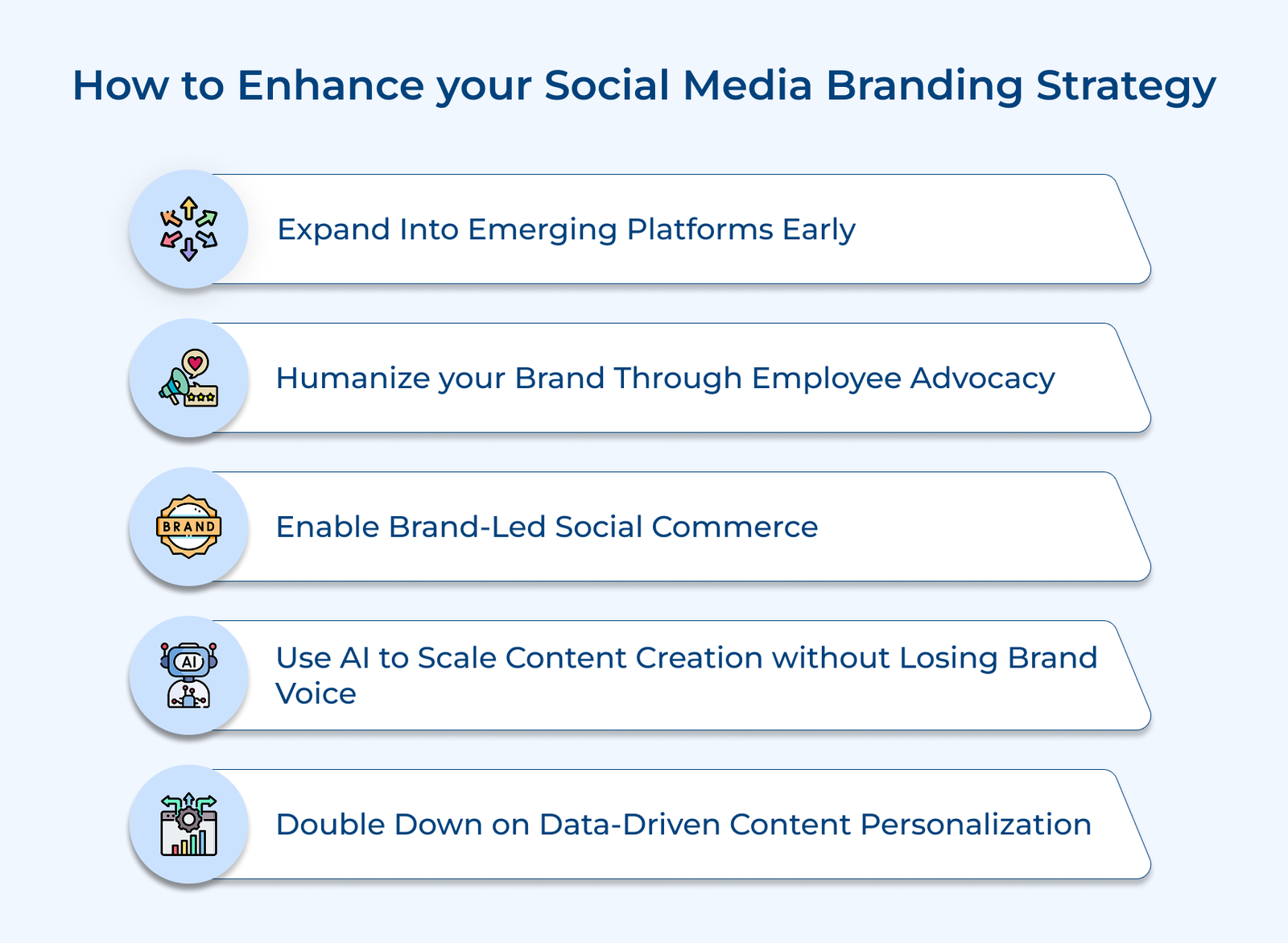
1. Expand into Emerging Platforms Early
Brands that establish a presence on emerging platforms before they become crowded often have an easier time building visibility and audience relationships. Being early on platforms like Threads or Bluesky gives your brand an organic reach advantage that disappears once the space gets competitive. Strong social media branding often comes from being visible early in spaces where audience trust and attention have not yet become saturated.
2. Humanize Your Brand Through Employee Advocacy
Your employees are the most credible and underutilized brand voice your social media strategy has access to. When real people inside your organization share genuine perspectives, your brand becomes more relatable and trustworthy than any polished campaign could.
3. Enable Brand-led Social Commerce
Social media has become an important place for product discovery, research and purchasing. Many consumers now expect to move from finding a product to buying it with as little friction as possible. Strong social media branding becomes even more valuable when audiences can take action immediately after discovering a product or service.
4. Use AI to Scale Content Creation Without Losing Brand Voice
AI can help teams create content more efficiently, but it works best when clear brand guidelines already exist. The brands using AI most effectively are using it to handle volume while their teams focus on strategy and quality control.
5. Double Down on Data-driven Content Personalization
Generic content is the fastest way to become invisible in a feed driven by relevance signals and audience behavior. Strong social media branding now depends heavily on delivering content that feels personally relevant instead of broadcasting the same message to everyone.
Below are essential tools to help you manage content and maintain a consistent social media branding strategy across platforms.
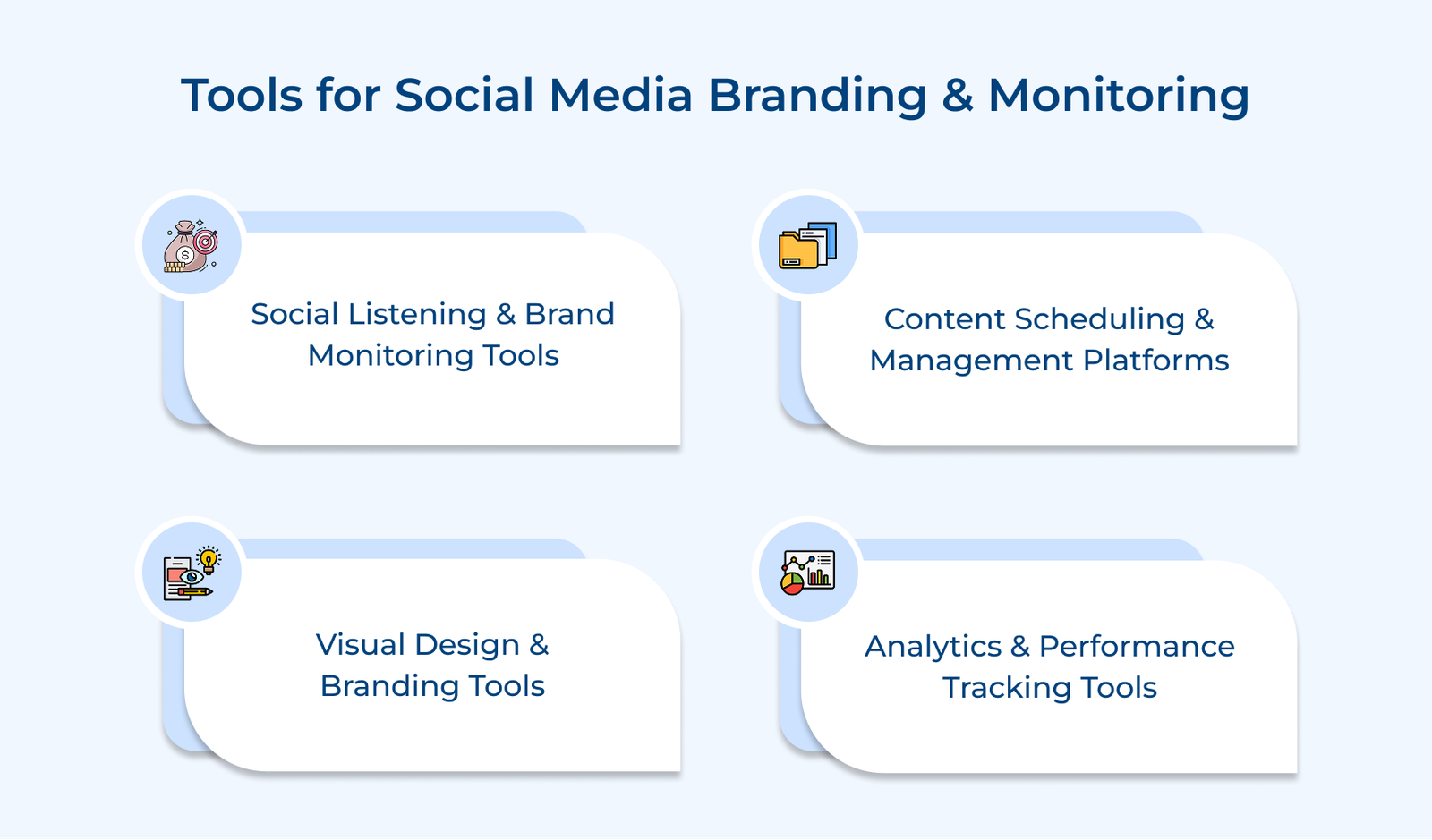
1. Social Listening and Brand Monitoring Tools
Social listening tools help you understand what people are saying about your brand across social media, forums, review sites and online communities. Without visibility, you are making brand decisions based on assumptions rather than actual audience signals. Tools such as Brandwatch, Sprout Social and Mention can help track brand mentions, audience sentiment, share of voice or emerging trends that deserve attention.
2. Scheduling and Content Management Platforms
A scheduling platform is what gives your social media branding the consistency that builds audience trust over time. Brands that publish reactively without a structured schedule end up with an inconsistent presence that confuses their audience. Platforms like Buffer, Hootsuite or Sprout Social let your team plan and publish content across multiple channels from one centralized workspace without compromising brand compliance.
3. Visual Brand Creation and Design Tools
Visual consistency plays a major role in brand recognition. Audiences often recognize colors, layouts and design styles before they notice a brand name. Tools such as Canva for Teams and Adobe Express let you lock in brand colors, fonts or logo usage so every team member produces on-brand visuals without needing a designer for every asset.
4. Analytics and Performance Tracking Tools
Tracking social media branding performance goes far beyond native platform analytics. You need tools that connect content performance to actual brand health metrics. Without a dedicated analytics layer, it is nearly impossible to know if your branding efforts are building equity or generating noise.
Check out the most common social media branding mistakes that weaken audience trust and limit growth, even when content is being published consistently.
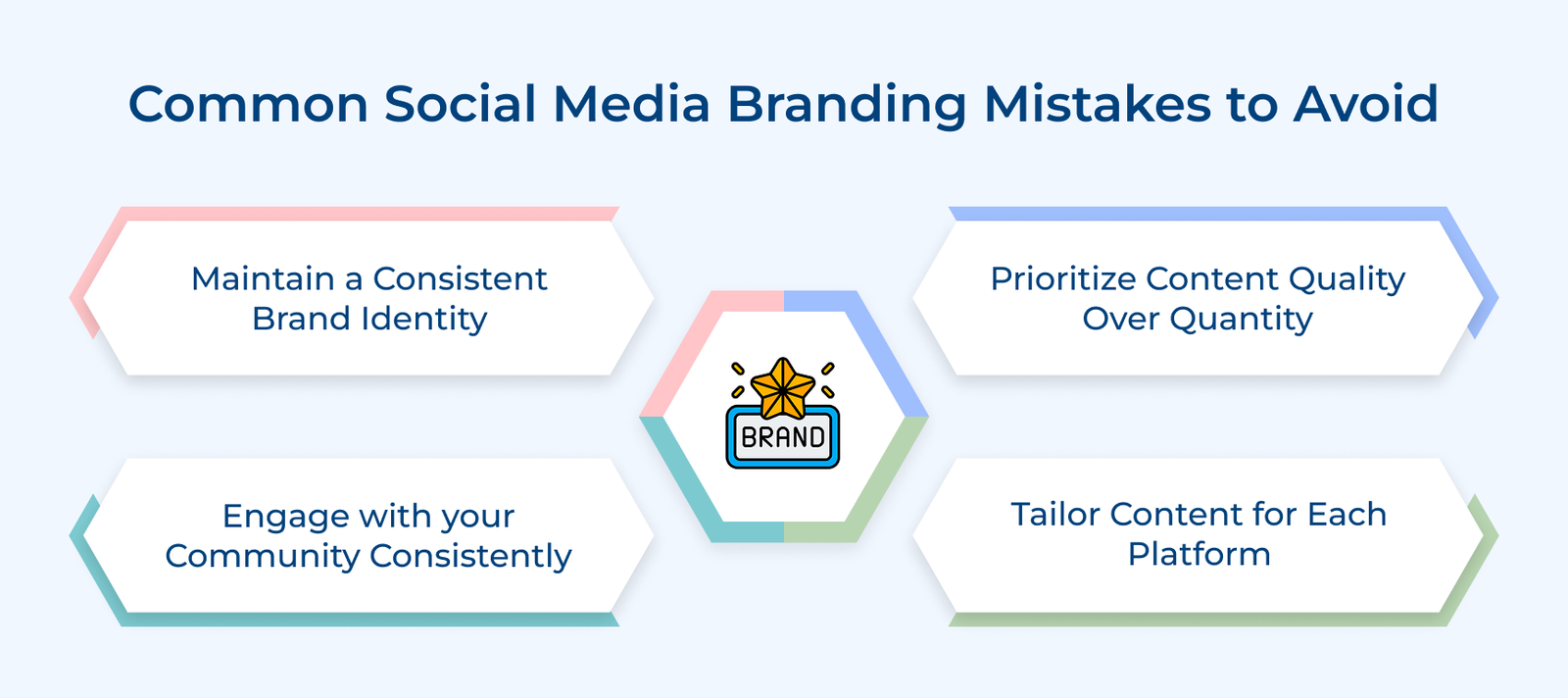
When your audience sees a different logo treatment on Instagram than on LinkedIn, it signals a lack of internal standards. That disconnect alone is enough to make a potential customer question if your brand is credible and worth their trust.
Publishing more content does not automatically produce better results. Content that adds little value often gets ignored, regardless of how frequently it appears. Many brands become focused on maintaining a posting schedule and lose sight of what their audience actually wants to see. A few high-quality posts that educate, entertain or solve problems will usually outperform a large volume of forgettable content.
Copying the same content across every platform is a clear sign that a brand does not understand its audience on each channel. What performs on LinkedIn has a completely different format and intent than what drives engagement on Instagram or TikTok.
Social media is built around interaction, yet many brands treat it like a one-way communication channel. Publishing content without responding to comments, mentions or direct messages makes the audience feel ignored. Strong social media branding depends as much on engagement as it does on content creation. Every response is an opportunity to strengthen relationships and show that there are real people behind the brand.
Key solutions:
A strong social media branding strategy does not come from posting more content. It comes from creating a consistent experience that people recognize, trust and remember across every platform where your brand appears.
Key takeaways:
Ready for the next step? Explore our guide on social media marketing strategy to learn how to turn your brand identity into a structured plan that drives engagement, builds relationships and supports long-term business growth.

One of the biggest changes in 2026 is the shift from audience accumulation to community building. Brands are investing more effort into creating meaningful participation instead of simply publishing content and hoping for engagement.
AI is most valuable when it handles operational volume, like scheduling, sentiment monitoring and performance reporting, so your team focuses on strategy. The brands using AI most effectively treat it as an execution accelerator, not a replacement for human brand judgment and creative direction.
The best platform is the one where your audience is most active, engaged and receptive to your content. A B2B company may see better results on LinkedIn, while a visually driven brand may thrive on Instagram. YouTube works well for education and in-depth content, while TikTok often rewards personality-driven and engaging short-form videos.
Automation should support efficiency without replacing genuine interaction. Scheduling content, managing workflows and generating reports are tasks that can be automated successfully. Audience conversations, community engagement and relationship building should remain human. People connect with brands that feel approachable and responsive, not brands that feel entirely automated.
The KPIs that matter most go beyond likes and follower counts. Focus on brand sentiment score, share of voice and branded search volume. The metrics tell you if your social media branding is building real equity or just generating surface-level activity with no business impact.

Grow Customer Relationships and stronger team collaboration with our range of products across the Conversational Engagement Suite.
Omnichannel Customer Support & Help Desk Software
AI Enabled Business Messaging and Chatbot Software
Sales Engagement & CRM Software
Call Center Software & Virtual Phone System
Product Marketing & Experience Platform
Customer Experience & Feedback Management Software

 How to Improve Email Collaboration? 8 Key Tips (2026)
Scroll to top
How to Improve Email Collaboration? 8 Key Tips (2026)
Scroll to top