1. Define Your Knowledge Base Structure
Defining your knowledge base structure creates the foundation that determines how easily your support team can find and use information. No matter how good the content is, it’s useless if agents can’t find it quickly when talking to customers.
Here are three effective ways to build a solid knowledge base structure for your help center:
- Category-based organization: Start by grouping content around your main product lines or service areas. Divide content into clear sections, technical, billing and general so agents find what they need fast.
- Problem-solution mapping: Structure content based on common customer pain points and their corresponding solutions. The setup matches how your team handles tickets, making it easier to find the right info quickly.
- Skill-level segmentation: Sort articles by difficulty, basic fixes, intermediate steps and advanced procedures. It helps new and experienced agents quickly find content that matches their skill level.
Imagine a software company organizing its knowledge base into main sections like “Login Issues,” “Payment Problems,” and “Feature Questions.” Each section breaks down into smaller topics, helping agents quickly find precise solutions.
2. Choose Your Knowledge Base Platform
Selecting the right platform determines how effectively your team can create, maintain and access knowledge base content. Choosing poorly can cause delays that hold up support, frustrating both agents and customers.
Before choosing your knowledge base platform, consider these four essential questions:
- What integrations does your current help desk system require?
- How many users will need access to create and edit content?
- What search capabilities do your agents need for quick information retrieval?
- What budget constraints and scalability requirements guide your decision?
The questions help you focus on platforms that fit your real needs instead of getting sidetracked by extra features. After that, it’s important to assess the technical details that affect your day-to-day work.
Here are five critical features to prioritize when selecting your service desk knowledge base platform:
- Real-time search functionality: Fast search with autocomplete suggestions helps agents find answers without interrupting customer conversations.
- Multi-format content support: The platform needs to support text, images, videos and downloads to cover all types of support materials.
- Version control and audit trails: Keep track of changes, storing content history to maintain accuracy and accountability in your knowledge base.
- Mobile accessibility: Agents need access from various devices, especially in remote work environments or when handling urgent issues outside office hours.
- Analytics and reporting dashboard: Monitor content usage patterns and identify gaps to continuously improve your knowledge base effectiveness.
3. Integrate with Your Help Desk System
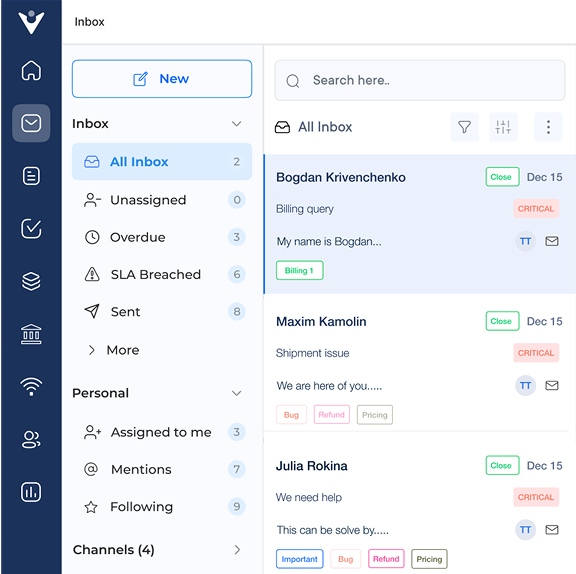
Integration links your knowledge base to your ticketing system, so agents find info without switching apps. The seamless connection reduces resolution time and ensures solutions remain within easy reach during customer conversations.
Connect the knowledge base with the ticketing platform
Your integration automatically links tickets to relevant articles using keywords and categories. Agents see suggested solutions as soon as they open a ticket, cutting search time. The system should enable agents to attach knowledge base articles to responses for consistent answers.
Configure automatic article suggestions for tickets
Smart algorithms analyze ticket content and automatically recommend the most relevant knowledge base articles to agents. The feature uses machine learning to match issues with solutions, getting smarter over time. Suggestions show up in sidebars, letting agents browse options without interrupting the conversation.
Set up seamless workflow between systems
Create workflows for smooth ticket escalation and easy article creation from resolved tickets. The system should track which articles successfully resolve issues, providing valuable optimization data. Establish processes for updating content based on ticket trends and recurring issues.
4. Create Your Initial Content Library
Creating your initial content library establishes the foundation of helpful information that your support team will rely on daily. The step turns scattered info into organized resources that support consistent, efficient customer service.
Your content library serves as the primary resource agents use to resolve customer issues quickly and accurately. Clear articles speed up training for new staff and give experienced agents reliable references for handling complex issues.
Pro tips:
- Begin with detailed articles for your 20 most common customer issues, then expand to cover less frequent problems.
- Use a clear, consistent template with the problem, steps and alternatives to keep articles uniform.
5. Establish Help Desk Content Approval Process
A content approval process ensures that only accurate, useful information reaches your team and customers. Without it, outdated or incorrect content can create confusion. It leads to inconsistent support and risks damaging customer trust.
So, how do you create an effective review workflow for new articles? Start by choosing team members who know your products and support process well to oversee content quality. The reviewers examine each article for accuracy, clarity and completeness before it goes live in your knowledge base system.
Assigning subject matter experts for validation brings specialized knowledge to your content review process. The experts catch technical errors and ensure solutions work in real-world scenarios. Consider these types of subject matter experts:
- Technical product specialists: Review articles about product functionality, features and technical troubleshooting procedures to ensure accuracy.
- Customer success managers: Review content with the customer in mind to make sure solutions truly solve real problems.
- Senior support agents: Check articles to ensure they’re easy to use and that instructions are clear enough for agents to follow.
How often should you update your knowledge base content to keep it current? Regular updates keep data current, so your team always has access to the latest solutions and procedures.
6. Train Your Support Team Effectively
Training your support team effectively ensures that agents can find, use and contribute to your knowledge base efficiently. Without training, even the best knowledge base goes unused, slowing down resolutions and causing inconsistent support.
Here are four essential training programs to prepare your support team:
- Platform navigation workshop
- Content creation and editing bootcamp
- Search strategy and optimization training
- Knowledge base maintenance and updates course
What happens if you rush through the training process without allowing enough time for practice? Teams without proper training often can’t find information fast, frustrating both agents and customers waiting for answers.
Consider a scenario where your company launches a new product feature that requires updated troubleshooting procedures. Well-trained agents quickly find new documentation and guide customers through solutions, keeping service steady during changes.
7. Launch and Monitor Performance Metrics
Launching your knowledge base marks the beginning of ongoing optimization rather than the end of your setup process. Tracking performance reveals how well your knowledge base helps agents and customers, guiding ongoing improvements.
After integrating your knowledge base with your help center, tracking key metrics is crucial. The insights reveal how users interact with the system and highlight areas that need improvement.
- Article usage frequency: Track which articles get accessed most often to identify your most valuable content and potential gaps.
- Search success rate: Measure how often users find relevant articles through search queries to optimize your search functionality.
- Resolution time improvement: Compare ticket resolution times before and after knowledge base implementation to quantify efficiency gains.
- Content accuracy feedback: Monitor user ratings and feedback on articles to identify content that needs updates or improvements.
Besides tracking metrics, asking targeted questions reveals deeper insights into user satisfaction and operational impact.
- Does your knowledge base reduce the number of escalated tickets to senior support staff?
- Are agents spending less time researching solutions and more time helping customers?
- Can new team members handle complex issues faster using your knowledge base resources?
- Do customers report higher satisfaction scores when agents use knowledge base information?
Help Desk Knowledge Base Examples
Each company’s unique approach offers valuable lessons for building effective support systems that scale with business growth.
Amazon
Amazon structures its knowledge base around customer journey stages, creating separate sections for order placement, delivery tracking, returns and account management. The system uses purchase history, past support to suggest relevant articles, speeding up and personalizing resolutions.
The streamlined approach has transformed Amazon’s support efficiency by reducing repetitive inquiries and enabling self-service for routine issues. Customer satisfaction rose as people solved problems independently, cutting support costs by reducing tickets.
Apple
Apple builds its knowledge base into its support app, website, offering videos, interactive guides, and device-specific troubleshooting steps. The system adapts content based on the specific Apple product model. It ensures customers receive precise instructions rather than generic solutions that might not apply.
The targeted approach has enhanced Apple’s reputation for premium customer support while reducing the complexity of supporting diverse product lines. The visual format suits their design-savvy users and cuts confusion in troubleshooting, boosting first-contact resolution rates.
Netflix
Netflix centers its knowledge base on streaming issues, device compatibility, and account help. It sorts content by device and common problems. It also offers tools to check for connection issues and suggests fixes before directing users to support.
The proactive troubleshooting approach has improved Netflix’s streaming experience reliability while reducing support costs during peak viewing periods. Customers fix technical issues quickly without pausing their shows, while Netflix learns from problems to keep improving the platform.
Spotify
Spotify structures its knowledge base around music discovery, playlists, subscriptions and tech issues, with content designed for easy use on mobile devices. The system includes community-driven content where users can share solutions and tips alongside official support documentation.
The community-integrated approach has created a more engaged user base while reducing formal support ticket volume for common issues. The collaborative approach strengthens customer relationships and gives insights into user habits, helping shape support or product decisions.
Zappos
Zappos centers its knowledge base on service, with friendly, clear info on products, sizing, returns and shipping. The system includes extensive FAQs written in the company’s signature approachable style, making policy information feel less intimidating and more helpful.
The personality-driven approach has reinforced Zappos’ brand identity as a customer-centric company while maintaining operational efficiency during growth phases. The knowledge base reflects company values, ensures consistent support and builds customer trust through reliable service.
Common Challenges When Implementing a Help Desk Knowledge Base
Building a service desk knowledge base is like fitting puzzle pieces. Understanding these common roadblocks helps organizations prepare for potential obstacles and develop effective strategies.