8 Effective Strategies For Customer Follow Up (2026)
Customer follow up strengthens relationships, improves satisfaction and drives repeat sales. Learn about the proven strategies, timing tips and communication methods to keep customers engaged.
Customer follow up strengthens relationships, improves satisfaction and drives repeat sales. Learn about the proven strategies, timing tips and communication methods to keep customers engaged.
Most businesses lose customers after the first sale because the relationship quietly ends there. No follow-ups, no check-ins, no reason for the customer to stay connected. Over time, even happy buyers move on to brands that make them feel noticed and supported. This gap hits small businesses the hardest.
One-time buyers rarely return, referrals never happen and revenue leaks out slowly but consistently. Customers don’t leave because the product failed. They leave because the business stopped showing up. Thoughtful customer follow up changes that dynamic. Anywhere between 35% and 50% of sales are won by the business that follows up with a prospective customer first.
Simple, personal communication keeps the conversation going and turns buyers into repeat customers who trust you. Let us dive in to learn about the practical follow-up techniques that help you stay relevant, build real relationships and grow without chasing new leads every time.
Customer follow up refers to the practice of reconnecting with customers after they’ve bought from you or used your service. It could be a quick call, a short email, or a simple survey to check how things went. Done right, it shows you care about more than just the sale and opens the door for continued support and connection.
When businesses consistently follow up with customers in a helpful and genuine way, it builds trust and strengthens the emotional connection between customer and brand. Customers feel valued and heard when companies take time to ensure their needs are met properly. The personal touch can turn a one-time buyer into someone who returns and recommends you to others
Key objectives:
Check out the effective strategies to transform your follow-up process and elevate your customer relationships to new heights.
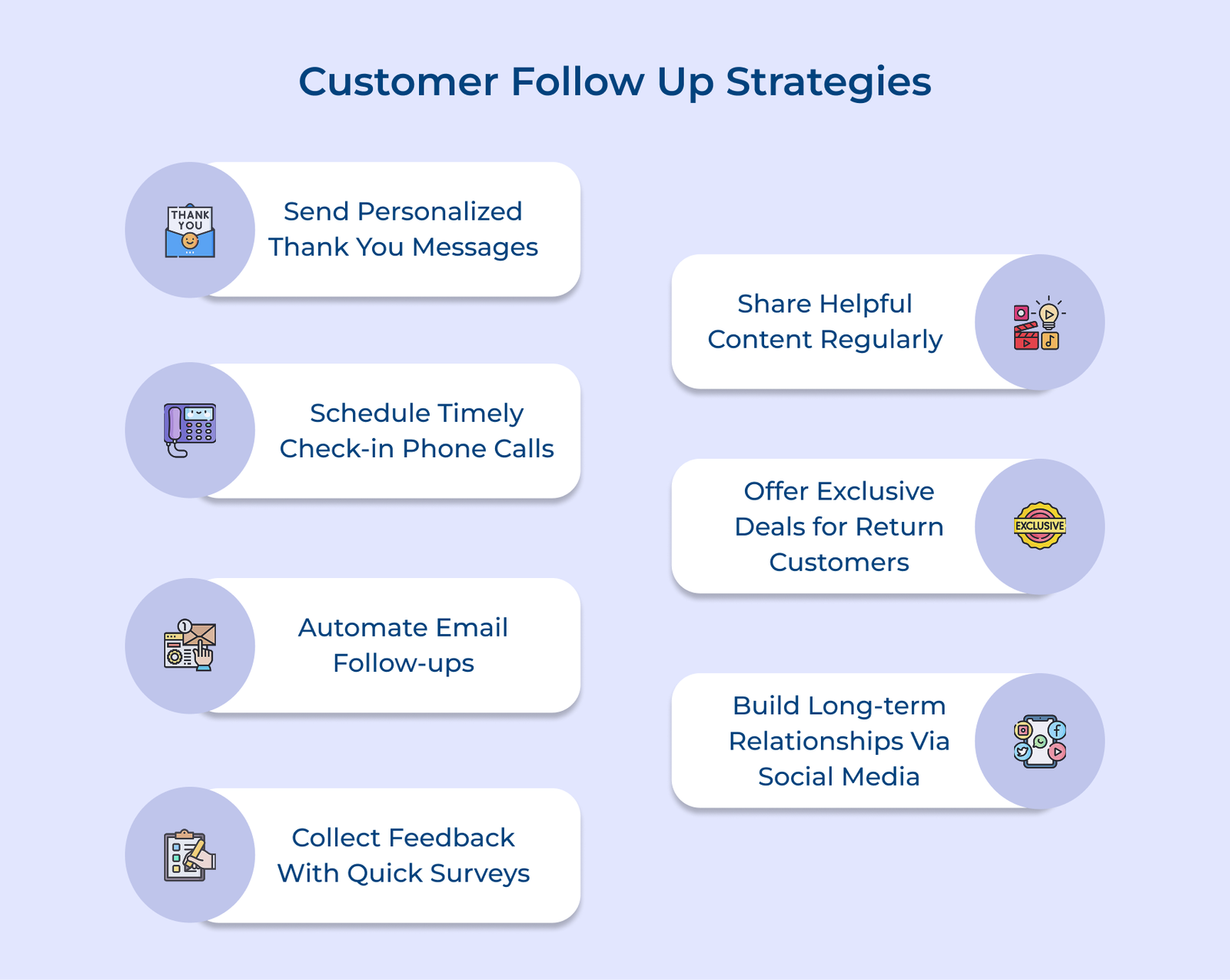
A thank-you note that feels personal and not canned can make a customer remember you long after the sale. It shows you see them as a person, not just a receipt.
Key factors:
Strategic timing and genuine personalization transform routine thank you messages into relationship-building tools that encourage repeat business. When customers feel truly appreciated, they become natural advocates who refer friends and family to your business.
Key phrases:
A quick check-in call shows customers you genuinely care about their satisfaction and experience. It also gives you a chance to catch issues early and reinforce the personal touch that sets small businesses apart.
Effective times to call:
The intervals catch customers at different stages of their experience when feedback is most valuable and actionable. Early calls address immediate concerns while later calls focus on relationship building and future opportunities.
During the conversations, asking open-ended questions encourages customers to share detailed thoughts rather than simple yes or no responses. The approach uncovers deeper insights and improvement opportunities you might otherwise miss.
Key open-ended questions:
After gathering this valuable feedback, listening actively and taking detailed notes creates a foundation for continuous improvement. The insights help you refine processes and identify patterns that enhance future customer experiences significantly.
Automated email sequences keep your customers connected without constant manual effort, freeing your team to focus on other priorities. The sequences maintain timely, relevant communication while strengthening customer relationships.
Key methods:
The key is finding the right balance between staying connected and respecting their inbox space. Start with fewer emails and gradually increase frequency based on engagement rates and customer feedback to avoid seeming pushy or intrusive.
Customer feedback surveys give your small business a clear way to understand how well you’re serving customers and uncover areas for improvement. Short, focused surveys increase completion rates and encourage thoughtful responses.
Key questions:
Offering various response formats like rating scales makes it easier for customers to express their thoughts without struggling to find words. The structured options provide consistent data that you can track over time while giving customers flexibility in how they share feedback.
Effective response options:
Sending surveys 1-2 weeks after service completion gives customers enough time to fully experience your product or service while keeping the interaction fresh in their memory. The timing captures both immediate reactions and longer-term satisfaction effectively.
Sharing educational content keeps your business connected with customers while providing ongoing value beyond the initial purchase. It helps them get the most from your products and shows your expertise in addressing their needs.
Key types:
Consider a small landscaping business that installs gardens for homeowners throughout the growing season. They might send monthly emails with seasonal plant care tips and watering schedules for different plant types. They could share advice on preparing gardens for weather changes, providing ongoing value long after installation.
Exclusive deals reward loyal customers while encouraging repeat business and strengthening long-term relationships. They make customers feel valued and recognized for their continued support.
Used as follow-up tools, the offers maintain a connection with past buyers by providing tangible value beyond standard communication. Special deals also create a sense of excitement and motivate timely engagement.
Pro tips:
Social media helps maintain ongoing connections with customers, keeping your business visible and approachable between transactions. Consistent engagement builds familiarity and trust over time.
Key questions:
The strategic questions help you focus your social media efforts on platforms and content that will actually reach your customers effectively. Knowing the basics ensures you focus only on platforms and content your customers actually engage with.
Consider a local bakery that discovers most customers use Instagram and Facebook rather than LinkedIn or Twitter. They focus their efforts on sharing behind-the-scenes baking videos and daily specials through the two platforms instead of spreading thin across multiple channels.
Begin by consistently sharing valuable content that your customers find interesting and engaging with their comments and messages promptly. The approach gradually builds trust and keeps your business top-of-mind when they need your services again.
Below are the essential customer best practices for customer follow up that help create opportunities for repeat business while keeping your customers engaged and satisfied.
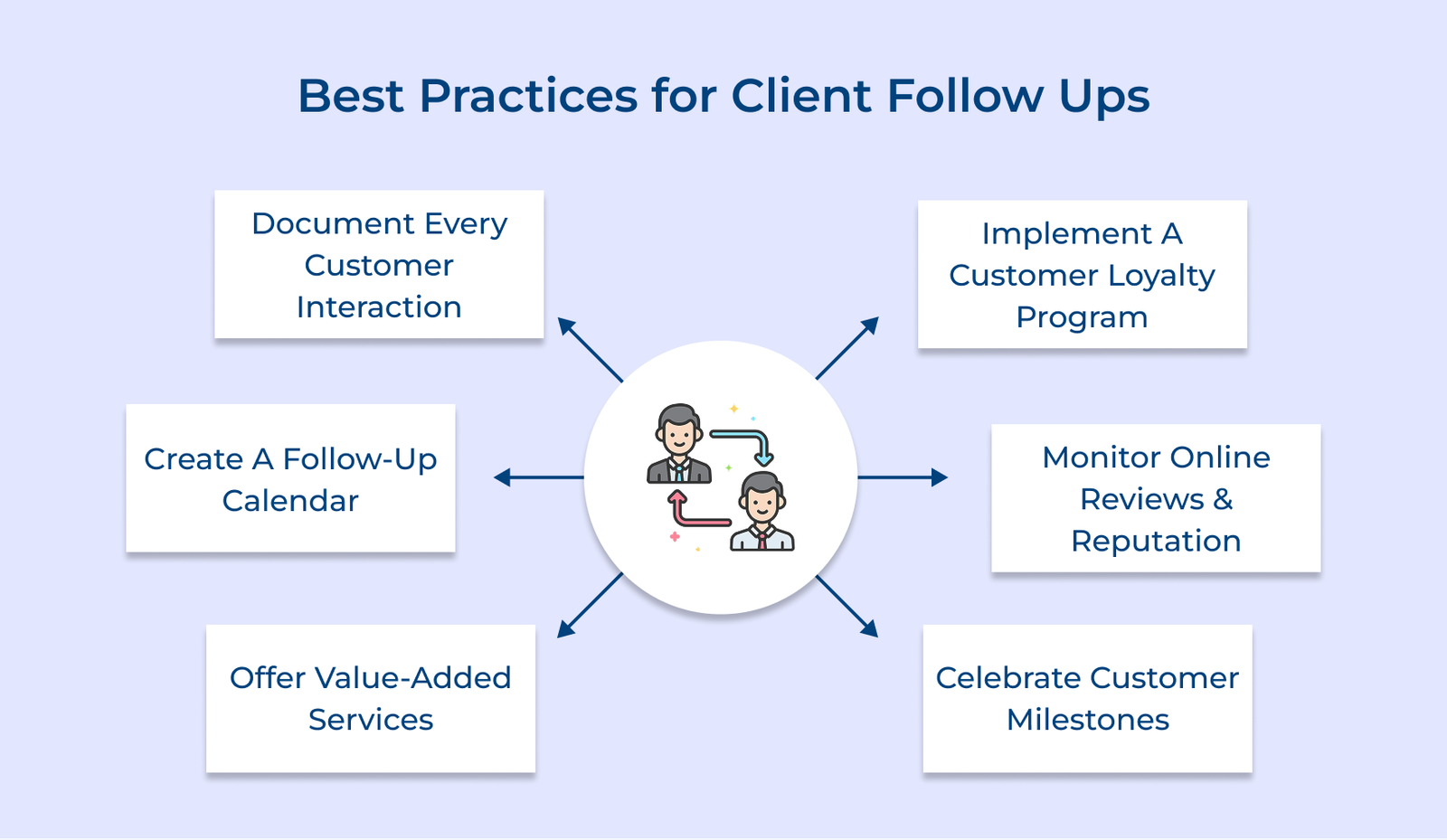
Keeping detailed notes from each conversation builds a valuable reference for future interactions. Recording preferences, challenges and key dates helps customers feel genuinely recognized.
Key components:
Consistent documentation transforms casual conversations into strategic relationship-building tools that demonstrate your attention to detail. When you reference something they mentioned months ago, customers feel impressed by your personal touch and professional approach.
A structured follow-up calendar ensures no customer is overlooked and keeps communication consistent. It helps balance immediate needs with long-term relationship building across your entire customer base effectively. Regularly reviewing your calendar lets you spot patterns and adjust timing to maintain engagement, preventing satisfied customers from drifting away.
Providing services that complement a customer’s original purchase demonstrates understanding of their broader needs and challenges. The approach positions your business as a comprehensive solution provider rather than just a one-time vendor or service company.
Key questions:
Value-added services create natural opportunities for additional revenue while strengthening customer relationships through increased engagement and dependency. When customers see you as their go-to resource for multiple needs, they become less likely to shop elsewhere.
Loyalty programs reward repeat customers and provide incentives for continued engagement. Small businesses can use them to create personal connections that big competitors often miss.
Effective elements:
The key to successful loyalty programs lies in making rewards feel achievable and meaningful rather than distant goals that customers never reach. Simple programs with clear benefits often outperform complex systems that confuse customers and create administrative burdens.
Actively tracking what customers say about your business online provides valuable feedback while showing potential customers that you care about service quality. The practice helps you address concerns quickly and publicly demonstrate your commitment to customer satisfaction.
Regular review monitoring helps you identify recurring issues that need attention while highlighting strengths you should continue emphasizing in your marketing efforts. Responding professionally to all reviews shows potential customers how you handle different situations.
Acknowledging important dates and achievements builds emotional connections beyond transactions. Recognizing milestones makes customers feel valued as people, not just sources of revenue.
Customer milestone celebrations might include business anniversaries, personal achievements or seasonal events that matter to your specific customer base. The key is choosing celebrations that feel genuine and appropriate for your relationship level with each customer.
Check out the following customer follow-up email templates designed to ensure every interaction leaves a positive, lasting impression on your clients.
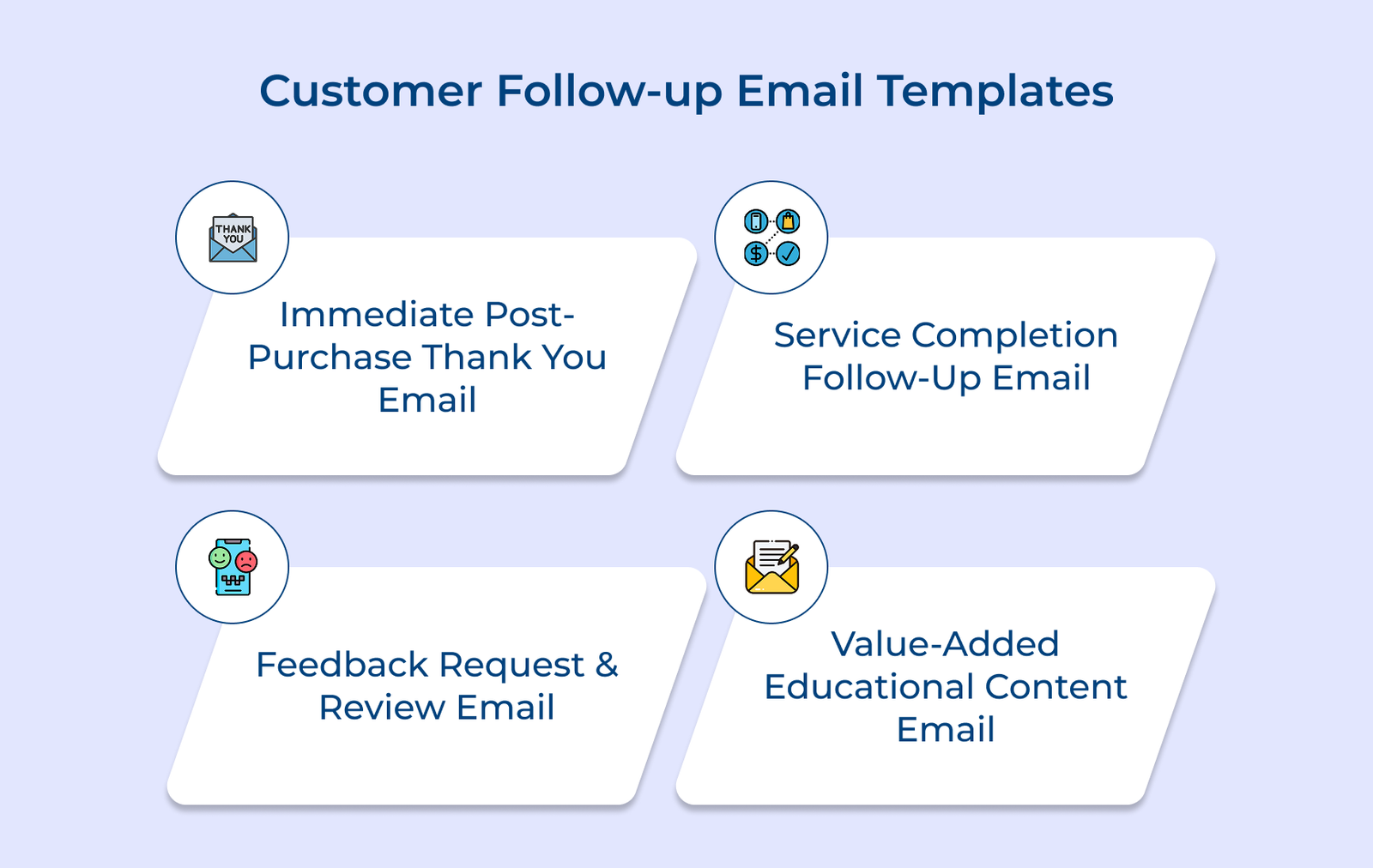
The template focuses on expressing gratitude immediately after a customer completes their purchase or service while setting expectations for next steps. The message confirms their choice and shows your commitment to their satisfaction with quick, clear communication.
———
Example structure:
Subject Line: Thank you for choosing [Business Name] – Your order confirmation
Opening: Hi [Customer Name], thank you for purchasing [specific product/service].
Body: We appreciate your trust and look forward to exceeding your expectations. Your order will be processed within [timeframe] and we’ll keep you updated.
Call to Action: Reach out anytime with any questions at [contact information].
Closing: Best regards, [Your Name] and the [Business Name] team.
The template addresses the critical period immediately after service delivery when customers are forming lasting impressions about your business performance. The message checks satisfaction, addresses issues and encourages future engagement and relationship-building.
Example structure:
Subject line: How was your experience with [Service Name]?
Opening: Hi [Customer Name], I wanted to personally check in about the [specific service] we completed yesterday.
Body: Did everything meet your expectations? Let us know if you have questions or concerns.
Value Statement: Your feedback is important to help us ensure complete satisfaction.
Closing: Thank you for choosing [Business Name]. Sincerely, [Your Name]
Pro Tips:
The template strategically requests customer feedback while encouraging online reviews that boost your business’s visibility and credibility. The message requests reviews while showing interest in improvement and keeping the process easy for busy customers.
Pros:
Cons:
Example Template Structure:
Subject Line: Your opinion matters to us – Quick feedback request
Opening: Hi [Customer Name], your recent experience with [specific service/product] means a lot to us.
Request: Could you share a quick review? It only takes a couple of minutes and helps others make informed decisions.
Call to Action: Here’s the convenient link: [review link]
Closing: Your feedback helps us improve continuously. Thank you, [Your Name]
The template positions your business as a trusted advisor by sharing relevant educational content that helps customers maximize their investment with you. The message adds ongoing value, keeps your business visible and showcases your expertise.
Example structure:
Subject Line: [Helpful tip] – Getting more from your [product/service]
Opening: Hi [Customer Name], I thought you’d appreciate this helpful guide about [relevant topic] that relates to your recent [purchase/service].
Value proposition: The tips can help you [specific benefit].
Access information: View the full guide here: [resource link]
Support offer: Please let me know if you have questions about implementing the strategies.
Closing: Best wishes, [Your Name]
Actionable tips:
Check out the importance of follow up with clients, where timely, thoughtful communication turns one-time interactions into lasting customer loyalty.
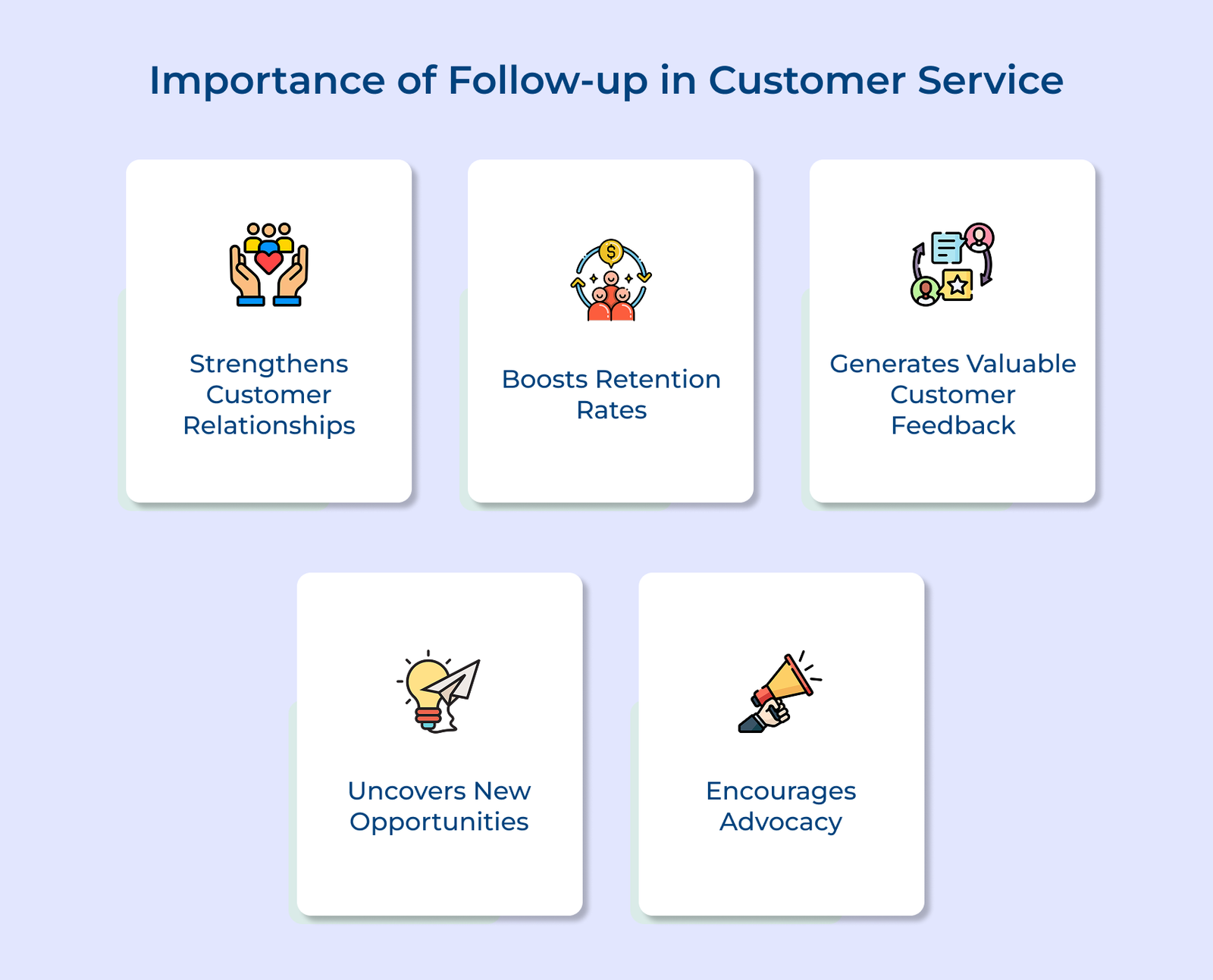
1. Strengthens Customer Relationships
Consistent follow-up creates meaningful touchpoints that transform transactions into genuine connections. Customers feel recognized and valued as individuals, not just numbers, enhancing long-term loyalty.
2. Boosts Retention Rates
Regular check-ins keep your business top of mind and address small issues before they grow. Customers who feel supported are more likely to stick around and return.
3. Generates Valuable Customer Feedback
Systematic follow-up creates structured opportunities to gather honest opinions about your products and services from real users. The feedback becomes invaluable data that helps identify improvement areas and understand what customers value most highly.
4. Uncovers New Opportunities
Follow-up conversations reveal additional needs or challenges your customers face. The insights let you suggest solutions that genuinely help, creating natural upselling and cross-selling opportunities.
5. Encourages Advocacy
Satisfied customers who receive excellent follow-up service naturally become brand advocates who refer friends and colleagues to your business. The referrals carry more weight than traditional advertising because they come from trusted sources with firsthand experience.
Below are the brands that demonstrate how strategic customer follow-up transforms one-time transactions into lasting relationships that drive business growth.
1. Amazon’s Post-Purchase Updates
Amazon sends automated emails asking customers to review their recent purchases and provides tracking updates throughout the delivery process. Their follow-up includes personalized product suggestions and alerts about potential delivery issues.
The detailed follow-up approach builds customer confidence in the buying process and encourages repeat purchases through trust-building. Amazon’s regular updates ease customer anxiety and create touchpoints that enhance the shopping experience.
2. Zappos’ Personal Touch Approach
Zappos representatives make surprise phone calls to customers after purchases to ensure satisfaction and sometimes upgrade shipping at no cost. Their staff can spend unlimited time with customers and often includes handwritten thank-you notes with orders.
The unexpected personal touches create emotional connections that turn customers into passionate brand advocates who share their experiences widely. Zappos’ focus on genuine human interaction drives word-of-mouth marketing, often more effective than traditional advertising.
3. Starbucks’ Mobile App Engagement
Starbucks uses its mobile app to send personalized offers based on previous orders and location data when customers are near stores. They follow up on app usage patterns to recommend new products and celebrate customer milestones like birthdays or loyalty program achievements.
The data-driven follow-up strategy increases visit frequency and average order value while making customers feel recognized. The personalized approach strengthens brand loyalty and encourages customers to choose Starbucks over competitors for their daily coffee needs.
4. Tesla’s Ownership Experience Follow-up
Tesla connects new owners early for delivery tutorials and keeps them informed through software updates. Their service team proactively reaches out before scheduled maintenance and offers virtual troubleshooting sessions for minor technical issues.
The proactive communication model reduces customer service calls while building confidence in the innovative technology and ownership experience. Tesla’s guidance makes customers confident in their investment and reinforces the brand as a trusted technology partner.
5. Airbnb’s Host and Guest Connection
Airbnb sends automated messages to both hosts as well as guests before, during and after stays to ensure smooth experiences. They follow up with review requests and provide tips for future bookings based on previous travel patterns.
The systematic follow-ups maintain quality standards across the platform while encouraging repeat usage from both sides of the marketplace. Airbnb’s follow-ups build trust and enhance community, setting it apart from traditional hospitality options.
Customer follow-up connects a single purchase to lasting loyalty. When businesses consistently engage with customers after a purchase, they demonstrate genuine care. The approach transforms routine interactions into meaningful relationships built on trust and mutual value.
Consistent, thoughtful follow-up helps customers feel valued beyond the sale. The approach promotes loyalty, encourages repeat business, inspires positive referrals and strengthens long-term growth.

Following up turns one-time buyers into loyal advocates by showing genuine care for their satisfaction. It builds trust, encourages repeat purchases and provides valuable feedback to improve your business.
Effective post-sale follow-up begins with timely, personalized communication that addresses specific customer needs and experiences. Use multiple touchpoints, like thank-you messages, satisfaction surveys, usage tips and proactive support to create meaningful engagement.
Personal touches work best: handwritten thank-you notes, follow-up calls, helpful email newsletters and loyalty programs. Social media engagement, birthday greetings and exclusive offers strengthen community connections effectively.
Frequency depends on purchase complexity and customer preference. Start within 24-48 hours, then weekly for the first month and monthly for ongoing relationships. Adjust based on engagement to avoid overwhelming them.
Customer relationship management systems, email automation platforms and scheduling tools streamline follow-up processes efficiently. The technologies enable personalized messaging at scale, track interaction history and trigger timely communications based on customer behavior.
When customers don’t respond, vary communication channels and timing while respecting their preferences. Try calls instead of emails, share helpful content without pressure and gradually reduce frequency while leaving room for future engagement.
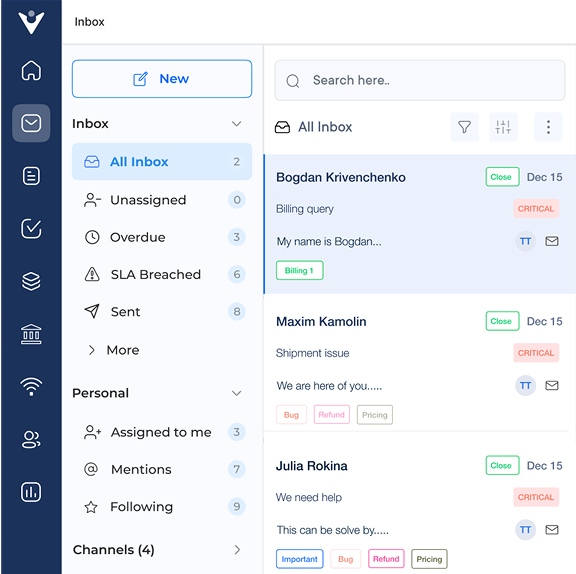
Grow Customer Relationships and stronger team collaboration with our range of products across the Conversational Engagement Suite.
Omnichannel Customer Support & Help Desk Software
AI Enabled Business Messaging and Chatbot Software
Sales Engagement & CRM Software
Call Center Software & Virtual Phone System
Product Marketing & Experience Platform
Customer Experience & Feedback Management Software
 How to Calculate Customer Retention Metrics & KPIs? 6 Strategies
Scroll to top
How to Calculate Customer Retention Metrics & KPIs? 6 Strategies
Scroll to top