1. Master Your Product or Service Inside-Out
Fast customer service starts with agents who know the product or service thoroughly. Strong product knowledge helps agents resolve issues with confidence instead of guessing, escalating or delaying the conversation while searching for answers.
Key areas:
- Feature fluency: Agents should understand every feature well enough to explain it clearly without relying on documentation mid-call.
- Edge case awareness: Uncommon situations often cause the biggest delays, so training should cover unusual scenarios alongside everyday issues.
- Cross-department shadowing: Spending time with product or engineering teams gives agents practical context that documentation alone can’t provide.
- Continuous updates: Product knowledge changes over time, making regular refresher sessions just as important as initial training.
How much product knowledge is enough? Agents should understand the product well enough to anticipate common follow-up questions instead of waiting for customers to ask them one by one.
Pro tips:
- Run monthly product quizzes to identify knowledge gaps before customers do.
- Pair new agents with experienced team members during their first 30 days.
2. Set Clear, Time-Sensitive Performance KPIs
KPIs only improve fast customer service when they’re tied directly to time, rather than vague satisfaction scores that teams review much later. Without time-bound metrics, “fast” becomes a feeling instead of something a team can actually measure, track and improve with any real confidence.
Key metrics:
- First response time: Measures how quickly customers receive the first reply after contacting support.
- Average resolution time: Tracks the time it takes to completely resolve a customer’s issue.
- First contact resolution rate: Shows how often an issue is resolved during the first interaction without additional follow-up.
- Escalation rate: Measures how frequently issues need to be passed to another team instead of being resolved immediately.
- Customer wait time: Tracks how long customers remain in the queue before reaching a support agent.
3. Balance Personalization With Smart Automation
Fast customer service works best when automation and personalization support each other. Automation speeds up routine tasks, while human conversations add the understanding and empathy customers expect when problems become more complex.
Automate repetitive, low-value interactions
Routine requests like order tracking, password resets or account updates don’t always need an agent. Automating the tasks gives support teams more time to focus on conversations that require judgment and problem-solving.
Personalize complex or emotional conversations
Customers dealing with frustration or confusion usually need more than an automated reply. A real conversation allows agents to understand the situation, respond with empathy and adapt their approach as the discussion unfolds.
Use customer data to tailor responses
Previous purchases, support history and earlier interactions should help shape every response. Customers appreciate support that reflects their history instead of making them explain the same problem repeatedly.
4. Empower Representatives to Decide Faster
Fast service improves when agents have the authority to resolve common issues without waiting for unnecessary approvals. Most delays happen because of slow internal processes, not because support teams lack the ability to help customers quickly.
Key steps:
- Manager sign-off for small refunds.
- Multi-step ticket reassignment processes.
- Redundant verification for repeat customers.
- Manual escalation for known issue types.
5. Deploy an AI-Powered Chatbot System
Fast customer support becomes easier to deliver when AI chatbots handle routine requests before they reach a human agent. Chatbots reduce repetitive work, giving agents more time to focus on conversations that require judgment, empathy and complex problem-solving.
Key factors:
- Intent accuracy: A chatbot should understand customer requests correctly, since repeated misunderstandings quickly become frustrating.
- Escalation triggers: Clear handoff rules ensure customers reach a human agent as soon as the conversation goes beyond the bot’s capabilities.
- Tone calibration: Responses should sound helpful and clear, never overly casual or robotic in a way that feels dismissive.
- Continuous training: Chatbots should learn from real customer interactions so their responses remain accurate as products and services change.
A well-designed chatbot also helps teams identify recurring issues by collecting data from everyday conversations. Looking for patterns in those interactions helps businesses address common problems instead of responding to the same questions repeatedly.
Key scenarios:
- Order tracking updates: Customers receive shipment information instantly without waiting for an agent.
- Appointment scheduling: Bots can book, reschedule or cancel appointments at any time.
- Basic troubleshooting: Step-by-step guidance helps customers solve common issues on their own.
- Account information requests: Billing details, balance checks and account updates are available around the clock.
- Pre-support triage: Chatbots gather key details before the conversation reaches an agent, reducing resolution time.
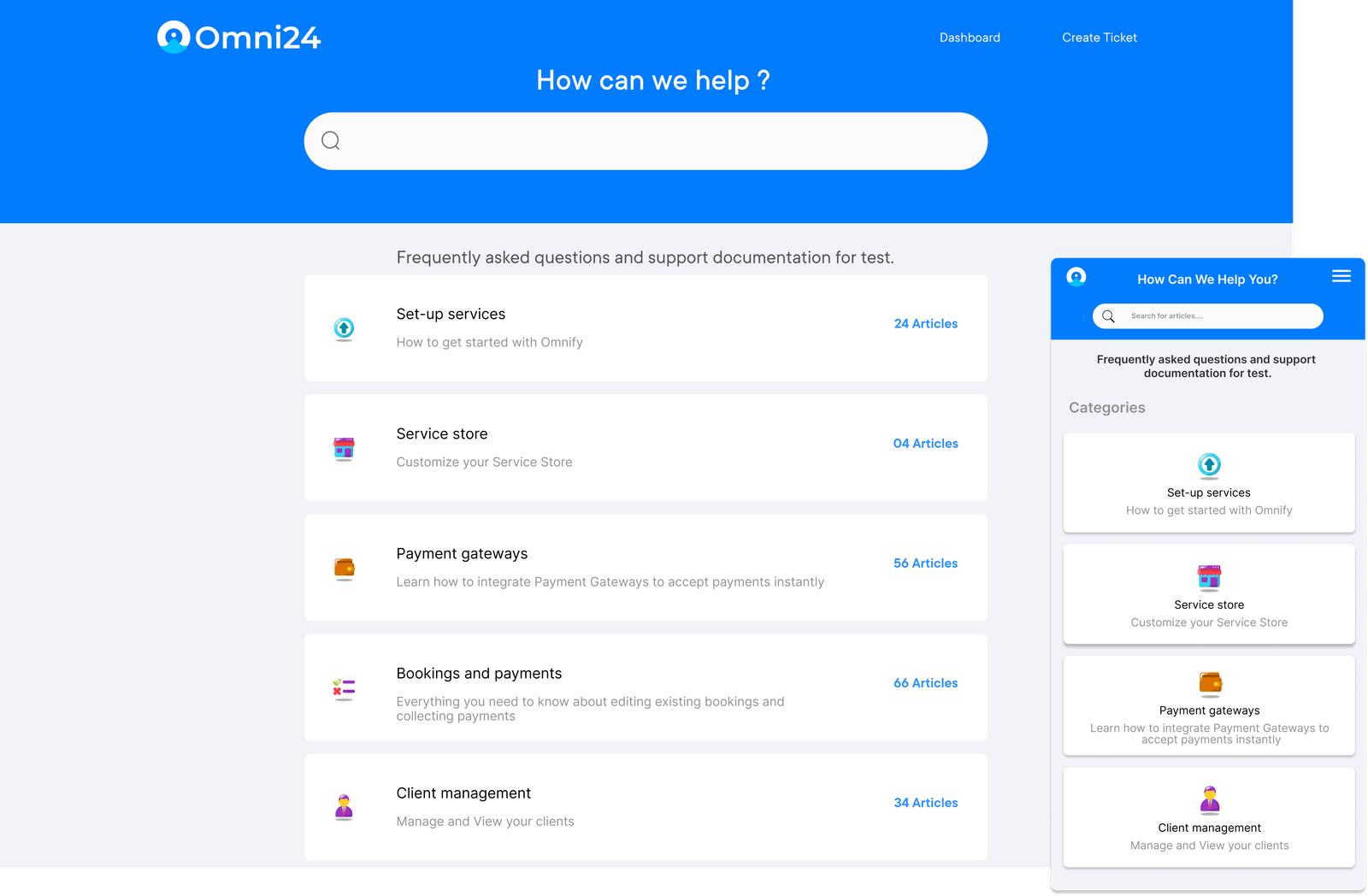
6. Build a Self-Serve Knowledge Base Portal
Fast customer service becomes easier when customers can find accurate answers without contacting support. A knowledge base works best when it’s treated as an ongoing resource instead of a one-time documentation project, giving customers reliable help whenever they need it.
Key ways:
- Organize around customer intent: Group articles by the tasks customers want to complete instead of your internal team structure. Finding answers becomes much easier when navigation matches how customers think.
- Use real support data: Create articles around the questions agents answer most often. Building content from real customer issues keeps the knowledge base relevant and reduces repetitive tickets.
- Keep content short and easy to scan: Customers usually want quick answers, not long explanations. Clear steps, bullet points, screenshots and short videos make information much easier to follow.
7. Streamline Internal Communication Across Teams
Fast customer service relies on teams sharing information instead of working in separate systems. Customers often repeat the same problem several times because support, product and billing teams don’t have access to the same context. Better internal communication reduces delays without adding more people to the team.
Why does the gap exist in the first place? Many businesses build tools and workflows for individual departments first, leaving information scattered across different systems that are difficult to connect later.
Key ways:
- Disconnected ticketing systems: Separate platforms force agents to switch between tools just to understand a customer’s issue.
- No shared customer history: A unified customer view prevents every department from starting the conversation from scratch.
- Unclear ownership: Clearly assigning responsibility reduces unnecessary handoffs between teams.
- Missing product updates: Keeping support teams informed about product changes helps them answer customer questions with confidence.
8. Monitor and Act on Real-Time Feedback
Fast customer service improves when customer feedback leads to action instead of sitting untouched in reports. Many businesses collect valuable feedback but wait too long to review it. Real value comes from identifying issues quickly and responding while the experience is still fresh.
What does acting on feedback in real time look like? A negative survey response or poor review should prompt a follow-up with the customer and a discussion with the agent within days, not months later.
Best Tools for Fast Customer Service Delivery
Below are the best tools for fast customer service delivery, helping teams manage conversations and deliver a more consistent customer experience across every channel.
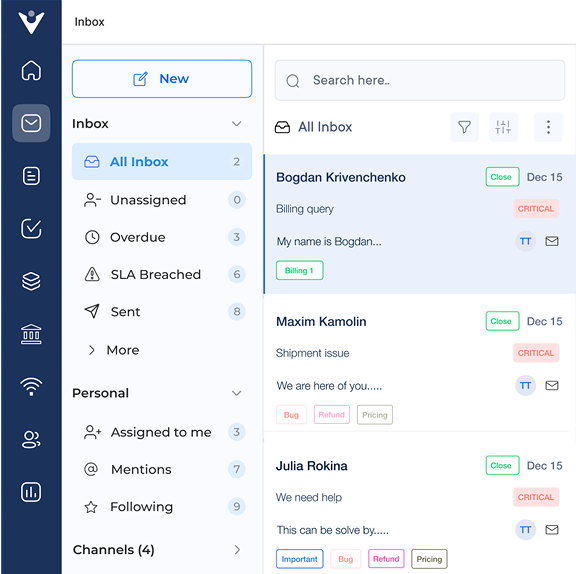
1. Veemo Support