1. Define Your Ideal Customer Profile
Your ideal customer profile is the base of your outreach strategy. Without the clarity, you’ll waste resources targeting prospects who are unlikely to convert into profitable long-term customers.
Key factors:
- Company size: Revenue and employee ranges that fit your solution.
- Industry: Sectors where your product solves clear, pressing problems.
- Location: Regions you can realistically support and serve.
- Technology stack: Tools prospects already use that must integrate with yours.
- Growth stage: Companies at the right maturity level for your offering.
Implementation becomes straightforward once you document the criteria and train your team to recognize qualifying characteristics consistently. The profile acts as your north star for all prospecting activities and message development.
2. Set Clear Measurable Outreach Goals
Goal setting turns your outreach from a random activity into a strategic revenue-generating system with clear success metrics. Without specific targets, you cannot measure progress or identify areas that need improvement in your approach.
Key examples:
- Response rates: Aim for targets like 15% email replies within 90 days.
- Measurable conversion metrics: Define “convert 25% of responses into qualified meetings” for pipeline clarity.
- Revenue pipeline: Set realistic objectives like $500K in new opportunities per month.
- Activity milestones: Create “book 50 discovery calls per quarter” aligned with sales capacity
The goals create accountability while providing data points that help you optimize your approach over time. Regular measurement against the targets reveals what’s working and what needs adjustment in your sales strategy.
Pro tips:
- Review results monthly instead of waiting until the quarter ends.
- Align each rep’s goals with overall revenue objectives to keep efforts focused.
3. Choose Your Primary Outreach Channels
Channel selection represents the most vital step because it determines how effectively you can reach your target audience. The wrong channels waste time and budget, while the right combination amplifies your message reach significantly.
Key questions:
- Where do your ideal customers spend time online?
- How do decision-makers in your industry prefer to communicate?
- What channels do your competitors use most heavily for similar outreach efforts?
- What budget can you commit to each channel?
- Which channels allow for the most personalization?
The questions help you avoid assumptions and make data-driven decisions about where to invest your outreach efforts most effectively. Here are five proven channels worth testing for your B2B sales outreach campaigns:
- Email outreach
- LinkedIn messaging
- Cold calling
- Direct mail
- Video messaging
4. Craft Compelling Personalized Message Templates
Templates connect your research to real conversations. Without well-crafted templates, even perfect targeting falls flat because your communication fails to resonate with prospects’ specific needs.
Write subject lines that spark interest
Your subject line decides if your email gets opened or ignored. Keep it short, specific and tied to something your prospect cares about, like a recent challenge or industry shift.
Focus your message on their needs
Skip the pitch-heavy language. Instead, share a useful insight or ask a thoughtful question that shows you understand their world. It makes your email feel like the start of a conversation, not a script.
End with a simple next step
Every message needs a specific next step that feels natural and low-pressure for prospects to take confidently. No matter if you’re requesting a brief call or offering a valuable resource, your call-to-action should align with where prospects are in their buying journey.
5. Build Your Prospect Research System
The quality of your outreach depends on the quality of your research. Without it, messages sound generic and easy to ignore. The quality shows real understanding and increases your chances of a response.
The system turns random prospecting into strategic relationship building by providing context that makes your outreach feel personalized and valuable. Research shows you who to contact and how to approach them with relevant messages.
Pro tips:
- Spend at least five minutes reviewing each prospect before crafting your initial outreach message for maximum personalization impact.
- Create a research checklist that your team can follow consistently to ensure no important details are missed during preparation.
6. Automate Whenever Possible
Automation transforms manual repetitive tasks into systematic processes that run consistently without human intervention while maintaining personalization quality. Without it, reps often lose focus on actual selling.
Key areas:
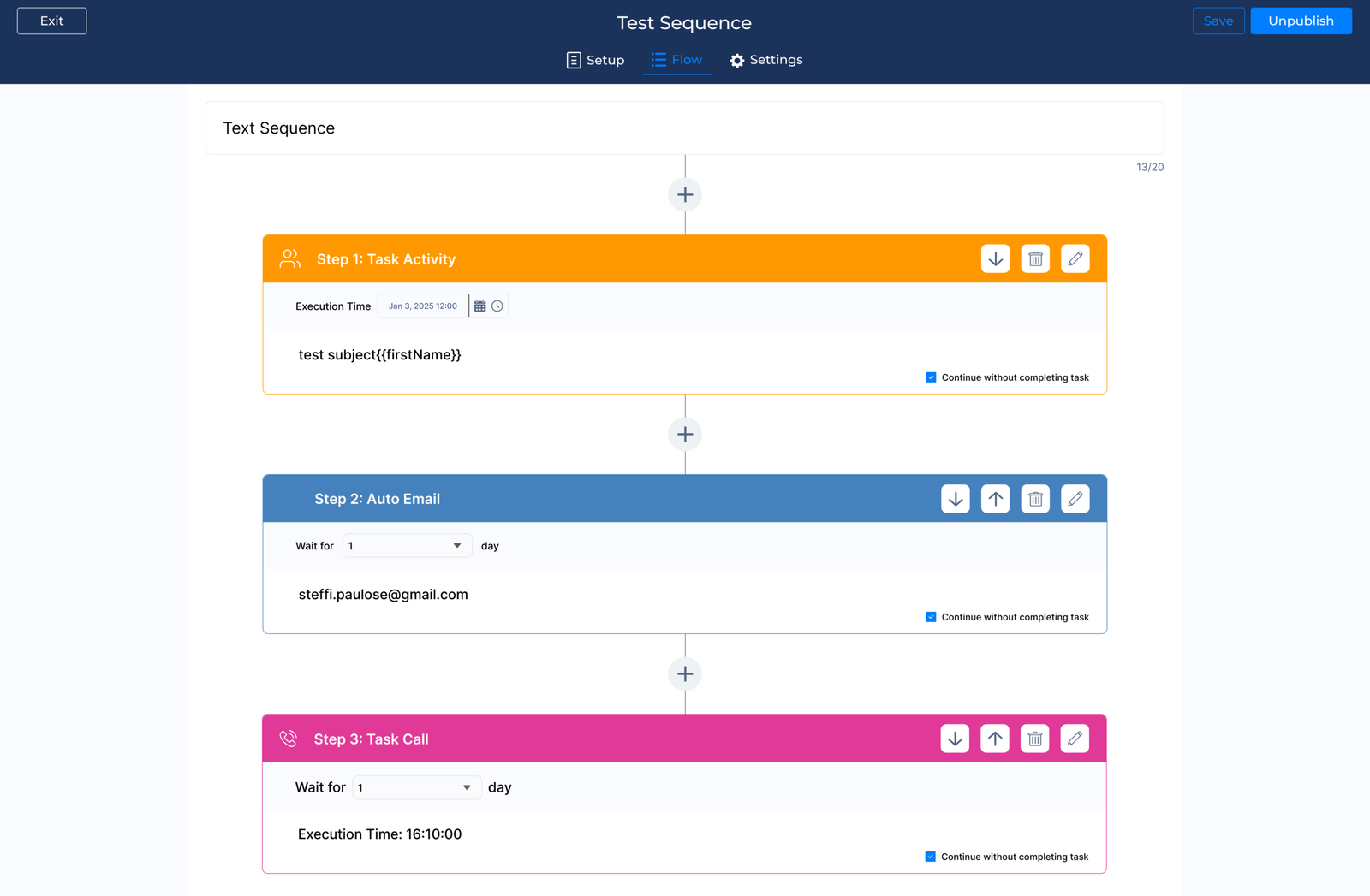
- Email sequences: Send follow-ups automatically based on how prospects engage with your emails.
- CRM tasks: Trigger reminders or activities when prospects take specific actions, like visiting your pricing page.
- Lead scoring: Rank prospects automatically based on behavior and fit so reps know who to prioritize.
Consider a scenario where a prospect opens your first email but doesn’t respond within three business days. Your system can send an automatic follow-up and remind the rep to check recent company updates before making a call.
7. Design Your Multi-Touch Follow-Up Sequence
Multi-touch sequences ensure consistent prospect engagement over time while respecting their decision-making process and timeline preferences. Most sales need several touchpoints before prospects engage, so consistent follow-up is key to turning interest into conversations.
Key steps:
- Touch 1: value introduction: Send an email sharing relevant insights or case studies without asking for anything.
- Touch 2: social proof: Share a customer success story similar to their situation.
- Touch 3: question-based engagement: Ask thoughtful questions about their current processes or recent updates.
- Touch 4: resource offering: Share a useful tool, template or resource that addresses a common challenge.
- Touch 5: meeting request: Make a clear, time-specific ask for a short conversation.
The biggest challenge lies in maintaining personalization across multiple touches while avoiding generic messaging that feels automated. One way to solve the issue is by using template frameworks with editable fields so each note feels tailored, not automated.
8. Implement Tracking and Analytics Tools
Tracking your outreach efforts turns guesswork into clarity by showing which actions drive results. Without it, you cannot identify successful patterns or optimize underperforming elements in your strategy moving forward.
The tools provide real-time visibility into prospect engagement patterns while measuring progress toward your revenue goals and conversion targets. Analytics show not just what happened but why certain approaches work better for specific audiences.
Actionable tips:
- Track leading metrics like response rates and meeting bookings instead of waiting on closed deals for insights.
- Hold weekly reviews with your team to spot trends early and adjust before small issues become bigger problems.
Tips and Best Practices for Sales Outreach Strategies
The following are the essential techniques that consistently deliver better results across different industries.