Ecommerce Conversion Rate Optimization: The Comprehensive Guide
Ecommerce conversion rate optimization (CRO) improves your online store so more visitors complete valuable actions. It increases sales without relying only on more website traffic.
Ecommerce conversion rate optimization (CRO) improves your online store so more visitors complete valuable actions. It increases sales without relying only on more website traffic.
Most e-commerce stores do not lose sales because of poor products. They lose sales because shoppers add items to their cart but leave before completing the purchase. Research shows the average e-commerce cart abandonment rate is 70.22%, meaning seven out of ten purchase-ready visitors never place an order.
Ecommerce conversion rate optimization helps identify the reasons behind these lost sales and improve the shopping experience so more visitors complete their purchases using your existing traffic. Below we’ll understand how to calculate your current conversion rate, apply practical optimization strategies and use a simple checklist to improve your store’s performance.
Ecommerce conversion rate optimization refers to the process of increasing the percentage of visitors who complete a desired action such as making a purchase, subscribing to a newsletter or adding a product to the cart. The focus is on improving your store so more existing visitors convert instead of relying only on increasing traffic.
A good ecommerce conversion rate depends on your industry, products and customer base. Many online stores achieve conversion rates between 2% and 4%, but those numbers should always be evaluated alongside factors such as product pricing, average order value and traffic quality.
Key objectives:
Let’s go through the key ecommerce conversion rate optimization benefits and see how improving your store’s shopping experience can increase conversions.
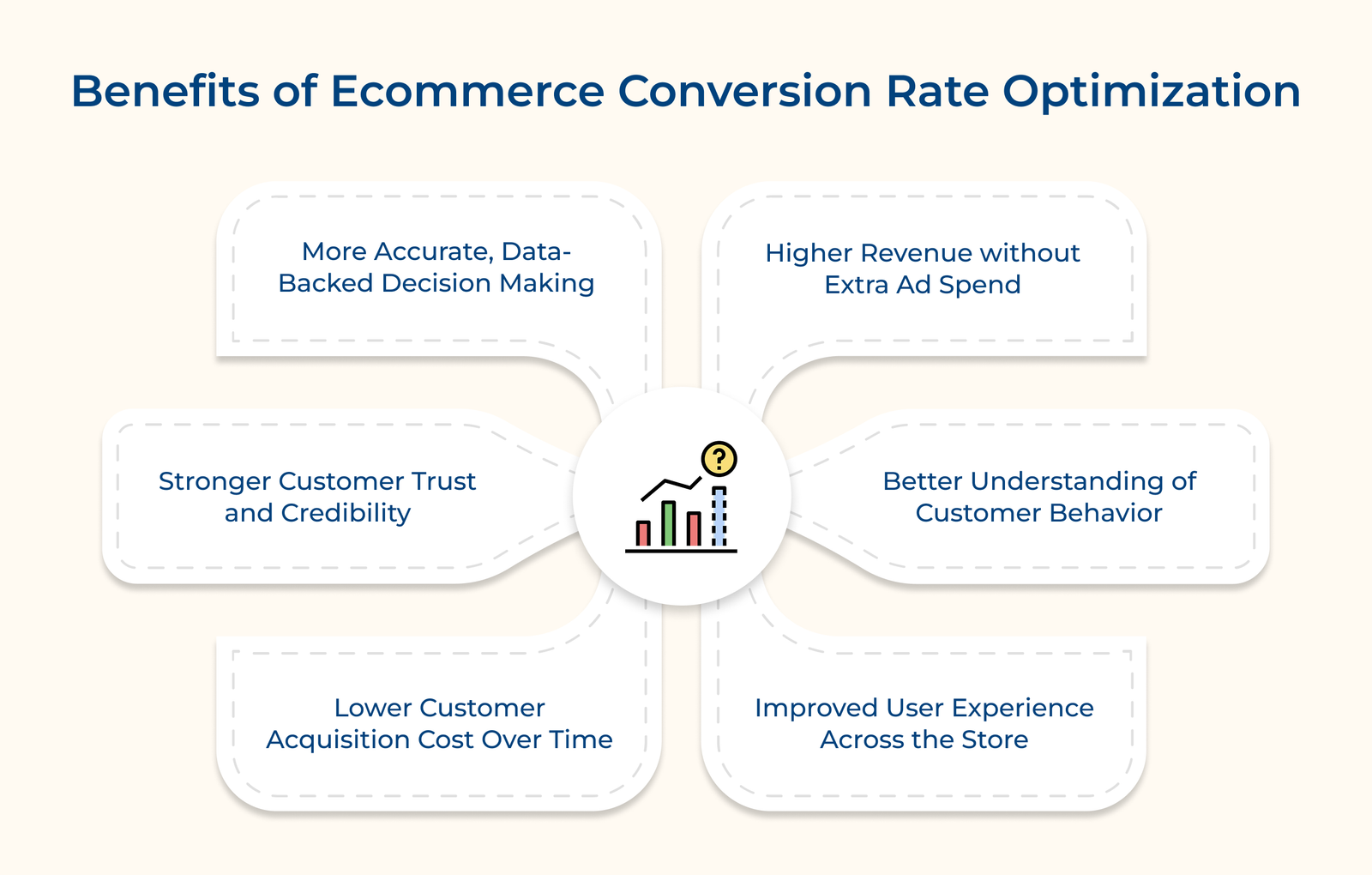
Higher Revenue Without Extra ad Spend
Converting more existing visitors increases revenue without increasing your advertising budget. Ecommerce conversion rate optimization helps you get more value from your current traffic by improving the percentage of visitors who complete a purchase.
Better Understanding of Customer Behavior
Studying how visitors browse, click and purchase reveals where they encounter obstacles during their shopping journey. The insights help you identify improvement opportunities that analytics alone may not clearly explain.
Improved User Experience Across the Store
Removing conversion barriers creates a smoother shopping experience and makes it easier for customers to complete their purchases. Ecommerce conversion rate optimization also helps reduce abandoned carts, support requests and unnecessary product returns.
Lower Customer Acquisition Cost Over Time
Higher conversion rates mean you can generate more sales from the same amount of traffic. It reduces the cost of acquiring each customer and improves the return on your marketing investment over time.
Stronger Customer Trust and Credibility
A clear, consistent and transparent shopping experience gives customers greater confidence in your store. Ecommerce conversion rate optimization strengthens trust by reducing confusion and making every stage of the buying journey easier to navigate.
More Accurate, Data-backed Decision-Making
Regular testing and performance analysis replace assumptions with measurable customer insights. Reliable data helps you make informed decisions and continuously improve your ecommerce store based on real user behavior.
Conversion rate measures the percentage of visitors who complete a purchase out of the total store visits.
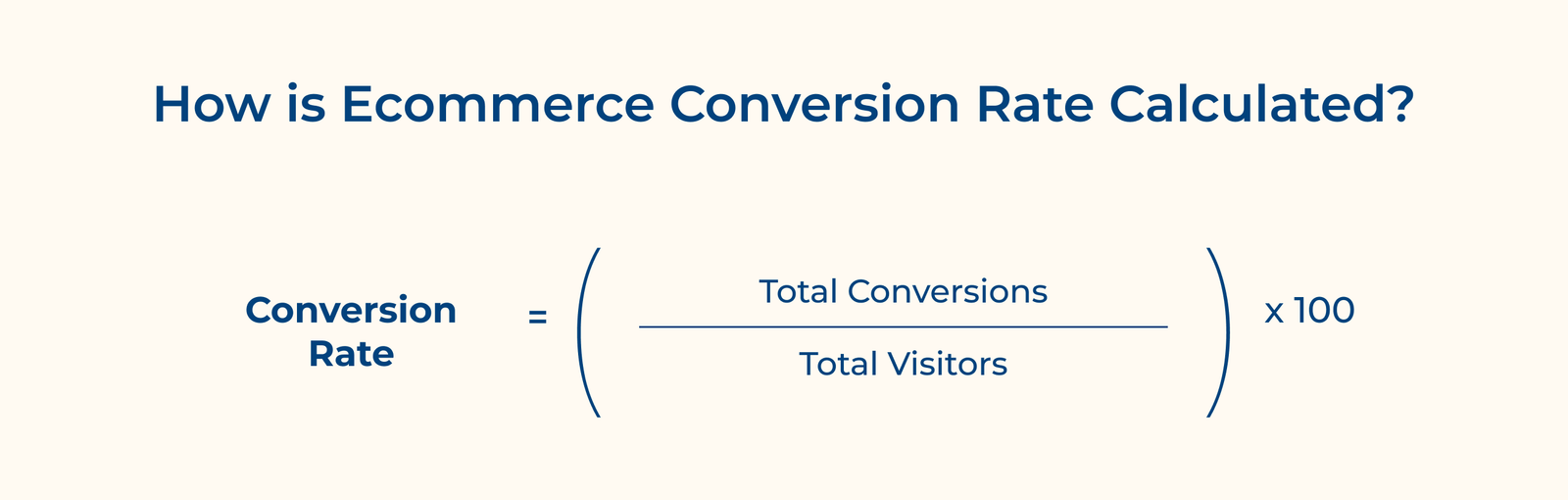
Key factors:
Calculating your conversion rate is only the first step. Tracking it consistently over time helps you identify performance trends, measure the impact of changes and uncover opportunities to improve your ecommerce store.
Key steps:
Let’s say an online fashion store wants to calculate its conversion rate for the month of May.
Time period: 1st May to 31st May (1 month)
Total visitors: 25,000 unique visitors tracked through analytics
Total conversions: 500 completed purchases during this period
Formula applied: (500 ÷ 25,000) × 100
Final Conversion Rate: 2%
This means that out of every 100 visitors who landed on the store that month, only 2 actually completed a purchase. That single number now becomes the baseline the store can work to improve through CRO.
The following are the essential steps to build a successful ecommerce conversion rate optimization strategy that helps drive consistent growth for your online store.
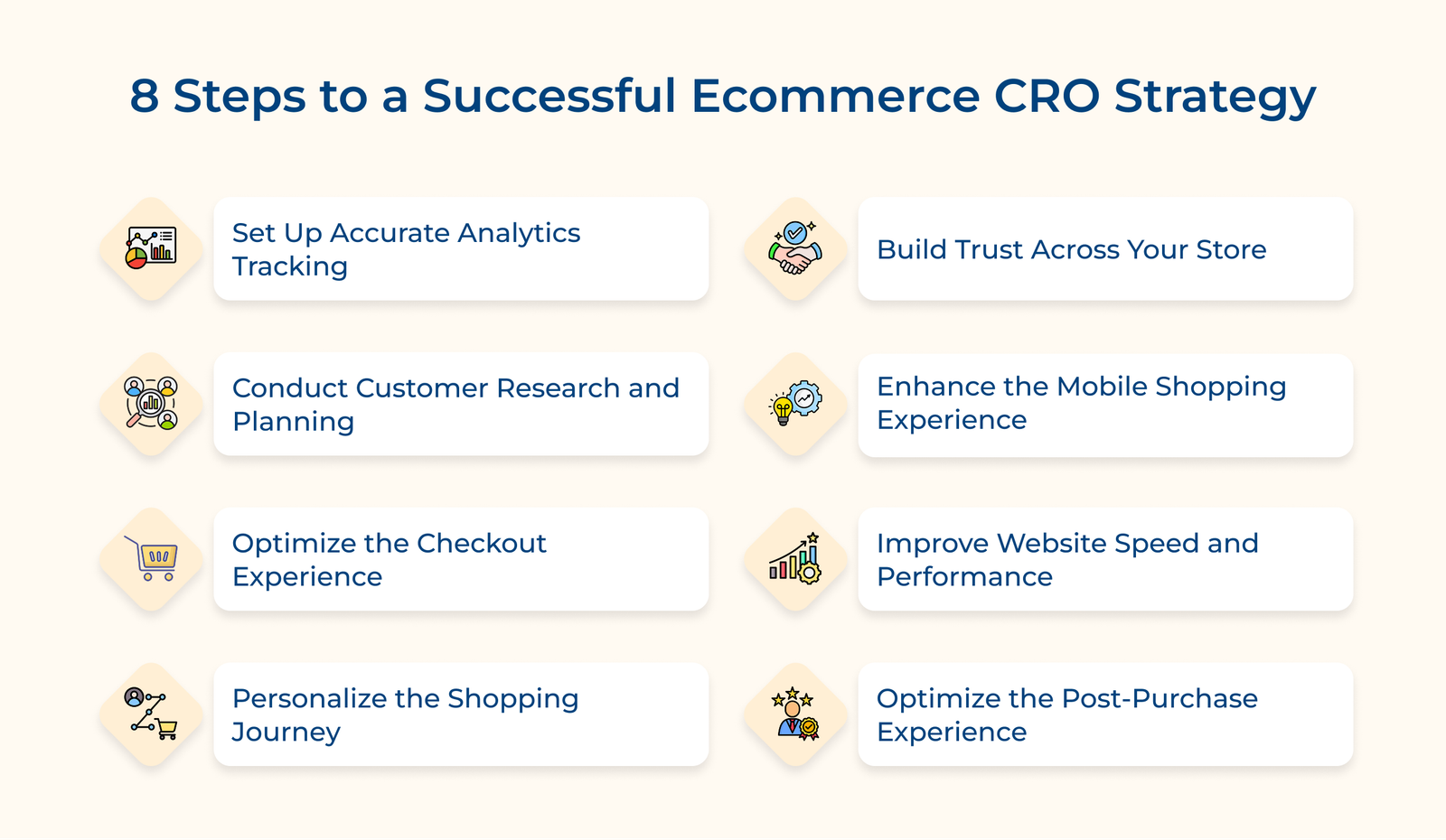
A successful ecommerce conversion rate optimization strategy starts with accurate data. Tracking customer behavior from the beginning helps you understand how visitors interact with your store and gives you the information needed to make meaningful improvements.
Key factors:
Google Analytics 4 is a common starting point for tracking ecommerce performance. Pairing analytics with heatmaps and session recordings provides deeper insights into how visitors interact with your store.
Key tools:
Customer research helps explain the reasons behind your analytics data. Ecommerce conversion rate optimization becomes much more effective when you understand what prevents visitors from completing a purchase and which improvements are likely to deliver the greatest results.
Key stages:
Checkout is the last step before a visitor becomes a customer, so even small obstacles can lead to an abandoned purchase. Ecommerce conversion rate optimization often delivers the biggest improvements by making the checkout process faster, simpler and easier to complete.
A simple checkout should still collect the information needed to process orders accurately and securely. Breaking the checkout into smaller, easy-to-complete steps helps customers move through the process with less effort while still providing all the required details.
Personalization helps shoppers find products that match their interests instead of showing the same content to everyone. Ecommerce conversion rate optimization improves when customer data is used to deliver relevant content, recommendations and offers throughout the purchase journey.
Key questions:
Trust plays an important role in online shopping because customers cannot examine products before making a purchase. Ecommerce conversion rate optimization improves when your store gives shoppers clear reasons to feel confident at every stage of the buying journey.
Key elements:
Mobile devices account for a large share of ecommerce traffic, making a smooth mobile experience essential for online sales. Ecommerce CRO improves when shoppers can browse products, navigate your store and complete purchases quickly on their phones.
Key questions:
The questions matter because mobile friction often hides in small details that look fine on desktop but feel frustrating on a smaller screen. Answering them honestly reveals exactly where your mobile funnel quietly leaks potential customers.
Key ways:
Mobile optimization requires regular attention because devices, browsers and customer expectations continue to change. Testing your store frequently helps maintain a smooth shopping experience and supports higher conversion rates over time.
Page speed directly impacts conversions because visitors expect your store to load quickly. Ecommerce CRO becomes more effective when customers can browse products and move through your website without delays.
Key reasons:
The customer journey continues long after a purchase is completed. Ecommerce conversion rate optimization improves the post-purchase experience because satisfied customers are more likely to return and make future purchases.
Significance aside, the step works because retaining an existing customer costs far less than acquiring a new one through ads. Stores that treat post-purchase as part of CRO consistently see better lifetime value than those focused only on the first sale.
Key practices:
Many businesses focus only on completing the first sale and overlook the customer experience afterward. Treating post-purchase communication as an important part of the customer journey helps build stronger relationships and encourages customers to return again.
Before starting any ecommerce conversion rate optimization initiative, review the checklist to confirm the key elements of your online store are working as expected. The questions can help you identify common issues before they affect your conversion rate.
Key takeaways:
Check out the following ecommerce conversion rate optimization examples to see how leading brands improve conversions by solving real customer problems.
Patagonia
Patagonia shows that ecommerce conversion rate optimization is about much more than improving product pages or streamlining checkout. Its shopping experience consistently reinforces the brand’s environmental values through repair programs, sustainable materials and detailed product information that resonates with its target audience.
The approach has strengthened brand loyalty significantly, turning purchases into value-aligned decisions rather than purely transactional ones. Customers who connect with the mission tend to return repeatedly, which steadily improves lifetime value beyond just first-time conversions.
Amazon
Amazon improves conversions by making the buying process as simple as possible. Its one-click “Buy Now” feature allows returning customers to complete a purchase using saved payment and shipping details, removing unnecessary steps during checkout.
The impact on conversions has been substantial, since simplifying the checkout process through one-click checkout is a prominent example of how Amazon has improved its ecommerce conversion rate. Fewer clicks translate directly into fewer drop-offs and that single design decision has become an industry benchmark other retailers now try to replicate.
Sephora
Sephora improves ecommerce conversion rate optimization through its virtual artist tool. Customers can virtually try on makeup products and receive personalized recommendations, helping them choose the right products before making a purchase.
The results have been significant. More than 8.5 million customers have used Virtual Artist, contributing to an 11% increase in conversion rate. Solving a specific customer challenge often delivers stronger results than making broad website changes alone.
Ecommerce conversion rate optimization is about making it easier for visitors to become customers. Every improvement should remove unnecessary friction and rely on real customer data instead of assumptions. Consistent testing and careful measurement help you understand what encourages more shoppers to complete a purchase.
Key takeaways:
Ecommerce conversion rate optimization is an ongoing process of measuring, testing and improving the shopping experience. Start with the checklist above, review your results regularly and make changes based on real customer behavior.

Most businesses start seeing measurable results within four to eight weeks, depending on website traffic and the number of visitors included in each test. Smaller online stores usually need more time to collect enough reliable data before making confident decisions.
Below are the metrics a business should be tracking for optimizing their conversion:
These metrics highlight where customers leave the buying journey and where improvements can have the greatest impact.
CRO increases sales by converting more of your existing traffic, rather than relying solely on bringing in new visitors. It makes every marketing dollar already spent work harder toward actual revenue.
Google Analytics 4, Hotjar, Microsoft Clarity or A/B testing tools provide valuable insights into customer behavior and website performance. Using the tools together helps you understand what customers are doing and identify opportunities to improve conversions.
Slow-loading pages increase bounce rates and cause visitors to abandon your site before even browsing products. Even a one-second delay can noticeably reduce conversions, especially on mobile devices.
Grow Customer Relationships and stronger team collaboration with our range of products across the Conversational Engagement Suite.
Omnichannel Customer Support & Help Desk Software
AI Enabled Business Messaging and Chatbot Software
Sales Engagement & CRM Software
Call Center Software & Virtual Phone System
Product Marketing & Experience Platform
Customer Experience & Feedback Management Software
 How to Create a Predictive Customer Service Strategy?
Scroll to top