Lead vs Prospect vs Opportunity: A Detailed Comparison
Explore the comparison of lead vs prospect vs opportunity. It helps sales teams qualify contacts, prioritize efforts and move potential customers through each stage of the sales funnel.

Explore the comparison of lead vs prospect vs opportunity. It helps sales teams qualify contacts, prioritize efforts and move potential customers through each stage of the sales funnel.
Many businesses generate a steady flow of leads, yet their sales teams spend valuable hours chasing contacts who never convert. The pipeline appears healthy on reports, but a closer look reveals stalled conversations, low intent and disappointing conversion rates.
Each unqualified lead absorbs time, effort and budget that should be directed toward buyers who are ready to make decisions. Sales teams lose momentum when they cannot clearly distinguish between someone who simply showed interest and someone prepared to move forward. It is why understanding the comparison of lead vs prospect vs opportunity is vital; otherwise, the follow-ups become scattered and high-potential deals lose priority.
A lead refers to a person or business that has shown interest in what you offer. They might have filled out a form on your website or downloaded something you created. Think of them as potential customers who have raised their hand to say they want to learn more about your product or service.
Leads matter because they’re the foundation of every sale. Without them, your pipeline dries up and your team ends up chasing cold contacts instead of real opportunities. Good leads mean consistent growth, you’re connecting with people who actually need what you provide.
Key benefits:
A prospect refers to a lead who has been qualified and meets your specific criteria for becoming a customer. They have a clear need, a budget to spend and the authority to make a buying decision within a realistic timeframe.
While a lead might just be exploring options, a prospect has moved from curiosity to consideration. Your team has already confirmed they’re worth pursuing because what you offer actually fits their situation.
Key factors:
A sales opportunity can be defined as a qualified prospect who’s moved into active discussions about making a purchase. It means they’ve expressed a clear intent to buy and are now evaluating your solution against their specific requirements. Your sales team has opened a formal opportunity in the system because there’s a real chance of closing a deal.
Sales opportunities represent the final stage before someone becomes a customer. The prospect is no longer exploring options casually. They’re having detailed conversations about pricing and implementation timelines. The relationship has progressed from “maybe interested” to “seriously considering a purchase.”
Key significance:
Let’s go through the key benefits of knowing the differences between leads vs prospects vs opportunities so your sales team can focus efforts where they matter most.
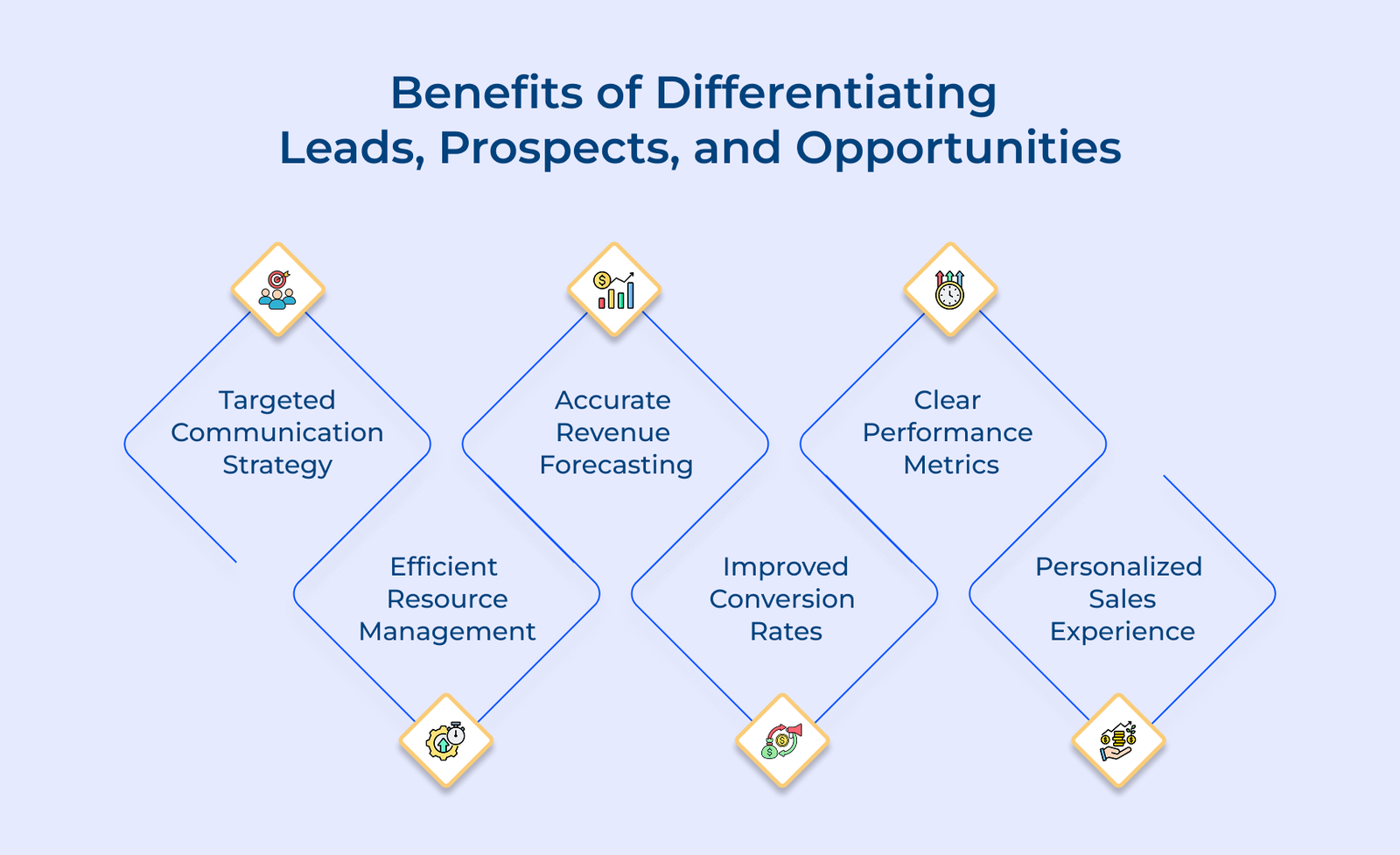
You can tailor what you say to match where someone is in their buying journey. A lead needs simple, educational content to understand their problem. A prospect wants to see how your solution compares to alternatives. An opportunity requires specific pricing details and implementation plans that would overwhelm someone just starting to explore options.
Your team stops treating every name in the database like a hot lead. Junior reps or automation can handle early-stage leads, while experienced salespeople focus on opportunities that are close to closing. It keeps your top talent working where they’ll have the biggest impact.
You can predict future income with much greater precision when you know what stage each potential customer occupies. Leads are long-term possibilities, while opportunities have defined values and close dates. Your finance team can plan budgets and your leadership can make informed decisions about expansion.
You avoid pushing people too hard before they’re ready or waiting too long when they want to move forward. Leads need time to understand their problem before discussing solutions. Prospects want comparisons to help them decide. Opportunities need you to address final concerns and facilitate the buying process quickly.
Knowing which stage people drop off helps you pinpoint weak spots in your process. Maybe you collect plenty of leads but struggle to qualify them or maybe deals stall just before closing. Understanding where you lose momentum helps you fix what matters most.
People feel understood when you approach them based on where they actually are. No one wants a hard sales pitch when they’re just learning about their problem and prospects lose patience when they get basic content instead of real answers. Matching your tone and timing builds trust naturally.
Below are the leads vs prospects vs opportunity distinction, empowering you with the knowledge to optimize your sales strategy efficiently.
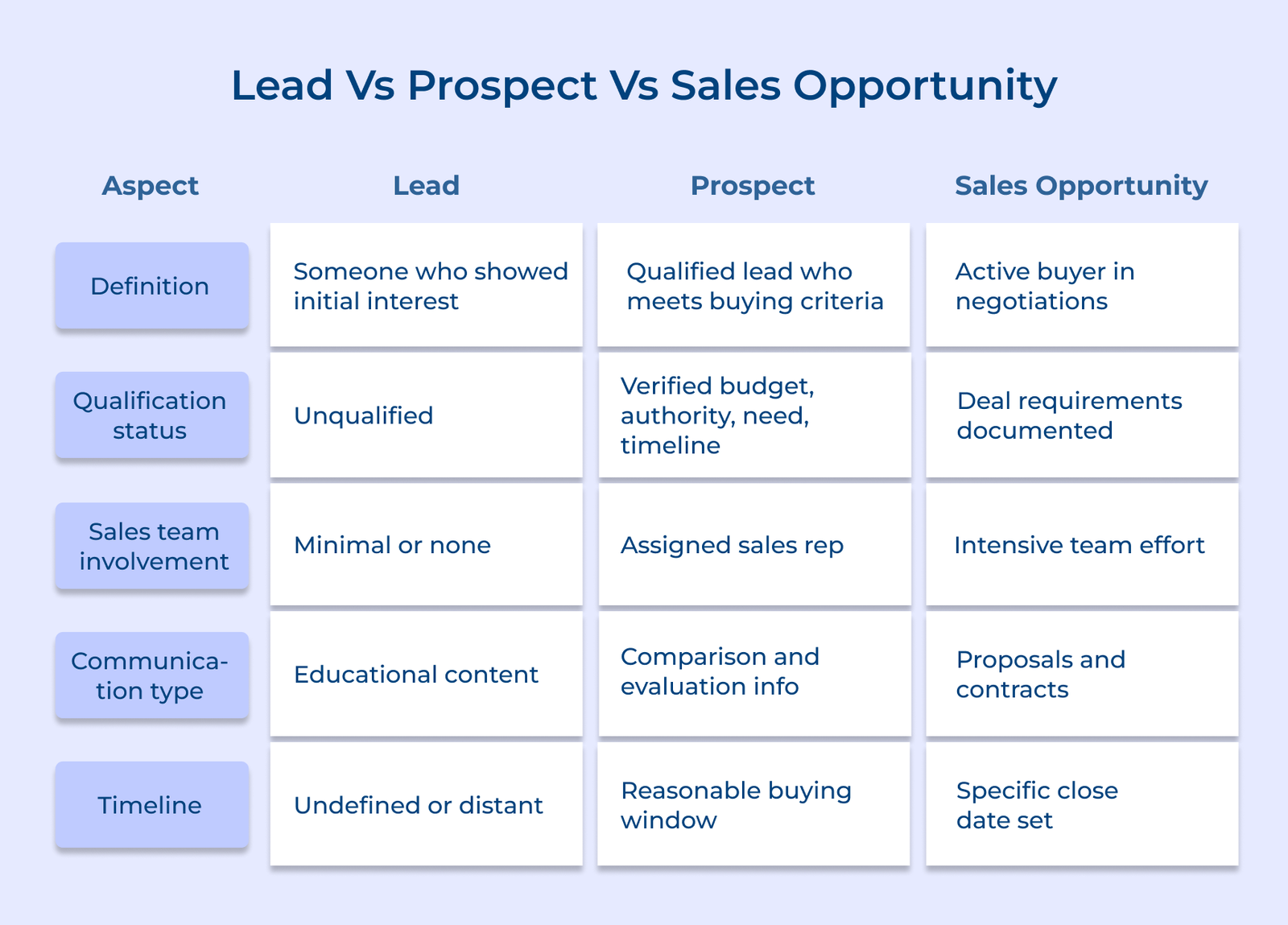
A lead has shown basic curiosity by taking a simple action like downloading a guide or signing up for your newsletter. They’re at the very beginning of their journey and might not even fully understand their problem yet. Their engagement is minimal and they haven’t had any real conversation with your team about their specific needs.
A prospect has moved past casual interest and is qualified as a realistic potential buyer. They’ve engaged with your team and shown real interest in buying. A sales opportunity shows clear intent, with buyers discussing pricing and timelines.
Pro tips:
A lead exists simply because someone raised their hand and provided contact information in exchange for something you offered. There’s no vetting process at this stage and you don’t know if they have money or authority to buy. Many leads never progress because they simply aren’t the right fit.
Actionable tips:
A prospect has cleared specific hurdles that prove they’re worth your sales team’s time and focused attention. Your team confirms they fit your ideal customer profile and can make a purchase decision. Sales opportunities go even further by having documented requirements and an established process for moving toward a final decision together.
Leads sit at the top of your sales funnel, where volume is highest but conversion probability remains quite low. They’re new to your brand and most won’t become customers. Your goal with leads is simply to sort through them and identify which ones deserve more attention or resources.
Prospects sit in the middle of the funnel. They’ve been qualified and show real potential. Sales opportunities move to the bottom, where active deals and real revenue decisions happen. Naturally, the numbers shrink at each level as you move from awareness to action.
Let’s assume that our website generates 1000 leads monthly, but only 100 become prospects after qualification calls. Around 20 progress out of those prospects into active opportunities. Five opportunities close, showing how the funnel narrows at each stage.
Actionable tips:
A lead receives broad educational content designed to help them understand their problem and explore potential solutions. You’re not trying to sell anything yet because they’re not ready for that conversation. Your messaging builds awareness and shows you understand their challenges while offering useful insights.
Best practices:
A prospect hears from you differently because they’ve already acknowledged they have a problem worth solving. Your conversations get specific, focusing on how your solution fits their situation. Sales opportunities need a tailored approach that moves them toward a decision with clear next steps.
A lead operates on an undefined timeline and might not even be thinking about making a purchase anytime soon. They might be casually researching or collecting information for a project far in the future. There’s no sense of urgency and they may simply be exploring what’s possible without any commitment to take action.
Key questions:
A prospect has usually indicated they plan to decide within a reasonable window that makes pursuing them worthwhile. They might say something like “we’re looking to implement a solution before the end of Q2,” which gives you a concrete timeframe. Sales opportunities have clear timelines with active discussions, scheduled meetings and defined decision dates.
Leads rarely interact with your sales team early on. Marketing handles them through automated emails and content that slowly builds interest until they’re ready for a real conversation.
Key takeaways:
Prospects get personal attention from a rep who understands their situation and guides them through the evaluation process. Opportunities demand deeper engagement as salespeople handle objections, align multiple decision-makers and manage the final steps toward closing.
A lead needs basic information captured in your system, like name and email address or maybe the source from which they came. You’re tracking light engagement like page visits or downloads, just enough to understand initial interest.
A prospect needs more detailed data, so your team can plan the right approach. You record their company size, budget, pain points and key decision-makers. Sales opportunities need detailed tracking of deal size, close date, competitors and key objections.
Pro tips:
A lead gets measured primarily by volume and quality scores that indicate if they fit your target profile. You track how many leads come in each month and how many fit your target criteria. The metrics stay high-level because leads represent the earliest stage, where you’re simply trying to fill the top of your funnel.
Key questions:
Below are five approaches that help you identify which leads deserve your attention and guide them toward becoming qualified prospects.
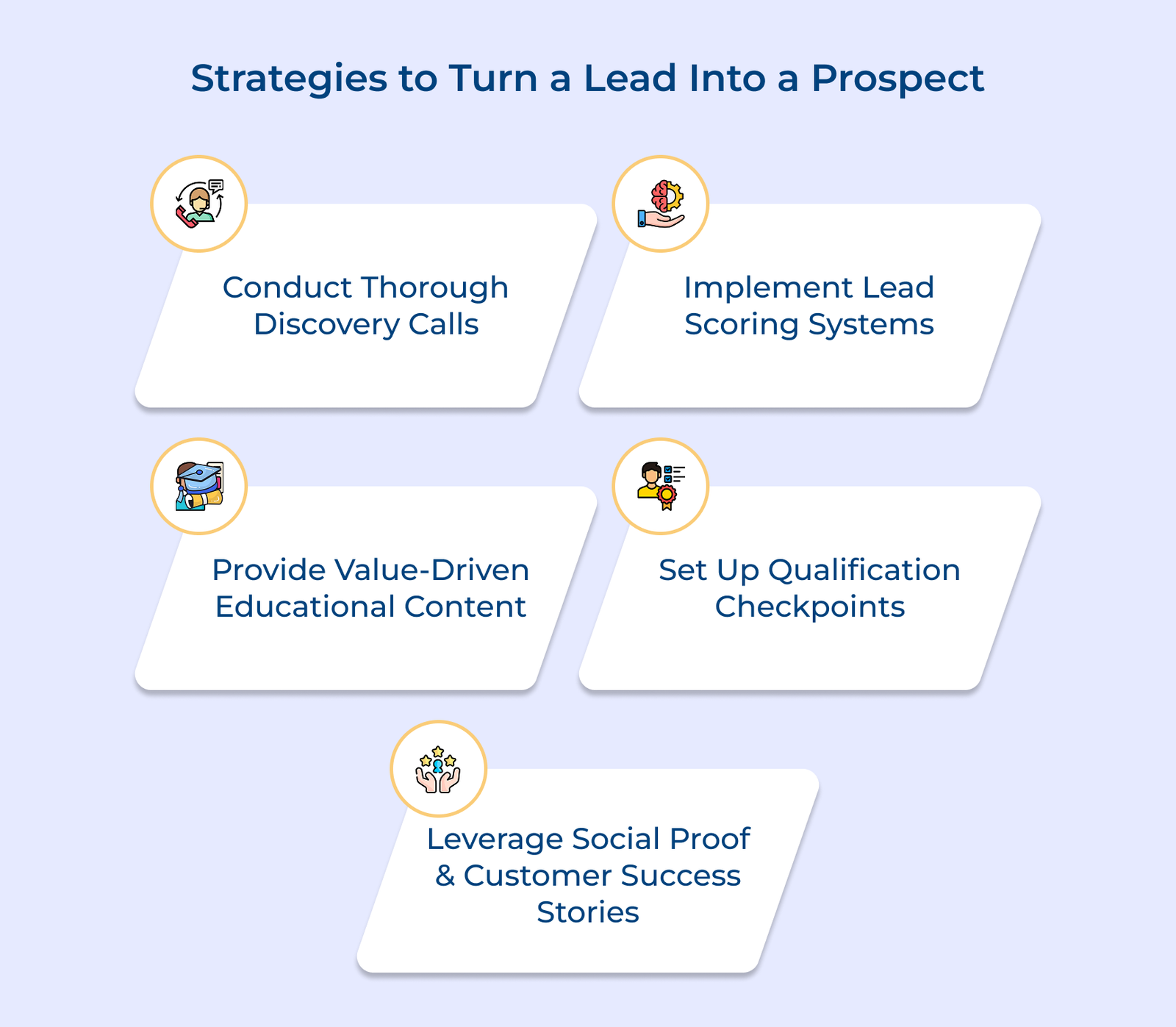
Have a focused conversation to learn if the lead genuinely fits your prospect criteria. Ask open-ended questions about their situation, goals and constraints. Listen carefully to uncover if they have the authority, budget and reason to buy not just curiosity.
Set up a scoring process that ranks leads by how well they match your ideal customer and how engaged they are. Give higher scores for meaningful actions like booking a demo or checking your pricing page more than once.
Key ways:
The systematic approach removes guesswork and ensures your team focuses on leads most likely to convert based on objective criteria rather than random outreach.
Share resources that directly address the specific pain points your lead has expressed interest in through their initial actions. Your content should help them understand their challenges and show you understand their world, building trust without asking for anything in return.
Include small checkpoints in your nurture process to see who’s ready to move forward. It could be a short survey, a quick email about their goals or a call to clarify their timeline.
Key details:
The checkpoints act as filters that naturally separate curious browsers from serious buyers who deserve your focused sales attention.
Share testimonials and case studies from customers who had similar challenges to what your lead is experiencing right now. Make sure your success stories include specific outcomes and numbers that demonstrate real impact rather than vague claims about improvement.
Check out the common mistakes that help you avoid wasting time and losing potential customers who were ready to buy.
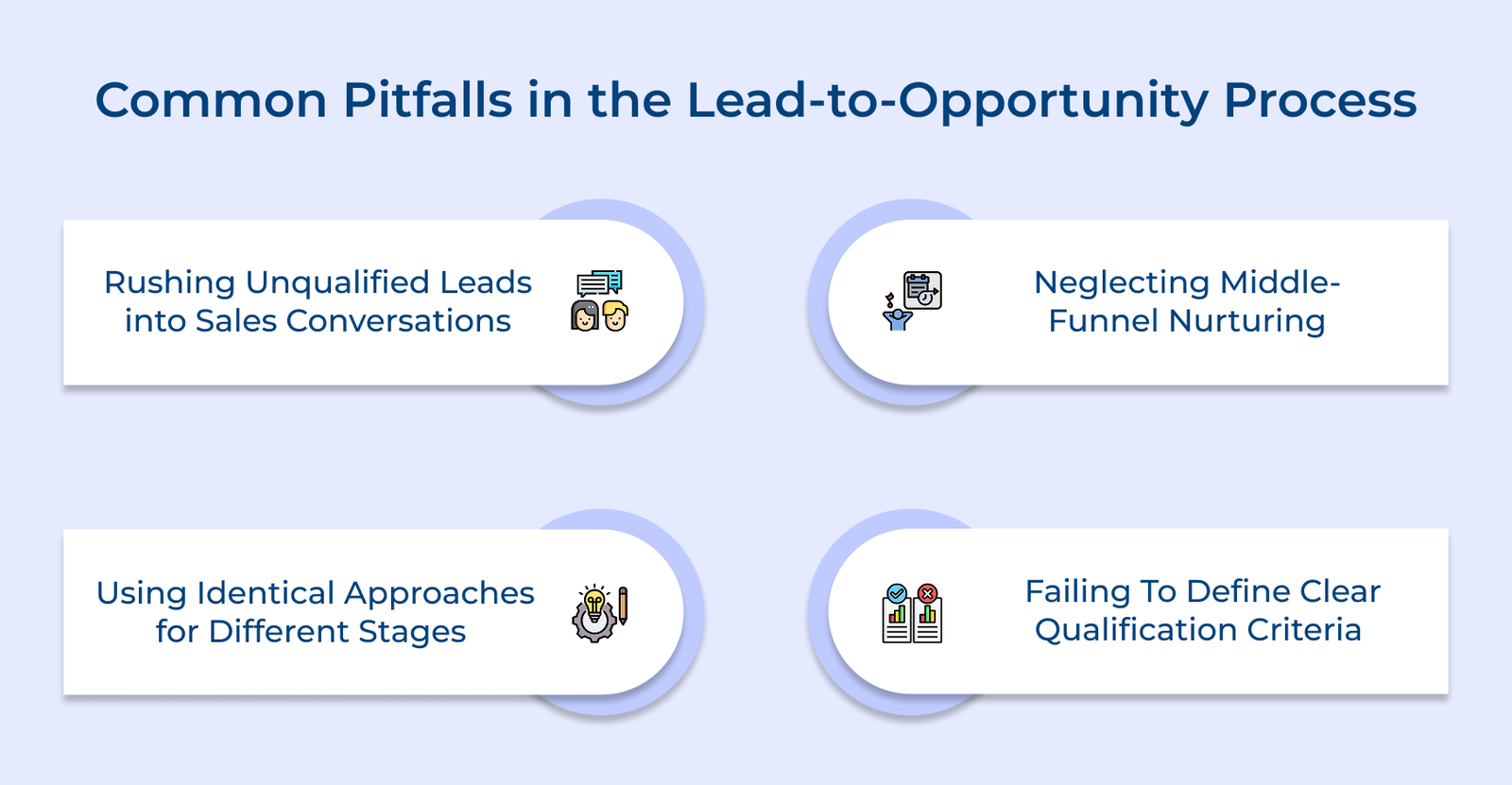
1. Rushing Unqualified Leads into Sales Conversations
Jumping on every new lead without checking if they’re actually a fit wastes time and energy. It also turns off people who aren’t ready for a serious sales talk yet.
2. Neglecting Middle-funnel Nurturing
You capture leads effectively but then fail to stay engaged with them through helpful content until they’re ready to talk. The leads go cold because you either ignored them completely or only sent generic newsletters that didn’t address their specific interests.
3. Using the Same Approaches for Every Stage
Your team uses the same generic messaging for everyone, ignoring what stage they’re actually in. A lead gets bombarded with pricing details, while an opportunity receives basic educational content they already consumed months ago.
4. Failing to Define Clear Qualification Criteria
Nobody on your team knows exactly what separates a lead from a prospect or when to create an opportunity in your system. The confusion leads to inconsistent handling where some salespeople chase anyone while others ignore genuinely interested buyers.
Implementation steps:
The following are the five practices to help you transform qualified interest into active buying conversations that move toward closed deals.
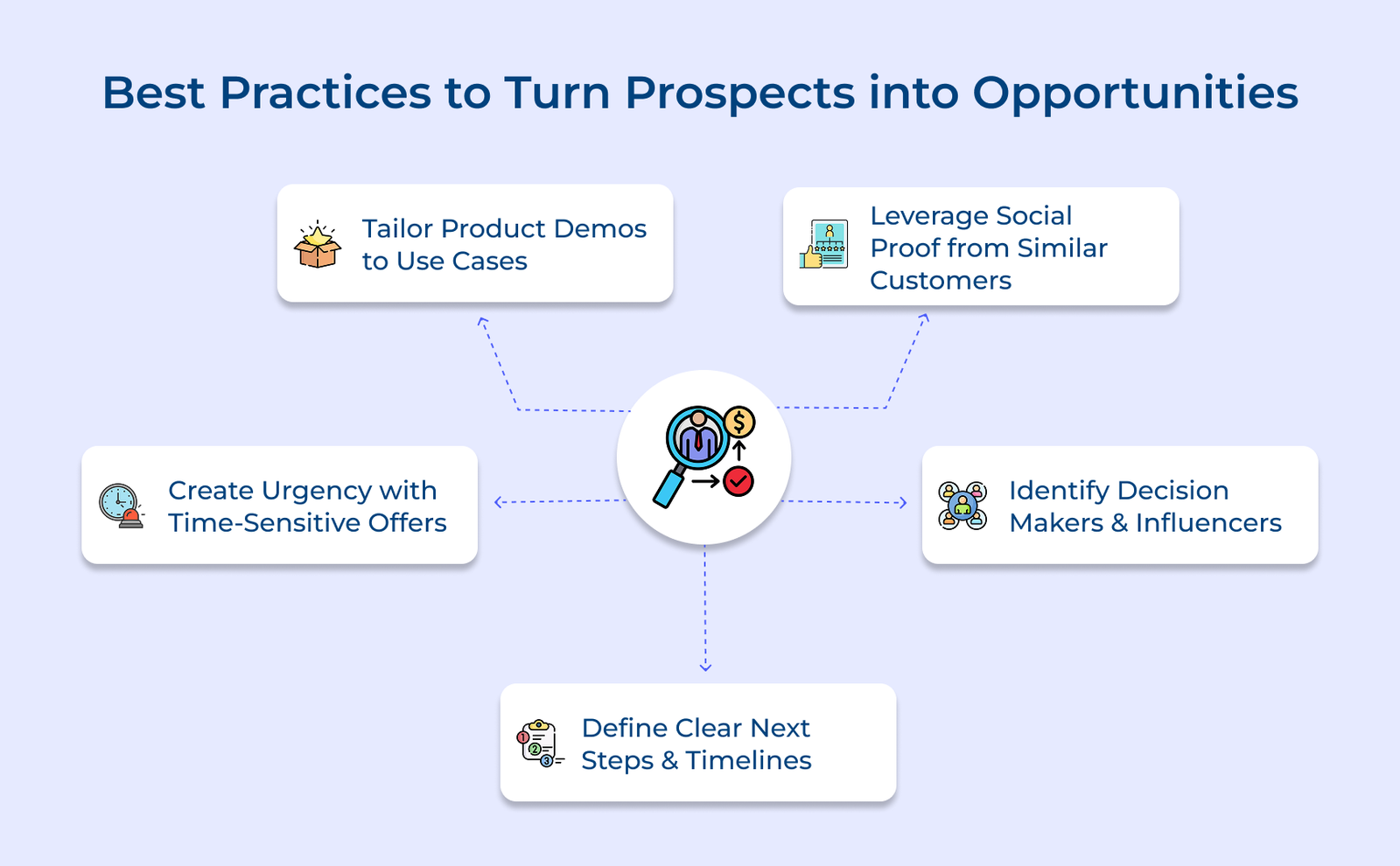
1. Schedule Demos Tailored to Their Needs
Show prospects how your solution tackles their specific problem instead of giving a standard feature walkthrough. Focus on what matters most to them, using examples from their own industry. Come prepared with a clear understanding of their current process so the demo feels like a continuation of your earlier conversation, not a generic presentation they could have watched online.
2. Share Proof from Similar Customers
Show real results from companies like theirs. When prospects see similar businesses succeeding, it builds confidence that your solution will work for them too. Go beyond surface-level testimonials and highlight measurable outcomes, timelines, and the exact challenge that was solved so they can clearly connect the dots to their own situation.
3. Create Gentle Urgency
Offer something valuable like discounted pricing or waived implementation fees that expires on a specific date to encourage faster decision-making. The gentle push helps prospects act sooner instead of letting the decision linger while their problem persists. Tie that urgency to the cost of inaction so they understand what delaying the decision continues to cost them in time, revenue, or missed opportunities.
4. Identify Every Decision Maker
Ask early who’s involved in the decision and what each person cares about. Addressing everyone’s priorities upfront prevents last-minute surprises or slowdowns. Map out each stakeholder’s concerns and influence level so you can equip your main contact with the right information to advocate internally with confidence.
5. Define Clear Next Steps
End every call with an agreed action and deadline, like scheduling the next meeting or sending a proposal. Clear follow-ups keep progress steady and deals moving forward. Confirm the purpose of the next interaction so both sides know exactly what needs to happen before that date to keep momentum intact.
Understanding the three stages changes how you approach every potential customer. When you know where someone is in their buying journey, you can speak to what actually matters to them and focus your time where it counts most.
The roadmap isn’t about complicated systems or fancy terminology. It’s about respecting where people are in their decision process and meeting them there with the right message at the right time, which naturally leads to more closed deals.

You qualify a lead by conducting discovery calls to verify they have budget and authority and a genuine need for your solution. Ask simple, open questions to find out if they’re a good fit and ready to move forward within a realistic timeframe.
Show value that feels personal. Tailor demos to their situation, share stories from similar customers and address their specific concerns. Make sure you know every decision-maker involved and guide them toward practical next steps like pricing discussions.
Sales opportunities have defined deal values and expected close dates that your team tracks in your CRM system for forecasting purposes. They involve active negotiations with multiple touchpoints scheduled and clear next steps agreed upon. The buyer has expressed concrete intent to purchase and is evaluating your solution against specific requirements.
Leads get educational content through automation, while prospects receive personal outreach and qualification calls from sales reps. Opportunities need focused effort with tailored proposals, demos and negotiations to address objections quickly.
Always prioritize opportunities first because they’re closest to closing and represent immediate revenue that directly impacts your targets this quarter. Next, focus on prospects who are qualified and ready for sales conversations. Spend the least time on leads by using automation to nurture them until they show signals of being ready for human interaction.
Grow Customer Relationships and stronger team collaboration with our range of products across the Conversational Engagement Suite.
Omnichannel Customer Support & Help Desk Software
AI Enabled Business Messaging and Chatbot Software
Sales Engagement & CRM Software
Call Center Software & Virtual Phone System
Product Marketing & Experience Platform
Customer Experience & Feedback Management Software
 Scroll to top