A Guide on Sales Kickoff: Elements, Benefits & Tips
A sales kickoff aligns teams, sets goals and shares strategy. It energizes sellers with clear direction, motivation and actionable insights to drive strong performance for the year ahead.
A sales kickoff aligns teams, sets goals and shares strategy. It energizes sellers with clear direction, motivation and actionable insights to drive strong performance for the year ahead.
Your sales team ended last year on a high, but now people are spread across regions, working on different priorities and unsure about what matters the most now. Without a clear reset, momentum fades fast.
Planning a sales kickoff can feel messy when you are balancing budgets, speakers and content at the same time. Many leaders rush through it, stack slides together and hope the message lands. Little do they know, the teams walk away with mixed signals and forget most of the training within weeks.
The guide walks you through everything from defining your kickoff goals to choosing the right template for your specific situation. You’ll learn how to create an event that turns scattered effort into focused execution and builds the energy your team needs to crush their targets.
A sales kickoff refers to a company-wide meeting held at the start of a new fiscal year or quarter to bring the entire sales team onto the same page. It resets priorities, clarifies goals and gives everyone a clear sense of direction for what comes next.
Your leadership team gathers the sales force for one to three days of intensive sessions. The meetings combine strategic planning with skill development and team-building activities. The event typically includes keynote speaker presentations from executives and breakout workshops where teams can practice new approaches.
Key objectives:
Let’s go through the essential elements that transform a routine meeting into a catalyst for growth.
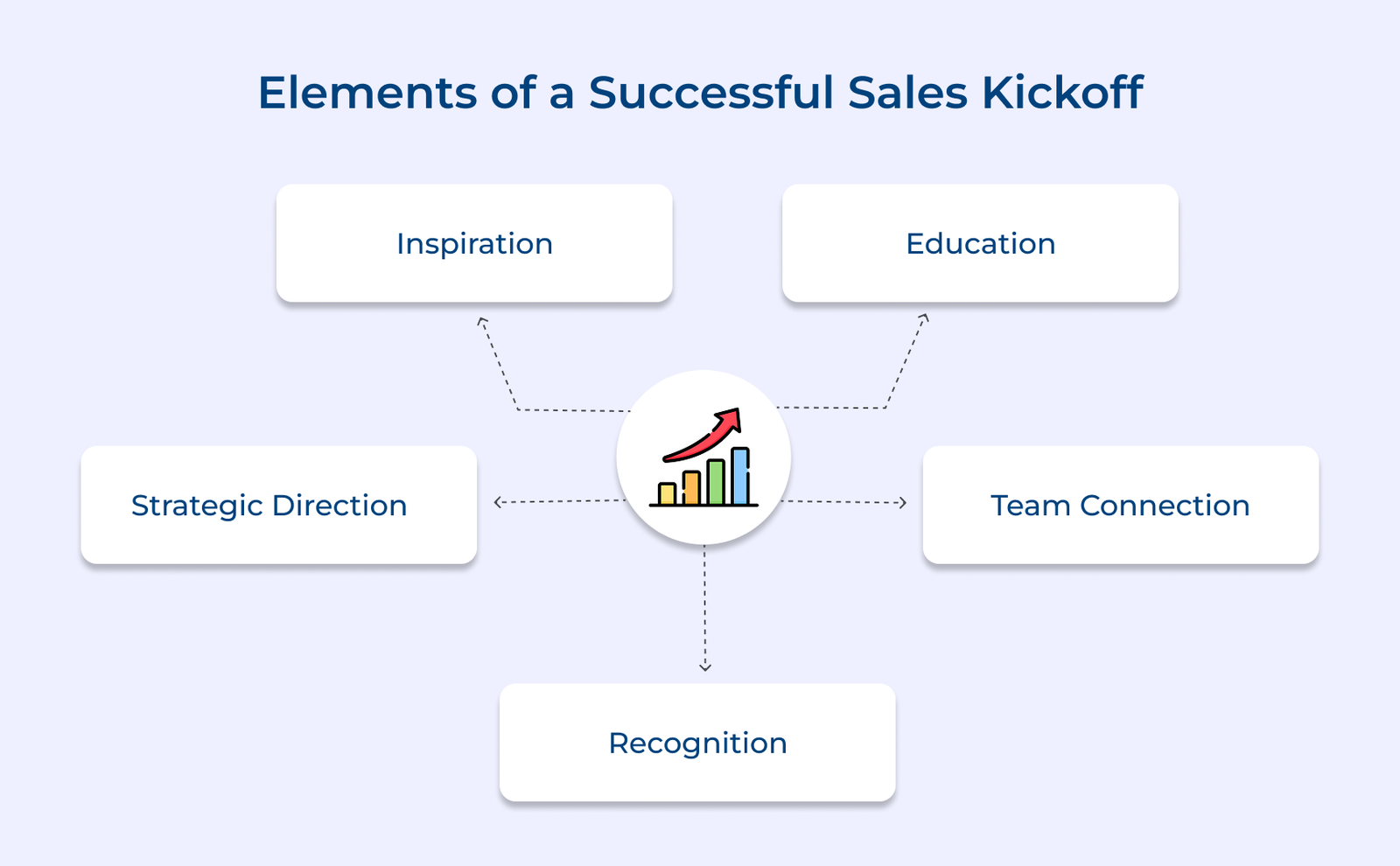
Your team needs to feel excited about the year ahead and confident in what they are selling. Invite speakers who share real wins or ask top performers to talk through tough deals they closed. The stories stick and help reps push through rejection later.
Sales kickoff training should focus on skills reps will use every day. Cover new product updates and clear competitive talking points that help handle objections. Hands-on sessions work best when people practice instead of sitting through long presentations.
Your sales team can’t execute effectively if they don’t understand where the company is headed and why. Leadership should clearly articulate market opportunities and explain how your priorities have shifted from last year. The clarity helps reps make better decisions about where to invest their time and energy.
Many salespeople work in isolation, so your sales kickoff provides rare face time with colleagues and cross-functional partners. Plan relaxed networking and team activities that encourage honest conversations. Strong connections make it easier to ask for help throughout the year.
Celebrating achievements from the previous period reinforces the behaviors you want to see repeated and shows appreciation for hard work. Announce awards publicly and be specific about what each person did to earn recognition. The acknowledgment motivates top performers while giving others concrete examples of excellence to emulate.
The following are the benefits of hosting a sales kickoff event. Let’s check them out in more detail.
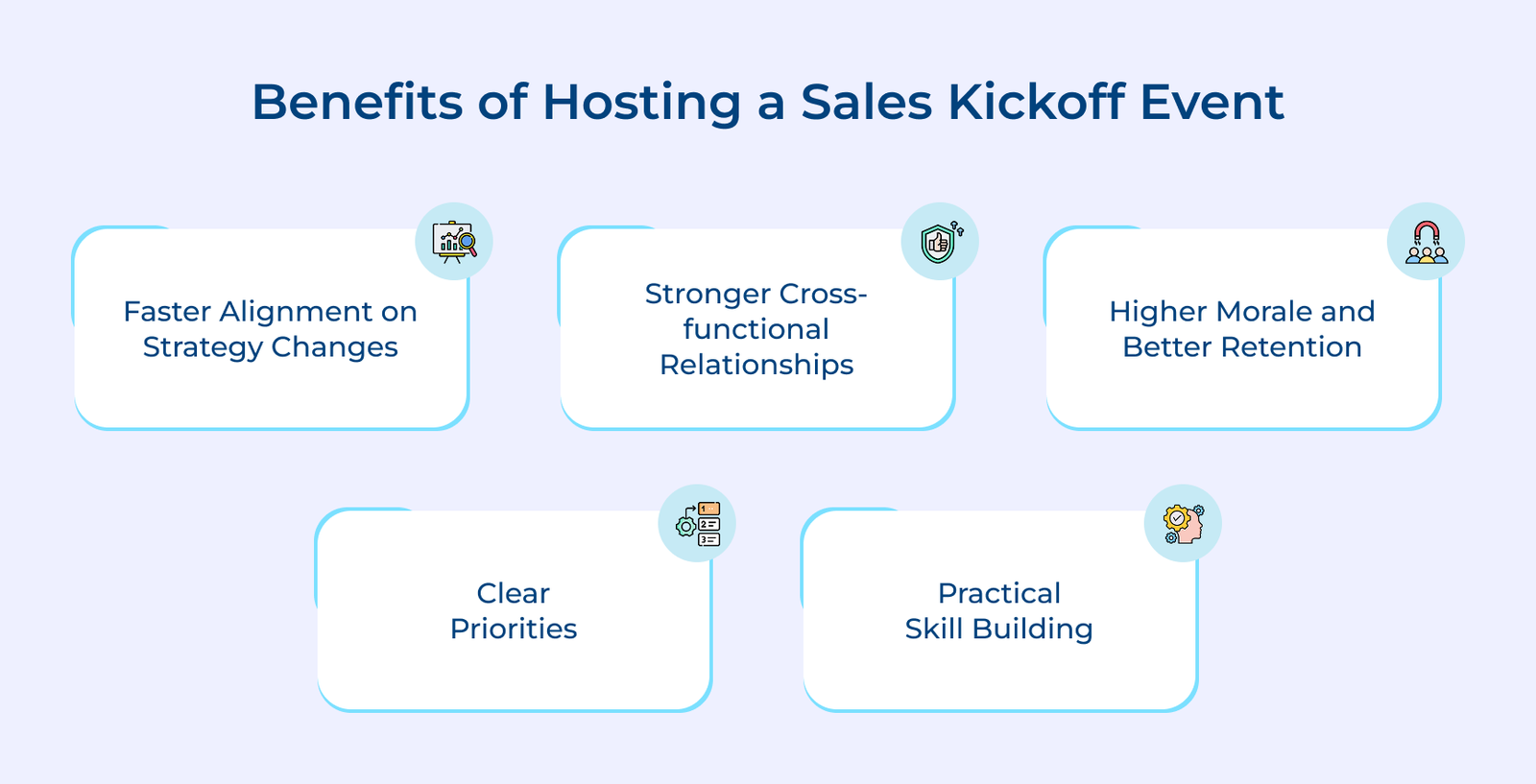
Faster Alignment on Strategy Changes
New sales methods or market shifts are easier to adopt when everyone learns them at the same time. A kickoff removes the slow game of passing updates through layers of management and creates shared understanding from day one.
Stronger Cross-Functional Relationships
Your salespeople need strong connections with product teams and marketing to close complex B2B deals effectively. A sales kickoff creates natural opportunities for interaction and helps different departments understand each other’s daily challenges or priorities.
Higher Morale and Better Retention
Sales can feel lonely, especially when rejection is constant. Bringing the team together reminds people they are not working in isolation. Shared experiences and honest conversations build bonds that make people want to stay.
Clear Priorities
Long sales cycles force reps to make daily choices about where to spend their time. Clear guidance from sales leadership on target markets and key products keeps effort focused on what matters most.
Practical Skill Building
Workshop sessions at kickoffs give you a controlled environment to practice new sales techniques before using them with actual prospects. Your reps can roleplay difficult conversations and get immediate coaching in ways that don’t happen during regular workweeks.
Check out the essential tips and insights on how to plan a successful sales kickoff meeting that sets the tone for a remarkable year ahead.
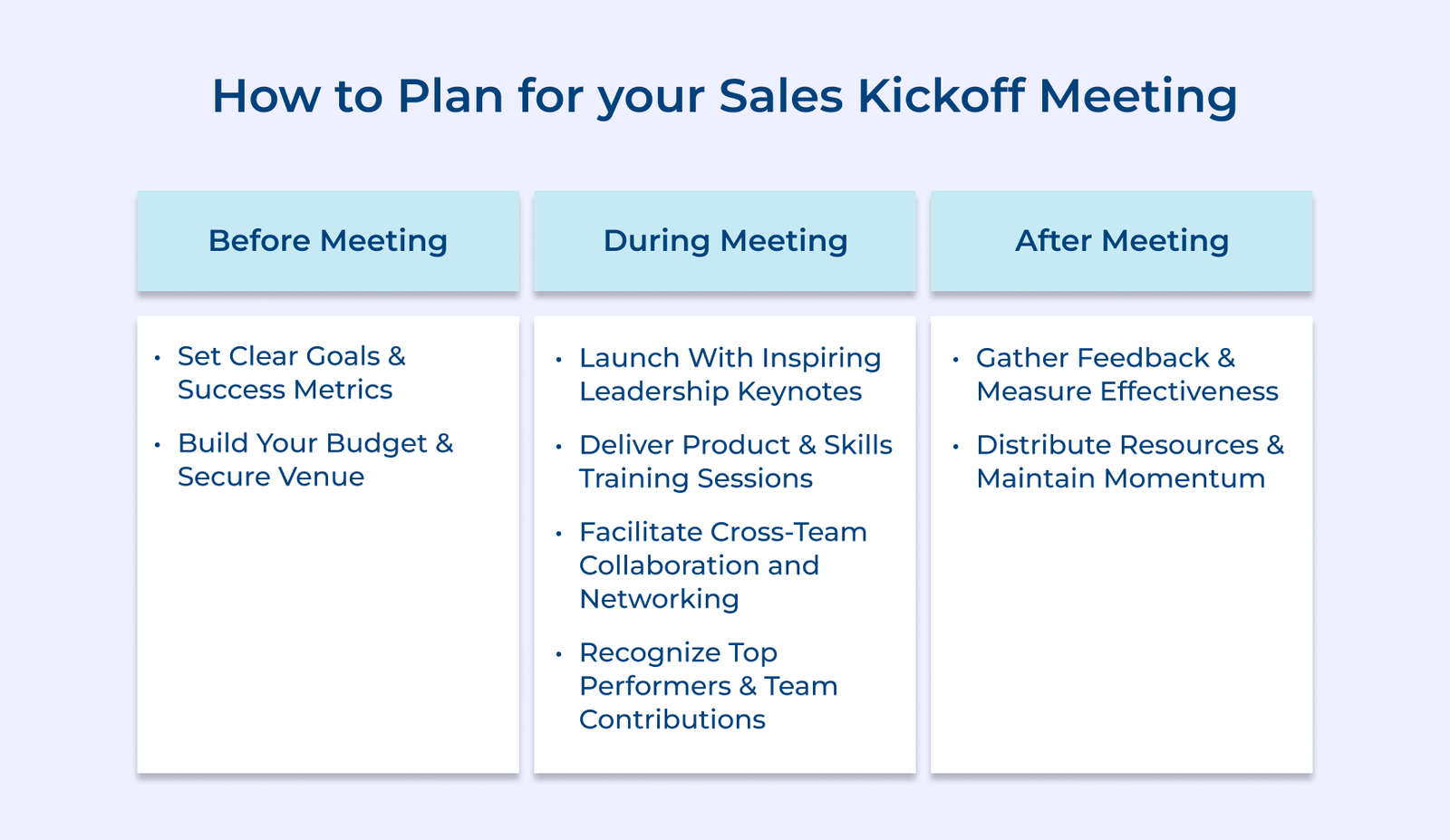
A sales kickoff works best when the goals are clear before the first session begins. Without defined outcomes, the event turns into another meeting that sounds good in the moment and gets forgotten a week later. Clear goals give the kickoff a purpose and a way to judge if the time and money were worth it.
Start by deciding what specific outcomes would make this investment worthwhile. Maybe you need your team to close 20% more discovery calls or you want every rep to confidently pitch your new product line.
Key goals:
Your right goals will shift based on if you’re launching in a new market or fixing execution problems. A startup might focus on foundational selling skills, while an established company could prioritize competitive differentiation.
Once you’ve set goals, you need metrics that show if you’re achieving them. Track metrics like quota attainment percentage, win rates against specific competitors, product attach rates, average contract value and sales cycle length by stage.
The final step ties everything back to what your company is trying to accomplish this year. If your CEO is pushing into enterprise accounts, then your kickoff goals around deal size need to reflect that strategic direction clearly.
Budget and logistics set the limits for every decision that follows. A strong agenda means nothing if the team cannot gather comfortably or the space does not support sales training sessions. Locking the details early reduces stress and gives you more control when working with vendors.
Start with a realistic budget that covers the basics. Include venue rental, hotel rooms for traveling team members, meals and refreshments, speaker fees, flights or local transport, printed materials, swag and audiovisual needs. A small contingency cushion of about 10 to 15 percent helps absorb surprise costs.
Pro tips:
The opening keynote sets the mood for the entire sales kickoff. A strong start pulls people in and signals that the time together matters. A weak one turns the event into something people sit through instead of leaning into.
Key ways:
Consider how a B2B software company might open its sales kickoff with its founder sharing the story of their first major enterprise customer. They describe the initial rejection and the breakthrough conversation that changed everything. The personal narrative reminds the sales team that every no brings them closer to a transformational yes.
Training is where ideas turn into habits your team can use every day. The sessions should help reps walk away knowing exactly how to apply what they learned when they get back to selling. The key is balancing comprehensive product knowledge with practical selling skills in a format that keeps people engaged. Sessions that stay under 90 minutes hold attention and keep energy from dropping.
Key sessions for your sales kickoff:
The biggest mistake teams make is trying to cover too much at once. Long lectures overload people and lead to poor retention. Focus on two or three key ideas per session and spend at least half the time practicing through roleplays or small group exercises.
The step often gets overlooked, yet it shapes how well the team supports each other all year. Sales can feel isolating. Real connections give reps people they can turn to when they need ideas, feedback or a quick reality check.
Host territory focused breakout sessions
Each region deals with different buyers, rules and competitors. Small group discussions help reps compare notes and share what actually works in their markets. Someone selling in the Northeast might learn how another rep handled a tough compliance objection in financial services.
Plan informed bonding moments
Strong relationships usually form outside meeting rooms. Group dinners, casual activities or light team challenges help relax and talk naturally. The moments build trust that makes it easier to ask for help later.
Connect sales with product and marketing teams
Sales work best when communication flows both ways. Give reps time to talk with product managers about upcoming features and with marketing about lead quality. When a rep needs support on a live deal, they already know who to call.
Recognition sets the standard for what great performance looks like. Calling out wins during a sales kickoff carries more impact than a private message because the entire team sees what is valued and celebrated.
Key ways:
Your sales software tracks every activity and outcome throughout the year so you can recognize achievements with specific data. Instead of saying someone had a great year, you can highlight that they closed 15 deals worth $2.3 million and maintained a 45% win rate against your toughest competitor.
Key ways:
Feedback shows what the kickoff actually achieved. Without it, the event risks becoming a feel-good experience with no clear impact. Honest input helps you see what worked, what missed the mark and what needs to change next time.
Use feedback alongside performance data to judge results. Compare key metrics from before the event with results in the weeks and months that follow. Survey responses paired with real sales outcomes reveal which sessions influenced behavior and which ones did not.
Pro tips:
A sales kickoff only creates real change when the learning continues after everyone goes home. The energy and knowledge from those few days fade quickly unless you provide your team with ongoing access to materials and accountability for applying what they have learned.
Key ways:
Let’s assume that a B2B software team gives each rep a playbook outlining personal goals and next steps. Managers review it one-on-one to track progress. A few months later, stronger objection handling leads to higher demo-to-close rates that clearly trace back to kickoff training.
The following are five sales kickoff templates that give you proven structures that you can adapt to your company’s specific needs.
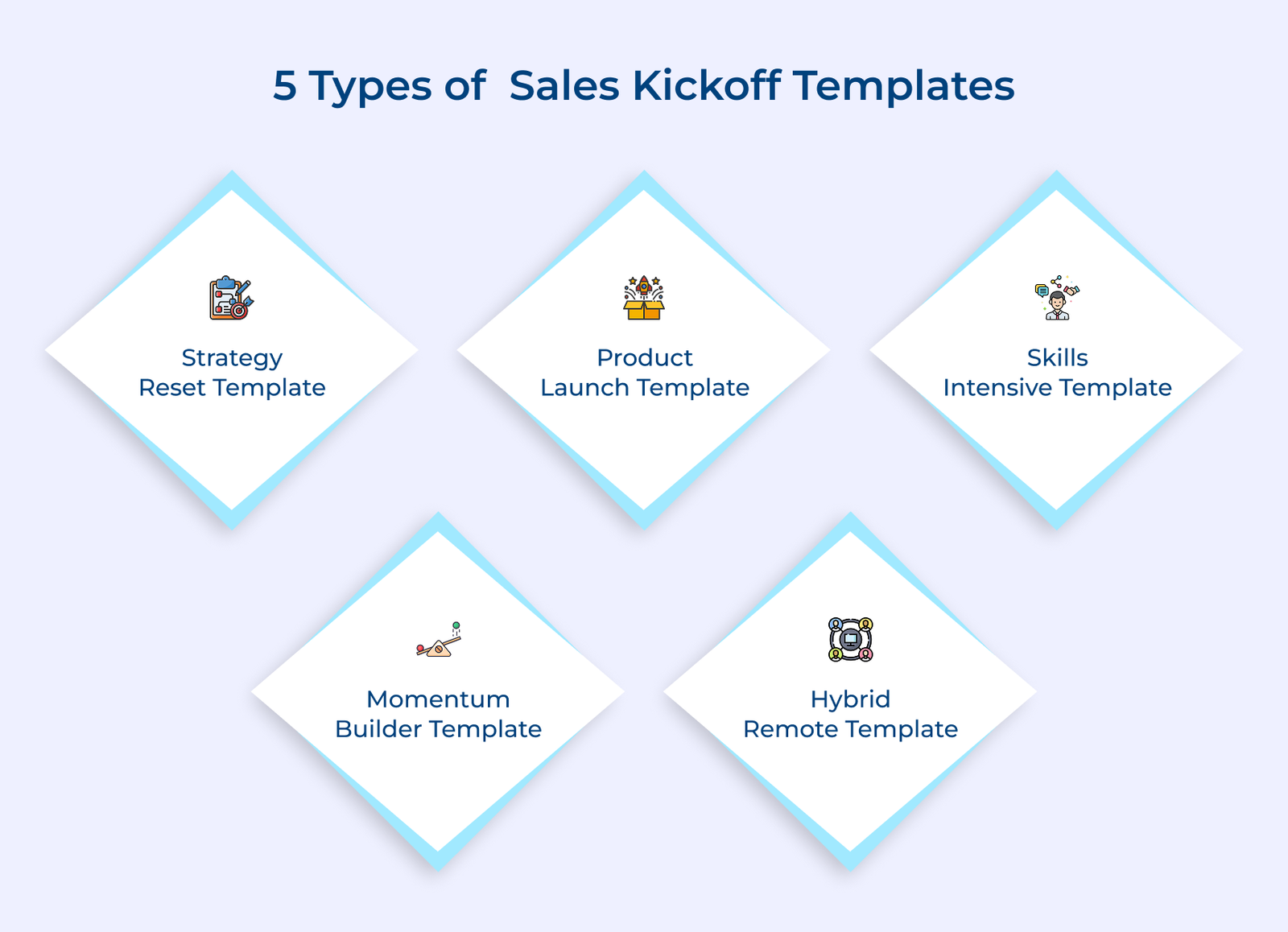
The format fits teams facing a clear shift in direction or moving into new markets. The first day focuses on context and clarity. The second day focuses on learning how to sell differently through practice.
Template structure:
Day 1: CEO keynote and competitive landscape workshops
Day 2: New sales approach training with hands-on breakout sessions
A B2B SaaS company used the template while moving from IT buyers to business users. Time was spent explaining how buying behavior had changed and why technical messaging was no longer effective.
The option works best when a major new product will drive a major share of revenue. The entire kickoff centers around making your sales team absolute experts on this offering through product training and real customer success stories.
Structure:
Day 1: Deep product training and customer panel discussion
Day 2: Demo practice and competitive positioning sessions
A cybersecurity company followed the approach during a cloud platform launch. Each rep delivered multiple practice demos before the event ended, which built confidence quickly.
The template suits teams with a clear strategy that need stronger execution skills. Most of the time goes into practice, coaching and feedback rather than lectures.
Template structure:
Day 1: Discovery skills with real call reviews
Day 2: Negotiation and executive lead conversations
Day 3: Account planning strategy sessions
A manufacturing sales team adopted the format after noticing weaker performance in competitive deals. Several hours were spent practicing competitive conversations through roleplay.
High-performing teams benefit from the template when the goal is to increase pace and confidence. Energy stays high with a strong focus on wins and shared learning.
Template structure:
Day 1: Awards and top performer sessions
Day 2: Advanced selling workshops and team activities
A financial services firm used the format and saw a dramatic improvement because they learned specific tactics that top producers used daily. Success became contagious across the team.
The modern template acknowledges that many teams work remotely but still need connection and alignment. You blend virtual sessions for content delivery with one strategic in-person day for relationship building and hands-on activities.
Structure:
A remote logistics sales team used the approach and saw 90% engagement on virtual sessions because the in-person day focused entirely on emotional connection and culture building.
Check out six practical tips that will help you avoid common pitfalls and create a sales kickoff that delivers real value.
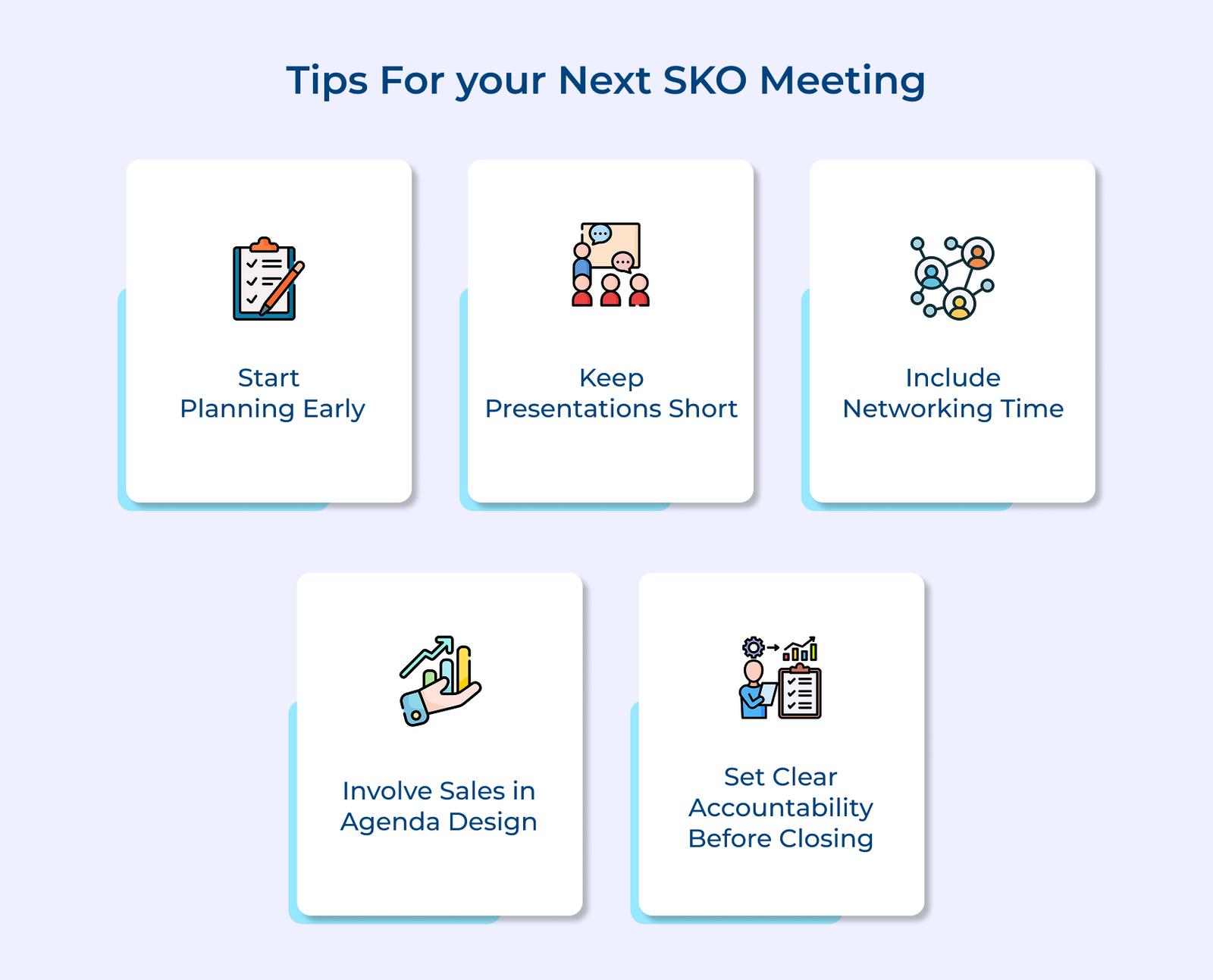
Start Planning at Least Three Months Ahead
Early planning gives you better venue options and makes it easier to confirm speakers. Extra time also allows you to shape a clear agenda instead of rushing decisions.
Keep Presentations Short
Your salespeople spend their days talking and listening, so long presentations drain their energy fast. Breaking content into shorter blocks with activities in between keeps attention high and information retention much stronger throughout the event.
Build in Unstructured Networking Time
Some of the most valuable conversations happen when reps casually chat over coffee or during breaks between sessions. Don’t pack every minute with formal content because the organic moments create the relationships that support collaboration all year long.
Get Sales Input During Agenda Design
Frontline sellers know where deals stall and which skills need work. Gathering their input before finalizing the agenda ensures the content stays relevant.
Set Accountability Before Everyone Leaves
Ask each rep to commit to three clear actions based on what they learned. Share the commitments with the sales managers, so progress continues once daily work resumes.
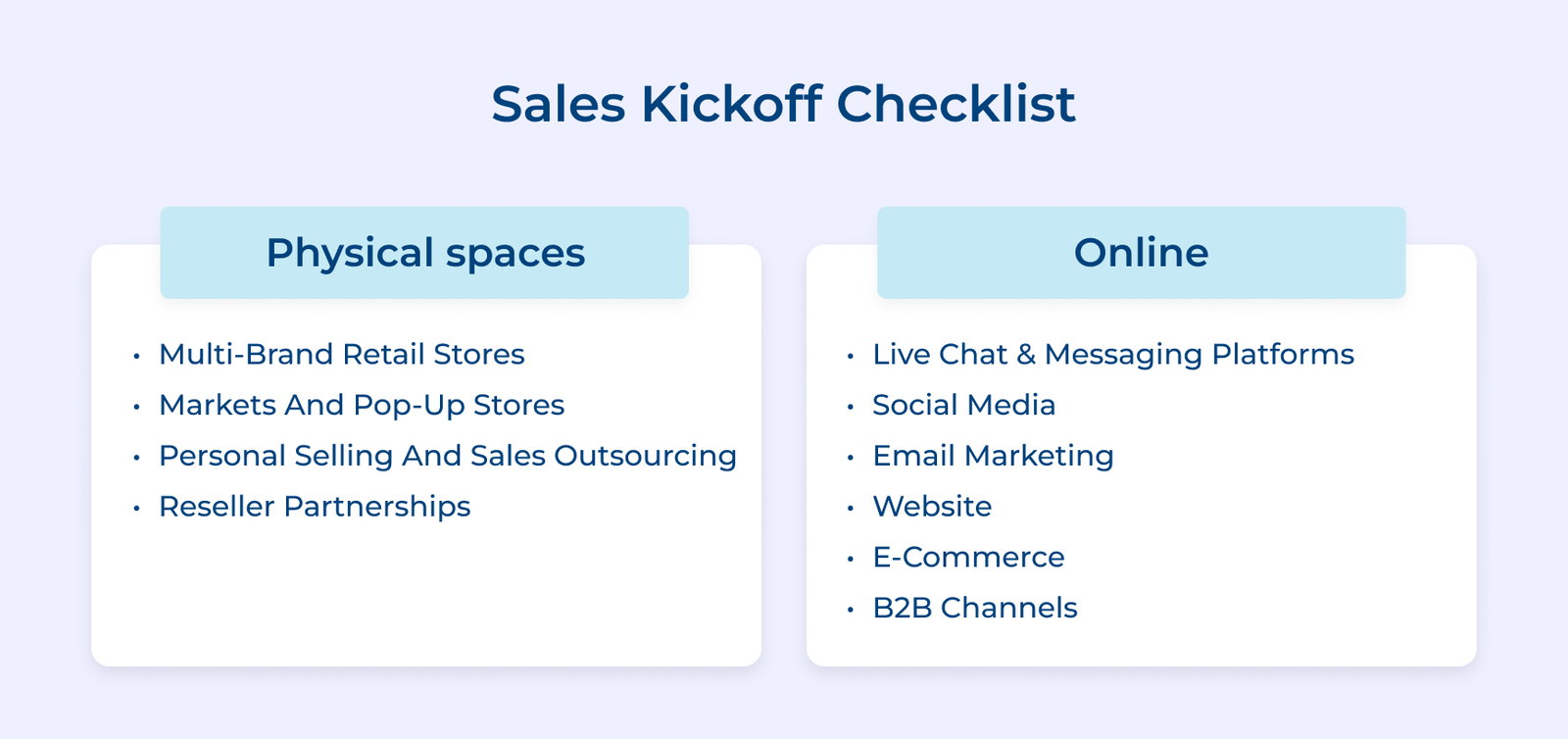
Let’s go through the essential sales kickoff checklist that helps you stay organized and ensure your event delivers clarity for the year ahead.
A sales kickoff is more than a calendar event or a room full of slides. It’s your opportunity to align your entire team around a shared vision and equip them with the exact skills they need to win in competitive markets throughout the year.
Teams that treat kickoff as an intentional reset see clearer execution and stronger commitment throughout the year. Thoughtful planning or clear follow-through turns a few days together into steady progress and shared momentum long after the event ends.

Start planning at least three months ahead with clear goals and success measures. Lock the budget, book a venue that fits your team, confirm speakers and shape an agenda that balances motivation with practical skill building.
A sales kickoff aligns your team around updated sales strategies and ensures everyone receives the same information at the same time. It builds the personal connections or shared energy that isolated salespeople need to stay motivated through rejection and challenging quarters throughout the year.
Leaders share company direction and revenue targets. Training sessions cover products and selling skills through active practice. Recognition moments celebrate wins, while networking builds relationships that teams rely on later.
Every effective kickoff needs inspiring keynotes that energize your team, combined with practical training on products and sales process skills they’ll use immediately. Time for collaboration, peer learning and recognition matters just as much as outlining priorities for the months ahead.
Open with a compelling story or customer success example that immediately shows why your solution matters rather than diving straight into features. Set clear expectations and ask a thoughtful question that turns the pitch into a conversation.
Grow Customer Relationships and stronger team collaboration with our range of products across the Conversational Engagement Suite.
Omnichannel Customer Support & Help Desk Software
AI Enabled Business Messaging and Chatbot Software
Sales Engagement & CRM Software
Call Center Software & Virtual Phone System
Product Marketing & Experience Platform
Customer Experience & Feedback Management Software
 How To Close a Sale? Key Tips, Techniques & Best Practices
Scroll to top
How To Close a Sale? Key Tips, Techniques & Best Practices
Scroll to top