How to Create a Predictive Customer Service Strategy?
Learn what predictive customer service is and how it works. Understand how delivering proactive support can bring multifold benefits to your business.

Learn what predictive customer service is and how it works. Understand how delivering proactive support can bring multifold benefits to your business.
Support teams often get to hear about problems once the customers have already become frustrated. That delay can damage trust that took months to build. Around 73% of consumers now expect companies to understand their unique needs instead of waiting for them to ask for help.
Predictive customer service uses historical data and real-time signals to identify potential issues before customers report them. Predicting customer needs before problems occur provides a better support experience for both customers and support teams. We’ll go through the complete strategy and an eight-step implementation process, while keeping the focus on practical execution rather than vendor comparisons.
Predictive customer service refers to using customer data, behaviour patterns and historical interactions to identify potential issues before customers contact your support teams. Instead of waiting for a support ticket, businesses detect early warning signs and take action before the problem affects the customer experience.
Predictive support starts with the customer data your business already collects. Purchase history, support conversations, product usage and browsing behaviour all contain signals that can help identify potential issues before they become support requests.
Key signals:
Let’s go through the key features of predictive customer support that help identify issues early and deliver a more proactive customer experience.
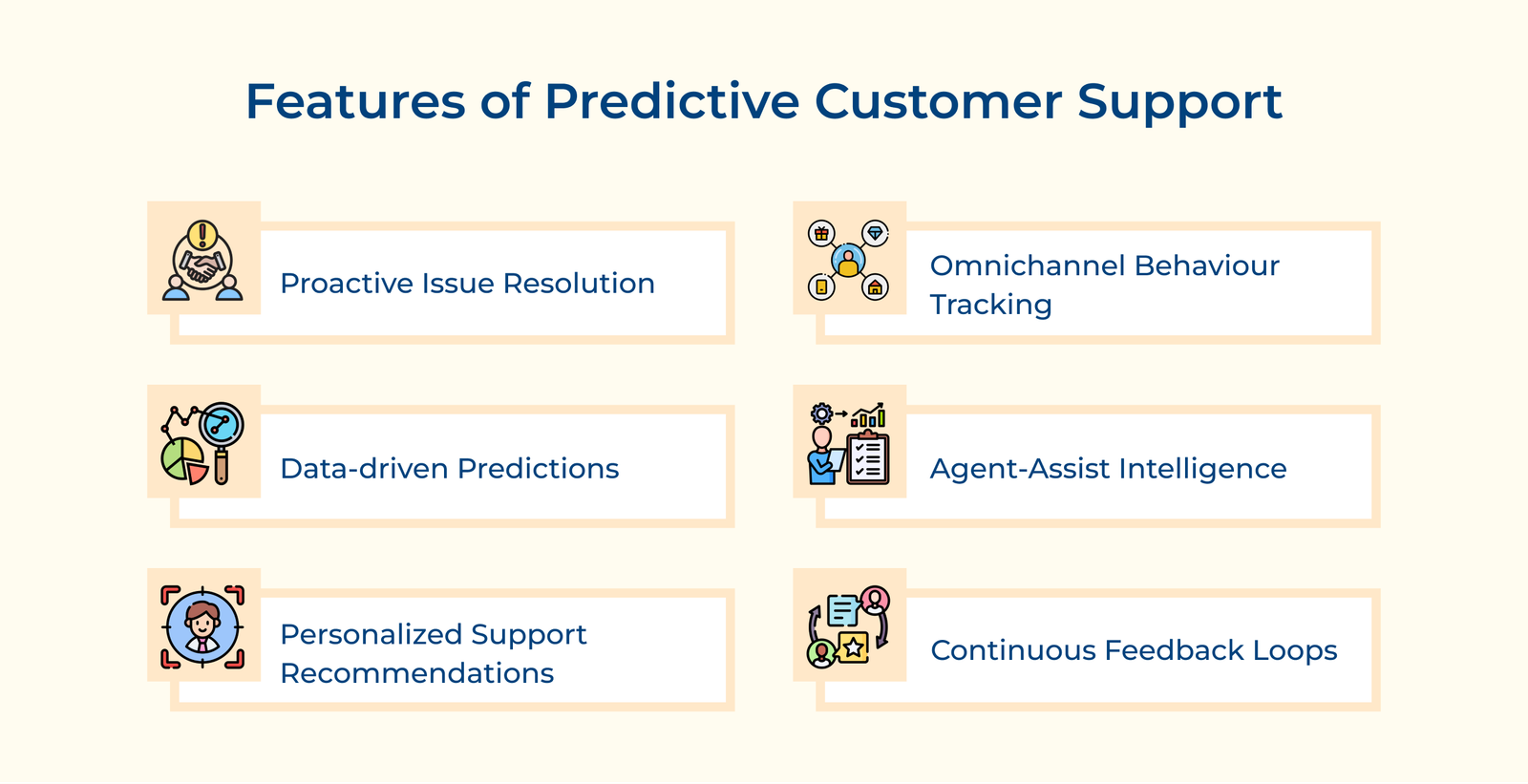
Proactive issue resolution is one of the defining features of predictive customer service. Instead of waiting for customers to report a problem, the system identifies potential issues early and takes action before they interrupt the customer experience.
A genuinely proactive setup catches the issue and acts on it without waiting for a human to notice. The difference shows up fast in your numbers because tickets that never get raised don’t sit in anyone’s queue.
Key ways:
Data-driven predictions are the foundation of effective predictive support. Accurate predictions depend on clean, up-to-date and connected customer data. Outdated or incomplete information leads to unreliable recommendations, no matter how advanced the model is.
The strength of the feature isn’t the algorithm; it’s the discipline behind feeding it well. Most failed predictive programs I’ve seen didn’t fail on math; they failed on data hygiene nobody owned.
Personalized recommendations make customer service more useful by using each customer’s history, preferences and previous interactions to suggest the most relevant solution. Customers receive support that fits their specific situation instead of the same response everyone else gets.
Personalization works best when it feels natural and informed. Recommendations based on past conversations, purchases or account activity help resolve issues faster and create a better customer experience.
A customer who browses your app, emails support and then calls in isn’t three separate people, but most systems treat them that way. Real predictive support stitches the touchpoints together so the prediction reflects the full picture, not one fragment of it.
Without it, you end up predicting based on partial behaviour and acting on a guess dressed up as data. The fix usually isn’t a smarter model; it’s better integration between the channels you already run.
Key gaps:
Agent-assist intelligence strengthens predictive customer service by giving agents relevant recommendations, customer history and suggested next steps during live conversations. It helps support teams respond faster without searching through multiple systems.
The teams that adopt it well treat it as a co-pilot, not an answer key that the agent reads from blindly. Agents who ignore every suggestion the system makes are usually telling you the recommendations aren’t good enough yet.
A predictive customer service system that doesn’t learn from its own mistakes is just making the same mistakes faster and at scale. Every wrong prediction should feed back in, sharpening the model instead of repeating the error untouched.
Improvement requires regular review, not a one-time setup. Teams that monitor prediction accuracy and update their models consistently build systems that become more reliable as customer behavior changes.
The following are the key reasons predictive customer support is essential for businesses looking to reduce support issues and deliver proactive customer experiences.
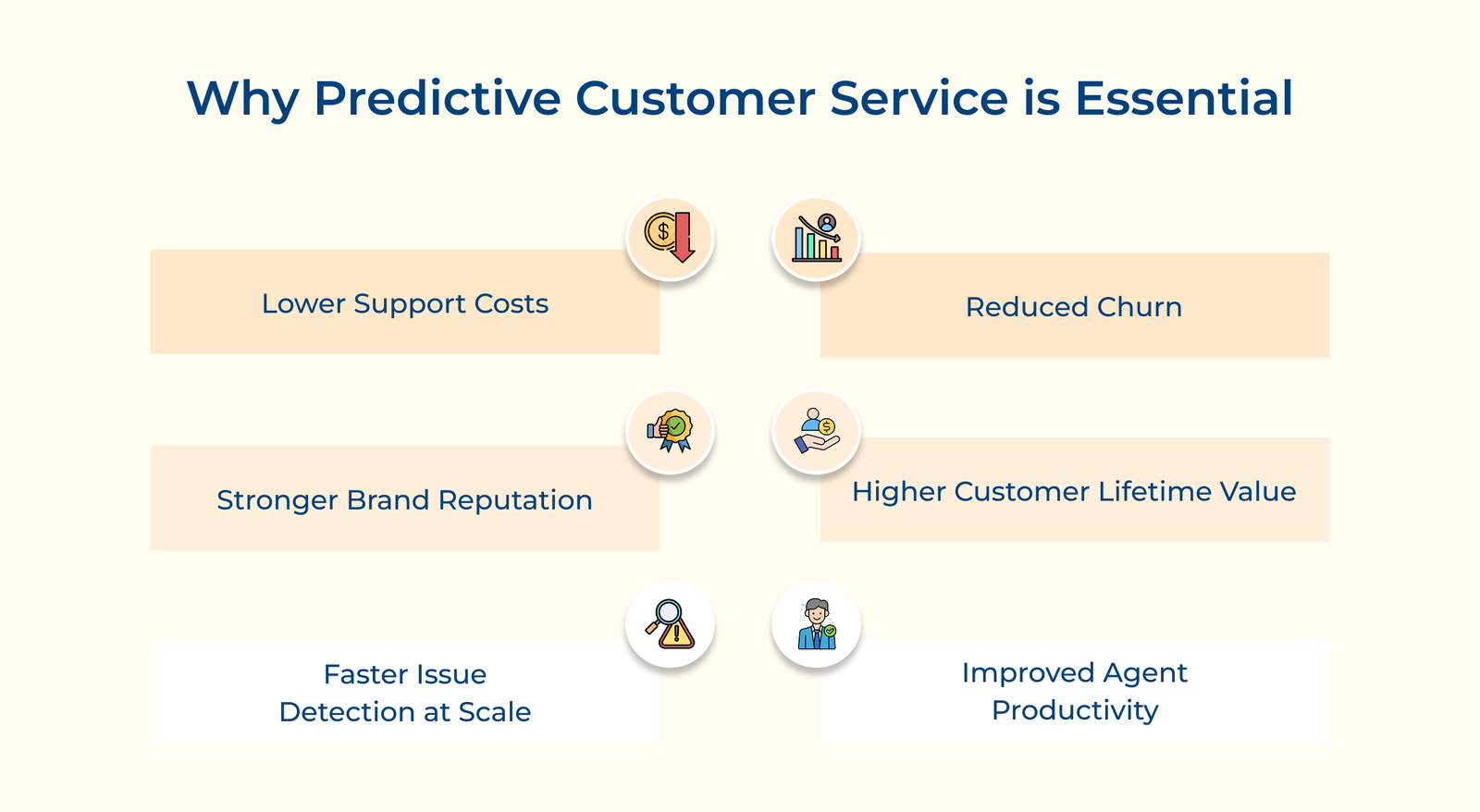
1. Reduced Churn
Customers often show signs of leaving long before they cancel or stop buying. Predictive customer service systems identify the early signs, giving support teams time to step in and resolve issues before customers decide to leave.
2. Lower Support Costs
Resolving problems before customers contact support reduces ticket volume and lowers operational costs. Predictive support helps teams spend less time handling preventable issues and more time focusing on complex customer needs.
3. Higher Customer Lifetime Value
Customers who receive timely, proactive support are more likely to stay loyal and continue buying over time. Predictive customer service builds trust through consistent positive experiences that encourage long-term customer relationships.
4. Improved Agent Productivity
When the easy, repetitive issues get handled before they reach a human, your agents are left with the problems that actually need their judgment. That shift alone changes how agents feel about their job, not just how fast they work.
5. Stronger Brand Reputation
Customers remember businesses that solve problems before they become frustrations. Positive, proactive experiences often lead to stronger customer trust and recommendations that help strengthen your brand’s reputation.
6. Faster Issue Detection at Scale
Support teams can only identify so many issues manually, but a predictive system detects patterns across thousands of customer interactions at the same time. Early detection helps businesses respond faster and resolve problems before they spread.
Below are the essential steps to develop a predictive strategy that will not only delight your customers but also streamline your support processes for long-lasting success.
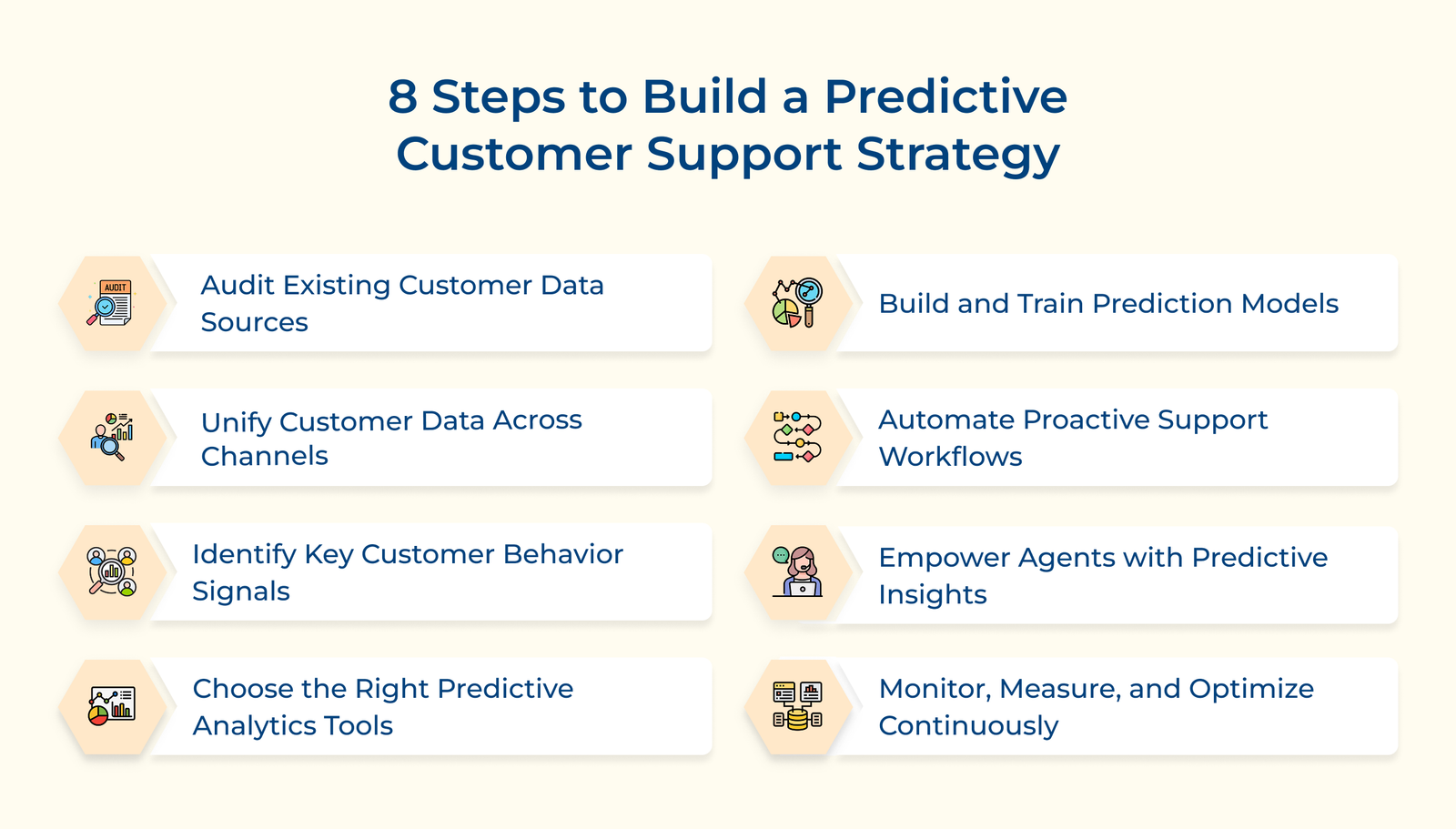
Every predictive customer service strategy begins with understanding the quality of your customer data. Auditing your existing data shows if you have the information needed to make reliable predictions before investing in new tools or models.
Key questions:
Answering the questions helps uncover problems before they affect your predictions. Fixing data quality issues early is much easier than correcting inaccurate results after a model is already in use.
Putting the step into practice means collecting data from every system and reviewing it in one place. Looking at everything together makes it easier to identify inconsistencies and missing information that would otherwise go unnoticed.
Key ways:
A complete customer view is essential for predictive customer support. Customers interact through email, chat, phone, apps, or social media and combining these interactions helps your team identify patterns that a single channel cannot reveal.
The key consideration here isn’t the technology; it’s ownership, because someone has to be accountable for keeping the unified view accurate. Without a clear owner, channels drift back into silos within a few months of integration.
Key channels:
Connecting the channels gives support teams the full customer story instead of isolated interactions. Agents can understand previous conversations immediately and respond with the right context from the start.
Effective customer service depends on tracking the right customer behaviors instead of collecting every available data point. Focusing on a small number of meaningful signals makes predictions more accurate and easier to act on.
Key ways:
Selecting the right tool comes after understanding your data, customer signals and business goals. The approach works best when the platform fits your existing processes instead of forcing your team to adapt to the software.
Key factors:
Another important consideration is how well the platform adapts over time. Customer behavior changes and your predictive models need regular updates to remain accurate. Regular monitoring helps identify when model performance starts to decline, allowing you to make improvements before predictions become unreliable.
Key takeaways:
Building an effective predictive service model starts with defining a clear use case and making sure you have enough reliable historical data to support it. Clear goals at this stage make training and evaluation much more effective.
Key questions:
Automating response triggers is an important part of predictive customer support, but every trigger should be carefully tested before it reaches customers. Poorly configured alerts can create unnecessary notifications and reduce customer trust over time.
A response trigger should only activate when action is genuinely needed. Sending too many alerts for minor issues encourages customers to ignore important messages when real problems occur.
Key factors:
Rolling out automation gradually produces better results than automating everything at once. Testing triggers with human review first helps confirm they are accurate before giving the system greater responsibility.
A predictive customer service system that only talks to dashboards and never reaches your agents is solving half the problem at best. The real value shows up the moment an agent sees a next-best-action suggestion while they’re still on the call.
Giving agents immediate context reduces time spent searching across multiple systems. Customers benefit from quicker, more informed support because agents can understand the situation before asking repetitive questions.
Actionable tips:
Training is just as important as the technology itself. Agents should understand when to follow a recommendation and when their own judgment is the better choice, helping them deliver support that feels accurate and natural.
A predictive customer support strategy doesn’t end when the system goes live. Regular refinement keeps predictions accurate as customer behavior, products and business processes continue to change over time.
Reviewing performance every month helps identify changes before they affect customer experience. A model that performed well during implementation may gradually lose accuracy if it is not updated with new customer patterns and outcomes.
Key metrics:
Check out the following predictive customer service examples to see how different industries use customer data and early signals to resolve issues before they turn into support requests.
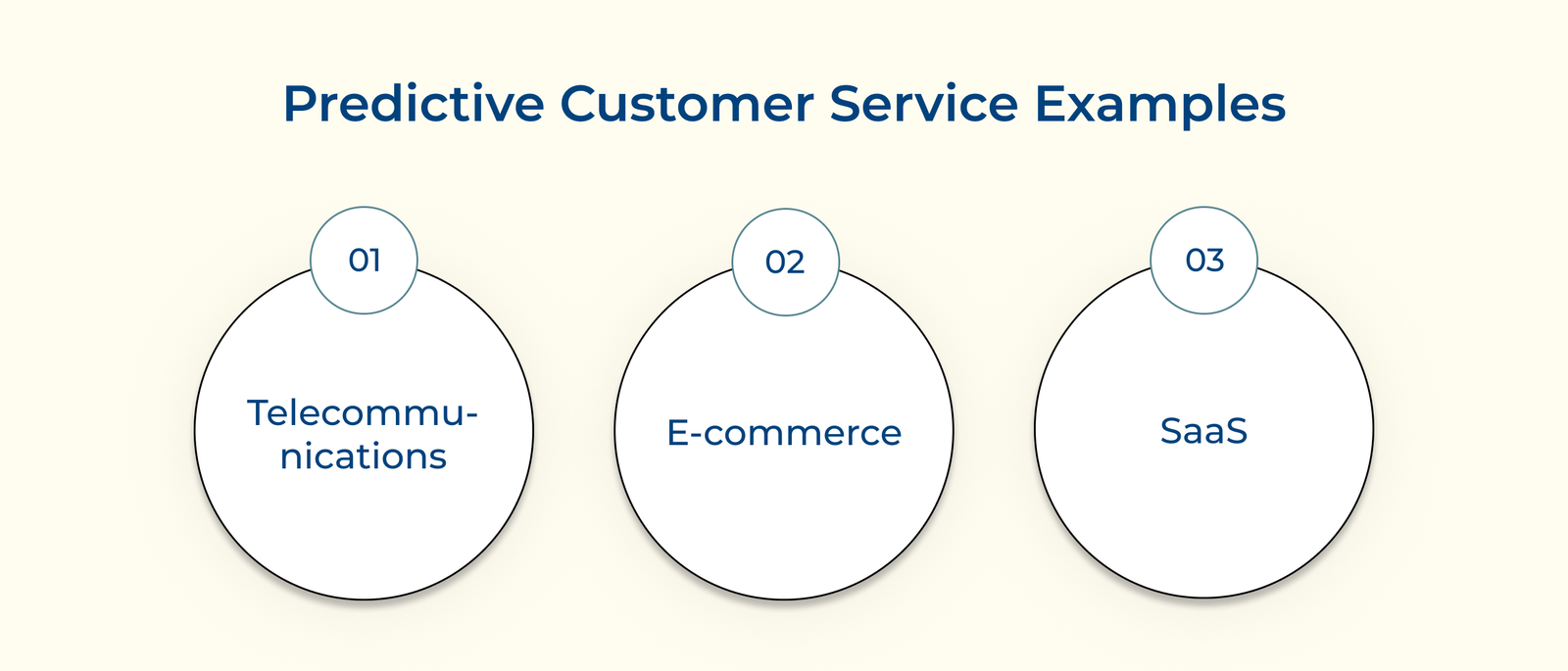
Predictive customer service helps telecom providers detect network issues before customers experience dropped calls or slow data speeds. Customers receive service updates early, reducing the need to contact support when an outage is likely.
Large telecom networks generate millions of data points every minute. Success comes from identifying the small number of signals that consistently point to a genuine service disruption. Acting on the signals early helps reduce customer frustration and prevents many support requests before they ever happen.
E-commerce platforms predict cart abandonment, shipping delays and return likelihood, then act before the customer reaches out frustrated. A delayed order triggers a proactive update, not a refund request three days later.
Peak shopping periods make it even more valuable because delays become more common. Early communication helps customers stay informed and reduces the volume of “Where is my order?” requests.
SaaS companies predict churn risk by tracking login frequency, feature usage and support ticket patterns across the account. A noticeable drop in engagement can trigger proactive outreach before a renewal decision is made.
Successful SaaS teams focus on identifying the accounts that need personal attention instead of treating every customer the same. Prioritizing the right accounts helps customer success teams spend their time where it creates the greatest impact.
Key solutions:
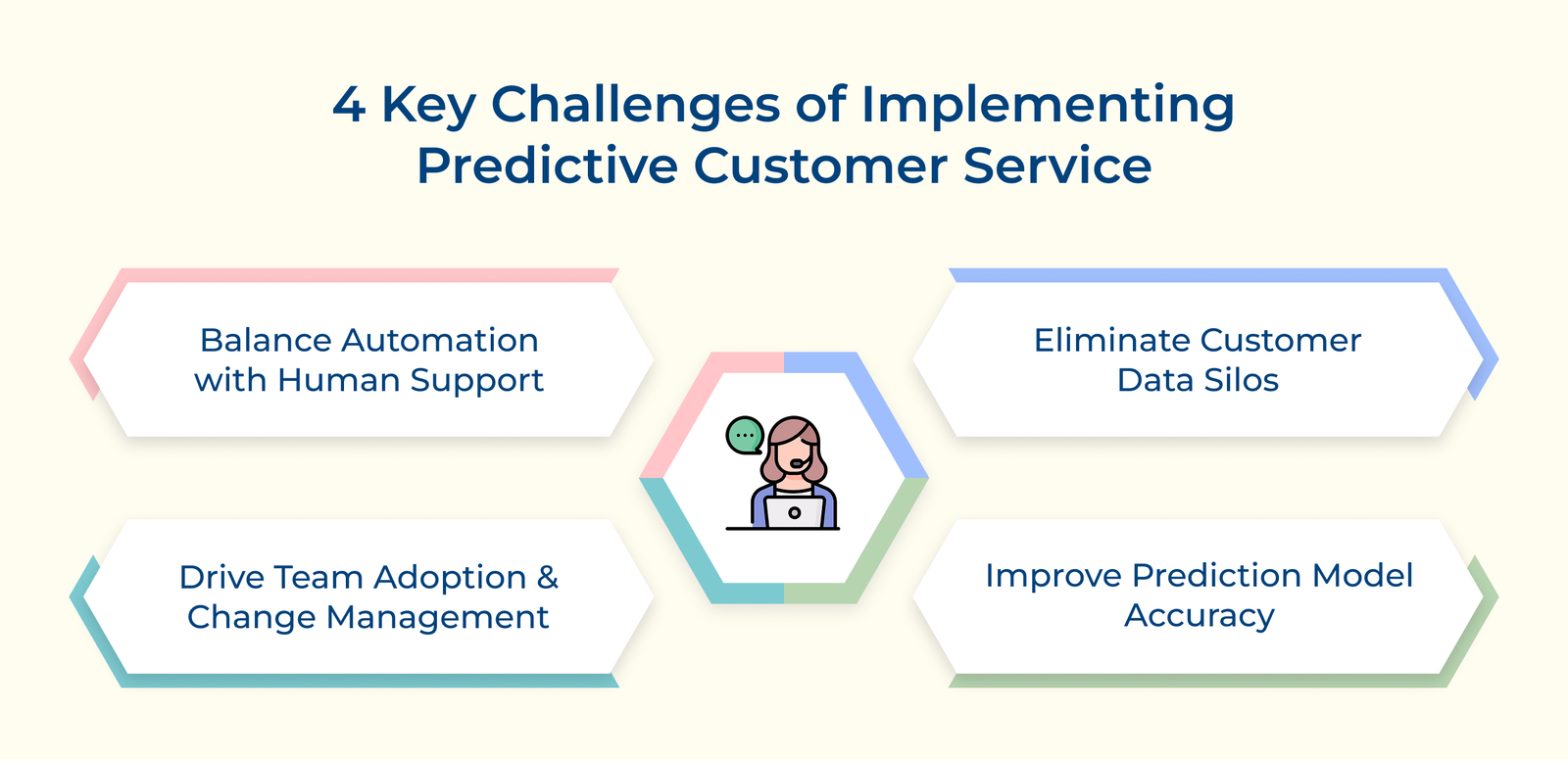
The following are the common challenges businesses face when implementing predictive customer service, along with ways to overcome them and improve long-term results.
1. Fragmented, Siloed Data Across Teams
Most businesses already have enough customer data to support predictive customer service, but it often sits across separate systems that are not connected. Predictions become less reliable when the model only sees part of the customer journey instead of the complete picture.
2. Low Model Accuracy in Early Stages
Early prediction models rarely deliver perfect results from the start. Missed signals and incorrect predictions are common while the system learns from historical data and improves through regular testing.
3. Agent and Team Resistance to Change
Agents who’ve handled support their own way for years often distrust a system telling them who to prioritize. That resistance isn’t stubbornness; it’s usually a sign the system hasn’t earned their trust yet through visible, consistent wins.
4. Over-Automation Driving Customer Annoyance
Predictive customer support should make support feel timely and helpful, not overwhelming. Too many alerts, reminders or recommendations can frustrate customers instead of improving their experience. Relevant communication delivered at the right time builds confidence in the system. Excessive automation can cause customers to ignore messages or disengage from future outreach.
Implementation steps:
Predictive customer service delivers the greatest value when it helps resolve issues before customers need to ask for support. Success depends on clean data, thoughtful implementation and steady improvements instead of trying to automate everything from the beginning.
Key takeaways:

AI analyzes historical support tickets, usage patterns and behaviour signals to identify issues before they become support requests. It then suggests or triggers a response, often faster and more consistently than manual review ever could.
Artificial intelligence studies past actions, like browsing habits or purchase timing, to estimate what a customer is likely to do next. The predictions help teams act early, rather than react once a pattern has already played out fully.
Predictive customer service identifies early warning signs such as declining product usage, repeated errors or unusual account activity. Early action helps resolve problems before customers experience enough frustration to contact support.
Customers appreciate support that arrives before a problem grows into a frustrating experience. Resolving issues early creates smoother interactions and builds confidence that the business is paying attention to their needs.
Yes. Small businesses can begin with one practical use case, such as identifying churn risks or recurring support issues, before expanding their strategy. Even a simple approach can improve customer experience without requiring a large investment.
Grow Customer Relationships and stronger team collaboration with our range of products across the Conversational Engagement Suite.
Omnichannel Customer Support & Help Desk Software
AI Enabled Business Messaging and Chatbot Software
Sales Engagement & CRM Software
Call Center Software & Virtual Phone System
Product Marketing & Experience Platform
Customer Experience & Feedback Management Software

 How to Build a Sales Cadence? Steps, Examples & Metrics
Scroll to top