An Ultimate Guide to Benchmarking & SaaS Conversion Rate in 2026
The blog delves into the real factors that define a SaaS conversion rate for a product. It helps businesses benchmark success and find areas for optimizing the SaaS signup funnel.

The blog delves into the real factors that define a SaaS conversion rate for a product. It helps businesses benchmark success and find areas for optimizing the SaaS signup funnel.
Need help improving the SaaS conversion rate? Need help converting leads into paying customers? Many SaaS companies need help with increasing their conversion rates. The average conversion rate for SaaS companies in 2024 is 7.8%.
SaaS, or Software as a Service, companies rely on converting leads into customers to drive revenue and growth. A high conversion rate is crucial for the success of any SaaS business. Maintaining a high conversion rate can be a challenging task.
The article explores what is conversion rate and discusses strategies for improving them. Optimizing conversion rates is vital for all businesses, big or small, to drive success.
The B2B SaaS conversion rate refers to the percentage of prospects who complete a desired action in your sales funnel. Think of it as tracking how many visitors actually become paying customers after interacting with your software platform. The metric reveals how effectively your marketing efforts translate into real business results. It helps you understand which touchpoints in your customer journey are working and which need improvement.
Conversion rates directly impact your revenue growth and customer acquisition costs. When you improve these rates, you generate more customers from the same marketing spend. The metric also helps you identify bottlenecks in your sales process and optimize resource allocation across different channels.
Key objectives:
Check out the four critical factors that determine how effectively your SaaS company converts leads into loyal customers.
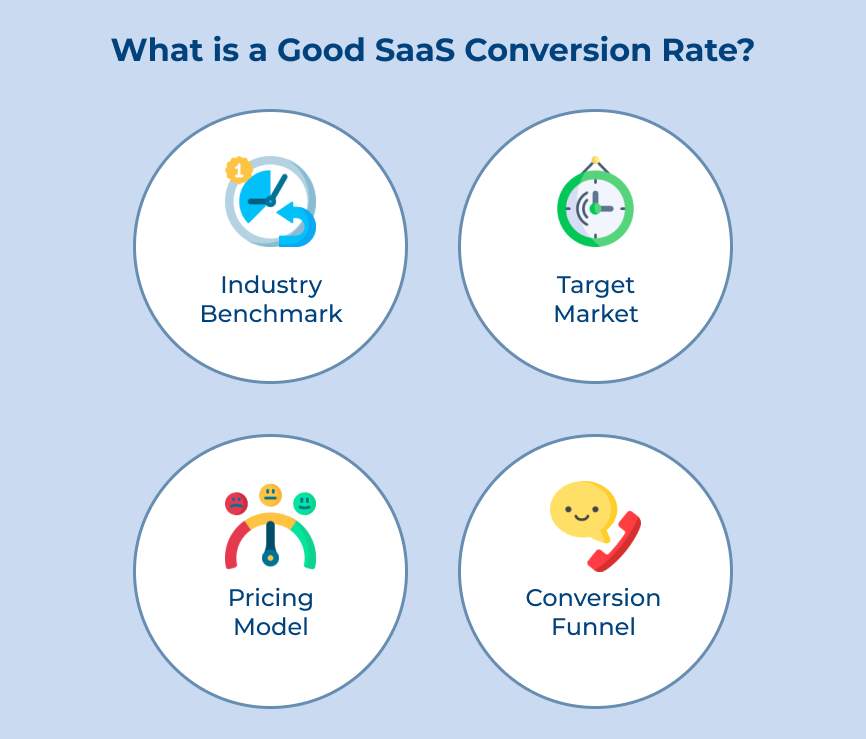
There is no one-size-fits-all answer for a “good” SaaS conversion rate. It depends on various factors. Here are four factors that make a good SaaS conversion rate:
1. Industry benchmark: Research industry benchmarks to understand good conversion rate benchmarks in the specific industry. It can give a benchmark to measure the performance.
2. Target market: Analyze the target market’s demographics and behavior to understand their characteristics. Different audiences may have different conversion rates. It is important to tailor the strategies accordingly.
3. Pricing model: The pricing model of the SaaS product can also impact the conversion rate. Consider that higher-priced products may lead to lower conversion rates but higher revenue per customer.
4. Conversion funnel: Evaluate each conversion funnel stage. It will identify where visitors are dropping off or getting stuck. Optimizing each stage can improve the overall conversion rate.
Below are the importance of B2B SaaS conversion rates that focus on enhancing this metric and propel your business towards sustained success.
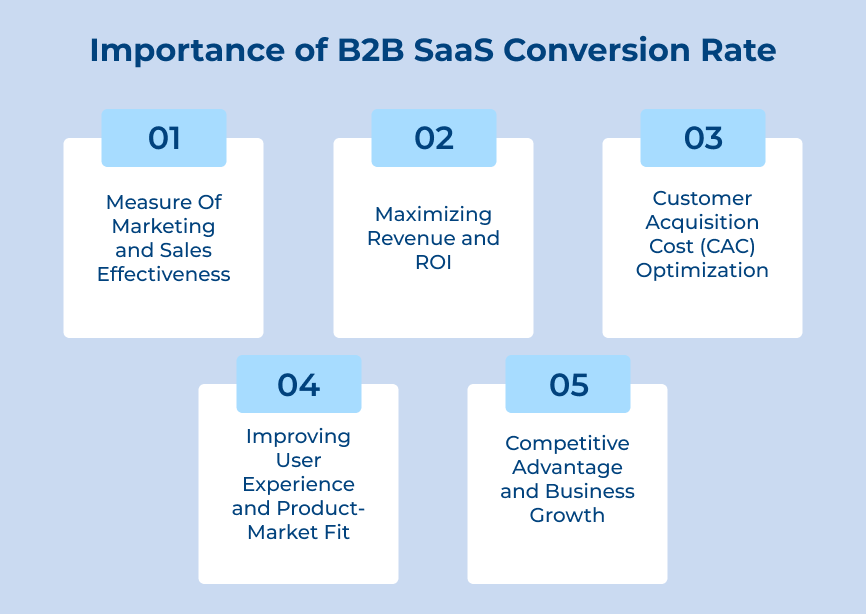
The B2B SaaS conversion rate reflects the effectiveness of marketing and sales efforts in acquiring customers. Tracking the metric can help identify any potential bottlenecks in the conversion funnel. It also helps make data-driven decisions to optimize marketing and sales strategies.
High B2B SaaS conversion rates help businesses gain more customers using fewer marketing and sales resources. It boosts revenue and ROI for SaaS businesses, aiding efficient revenue goal achievement.
Analyzing B2B SaaS conversion rates aids in optimizing customer acquisition costs for businesses. Improving the conversion rate can reduce Customer Acquisition Costs (CAC) and boost profits by reducing customer acquisition costs.
A low B2B SaaS conversion rate may signal user experience or product-market fit issues. Analyzing conversion rate data helps pinpoint improvement areas. It helps to adjust products and user experience to meet customer expectations.
A high conversion rate helps businesses outperform competitors by acquiring customers more efficiently. Continuously optimizing the conversion rate can drive business growth. It can help position the SaaS company as a leader in the industry.
Check out the key average pipeline conversion rates in SaaS that will guide you in assessing and enhancing your company’s sales performance.
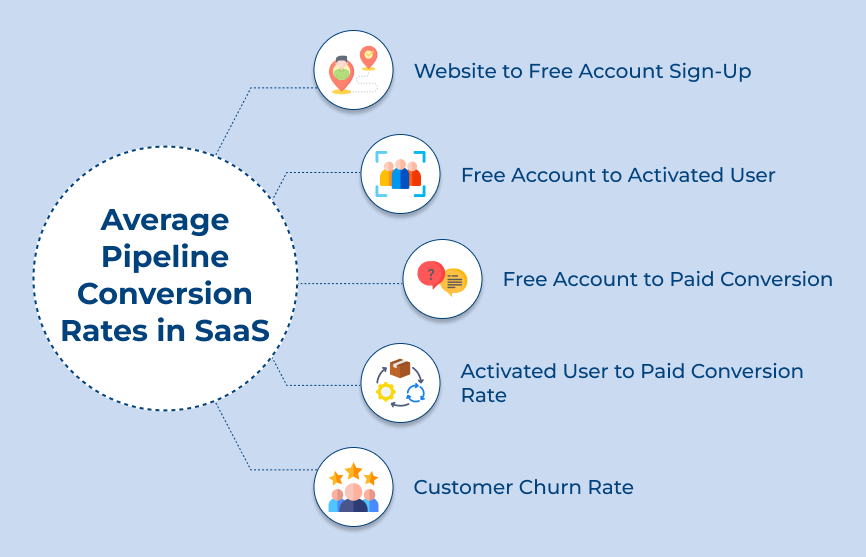
The conversion rate from website visitors to free account sign-ups is an important benchmark for SaaS companies. It reflects how well a company’s website attracts and engages potential customers. They can boost stage conversion rates through optimized website design, content and user experience.
Let’s assume a SaaS company like HubSpot offers a free CRM tool. It attracts website visitors and converts them into free account sign-ups by providing valuable resources.
Once a user signs up for a free account, the next step is to activate and engage them with the product. The conversion rate from free to activated users gauges the onboarding process’s effectiveness in showcasing product value.
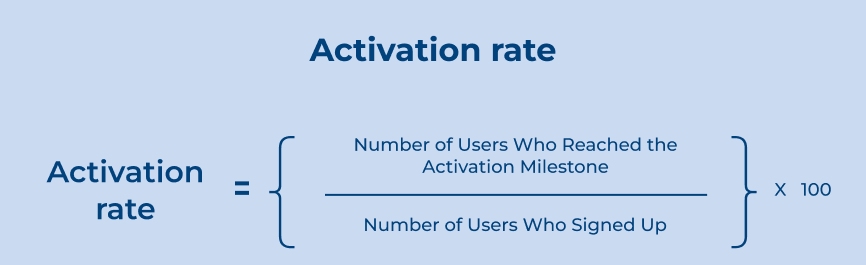
SaaS companies enhance conversion rates with tailored onboarding, tutorials and support. Let’s consider that the project management tool Trello guides new users through a step-by-step onboarding process. It helps them to understand and use the platform effectively.
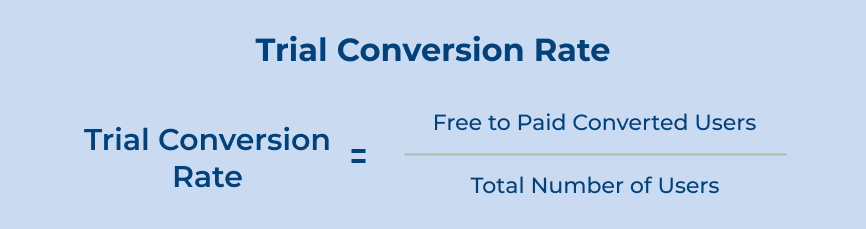
The ultimate goal for SaaS companies is to convert free users into paying customers. The free-to-paid conversion rate is a key metric affecting revenue and profitability. Enhancing features, promotions and great service can boost user upgrades to paid plans.
Let’s consider that Mailchimp’s email marketing platform entices free users with advanced features. It includes features like automation and A/B testing to encourage them to upgrade to a paid subscription.
The conversion rate shows the percentage of users moving from free trial to paying customers. The conversion rate is crucial for SaaS companies, directly influencing revenue and growth. A higher conversion rate indicates that the product is effectively converting users into customers. A low conversion rate may indicate issues with the product-market fit.
Let’s assume that a SaaS company offers a 14-day free trial of its project management software. If 20 out of 100 free trial users convert to paying customers, the conversion rate would be 20%. Improving onboarding, adding key features and targeting the right audience can boost conversion rates.
Customer churn rate is another crucial metric in the SaaS industry. It is the percentage of customers who stop using the software over a certain period. SaaS companies will fall somewhere between 3% and 5% annually. Monitoring and reducing churn rates is essential for long-term success.
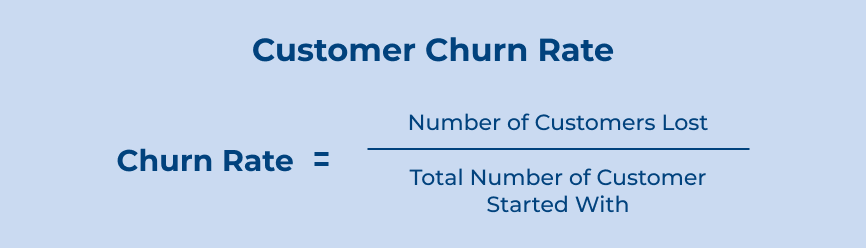
Let’s consider a SaaS company that has 1000 customers at the beginning of the month and loses 50 customers by the end of the month. The churn rate would be 5%. Prioritizing customer success, exceptional support and product improvement can lower churn.
Calculating SaaS conversion rates is essential to evaluate marketing and sales effectiveness. Tracking the metric can help optimize the conversion funnel, increasing revenue. Here’s how businesses can calculate the SaaS conversion rate:
1. Determine the conversion goal: Businesses must first define SaaS conversions before calculating the conversion rate. It may involve a free trial, paid subscription, or other actions showing the user’s interest.
2. Track the website traffic: Utilize tools such as Google Analytics to monitor site visitor numbers. It will show the total number of people who have the potential to convert.
3. Track conversions: Utilize tools such as Google Analytics or HubSpot to track user conversions. It may include signing up, subscribing, or any other expression of interest in the product.
4. Calculate the conversion rate: Once businesses have the required numbers, they can calculate the conversion rate using the following formula:
Conversion Rate = (Number of Conversions / Total Website Visitors) x 100
Let’s assume that a SaaS business had 500 conversions out of 10,000 website visitors. The conversion rate would be
(500 / 10,000) x 100 = 5%
5. Monitor and optimize: Businesses should monitor metrics regularly and adjust strategies to improve conversion rates. It can include A/B testing pages, adjusting pricing, or refining onboarding.
Below are the practical tips designed to enhance your strategy and help you maximize your SaaS conversion potential.
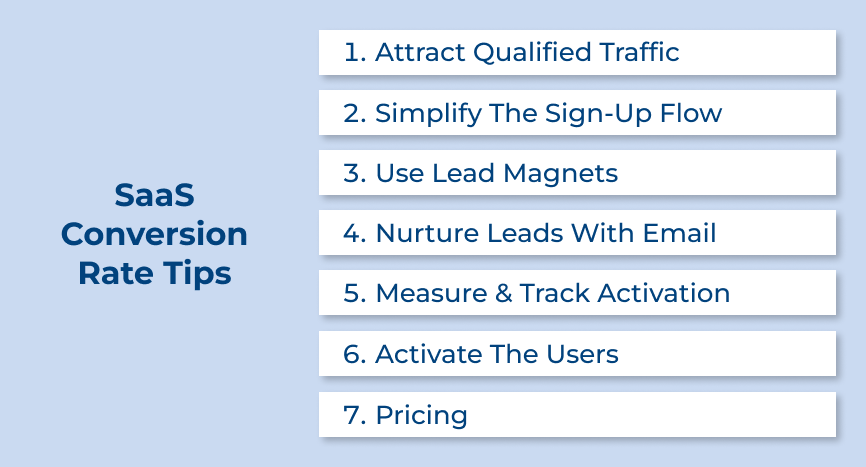
Attracting qualified traffic is a crucial tactic in improving SaaS conversion rates. Targeting the right audience boosts lead conversion rates. The tactic involves optimizing the website and marketing strategies. It helps to attract potential customers who are genuinely interested in the SaaS product.
Using targeted advertising on platforms like Google Ads and social media can attract sales-qualified traffic. Focusing on demographics, interests and behaviors can reach potential customers interested in the SaaS product.
Pro tips:
Simplifying the sign-up flow is a crucial tactic to improve SaaS conversion rates. Reducing steps and simplifying can enhance user experience, boosting sign-up chances for software.
Let’s consider that a SaaS company saw more sign-ups by simplifying the process to just a few key fields. The simple change resulted in a higher conversion rate and boosted their sales.
Pro tips:
Lead magnets are powerful tactics that can significantly improve SaaS conversion rates. Offering resources or incentives for contact information can boost email lists and improve lead nurturing. Lead magnets offer immediate value to potential customers, boosting trust for businesses. It can lead to higher conversion rates and more loyal customers.
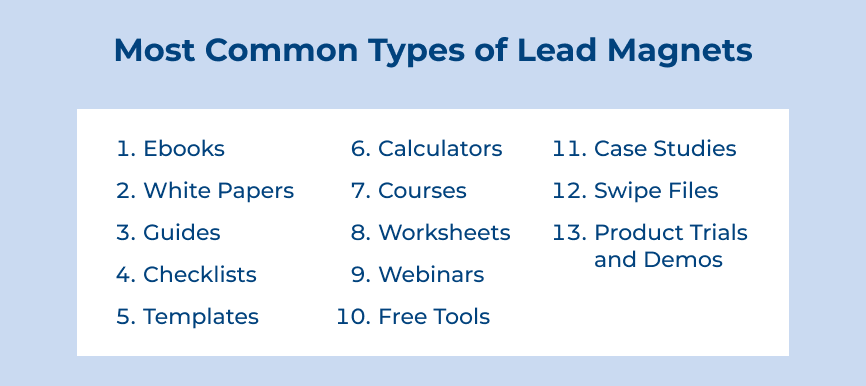
Some tools that can be used as lead magnets include:
One use case is providing a free ebook on digital marketing in exchange for subscribing to a company’s newsletter in SaaS marketing. It might appeal to interested customers, boosting marketing success and driving more sign-ups on the SaaS platform.
Pro tips:
Nurturing leads with email is a crucial tactic to improve SaaS conversion rates. The strategy includes sending tailored emails to leads during their buyer’s journey. It helps to build trust, establish relationships and drive conversions. Lead nurturing emails get up to 10x the response rate compared to standalone email blasts.
Nurturing leads via email helps SaaS companies engage and address concerns to boost conversion rates. Delivering the right message at the right time can move leads through the sales funnel more effectively and increase conversion rates.
Pro tips:
Measuring and tracking activation is a crucial tactic to improve SaaS conversion rates. Activation involves prompting users to take specific actions that make them active software users. SaaS companies can boost conversion rates by analyzing data to enhance user onboarding and address bottlenecks.
Let’s assume a SaaS company tracks user sign-ups for free trials, onboarding completion and purchases made. Analyzing the data can pinpoint drop-off areas and enhance conversion rates by making necessary improvements.
Pro tips:
Looking to improve the SaaS conversion rate and activate the users? Activating the users is a crucial tactic in driving success for a software as a service (SaaS) business. The tactic involves engaging users to take action within the platform. It leads to increased conversions and retention rates.
A great use case for the tactic is rewarding users for completing tasks or milestones within the platform through gamified onboarding. It encourages users to explore the features and creates a sense of accomplishment.
Pro tips:
Pricing is a crucial tactic to improve SaaS conversion rates. Strategically setting the prices can attract more customers and increase revenue. Understanding the target market through thorough research is crucial for pricing strategies. Analyzing competitors’ pricing and product value helps set competitive, profitable prices.
One use case of effective pricing tactics is offering tiered pricing options. Offering various packages at different prices can accommodate diverse budgets and needs. It not only increases the potential customer base but also encourages upselling and cross-selling.
Pro tips:
Let’s delve into the key factors that can limit SaaS conversion rates and what to watch for when measuring your performance against benchmarks.
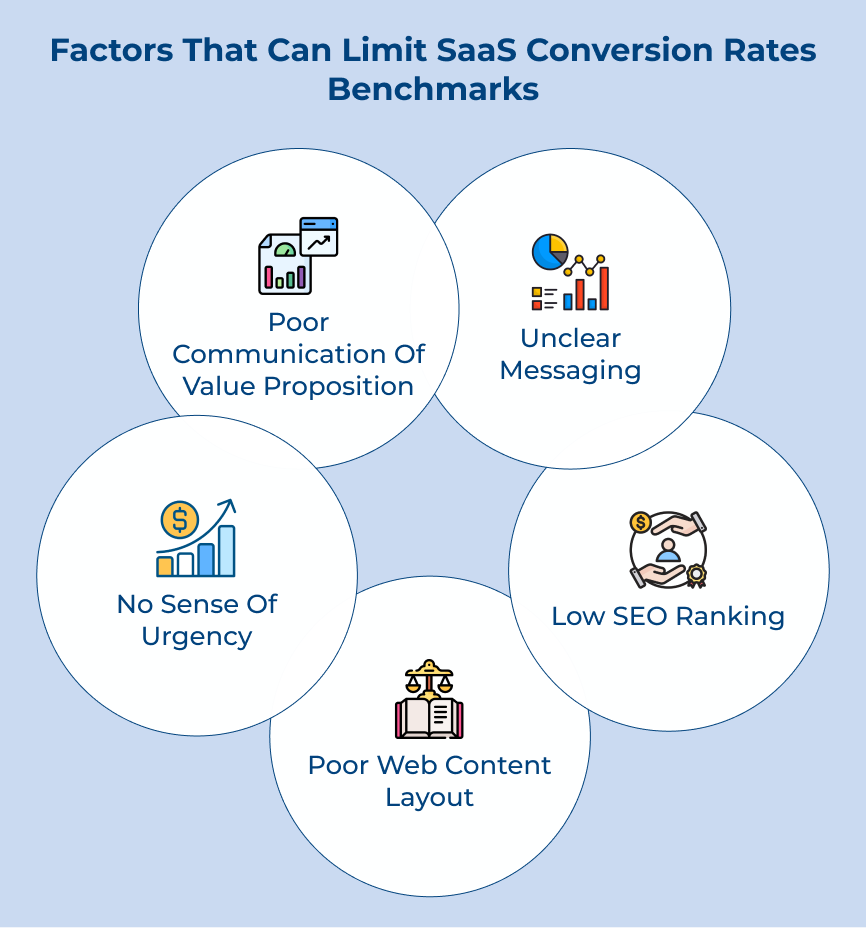
Potential customers may not convert if they fail to grasp the SaaS product’s value. Clearly communicate the product’s unique selling proposition and how it addresses customer needs. Make sure the messaging is concise, compelling and tailored to the target audience.
Unclear messaging can confuse potential customers and make it difficult for them to understand what the SaaS product offers. Ensure the website, landing pages and marketing materials display clear messaging explaining product benefits. Use simple language and avoid industry jargon that may not be familiar to the audience.
A poorly ranked SaaS website may struggle to draw organic traffic and convert visitors into customers. Optimize the website with SEO for relevant keywords, high-quality content and authoritative backlinks. Improving the SEO ranking will increase visibility and drive more qualified traffic to the site.
A confusing website layout can frustrate visitors and make it difficult for them to find needed information. Ensure the web content is well-organized, easy to read and visually appealing. Use headings, bullet points and visuals to navigate visitors, showcasing key points of the SaaS product.
Without a sense of urgency, potential customers may procrastinate or forget about taking action to convert. Encourage immediate action with limited-time promotions, discounts and incentives to create urgency. Craft urgent call-to-actions (CTAs) to drive visitors to sign up, book demos, or make purchases.
Let us understand how SaaS conversions differ from other industries, unveiling the unique techniques necessary to transform potential leads into loyal subscribers.
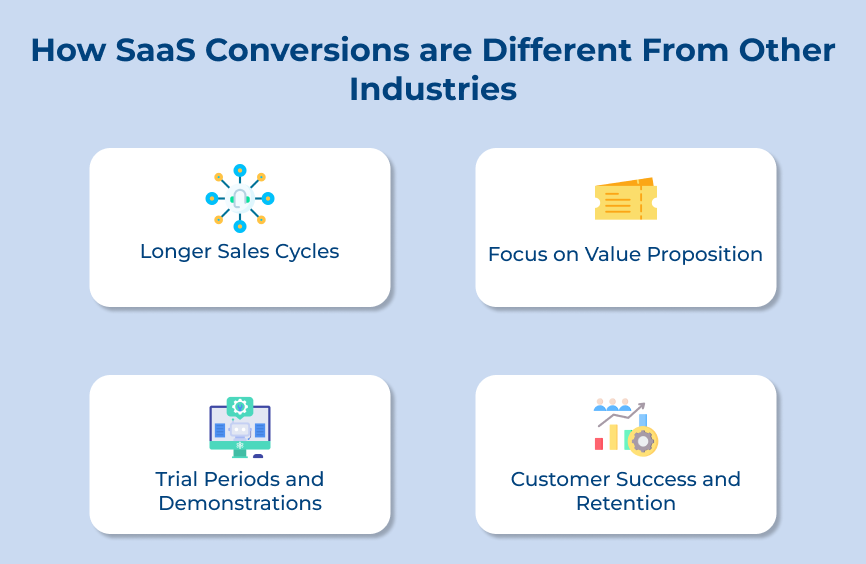
One of the most significant differences in SaaS conversions is the longer sales cycle. SaaS companies depend on recurring subscriptions, unlike retail businesses where customers make one-time purchases. It means that the sales process is more complex, requiring lead nurturing before subscription commitment.
SaaS companies need to communicate the value of their software solutions to potential customers. SaaS offerings, being intangible, require emphasizing software benefits to solve user pain points effectively.
Many SaaS companies offer free trials or product demos of their software to potential customers. It allows users to experience the product firsthand and see how it can be beneficial. Providing a trial period builds trust, letting users test the software before deciding.
SaaS companies focus not only on acquiring new customers but also on retaining existing customers. Customer success is crucial in the SaaS industry, as retention rates directly impact revenue. SaaS companies prioritize customer support, onboarding and communication to keep customers satisfied
Converting clicks to customers through SaaS conversion rates is crucial for digital marketing success.
Analyzing data, optimizing pages and running targeted campaigns can boost conversion rates
Continuously testing and refining strategies to ensure maximum effectiveness. Businesses can convert website visitors into loyal customers by following the steps outlined in the article. A well-executed conversion rate optimization strategy can greatly boost a SaaS business.

Tracking SaaS conversion rates is essential for measuring the success of the software product. Tracking conversion rates guides improvement, strategy evaluation and data-driven marketing optimization. The data will help businesses attract more customers, increase revenue and grow their SaaS business.
A B2B SaaS funnel conversion benchmark assesses how well a SaaS company converts leads into customers. It helps businesses assess sales performance against industry standards and pinpoint areas for improving customer acquisition.
The industry average conversion rate for Software as a Service (SaaS) companies typically falls between 1% to 5%. Conversion rates can differ based on industry, target market, pricing strategy and marketing efforts. SaaS companies should optimize conversion rates with A/B testing and analysis for better performance.
Improving SaaS conversion rates involves testing, tweaking and optimizing sales funnel elements gradually. It may take weeks or even months to see significant improvements. It is important to be patient and persistent in the efforts.
Numerous tools like Google Analytics, Kissmetrics, Mixpanel and Optimizely help businesses track SaaS conversion rates. The tools offer insights on user behavior, conversion paths and A/B testing to help businesses find improvement opportunities.
Grow Customer Relationships and stronger team collaboration with our range of products across the Conversational Engagement Suite.
Omnichannel Customer Support & Help Desk Software
AI Enabled Business Messaging and Chatbot Software
Sales Engagement & CRM Software
Call Center Software & Virtual Phone System
Product Marketing & Experience Platform
Customer Experience & Feedback Management Software

 11 Tips and Best Practices on SMS Customer Service
Scroll to top
11 Tips and Best Practices on SMS Customer Service
Scroll to top