11 Tips and Best Practices on SMS Customer Service
SMS customer service allows businesses to connect with customers on their turf - their phones. The convenient and fast approach boasts high open rates. It also helps handle simple inquiries easily.

SMS customer service allows businesses to connect with customers on their turf - their phones. The convenient and fast approach boasts high open rates. It also helps handle simple inquiries easily.
Customer service, today has evolved beyond phone calls and emails and ever considered utilizing SMS as a customer service tool? SMS customer service offers businesses a convenient and efficient way to connect with their customers. 81% of consumers check their text notifications within just five minutes of receiving a text.
SMS has become a popular form of communication for businesses. It helps to engage with their customers on a personal level. It enables fast, direct communication for customer service inquiries and support.
The article explores the benefits of customer service through SMS and how it can help businesses improve their customer experience. SMS customer support offers a unique opportunity for businesses to connect with their customers in a way that is both convenient and effective.
SMS customer service can be defined as a support channel where businesses communicate with customers through text messages on their mobile phones. The approach transforms the traditional phone-based support model into a more convenient and accessible format. Companies can send updates, answer questions and resolve issues directly through the messaging platform customers use daily.
Customers text their questions or concerns to a dedicated business phone number and receive responses from support agents or automated systems. The conversation flows naturally like personal texting but with professional support representatives handling inquiries. Businesses can integrate SMS platforms with customer relationship management systems to track conversations and maintain service quality.
Key objectives:
Let us understand why sms customer service is becoming an essential component of modern customer service strategies.
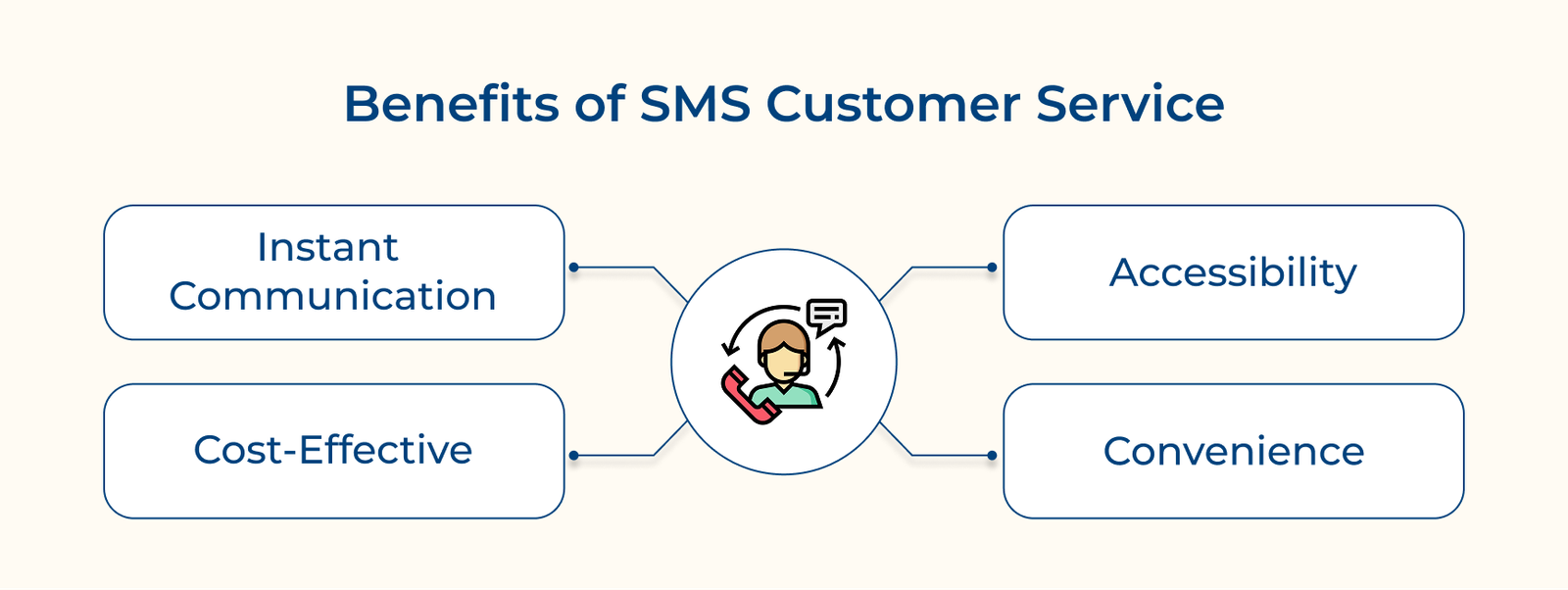
1. Instant communication: SMS allows businesses to communicate with their customers in real-time. It means that customers can receive updates, alerts and responses to their inquiries almost instantly. It can help improve customer satisfaction by providing quick and efficient assistance.
2. Accessibility: SMS is a universal form of communication that is accessible to almost all mobile phone users. Businesses can reach a wider audience and support customers without email or phone access.
3. Cost-effective: SMS customer service is a cost-effective solution for businesses looking to improve their customer support. SMS is a cost-effective alternative to phone calls and live chat for customer service, helping businesses cut costs.
4. Convenience: SMS for customer service offers customers a convenient way to communicate with businesses. Customers can easily send a text message and receive a response without having to wait on hold or navigate through automated phone systems.
Let us walk you through the step-by-step process to successfully implement text messaging in your customer service strategy.
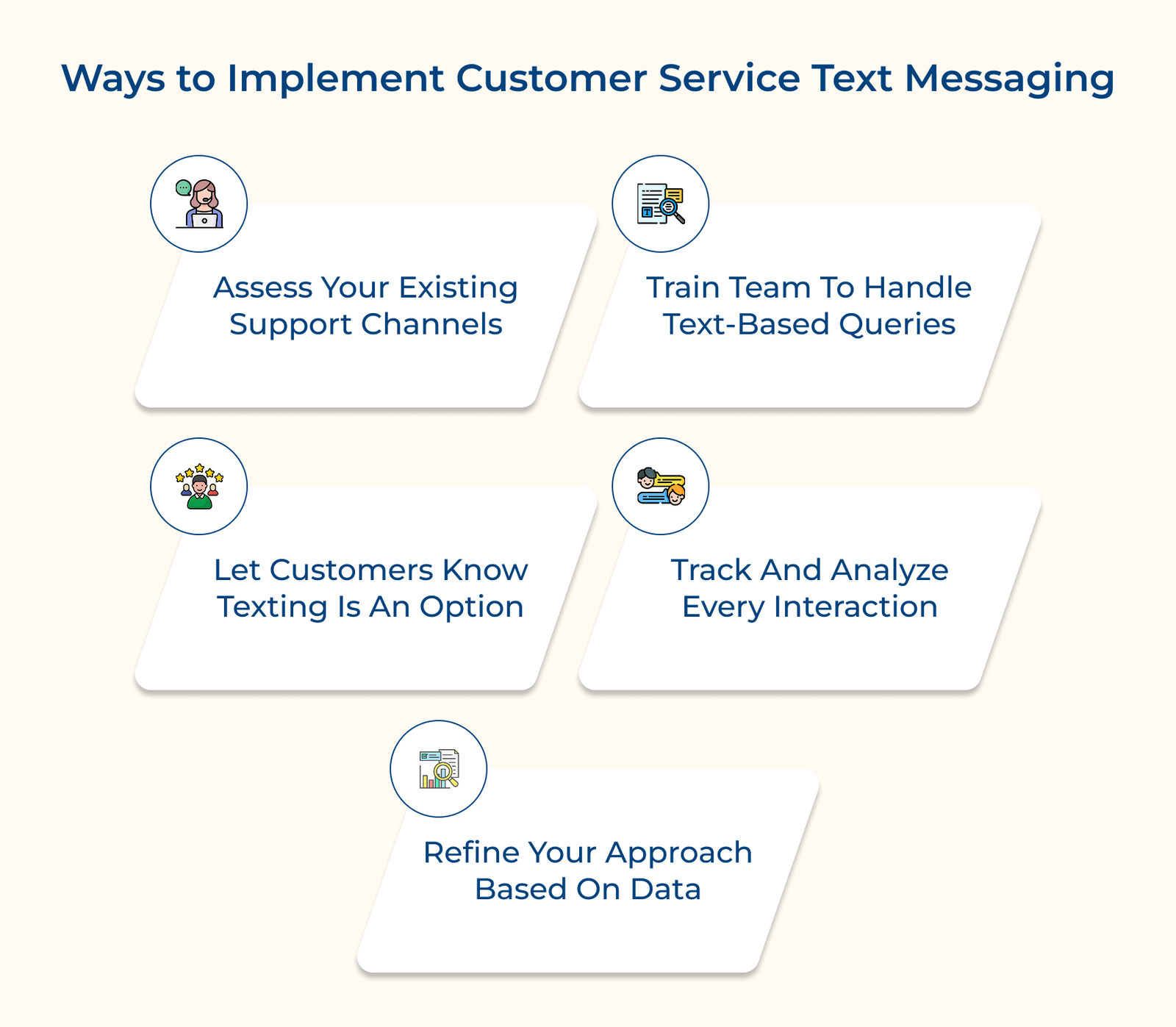
Before implementing customer service text messaging, it is important to assess the current customer service channels. Analyze customer communication channels for efficiency and effectiveness. The importance of the step lies in ensuring that the business is meeting the customer’s needs.
Assessing current channels informs businesses on improving customer service via text messaging. Let’s assume that businesses observe many customers engaging on social media messaging platforms. Including text messaging as a channel can provide a more personalized and efficient customer service experience.
Training the customer service team on how to use the text messaging platform effectively is crucial for a successful implementation. Train the team to handle text conversations, respond to customer queries and resolve issues effectively. Establish guidelines for professional customer service communication via text messaging.
Proper training can help the team adapt to the new communication channel and provide a seamless experience for customers. Consider conducting role-playing exercises and providing real-life examples of customer interactions. It will help the team practice and master the art of customer service text messaging.
Once the team is trained, promote text messaging as a customer service channel to customers. Let customers know they can use text messaging for questions or concerns.
Actively promoting text messaging as a customer service channel, can encourage more customers to use the convenient method of communication. Incorporate text messaging for customer service on the website, social media, emails and touchpoints for customers. It will make it easy for customers to reach out via text messaging.
Tracking customer text interactions is crucial to gauge the success of service strategy. Monitor response times, resolution rates, satisfaction scores and common inquiries to pinpoint improvement areas.
Analyzing customer interactions aids businesses in data-driven decisions to optimize text messages and drive positive outcomes. Let’s assume that a business uses metrics such as average response time, customer feedback ratings and conversation volume. It helps them track the effectiveness of the customer service text messaging efforts.
Continuously enhance the customer service text messaging strategy through iterative improvements. Collect feedback from customers and use the feedback to identify areas for improvement. Stay informed about industry trends and best practices in customer service text messaging. It ensures that the strategy remains relevant and competitive.
Consistently refining the customer service text messaging strategy, can enhance the customer experience and drive better business outcomes. Consider adding new features, training the team regularly and gathering customer feedback to inform decisions.
Check out the various scenarios and sectors where SMS customer service shines, helping you determine if it’s the right fit for your business strategy.
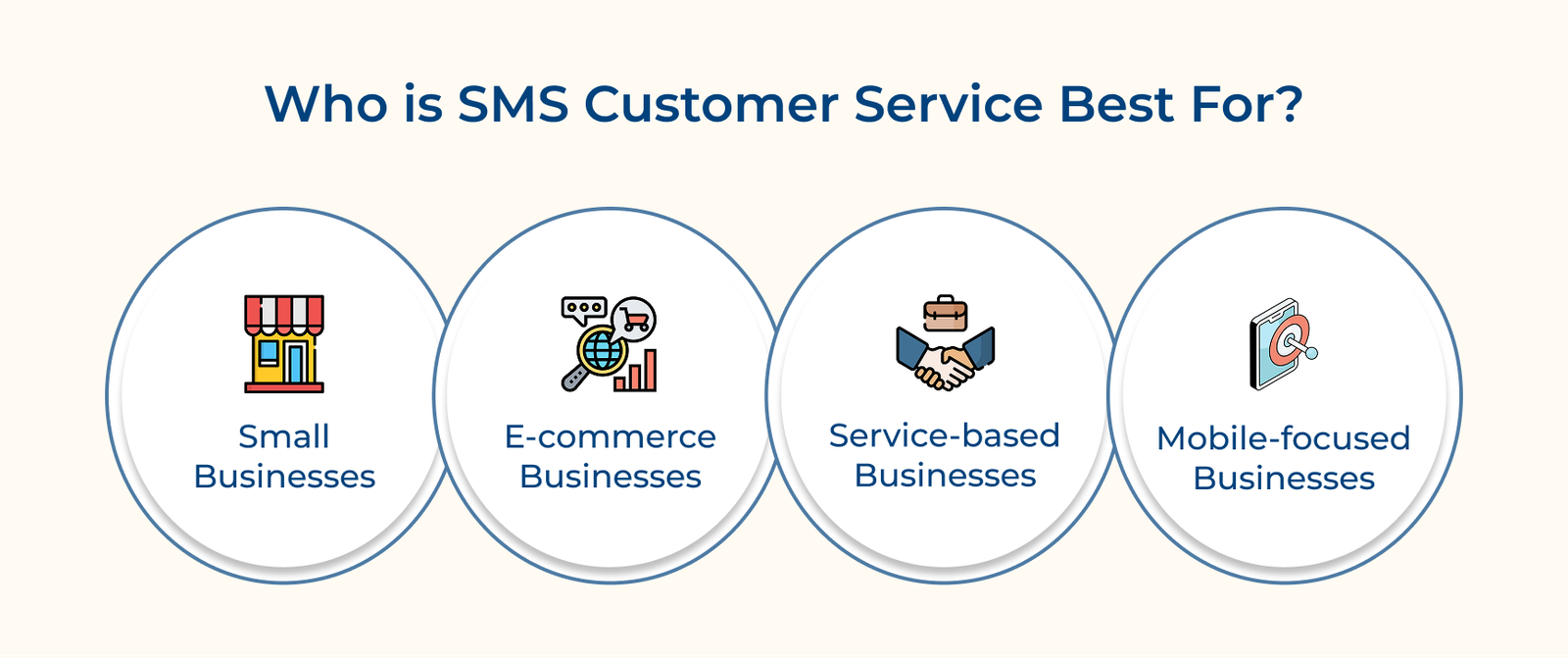
1. Small businesses: SMS customer service can be a cost-effective solution for small businesses with limited resources. It allows businesses to provide quick and personalized assistance to their customers without the need for a dedicated customer service team.
2. E-commerce businesses: E-commerce businesses benefit from SMS customer service for order updates, shipping notifications and customer inquiries. Sending text messages can keep customers informed and engaged throughout the buying process.
3. Service-based businesses: Service-based businesses such as salons, spas and restaurants can use SMS customer service. It helps them schedule appointments, send reminders and gather feedback from their customers. Utilizing text messages, can streamline their communication processes and improve customer satisfaction.
4. Mobile-focused businesses: Businesses that target a mobile-first audience can leverage SMS customer service to reach their customers where they are most active. Texting is an effective way to engage conveniently with smartphone-using customers for communication.
Below are the tips that will ensure that your SMS customer service is both effective and efficient helping you to enhance overall satisfaction.
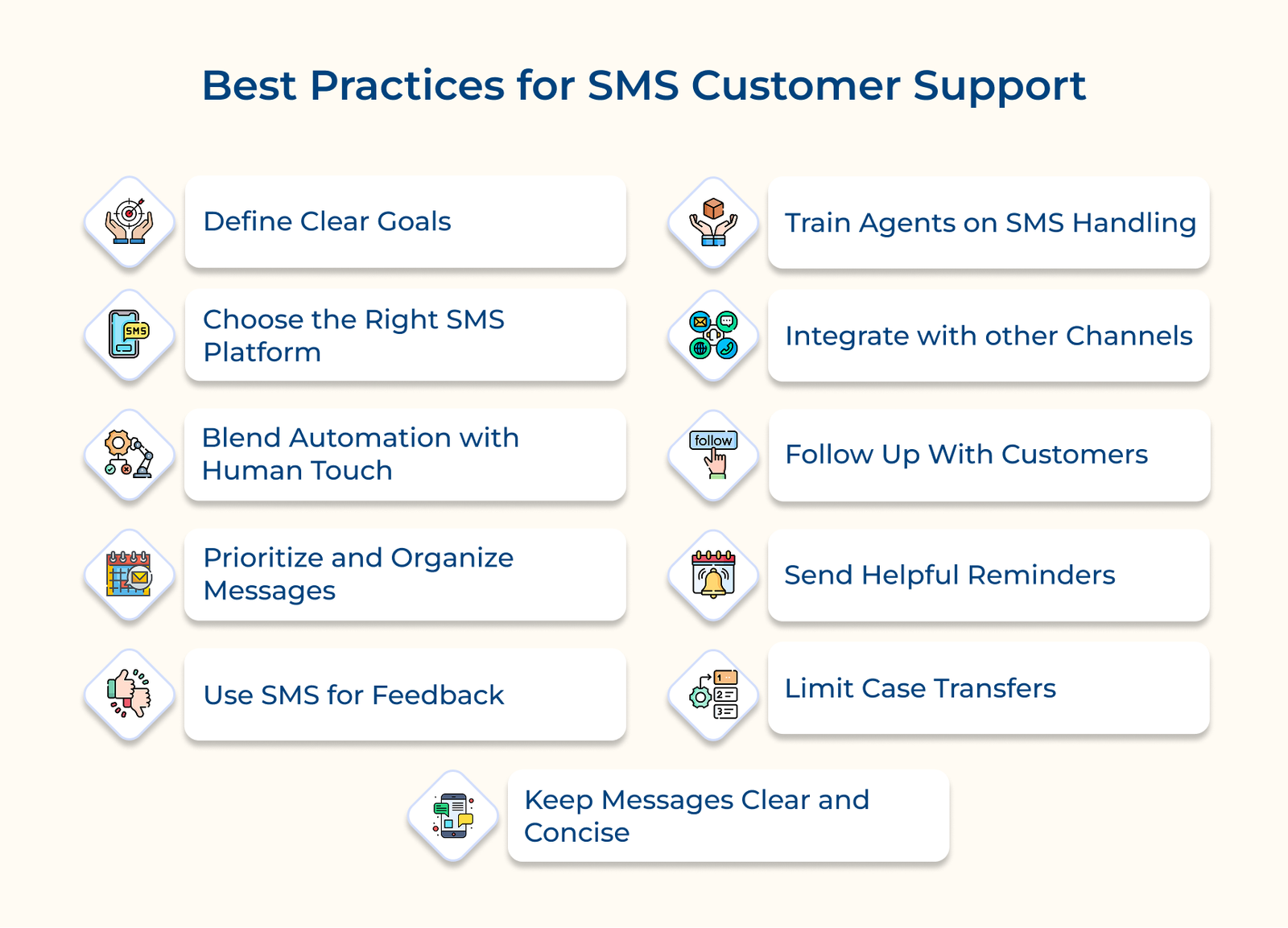
Clarifying the goals is a crucial best practice for SMS customer service. Clearly defining what the business wants to achieve with SMS marketing efforts can create a more focused and effective strategy. It ensures that messages are tailored to meet the needs and preferences of the customers.
One challenge faced in the best practice is setting realistic and measurable goals. It can be difficult to determine what specific metrics to track and how to measure the success of the SMS campaigns. Clearly defining the objectives and key performance indicators upfront can help overcome the challenge.
Ways to implement:
Choosing the right SMS support channel is crucial for effective customer service. SMS has become a popular communication channel for businesses to engage with their customers. Selecting the right SMS support channel ensures that businesses can provide timely and convenient support to customers.
There are different types of SMS support channels namely two-way SMS messaging, SMS chatbots and Automated SMS responses. The significance of the best practice lies in the ability to deliver quick responses, personalized communication and easy access to information.
Ways to implement:
The best practice involves utilizing automated responses to handle simple inquiries and tasks. It involves human agents for complex issues, offering empathy and understanding beyond what machines can provide. The significance of balancing automation with human input in SMS customer service lies in the ability to efficiently assist customers while still maintaining a personal touch.
Automated responses speed up inquiries and manage high volumes, while human agents offer personalized interaction. One challenge faced in implementing the best practice is finding the right balance between automation and human input. It can be tricky to determine which inquiries should be handled by automated responses and which ones require human intervention.
Ways to implement:
Categorizing and prioritizing incoming messages is a crucial best practice for SMS customer service. Organizing messages based on their urgency and content can ensure that businesses respond to customer inquiries promptly. Effective communication is crucial in SMS due to limited space, making conveying information challenging.
One of the main challenges faced in categorizing and prioritizing incoming messages is the volume of messages that businesses receive daily. Without a solid system, vital messages may be lost, causing customer frustration and missed engagement chances.
Ways to implement:
Leveraging SMS to collect customer feedback is considered one of the best practices for SMS customer service. Using SMS allows businesses to reach customers on their cell phones, making it easy for prompt feedback. The significance of the best practice lies in the ability to gather real-time feedback from customers.
Collecting feedback via SMS can also show customers that their opinions are valued, building trust in the process. One challenge in best practices is ensuring customer responses to SMS feedback requests.
Ways to implement:
Agents must be skilled in SMS support to offer customers a seamless, personalized experience. SMS customer service practices are vital for prompt responses, consistent communication and accurate information provision.
Agents need training to adapt to text-based customer support, considering limited characters and requiring clear responses.
Ways to implement:
Integrating SMS with other support channels is considered one of the best practices for SMS customer service. SMS support is integrated with email, phone, live chat and social media for a comprehensive customer support experience. The significance of integrating SMS with other support channels lies in the ability to meet customers where they are.
Offering a multi-channel support approach, can enhance customer satisfaction, improve response times and increase customer loyalty. One challenge faced in the best practice is ensuring that all support channels are integrated to provide a unified customer experience. It requires proper coordination between different departments within the organization.
Ways to implement:
Following up with customers is a best practice in SMS customer service that can help build stronger relationships and drive repeat business. Going above and beyond after an interaction can show customers that the business cares about their satisfaction. 60% of customers reject offers four times before making a purchase decision.
One challenge faced in implementing the best practice is the lack of time and resources to follow up with every customer individually. Businesses can seamlessly integrate customer follow-ups into their service process.
Ways to implement:
Sending reminders about upcoming appointments is one of the best practices for SMS customer service. The practice involves sending text messages to customers to remind them of their scheduled appointments. It helps to reduce no-show rates and improve overall customer satisfaction. The best practice enhances customer experience by offering timely reminders of upcoming appointments.
The practice can help customers better plan their schedules and reduce the likelihood of forgetting about their appointments. The challenge lies in sending personalized reminders at the right time to engage customers effectively.
Ways to implement:
Avoiding unnecessary case transfers is crucial when it comes to providing efficient and effective customer service via SMS. Resolve customer inquiries with the same agent for efficiency, avoiding unnecessary transfers to multiple agents or departments.
The significance of avoiding unnecessary case transfers lies in improving customer satisfaction and reducing the chances of miscommunication in resolving customer issues. Repeating concerns to multiple agents or waiting for inquiries to be transferred can frustrate customers and lead to dissatisfaction.
Ways to implement:
The significance of the best practices in SMS customer support cannot be overstated. Communication with customers in text messages requires clarity and conciseness due to limited characters. Customers appreciate businesses that respect their time by providing them with clear information.
One challenge faced in implementing the best practice is finding the balance between being concise and providing enough information to address the customer’s needs. Businesses can master concise communication by practicing to convey complex information in short text messages.
Ways to implement:
Explore the four compelling use cases that highlight how SMS is revolutionizing customer service and enhancing satisfaction across industries.
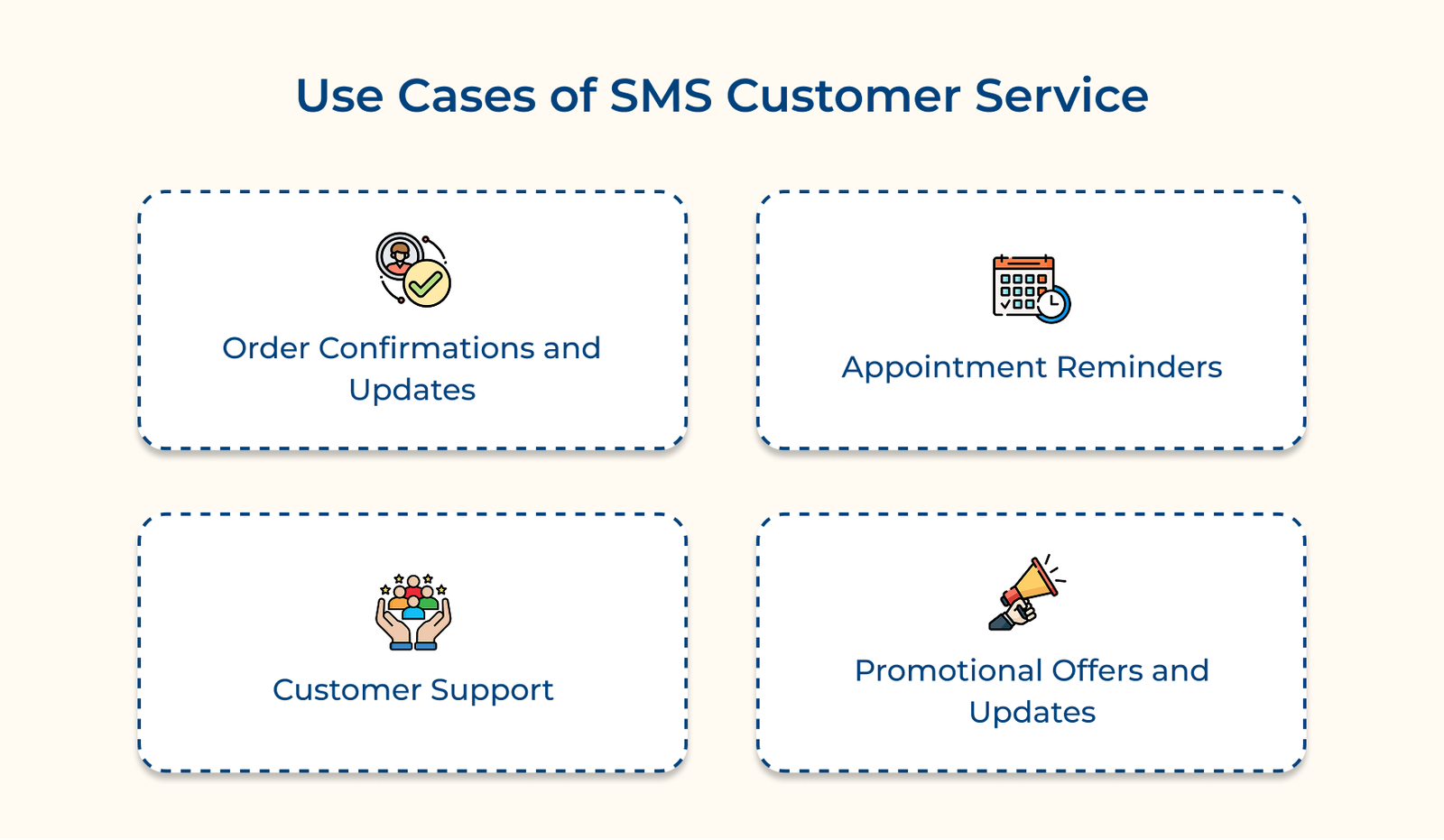
SMS customer service can be used to send order confirmations and updates to customers after they make a purchase. The system gives customers peace of mind and helps businesses keep customers informed during processing.
Many businesses, such as medical offices and hair salons, rely on appointments to keep their schedule organized. SMS customer service can be used to send appointment reminders to customers. It reduces the number of no-shows and ensures that the business runs smoothly.
SMS customer service can also be used to provide quick and efficient customer support. Customers can text for quick responses instead of waiting on hold or emailing back and forth.
Businesses can use SMS customer support to send promotional offers and updates to their customers. It can include exclusive deals, new product announcements and upcoming sales events. Sending messages directly to customers’ phones can increase engagement and drive sales.
Check out the essential features to look for in an SMS customer service platform to ensure your business not only meets customer needs but exceeds their expectations.
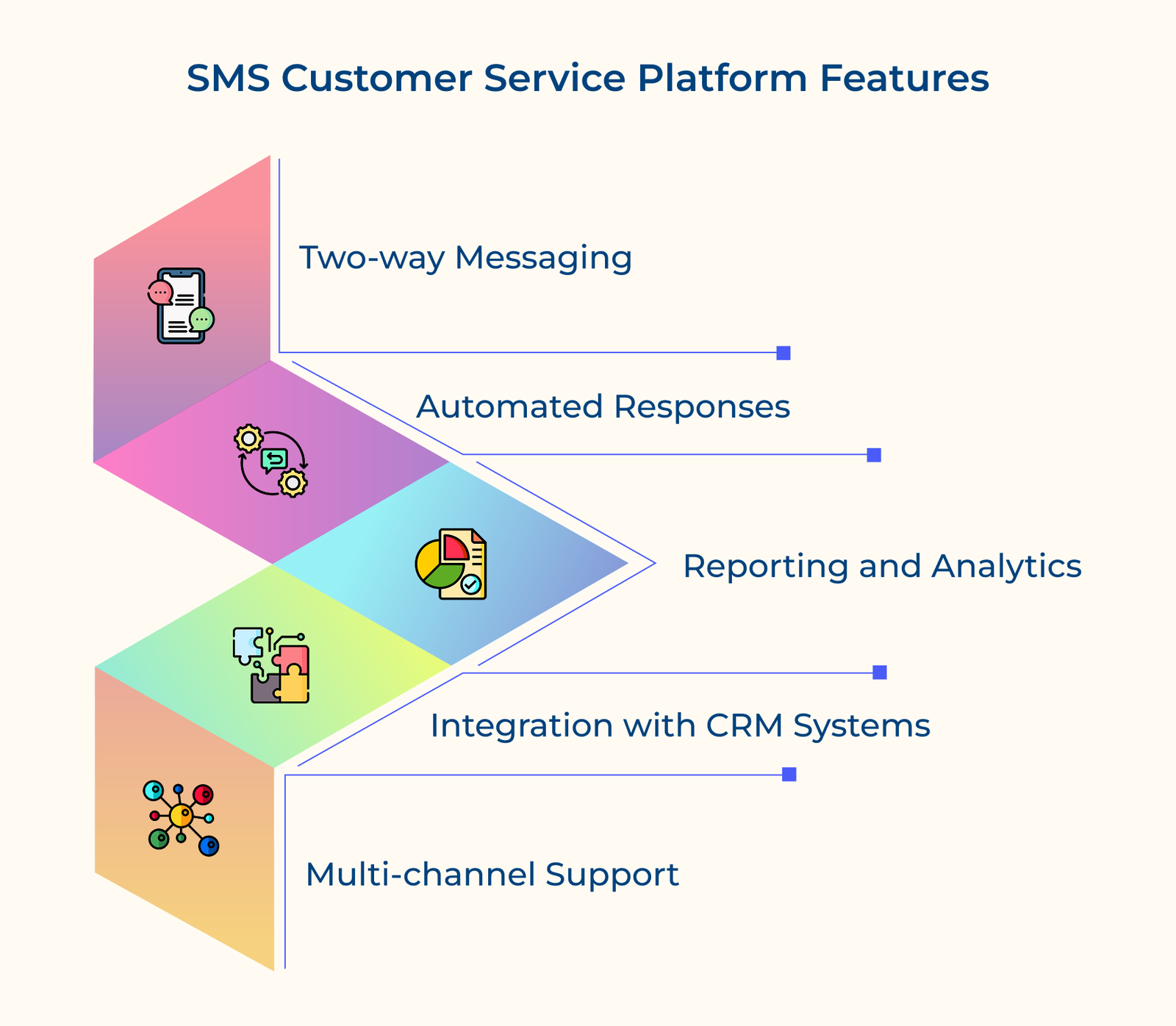
1. Two-way messaging: One of the most important features of an SMS customer service platform is the ability to engage in two-way messaging with customers. It allows customers to ask questions, make requests, or provide feedback via text and for businesses to respond promptly.
2. Automated responses: Many SMS customer service platforms offer the ability to set up automated responses for frequently asked questions or common inquiries. It can help businesses provide instant answers to customers without the need for human intervention.
3. Integration with CRM systems: A quality SMS customer service platform should integrate with CRM systems for a smooth experience for customers and staff. The integration can help businesses keep track of customer interactions, preferences and history for more personalized service.
4. Reporting and analytics: Another important feature to look for in an SMS customer service platform is robust reporting and analytics capabilities. The tools enable businesses to monitor response times, satisfaction and message volume for data-driven customer service improvements.
5. Multi-channel support: Many customer service platforms support various communication channels like SMS, email, social media and live chat. The multi-channel approach lets businesses offer support on various platforms to reach customers where they are comfortable.
Below are the real-life scenarios where SMS customer service is not just meeting but exceeding expectations.
Domino’s Pizza is known for its innovative approach to customer service and its use of SMS is no exception. Customers can text a pizza emoji or keyword to Domino’s short code to receive a link for ordering through SMS.
Customers can also track their orders and receive updates on their delivery status via text messages. The streamlined SMS ordering process has made it easier than ever for customers to enjoy their favorite Domino’s pizza.
Sephora, a leading beauty retailer, has also embraced SMS as a customer service channel. Customers can receive personalized beauty tips, product recommendations and exclusive offers by text message sign-ups. Sephora’s SMS program allows customers to engage with the brand conveniently and increase customer engagement.
Nordstrom, a high-end fashion retailer, has integrated SMS into their customer service strategy to offer personalized shopping experiences. Customers can choose to get SMS updates on sales, product launches and events. Nordstrom’s SMS program offers trend updates, promotions and personalized shopping suggestions to keep customers informed.
Starbucks has a strong presence on social media, but they have also recognized the importance of SMS in providing exceptional customer service. Customers can sign up for Starbucks’ SMS program to receive notifications about new menu items, promotions and rewards. Starbucks’ SMS program enables customers to manage rewards, order ahead for pickup and enhance their coffee experience conveniently.
SMS customer service provides a convenient and efficient way for businesses to offer instant support to their customers. Text messaging allows customers to communicate needs and concerns easily, enabling businesses to respond promptly.
The real-time communication can lead to improved happy customers and loyalty. Businesses can streamline support and offer personalized customer experiences through SMS. It is a valuable tool for businesses to improve customer support and strengthen client relationships.

Reply with “STOP” or “UNSUBSCRIBE” to opt out of SMS notifications or promotional messages. It can also be done by contacting the sender directly and requesting to be removed from their messaging list. Alternatively, do not disturb can be enabled on the cell phone, or use a third-party app to block unwanted messages.
Yes, many companies now offer the option to interact with customer service agents via SMS messaging. Responding to a company’s SMS can help to ask questions, make inquiries and get assistance via text. The convenient method allows for quick and easy communication with customer service teams.
The response time for customer service via SMS can vary depending on the company and its availability. Most companies aim to respond to customer inquiries within a few hours or by the end of the business day. Some companies may have quicker response times, while others may take longer to address customer concerns.
SMS customer service offers businesses a direct and efficient way to communicate with their customers. Some of the biggest opportunities for SMS include personalized messaging, quick responses and automation for common inquiries. The channel allows for convenient customer support, increasing customer satisfaction. It also provides businesses with valuable data insights for improving their services.
SMS customer service benefits businesses by providing a quick and convenient way to communicate with customers, leading to increased customer satisfaction. The support provides customers with efficient, personalized assistance for accessing information or resolving issues on the go. Overall, it improves communication and efficiency for both parties involved.
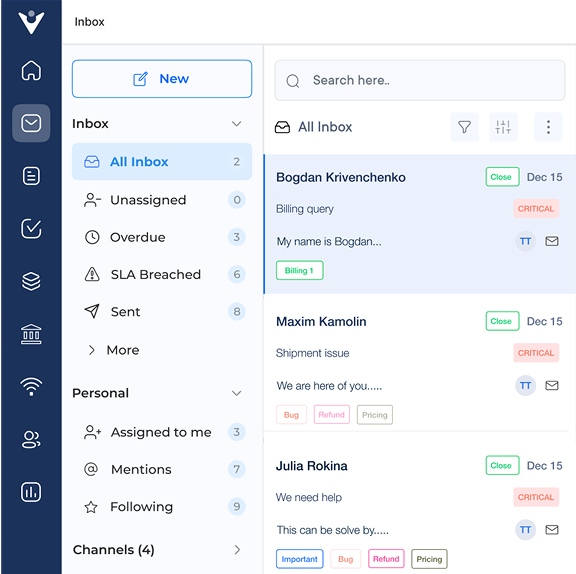
Grow Customer Relationships and stronger team collaboration with our range of products across the Conversational Engagement Suite.
Omnichannel Customer Support & Help Desk Software
AI Enabled Business Messaging and Chatbot Software
Sales Engagement & CRM Software
Call Center Software & Virtual Phone System
Product Marketing & Experience Platform
Customer Experience & Feedback Management Software

 Knowledge Management Success: 9 Tips for Businesses
Scroll to top
Knowledge Management Success: 9 Tips for Businesses
Scroll to top