B2B Customer Relationships: How to Enhance Them?
B2B customer relationships focus on building trust, long-term collaboration and mutual value. Learn about their importance, key challenges and strategies for maintaining strong business partnerships.

B2B customer relationships focus on building trust, long-term collaboration and mutual value. Learn about their importance, key challenges and strategies for maintaining strong business partnerships.
Most B2B companies don’t lose clients overnight. Relationships slowly weaken, communication becomes reactive and revenue starts to feel unpredictable. If there’s a clear system to manage client relationships, businesses leave the door open for competitors who pay closer attention to real needs and day-to-day challenges.
Weak relationship management shows up in shorter contracts, stalled renewals and missed chances to grow accounts. Clients who feel ignored or taken for granted start exploring other options long before renewal talks begin. 13% of dissatisfied buyers will warn 20 or more of their peers in the B2B space about bad experiences with a company.
Strong B2B customer relationship management changes that story. It turns scattered interactions into structured, intentional partnerships built to last. Here’s how businesses create systems that keep clients engaged, increase contract value over time, and bring stability back to revenue.
B2B customer relationships refer to the ongoing partnerships where one business supports another with products or services. Unlike individual consumer deals, the relationships involve longer cycles, more decision-makers and deeper collaboration.
They’re not just about transactions, they’re about shared goals, trust and long-term impact. Businesses invest time in understanding each other because the stakes are higher: large contracts, complex needs and commitments that shape future success.
Key objectives:
The following are the key reasons why managing B2B customer relationships matters. Let’s check them out.
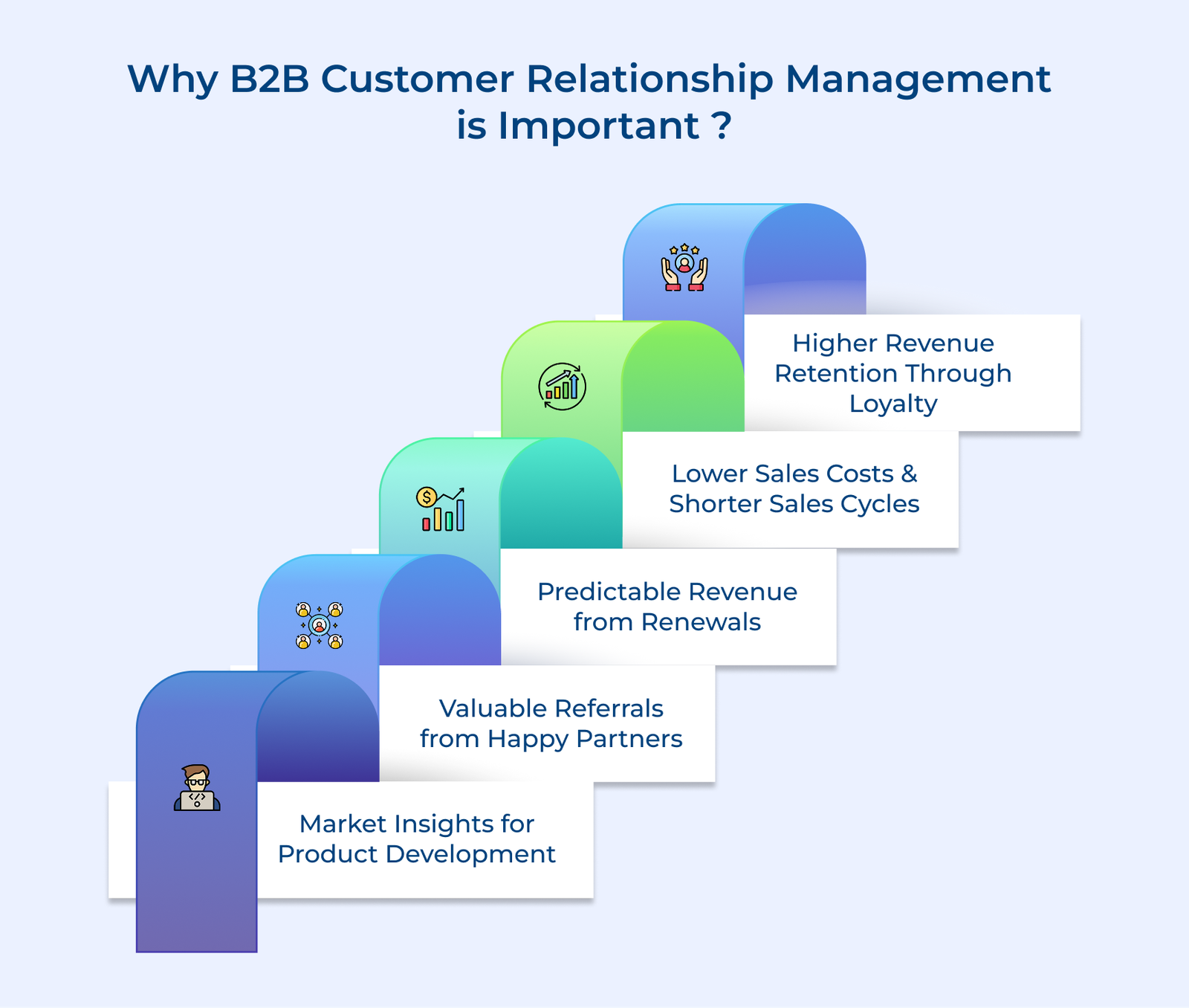
Higher Revenue Retention Through Loyalty
Long-term B2B customers often spend much more than new ones. Once trust is built, they’re more likely to stick around, add new services and skip the hassle of comparing other vendors.
Reduced Sales Costs and Shorter Cycles
Winning over new clients takes time and money. But with existing customers, there’s no need to start from scratch; they already know you. It means quicker deals and fewer back-and-forths.
Predictable Revenue through Contract Renewals
When clients are happy, they tend to renew contracts without drama. The stability helps your team plan and invest wisely, knowing revenue won’t disappear overnight.
Valuable Referrals from Satisfied Partners
Satisfied customers often spread the word to others in their industry. The personal introductions lead to better-quality leads and make your sales team’s job a lot easier.
Market Intelligence and Product Development Insights
Clients who trust you will share what’s changing in their world. The insights help you stay ahead by improving products and solving problems before they become big ones.
Let’s go through the powerful B2B customer relationship strategies that can propel your business toward growth and long-lasting success.
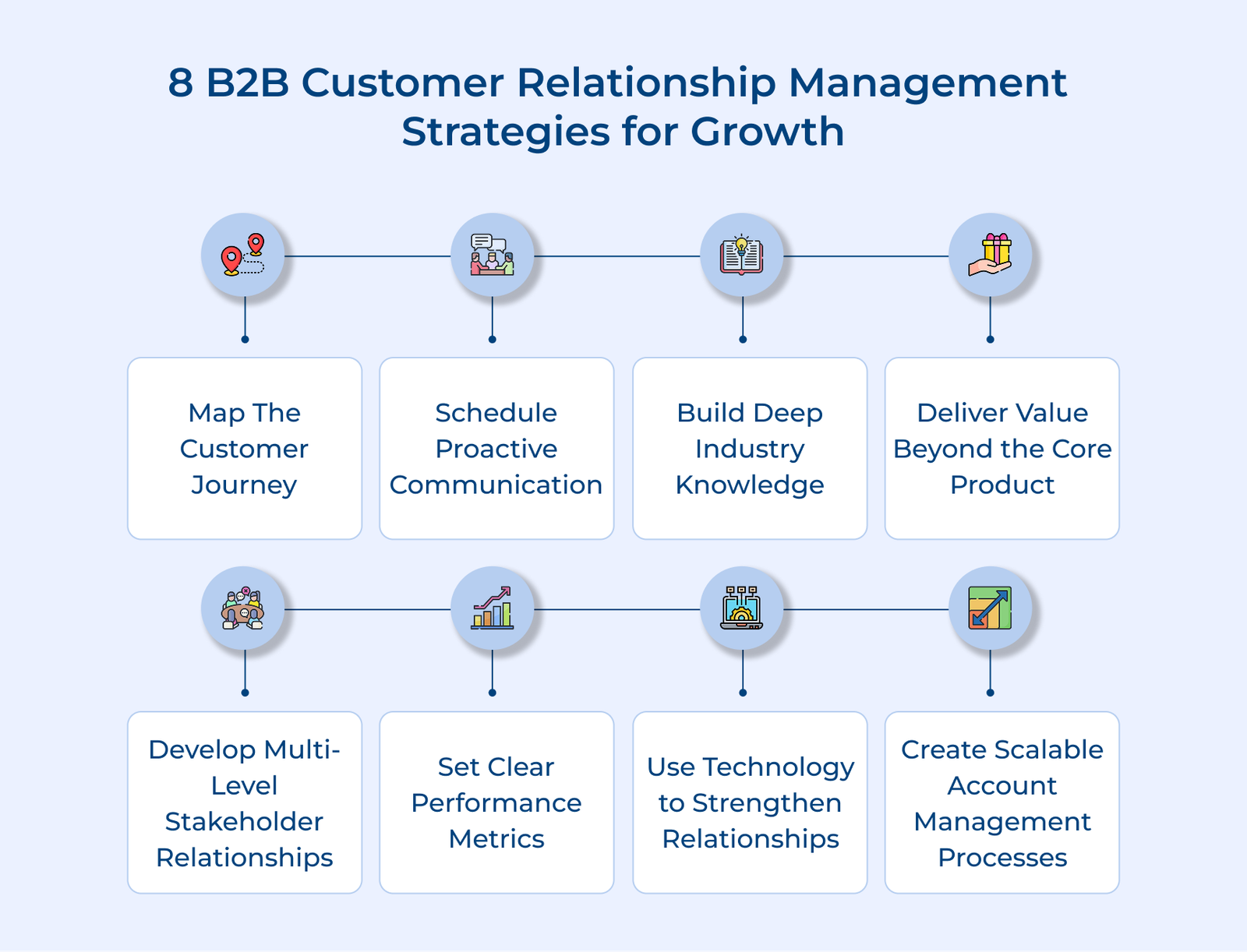
Mapping your customer journey means laying out every step when interacting with your business. The approach reveals hidden opportunities and prevents customers from falling through cracks during complex B2B sales processes. Here are three simple, effective ways to do it:
Proactive communication scheduling means reaching out to clients regularly before they have to ask for updates. It prevents relationship gaps and ensures important dates never slip through the cracks in busy B2B environments. Here’s a simple checklist to help you build a proactive system:
The questions help establish consistent communication rhythms that prevent clients from feeling neglected. Regular check-ins build trust, and reminders help prevent missed details during hectic periods. But how do you implement it without overwhelming your team? Start small by scheduling monthly check-ins with your top five clients, then gradually expand the system as processes become routine habits.
Deep industry knowledge means truly understanding your client’s world, their daily challenges, industry rules and what their competitors are doing. It shifts your role from just another vendor to someone they trust and listen to. There are four key ways to build this understanding:
The components spark conversations that show you care about the client’s success beyond just selling to them. Knowledge depth creates credibility and opens doors for strategic discussions about future planning.
Creating extra value means helping clients succeed even when it’s not directly tied to what you sell. It turns you from a vendor into a trusted, hard-to-replace partner.
Share market intelligence and industry insights
Send clients updates on market trends, competitor moves or regulation changes that might affect their business. The small actions show you’re paying attention and thinking about their long-term success.
Provide strategic planning and business advice
If you’ve seen similar challenges with other clients, share what worked and what didn’t without breaking trust. Your outside view can highlight solutions they haven’t considered.
Connect clients with complimentary service providers
If a client needs support you don’t offer, connect them with professionals who can help. No matter if it’s legal advice or niche consulting, good recommendations build trust and show you care about their bigger picture.
Building relationships with just one person at a client company is risky if they leave, your connection disappears too. It’s why it’s important to connect with people across teams and levels.
Start by identifying others who influence decisions, not just your main contact. Ask for introductions to colleagues who might benefit from knowing your work. Build these connections over time and always tailor conversations to each person’s role.
Best practices:
Measuring performance in B2B relationships means showing clients the real impact of your work not just assuming they see it. Without clear results, it’s easy for clients to question the value of your partnership when budgets tighten or new vendors pitch alternatives. Here are five simple but powerful metrics that help you track and show your contributions:
But why does regular reporting matter so much for relationship building? Would you rather have clients guessing your value or seeing it clearly through regular progress updates? Feedback loops close the measurement process by collecting client input to improve the customer service. It creates collaborative relationships where clients feel heard and valued as partners rather than passive service recipients.
Key questions:
Using technology to manage client relationships helps you stay organized, responsive and consistent especially when juggling multiple accounts. Without it, key touchpoints get missed and relationships suffer. Here are five practical tools that support stronger B2B client relationships:
But how do you choose the right technology stack without overwhelming your team? Start by pinpointing your biggest challenges, then choose simple tools that solve them. Avoid systems that add unnecessary complexity.
Check out the most unique challenges that make B2B customer relationship management more complex than B2C.
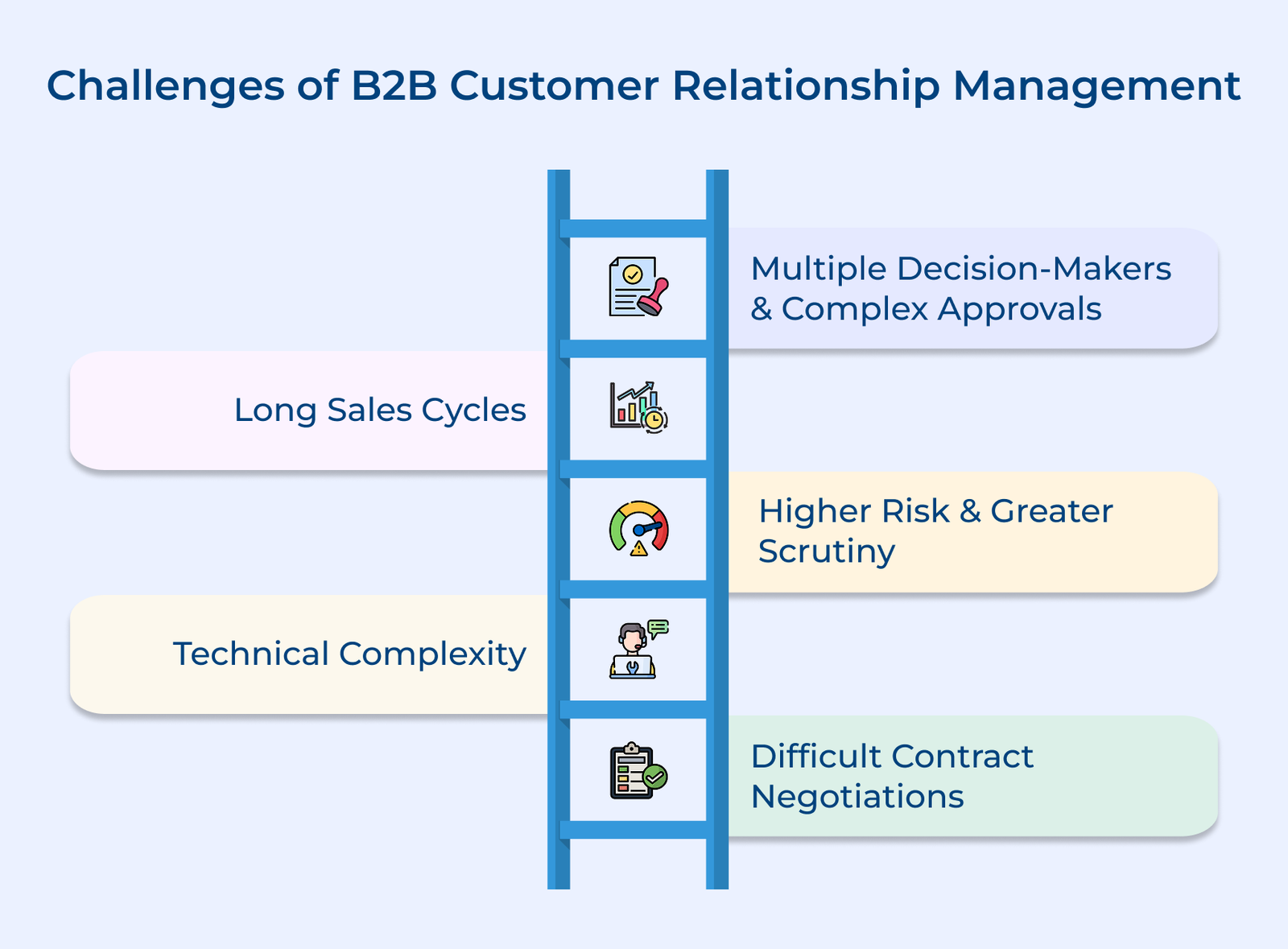
B2B purchases involve committees with diverse priorities rather than individual buyers. Finance worries about cost, IT checks the tech fit and operations look for usability. Aligning everyone takes time and often stalls progress, especially in large organizations.
Unlike quick consumer sales, B2B deals can stretch over months. Keeping relationships warm during long evaluation periods requires ongoing attention; otherwise, interest fades and conversations lose momentum.
Business decisions involve substantial financial commitments affecting company performance and individual careers. It creates heightened scrutiny of vendor relationships and resistance to change. Decision-makers fear making wrong choices that could impact their professional reputation or results.
B2B products usually aren’t plug-and-play. Relationship managers need to understand detailed specs and client systems. Without that knowledge, it’s hard to offer real customer support or earn trust.
When legal teams and procurement get involved, the tone often shifts from collaboration to negotiation. Instead of building a strong working relationship, both sides focus on fine print, which can make future teamwork harder.
Implementation steps:
Below are the examples that show practical applications of relationship management strategies that drive measurable growth.
Amazon Web Services (AWS) – Cloud Infrastructure Partnerships
AWS supports enterprise clients with dedicated account managers and technical experts. Clients get training and certifications that help them use the platform better. The long-term support makes switching providers difficult, leading to lasting partnerships and reliable revenue from multi-year agreements.
Nike – Athletic Retail Partnership Programs
Nike works closely with retail partners by offering early access to products and hands-on help with displays. It boosts in-store sales and keeps Nike in prime shelf space. Retailers benefit from better performance and consistent customer interest.
Puma – Sports Team and Athlete Sponsorship Management
Puma strengthens ties with professional teams by offering custom gear programs and advice on performance. Each team gets a dedicated contact who understands their needs. It builds long-term trust and helps teams perform better, while giving Puma strong visibility in the sports world.
Microsoft – Enterprise Software Integration Partnerships
When large organizations adopt Microsoft tools, Microsoft places support specialists directly inside the company. The experts run workshops, solve problems and help teams get comfortable with the software. As a result, clients see Microsoft as part of their team, not just a vendor.
B2B customer relationship management isn’t just about making sales; it’s about building real partnerships. When you take the time to understand your clients and support their goals, you become more than just a customer service provider.
Strong relationships lead to long-term loyalty, steady revenue and new opportunities through referrals, along with deeper collaboration. The connections are what set businesses apart and keep clients coming back.

Stay in touch regularly with scheduled check-ins. Talk about more than just your customer service, ask about their challenges, share useful insights and connect them with helpful people or tools. Assign someone on your team who understands their business and goals.
The five stages include building trust, needs discovery, solution alignment, contract negotiation, onboarding support and ongoing partnership development with expansion opportunities. Each stage requires different relationship strategies and varying levels of engagement intensity.
Salesforce leads B2B CRM with comprehensive features for complex sales processes and enterprise integration capabilities. HubSpot is great for growing businesses with solid marketing automation tools. Microsoft Dynamics fits well with Microsoft tools; Pipedrive is simple and ideal for small B2B teams.
B2B deals take longer and involve more people. Decisions are made carefully, often over weeks or months, with a strong focus on results. It’s less about emotions, more about trust, reliability and long-term outcomes.
Strong B2B relationships typically develop over six months to two years, depending on industry complexity and transaction size. Trust starts early, but real partnerships grow through repeated success and steady customer support over time.
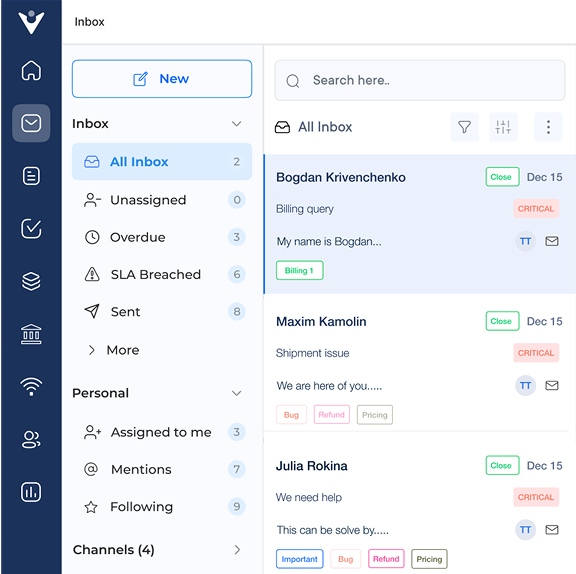
Grow Customer Relationships and stronger team collaboration with our range of products across the Conversational Engagement Suite.
Omnichannel Customer Support & Help Desk Software
AI Enabled Business Messaging and Chatbot Software
Sales Engagement & CRM Software
Call Center Software & Virtual Phone System
Product Marketing & Experience Platform
Customer Experience & Feedback Management Software

 What is Ecommerce Sales Funnel? Benefits, Stages & Examples
Scroll to top
What is Ecommerce Sales Funnel? Benefits, Stages & Examples
Scroll to top