How to Collect Customer Experience Insights? A Complete Guide
Customer experience insights help businesses understand customer needs, improve interactions and build loyalty. Discover how to gather and utilize insights for enhanced service.

Customer experience insights help businesses understand customer needs, improve interactions and build loyalty. Discover how to gather and utilize insights for enhanced service.
If you don’t understand your customers, another brand will and they’ll win their trust first. In the modern markets, knowing what your customers need and expect is no longer optional. 65% of U.S. customers say a positive experience with a brand matters more to them than great advertising. Customer experience insights help bridge the gap by revealing real customer behaviors, preferences, and frustrations, rather than just surface-level feedback.
When properly collected and analyzed, the insights can reshape how businesses serve their customers. Businesses must prioritise understanding how to gather and use CX insights effectively. It will also show you how to turn customer feedback into real improvements that strengthen relationships and drive growth. Let’s dive into it.
Customer experience insights refer to the process of collecting, analyzing and understanding how customers interact with a business. Companies can make informed decisions to improve satisfaction and retention by examining real customer behaviors across different touchpoints.
The process starts with gathering data from sources like surveys, social media, website activity and customer service interactions. The raw information is then analyzed to spot patterns, identify issues and predict future behavior. Businesses can uncover hidden trends and find opportunities for improvement with the help of AI.
Key principles:
Let’s go through the key benefits of the customer experience insights framework to understand how it can transform your business operations and drive sustainable growth.
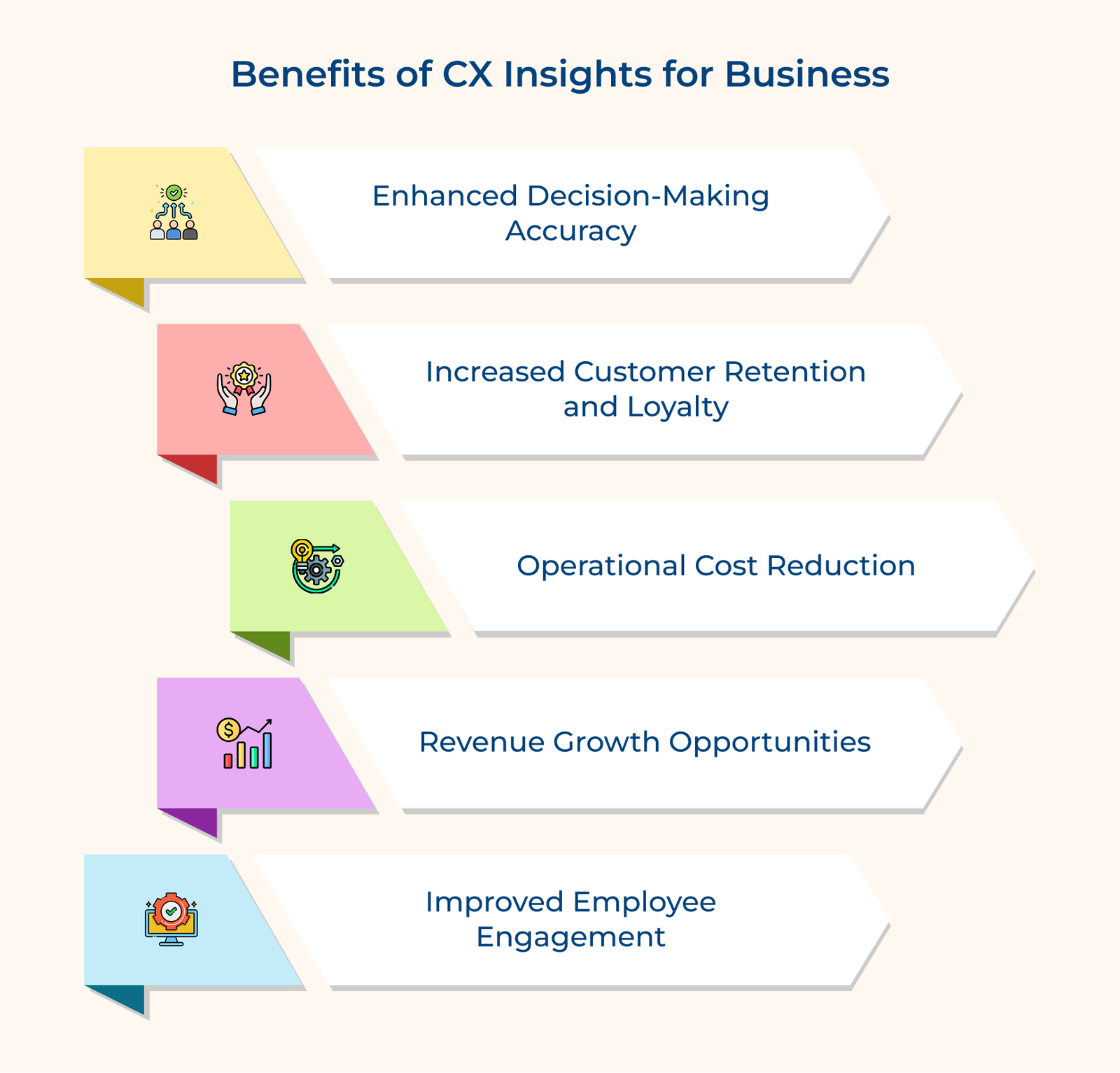
1. Enhanced Decision-Making Accuracy
CX insights give you a real-time understanding of what customers want based on their actions and feedback, rather than relying on assumptions. It helps you make informed decisions, focus on real needs and invest resources where they matter most.
2. Increased Customer Retention and Loyalty
Listening to customer feedback and acting on it builds long-term loyalty. You show customers their opinions matter, making them more likely to stay with you by spotting issues early and fixing them.
3. Operational Cost Reduction
Fixing customer experience issues early stops small problems from turning into costly ones. You can simplify processes, cut what isn’t working and use resources more efficiently by focusing on real customer behavior.
4. Revenue Growth Opportunities
CX insights help you spot new opportunities by showing what customers need. You can see which products or features they want next and price them wisely, making it easier to create offerings they’ll buy.
5. Improved Employee Engagement
When employees see how their work affects customers, they gain a clearer sense of purpose. They can make better decisions, improve interactions and find more satisfaction in their roles with access to real feedback.
The following are the essential strategies for collecting consumer experience insights that can drive meaningful changes in your organization.
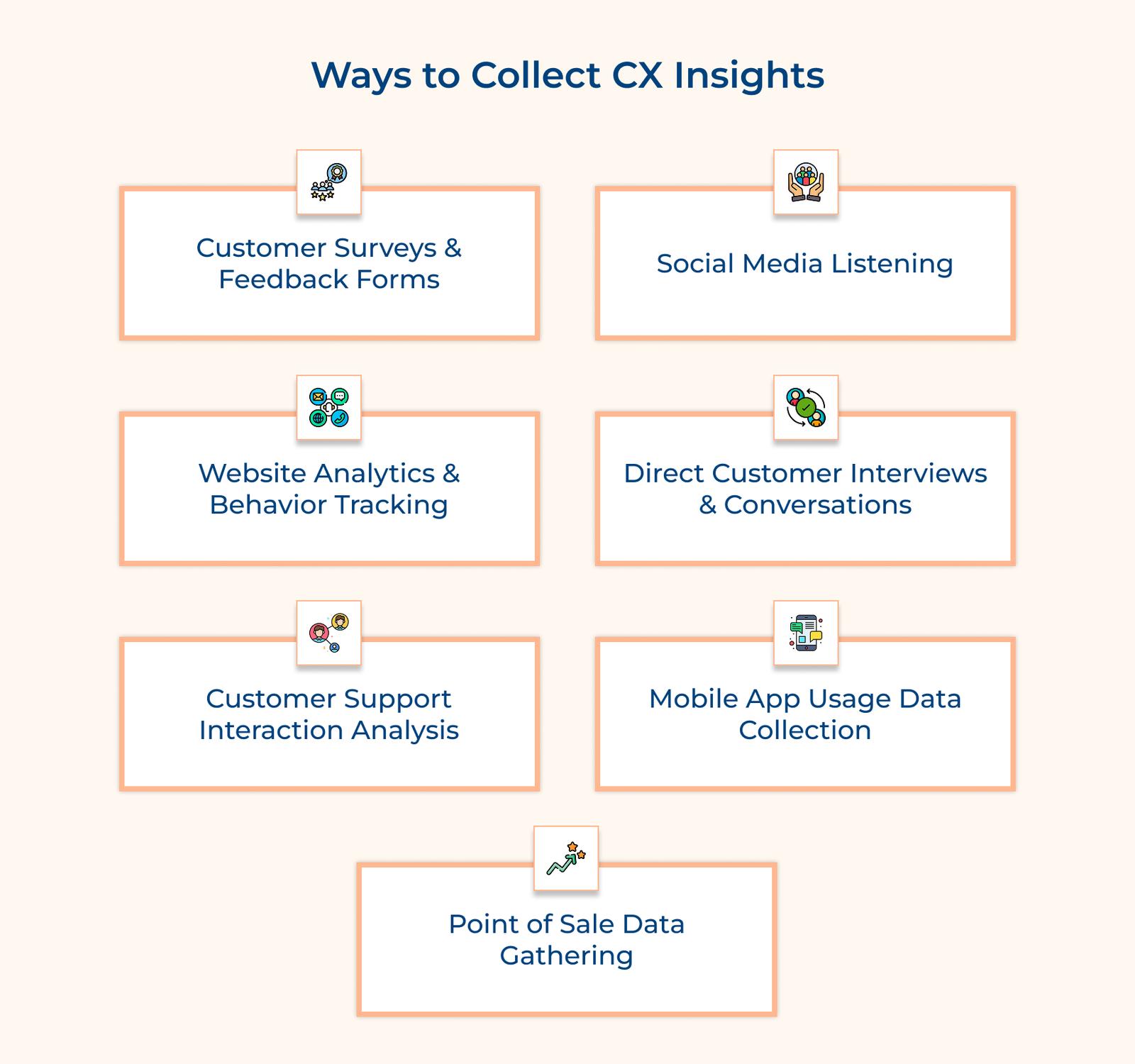
Customer surveys and feedback forms give businesses a direct way to hear from customers. They help measure satisfaction, highlight problems and gather insights through structured as well as open-ended questions.
Well-designed questions focus on specific aspects of a product or service, avoiding vague or generic inquiries. It ensures the feedback is useful and directly addresses real concerns. Using both numerical ratings and open-ended responses provides a clearer picture. Ratings help track performance over time, while written feedback reveals deeper insights and patterns across different customer groups.
Pro tips:
Social media listening means paying close attention to what people are saying about your brand on platforms like Instagram, X (Twitter), Facebook and more. It gives you a candid look at how your audience really feels without filters or surveys, making it one of the most honest forms of feedback. 89.4% of companies use social listening to analyze their social data.
You’ll need tools that can scan different platforms at once, catching both direct tags and indirect shoutouts. It helps you see the full picture, not just what’s happening in your notifications tab. Sentiment analysis lets you understand whether the overall tone is positive, negative or neutral. Spotting patterns early, like a recurring complaint, lets you respond before things spiral. It’s not just about listening, it’s about stepping in when it matters most.
Actionable tips:
Website analytics and behavior tracking help you see exactly how people move through your site. You can understand what catches their eye, where they lose interest and what leads them to take action or leave. It’s about understanding the story behind the clicks.
You can spot which paths lead to conversions and which ones drop off by following the full user journey, from landing page to exit. Tracking where users click, scroll, or hesitate helps highlight what’s working and what’s getting in the way. Heat maps and interaction tools show which parts of your site get attention. When paired with conversion and drop-off data, they make it easier to fine-tune your site based on real behavior, not guesses.
Best practices:
Talking directly to your customers is one of the simplest, most effective ways to really understand their experience. The personal conversations give you honest feedback, emotional reactions and sometimes surprising insights that you won’t get from surveys or data alone.
One-on-one interviews open the door to deeper stories–why a feature frustrated them, what they love most or what they wish your product did better. The discussions often uncover the kind of raw detail that shapes better decisions. You’ll start to see patterns, common struggles, repeated requests or unexpected praise by recording and organizing the conversations.
Key takeaways:
Analyzing customer support conversations is like digging through a gold mine of real-world feedback. Every email, chat and phone call holds clues about what’s working and what’s not. A software company noticed a sudden increase in support tickets related to checkout problems. On investigating, they found the issue was a confusing error message; rewriting it led to a sharp drop in complaints.
Regularly reviewing support tickets helps spot patterns. Maybe the question keeps coming up or the same bug keeps tripping people up. They aren’t just problems to solve but insights into how to improve your product, FAQs or onboarding. Call center calls add another layer: tone and emotion. You hear the frustration, confusion or relief in someone’s voice, which helps your team fine-tune how they respond and what tools or fixes make the biggest impact.
Pro tips:
Tracking mobile app usage is one of the clearest ways to see how people use your product, not just what they say they do. It shows what features they rely on, which ones they skip, and where they get stuck. Think of it as watching someone use your app over their shoulder, but at scale.
Tracking in-app behavior shows you which parts of the app users naturally gravitate toward. If they’re constantly skipping a feature, it might be confusing, redundant or simply not useful. If a feature is getting heavy use, it could be worth improving or building on.
Pro tips:
Point-of-sale data offers a front-row seat to how and when people choose to buy. It captures real actions like what’s purchased, how often and under what conditions, right at the checkout. It makes it one of the most reliable ways to understand real customer behavior.
You can start to see the rhythms of your customers’ habits by reviewing purchase patterns and frequency. The insight can guide everything from staffing to inventory planning. Tracking changes in customer preferences over time helps you stay ahead of shifts in demand. If interest in a product drops or spikes, you’ll see it early. When you layer in seasonal patterns, it becomes easier to prepare for busy periods or spots when an off-season trend is starting to build.
Key takeaways:
Below are the ways businesses are effectively utilizing customer experience insights to elevate their services and build lasting connections.
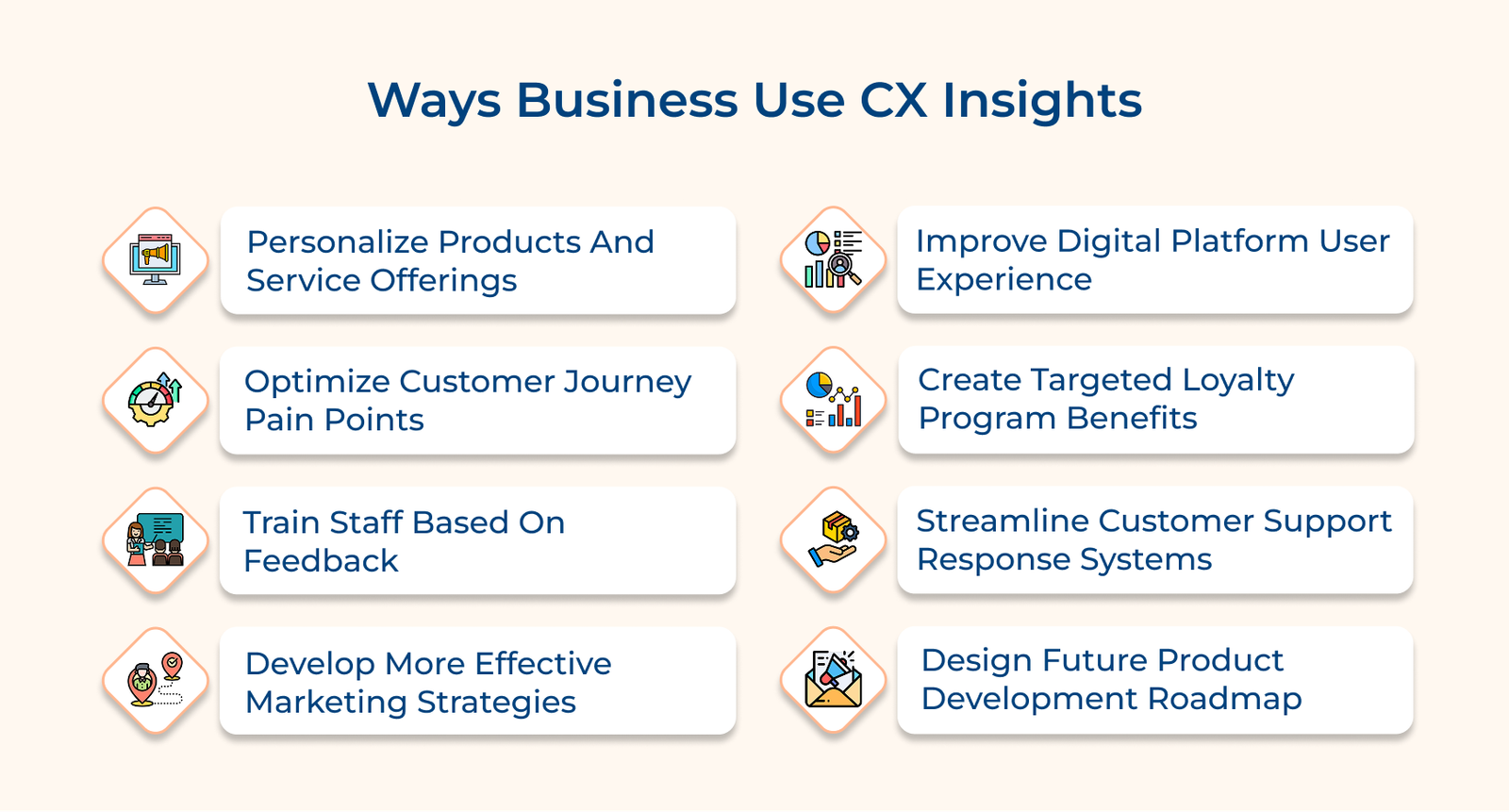
Personalization means adjusting what you offer based on what each customer wants or needs. It’s not about flashy tactics but about paying attention. Modern customers are often bombarded with generic messages and getting something that feels relevant makes all the difference.
Businesses that take personalization seriously use real customer insights to guide how and when they reach out. Be it about choosing the right time to send an email or tweaking support based on someone’s usage habits, the goal is to meet people where they are, not where you assume they are.
Pro tips:
Pain point optimization is about spotting what’s not working for your customers and fixing it before it drives them away. Whether it’s a clunky checkout process, confusing instructions or long wait times, the small frustrations add up quickly.
The most effective fixes come from listening closely to your customers and the teams who work with them every day. Businesses that take it seriously often pull in voices from across departments to rethink how key moments work, then keep tracking how the changes land with real customers.
Actionable tips:
Training staff using direct customer feedback helps turn real-world insights into better service. Instead of guessing what good service looks like, teams learn from actual customer experiences, both the wins and the pain points.
The training often includes role-playing based on real scenarios, not scripted ones. Some companies even use recordings of great interactions to show what “right” looks like. It’s a way to make training practical, relatable and grounded in what customers care about.
Key takeaways:
Using customer experience insights to shape your marketing strategy helps you connect with people in a way that matters to them. Instead of pushing out one-size-fits-all messages, the approach uses real feedback and behavior patterns to guide what you say, where you say it and when.
Marketing teams can fine-tune their approach by watching how customers respond—what they click on, when they engage and which channels they prefer. It’s about listening first, then speaking.
Best practices:
Digital platform optimization is about making it easier and more intuitive for people to use your website, app or any other digital tool you offer. Since the platforms are often the main way customers interact with a business, even small frustrations can cause people to leave.
Teams track how users move through the site, where they click, where they hesitate and where they give up. If people consistently drop off at a certain point, it’s a sign that something’s off and needs fixing.
Pro tips:
Targeted loyalty programs focus on giving customers rewards they care about, instead of handing out the same perks to everyone. It matters because people are more likely to stay engaged when the program feels tailored to their habits and preferences.
Businesses look closely at what people buy, how often they engage and which rewards get used or ignored. The patterns help them shape loyalty offers that feel relevant and worthwhile, not like a generic points system no one pays attention to.
Actionable tips:
Streaming your support system means making it easier and faster for customers to get the help they need. When support teams work efficiently, customers get answers quicker and businesses save resources.
Teams can spot patterns and put better systems in place by reviewing common issues along with how they’re resolved. If lots of people are asking the same billing questions, for example, it makes sense to build dedicated resources just for that.
Key takeaways:
Designing a product roadmap based on real customer experience means building what people need, not what you think they might want. It helps teams focus on updates that fix real problems, improve usability or add value where it matters most.
Product teams dig into feedback, usage patterns and common requests to figure out which changes will make the biggest difference. If a lot of people hit the same roadblock or keep asking for the same thing, that’s a clear sign it needs to be addressed in the next update.
Pro tips:
Let’s go through the transformative role of AI and automation in gathering customer experience insights, ensuring your business thrives.
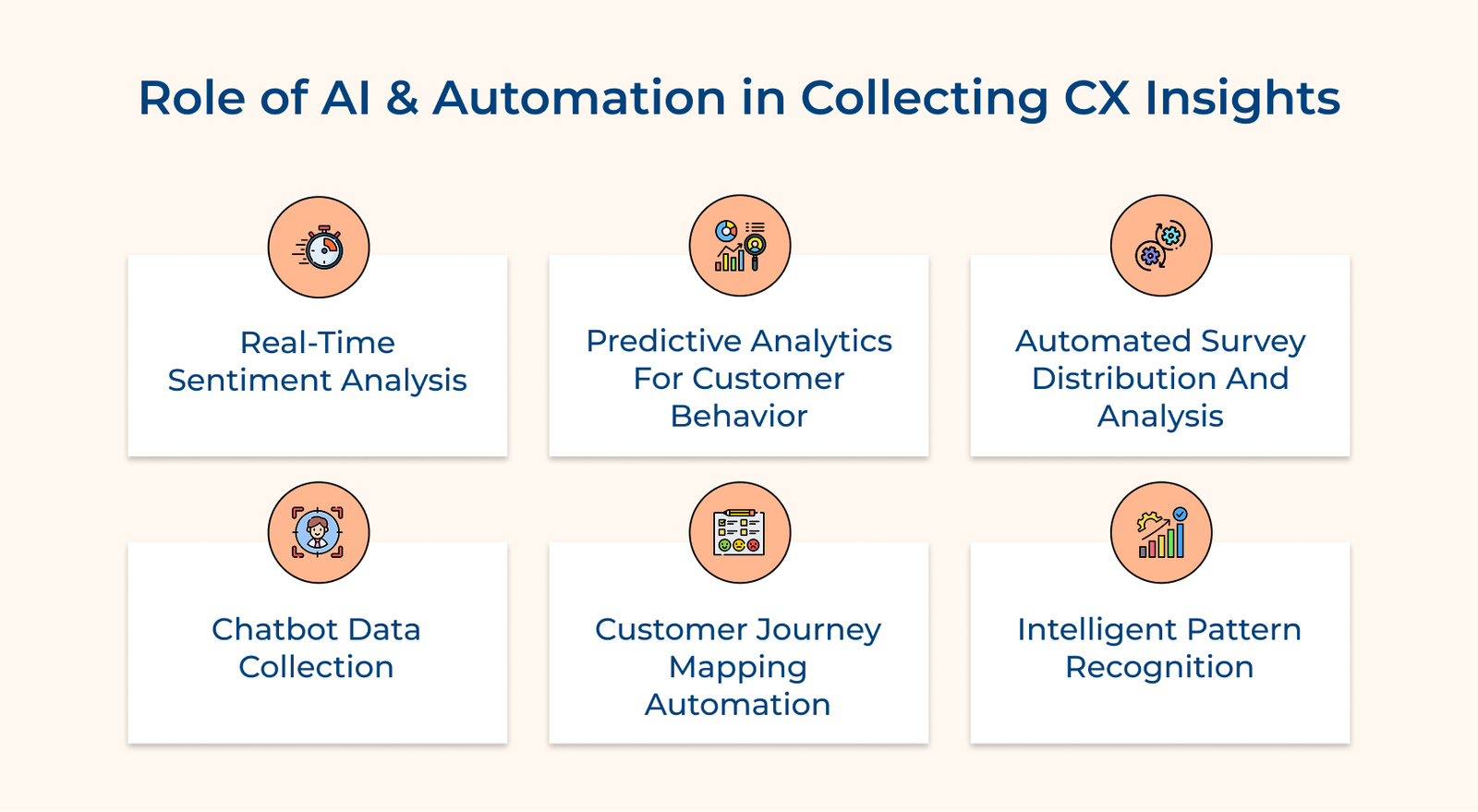
1. Real-time Sentiment Analysis
AI tools can track how customers feel by analyzing their interactions, whether it’s a chat message, a tweet or a support call. The systems don’t just look at words but pick on tone, phrasing and patterns that signal emotions like frustration, confusion or satisfaction. Natural language processing helps break down what people are saying so teams can respond more thoughtfully and quickly when things go wrong or right.
2. Predictive Analytics for Customer Behavior
Advanced AI looks at what customers have done in the past, like where they’ve dropped off and uses that history to spot patterns. Over time, the system learns to recognize signs that someone might need help or might be ready to buy again. It lets businesses step in early, either to fix a problem before it grows or to offer something useful at just the right moment.
3. Automated Survey Distribution and Analysis
Smart systems send surveys when they’re most likely to get honest answers, like right after a purchase or a support interaction. The questions adjust in real time based on how someone responds, so people aren’t stuck answering things that don’t apply. It makes feedback feel more like a conversation than a form and the instant analysis helps teams spot what’s working and what’s not while it still matters.
4. Chatbot Data Collection
AI chatbots handle everyday customer questions in a way that feels like talking to a helpful human. While answering questions, they quietly gather useful info like what people ask most, where they get stuck and what they care about. Over time, the bots get better at giving the right answers and spotting patterns that help teams improve service.
5. Customer Journey Mapping Automation
Automated tools follow each step a customer takes from the first click to the final purchase across websites, apps, emails and more. They map out the paths to show where people move smoothly and where they get stuck or leave. The clear view helps teams spot what’s working, fix what isn’t and make the entire experience easier.
6. Intelligent Pattern Recognition
AI tools sift through massive amounts of customer data to spot patterns that aren’t easy to see with the naked eye. They catch subtle trends, strange outliers and repeating behaviors that can signal what’s working or what’s going wrong. The discoveries help teams make smarter choices about what to fix, improve or build next.
The following are some leading brands that have transformed their businesses by leveraging customer experience insights effectively.
Nike
Nike gathers customer insights from its apps, stores and digital platforms by looking closely at how people work out, shop or share feedback. They use the information to recommend products that match individual preferences and habits. Nike gets a clear picture of how their gear fits into people’s lives by combining data from both in-store and online interactions.
The detailed understanding has helped them build stronger connections with their customers and grow a dedicated following. It’s also shaped how they design products and set up their stores, moving beyond just selling sportswear to becoming a part of their customers’ everyday lifestyle.
Starbucks
Starbucks learns about its customers through its mobile app, loyalty program and in-store feedback. They look at what people order, when they visit and how they customize their drinks. The system keeps track of individual favorites to suggest options that match personal tastes.
The insights have changed how Starbucks operates, from letting customers skip the line with mobile ordering to offering rewards that feel more personal. It’s also helped them design better store layouts, cut down on wait times and launch new items that reflect what their customers are actually looking for.
Amazon
Amazon closely tracks what people search for, click on and buy, along with how they review products. They use the information to build detailed profiles of each customer’s habits and preferences, paying attention not just to what people purchase but the choices they consider along the way.
The deep level of understanding lets Amazon offer suggestions that often feel spot-on and even anticipate what customers might need next. They’ve moved far beyond books and built a system that consistently delivers convenience, speed and relevance by staying in tune with how people actually shop.
Delta Airlines
Delta gathers feedback from multiple places, like its app, post-flight surveys and social media, to get a clear sense of what passengers experience. They pay close attention to comments about delays, service quality and overall satisfaction.
Delta has been able to improve how reliably they run flights and how well they meet traveler expectations by responding in real time. The hands-on approach to solving issues and refining service has helped them retain business in an industry where customers have lots of options.
Disney
Disney collects guest feedback through their app, wearable tech like MagicBands and in-park surveys. They track how visitors move through the park, which rides they choose and where they like to eat. Disney gets a clear picture of how people spend their time in the parks by combining the information.
The approach helps them adjust everything from ride schedules to restaurant staffing to make visits smoother and more enjoyable. The goal is simple – make each guest’s day run better without them even noticing the behind-the-scenes work. It’s the attention to detail that keeps people coming back.
Customer experience insights are all about understanding what matters most to your customers, how they think, what they need and where they’re getting stuck. When businesses take the time to act on the information, they’re better able to fix real problems, meet expectations and build stronger customer relationships.
The future of great customer experience lies in blending smart data with real human understanding. It’s not just about tracking numbers; it’s about using the insights to make thoughtful changes that improve how people feel when they interact with your brand. Companies that stay close to their customers and adjust quickly are the ones that will thrive.
Key takeaways:

Customer experience insights point directly to what’s working and what’s not. Businesses can start fixing the things that matter by paying attention to how people actually use a product or service and where they run into trouble. The insights highlight real needs and frustrations, giving teams a clear path to improve what they offer in a way that actually helps customers. It’s a simple idea: listen first, then make changes that count.
Businesses can stay on the curve, spotting shifts in customer expectations and market trends before they become problems by analyzing customer experience insights. The approach lets companies address issues early and find opportunities others might miss. Consistently reviewing customer feedback and behavior helps strengthen relationships. It’s about staying in tune with your customers and adapting quickly to keep up.
Businesses can use a mix of digital tools, feedback platforms and behavior tracking systems to get a clearer picture of customer experience. Modern options include AI-driven sentiment analysis, surveys, social media monitoring and journey mapping tools. The key is selecting the right tools for your business and ensuring they work well together to provide a full, accurate view of how customers are interacting with your brand.
Client experience insights help businesses tailor their offerings by understanding what customers truly want and where they face challenges. The insights allow companies to anticipate needs, address issues before they become problems and create interactions that feel personal. Businesses can ensure smoother customer journeys and more satisfying experiences at every touchpoint by taking a proactive approach.
Businesses need a clear plan to turn them into real improvements. Begin by prioritizing changes that will have the greatest impact on customers and are feasible for the business. Form cross-functional teams to carry out the changes, test new ideas with direct customer feedback and keep track of progress by regularly reviewing performance metrics. It ensures that adjustments are making a meaningful difference.
Some of the biggest challenges in working with customer experience insights include handling too much data, making sure that data is accurate and staying consistent across different feedback channels. It’s also tough to turn raw feedback into clear next steps. Businesses have to be careful not to overwhelm customers with too many surveys and instead focus on gathering feedback that actually leads to useful changes.

Grow Customer Relationships and stronger team collaboration with our range of products across the Conversational Engagement Suite.
Omnichannel Customer Support & Help Desk Software
AI Enabled Business Messaging and Chatbot Software
Sales Engagement & CRM Software
Call Center Software & Virtual Phone System
Product Marketing & Experience Platform
Customer Experience & Feedback Management Software

 What is a Sales Report Template? Metrics, Tips and Roadmaps
Scroll to top
What is a Sales Report Template? Metrics, Tips and Roadmaps
Scroll to top