A Guide to Customer Targeting: 10 Proven Strategies
Effective customer targeting helps businesses reach the right audience with tailored messaging. Learn how you can identify, segment and engage customers for better conversions.
Effective customer targeting helps businesses reach the right audience with tailored messaging. Learn how you can identify, segment and engage customers for better conversions.
Traditional marketing often falls short of capturing the attention of modern customers. Businesses frequently face poor response rates, wasted budgets, and the challenge of blending into a sea of similar messages. What could be the root of the problem here? It’s a lack of precision in knowing who they’re speaking to.
Businesses must understand who their ideal customers are and then tailor their approach to meet their specific needs. Businesses are known to experience a 5.3x increase in click-through rates (CTR) when they use targeted ads.
No matter what industry your business belongs to, the more precisely you understand and reach the right customers, the more effective your efforts become. Effective customer targeting helps reduce wasted resources, improve conversion rates and deliver what your audience actually needs. Let’s down how you can reach the right audience and make your efforts count where it matters most.
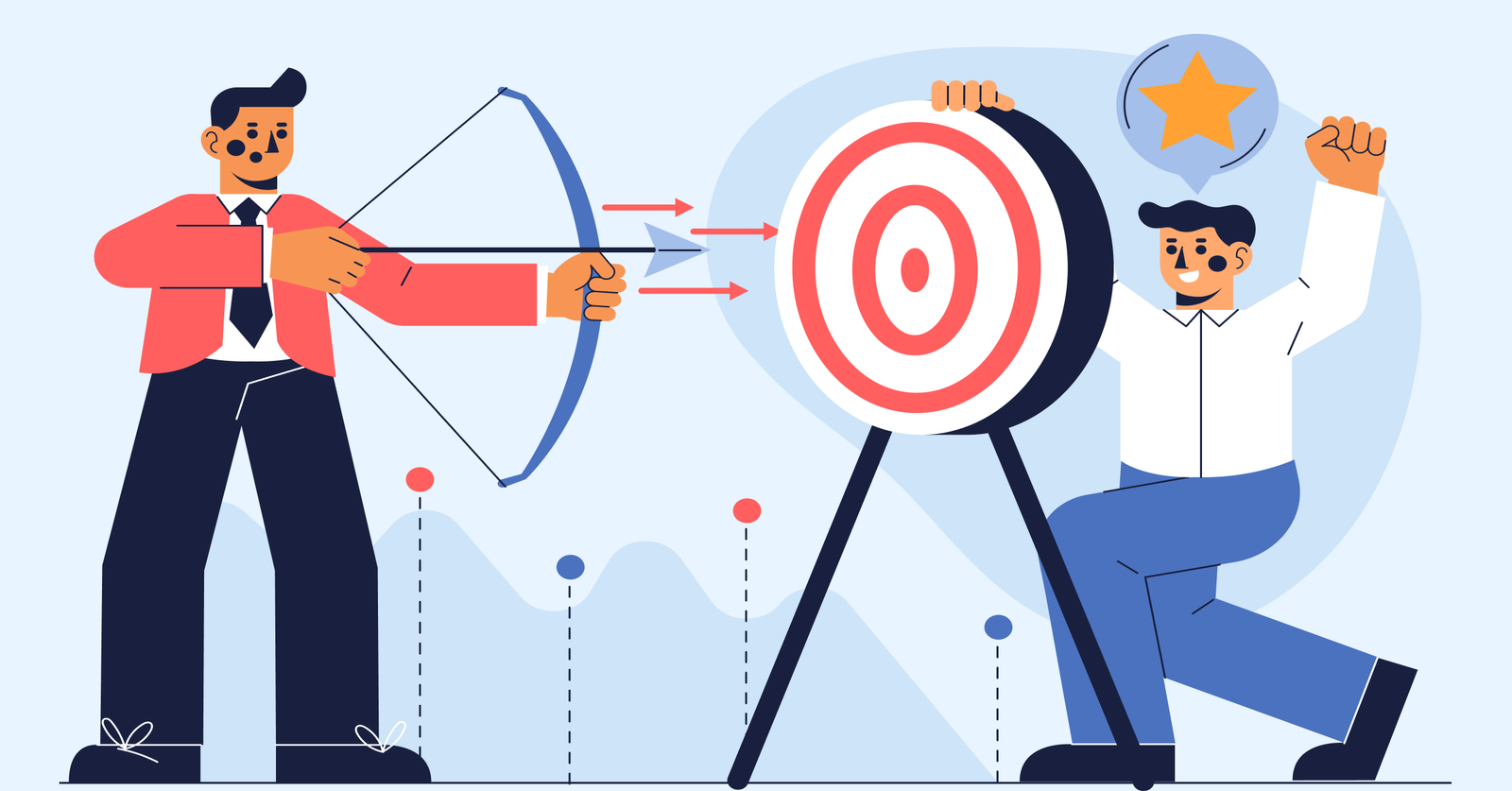
Customer targeting is defined as the process of identifying and reaching the audience that’s most likely to engage with your products or services. Businesses can focus their marketing efforts where they matter most by analyzing customer data such as demographics, behavior, and preferences.
The process begins with collecting data on customer habits, interests and interactions. Businesses then use the information to build detailed customer profiles, shaping marketing strategies that resonate with specific audience segments.
Key types:
The following are the main advantages of using consumer targeting to improve how you reach and serve your audience.
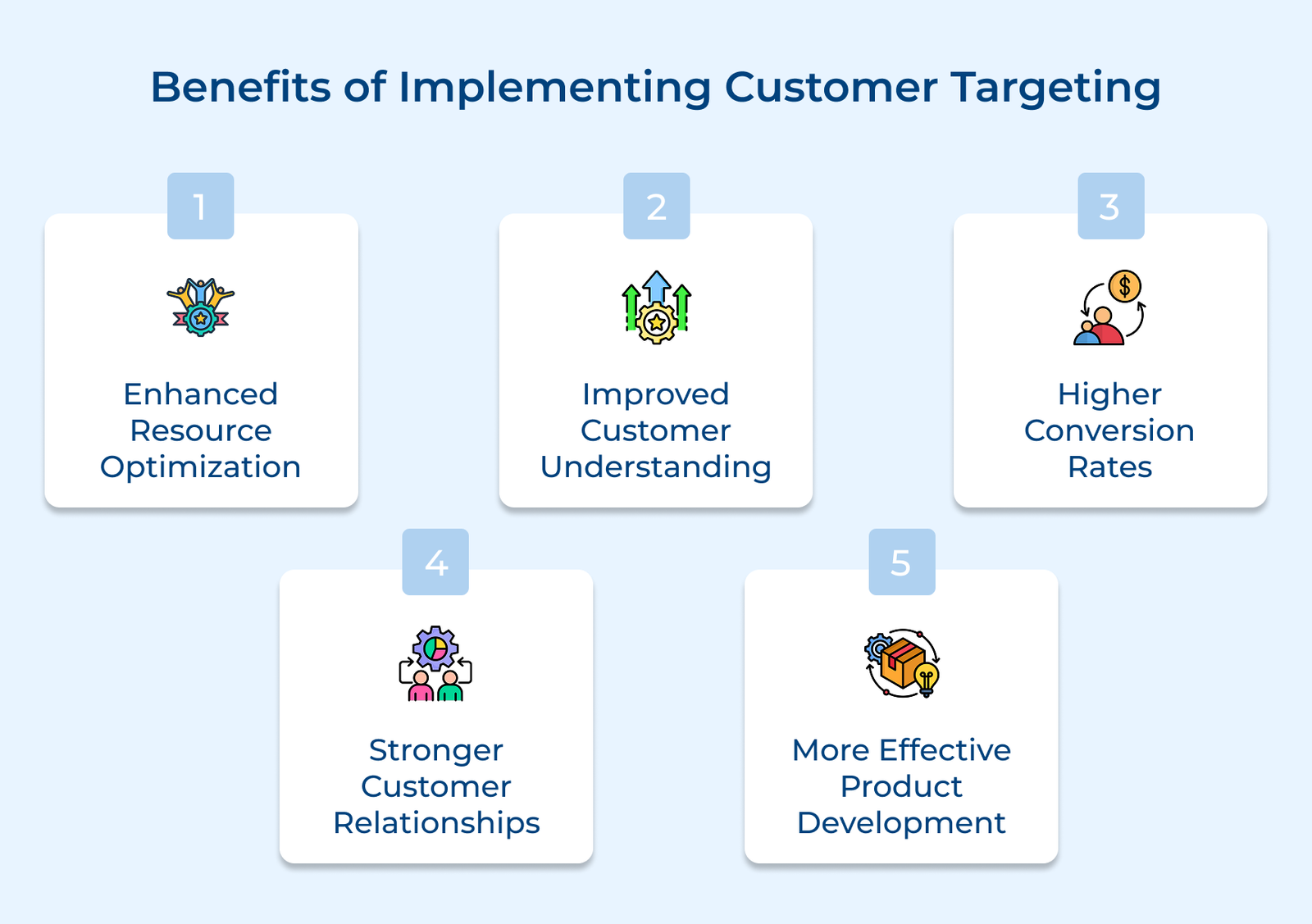
1. Enhanced Resource Optimization
Customer targeting helps you spend wisely by reaching people who are actually interested in your product. It cuts wasted effort, directs resources to the right places and makes every campaign more effective.
2. Improved Customer Understanding
Studying specific customer groups makes you familiar with what they actually and want. It helps you create better products and messages that truly connect with them even before they ask for it.
3. Higher Conversion Rates
Reaching the right customers with the right message will naturally lead you to more sales. When people feel understood, they’re more likely to buy. It means you get better results without spending more.
4. Stronger Customer Relationships
When you truly understand your customers, you connect with them in a way that feels personal. It makes them more likely to return, trust your brand and stick with you over time.
5. More Effective Product Development
Knowing your customers well helps you create products that truly fit their needs. It lowers the risk of failure and increases the chances of success because your products solve real problems for real people.
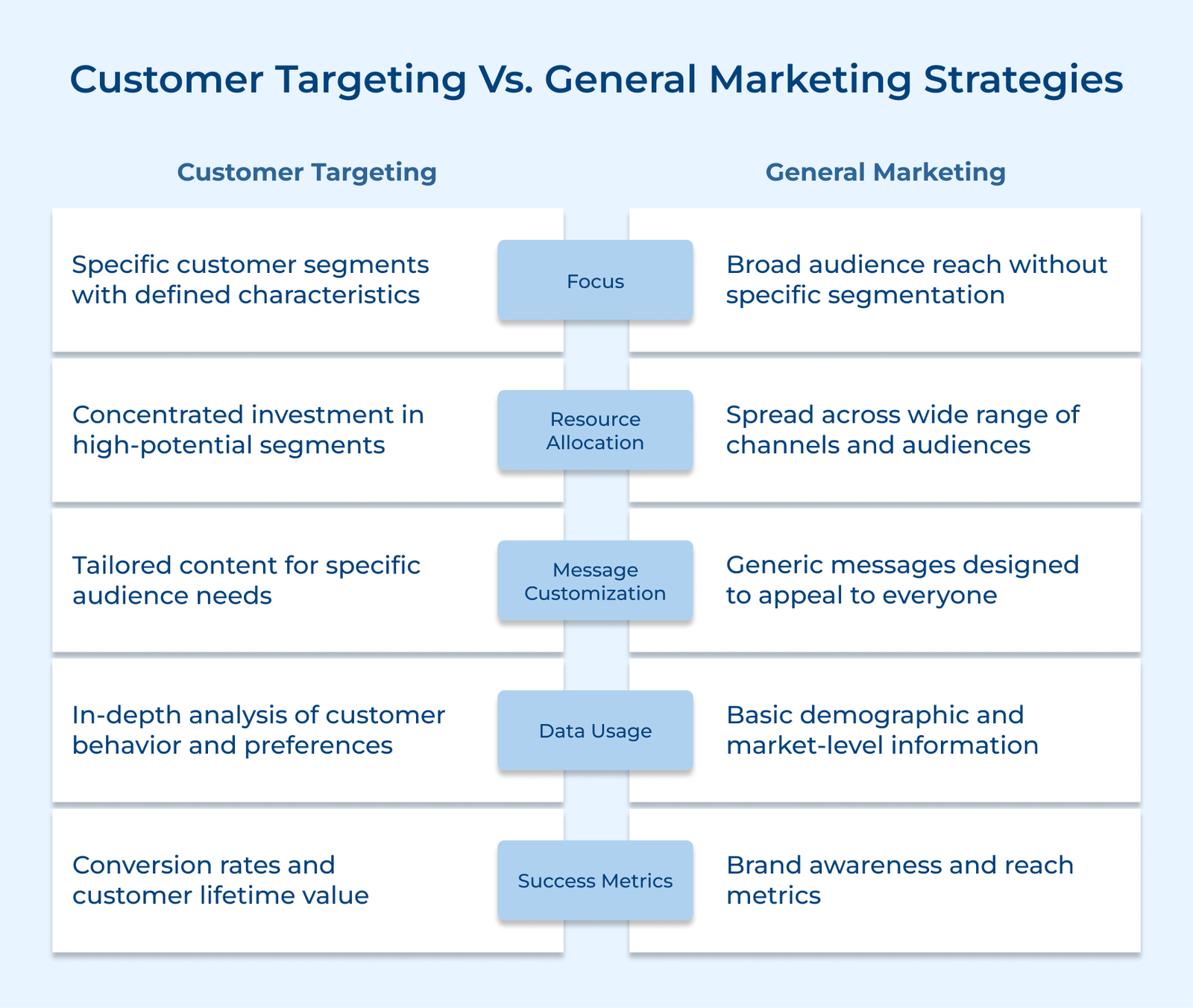
See how customer targeting focuses on specific audience segments, unlike general marketing approaches. Understand what sets it apart and why it leads to more effective outreach.
Focus and Audience Approach
Customer targeting focuses on reaching the people most likely to be interested in your brand. It relies on detailed customer profiles to make marketing more relevant and effective.
General marketing aims to reach as many people as possible, hoping some will be interested. While it covers more ground, it often lacks the focus needed to truly connect with customers.
Resource Allocation and Investment
Client targeting means putting your marketing budget toward channels that reach the right people, those most likely to care about and buy your product. It’s a more thoughtful approach that avoids wasting time and money on broad campaigns. Your efforts go further and your chances of converting go up by focusing on specific customer segments.
General marketing spreads your messages across as many channels as possible, hoping to grab attention wherever it can. While it might lead to more eyes on your brand, it means you are also spending money on audiences who may never convert.
Message Development and Content Strategy
Customer targeting lets you craft content that feels personal and meaningful. You can speak in a way your audience understands by using their language, addressing their real problems and tapping into what matters to them. The direct connection makes your message more likely to stick and lead to action.
General marketing goes wide with broad messages meant to appeal to as many people as possible. While it might catch more eyes, it often misses the mark when it comes to depth. When something doesn’t feel personally relevant, people are more likely to ignore it or move on without engaging.
Data Analysis and Implementation
Consumer targeting uses detailed data to spot patterns in how people shop, browse and make decisions. You can fine-tune your approach and even anticipate what your audience might want next by tracking their behavior over time. It’s less guesswork and more informed action!
General marketing leans on big-picture trends and surface-level demographics. While that can point you in the right direction, it often skips the deeper insights that help campaigns truly connect. The result is messaging that might reach many but resonate only with a few.
Performance Measurement and ROI
Customer targeting tracks what really matters, like who clicked, who bought and who came back. You get a clear picture of what’s working or where to tweak your strategy by focusing on engagement, conversions and lifetime value.
General marketing leans on wide-net metrics like reach and impressions. It can look impressive on paper, but they don’t always reflect real results. Just because someone saw your ad doesn’t mean they’re buying or even paying attention, right?
Check out the effective client targeting strategies that can help steer your marketing efforts in the right direction.
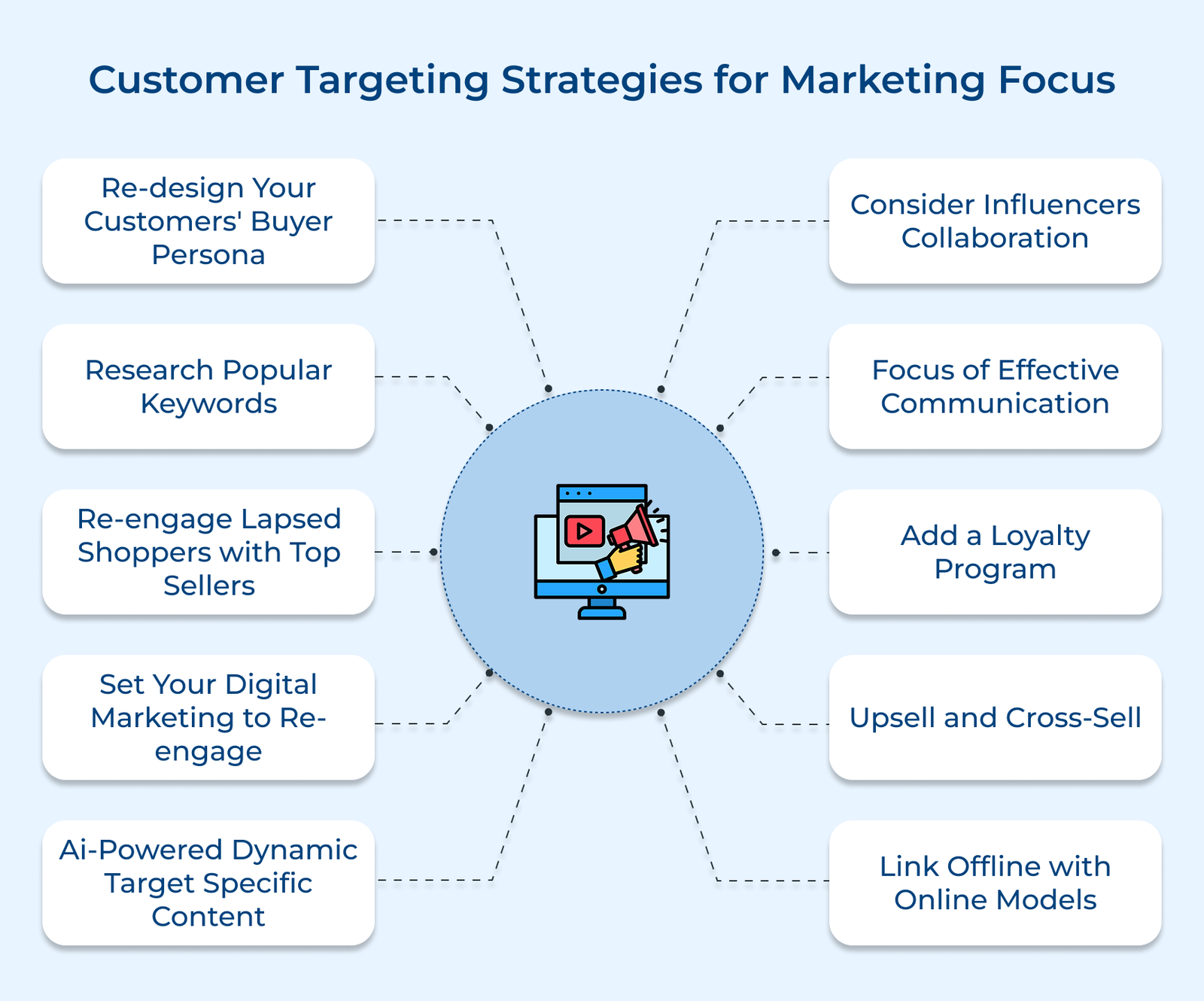
Buyer personas are simply detailed snapshots of your ideal customers, built from real conversations and research, not guesswork. They help you understand what your customers care about so you can shape your messaging, products and outreach to match.
Interviewing your customers will reveal what data can’t, such as what drives their choices, what frustrates them and what they actually need. These conversations bring out details that numbers often miss and doing them regularly helps you keep up as those needs shift.
Pro tips:
Understanding the exact terms people use in search engines helps you align your content with their intent. Using relevant keywords helps your content appear where your audience is already looking. Studies show that up to 60% of clicks go to the top three organic results, highlighting how much visibility depends on search relevance.
Tracking trending search terms will help you understand what your customers are actively looking for right now. As it helps you adjust your content or offerings in real time, it gives you a chance to address emerging needs before others do.
Actionable tips:
Re-engagement strategies focus on bringing back customers who haven’t interacted in a while by showing them relevant products based on their past activity or interests. It’s a very cost-effective approach that taps into existing customer data to drive repeat purchases without the expense of acquiring new buyers.
Personalized product suggestions, built from past shopping behavior, remind people why they liked your store in the first place. When they see something that fits their taste, it feels more like a nudge than a sales pitch and that familiarity is often enough to bring them back.
Best practices:
Automated re-engagement lets you reconnect with customers at the right moment, such as when they abandon a cart, without needing constant manual follow-ups. It relies on real customer actions to trigger timely messages that serve as helpful reminders or gentle nudges.
Setting up things like cart reminders or follow-up emails will work to bring customers back by picking up where they left off. These small, timely prompts often lead to completed purchases, especially when paired with a clear message or relevant offer.
Key takeaways:
Modern customers want content that feels like it was made just for them. Real-time personalization helps make that happen by adapting on-screen content based on how users behave, where they are and what they’re interested in. Yes, it does all of it while they are interacting with your site or app.
Instead of sending the same message to everyone, you’re tailoring the experience based on who’s viewing it. The approach not only grabs attention but also shows customers you’re paying attention, which goes a long way in keeping them engaged.
Pro tips:
Influencer partnerships offer a way to connect with people through voices they already trust and might be familiar with. Instead of relying on polished ads, brands can speak to real communities through creators who feel more like peers than promoters.
Micro-influencers are especially effective because their audiences tend to be more focused and engaged. But for it to work, their followers need to genuinely reflect your ideal customers. They must have the same interests, values and vibe.
Key takeaways:
Effective customer targeting starts with clear, intentional communication. It’s about reaching the right people with messages that make sense to them. The communication needs to be relevant, well-timed and easy to relate to.
Take a fitness brand, for instance. Instead of sending the same message to everyone, they might guide beginners with simple routines while offering in-depth nutrition tips to seasoned athletes. It makes each group feel seen and supported in their own journey.
Best practices:
Loyalty programs turn everyday customers into returning supporters by offering rewards that recognize and appreciate their commitment. When people feel acknowledged for sticking with a brand, they’re more likely to keep coming back and tell others why they do.
Creating reward tiers gives customers a reason to stay engaged. As each level has something more to offer, it becomes less about collecting points and more about reaching milestones that feel worth it.
Pro tips:
A thoughtful customer targeting strategy isn’t just about closing a sale; it’s about understanding what the customer actually needs. Businesses can only recommend products that make sense, feel helpful and improve the original purchase when they understand what customers truly need.
Spotting which products work well together starts with observing how customers actually shop and what they frequently pair. Once you see the patterns, it’s easier to guide customers toward options that genuinely add value to what they already want.
Actionable tips:
A modern customer targeting approach understands that people don’t separate their online and offline experiences, so brands shouldn’t either. Be it someone browsing a website or visiting a store, the experience should feel connected and familiar.
Bringing together data from both digital and physical interactions helps paint a clearer picture of each customer. It means your targeting can feel more relevant and less like guesswork, no matter where the interaction happens.
Key takeaways:
Below are the inspiring examples of successful customer targeting strategies that transformed businesses and created stronger customer relationships.
Nike’s Micro-Segment Engagement
Nike shaped its consumer targeting around the specific needs of different athletic groups. Instead of taking a one-size-fits-all approach, they created dedicated product lines and content for runners, basketball players and yoga fans. They went as far as creating separate apps tailored to each group’s specific needs.
Nike made their brand feel more personal and relevant by speaking directly to the interests of each community. It infused loyalty, boosted engagement and cemented their place as the brand athletes turn to for gear that truly fits their lifestyle.
Sephora’s Beauty Insider Program
Sephora reshaped how it connects with customers by building a loyalty program that feels personal and rewarding. Rather than getting hyper-focused on offering discounts, they use shopping history to build beauty profiles and offer product suggestions that match each customer’s style.
The thoughtful approach turned one-time buyers into repeat customers. People came back not just for the products but because they felt appreciated. All of it naturally led to bigger baskets and longer-lasting relationships.
Starbucks’ Mobile-First Personalization
Starbucks used its mobile app to quietly change how it connects with regulars. The app uses past orders and visit times to recommend drinks a customer is likely to choose again. It also sends timely offers based on when they usually visit, making each interaction more relevant.
The simple, thoughtful use of customer habits has paid off. People show up more often and they’re happier doing it because the experience feels a little more like it was made just for them.
Netflix’s Content Recommendation Engine
Netflix built its targeting strategy around understanding what people watch, not just what they say they like. They studied what their users watch, skip or replay to build a feed that closely matches their habits and preferences.
The subtle tailoring keeps people watching without needing to search too hard. It’s not flashy, but it works and it’s a big part of why Netflix stays ahead in the streaming game.
Amazon’s Predictive Analytics
Amazon doesn’t wait for you to search. It studies your browsing history, past orders, and behavior of similar users to suggest what you’re likely to need next. It’s almost like the site already knows what you’re about to need, isn’t it? The anticipation makes shopping faster and easier. People spend less time hunting and more time buying, which keeps them coming back.
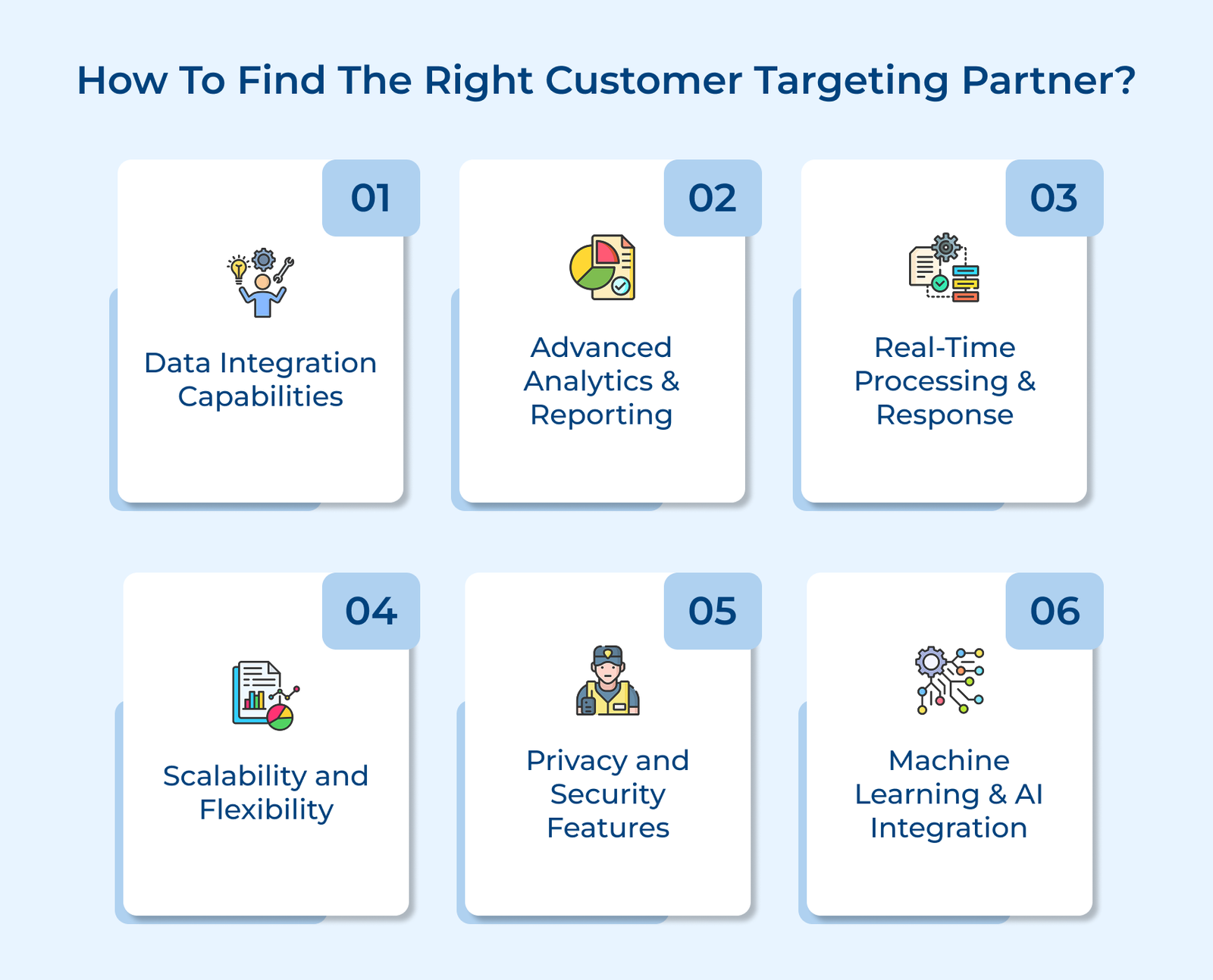
Here’s what you need to look at when choosing a customer-targeting partner who can actually help you reach the right audience.
Also, ask yourself these important questions before making a decision:
Data integration
A good targeting solution should pull together data from all your key sources. It includes CRM, website, social media and in-store activity. The combined view will help you clearly understand how customers behave across different touchpoints.
Advanced analytics and reporting
Look for tools that do more than just crunch numbers. You want insights you can act on, like which groups of customers are growing, what they’re likely to do next and how trends are shifting.
Real-time response
The system should react as customers interact with your brand. It means it should instantly adjust segments, trigger follow-ups or show the right content at the right moment.
Scalability and flexibility
The platform should grow with your business, handling increasing data volumes and new channels without performance issues. It should also be flexible enough to adapt to changing market conditions, new customer segments and emerging marketing channels.
Privacy and security features
Data protection isn’t optional. So make sure the system keeps information safe, supports anonymization where needed and is built to meet current privacy laws like GDPR or CCPA.
Machine learning and AI integration
AI and machine learning should help the system get better the more it’s used. It should spot patterns, fine-tune suggestions and make personalization feel more natural with every interaction.
Below are the common challenges businesses face with consumer targeting, along with the solutions that help in effectively overcoming them.
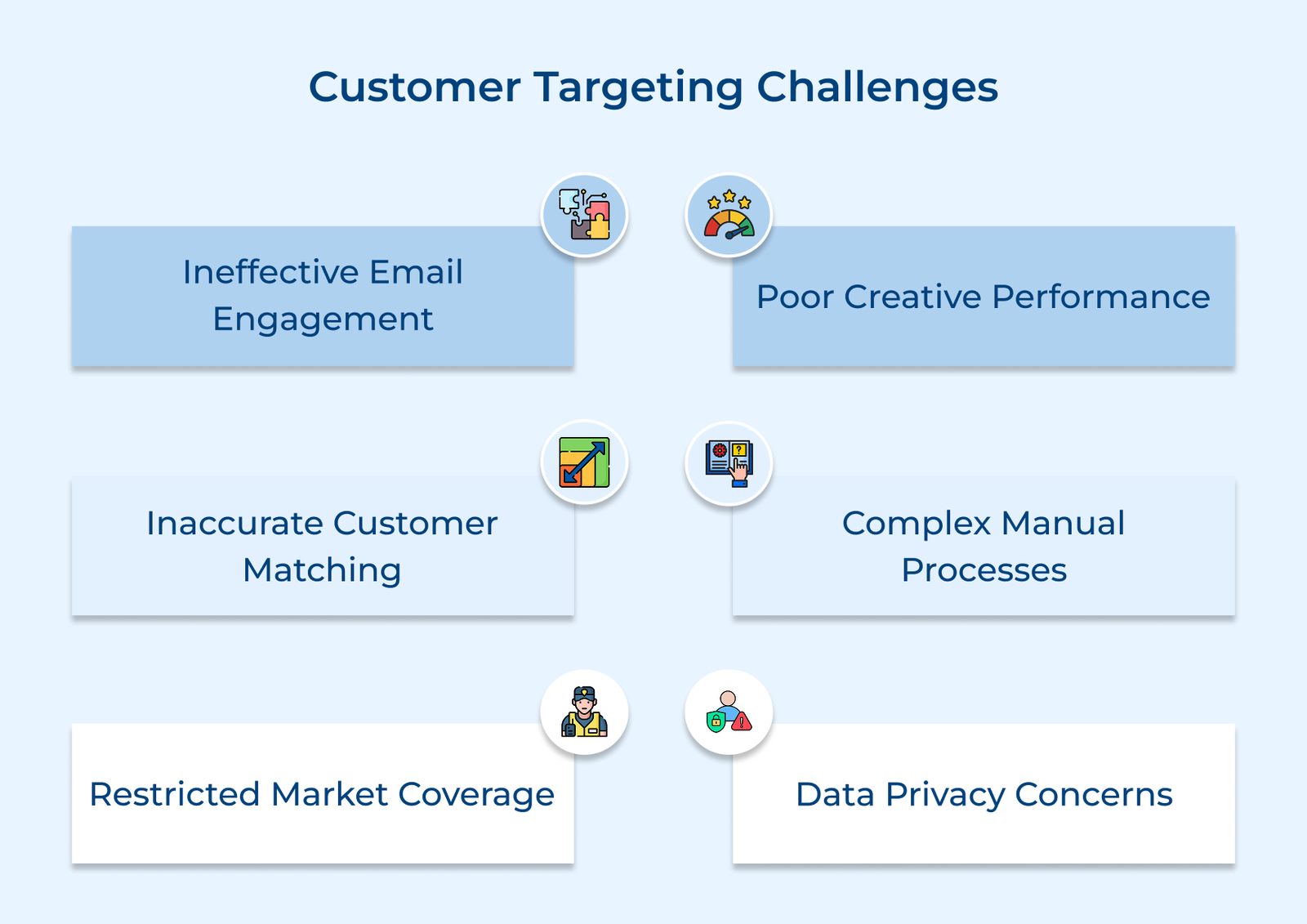
Many email campaigns fall flat because the content feels too broad or irrelevant. When people don’t see value right away, they don’t open or click and your message gets ignored. The disconnect often comes from sending the same message to everyone rather than tailoring it to what different groups actually care about.
When customer data is scattered across different systems and doesn’t line up, it’s hard to know who you’re talking to. The disconnect leads to mixed messages, repeated efforts and missed opportunities. The more platforms and touchpoints you add, the harder it becomes to keep the full picture straight.
When you can’t get your ads in front of the right people on the right platforms, parts of your audience stay in the dark. The gaps limit your reach, weaken your message and leave potential customers untouched by your campaign, no matter how strong it is.
When the same ad or message is shown to everyone, it rarely hits the mark. When content isn’t adapted for specific audiences or platforms, it often gets ignored. The result? It fails to resonate, stay relevant or leave any impact.
When campaigns rely too heavily on manual work, they take longer to launch and are more prone to mistakes. Valuable time gets lost in repetitive tasks and small errors can throw off the entire strategy.
Tighter privacy rules and growing customer concern over how their data is used are making it harder to target people effectively. Businesses have to be more careful about how they collect and handle data, which can limit what they’re able to do with it.
Implementation steps to overcome the challenges :
Customer targeting has shifted from a basic marketing tactic to a core part of how smart businesses operate. It’s no longer just about reaching people, it’s about understanding them. When companies pay attention to what their customers do, want and need, they can speak to them in a way that feels human. The real value of targeting isn’t just in selling, it’s in connecting.
Looking ahead, the key will be balancing technology with a personal touch. Automation can help scale efforts, but genuine relationships still win trust. Businesses that get it right by responding more thoughtfully will stand out, build loyalty and grow in ways that last.

A target audience is the group of people most likely to care about what your business offers. They tend to share common traits like age, interests, habits or challenges that connect directly to your solutions. Identifying them means looking closely at who your customers are, what they need and what drives their decisions. When you know who you’re talking to, it’s much easier to speak in a way that matters to them.
Customer targeting works by dividing your audience into specific groups based on traits like age, location, lifestyle, habits and tech use. It helps you understand what drives different types of customers and how they make decisions. More advanced methods go a step further, building detailed customer profiles, using data to spot patterns and predicting what someone might want next so you can connect in a way that actually matters to them.
Businesses need to look closely at both numbers and real-world feedback. It means studying current customer behavior, running surveys, watching how people interact on websites and seeing who competitors are attracting. Grouping people by shared traits or habits helps paint a clearer picture of who’s most likely to buy. The goal is to understand not just what people do, but why they do it.
Data analysis plays a key role in finding and understanding the right customers. Businesses can make smarter decisions about what to offer by looking at patterns in how people browse, buy and interact. Tools like predictive models or sentiment analysis help spot trends early and tailor messages to fit different groups. It’s about using facts to connect with people in ways that feel relevant and timely.
Accurate customer targeting helps businesses focus their efforts where they count. It leads to better conversion rates, lower marketing costs and stronger customer loyalty by addressing the specific needs of each group. The approach also helps shape products that people want, making it easier to stand out and build lasting relationships.
Businesses should reassess their target audience every 6 to 12 months or when major changes in the market happen. Shifts in technology, the economy, demographics or customer behavior can quickly make existing strategies outdated. Regular check-ins using data, customer feedback and market research help keep marketing efforts aligned with what people want.
Grow Customer Relationships and stronger team collaboration with our range of products across the Conversational Engagement Suite.
Omnichannel Customer Support & Help Desk Software
AI Enabled Business Messaging and Chatbot Software
Sales Engagement & CRM Software
Call Center Software & Virtual Phone System
Product Marketing & Experience Platform
Customer Experience & Feedback Management Software
 How to Collect Customer Experience Insights? A Complete Guide
Scroll to top
How to Collect Customer Experience Insights? A Complete Guide
Scroll to top